Visitor Insights
Visiting Mission San Francisco de Asís
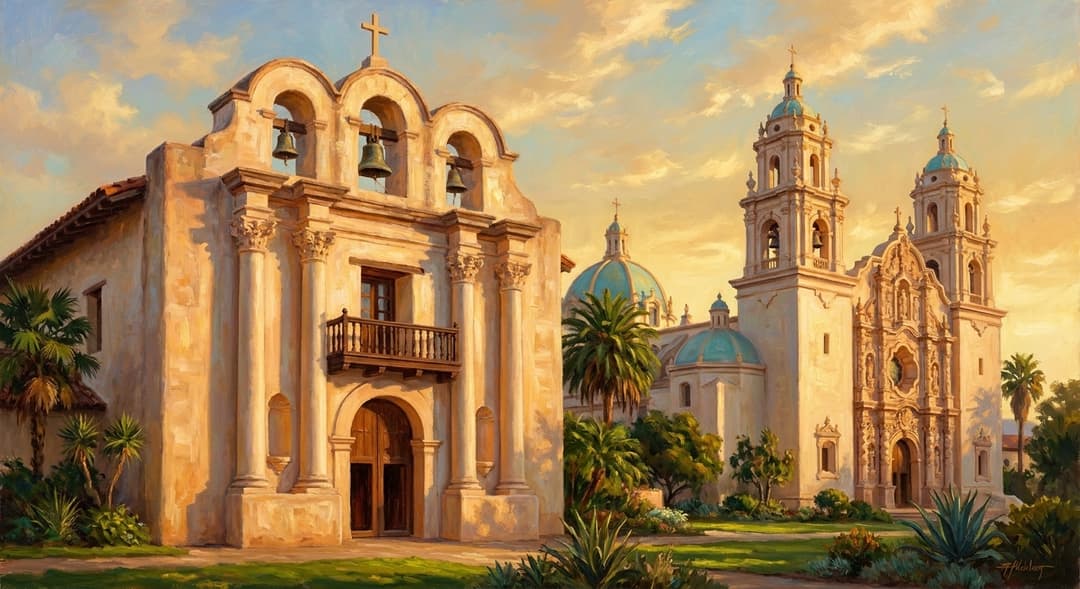
Mission Dolores offers visitors a peaceful encounter with early California history through its historic 1791 adobe chapel, grand 1918 basilica, and lush cemetery garden. Visitors can explore self-guided exhibits, sacred art, and quiet reflection areas in San Francisco's Mission District.
Highlights
- Intact 1791 adobe chapel featuring native hand-painted ceiling motifs
- Gilded wooden retablo altarpiece imported from Mexico in 1796
- Historic cemetery garden with blooming roses and pioneer graves
- Grand Spanish Colonial Revival Minor Basilica
Things to Know
- Quiet reverence requested during active liturgical services
- Limited street parking available in the surrounding neighborhood
- Small admission fee supports ongoing structural preservation
Location
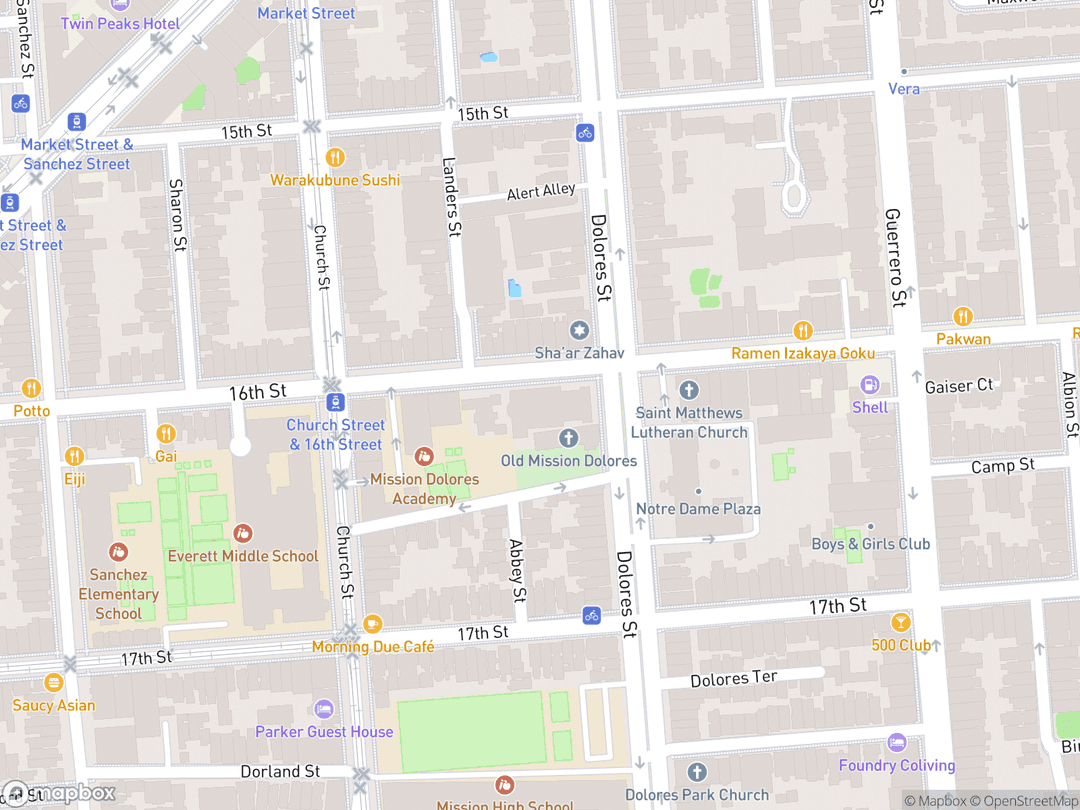
320 Dolores Street, San Francisco, California 94114, USA
Hours: Museum & Chapel: Daily 10:00 AM – 4:00 PM (Mon–Fri), 10:00 AM – 5:00 PM (Sat–Sun)
Getting There: Accessible via MUNI J-Church light rail line or a short three-block walk west from the 16th St Mission BART Station.
Get DirectionsTips for Your Visit
Attend Morning Mass
Experience active parish life by attending daily morning Mass in the historic chapel before museum hours begin.
Explore the Cemetery
Stroll through the cemetery to see the final resting place of thousands of Native Americans and early California pioneers.
Observe the Ceiling Art
Look closely at the sanctuary roof beams to admire the original Ramaytush Ohlone hand-painted geometric motifs.
About
Founded on June 29, 1776, by Franciscan friars under the leadership of Father Junípero Serra, Mission San Francisco de Asís—popularly known as Mission Dolores—stands as the oldest intact building in San Francisco. Within the Christian and broader Abrahamic tradition, physical sanctuaries are consecrated to facilitate Eucharistic worship, sacramental life, and community gathering.
The mission was named after Saint Francis of Assisi, while its popular moniker derives from nearby Arroyo de Nuestra Señora de los Dolores. Constructed with four-foot-thick adobe walls and redwood beams bound by wet rawhide, the 1791 chapel remarkably survived the catastrophic 1906 earthquake and fire undamaged.
Today, Mission Dolores encompasses the original historic chapel, an ornate 1918 Spanish Colonial Revival basilica elevated to a Minor Basilica by Pope Pius XII in 1952, and the city's only intact historic cemetery. The complex continues to serve as an active parish in the Roman Catholic Archdiocese of San Francisco.
Gallery
Symbolic Elements
The temple's exterior features intricate carvings, each rich with spiritual meaning:
Saint Francis Iconography
Statues and imagery honor Saint Francis of Assisi, representing evangelical poverty, humility, and care for creation.

Triple Belfry Bells
Cast in Mexico in 1792 and 1797, these original bronze bells continue to call believers to daily worship.

Ohlone Hand-Painted Ceiling
Vibrant geometric chevron motifs painted with natural dyes reflect the artistic synthesis of indigenous culture and sacred space.

Gilded Baroque Retablo
A 1796 Mexican altarpiece carved in cedar wood and covered in gold leaf frames sacred images of patron saints.

Franciscan Cord and Stigmata
Decorative relief carvings depict the three knotted vows of poverty, chastity, and obedience alongside Christ's sacred wounds.

Our Lady of Sorrows Motif
Marian iconography honoring Our Lady of Sorrows provides comfort and historical connection to the mission's popular name.

Rawhide Structural Bindings
Flexible leather straps wrapping roof timbers demonstrate innovative frontier construction that absorbed seismic shocks.
Interesting Facts
Mission Dolores is the oldest surviving intact building in the entire City and County of San Francisco. (Tier A)
Roof timbers were bound with wet rawhide thongs that shrank into rigid shock absorbers against earthquakes. (Tier B)
The 1791 adobe chapel suffered zero structural damage during the catastrophic 1906 earthquake and fire. (Tier A)
The Mission Dolores Cemetery is the only remaining intact burial ground located within San Francisco city limits. (Tier A)
More than 5,000 Native American inhabitants and early pioneers are buried within the cemetery grounds. (Tier B)
The hand-painted geometric sanctuary ceiling was created by indigenous Ramaytush Ohlone artisans using vegetable dyes. (Tier B)
It became the first church in Northern California elevated to the rank of Minor Basilica by Pope Pius XII in 1952. (Tier A)
Alfred Hitchcock featured the mission cemetery in his classic 1958 psychological thriller Vertigo. (Tier C)
Common Questions
What is the oldest structure in San Francisco?
The 1791 adobe chapel of Mission Dolores is the oldest intact building in San Francisco.
Why is the mission called Mission Dolores?
The name comes from its location near a stream named Arroyo de Nuestra Señora de los Dolores.
Is Mission Dolores an active church?
Yes, it is an active Roman Catholic parish hosting regular daily and weekend Masses in both the chapel and basilica.
Are there burials at Mission Dolores?
Yes, the historic cemetery is the only intact burial ground within San Francisco city limits, holding over 5,000 graves.
Featured Stories
The Miracle of the 1906 Earthquake
April 18, 1906
When a violent earthquake struck San Francisco in 1906, nearby structures collapsed and massive fires swept across the city, destroying the adjacent wooden parish church. Miraculously, the 1791 adobe chapel stood firm with zero structural damage, preserved by its four-foot-thick clay walls and flexible rawhide bindings. Today, it remains an enduring symbol of spiritual resilience in the heart of San Francisco.
Source: Archdiocese of San Francisco Historical Archives
The Hand-Carved Gilded Retablo
1796
In 1796, an extraordinary carved wooden altarpiece arrived in San Francisco after an arduous ocean voyage around South America's Cape Horn from Mexico. Hand-crafted by master Mexican artisans and covered in brilliant gold leaf, the retablo was assembled inside the simple adobe chapel where it continues to illuminate the sanctuary. It stands as one of the oldest imported colonial liturgical treasures along the Pacific Coast.
Source: Mission Dolores Museum Collection
Indigenous Art in the Sacred Sanctuary
1791
During the construction of the adobe chapel in 1791, Native Ramaytush Ohlone artisans painted intricate geometric patterns across the heavy timber ceiling beams using natural mineral and plant dyes. Their traditional chevron designs were integrated directly above the main sanctuary, creating a unique visual synthesis between native craftsmanship and Catholic liturgy. This masterpiece remains one of the few surviving intact 18th-century indigenous ceiling paintings in North America.
Source: California Missions Foundation Research
Timeline
First Mass Celebrated
Father Francisco Palóu celebrates the first Mass at a temporary shelter near Arroyo de los Dolores.
MilestoneFormal Dedication
The mission is formally dedicated in honor of Saint Francis of Assisi.
DedicationAdobe Chapel Dedicated
Construction of the four-foot-thick adobe chapel is completed and officially consecrated.
DedicationRetablo Installed
An elaborate gilded wooden altarpiece carved in Mexico is installed behind the main altar.
EventSecularization Act
The Mexican government secularizes California missions, resulting in land division and temporary decline.
EventRestoration to Church
President James Buchanan officially restores ownership of Mission Dolores to the Catholic Church.
MilestoneSan Francisco Earthquake
The historic adobe chapel survives the earthquake undamaged while neighboring buildings collapse.
EventNew Basilica Completed
A large Spanish Colonial Revival church designed by Willis Polk opens next to the chapel.
EventMinor Basilica Elevation
Pope Pius XII designates the parish church as the first Minor Basilica in Northern California.
MilestoneNational Register Listing
Mission Dolores is added to the United States National Register of Historic Places.
MilestoneSeismic Retrofitting
Engineers complete extensive conservation work reinforcing adobe walls while preserving native ceiling art.
RenovationHistory by Decade
1770s — Mission Foundation
Spanish explorers and Franciscan friars established Mission San Francisco de Asís near a freshwater stream. Fr. Francisco Palóu celebrated the first Mass in June 1776, laying the foundation for permanent Christian evangelization and settlement in Northern California.
1790s — Adobe Chapel Construction
Ramaytush Ohlone laborers and Franciscan friars constructed the enduring adobe chapel using sun-dried clay bricks and redwood logs. Consecrated in 1791, the chapel received its imported Mexican gilded retablo in 1796, establishing a profound sacred sanctuary.
1830s — Secularization and Transition
Following Mexican independence, the 1834 Secularization Act dismantled mission administration and redistributed lands. The chapel fell into partial neglect until U.S. President James Buchanan restored Church ownership in 1857 following the Gold Rush.
1900s — Preservation Through Catastrophe
The catastrophic 1906 San Francisco earthquake destroyed the surrounding neighborhood and adjacent wooden church. Thanks to thick adobe walls and flexible rawhide bindings, the 1791 chapel suffered no structural damage, proving its remarkable architectural resilience.
1950s — Papal Recognition as Basilica
In 1952, Pope Pius XII elevated the adjacent 1918 parish church to a Minor Basilica. This papal distinction honored the site's rich historical legacy as the foundational cradle of Catholicism in San Francisco.
2000s — Modern Preservation and Parish Life
Mission Dolores remains a vibrant Catholic parish and active historic shrine. Ongoing preservation ensures that the 1791 chapel, Ohlone ceiling motifs, and sacred cemetery continue to inspire thousands of daily parishioners and global visitors.
Architecture & Facilities
The historic chapel exhibits traditional Spanish Colonial Mission architecture, characterized by thick adobe walls, heavy timber framing, simple geometric proportions, and functional rustic elegance. The adjacent 1918 basilica incorporates elaborate Spanish Colonial Revival and Churrigueresque details with twin bell towers and carved stone facades.
Building Materials
Adobe Bricks
Walls are built from four-foot-thick sun-dried clay and straw bricks that provide thermal insulation and seismic strength.
Redwood Roof Timbers
Structural roof beams were hand-hewn from local coastal redwood trees and secured with flexible rawhide straps.
Rawhide Thongs
Wet leather straps were wrapped around timber joints, shrinking upon drying to create flexible shock-absorbing connectors.
Clay Roof Tiles
Curved red ceramic tiles shield the moisture-sensitive adobe structure from rain and coastal ocean fog.
Interior Features
Sanctuary Ceiling
Features authentic 1791 geometric chevron patterns painted by Ohlone artisans using natural plant and mineral dyes.
Main Altar Retablo
A gilded 1796 Mexican carved wooden altarpiece housing historic statues of Saint Francis and other Franciscan saints.
Belfry Choir Loft
A wooden balcony overlooking the nave, accessible via original stairs and framing the historic entrance doors.
Basilica Sanctuary
The grand 1918 nave features stained-glass windows depicting all 21 California missions and ornate vaulted ceilings.
Temple Grounds
The grounds include a tranquil cemetery garden filled with blooming roses, native flora, historic burial vaults, and peaceful cobblestone walkways.
Additional Facilities
The complex offers a museum with early California artifacts, a gift shop, visitor restrooms, and active parish administrative facilities.
Religious Significance
Within the Christian tradition and broader Abrahamic theology, physical worship spaces are consecrated as sacred dwellings where God encounters His people through Word and Sacraments. Mission Dolores embodies this sacrality through two centuries of unbroken Catholic liturgy and Franciscan ministry.
To serve as a consecrated house of Eucharistic prayer, sacramental grace, and spiritual sanctuary for the Catholic community in San Francisco.
Sacred Ordinances
Holy Mass (The Eucharist)
The central act of Catholic worship where Christ's sacrifice is celebrated and believers receive the Holy Eucharist.
Sacrament of Reconciliation
The liturgical rite where faithful believers seek divine mercy, forgiveness of sins, and spiritual renewal.
Sacrament of Baptism
The foundational initiation sacrament welcoming individuals into the Christian faith and the body of the Church.
Sacrament of Matrimony
Sacred matrimonial ceremonies uniting couples in Holy Matrimony within a consecrated sanctuary setting.
Franciscan Charism and Vocation
Rooted in Saint Francis of Assisi's devotion to evangelical poverty and creation, the mission represents a commitment to humility, community prayer, and service.
Sacramental Life and Continuity
As the continuous cradle of Catholic faith in San Francisco, the mission links centuries of worshippers through shared Eucharistic tradition and sacred memory.
Similar Temples

Sources & Research
Every fact on Temples.org is backed by verified Sources & Research. Each piece of information is rated by source tier and confidence level.
View All Sources (8)
| Field | Source | Tier | Retrieved |
|---|---|---|---|
| About & Historical Background | Mission Dolores Parish & Minor Basilica (opens in a new tab) | A | 2026-01-30 |
| About & Historical Background | Roman Catholic Archdiocese of San Francisco (opens in a new tab) | A | 2026-01-30 |
| Architecture & Design | National Park Service — National Register of Historic Places (opens in a new tab) | A | 2026-01-30 |
| Architecture & Design | California Office of Historic Preservation (opens in a new tab) | A | 2026-01-30 |
| Religious Significance & Sacraments | The Holy See (opens in a new tab) | A | 2026-01-30 |
| Timeline & History | California Missions Foundation (opens in a new tab) | B | 2026-01-30 |
| Religious Significance & Sacraments | Catholic Online (opens in a new tab) | B | 2026-01-30 |
| Visitor Insights & Access | San Francisco Travel Association (opens in a new tab) | D | 2026-01-30 |