Visitor Insights
Visiting Newport Beach California Temple
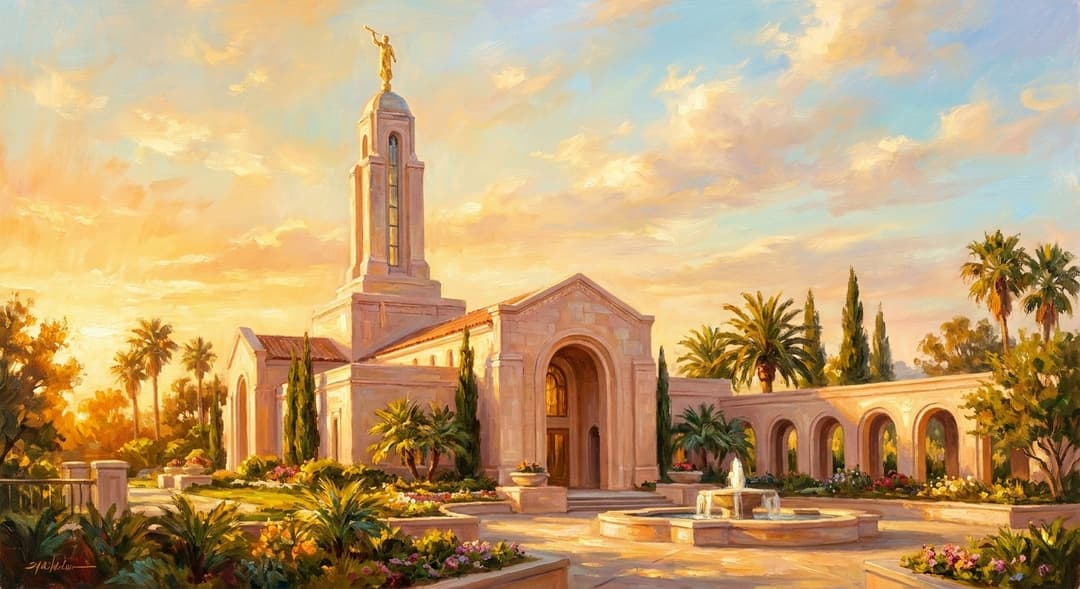
The Newport Beach California Temple grounds are open to the public, offering a peaceful environment for quiet contemplation amidst beautiful landscaping. The interior is reserved for members of The Church of Jesus Christ of Latter-day Saints holding a current temple recommend.
Highlights
- Enjoy the serene temple grounds and gardens.
- Photography of the exterior is permitted.
- Experience a sense of peace and spiritual reflection.
Things to Know
- The interior is not open for public tours after dedication.
- No public visitors' center or distribution center on site.
- Appointments are encouraged for members participating in ordinances.
Location
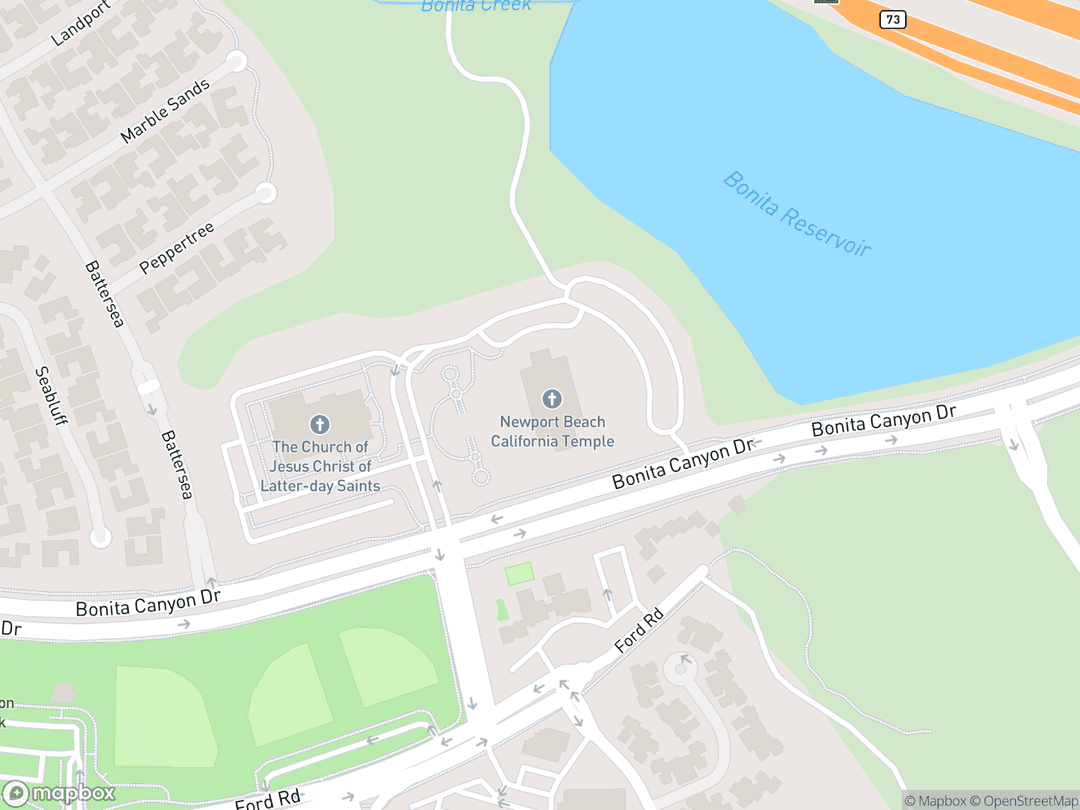
2300 Bonita Canyon Dr, Newport Beach, CA 92660-9118, United States
Hours: Grounds open daily from dawn to dusk.
Getting There: Located off Bonita Canyon Drive, with ample parking available on site.
Get DirectionsTips for Your Visit
Explore the Gardens
Take time to walk through the meticulously landscaped grounds, featuring water features and a variety of trees.
Respect Sacred Space
While on the grounds, maintain a reverent demeanor, as the temple is a sacred place of worship.
About
The Newport Beach California Temple is a significant edifice for The Church of Jesus Christ of Latter-day Saints, standing as a sacred space for its members within the broader Christian tradition. As part of the Abrahamic faiths, Latter-day Saints share a belief in God, the divinity of Jesus Christ, and the importance of sacred covenants. This temple is distinct from regular Sunday meetinghouses, considered a "House of the Lord" where members participate in ordinances and make sacred promises to God.
The temple's design draws inspiration from Southern California's traditional mission architecture, harmonizing with the local landscape. Its construction and dedication were a testament to community engagement, with adjustments made to its design to integrate seamlessly into the Orange County aesthetic. The grounds offer a serene environment for public contemplation, while the interior is reserved for sacred worship and ordinances focused on eternal families and the plan of salvation.
Gallery
Symbolic Elements
The temple's exterior features intricate carvings, each rich with spiritual meaning:

Angel Moroni Statue
A gold-leafed statue of the Angel Moroni, a prophet from the Book of Mormon, stands atop the temple's tower, symbolizing the restoration of the gospel.

Arches
Numerous arches in the design are reminiscent of historic Californian structures and carry spiritual meaning, connecting to both regional history and deeper significance.

Salisbury Pink Granite
The exterior is constructed from Salisbury pink granite, chosen to harmonize with the local Orange County landscape and provide a warm, inviting appearance.

Interior Progression
The interior rooms are designed to be progressively brighter and slightly higher in elevation, symbolizing the spiritual ascent and journey toward God.

Baptistry
Located on the lowest level, the baptistry houses a baptismal font resting on the backs of twelve oxen, symbolizing the twelve tribes of Israel.

Celestial Room
This culminating room represents heaven and the highest state of peace and communion with God that faithful individuals can achieve through temple worship.

Gardens and Water Features
The meticulously maintained gardens symbolize the Garden of Eden, while water features evoke Christ as the 'living water' and prophetic imagery.

California Coast Murals
Murals depicting the California coast are featured in instruction rooms, connecting the sacred space to its regional heritage and natural beauty.
Interesting Facts
The Newport Beach California Temple was the 122nd operating temple of The Church of Jesus Christ of Latter-day Saints worldwide (Tier A).
Its announcement on April 21, 2001, was part of a broader plan that included two other California temples: Redlands and Sacramento (Tier A).
Due to community concerns and city height restrictions, the temple's steeple underwent two significant reductions in height, from 124 feet to 90 feet (Tier B).
The exterior color was changed from an initial off-white to Salisbury pink granite to better integrate with the Orange County aesthetic (Tier B).
The architect, Lloyd E. Platt, noted that the temple's design could evoke a sense of the 'Holy Land' with its landscaping (Tier B).
Members in Orange County uniquely requested and were granted the privilege to entirely finance the temple through their donations (Tier B).
During the placement of the Angel Moroni statue, a solar halo was observed around the sun, reportedly dissipating once the statue was in place (Tier B).
A Catholic delegate from the Inter-Religious Council of Los Angeles was deeply moved by a Christus sculpture displayed during the open house (Tier A).
Construction workers and security personnel reportedly experienced a profound sense of peace on the temple grounds (Tier B).
The temple was constructed with solid concrete walls that exceed California's stringent earthquake safety standards (Tier B).
Common Questions
Is the Newport Beach California Temple open to the public?
The temple grounds are open to the public, but the interior is reserved for members of the Church after its dedication.
What is the architectural style of the temple?
The temple is designed in a Southern California traditional architectural style, inspired by early mission architecture.
Are there any visitor facilities on site?
There is no public visitors' center, arrival center, temple housing, or distribution center located on the temple site.
What is the significance of the Angel Moroni statue?
The Angel Moroni statue symbolizes the restoration of the gospel of Jesus Christ to the earth and is a traditional feature on Latter-day Saint temples.
How many people visited during the open house?
Between 175,000 and 190,000 visitors toured the temple during its month-long public open house period.
Featured Stories
A Community's Influence on Design
2002
The Newport Beach California Temple's design underwent significant changes due to extensive discussions with local residents and city officials. Initially planned with a taller steeple, community concerns led to two reductions in height, ultimately settling at 90 feet. This collaborative process ensured the temple's aesthetic harmonized with the Orange County landscape, reflecting a spirit of community engagement.
Source: Los Angeles Times
The Dedication by President Hinckley
August 28, 2005
President Gordon B. Hinckley, then President of The Church of Jesus Christ of Latter-day Saints, dedicated the Newport Beach California Temple in four sessions. This momentous event marked the temple's official opening as the 122nd operating temple worldwide and the sixth in California. His dedication brought a profound spiritual experience to thousands of members and guests.
Source: Church News
A Solar Halo and the Angel Moroni
January 13, 2005
During the placement of the Angel Moroni statue atop the temple's spire, a remarkable solar halo was observed around the sun. Witnesses reported that this celestial phenomenon dissipated once the statue was securely in place. This event was seen by many as a symbolic affirmation of the sacred nature of the temple and its divine purpose.
Source: FHE On The Road
Timeline
Temple Announced
The First Presidency announced plans for the Newport Beach California Temple, along with two other California temples.
component.timeline.announcementPlanning Commission Approval
The Newport Beach Planning Commission granted its approval for the temple project after initial discussions.
EventCity Council Final Approval
The Newport Beach City Council gave final approval, following extensive discussions and a compromise to reduce the steeple height.
EventGroundbreaking Ceremony
Elder Duane B. Gerrard presided over the groundbreaking, officially commencing construction of the temple.
component.timeline.groundbreakingAngel Moroni Placed
The iconic Angel Moroni statue was placed atop the temple's spire, a significant construction milestone.
MilestonePublic Open House Begins
A month-long public open house began, allowing the community to tour the temple interior before its dedication.
EventPublic Open House Concludes
The public open house concluded, having welcomed between 175,000 and 190,000 visitors.
EventTemple Dedicated
President Gordon B. Hinckley dedicated the Newport Beach California Temple in four sessions, making it the 122nd operating temple.
DedicationSixth California Temple
The Newport Beach California Temple became the sixth operating temple of the Church in California.
MilestoneHistory by Decade
2000s — Announcement and Construction
The 2000s marked the genesis and completion of the Newport Beach California Temple. Announced in 2001, the project quickly moved through planning and community discussions, leading to design adjustments to integrate with the local aesthetic. Construction began in 2003, culminating in its dedication in 2005.
2001 — A Vision for Southern California
On April 21, 2001, the First Presidency of The Church of Jesus Christ of Latter-day Saints announced plans for the Newport Beach California Temple. This announcement was part of a broader initiative to bring more temples closer to Church members in California, alongside temples in Redlands and Sacramento. The vision was to provide a sacred space for ordinances and worship in the heart of Orange County.
2002 — Community Engagement and Design Refinement
The year 2002 was crucial for the temple's design approval, involving extensive dialogue with the Newport Beach Planning Commission and City Council. Community feedback led to significant adjustments, including two reductions in the temple's steeple height, from an initial 124 feet to a final 90 feet. This collaborative approach ensured the temple's integration into the local landscape and community preferences.
2003 — Groundbreaking and Commencement of Building
On August 15, 2003, a groundbreaking ceremony was held, presided over by Elder Duane B. Gerrard. This event officially marked the commencement of construction, with the site dedicated for its sacred purpose. The groundbreaking was a joyous occasion for local members, signifying the beginning of their long-awaited temple.
2005 — Dedication and Opening
The year 2005 culminated in the temple's dedication by President Gordon B. Hinckley on August 28. Preceding the dedication, a month-long public open house welcomed nearly 190,000 visitors, allowing the community to experience the temple's interior. The dedication marked the temple's official opening as a sacred house of the Lord, serving members across Southern California.
Architecture & Facilities
The Newport Beach California Temple is designed in a Southern California traditional architectural style, drawing inspiration from the region's early mission architecture. This style is characterized by its use of arches, a harmonious blend with the local landscape, and a serene, inviting aesthetic that reflects the spiritual purpose of the edifice. The design successfully integrates traditional elements with modern construction techniques, creating a timeless and elegant structure.
Building Materials
Exterior
The temple's exterior is constructed from Salisbury pink granite, quarried in North Carolina, chosen to harmonize with the local Orange County landscape.
Interior Finishes
Inside, the temple features high-quality finishes, including various types of stone, wood, and intricate detailing to create a reverent atmosphere.
Stained Glass
Custom stained-glass windows adorn the temple, depicting symbolic imagery and allowing natural light to filter into the sacred spaces.
Structural Concrete
The temple was constructed with solid concrete walls, exceeding California's stringent earthquake safety standards for durability and longevity.
Interior Features
Instruction Rooms
These rooms feature murals depicting the California coast, connecting the sacred space to its regional heritage and natural beauty.
Celestial Room
This room is designed to represent heaven, offering a space of profound peace and communion with God, culminating the temple experience.
Baptistry
Located on the lowest level, the baptistry houses a baptismal font resting on the backs of twelve oxen, a design reminiscent of Solomon's Temple.
Sealing Rooms
These rooms are where eternal marriages and family sealings are performed, emphasizing the everlasting nature of family relationships.
Temple Grounds
The temple grounds are meticulously landscaped with water features, walkways, and a variety of columnar, palm, and native trees, enhancing its serene ambiance and providing a peaceful environment for visitors.
Additional Facilities
While there is no public visitors' center or distribution center on site, the temple grounds provide ample parking and well-maintained pathways for public access and enjoyment.
Religious Significance
As a temple of The Church of Jesus Christ of Latter-day Saints, this sacred edifice is considered a 'House of the Lord,' distinct from regular Sunday meetinghouses. It serves as a place where members, as part of the broader Christian tradition, participate in sacred ordinances and make covenants with God, focusing on eternal families and the plan of salvation.
The core spiritual purpose of the temple is to provide a place for members to draw closer to God, receive divine instruction, and participate in saving ordinances that bind families together for eternity.
Sacred Ordinances
Baptism for the Dead
Members perform baptisms by proxy for their deceased ancestors, offering them the opportunity to accept the gospel in the spirit world.
Endowment
The endowment is a series of covenants and instructions that provide spiritual power, knowledge, and blessings to help individuals return to God's presence.
Sealing
Eternal marriages and family sealings are performed, uniting families for time and all eternity, a central doctrine of Latter-day Saint belief.
The Plan of Salvation
Temple ordinances teach and reinforce the Latter-day Saint understanding of God's plan of salvation, which includes premortal life, mortal probation, and eternal progression.
Eternal Families
A primary focus of temple worship is the doctrine of eternal families, emphasizing that family relationships can continue beyond mortal life through sacred covenants.
Covenants with God
Members make sacred promises and commitments to God in the temple, receiving blessings and guidance as they strive to live a Christ-centered life.
Similar Temples
Sources & Research
Every fact on Temples.org is backed by verified Sources & Research. Each piece of information is rated by source tier and confidence level.
View All Sources (9)
| Field | Source | Tier | Retrieved |
|---|---|---|---|
| About & Historical Background | The Church of Jesus Christ of Latter-day Saints (opens in a new tab) | A | 2024-07-30 |
| Dedication & Historical Context | Church News (opens in a new tab) | B | 2024-07-30 |
| Architectural Description & Materials | Los Angeles Times (opens in a new tab) | B | 2024-07-30 |
| Symbolic Elements & Interior Progression | Latter-day Saint Magazine (opens in a new tab) | C | 2024-07-30 |
| Construction & Community Engagement | ChurchofJesusChristTemples.org (opens in a new tab) | C | 2024-07-30 |
| Interesting Facts & Design Changes | FHE On The Road (opens in a new tab) | B | 2024-07-30 |
| Groundbreaking & Dedication Details | The Church of Jesus Christ of Latter-day Saints (opens in a new tab) | A | 2024-07-30 |
| Architectural Style & Materials | Best View Stone (opens in a new tab) | D | 2024-07-30 |
| Temple Operations & Accessibility | Laguna Niguel Stake (opens in a new tab) | A | 2024-07-30 |