Visitor Insights
Visiting Shiva-Vishnu Temple of the Bay Area
The temple offers an authentic spiritual haven defined by traditional South Indian architecture and sacred Agamic rituals. Visitors experience peaceful morning aartis, ornate hand-carved stone shrines, and warm hospitality through weekend communal meals.
Highlights
- Dravidian Rajagopuram entrance gate adorned with hundreds of mythological reliefs
- Dual principal inner sanctums housing consecrated granite murtis of Shiva and Vishnu
- Traditional weekly free sanctified vegetarian feast (Annadaanam) served to all visitors
- Extensive 12-acre campus featuring quiet reflection zones and cultural halls
Things to Know
- Footwear must be removed and placed in marked storage racks prior to entry
- Modest attire covering shoulders and knees is strictly requested for all guests
- Photography and videography inside the inner sanctums are strictly prohibited
- Circumambulation around all consecrated shrines is traditionally performed clockwise
Location
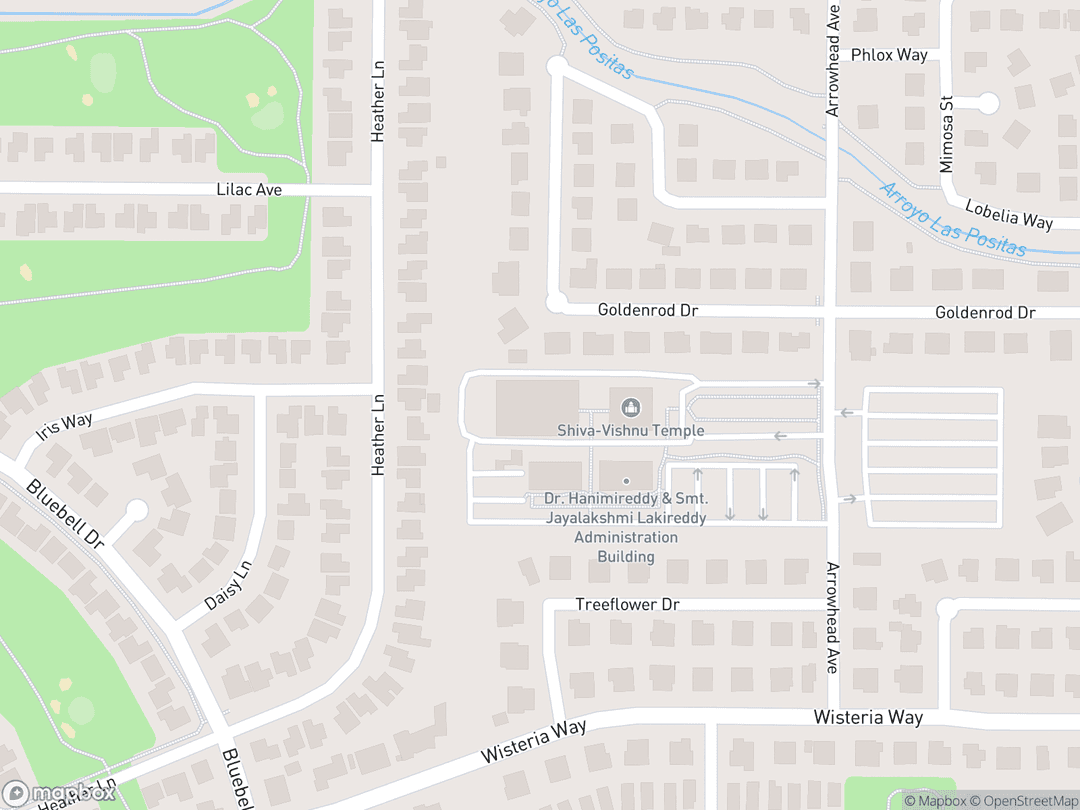
1232 Arrowhead Avenue, Livermore, CA 94551, USA
Hours: Weekdays 9:00 AM - 12:00 PM & 6:00 PM - 8:00 PM; Weekends 9:00 AM - 8:00 PM
Getting There: Located off Interstate 580 via North Vasco Road and Arrowhead Avenue in Livermore, with Wheels bus connections from Dublin/Pleasanton BART.
Get DirectionsTips for Your Visit
Morning Darshan
Visit before 10:30 AM on weekdays to observe Suprabhatam chanting in a quiet, contemplative atmosphere.
Receiving Prasadam
Always extend your right hand when accepting sanctified water, flowers, or sacred ash from resident priests.
Festival Crowds
Arrive early and expect shuttle parking during major observances like Maha Shivaratri and Diwali.
About
The Shiva-Vishnu Temple of the Bay Area, administered by the Hindu Community and Cultural Center (HCCC), is a premier Hindu sanctuary situated on a 12-acre campus in Livermore, California. Dedicated to both Lord Shiva as Kashi Vishwanatha and Lord Vishnu as Sri Venkateswara, the temple exemplifies the ancient synthesis of Harihara within classical Dharmic tradition.
Founded by Indian-American immigrant families in 1977, the sacred complex incorporates traditional Dravidian stone architecture designed by renowned Sthapatis from Tamil Nadu. By honoring distinct Shaiva and Vaishnava liturgical systems side by side, it fosters communal harmony across diverse regional backgrounds.
Beyond its ritual role as a tirtha for daily darshan, the center serves as a vibrant cultural beacon hosting Carnatic and Hindustani classical concerts, educational classes, community wellness clinics, and weekly free sanctified meals.
Interesting Facts
Livermore was among the first major temples in North America built with equal liturgical stature for Shiva and Vishnu (Tier A).
The foundation ceremonies in 1985 were spiritually consecrated by legendary classical musicians Pandit Ravi Shankar and Ustad Ali Akbar Khan (Tier A).
The inaugural consecration in 1986 featured 32 priests, including Tirumala Tirupati scholars representing all four Vedas (Tier A).
Over 20 generational shilpis lived on campus in the 1980s to sculpt intricate stucco and granite iconography by hand (Tier B).
Unlike most major diaspora temples with commercial canteens, the temple serves universal free vegetarian meals every weekend (Tier B).
The complex features an extensive rooftop solar array installed in 2016 to blend ancient environmental reverence with green energy (Tier B).
The 2022 reconsecration was directed by Sthapati Dr. S. Selvanathan, representing the 38th generation of temple architects (Tier A).
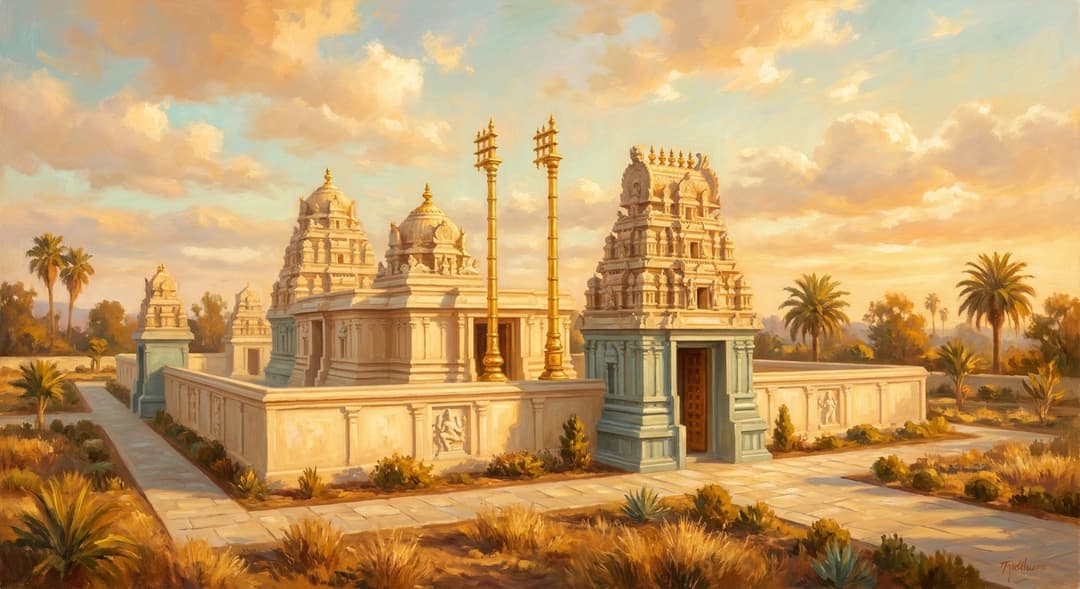
The sanctuary includes two distinct gold-plated flagstaffs side-by-side to honor Shaiva and Vaishnava liturgies independently (Tier A).
Common Questions
Are non-Hindus allowed to visit the temple?
Yes, visitors of all cultural and religious backgrounds are warmly welcomed to tour the grounds and attend public services.
Is there an admission fee or charge for meals?
Admission is entirely free, and the weekend vegetarian meal (Annadaanam) is provided without charge to all visitors.
What is the proper etiquette regarding footwear?
All shoes, sandals, and boots must be removed at the designated foyer racks before stepping onto the temple floor.
Why are Lord Shiva and Lord Vishnu enshrined together here?
The dual sanctums reflect the synthesis of Harihara, uniting Shaiva and Vaishnava traditions under one roof for the diaspora community.
Featured Stories
The Consecration of 1986
July 13, 1986
In July 1986, 32 Vedic priests from across India gathered in Livermore to conduct the temple's inaugural Maha Kumbhabhishekam. Tirumala Tirupati scholars chanted all four Vedas as sacred waters were poured over the newly sculpted spires. The event marked a landmark moment of spiritual anchoring for immigrant Hindu families in Northern California.
Source: HCCC Consecration Archives
A Sacred Musical Foundation
1985
Before construction of the cultural complex began in 1985, sitar maestro Pandit Ravi Shankar and sarod virtuoso Ustad Ali Akbar Khan blessed the grounds with foundational melodies. Their blessing established the center's enduring identity as both a temple of worship and a premier institution for Indian classical arts. Generations of musicians have since performed in the consecrated auditorium.
Source: India Currents Archives
The Tradition of Free Annadaanam
1997
Following the opening of the community kitchen in 1997, temple founders established a strict policy of universal, free food distribution. Rather than charging visitors for sanctified meals, volunteers prepare hot vegetarian feasts for thousands of guests every weekend. The practice reflects the ancient Dharmic injunction that feeding guests is the highest form of worship.
Source: HCCC Community History
Timeline
Organization Incorporation
Pioneering Indian-American families officially establish the Hindu Community and Cultural Center.
MilestoneCampus Land Acquisition
The organization secures 12 acres on Arrowhead Avenue to construct a permanent temple.
MilestoneFoundation Stone Ceremony
Chief Minister N. T. Rama Rao lays the sacred foundational stone for the sanctuary.
MilestoneCultural Arts Consecration
Pandit Ravi Shankar and Ustad Ali Akbar Khan spiritually consecrate the cultural hall site.
MilestoneInaugural Maha Kumbhabhishekam
Thirty-two Vedic priests formally consecrate the sanctums of Lord Shiva and Lord Venkateswara.
DedicationRajagopuram Completion
Artisans complete the multi-tiered ornamental Dravidian entrance tower and gopurams.
MilestoneAssembly Hall Inauguration
The community completes the Kalyana Mantapam and community kitchen for cultural events.
MilestoneSecond Cyclic Kumbhabhishekam
Priests conduct the mandatory twelve-year cyclic reconsecration after campus expansions.
RenovationThird Cyclic Kumbhabhishekam
The temple reconsecrates its expanded prayer halls and newly installed auxiliary shrines.
RenovationSolar Modernization
HCCC installs a comprehensive rooftop solar array to offset the sanctuary's energy footprint.
MilestoneFourth Cyclic Kumbhabhishekam
Artisans complete gold-leaf regilding of all kalashams and reconsecrate the main spires.
RenovationHistory by Decade
1970s — Foundational Vision
In 1977, Indian immigrant families living throughout the Bay Area incorporated the Hindu Community and Cultural Center. The founders envisioned an inclusive spiritual sanctuary uniting varied regional traditions under a shared Vedic heritage.
1980s — Sthapatis and Consecration
HCCC acquired the 12-acre Livermore property in 1981 and engaged master architect Muthiah Sthapati alongside generational stonemasons from Tamil Nadu. On July 13, 1986, the community solemnized the inaugural Maha Kumbhabhishekam with 32 priests.
1990s — Gopurams and Expansion
During the 1990s, artisans completed the soaring ornamental Rajagopuram gateway and adjoining assembly halls. The temple celebrated its mandatory twelve-year cyclic reconsecration on July 5, 1998, with the acquisition of surrounding protective acreage.
2000s — Infrastructure and Endowments
The turn of the century brought polished granite flooring throughout the inner mandapa and the establishment of permanent community healthcare clinics. HCCC established an institutional endowment to ensure sustainable operations and ritual continuity.
2010s — Green Energy and Second Renewal
In 2010, the temple solemnized its second major cyclic Maha Kumbhabhishekam with newly added prayer halls. Embracing environmental stewardship, the institution installed an extensive rooftop solar array in 2016 to offset campus electrical needs.
2020s — Golden Spire Reconsecration
Under the direction of Dr. S. Selvanathan Sthapati, the complex completed broad renovations and regilded its spires with gold leaf. Priests conducted the fourth Maha Kumbhabhishekam on July 10, 2022, ensuring architectural and ritual vitality.
Architecture & Facilities
The temple complex represents classical Dravidian temple architecture executed in strict accordance with the Vastu Shastra and Agamic canons. Its floor plan follows the metaphysical grid of the Vastu Purusha Mandala, featuring parallel axial alignments that accommodate distinctive vimana superstructures for both Shaiva and Vaishnava traditions under an engineered weather enclosure.
Building Materials
Black Granite (Krishna Shila)
Hand-carved in Kanchipuram and Mahabalipuram for all primary deities.
Stucco Mortar (Sudha)
Mineral-rich traditional plaster hand-modeled for all exterior relief statues.
Gold-Plated Metalwork
Beaten brass and copper electroplated in high-karat gold leaf for all spires.
Polished Granite Flooring
Smooth stone flags installed throughout the spacious enclosed circumambulation halls.
Interior Features
Kashi Vishwanatha Garbhagriha
Granite inner sanctum housing the consecrated Shiva Lingam with brass lamps.
Sri Venkateswara Garbhagriha
Sacred windowless chamber enshrining the standing granite icon of Vishnu.
Mahamandapa
Spacious central assembly hall where congregants gather for aartis and chants.
Navagraha Shrine
Elevated stone platform displaying the nine astrological deities in square formation.
Temple Grounds
The 12-acre campus features landscaped walkways, parking facilities, decorative stone plinths, and solar-equipped service structures.
Additional Facilities
Includes the 4,200-square-foot Lakkireddy Auditorium, the Akella Assembly Hall, community dining facilities, and a dedicated kitchen.
Religious Significance
Within Dharmic traditions, the temple functions as a consecrated tirtha—a metaphysical crossing place bridging mundane existence and the ultimate divine reality known as Brahman.
To provide a consecrated sanctuary where devotees attain darshan, perform Agamic rituals, and cultivate inner liberation through dual Shaiva and Vaishnava liturgies.
Sacred Ordinances
Abhishekam
Sacred ritual bathing of the consecrated murtis using milk, honey, yogurt, and sanctified waters.
Archana & Aarti
Personalized name-chanting invocations accompanied by the waving of sacred camphor flames.
Pradakshina
Meditative clockwise circumambulation of the inner sanctums to align mind and spirit with the center.
Annadaanam
The devotional offering and free communal distribution of sanctified vegetarian food to all guests.
The Harihara Synthesis
By enshrining Shiva and Vishnu with equal prominence, the temple embodies the philosophical principle of Harihara. While Vaishnavism emphasizes cosmic preservation and grace, Shaivism centers on inner transformation and spiritual dissolution. Their unified worship underscores the Rigvedic teaching that ultimate truth is singular though expressed through diverse divine forms.
Agamic Ritual Purity
The temple maintains independent, traditional priestly lineages to conduct rituals according to proper scriptures. Vaishnava rites follow the Pancharatra and Vaikhanasa Agamas under trained Bhattacharyas, while Shaiva ceremonies follow the Shaiva Agamas under resident Gurukkals, preserving liturgical integrity within a shared communal home.
Major Festivals
Maha Shivaratri
February or March
An all-night vigil celebrating Lord Shiva with continuous four-stage abhishekam, Vedic chanting, and meditation.
Vaikuntha Ekadashi
December or January
Vaishnava celebration marking the opening of the celestial gateway, featuring special darshan of Sri Venkateswara.
Diwali & Annakut
October or November
Festival of lights observed with grand evening illuminations, fireworks, and extensive food offerings to the deities.
Navaratri & Dussehra
September or October
Nine nights of devotional worship dedicated to the Divine Mother, culminating in classical arts recitals.
Sources & Research
Every fact on Temples.org is backed by verified Sources & Research. Each piece of information is rated by source tier and confidence level.
View All Sources (8)
| Field | Source | Tier | Retrieved |
|---|---|---|---|
| Core Identity & Consecration | Hindu Community and Cultural Center (opens in a new tab) | A | 2026-03-30 |
| Historical Timeline & Renovation | HCCC Livermore (opens in a new tab) | A | 2026-03-30 |
| Architectural Tradition & Sthapati Lineage | Hinduism Today (opens in a new tab) | B | 2026-03-30 |
| Cultural Center & Community History | India Currents (opens in a new tab) | C | 2026-03-30 |
| Consecration Rituals & Artisanship | Hinduism Today (opens in a new tab) | B | 2026-03-30 |
| Assembly Hall & Classical Arts | Marvel Murugan (opens in a new tab) | C | 2026-03-30 |
| Pilgrimage Practices & Tirupati Endowment | Go Tirupati (opens in a new tab) | C | 2026-03-30 |
| Community Service & Free Annadaanam | India West (opens in a new tab) | C | 2026-03-30 |