Visitor Insights
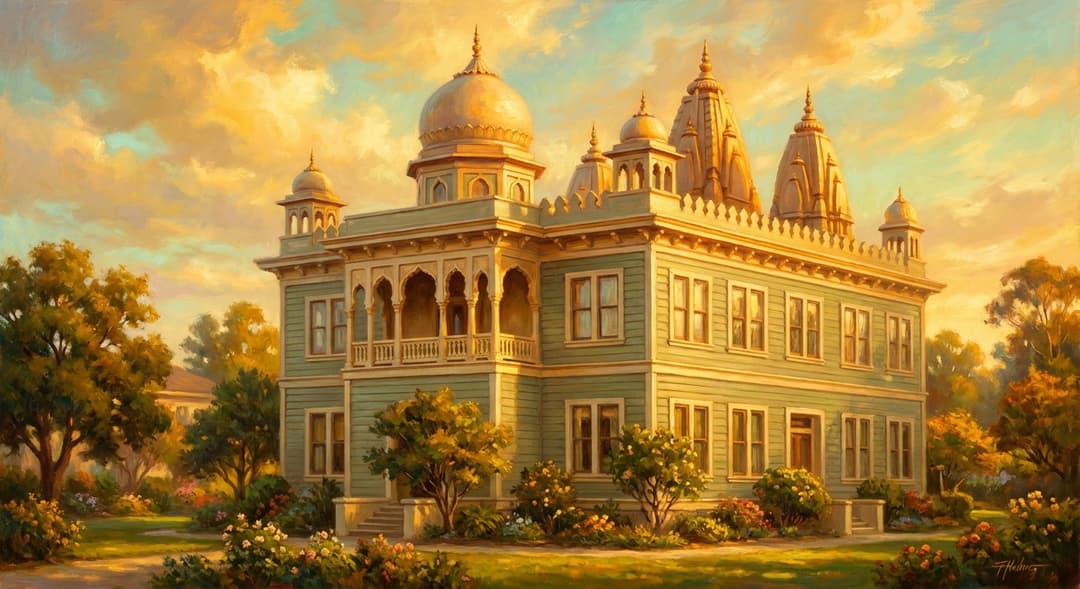
Visiting Old Temple, Vedanta Society of Northern California
The Old Temple offers a serene, contemplative environment within San Francisco's lively Cow Hollow neighborhood. Visitors experience an unbroken lineage of monastic practice through Friday evening scriptural lectures and scheduled architectural tours.
Highlights
- Five distinct architectural roof towers honoring world spiritual paths
- Historic 1906 ground-floor sanctuary and lecture auditorium
- Intricate Moorish third-floor arcaded veranda with cusped arches
- Intimate meditation atmosphere preserved by the Ramakrishna Order
Things to Know
- Footwear must be removed before entering the sanctuary and prayer hall
- Photography is strictly prohibited during classes, lectures, and meditation sessions
- The upper monastic quarters are private and accessible only during official guided events
- Primary Sunday morning congregational lectures take place at the New Temple on Vallejo Street
Location
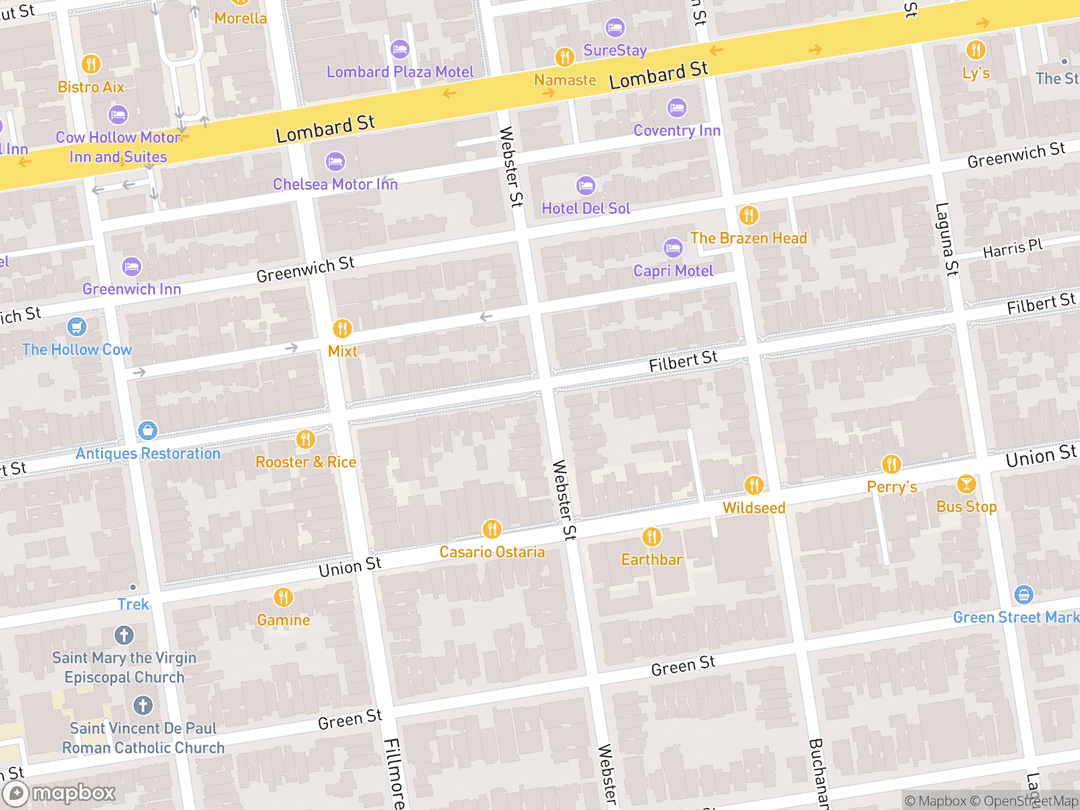
2963 Webster Street, San Francisco, California 94123
Hours: Open Friday evenings from 7:00 PM to 9:00 PM for public classes, and during scheduled historical tours.
Getting There: Located at Webster and Filbert Streets, reachable via Muni bus lines 22, 41, and 45. Metered street parking is available throughout Cow Hollow.
Get DirectionsTips for Your Visit
Attend Friday Discourses
Friday evening classes provide public access to the historic sanctuary alongside in-depth studies of the Upanishads and Bhagavad Gita.
Observe Monastic Protocol
Maintain silence upon entering the building to respect resident monks who maintain an active monastic schedule on the upper floors.
About
Founded under the spiritual inspiration of Swami Vivekananda following his historic address at the 1893 Parliament of Religions, the Old Temple was dedicated in 1906 as the first permanent Hindu house of worship in the Western hemisphere. Conceived by his direct brother-disciple Swami Trigunatitananda, the structure represents the universal pluralism of classical Advaita Vedanta, demonstrating that spiritual paths converge on a single divine reality.
Architecturally singular, the temple combines Victorian domestic motifs, Moorish arcades, medieval European towers, and classical Indian shikhara spires. The building weathered both the catastrophic 1906 earthquake and the 1989 Loma Prieta tremor, serving as a resilient testament to sacred sanctuary in the urban landscape of San Francisco.
Today, the sanctuary remains an active monastic residence within the Ramakrishna Order, hosting scriptural discourses, youth education, and public tours. While primary Sunday congregational services shifted to the nearby New Temple in 1959, the Old Temple preserves its consecrated atmosphere as a living monument of interfaith harmony and Dharmic scholarship.
Interesting Facts
It is officially documented as the first dedicated Hindu temple built in the Western hemisphere. (Tier A)
The temple withstood the catastrophic 1906 San Francisco earthquake and fires just three months after dedication. (Tier A)
Its five rooftop towers each represent a different major world religious and architectural heritage. (Tier A)
Architect Joseph A. Leonard admitted he learned more about sacred proportions from Swami Trigunatitananda than he imparted. (Tier B)
The initial two-story timber sanctuary was erected in under 140 days during late 1905. (Tier A)
Swami Trigunatitananda heroically shielded his congregation when a pipe bomb exploded at the pulpit in 1914. (Tier A)
The gilded American eagle on the spire dual-symbolizes national religious liberty and the Vedic solar vehicle Garuda. (Tier B)
During the 2016 retrofit, hydraulic jacks suspended the entire wooden structure while a seismic concrete base was poured. (Tier A)
Common Questions
Is the Old Temple open for public worship every Sunday?
Regular Sunday morning lectures are held at the New Temple on Vallejo Street, while the Old Temple hosts Friday evening classes and tours.
Why does a Hindu temple have Christian towers and Islamic domes?
Founder Swami Trigunatitananda designed the exterior to reflect the Vedantic truth that all world religions lead to God.
How did the building survive the 1906 San Francisco earthquake?
The resilient redwood framing and favorable ground stability in Cow Hollow kept the building intact outside the primary fire zone.
Can visitors tour the interior of the Old Temple?
Visitors may attend public Friday evening scripture lectures or join periodic architectural walking tours organized by the society.
Featured Stories
Miracle of the Great Earthquake
April 18, 1906
Only three months after the temple was consecrated, the devastating 1906 San Francisco earthquake and subsequent fires reduced much of the city to ashes. Constructed of resilient redwood framing on stable Cow Hollow soils, the sanctuary escaped fire boundaries and structural cracking entirely. Swami Trigunatitananda immediately threw open the doors to provide shelter, food, and medical assistance to displaced neighborhood residents.
Source: Vedanta Society of Northern California Archives
The Monk and the Master Builder
August 21, 1905
When builder Joseph A. Leonard was hired to execute the plans, he expected to oversee standard residential construction for an immigrant religious society. Instead, Swami Trigunatitananda presented complex proportional geometries harmonizing Mughal curves, Bengali arches, and American porches into a unified structure. Leonard later remarked that working with the swami transformed his perspective on sacred architecture and cosmic structural balance.
Source: Historic American Buildings Survey Documentation
Shielding the Altar
December 28, 1914
During a quiet Sunday afternoon service, an unstable former student stepped to the platform and detonated a concealed pipe bomb. Swami Trigunatitananda instinctively stepped between the blast and his congregation, absorbing the primary impact and preventing wider loss of life among attendees. In the hospital following the tragedy, the swami expressed forgiveness for his assailant before passing away from complication of his wounds.
Source: Ramakrishna Math and Ramakrishna Mission Memorial Ledger
Timeline
Vedanta Society Founded
Swami Vivekananda establishes the Vedanta Society of Northern California following lectures in San Francisco and Oakland.
MilestoneSwami Trigunatitananda Arrives
A direct monastic disciple of Sri Ramakrishna arrives in California to assume spiritual leadership of the society.
MilestoneCornerstone Laid
Construction begins at Webster and Filbert Streets on the society's first permanent headquarters.
component.timeline.groundbreakingTemple Dedication
The initial two-story timber structure is consecrated as the first Hindu temple in the Western hemisphere.
DedicationGreat San Francisco Earthquake
The newly built sanctuary survives the catastrophic temblor and subsequent firestorms without structural damage.
EventRoof Towers and Veranda Added
Workers complete the third-story Moorish balcony and erect five eclectic towers representing world faiths.
RenovationPulpit Explosion
A tragic bomb detonation at the altar mortally injures Swami Trigunatitananda as he protects congregants.
EventPassing of the Founder
Swami Trigunatitananda passes away, leaving a legacy of interfaith architecture and dedicated monasticism.
MilestoneNew Temple Dedication
The society inaugurates a larger sanctuary on Vallejo Street, establishing the Webster building as the Old Temple.
MilestoneLoma Prieta Earthquake
The resilient wood-frame building absorbs the regional earthquake without sustaining structural failure.
EventCentennial Rededication
Monastics and civic leaders gather for rededication rites following extensive structural foundation work.
DedicationSeismic Retrofit Concluded
Contractors finish a multi-million-dollar seismic upgrade that integrates an engineered concrete base.
RenovationHistory by Decade
1900s — Foundation and Architectural Synthesis
Architecturally, this temple may be considered as a combination of a Hindu temple, a Christian church, a Mohammedan mosque, a Hindu math, and an American residence.
Following Swami Vivekananda's historic Bay Area lectures in 1900, the society sought a permanent sanctuary under Swami Trigunatitananda's leadership. The cornerstone was set in August 1905, and the initial building opened in January 1906. Remarkably unharmed by the catastrophic earthquake that spring, the building was expanded in 1908 with a third story and five eclectic towers.
1910s — Tragedy and Monastic Steadfastness
The temple became a hub for spiritual seekers and visiting international scholars who marveled at its unusual skyline. In December 1914, a tragic explosion at the altar took the life of Swami Trigunatitananda, who died shielding his students. Leadership passed to Swami Prakashananda, ensuring the continuous spiritual practice of the monastic community.
1920s–1940s — Deepening the American Vedanta Tradition
Under the stewardship of Swami Ashokananda beginning in 1932, the temple flourished as a vibrant spiritual academy and publishing center. Monks maintained rigorous disciplines of meditation and Sanskrit translation within the upper-floor cells. The expanding congregation regularly filled the 112-seat ground-floor hall, prompting plans for eventual expansion.
1950s–1980s — Transition to the Old Temple
In 1959, the society inaugurated its expansive New Temple on Vallejo Street, redesignating the Webster Street site as the Old Temple. The building continued as a quiet monastery, archive, and center for scriptural study. The sturdy redwood structure again demonstrated remarkable structural resilience during the 1989 Loma Prieta earthquake.
1990s–2020s — Engineering Preservation and Centennial
Severe foundation settlement and weathering prompted a multi-million-dollar seismic overhaul between 2014 and 2018. Engineers excavated beneath the suspended timber structure to pour a seismic concrete mat foundation. In October 2016, monastics celebrated a historic centennial rededication, renewing the temple for another century of service.
Architecture & Facilities
Composite Eclectic Revival fusing Edwardian Queen Anne wood frame residential architecture, Moorish horseshoe colonnades, Bengal shikhara temple towers, and European Gothic crenellations.
Building Materials
Douglas Fir and Redwood Framing
Old-growth Pacific timber provided the flexible structural frame that weathered multiple major earthquakes.
Redwood Lap Siding
Horizontal exterior timber siding painted in soft seafoam sage green with cream decorative moldings.
Engineered Concrete Foundation
Modern seismically isolated reinforced concrete foundation installed during the structural renovation.
Tin and Plaster Ornamentation
Sheet metal domes and molded plaster cornices form the eclectic rooftop silhouettes and decorative flourishes.
Interior Features
Ground Floor Auditorium
A 112-seat lecture hall and consecrated sanctuary lined with historic timber paneling and floral moldings.
Inner Shrine
An intimate altar space honoring Sri Ramakrishna, Sri Sarada Devi, and Swami Vivekananda.
Third-Floor Monastic Quarters
Ascetic residential rooms designed for ordained sannyasins and novices of the Ramakrishna Order.
Arcaded Moorish Balcony
A covered viewing veranda bordered by slender colonnettes and lobed arches overlooking Cow Hollow.
Temple Grounds
Situated directly on the urban corner of Webster and Filbert Streets with paved perimeter sidewalks, classical entryway steps, and perimeter foundation landscaping.
Additional Facilities
Features a scriptural library, archival publishing repository, and private monastic common spaces serving resident monks.
Religious Significance
As part of the Hindu Dharmic tradition rooted in classical Advaita Vedanta, the Old Temple embodies the Vedic truth that all sincere spiritual disciplines lead to the realization of the one supreme reality, Brahman.
To serve as a consecrated monastery, sanctuary of meditation, and center for expounding the non-dual philosophy of Vedanta to seekers of all backgrounds.
Sacred Ordinances
Vedanta Scriptural Classes
Weekly systematic expositions of foundational texts including the Upanishads, Bhagavad Gita, and Brahma Sutras.
Dhyana (Meditation)
Daily periods of silent inward concentration and japa practice observed by resident monastics and householder devotees.
Puja and Arati
Sacred devotional worship and evening light offerings dedicated to Sri Ramakrishna and the divine lineage.
Kali Puja Observance
Annual all-night worship honoring the Divine Mother, during which the centennial rededication was commemorated.
The Advaita Synthesis
Advaita Vedanta teaches that the ultimate reality (Brahman) is non-dual, infinite, and conscious. The Old Temple materially expresses this philosophy by integrating architectural symbols from Hinduism, Buddhism, Christianity, and Islam under one roof, asserting that diverse traditions are complementary approaches to the same divine mystery.
The Ramakrishna Monastic Tradition
Operating under the authority of Belur Math in India, the temple maintains an unbroken monastic lifestyle. Monks take vows of renunciation and service, dedicating their lives to spiritual realization and the dissemination of spiritual wisdom without proselytization.
Similar Temples
Sources & Research
Every fact on Temples.org is backed by verified Sources & Research. Each piece of information is rated by source tier and confidence level.
View All Sources (8)
| Field | Source | Tier | Retrieved |
|---|---|---|---|
| About & Historical Background | Vedanta Society of Northern California (opens in a new tab) | A | 2026-03-31 |
| Religious Significance & Monastic Order | Ramakrishna Math and Ramakrishna Mission (opens in a new tab) | A | 2026-03-31 |
| Lineage & Administrative Affiliation | Ramakrishna Math and Ramakrishna Mission Headquarters (opens in a new tab) | A | 2026-03-31 |
| Timeline & Historical Overview | India Currents (opens in a new tab) | C | 2026-03-31 |
| Seismic Engineering & Preservation | The Marina Times (opens in a new tab) | C | 2026-03-31 |
| San Francisco Civic Heritage | FoundSF Historical Archive (opens in a new tab) | B | 2026-03-31 |
| Neighborhood History & Architecture | The New Fillmore (opens in a new tab) | C | 2026-03-31 |
| Architectural & Landmark Profile | Atlas Obscura (opens in a new tab) | C | 2026-03-31 |