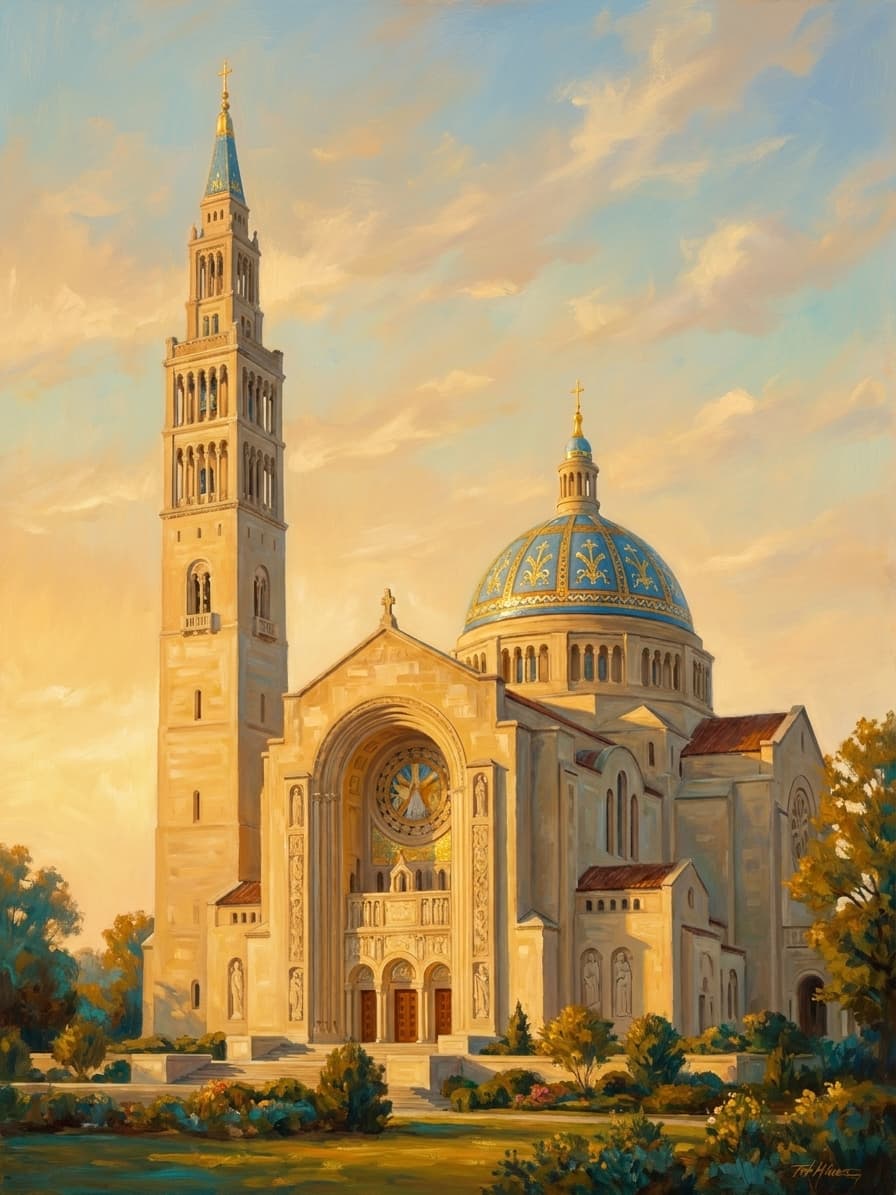
Visitor Insights
Visiting Basilica of the National Shrine of the Immaculate Conception
The Basilica welcomes visitors and pilgrims 365 days a year with free admission, offering guided tours, daily Mass in Latin and Eastern Catholic rites, and daily confessions. The sanctuary features world-class mosaic art, magnificent pipe organs, and quiet spaces for reflection across two distinct floor levels.
Highlights
- Marvel at the monumental 3,600-square-foot Christ in Majesty apse mosaic
- Explore over 80 multicultural Marian chapels and oratories representing global Catholic heritage
- View the 18,300-square-foot Trinity Dome mosaic composed of 14 million Venetian glass tiles
- Ascend near the 329-foot Knights' Tower campanile housing a 56-bell cast-bronze carillon
Things to Know
- Free guided tours run daily, but quietest reflection hours are weekday mornings from 8:00 AM to 11:00 AM
- Located 4 blocks west of Brookland-CUA Metro Station (Red Line) with free on-site visitor parking
- Fully accessible with elevators and ramps connecting Crypt and Upper levels
Location
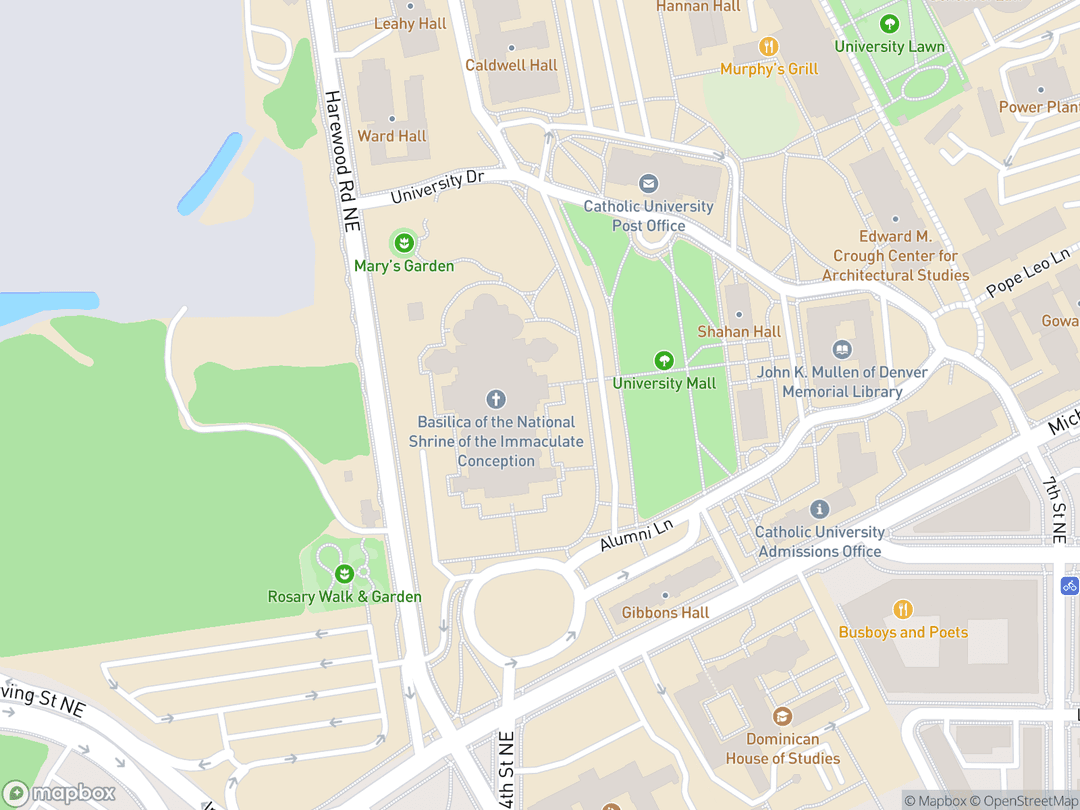
400 Michigan Avenue NE, Washington, D.C. 20017, United States
Hours: Open 365 days a year; April-October: 7:00 AM - 7:00 PM; November-March: 7:00 AM - 6:00 PM
Getting There: Located at 400 Michigan Ave NE, near Brookland-CUA Metro Station on the Red Line, with free parking on site.
Get DirectionsTips for Your Visit
Plan for Both Levels
Allow time to explore the intimate Guastavino-vaulted Crypt Church below as well as the soaring Great Upper Church above.
Audio & Guided Tours
Inquire at the Visitor Information Desk for free guided tours or self-guided digital audio guides.
About
The Basilica of the National Shrine of the Immaculate Conception stands as America's Catholic Church and the largest Roman Catholic church in North America. Located in Washington, D.C., this landmark minor basilica is dedicated to the Blessed Virgin Mary under her title of the Immaculate Conception, principal patroness of the United States. Within the Christian theological tradition and Abrahamic heritage, the shrine celebrates the mystery of the Incarnation and Mary's role in salvation history.
Conceived in 1913 by Monsignor Thomas J. Shahan and approved by Pope Pius X, construction began in 1920 using load-bearing masonry without structural steel framework. The Crypt Church opened in 1926, while the soaring Great Upper Church was dedicated in 1959. Physical completion was achieved on December 8, 2017, with the dedication of the monumental Trinity Dome mosaic.
As a sanctuary of global Catholic pilgrimage, the Basilica features over 80 side chapels and oratories representing diverse multicultural Marian devotions from around the world. Designed in a hybrid Neo-Byzantine and Romanesque Revival style, it embodies both ancient Mediterranean Christian roots and the vibrant faith of the American Catholic populace.
Gallery
Symbolic Elements
The temple's exterior features intricate carvings, each rich with spiritual meaning:

Christ in Majesty Mosaic
A monumental 3,600-square-foot apse mosaic portraying Jesus Christ as Triumphant Ruler and Eschatological Judge.

Trinity Dome Ceiling Mosaic
An 18,300-square-foot mosaic featuring the Holy Trinity, Mary, and American saints composed of 14 million glass tiles.

Guastavino Crypt Tile Vaults
Low Romanesque tile arches engineered by Rafael Guastavino creating an ancient subterranean catacomb atmosphere.

Knights' Tower Campanile
A 329-foot bell tower with a 56-bell bronze carillon and gilded cross that marks the D.C. skyline.

Polychromatic Glazed Main Dome
A soaring exterior dome adorned with brilliant blue and gold glazed tiles visible across the city.

Global Marian Chapels
Over 80 custom chapels honoring diverse cultural Marian apparitions and international traditions.

Tiara of Pope Paul VI
The historic papal coronation tiara donated to the poor and permanently preserved in the shrine's treasury.
Interesting Facts
The 329-foot Knights' Tower is the tallest habitable structure in Washington, D.C. (Tier A)
The sanctuary superstructure was built entirely of load-bearing masonry without structural steel framework. (Tier A)
It has hosted three reigning popes: Saint John Paul II, Pope Benedict XVI, and Pope Francis. (Tier A)
Pope Francis performed the first canonization on American soil here in 2015 for Saint Junípero Serra. (Tier A)
The central Trinity Dome ceiling mosaic alone contains over 14 million hand-cut Venetian glass tiles. (Tier A)
It permanently houses the triple-tiered coronation tiara donated by Pope Paul VI in 1964. (Tier A)
The tower houses a carillon of 56 cast-bronze bells weighing a total of 37,150 pounds. (Tier A)
The Great Upper Church interior generates a natural sound reverberation lasting over seven seconds. (Tier A)
Over 100 varieties of stone and marble from 20 nations line the walls and altars. (Tier A)
Construction and artistic enrichment spanned nearly a century from 1920 to 2017. (Tier A)
Common Questions
Is admission to the Basilica free?
Yes, entry to the Basilica, including self-guided visits and guided tours, is free to the public 365 days a year.
What is the relation between the Basilica and Catholic University?
The Basilica sits on land donated by The Catholic University of America, though it operates as an independent national shrine.
Can visitors attend daily Mass at the shrine?
Yes, multiple public Masses are celebrated daily in both the Roman Rite and Eastern Catholic liturgical traditions.
Why is it called America's Catholic Church?
It was built through the combined contributions of U.S. Catholics to serve as the patronal shrine of the nation.
Featured Stories
The Century-Long Build Without Structural Steel
1920–2017
Architect Charles Maginnis insisted on medieval load-bearing masonry methods rather than structural steel framing for structural longevity. Facing suspension during the Great Depression and World War II, builders persevered through national contributions over nearly 100 years. The century of structural work culminated in 2017 with the installation of the final 14 million glass tiles in the Trinity Dome.
Source: Basilica Architectural Archives
First Canonization Ceremony on American Soil
September 23, 2015
During his pastoral visit to Washington, D.C., Pope Francis presided over an outdoor Mass on the East Portico of the Basilica before thousands of pilgrims. He solemnly canonized Saint Junípero Serra, the 18th-century Franciscan missionary to California. This historic event marked the first time a papal canonization liturgy had ever been celebrated within the United States.
Source: United States Conference of Catholic Bishops
The Papal Tiara Gifted to the Poor
1964
At the conclusion of the Second Vatican Council, Pope Paul VI placed his triple-tiered papal coronation tiara upon the altar of Saint Peter's Basilica as a gift to the poor. American Catholics raised substantial charitable funds to purchase the tiara, which was then transferred to the National Shrine. Today, it remains on public display in the Basilica's treasury as an enduring symbol of papal solidarity with those in need.
Source: National Shrine Visitor Records
Timeline
Marian Patronage Declared
U.S. Catholic bishops select the Immaculate Conception as national patroness.
EventPapal Approval Received
Pope Pius X enthusiastically approves plans for a national shrine in Washington, D.C.
MilestoneGroundbreaking Ceremony
Construction begins on donated Catholic University of America land.
component.timeline.groundbreakingCornerstone Blessing
James Cardinal Gibbons blesses the foundation stone before 10,000 faithful.
MilestoneFirst Mass Celebrated
The initial public Mass is celebrated on Easter Sunday in the Crypt Church.
EventGreat Upper Church Dedicated
Francis Cardinal Spellman presides over the solemn blessing and dedication.
DedicationFirst Papal Visit
Saint John Paul II becomes the first reigning pope to visit the shrine.
EventElevated to Minor Basilica
Pope John Paul II officially elevates the sanctuary to a Minor Basilica.
MilestonePapal Golden Rose Awarded
Pope Benedict XVI bestows the Papal Golden Rose upon the Basilica.
EventFirst U.S. Canonization
Pope Francis canonizes Saint Junípero Serra on the Basilica's East Portico.
EventTrinity Dome Dedicated
The completion of the monumental 18,300-square-foot Trinity Dome mosaic finishes the original architectural vision.
DedicationHistory by Decade
1840s–1910s — Vision & Papal Blessing
In 1846, U.S. Catholic bishops declared the Blessed Virgin Mary under her title of the Immaculate Conception as patroness of the nation. In 1913, Monsignor Thomas J. Shahan proposed constructing a national shrine in Washington, D.C., receiving enthusiastic papal approval and seed funds from Pope Pius X. Land was secured from The Catholic University of America in 1914.
1920s–1930s — Crypt Church & Depression Interruption
Groundbreaking occurred in May 1920, and James Cardinal Gibbons blessed the cornerstone that September. Architect Charles D. Maginnis designed a subterranean Crypt Church using Guastavino tile vaulting, which opened for Easter Mass in 1924. Financial collapse during the Great Depression halted work above the crypt in 1932.
1940s–1950s — Revival & Upper Church Dedication
Following World War II, a national fundraising effort led by Archbishop Patrick O'Boyle restarted construction in 1954. Working strictly with load-bearing masonry, builders erected the massive stone superstructure. On November 20, 1959, Francis Cardinal Spellman solemnly dedicated the Great Upper Church.
1960s–1980s — Tower Completion & Papal Pilgrimages
The 329-foot Knights' Tower campanile was completed in 1963 through funding from the Knights of Columbus. Dozens of ethnic Marian chapels were installed along the ambulatories, celebrating global Catholic traditions. Saint John Paul II made a historic papal visit in 1979, calling the shrine a hymn in stone and mosaic.
1990s–2000s — Minor Basilica Elevation & Golden Rose
Pope John Paul II designated the shrine a Minor Basilica on October 12, 1990. The Our Mother of Africa Chapel was dedicated in 1997 to honor African American faith heritage. In 2008, Pope Benedict XVI visited and presented the sanctuary with the Papal Golden Rose.
2010s–Present — Completion & Centenary Preservation
Pope Francis celebrated Mass and canonized Saint Junípero Serra on the exterior portico in 2015. On December 8, 2017, the 18,300-square-foot Trinity Dome mosaic was dedicated, completing the physical interior program nearly a century after groundbreaking. The Basilica Historic Trust was formed in 2024 for ongoing preservation.
Architecture & Facilities
Designed by Maginnis & Walsh in a hybrid Neo-Byzantine and Romanesque Revival style, the Basilica deliberately eschewed Gothic forms to evoke the ancient, undivided Mediterranean roots of early Christianity. Resting on a Latin cross floor plan, the building combines a low subterranean Romanesque Crypt Church with a soaring Byzantine Great Upper Church, expressing both earthly humility and heavenly transcendence.
Building Materials
Indiana Limestone
Carved Indiana limestone forms the massive load-bearing exterior walls and intricate facade reliefs.
Guastavino Ceramic Tile
Self-supporting Guastavino structural ceramic tiles line the groin-vaulted arches of the Crypt Church.
Venetian Glass Tesserae
Over 75,000 square feet of hand-cut Venetian glass tiles comprise the upper church mosaic interior.
Polished Global Marbles
More than 100 distinct varieties of marble imported from 20 nations adorn the interior columns and altars.
Interior Features
The Crypt Church
A low Romanesque subterranean sanctuary with Pewabic pottery accents, groin vaults, and intimate marble side chapels.
The Great Upper Church
A soaring Byzantine nave reaching 120 feet high with three major structural domes and monumental mosaics.
The Trinity Dome
An 18,300-square-foot ceiling mosaic depicting the Holy Trinity, Mary, and American saints in brilliant color.
The Chancel & South Gallery Pipe Organs
A pair of grand pipe organs containing nearly 10,000 pipes designed for multi-second acoustic reverberation.
Temple Grounds
Situated on 14 elevated acres within The Catholic University of America campus, featuring paved plazas, Marian gardens, and outdoor procession areas.
Additional Facilities
Includes a Crypt Level visitor cafeteria with 300 seats, a major Catholic bookstore and gift shop, and administrative offices.
Religious Significance
Within Catholic theology and the broader Abrahamic Christian tradition, the Basilica serves as the patronal church of the United States. It honours the Blessed Virgin Mary under her title of the Immaculate Conception, celebrating her unique role in the mystery of the Incarnation and salvation history.
To serve as America's national sanctuary of prayer, pilgrimage, and Marian devotion, celebrating the Incarnation of Jesus Christ.
Sacred Ordinances
Holy Sacrifice of the Mass
Offered daily in both Latin Rite Roman Liturgy and various Eastern Catholic Rites for pilgrims and local faithful.
Sacrament of Reconciliation
Available daily for five hours in multiple languages across dedicated Crypt confessionals.
Eucharistic Adoration
Regular exposition of the Blessed Sacrament for silent prayer, reflection, and continuous devotion.
The Immaculate Conception Doctrine
Defined dogmatically in 1854, the doctrine affirms that Mary was preserved exempt from original sin from her conception through Christ's merits, serving as a model of faith and grace.
Global Catholic Unity in Chapels
With over 80 chapels representing ethnic Catholic communities, the Basilica manifests the universal nature of the Church united under Marian patronage.
Similar Temples
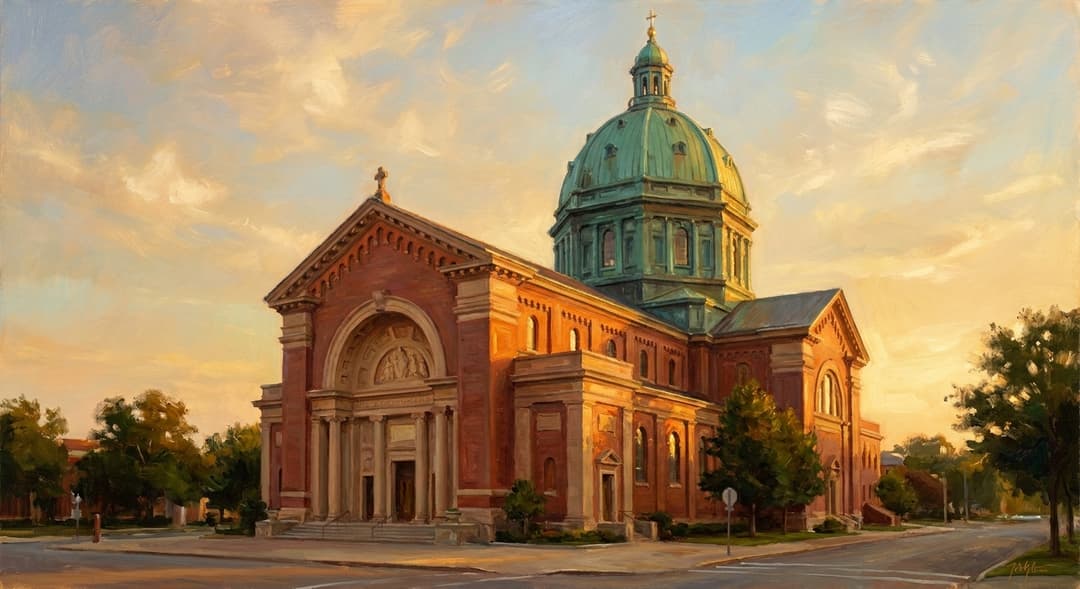
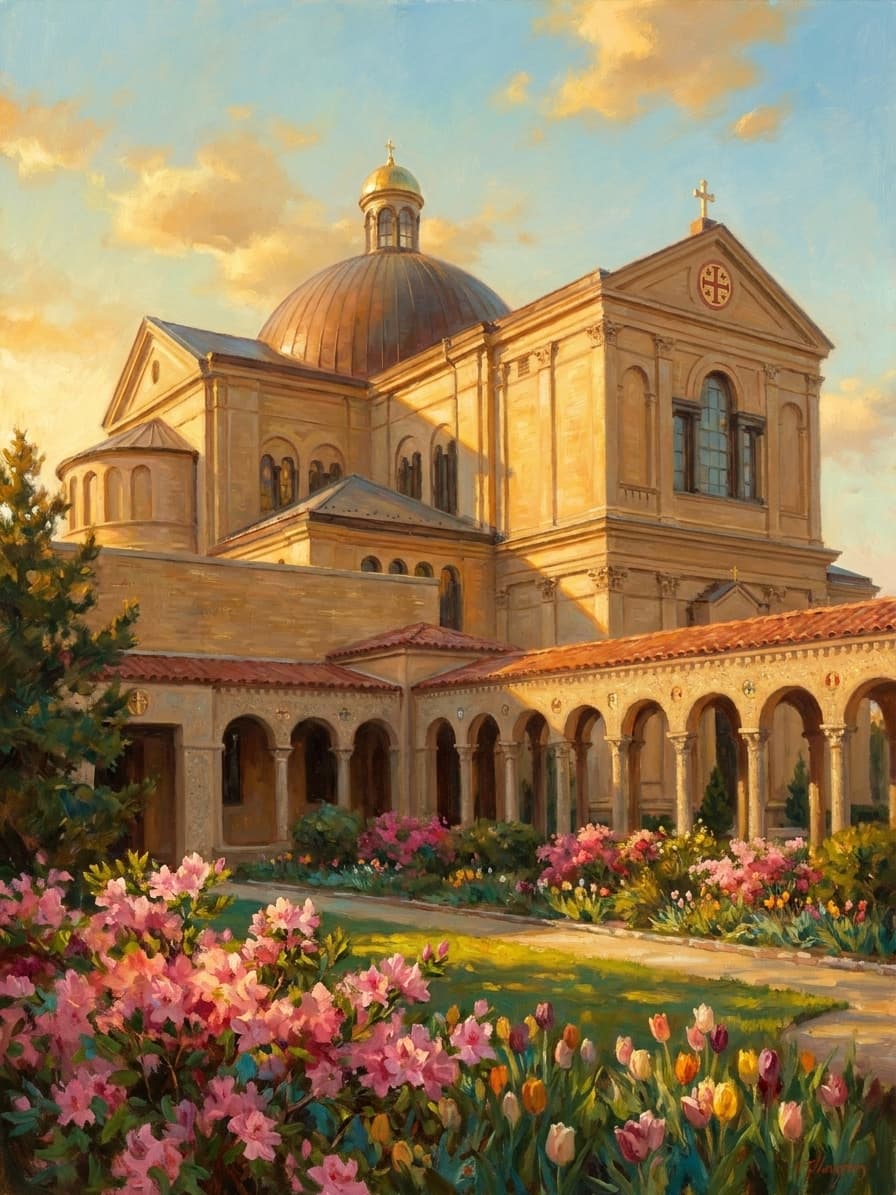
Sources & Research
Every fact on Temples.org is backed by verified Sources & Research. Each piece of information is rated by source tier and confidence level.
View All Sources (7)
| Field | Source | Tier | Retrieved |
|---|---|---|---|
| About & Historical Background | Basilica of the National Shrine of the Immaculate Conception (opens in a new tab) | A | 2026-02-18 |
| About & Historical Background | United States Conference of Catholic Bishops (opens in a new tab) | A | 2026-02-18 |
| Religious Significance & Marian Iconography | Holy See - The Vatican (opens in a new tab) | A | 2026-02-18 |
| Timeline & Historical Events | Encyclopaedia Britannica (opens in a new tab) | B | 2026-02-18 |
| Architecture & Structural Engineering | The Catholic University of America (opens in a new tab) | B | 2026-02-18 |
| Visitor Insights & Amenities | Basilica of the National Shrine of the Immaculate Conception (opens in a new tab) | A | 2026-02-18 |
| Timeline & Historical Events | Archdiocese of Washington (opens in a new tab) | A | 2026-02-18 |