Visitor Insights
Visiting Kansas City Missouri Temple
The Kansas City Missouri Temple grounds are open to the public, offering a peaceful environment for quiet contemplation and enjoyment of the beautiful landscaping. Access to the interior of the temple is reserved for members of The Church of Jesus Christ of Latter-day Saints who hold a current temple recommend.
Highlights
- Enjoy the serene temple grounds, featuring trees, flowers, and a fountain.
- Learn about the temple's unique olive branch motif, symbolizing peace.
Things to Know
- The temple interior is reserved for endowed members with a recommend.
- No dedicated visitors' center, but a distribution center is on site.
Location
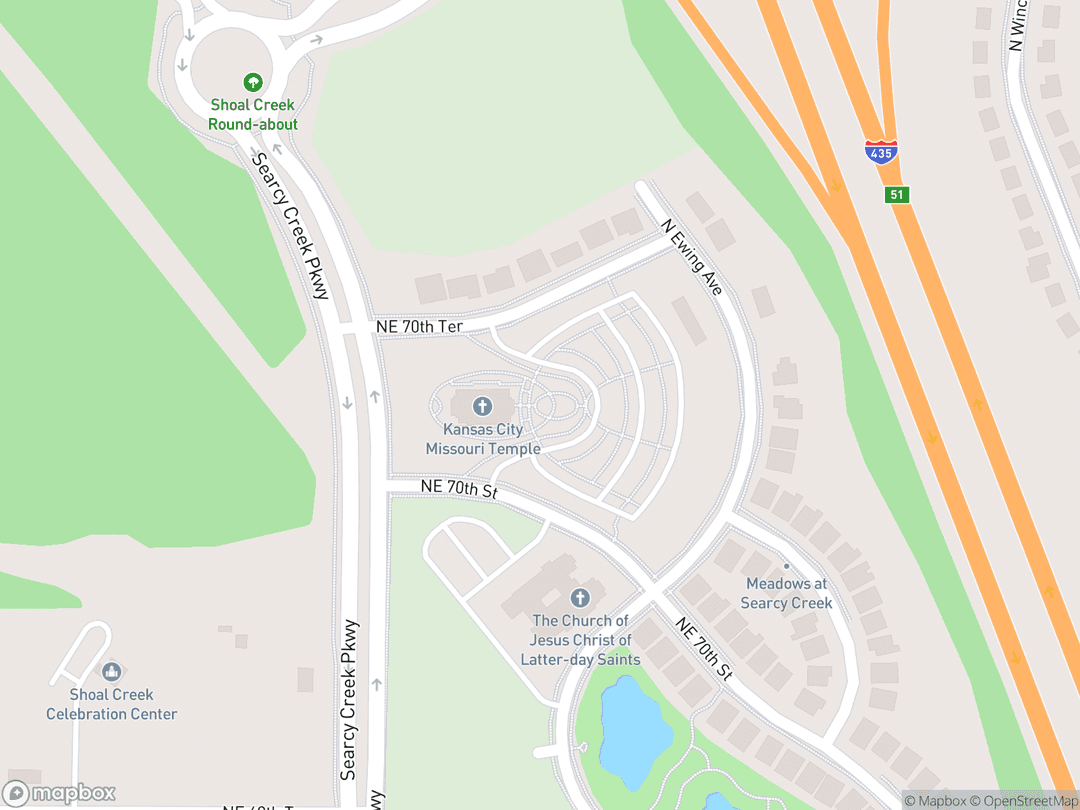
7001B Searcy Creek Parkway, Kansas City, MO 64119-5336, USA
Hours: Operating hours vary; check the official Church website for current schedules.
Getting There: Located at 7001B Searcy Creek Parkway, Kansas City, MO, with ample parking available on site.
Get DirectionsTips for Your Visit
Explore the Grounds
Take time to walk around the beautifully maintained temple grounds, which are open to all visitors.
Understand Temple Purpose
Learn about the sacred purpose of Latter-day Saint temples as Houses of the Lord for covenants and ordinances.
Dress Respectfully
When visiting the temple grounds, modest and respectful attire is appreciated, reflecting the sacred nature of the site.
About
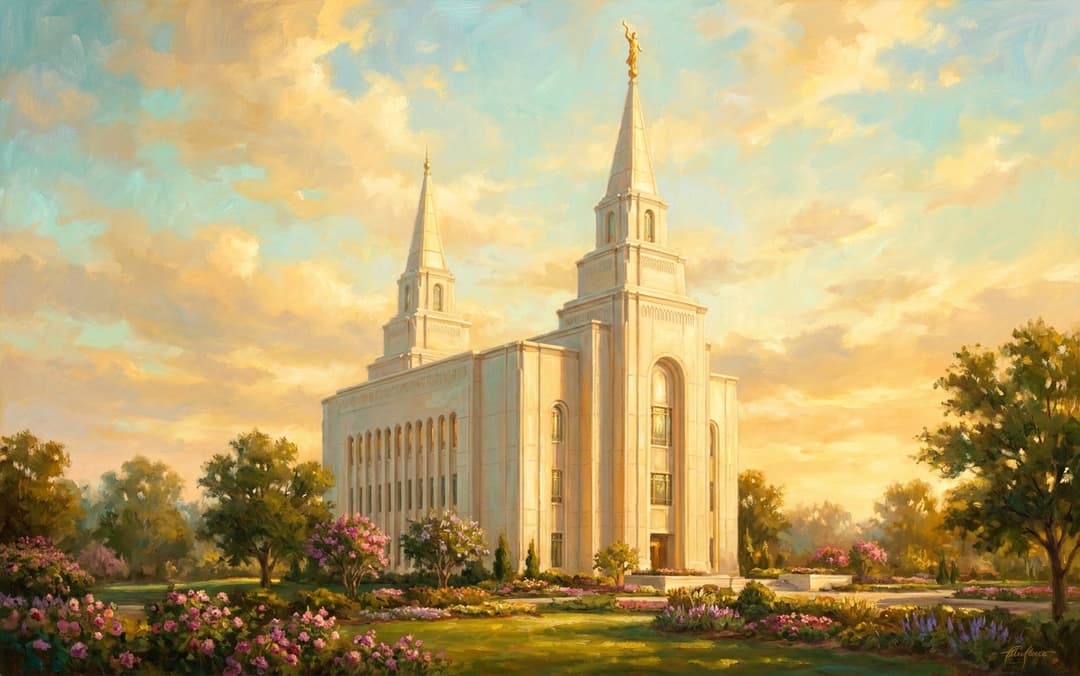
The Kansas City Missouri Temple stands as a significant edifice for The Church of Jesus Christ of Latter-day Saints, representing a return to a region with deep historical roots for the faith within the broader Christian tradition. Dedicated in 2012, it serves as a sacred space for worship, covenants, and ordinances for Latter-day Saints in parts of Kansas, Missouri, Oklahoma, and Arkansas.
This temple is a testament to the enduring faith and growth of the Church in the Midwest, providing a sacred sanctuary where members can participate in essential religious ceremonies. Its design and symbolic elements reflect both the universal principles of peace and the specific historical context of Latter-day Saints in Missouri.
Gallery
Symbolic Elements
The temple's exterior features intricate carvings, each rich with spiritual meaning:

Olive Branch Motif
This unifying symbol of peace is extensively incorporated throughout the temple's design, appearing in exterior stone carvings, art glass, and interior finishes.

Angel Moroni Statue
A gold-leafed statue of the Angel Moroni, a significant figure in Latter-day Saint theology, stands atop the eastern tower, symbolizing the Restoration of the Gospel.

Two Spires Design
The temple features a distinctive two-spire design, reminiscent of pioneer-era temples and symbolizing a connection to earlier sacred structures.

Baptismal Font on Oxen
The baptismal font rests upon the backs of twelve sculpted oxen, a traditional feature symbolizing the twelve tribes of Israel and the ordinance of baptism for the dead.

Precast Concrete Exterior
The exterior is clad in architectural precast concrete panels, providing durability and allowing for intricate detailing of the olive branch motif.

White Oak Interior Woodwork
Beautiful white oak, much of it harvested from the historically significant Adam-ondi-Ahman site, is used throughout the temple's interior, adding warmth and natural beauty.

Decorative Art Glass
Abundant windows are adorned with decorative art glass, featuring the olive-branch emblem and enhancing the temple's aesthetic and symbolic unity.

Entrance Fountain
A prominent fountain is featured at the front of the temple, near the entry doors, contributing to the serene and inviting atmosphere of the grounds.
Interesting Facts
The Kansas City Missouri Temple is the second temple built in Missouri, following the St. Louis Missouri Temple (1997).
It is the 137th operating temple of The Church of Jesus Christ of Latter-day Saints worldwide, dedicated in 2012.
The temple stands on ground considered hallowed by early Latter-day Saints, with significant historical sites nearby.
The temple is located roughly five miles northeast of the Liberty Jail Historic Site, where Joseph Smith was incarcerated.
Much of the white oak used for the temple's interior was harvested from Adam-ondi-Ahman, a site significant in early Latter-day Saint history.
The temple's distinctive two-tower design is shared with other temples, including those in Logan and Manti, Utah, and Rome, Italy.
During its public open house in 2012, nearly 91,000 people toured the temple, leading to an extension of the open house period.
The Kansas City Missouri Temple received the PCI Design Award for Best Religious Structure in 2012.
The olive branch motif, a symbol of peace, was intentionally chosen as the unifying design element throughout the temple.
The property for the temple was purchased by the Church in 1980, decades before the temple's announcement.
Common Questions
Who can enter the Kansas City Missouri Temple?
Only members of The Church of Jesus Christ of Latter-day Saints holding a current temple recommend may enter the temple interior.
Are the temple grounds open to the public?
Yes, the beautiful temple grounds are open to all visitors for quiet enjoyment and reflection.
Is there a visitors' center at the temple?
While there is no dedicated visitors' center, a distribution center is available on site for patrons.
What is the significance of the olive branch motif?
The olive branch is a universal symbol of peace, intentionally chosen to reflect a message of reconciliation in a region with historical significance for the Church.
How many temples are in Missouri?
The Kansas City Missouri Temple is the second operating temple in Missouri, following the St. Louis Missouri Temple.
Featured Stories
A Return to Sacred Ground
October 4, 2008
The announcement of the Kansas City Missouri Temple by President Thomas S. Monson marked a significant return for Latter-day Saints to a region deeply intertwined with early Church history. This new temple symbolized a renewed presence and commitment to faith in an area where early members faced profound challenges and persecution.
Source: The Church of Jesus Christ of Latter-day Saints
The Symbol of Peace
May 6, 2012
The pervasive olive branch motif throughout the temple's design was a deliberate choice, reflecting a message of peace and reconciliation in a historically contentious region. This symbol resonated deeply with members, offering a powerful reminder of hope and divine love after generations of historical conflict.
Source: LDS Living
Community Embrace
April 7-28, 2012
The public open house for the Kansas City Missouri Temple drew nearly 91,000 visitors, including state governors, demonstrating widespread community interest and goodwill. This overwhelming response led to an extension of the open house, fostering understanding and strengthening relationships between the Church and local residents.
Source: The Church News
Timeline
Early Church Efforts in Missouri
Early Latter-day Saints attempted to establish temples in Independence and Far West, but were compelled to leave due to persecution.
EventKansas City Stake Established
As Church membership grew in the Midwest, Kansas City established its first stake, a regional administrative unit.
EventTemple Announced
President Thomas S. Monson announced the intent to construct a temple in the greater Kansas City area during General Conference.
MilestoneSite Approval and Construction Begins
The Kansas City Council approved the subdivision plan, and site work commenced in late October with JE Dunn Construction.
component.timeline.constructionGroundbreaking Ceremony
Elder Ronald A. Rasband presided over the official groundbreaking, signifying the commencement of construction.
component.timeline.groundbreakingAngel Moroni Statue Placed
The gold-leafed Angel Moroni statue was placed atop the temple's eastern tower, marking a significant construction milestone.
component.timeline.constructionPublic Open House Begins
A public open house began, allowing nearly 91,000 visitors to tour the temple's interior before its dedication.
EventOpen House Extended
Due to high demand and public interest, the open house period was extended by an additional week.
EventCultural Celebration
Youth from the temple district participated in a vibrant cultural celebration, showcasing local talent and heritage.
EventTemple Dedicated
President Thomas S. Monson dedicated the Kansas City Missouri Temple, marking it as the 137th operating temple of the Church.
DedicationHistory by Decade
1830s — Early Missouri Settlements
In the 1830s, early members of The Church of Jesus Christ of Latter-day Saints sought to establish Zion in Missouri, dedicating temple sites in Independence and Far West. However, due to severe persecution, these efforts were halted, and Church members were compelled to leave the state. This period laid a foundational, yet challenging, history for the Church in Missouri.
1950s — Re-establishment and Growth
Decades later, as Church membership began to grow again in the Midwest, the Kansas City area saw a resurgence of Latter-day Saint communities. In 1956, Kansas City established its first stake, marking a significant milestone in the re-establishment and organizational growth of the Church in the region.
2000s — Temple Announcement and Planning
On October 4, 2008, President Thomas S. Monson announced the intent to construct a temple in the greater Kansas City area, a momentous occasion for local members. Following the announcement, the Kansas City Council approved the subdivision plan for The Meadows at Searcy Creek, and site work began in late October 2009.
2010s — Construction and Dedication
Construction officially began with a groundbreaking ceremony on May 8, 2010, presided over by Elder Ronald A. Rasband. A significant milestone occurred on March 24, 2011, with the placement of the Angel Moroni statue. After a successful public open house in April 2012, President Thomas S. Monson dedicated the Kansas City Missouri Temple on May 6, 2012, making it the 137th operating temple worldwide.
Architecture & Facilities
The Kansas City Missouri Temple features a distinctive two-spire design, drawing inspiration from pioneer-era Latter-day Saint temples such as those in Logan and Manti, Utah. Its architectural style blends traditional temple forms with modern materials, creating an elegant and enduring structure that harmonizes with its Midwestern setting. The design emphasizes clean lines and symbolic motifs, reflecting both reverence and contemporary craftsmanship.
Building Materials
Exterior
The exterior is finished with architectural precast concrete panels, which are durable and allow for precise, integrated detailing of the olive-branch motif.
Interior Woodwork
Beautiful white oak, much of which was harvested from the historically significant Adam-ondi-Ahman site, is extensively used for interior finishes, providing warmth and elegance.
Art Glass
Decorative art glass windows, featuring the olive-branch emblem, adorn the temple, allowing natural light while maintaining privacy and adding symbolic beauty.
Gold Leaf
Gold leaf accents are incorporated on interior walls and decorative elements, adding a touch of sacred grandeur and highlighting key design features.
Interior Features
Celestial Room
This room is designed for quiet contemplation and spiritual reflection, featuring elegant furnishings and a serene atmosphere.
Sealing Rooms
These sacred rooms are where eternal marriage and family covenants are performed, characterized by their intimate and reverent setting.
Baptistry
The baptistry houses the baptismal font, which rests upon twelve sculpted oxen, used for proxy baptisms on behalf of deceased ancestors.
Instruction Rooms
These rooms are used for teaching and covenant-making, featuring comfortable seating and sacred artwork.
Temple Grounds
The temple grounds are meticulously landscaped with numerous trees, brightly colored flowers, and inviting walkways that encircle the structure, creating a peaceful and welcoming environment for visitors.
Additional Facilities
A distribution center is located on the temple grounds, providing temple garments and clothing for patrons, though there is no dedicated public visitors' center.
Religious Significance
For members of The Church of Jesus Christ of Latter-day Saints, the Kansas City Missouri Temple is a sacred 'House of the Lord,' distinct from regular meetinghouses. It is a place dedicated to the highest ordinances and covenants of the Christian faith, where individuals can draw closer to God and prepare for eternal life.
The core spiritual purpose of the temple is to provide a sacred space for members to make and renew covenants with God, perform saving ordinances for themselves and their deceased ancestors, and receive divine instruction and blessings.
Sacred Ordinances
Baptism for the Dead
Members perform proxy baptisms on behalf of deceased ancestors who did not have the opportunity to be baptized during their lifetime, extending the blessings of the gospel to them.
Endowment
The endowment is a series of sacred instructions and covenants that provide spiritual power, knowledge, and blessings, preparing individuals for eternal progression.
Sealing
Sealing ordinances unite families eternally, allowing husbands and wives, and parents and children, to be bound together beyond mortal life through sacred covenants.
Covenant Path
Temples are central to the 'covenant path' in Latter-day Saint theology, representing a progression of commitments and blessings that lead individuals back to God's presence.
Eternal Families
A primary doctrine taught and practiced in the temple is the eternal nature of the family unit, with ordinances designed to bind families together forever.
Divine Instruction
Within the temple, members receive spiritual instruction and gain a deeper understanding of God's plan of salvation and their divine potential.
Similar Temples
Sources & Research
Every fact on Temples.org is backed by verified Sources & Research. Each piece of information is rated by source tier and confidence level.
View All Sources (9)
| Field | Source | Tier | Retrieved |
|---|---|---|---|
| About & Historical Background | The Church of Jesus Christ of Latter-day Saints (opens in a new tab) | A | 2024-07-30 |
| Dedication & Open House | The Church News (opens in a new tab) | B | 2024-07-30 |
| Architectural Design | FFKR Architects (opens in a new tab) | B | 2024-07-30 |
| Symbolic Elements & Interior | LDS Living (opens in a new tab) | B | 2024-07-30 |
| Temple History & Construction | ChurchofJesusChristTemples.org (opens in a new tab) | C | 2024-07-30 |
| Visitor Information | Lenexa Kansas Stake (opens in a new tab) | A | 2024-07-30 |
| Early Church History in Missouri | Latter-day Saint Magazine (opens in a new tab) | C | 2024-07-30 |
| Exterior Design Details | Great Big Canvas (opens in a new tab) | D | 2024-07-30 |
| Angel Moroni Placement | FHE On The Road (opens in a new tab) | C | 2024-07-30 |