Visitor Insights
Visiting Houston Texas Temple
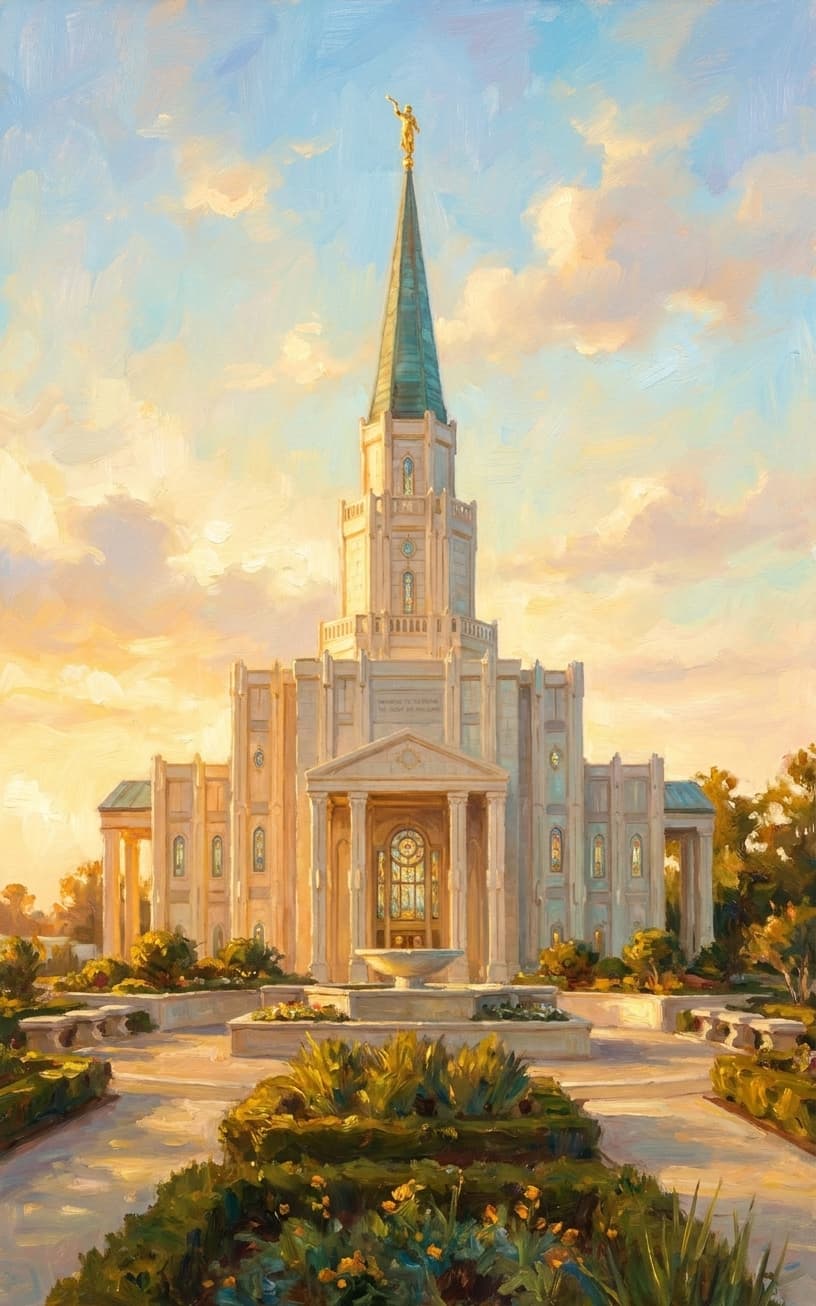
The Houston Texas Temple offers tranquil grounds and manicured gardens for visitors seeking reflection. While the interior is reserved for Latter-day Saints holding current temple recommends, the public is welcome to walk the pathways and view the exterior architecture.
Highlights
- Lush 11-acre wooded site with manicured flower gardens
- Central courtyard reflection fountain
- Classic castle-like façade crafted in Luna Pearl granite
- Single soaring spire crowned with the gold Angel Moroni
Things to Know
- Interior access requires a valid temple recommend
- Grounds remain accessible to the public during daytime hours
- Patrons are encouraged to reserve ordinance appointments in advance
- Arrival center provides assistance for visiting patrons
Location
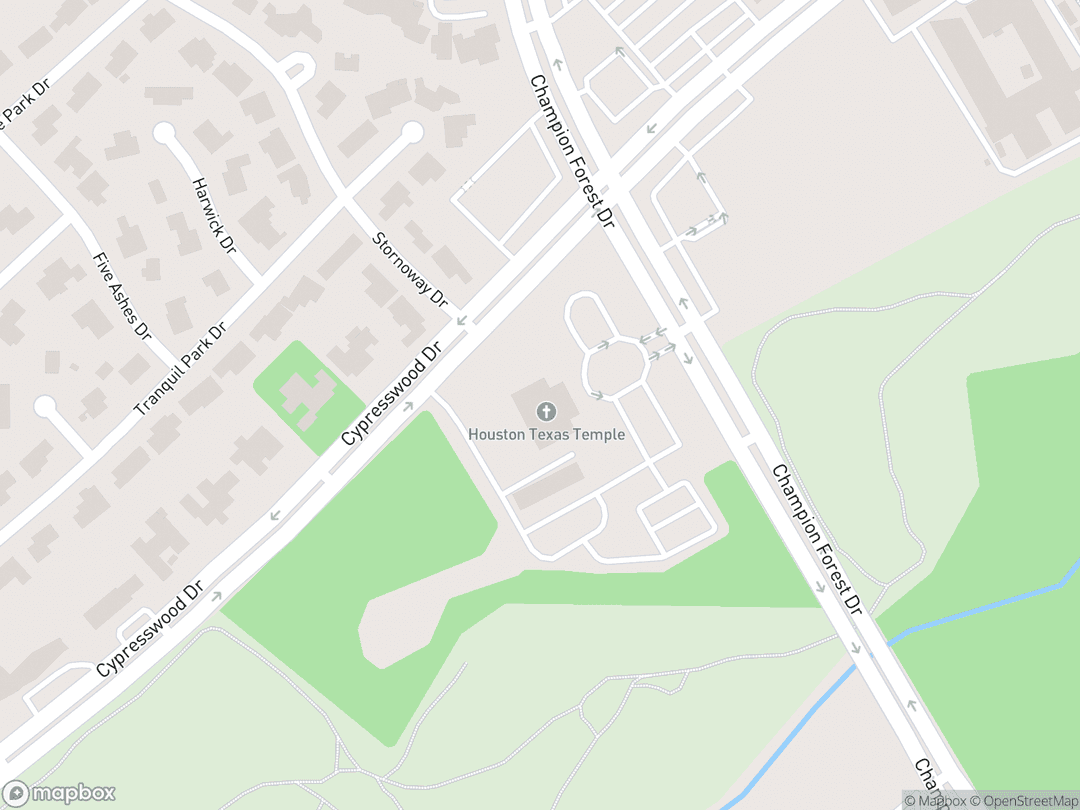
15725 Champion Forest Dr, Klein, Texas 77379-7036
Hours: Tuesday through Saturday: Hours vary by ordinance schedule. Closed Sundays and Mondays.
Getting There: Located in Klein, Texas, near Spring. Accessible via Champion Forest Drive north of Louetta Road.
Get DirectionsTips for Your Visit
Grounds Photography
The surrounding pine trees and reflecting fountain provide ideal natural lighting during early morning and late afternoon hours.
Appointment Booking
Schedule ordinance appointments online in advance to streamline check-in at the arrival center.
About
The Houston Texas Temple stands as a sacred sanctuary of worship and covenant-making for members of The Church of Jesus Christ of Latter-day Saints in east Texas and southwest Louisiana. Operating within the broader Christian tradition of consecrated sacred spaces, the temple represents a modern house of the Lord dedicated to the eternal salvation of God's children.
Announced in 1997 by President Gordon B. Hinckley, the temple was dedicated on August 26, 2000, becoming the second LDS temple constructed in Texas. Situated on an 11-acre wooded site in Klein, Texas, the building combines modern structural elements with classic architectural motifs, offering a peaceful refuge centered on Jesus Christ.
In August 2017, the temple faced a historic trial when rising floodwaters from Hurricane Harvey inundated its lower levels. Following a miraculous seven-month restoration effort, the structure was rededicated on April 22, 2018, by President M. Russell Ballard, renewed as a symbol of hope and resurrection.
Gallery
Symbolic Elements
The temple's exterior features intricate carvings, each rich with spiritual meaning:

Angel Moroni Statue
Positioned atop the spire facing east, the gold-leaf statue heralds the restoration of the gospel and Christ's Second Coming.

Holiness to the Lord Inscription
Engraved over the entry, this sacred phrase marks the edifice as a sanctuary consecrated unto God.

Baptistry Oxen
Twelve carved oxen supporting the baptismal font symbolize the twelve tribes of ancient Israel.

Granite Buttresses
Vertical exterior buttresses evoke 19th-century pioneer temple architecture and spiritual strength.

Celestial Room
An elegantly appointed room representing the tranquility and divine presence of the celestial kingdom.

Sealing Altar
Altars within the sealing rooms symbolize the binding of family relationships for time and all eternity.

Reflecting Fountain
The exterior water feature offers a symbol of spiritual rebirth, purity, and quiet contemplation.
Interesting Facts
The Houston Texas Temple was the 97th operating temple of the Church worldwide. (Tier A)
It was the second temple constructed in Texas, following the Dallas Texas Temple dedicated in 1984. (Tier A)
The temple design was inspired in part by the historic Washington Chapel in Washington D.C. (Tier B)
Landowner Don Hand sold the site after experiencing a personal spiritual conviction to aid the Church. (Tier B)
The temple district serves over 44,000 Latter-day Saints across 28 stakes in east Texas and Louisiana. (Tier A)
Floodwaters from Hurricane Harvey completely submerged the baptistry in August 2017. (Tier A)
The post-Harvey reconstruction was completed in just seven months, far ahead of typical timelines. (Tier A)
Fifty-four original pieces of artwork were added to the interior during the 2018 restoration. (Tier A)
The 2018 rededication was held as a single private session without a public open house. (Tier A)
Common Questions
Who may enter the Houston Texas Temple?
The interior is reserved for baptized members of the Church holding valid temple recommends, though public grounds are open to all.
Why was the temple rededicated in 2018?
Catastrophic flooding from Hurricane Harvey in 2017 required a complete interior renovation of the lower and main levels.
What architectural style is the Houston Texas Temple?
It features a classic modern design with subtle castle-like buttresses clad in Luna Pearl granite.
Are walk-in patrons permitted?
Walk-ins are accommodated when space permits, though scheduled appointments are strongly recommended.
Featured Stories
The Landowner's Change of Heart
1997
When Church representatives initially approached local developer Don Hand to purchase the 11-acre Klein property, he firmly stated that no amount of money could persuade him to sell. However, after experiencing a profound personal spiritual prompt regarding the land's purpose, Hand voluntarily reversed his decision and agreed to convey the parcel. He later attended the 1998 groundbreaking ceremony alongside Church leaders to celebrate the sacred project.
Source: Church News & Local History Records
Rising Above Hurricane Harvey
August 2017
In August 2017, Hurricane Harvey inundated the Houston area with historic rainfall, causing floodwaters to breach the temple and completely submerge the lower baptistry level. Despite catastrophic water damage across the main floor, local members united with relief teams to salvage artifacts and clean the surrounding community. The flood forced a complete closure, initiating a rapid seven-month renovation process.
Source: Church News & Emergency Response Reports
The Seven-Month Miraculous Restoration
April 2018
Initial estimates predicted that repairing the storm-damaged structure would require up to two years of continuous reconstruction work. Through extraordinary coordination by craftsmen and volunteers, the temple was completely rebuilt, refurnished, and enhanced with 54 new original paintings in just seven months. President M. Russell Ballard rededicated the sanctified building on April 22, 2018, praising the faith of local Saints.
Source: General Authority Dedicatory Remarks
Timeline
Temple Announcement
President Gordon B. Hinckley announces plans to build a temple in Houston during general conference.
MilestoneGroundbreaking Ceremony
Elder Lynn A. Mickelsen presides at the groundbreaking event attended by roughly 600 members.
component.timeline.groundbreakingAngel Moroni Installed
The gold-leafed Angel Moroni statue is hoisted atop the single spire.
MilestonePublic Open House Begins
A two-week public open house commences, hosting nearly 28,000 community visitors.
EventTemple Dedication
President Gordon B. Hinckley dedicates the temple in three formal sessions.
DedicationHurricane Harvey Flooding
Rising floodwaters breach the temple, submerging the baptistry and main floor.
EventRenovation Announcement
The Church formally announces closure of the temple for major flood repair.
RenovationRededication Date Announced
The First Presidency schedules the rededication following rapid reconstruction.
MilestoneTemple Rededication
President M. Russell Ballard rededicates the restored temple in an invitation-only session.
DedicationFort Bend Temple Announced
A second Houston-area temple is announced to accommodate rapid growth.
MilestoneHistory by Decade
1990s — Announcement and Groundbreaking
President Gordon B. Hinckley announced the Houston Texas Temple in September 1997 during general conference. Groundbreaking took place in June 1998, led by Elder Lynn A. Mickelsen, bringing together hundreds of local Saints and community members. Construction proceeded rapidly as the granite structure rose in Klein, culminating in the placement of the Angel Moroni statue in June 1999.
2000s — Dedication and Regional Service
In August 2000, nearly 28,000 visitors toured the newly completed temple during its public open house. President Hinckley dedicated the sacred edifice on August 26, 2000, establishing it as the second operating temple in Texas. Over the following decade, the temple became a spiritual hub for tens of thousands of Latter-day Saints across Texas and Louisiana.
2010s — Flooding and Miraculous Rededication
Hurricane Harvey brought unprecedented flooding to the region in August 2017, inundating the temple basement and main floor. Following an intense seven-month reconstruction effort that added original artwork and upgraded finishes, President M. Russell Ballard rededicated the temple in April 2018. The swift restoration was commemorated by local leaders as a testament to communal faith and divine assistance.
2020s — Continued Growth and Expansion
The Houston Texas Temple navigated temporary operational adjustments during global health restrictions in 2020 before resuming full ordinance schedules. To accommodate rapid membership growth in the greater Houston metropolitan area, the First Presidency announced the Fort Bend Texas Temple in April 2024. Today, the Houston temple continues to serve as an enduring beacon of faith and peace.
Architecture & Facilities
The Houston Texas Temple features a classic modern Latter-day Saint design with subtle Gothic-inspired buttresses along its façade, creating an imposing yet balanced profile reminiscent of 19th-century temple architecture adapted for modern Texas construction.
Building Materials
Exterior Granite Cladding
Crafted from durable Luna Pearl granite, providing a brilliant off-white exterior finish designed to withstand coastal Texas humidity.
Spire and Statuary
A single structural spire finished in matching stone panels and crowned with a gold-leafed fiberglass statue of the Angel Moroni.
Art Glass Windows
Custom stained-glass window assemblies featuring subtle geometric motifs that diffuse natural sunlight into interior sacred rooms.
Interior Millwork
Hardwood trim and custom cabinetry finished in light tones to accent white walls and create an atmosphere of light.
Interior Features
Celestial Room
A serene room featuring high ceilings, crystal chandeliers, and soft cream upholstered seating designed for prayer and meditation.
Ordinance Rooms
Two instruction rooms decorated with subtle mural accents and refined woodwork for presenting sacred endowment instruction.
Sealing Rooms
Three sealing rooms equipped with mirrored walls and central altars where eternal marriage covenants are solemnized.
Baptistry
A lower-level baptistry featuring a font supported by twelve cast oxen, fully restored and updated following flood remediation.
Temple Grounds
The temple rests upon an 11-acre property adorned with native Texas pine trees, seasonal flower beds, paved walking paths, and a central water fountain that reflects the soaring spire.
Additional Facilities
Includes an on-site arrival center and patron service facilities providing assistance and white clothing rentals for temple attendees.
Religious Significance
Within Latter-day Saint theology—grounded in the broader Christian tradition of divine covenants and sacred space—the Houston Texas Temple is revered as a literal house of the Lord where heaven and earth meet.
To serve as a consecrated sanctuary where sacred ordinances are performed, uniting families for eternity and deepening devotion to Jesus Christ.
Sacred Ordinances
Baptism for the Dead
Proxy baptisms performed in behalf of deceased ancestors, fulfilling the New Testament doctrine of universal salvation in Christ.
The Endowment
A sacred ceremony where patrons receive instruction regarding God's plan of salvation and make personal covenants of righteousness.
Eternal Sealing
Marriages and family relationships sealed by priesthood authority to endure beyond mortality into eternal life.
The Temple and the Christian Tradition
Latter-day Saints view temple worship as a continuation and fulfillment of biblical sanctuary traditions. Like ancient altars and sacred tabernacles recorded in Judeo-Christian scripture, the Houston Texas Temple is set apart from worldly concerns as a place of holy sanctuary, prayer, and divine covenant.
Symbol of Resurrection and Faith
The rapid restoration of the temple after Hurricane Harvey serves as a vivid local emblem of resurrection and spiritual renewal. Members view the rebuilt house of the Lord as a tangible reminder that faith in Jesus Christ brings strength to overcome temporal trial and destruction.
Similar Temples
Sources & Research
Every fact on Temples.org is backed by verified Sources & Research. Each piece of information is rated by source tier and confidence level.
View All Sources (8)
| Field | Source | Tier | Retrieved |
|---|---|---|---|
| About & Historical Background | The Church of Jesus Christ of Latter-day Saints (opens in a new tab) | A | 2026-02-15 |
| Timeline & Dedication | Church News (opens in a new tab) | B | 2026-02-15 |
| Architecture & Specifications | ChurchofJesusChristTemples.org (opens in a new tab) | C | 2026-02-15 |
| Hurricane Harvey Damage & Restoration | Houston Chronicle (opens in a new tab) | B | 2026-02-15 |
| Restoration & Rededication | KSL News (opens in a new tab) | B | 2026-02-15 |
| Renovation Milestones | Gephardt Daily (opens in a new tab) | B | 2026-02-15 |
| Symbolism & Visual Arts | LDS Temple Pics (opens in a new tab) | C | 2026-02-15 |
| Visitor & Regional Info | Katy Texas Stake (opens in a new tab) | C | 2026-02-15 |