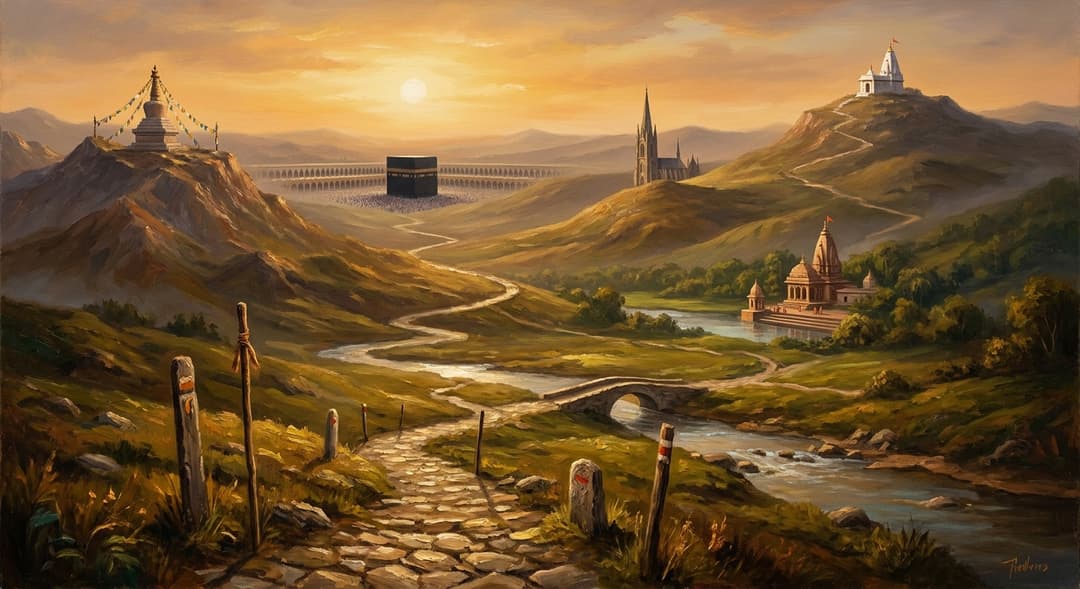
The Oldest Reason to Travel
Long before tourism, before trade routes, before the idea of travel as leisure existed at all, people walked long distances to visit holy places. Pilgrimage may be the original reason humans crossed continents on foot. The journey itself was the point: hardship, distance, and dust were not obstacles to the experience — they were the experience.
What unites pilgrimage traditions across thousands of years and dozens of religions is a shared conviction that some places hold a different quality of presence, and that you cannot reach those places only by sitting still. The body has to do the work. The road is part of the prayer.
Hajj: The Largest Pilgrimage on Earth
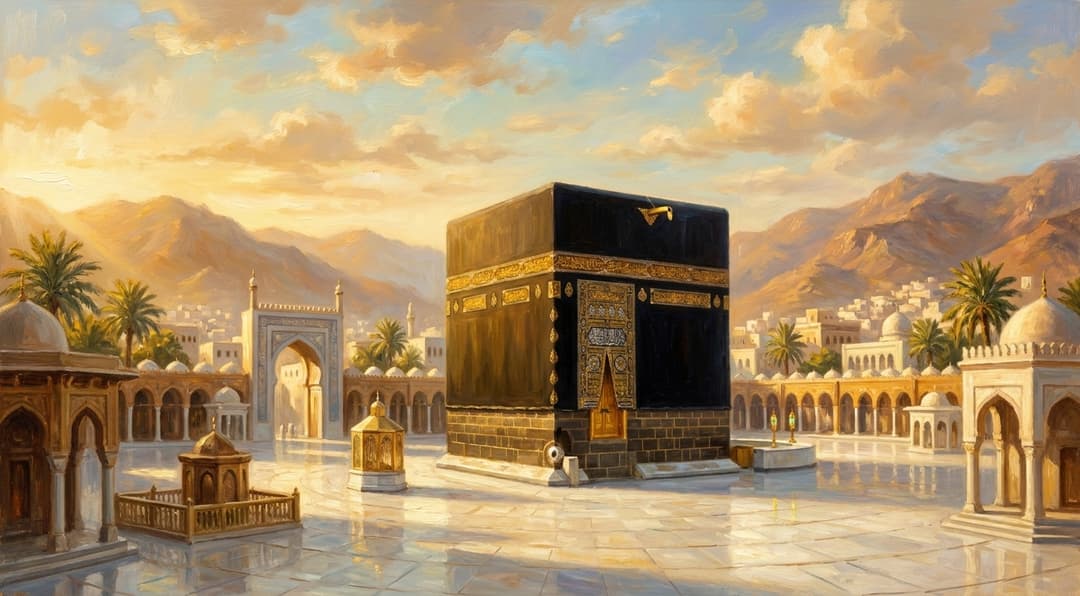
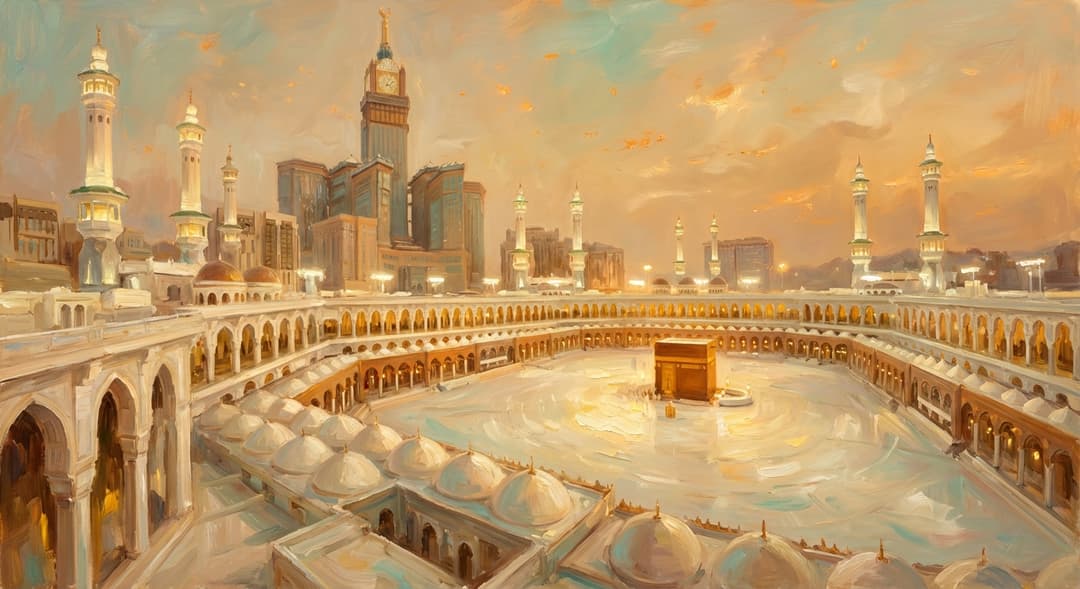
Once a year during the month of Dhu al-Hijjah, roughly two million Muslims converge on Mecca to perform the Hajj — the fifth pillar of Islam, required at least once in the life of every Muslim who is physically and financially able. The rites are elaborate and exact: pilgrims circle the Kaaba seven times counterclockwise, walk between the hills of Safa and Marwa, stand in prayer on the Plain of Arafat, and stone three pillars representing temptation.
Hajj is the largest annual gathering of human beings anywhere in the world, and one of the most logistically complex events on the planet. But what is most remarkable is its uniformity: every pilgrim wears the same simple white garments, eliminating distinctions of wealth and status. For a few days, two million people from every nation become indistinguishable in dress, posture, and purpose.
Christian Pilgrimage: Holy Land, Rome, and Camino
Christian pilgrimage traditions cluster around three great destinations. Jerusalem draws pilgrims to walk the Via Dolorosa, pray at the Garden Tomb and the Church of the Holy Sepulchre, and stand at the Western Wall. Rome offers the Vatican, St. Peter's Basilica, and the catacombs of the early martyrs. And Santiago de Compostela in northwestern Spain remains one of the most walked routes in the modern world.
The Camino de Santiago has experienced a striking revival. In 1985, fewer than 700 pilgrims completed the route. In 2024, more than 490,000 did. Many were not religious in any formal sense — they walked for grief, transition, exhaustion, or the simple need for the rhythm of a long road. The Camino's quiet popularity in a secular age suggests pilgrimage answers a need that does not depend on doctrine.
Hindu Yatra: River, Mountain, and Mela
Hindu pilgrimage — yatra — is woven into the fabric of Indian life on a scale that is hard to overstate. The Char Dham circuit visits four sacred sites at the cardinal directions of India. The seven sacred cities (Sapta Puri), including Varanasi, Ayodhya, and Dwarka, draw pilgrims year-round. And every twelve years, the Kumbh Mela at Prayagraj becomes the largest peaceful gathering in human history — the 2025 Maha Kumbh drew an estimated 660 million people over its six weeks.
Pilgrimage to a river is a distinctively Hindu practice. Bathing in the Ganges at Varanasi is believed to wash away accumulated karma; dying there is believed to free the soul from rebirth altogether. The ghats descending into the river are some of the most continuously used sacred infrastructure on earth, in active liturgical service for over two thousand years.
Buddhist Circuits: Following the Footsteps of the Buddha
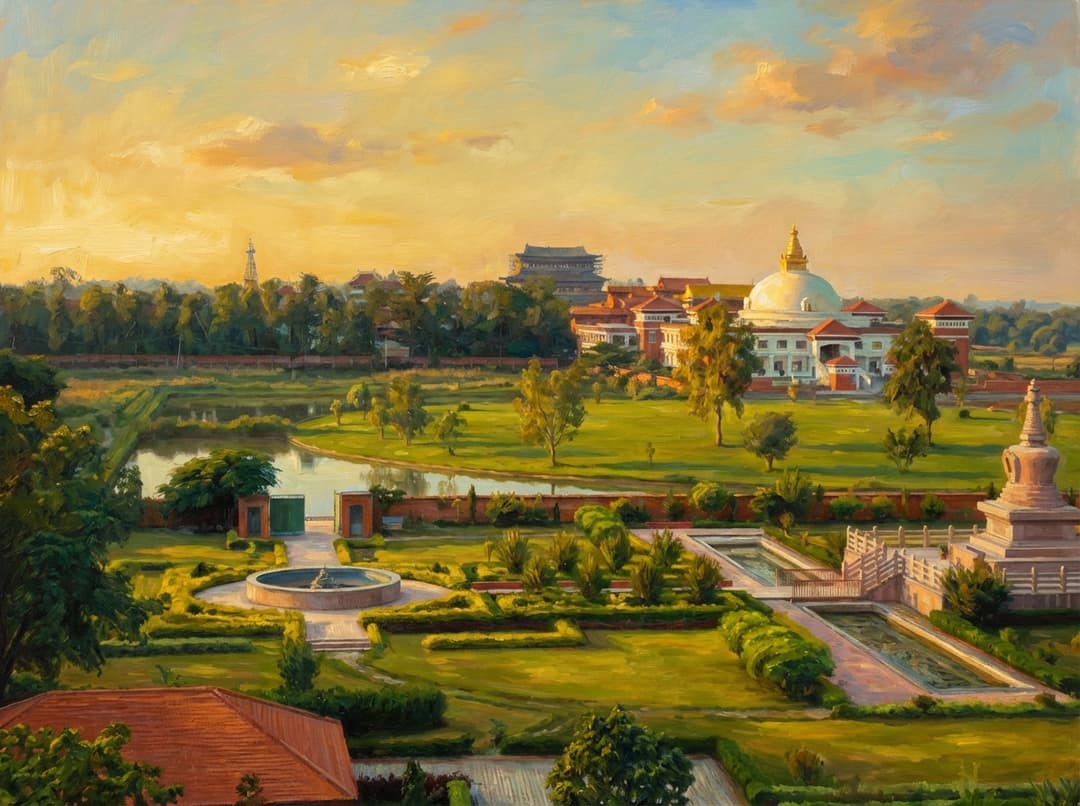
Buddhism has its own classic pilgrimage circuit: the four sites associated with the major events of the Buddha's life. Lumbini in Nepal, where he was born. Bodh Gaya in India, where he attained enlightenment under the Bodhi tree. Sarnath, where he gave his first teaching. Kushinagar, where he died. The tradition of visiting these places dates back to the Buddha's own instruction in the Mahaparinibbana Sutta.
In Japan, the 88-temple pilgrimage of Shikoku traces a 1,200-kilometer loop around the island, visiting sites associated with the monk Kūkai. Walked in full, it takes about six weeks. Pilgrims wear white robes and conical straw hats, carry a wooden staff, and are met by villagers offering food and lodging — a custom called osettai that is itself considered a way of joining the pilgrimage from home.
Latter-day Saint Pilgrimage and the Pioneer Trail
The pilgrimage tradition in The Church of Jesus Christ of Latter-day Saints is younger than most, but it has its own distinctive shape. Each summer, thousands of youth groups across North America walk segments of the Mormon Trail — the 1,300-mile route that early pioneers crossed from Nauvoo, Illinois to the Salt Lake Valley between 1846 and 1869. They pull handcarts, sleep on the prairie, and trace paths walked by their ancestors.
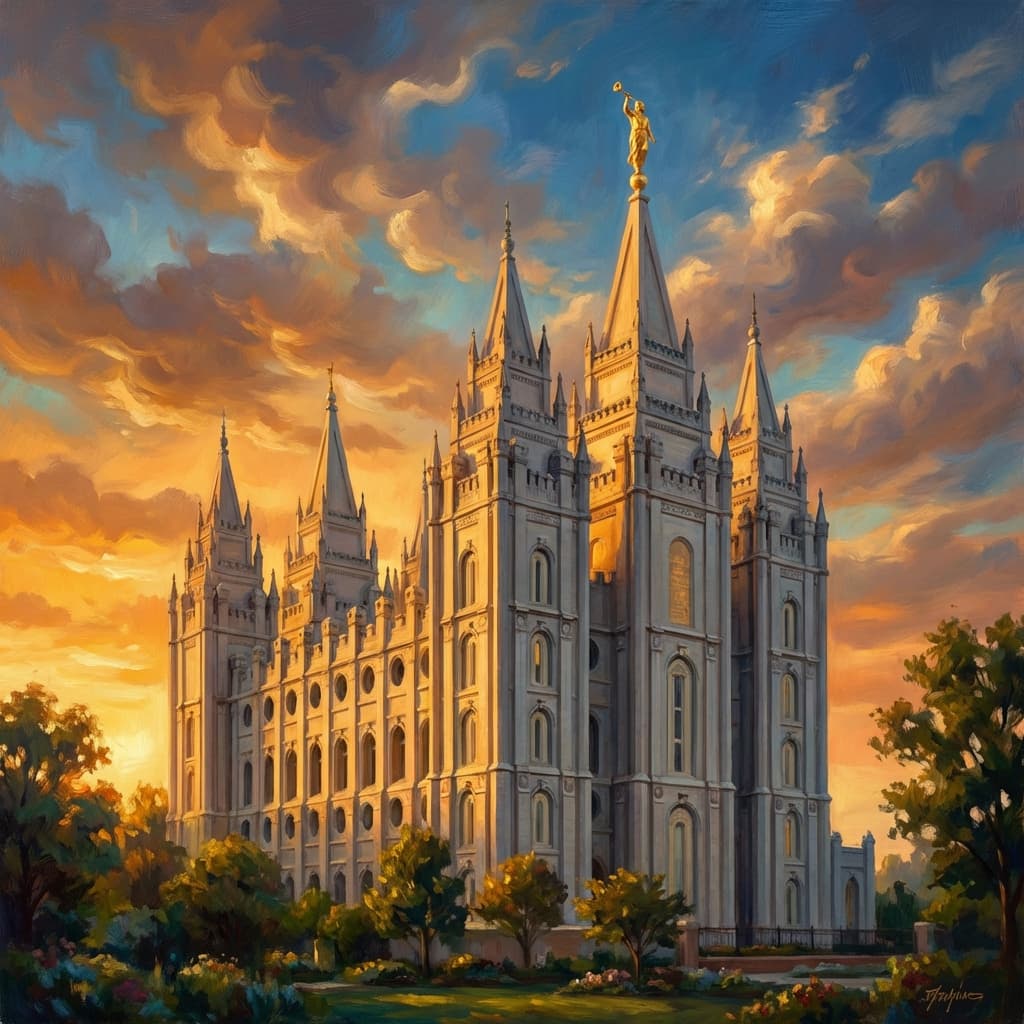
Beyond the trail, Latter-day Saints engage in temple pilgrimage of a different kind. With over 300 temples operating, under construction, or announced worldwide, attending a temple still often means traveling — sometimes across countries — to perform sacred ordinances. The Salt Lake Temple in particular draws Latter-day Saints from around the world as a kind of spiritual headquarters, much as Jerusalem, Mecca, and Bodh Gaya do for their respective traditions.
What Pilgrims Have Always Known
The patterns repeat across traditions with striking consistency. A meaningful destination. A route that involves real difficulty. A community of fellow travelers. A moment of arrival that justifies the journey. And the return home, where the pilgrim is expected to be in some way changed.
In an age of jet travel and instant communication, when almost any place on earth can be reached in a day, pilgrimage routes are growing rather than shrinking. The Camino has more walkers than at any point since the Middle Ages. Hajj infrastructure expands every decade. Maha Kumbh keeps breaking its own records. Whatever pilgrimage offers — slowness, embodiment, a horizon you walk toward rather than scroll past — appears to be something modern life has not replaced.
Related Temples
Sources & Research
Every fact on Temples.org is backed by verified Sources & Research. Each piece of information is rated by source tier and confidence level.
View All Sources (5)
| Field | Source | Tier | Retrieved |
|---|---|---|---|
| Hajj: rites, history, and scale | Encyclopædia Britannica (opens in a new tab) | B | 2026-05-08 |
| Camino de Santiago annual pilgrim statistics | Oficina de Acogida al Peregrino, Cathedral of Santiago (opens in a new tab) | A | 2026-05-08 |
| Maha Kumbh Mela 2025 attendance figures | Government of Uttar Pradesh (opens in a new tab) | A | 2026-05-08 |
| The Mormon Pioneer Trail | U.S. National Park Service (opens in a new tab) | A | 2026-05-08 |
| Shikoku 88-temple pilgrimage | Japan National Tourism Organization (opens in a new tab) | B | 2026-05-08 |