Visitor Insights
Visiting Mosteiro de São Bento
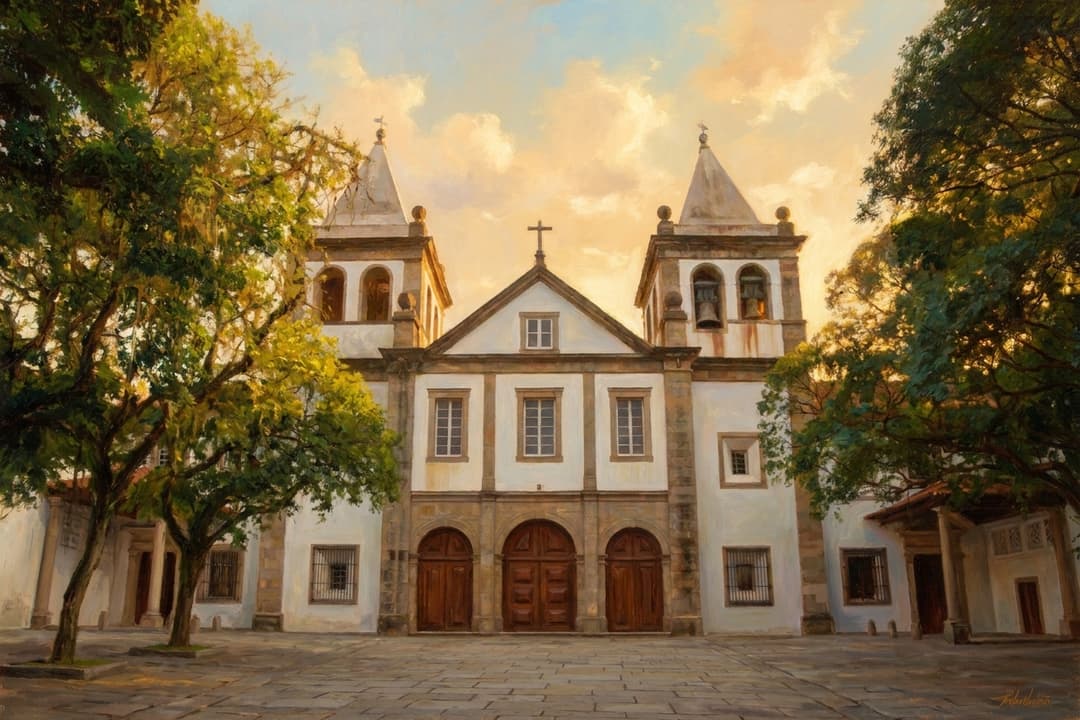
The Monastery of Saint Benedict offers visitors a peaceful retreat of sacred music, historical architecture, and traditional monastic hospitality in downtown São Paulo. Attending the 10:00 AM Sunday High Mass allows visitors to experience full Benedictine Gregorian chant accompanied by the majestic pipe organ.
Highlights
- Daily Gregorian chant and solemn Eucharistic liturgies
- Historic Monastic Bakery offering traditional European honey cakes and breads
- Monumental Beuron Art School interior murals and stained glass by Franz Mayer
- The 6,000-pipe Walcker organ, one of South America's largest
Things to Know
- High Sunday Mass fills early, so arriving by 9:30 AM is recommended
- Photography is restricted during active liturgical services
- Located directly above São Bento Metro Station for easy access
Location
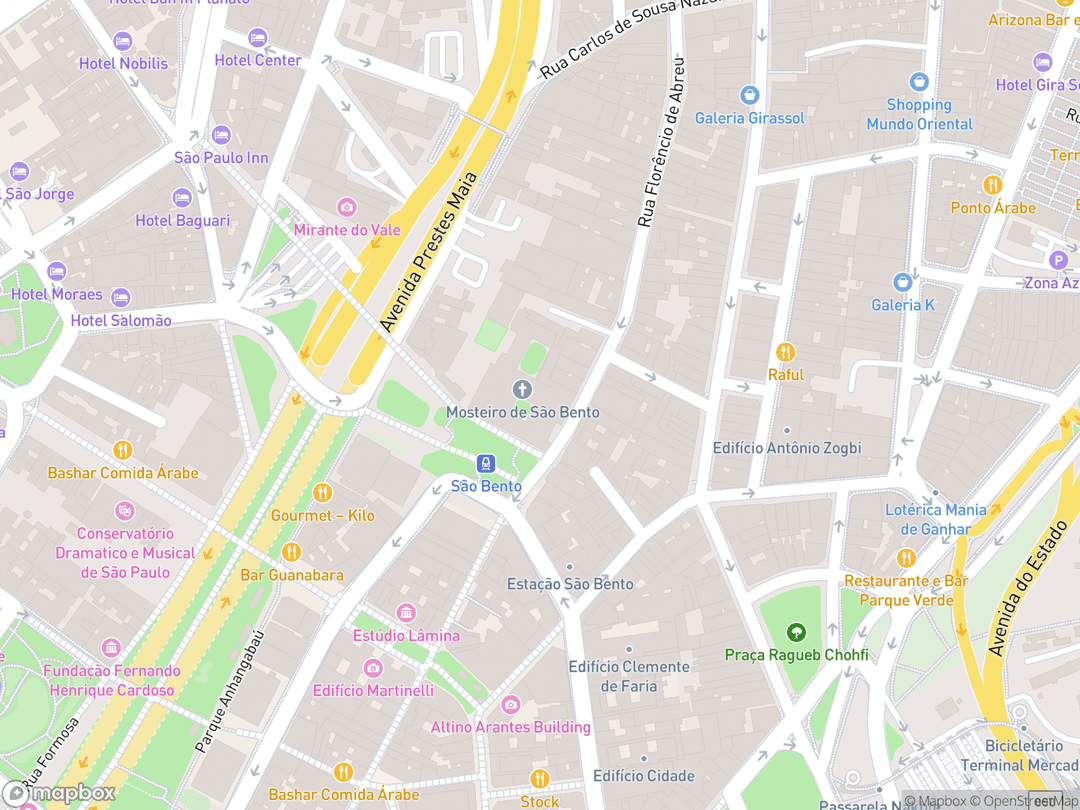
Largo de São Bento, s/nº - Centro Histórico, São Paulo - SP, 01029-010, Brazil
Hours: Monday–Wednesday & Friday 6:00 AM – 6:00 PM; Thursday 6:00 AM – 8:00 AM & 12:30 PM – 6:00 PM; Saturday–Sunday 6:00 AM – 1:00 PM & 4:00 PM – 6:00 PM
Getting There: Take São Paulo Metro Line 1 (Blue) or Line 4 (Yellow) directly to Estação São Bento, exiting straight into Largo de São Bento square.
Get DirectionsTips for Your Visit
Arrive Early for Sunday Mass
Arrive by 9:30 AM on Sunday to secure a seat for the popular 10:00 AM Gregorian chant High Mass.
Visit the Monastic Bakery
Stop by Padaria do Mosteiro inside the complex to purchase traditional pão de mel and monk-baked pastries.
Observe the Floor Zodiac
Look closely at the nave tile floor to find medieval zodiac motifs representing Christ's lordship over cosmic time.
About
The Mosteiro de São Bento (Monastery of Saint Benedict) is one of the most historical and spiritually significant Catholic monastic sites in South America. Founded in 1598, the complex stands on an elevated plateau in central São Paulo where Indigenous chief Tibiriçá once resided. Rooted in centuries of Benedictine monastic tradition, the abbey serves as an active sanctuary for monastic life, continuous prayer, and daily Eucharistic celebrations.
The present monumental church and monastic enclosure were constructed between 1910 and 1922 in a striking Neo-Romanesque architectural style designed by German architect Richard Berndl. Consecrated during Brazil's Independence Centenary and elevated to a Basilica Minor by Pope Pius XI, the sanctuary features rich interior decorations created by the German Beuron Art School, a famous 6,000-pipe Walcker organ, and a functioning monastic bakery.
Gallery
Symbolic Elements
The temple's exterior features intricate carvings, each rich with spiritual meaning:

Medal of Saint Benedict
Ingrained in sanctuary ironwork, this sacred emblem features exorcistic initials invoking divine spiritual protection against evil.
Cruciform Latin Cross Layout
The basilican ground plan forms a Latin Cross oriented eastward, symbolizing salvation through Christ as the Light of the World.

Calvary Sculpture Ensemble
Positioned high above the chancel arch, this 1921 Anton Lang masterpiece depicts Christ crucified between Mary and Saint John.

Zodiacal Time Vaults
Painted zodiac tilework along the nave ceiling symbolizes Christ's ultimate sovereignty over solar time, months, and creation.
Terracotta Monastic Statues
Sculpted around 1650 by Friar Agostinho de Jesus, these terracotta images represent Saint Benedict and Saint Scholastica as spiritual pillars.

Beuron Sacred Geometry Murals
Synthesizing Egyptian symmetry and Byzantine majesty, these wall murals express divine order through geometric proportion.

Ora et Labora Triad
The architectural physical union of the Basilica, College, and Monastic Bakery encapsulates Saint Benedict's rule of prayer and manual work.
Interesting Facts
The monastery was built on the elevated ridge that originally housed the village of Indigenous Chief Tibiriçá in the 16th century. (Tier A)
In 1641, local leader Amador Bueno hid in the monastery to refuse an illegal crown and declare loyalty to Portugal. (Tier A)
The Munich-made J. Mannhardt mechanical clock on the facade served for decades as São Paulo's official timekeeper. (Tier B)
Six bronze carillon bells survived World War maritime blockades to reach Brazil from Bavaria in 1921. (Tier B)
The sanctuary houses 1650 terracotta statues by Friar Agostinho de Jesus, Brazil's earliest known sacred clay sculptor. (Tier A)
Pope Benedict XVI stayed in the monastic quarters during his apostolic journey to Latin America in May 2007. (Tier A)
The church's E. F. Walcker organ features four manuals, 80 stops, and over 6,000 individual pipes. (Tier A)
Tile mosaic signs of the zodiac line the nave floor to symbolize Christ's ultimate lordship over time. (Tier B)
The monks operate an on-site bakery offering artisanal honey cakes and fruitcakes baked from secret recipes. (Tier B)
Common Questions
When is the best time to hear Gregorian chant at the monastery?
The full Benedictine choir sings Gregorian chant every Sunday during the 10:00 AM High Mass.
Is the Monastery Bakery open to the public?
Yes, Padaria do Mosteiro opens daily selling authentic monk-made breads, cakes, and honey pastries.
How do I reach the monastery using public transportation?
Take Metro Line 1 (Blue) or Line 4 (Yellow) directly to Estação São Bento, which exits onto the monastery square.
Did a Pope stay at the monastery?
Pope Benedict XVI resided at the monastery during his official apostolic trip to Brazil in May 2007.
Are guided tours available inside the cloister?
Private cloister areas are accessible during special monthly monastic brunches and scheduled cultural tours.
Featured Stories
The Sovereign Refuge of Amador Bueno
1641
In 1641, following Portugal's restoration of independence, rebellious Paulistas attempted to crown wealthy local nobleman Amador Bueno as King of São Paulo. Fearing civil conflict and remaining loyal to King João IV, Bueno fled into the Benedictine monastery to seek sanctuary. From the upper windows of the cloister, he famously shouted down to the armed crowds below, steadfastly refusing the crown and reaffirming his allegiance to the Portuguese throne.
Source: Archdiocese of São Paulo Historical Records
Wartime Crossing of the Bavarian Bells
1921
During the reconstruction of the monastery following World War I, six massive bronze carillon bells were commissioned from the foundry in Lauingen, Bavaria. Navigating intense transatlantic maritime blockades and post-war supply disruptions, the bells safely reached the port of Santos in 1921. Today, their harmonious chime connected to the Munich Mannhardt clock remains an iconic auditory signature of downtown São Paulo.
Source: Mosteiro de São Bento Monastic Archives
A Papal Residence in the Heart of São Paulo
May 10, 2007
During his historic apostolic voyage to Brazil in May 2007, Pope Benedict XVI chose the Monastery of Saint Benedict as his personal residence. The Holy Father joined the resident cloistered monks for evening Vespers in the monastic choir before addressing vast crowds gathered in Largo de São Bento. This papal visit highlighted the centuries-old Benedictine legacy of sacred liturgy and spiritual hospitality in Latin America.
Source: Holy See Vatican Press Office
Timeline
Monastic Land Grant
Benedictine monk Frei Mauro Teixeira establishes a chapel on land granted by Chief Tibiriçá.
MilestoneElevation to Abbey
Pope Urban VIII officially raises the São Paulo monastery to the canonical rank of an Abbey.
MilestoneSanctuary of Amador Bueno
Local leader Amador Bueno flees to the monastery to reject an illegal royal crown and pledge loyalty to Portugal.
EventEarliest Sacred Clay Statues
Friar Agostinho de Jesus crafts terracotta statues of Saint Benedict and Saint Scholastica for the high altar.
component.timeline.artBurial of Fernão Dias Pais
Famed explorer and major financial benefactor Fernão Dias Pais is interred in the abbey church.
EventDemolition and Groundbreaking
Demolition of the decaying colonial church begins to make way for Richard Berndl's Neo-Romanesque design.
component.timeline.groundbreakingInstallation of Clock and Carillon
The German J. Mannhardt mechanical clock and six Bavarian carillon bells are installed on the twin towers.
MilestoneConsecration as Basilica Minor
Pope Pius XI elevates the abbey church to a Basilica Minor during its official centenary consecration.
DedicationWalcker Organ Installation
A monumental 6,000-pipe organ built by E. F. Walcker & Cie is inaugurated in the church transept.
MilestonePapal Visit of Benedict XVI
Pope Benedict XVI resides at the monastery during his apostolic trip to Brazil and prays Vespers with clergy.
EventHistory by Decade
1590s–1630s — Colonial Founding and First Abbey
In July 1598, Benedictine monk Frei Mauro Teixeira established a humble chapel dedicated to Our Lady of Montserrat on an elevated ridge donated by Indigenous Chief Tibiriçá. By 1634, the growing monastic community erected a permanent stone-and-taipa church, prompting the Holy See to elevate the site to the official status of an Abbey.
1640s–1650s — Royal Sanctuary and Early Brazilian Sacred Art
During the political turmoil of 1641, wealthy citizen Amador Bueno sought sanctuary inside the monastery when a rebellious faction tried to proclaim him King of São Paulo. Around 1650, Friar Agostinho de Jesus sculpted iconic terracotta statues of Saint Benedict and Saint Scholastica, creating what art historians consider the earliest native-born sacred clay sculptures in Brazil.
1770s–1890s — Benefactors and Colonial Decay
Throughout the 18th and 19th centuries, the monastery served as a spiritual fortress and burial ground for elite benefactors, including famed explorer Fernão Dias Pais. However, centuries of tropical humidity severely degraded the original colonial taipa building, leading Abbot Dom Miguel Kruse to plan a modern replacement by the late 1800s.
1910s — Demolition and German Architectural Ambition
In 1910, the decaying colonial church was demolished to pave the way for a massive European-inspired complex designed by Munich professor Richard Berndl. Construction proceeded under Polish-Brazilian architect Georg Przyrembel despite severe shipping blockades and material shortages caused by World War I.
1920s — Centenary Consecration and Papal Elevation
The new complex officially opened in 1922 to commemorate the centenary of Brazilian independence, featuring murals by Dutch Benedictine painter Dom Adelbert Gresnicht. On June 14, 1922, Pope Pius XI elevated the abbey church to the status of Basilica Minor, establishing it as a primary Catholic shrine in the archdiocese.
1950s–2020s — Musical Expansion, Restoration, and Papal Host
In 1954, the monastery installed its massive 6,000-pipe Walcker pipe organ, solidifying its role as a premier sacred music venue in Latin America. In May 2007, the abbey hosted Pope Benedict XVI during his apostolic visit to São Paulo, continuing its legacy of prayer, hospitality, and cultural outreach.
Architecture & Facilities
The Basilica is a premier South American masterpiece of early 20th-century German Neo-Romanesque architecture with Eclectic touches. Designed by Munich professor Richard Berndl, its interior is entirely decorated according to the principles of the German Beuron Art School, combining geometric symmetry, Byzantine golden accents, and early Christian basilican spatial rhythm.
Building Materials
Facade Construction
Heavy reinforced concrete and masonry rendered with rustic stone plaster finishes.
Interior Columns
Polished Italian marble columns sourced from quarries around Lake Maggiore.
Woodwork and Altars
Hand-carved Bavarian oak wood altars and choir stalls crafted by master European artisans.
Stained Glass Windows
Vibrant stained glass crafted by Franz Mayer & Co. of Munich illustrating Benedictine saints.
Interior Features
Central Nave and Choir
Spacious central nave flanked by processional aisles and Beuron wall frescoes.
Abbatial Sanctuary
Chancel housing the high altar, 17th-century terracotta statues, and Anton Lang's Calvary group.
Walcker Organ Gallery
Transept gallery housing the 6,000-pipe organ supported by monumental carved oak pillars.
Monastic Choir Stalls
Enclosed oak stall seating where cloistered monks gather daily for Gregorian chant prayer.
Temple Grounds
Situated directly on the historic Largo de São Bento pedestrian square, the complex integrates the Abbatial Basilica, St. Benedict College, St. Benedict Faculty, and the Monastic Bakery into a cohesive urban precinct.
Additional Facilities
Includes the historic Monastic Bakery (Padaria do Mosteiro), the Faculty of Saint Benedict, a theological research library, and reception facilities for public cultural events.
Religious Significance
As a major Catholic basilica, the Monastery of Saint Benedict is dedicated to the worship of God through the Eucharistic Sacrifice and the continuous prayer of the Divine Office. Its sacred spaces manifest the continuity of historic Christian liturgy, monastic discipline, and divine revelation.
The monastery serves as an active cloistered house of prayer, an abbatial seat of Benedictine spiritual life, and a sanctuary of liturgical grace for the Archdiocese of São Paulo.
Sacred Ordinances
The Holy Sacrifice of the Mass
Daily Eucharistic celebrations where the faithful participate in Christ's memorial sacrifice.
Opus Dei (The Liturgy of the Hours)
Seven daily canonical hours of monastic psalmody and Gregorian chant offered for the Church and world.
Sacrament of Reconciliation
Regular confessional ministry offering pastoral forgiveness and spiritual counsel.
The Rule of Saint Benedict and Liturgical Arts
Living under the motto 'Ora et Labora' (Pray and Work), the Benedictine monks treat sacred beauty as a path to God. The integration of Beuron sacred art, Gregorian chant, and pipe organ music transforms every service into an earthly participation in heavenly liturgy.
Similar Temples
Sources & Research
Every fact on Temples.org is backed by verified Sources & Research. Each piece of information is rated by source tier and confidence level.
View All Sources (9)
| Field | Source | Tier | Retrieved |
|---|---|---|---|
| About & Canonical Status | Mosteiro de São Bento de São Paulo (opens in a new tab) | A | 2026-02-18 |
| Papal Visit & Elevation History | Holy See Press Office (opens in a new tab) | A | 2026-02-18 |
| Archdiocesan History & Liturgical Life | Archdiocese of São Paulo (opens in a new tab) | A | 2026-02-18 |
| Monastic Governance & Benedictine Order | Benedictine Confederation (opens in a new tab) | A | 2026-02-18 |
| Architectural & Beuron Art Analysis | Universidade Estadual Paulista (UNESP) (opens in a new tab) | B | 2026-02-18 |
| Monastic Architectural Conservation | ResearchGate Academic Repository (opens in a new tab) | B | 2026-02-18 |
| Walcker Organ Historical Documentation | E. F. Walcker & Cie Archives (opens in a new tab) | B | 2026-02-18 |
| Vatican Reporting on Monastic Life | Inside the Vatican Magazine (opens in a new tab) | B | 2026-02-18 |
| Cultural Heritage & Visitor Information | São Paulo Secreto (opens in a new tab) | C | 2026-02-18 |