Visitor Insights
Visiting Pátio do Colégio
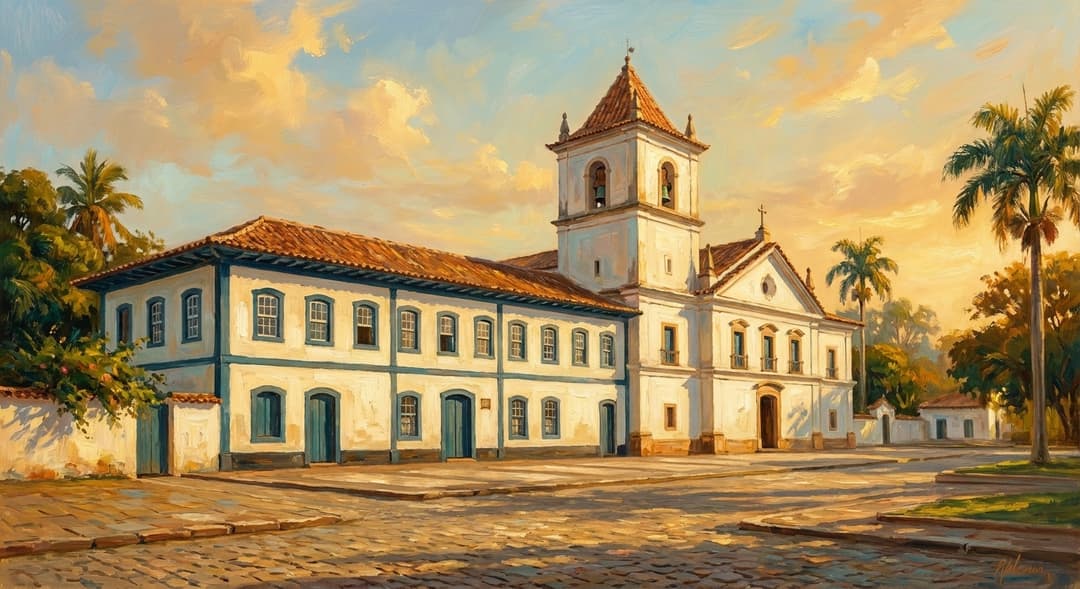
Visiting Pátio do Colégio offers a tranquil historical encounter in the heart of bustling downtown São Paulo. Guests can attend Catholic Mass, explore original 16th-century rammed-earth walls, and tour museum exhibits dedicated to colonial missionary history.
Highlights
- Exposed 16th-century rammed-earth (taipa de pilão) wall enclosed in glass.
- Reliquary containing a primary relic of Saint José de Anchieta.
- Quiet cobblestone inner courtyard away from urban noise.
- Solid four-ton pink granite altar crafted by artist Cláudio Pastro.
Things to Know
- The Anchieta Museum is closed on Mondays and Sundays.
- Appropriate modest attire is expected inside the sanctuary church.
Location
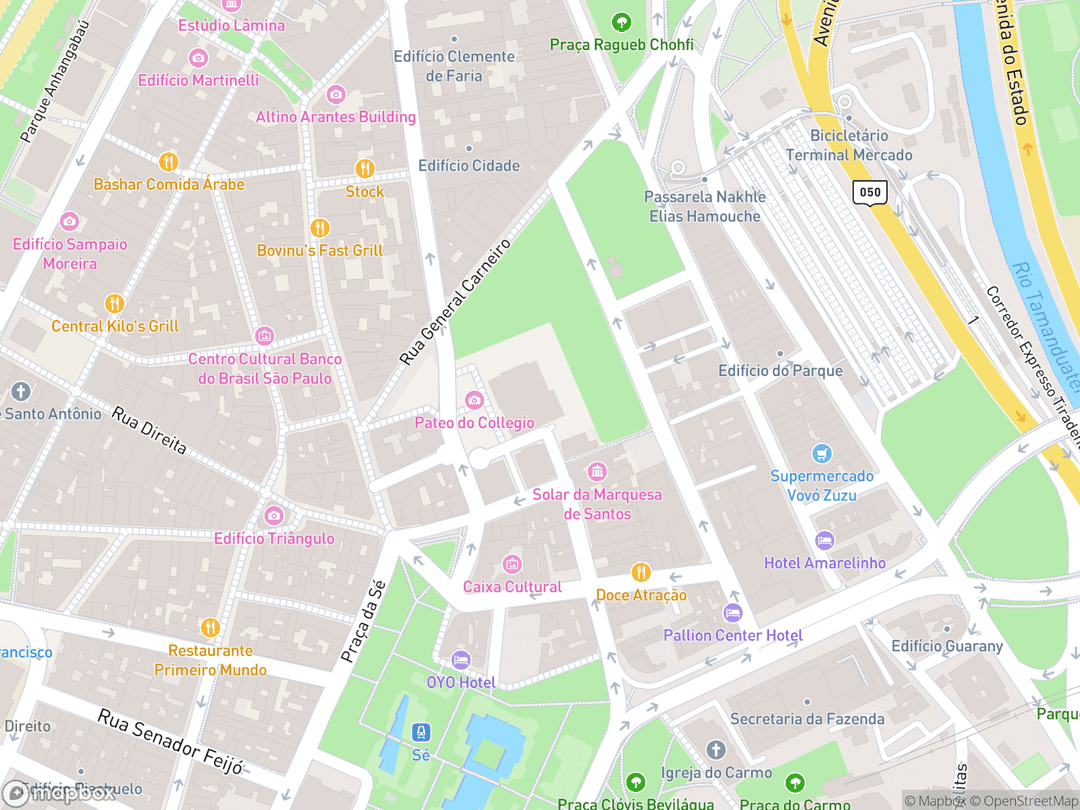
Praça Pateo do Collegio, 2 - Centro Histórico de São Paulo, São Paulo - SP, 01016-040, Brazil
Hours: Museum: Tuesday to Saturday, 9:00 AM – 4:45 PM. Mass: Tuesday to Friday at 12:00 PM, Sunday at 10:00 AM.
Getting There: Located 200 meters from Sé Station (Metro Red Line 3 / Blue Line 1) in Historic Downtown São Paulo.
Get DirectionsTips for Your Visit
Plan Around Mass Schedules
Combine your historical tour with the 12:00 PM weekday Mass for a meaningful spiritual experience.
Explore the Museum First
Visit the Anchieta Museum to view 16th-century artifacts before entering the main sanctuary church.
Utilize Public Transit
Arrive via Sé Metro Station to avoid dense downtown street traffic and limited parking.
About
The Pátio do Colégio, historically spelled Pateo do Collegio, is the birthplace of the metropolis of São Paulo and a foundational sanctuary of Roman Catholicism in Brazil. Rooted in the shared heritage of the Christian Gospel and Abrahamic tradition, the complex was established by Jesuit missionaries of the Society of Jesus to gather believers, proclaim the Word of God, and celebrate the Holy Eucharist on the South American frontier.
Founded on January 25, 1554, with a inaugural Mass celebrated by Saint José de Anchieta and Father Manuel da Nóbrega on the Feast of the Conversion of Saint Paul, the site initially consisted of a simple rammed-earth school and chapel. Over centuries of conflict, political expulsion, and structural collapse, the site evolved into a central spiritual and educational hub for the region.
Faithfully reconstructed between 1954 and 1979 in the Portuguese Colonial Mannerist style based on historical drawings, the sanctuary complex today houses the Church of Saint Joseph of Anchieta, the Anchieta Museum, and preserved 16th-century rammed-earth archaeological remains.
Gallery
Symbolic Elements
The temple's exterior features intricate carvings, each rich with spiritual meaning:

Relic of St. José de Anchieta
A femur bone relic of Saint José de Anchieta displayed near the sanctuary altar for veneration.

Solid Pink Granite Altar
A four-ton solid granite monolith symbolizing Jesus Christ as the unshakeable cornerstone of faith.

IHS Jesuit Monogram
The official emblem of the Society of Jesus symbolizing salvation in Christ carved into entrance portals.
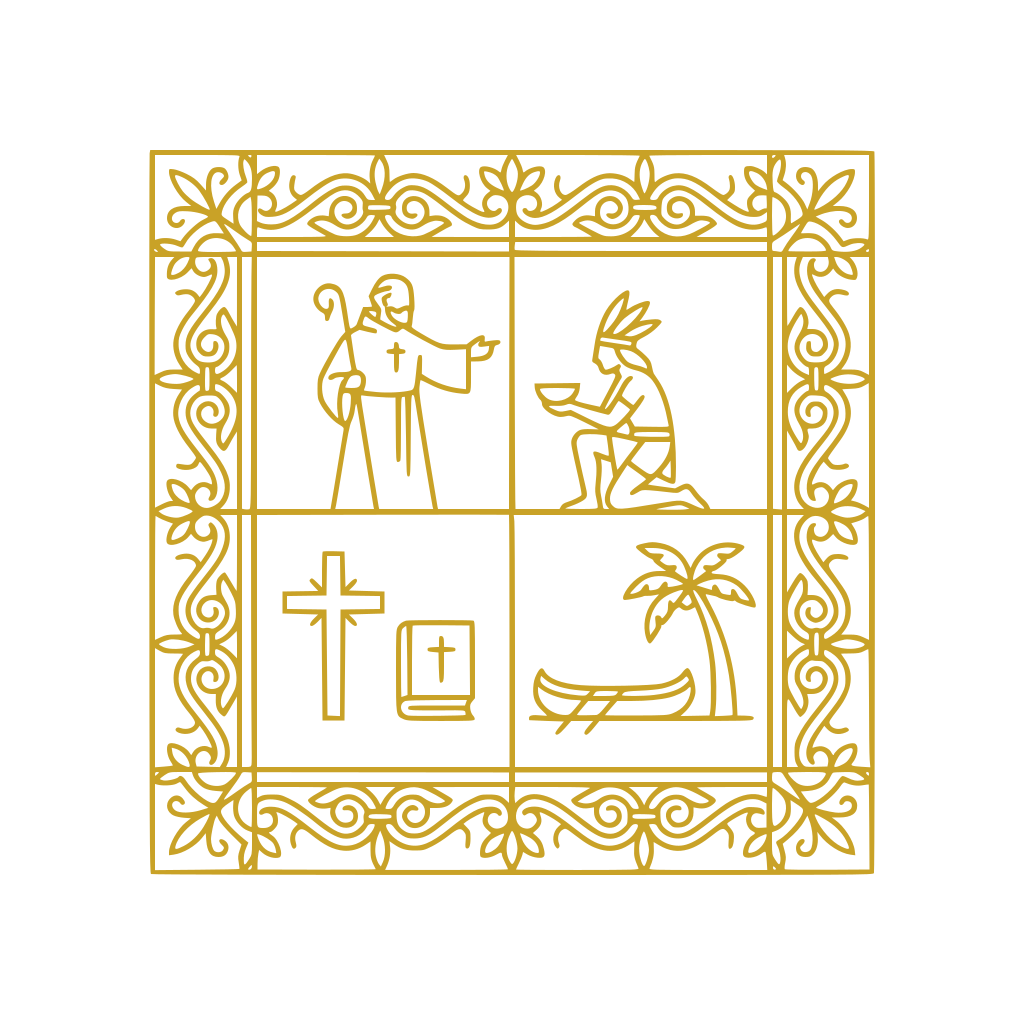
Contemporary Azulejo Murals
Blue-and-gold hand-painted tiles illustrating early encounters between Jesuit missionaries and native indigenous tribes.
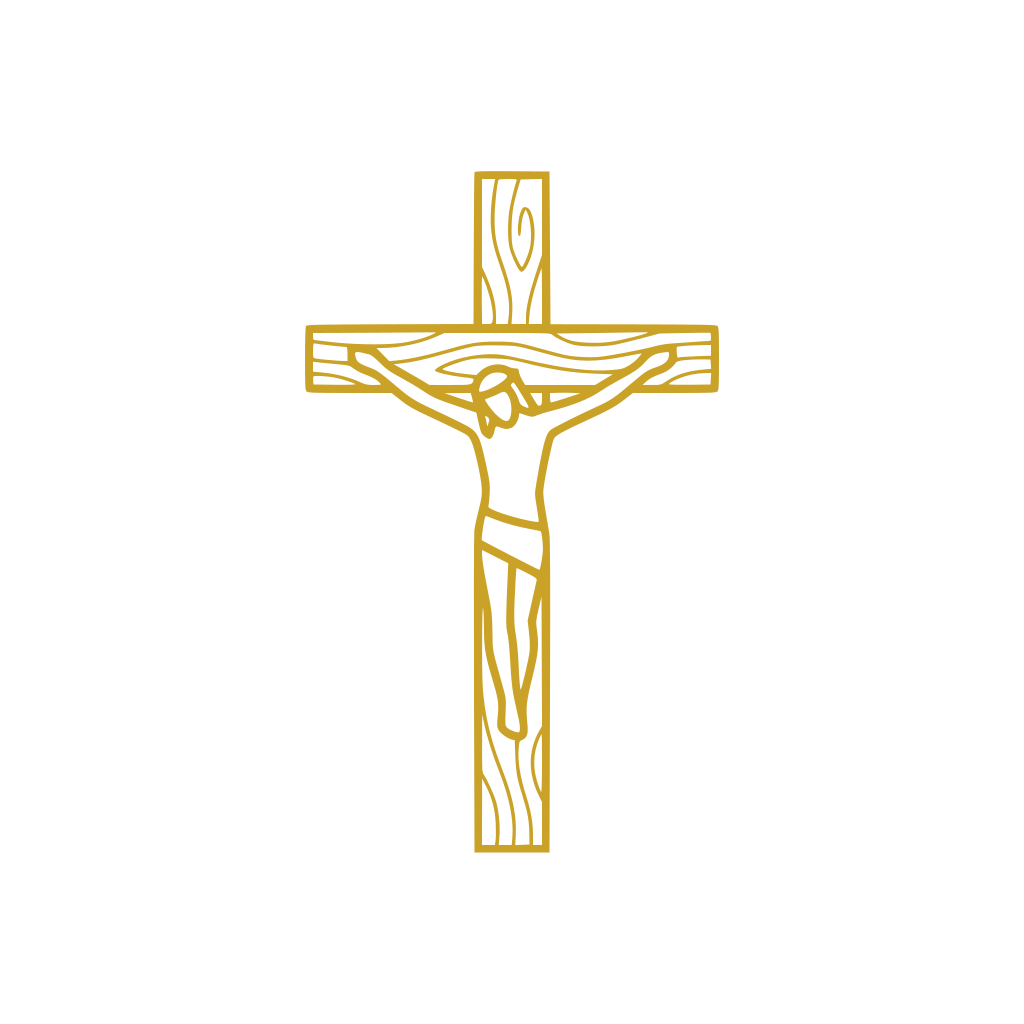
Sixteenth-Century Wooden Crucifix
An authentic 16th-century carved wood crucifix linking modern worshippers to early colonial evangelization.

Cripta Tibiriçá
Subterranean crypt honoring Chief Tibiriçá, the indigenous leader who embraced Catholicism and protected the mission.

Preserved Taipa de Pilão Wall
Exposed section of 1550s rammed-earth masonry demonstrating original missionary building techniques.

Mannerist Bell Tower
Single square bell tower crowned with pyramid finials modeled on historic 19th-century drawings.
Interesting Facts
São Paulo celebrates its official city anniversary every year on January 25 to mark the founding Mass at Pátio do Colégio. (Tier A)
The early Jesuit school used Tupi-Guarani as its main teaching language rather than Portuguese or Latin. (Tier B)
The complex served as the executive office for state governors for over 160 years following the expulsion of the Jesuits. (Tier A)
The main altar in the Church of St. José de Anchieta is carved from a single four-ton block of pink granite. (Tier B)
Visitors can view original 1550s mud-and-straw wall compaction under glass floor panels inside the museum. (Tier A)
The subterranean crypt houses the remains of indigenous Chief Tibiriçá alongside early Jesuit pioneers. (Tier B)
The current colonial facade was reconstructed based on precise 19th-century drawings by artist Jean-Baptiste Debret. (Tier B)
Saint José de Anchieta composed the first grammar book for the native Tupi language while stationed at this mission. (Tier A)
Common Questions
Is Pátio do Colégio an active Catholic church?
Yes, the Church of Saint Joseph of Anchieta holds regular daily Holy Mass and Catholic devotional services.
Is there an entrance fee to visit the complex?
Entry to the church for prayer is free, while a small admission fee is charged to enter the Anchieta Museum.
Can I see original 16th-century structures at the site?
Yes, an authentic 1556 rammed-earth wall section is preserved under glass inside the museum.
How close is the nearest Metro station?
The sanctuary is located approximately 200 meters from Sé Station on Lines 1 and 3.
Featured Stories
The Founding Mass of 1554
January 25, 1554
On January 25, 1554, a tiny group of Jesuit priests gathered inside a thatched palm shelter on the Piratininga plateau to celebrate Mass. Led by Father Manuel da Nóbrega and young José de Anchieta, this modest liturgical act consecrated the mission on the Feast of Saint Paul's Conversion and marked the official birth of the city of São Paulo.
Source: Archdiocese of São Paulo Archives
The Alliance with Chief Tibiriçá
1550s
The survival of the fragile 16th-century mission relied heavily on the friendship of Cacique Tibiriçá, leader of the local Tupiniquim tribe. After converting to Catholicism, Tibiriçá defended the college against hostile tribal attacks, ensuring the sanctuary's survival and earning a revered resting place in the crypt beneath the altar.
Source: Society of Jesus Historical Records
Rebuilding the City's Birthplace
1954–1979
Following the catastrophic destruction of the historic church in 1896, citizens of São Paulo spent decades advocating for its resurrection. During the city's 400th anniversary in 1954, the land was returned to the Jesuits, initiating a meticulous 25-year reconstruction program that faithfully restored the landmark using early 19th-century watercolors.
Source: Pátio do Colégio Restoration Documentation
Timeline
Inaugural Mass Celebrated
Jesuit priests Manuel da Nóbrega and José de Anchieta celebrate the first Mass establishing the mission station.
MilestoneRammed-Earth Construction
Father Afonso Brás directs the build of a permanent rammed-earth chapel and school building.
EventExpulsion of the Jesuits
Local settlers expel the Jesuit order due to their opposition to indigenous enslavement.
EventJesuit Return and Expansion
The Jesuits return to São Paulo and expand the stone and rammed-earth college complex.
RenovationPombaline Suppression
King Joseph I expels the Jesuits from Brazil and confiscates all order properties.
EventConversion to Executive Palace
The former Jesuit college building is converted into the Royal Government Palace.
EventCollapse of Historic Church
Heavy rainstorms cause the historic church roof to collapse, leading to structural demolition.
EventGovernment Relocation
State government offices vacate the property, paving the way for eventual historical restoration.
EventLand Returned and Reconstruction Begins
The land is returned to the Society of Jesus during São Paulo's 400th anniversary celebration.
component.timeline.groundbreakingInauguration of Complex
The reconstructed colonial complex, sanctuary church, and Anchieta Museum are officially opened.
DedicationSanctuary Liturgical Renovation
Artist Cláudio Pastro completes a major sacred art redesign of the church presbytery.
RenovationCanonization of St. José de Anchieta
Pope Francis canonizes Saint José de Anchieta, elevating the site to a major national sanctuary.
MilestoneHistory by Decade
1550s — Colonial Foundation
Here we are, a small group in the wilderness, establishing a home for Christ among the native peoples.
On January 25, 1554, Jesuit priests Manuel da Nóbrega and José de Anchieta celebrated Holy Mass on the Piratininga plateau. Constructed with wattle, daub, and palm thatch, the modest shelter marked the spiritual birth of São Paulo. In 1556, Jesuit Brother Afonso Brás directed construction of a durable rammed-earth school and chapel.
1640s–1650s — Resistance and Return
Tensions between Jesuits and local settlers escalated over the protection of native populations against enslavement. Settlers forcibly expelled the Jesuits in 1640, but the order returned in 1653 under negotiated protection to rebuild and expand the college.
1750s–1760s — Crown Seizure
The Marquis of Pombal decreed the total suppression of the Society of Jesus across the Portuguese Empire in 1759. The Jesuits were permanently expelled, and the complex was converted into the Executive Palace for provincial governors.
1890s — Structural Loss
Decades of secular usage and heavy alteration compromised the original architecture. In March 1896, severe rainstorms caused the old church roof to cave in, prompting state authorities to demolish the remaining standing walls.
1950s–1970s — Historical Reconstruction
In 1954, during São Paulo's quadricentennial, the site was returned to the Society of Jesus. Artisans spent twenty-five years reconstructing the 17th-century Mannerist design using historical drawings by Debret and Florence, completing the project in 1979.
2000s–Present — Contemporary Sanctuary
In 2009, artist Cláudio Pastro redesigned the presbytery with modern sacred art and a solid pink granite altar. Following the canonization of St. José de Anchieta in 2014, the site stands as an active center of worship and heritage.
Architecture & Facilities
The reconstructed complex is built in the Portuguese Colonial Mannerist style, often known as Estilo Chão or Plain Style. Popularized by the Society of Jesus in the 16th and 17th centuries, this style features clean geometric lines, unadorned white plaster surfaces, dark wood fenestration, and restrained exterior ornamentation that emphasizes functional, sacred dignity.
Building Materials
Preserved Taipa de Pilão
Authentic 16th-century rammed-earth wall compacting clay, straw, and organic matter.
Reinforced Brick Masonry
Twentieth-century structural brickwork faced with traditional whitewashed plaster.
Pink Granite Monolith
Single four-ton block of solid Brazilian pink granite forming the main altar.
Clay Barrel Tiles
Traditional terracotta roof tiles framing the gabled rooflines.
Interior Features
Nave of St. José de Anchieta
Single-nave sanctuary featuring high ceilings, timber beams, and natural directional lighting.
Presbytery and Altar
Renovated sanctuary featuring blue-and-gold azulejo tile murals and a solid stone altar.
Anchieta Reliquary Niche
Dedicated side shrine displaying the primary bone relic of Saint José de Anchieta.
Archaeological Crypt
Subterranean display area preserving ancient structural foundations under glass.
Temple Grounds
A quiet inner cobblestone courtyard framed by arched arcades and native tropical foliage, providing a peaceful retreat from downtown traffic.
Additional Facilities
Houses the Anchieta Museum containing colonial sacred art, interactive historical displays, a cafe, and a gift shop.
Religious Significance
As a sacred Roman Catholic sanctuary in the Christian Abrahamic tradition, Pátio do Colégio honors the transformative power of the Gospel and the celebration of the Holy Sacraments. The sanctuary serves as a monument to frontier evangelization, inculturation, and dedicated Christian service.
To offer a holy space for Eucharistic worship, historical reflection, veneration of Saint José de Anchieta, and reconciliation among cultures.
Sacred Ordinances
The Holy Sacrifice of the Mass
Central Eucharistic celebration connecting daily worshippers to the mystery of Christ's sacrifice.
Veneration of Relics
Devotional practice seeking the intercession of Saint José de Anchieta before his sacred relic.
Sacrament of Reconciliation
Penitential service offering spiritual healing, forgiveness, and renewal.
Catechesis and Christian Formation
Educational ministry continuing the Jesuit tradition of teaching faith and human values.
The Legacy of Saint José de Anchieta
Known as the Apostle of Brazil, Saint José de Anchieta learned the native Tupi language, composed the first dictionary of the indigenous tongue, and dedicated his life to education, healthcare, and peacemaking.
Similar Temples
Sources & Research
Every fact on Temples.org is backed by verified Sources & Research. Each piece of information is rated by source tier and confidence level.
View All Sources (9)
| Field | Source | Tier | Retrieved |
|---|---|---|---|
| About & Historical Background | Pátio do Colégio Official Site (opens in a new tab) | A | 2026-02-22 |
| About & Historical Background | Archdiocese of São Paulo (opens in a new tab) | A | 2026-02-22 |
| Architecture & Design | ArchDaily (opens in a new tab) | B | 2026-02-22 |
| Architecture & Design | University of São Paulo (opens in a new tab) | B | 2026-02-22 |
| Religious Significance | A Missa no Brasil (opens in a new tab) | B | 2026-02-22 |
| Visitor Insights & Travel | Melhores Destinos (opens in a new tab) | D | 2026-02-22 |
| Visitor Insights & Transit | SP Executive Drivers (opens in a new tab) | D | 2026-02-22 |
| Visitor Insights & Tours | AroundUs Travel (opens in a new tab) | D | 2026-02-22 |
| Visitor Insights & Bookings | Evendo (opens in a new tab) | D | 2026-02-22 |