Visitor Insights
Visiting Rio de Janeiro Brazil Temple
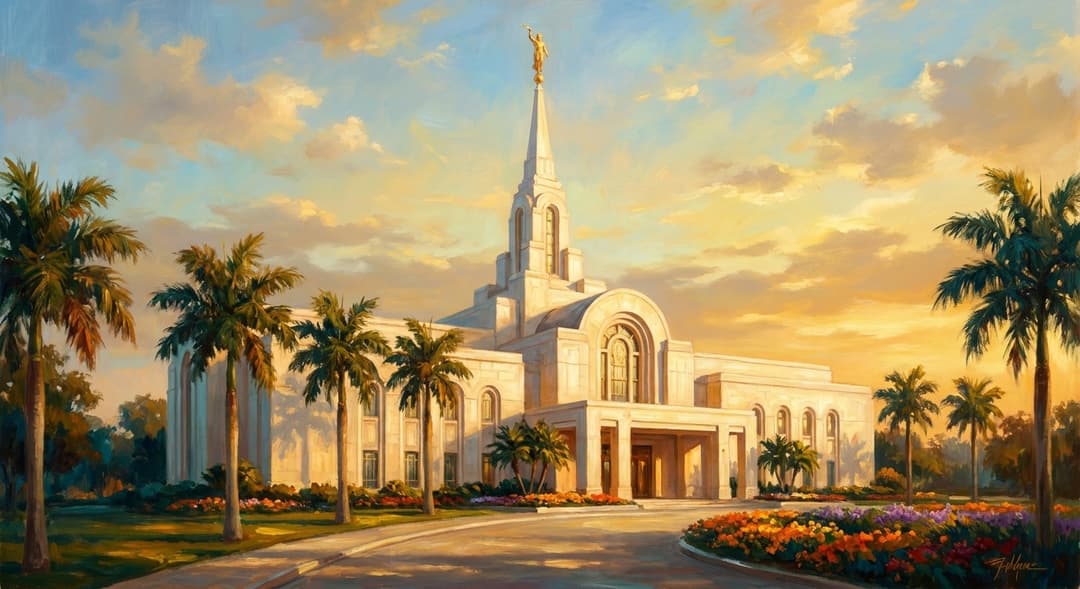
The Rio de Janeiro Brazil Temple features manicured grounds, tropical botanical displays, and serene reflecting plazas adjacent to a natural wetland reserve. While temple interior access is reserved for Church members with valid recommends, the public is welcome to walk the exterior gardens and reflection spaces.
Highlights
- Lush landscaping featuring 129 palm trees and native Brazilian flora
- Brilliant Branco Ceará white granite exterior facade
- Elegant Art Deco architectural motifs and ocean-inspired art glass
- Peaceful public garden pathways bordering the wetland reserve
Things to Know
- Interior admittance requires an active temple recommend
- No dedicated public visitors' center is on site, though a distribution center operates on the grounds
- Modest dress is encouraged when visiting the grounds and plaza
Location
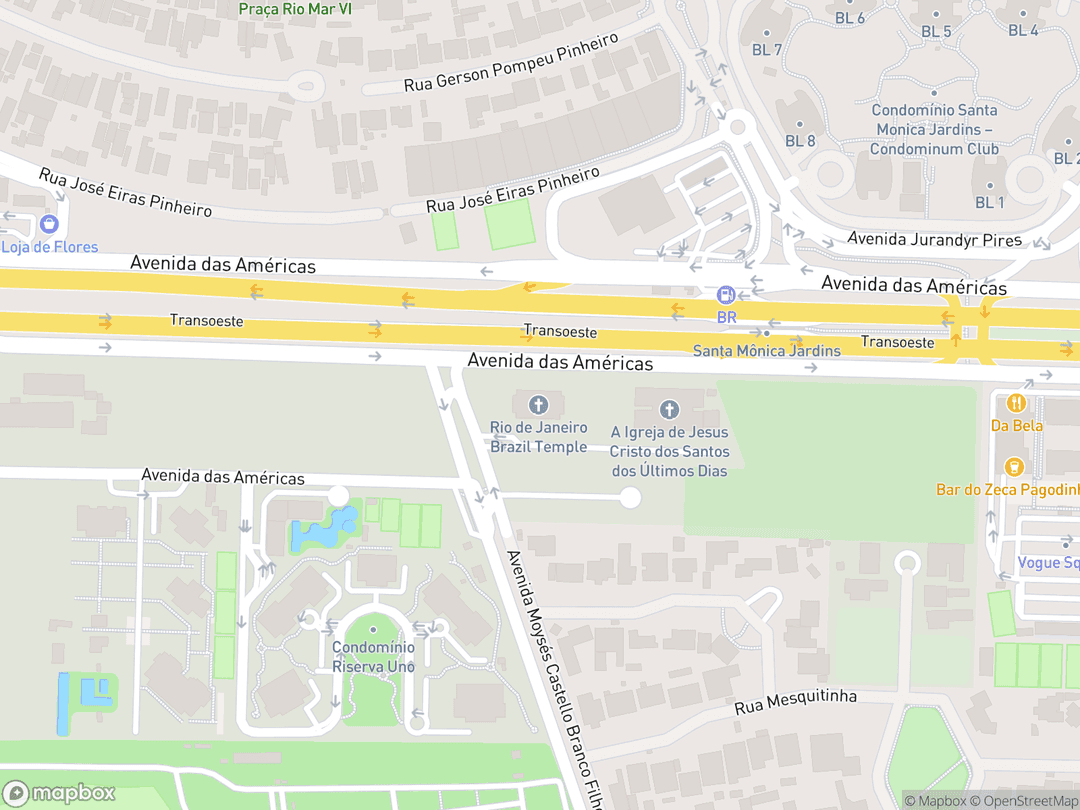
Avenida Das Américas, Nº 9005, Barra da Tijuca, Rio de Janeiro - RJ, 22793-083, Brazil
Hours: Grounds open daily from sunrise to sunset; temple ordinances operate Tuesday through Saturday.
Getting There: Located on Avenida das Américas in Barra da Tijuca, accessible via Rio's BRT TransOeste bus line or Metro Line 4 connection at Jardim Océanico.
Get DirectionsTips for Your Visit
Best Photo Moments
Visit during late afternoon to capture golden sunlight reflecting off the white granite facade against tropical greenery.
Public Transit Access
Take Metro Line 4 to Jardim Océanico and transfer to the BRT TransOeste system along Avenida das Américas.
About
The Rio de Janeiro Brazil Temple stands as the 171st operating temple of The Church of Jesus Christ of Latter-day Saints. Situated in the vibrant coastal district of Barra da Tijuca, the temple serves tens of thousands of Latter-day Saints across southeastern Brazil who previously traveled over 300 miles to São Paulo for sacred worship.
Grounded in Restorationist Christian theology, Latter-day Saints view Jesus Christ as the Savior and Son of God. In a city famed for the monumental Christ the Redeemer statue, the temple complements Rio's Christian heritage by providing a dedicated sanctuary where members make solemn covenants with Heavenly Father.
Designed to harmonize with Rio's historical Art Deco architecture, the temple features brilliant white Brazilian granite and stylized ocean-hued stained glass. It serves as a spiritual bridge between heaven and earth, offering eternal marriage sealings and sacred ordinances for families.
Gallery
Symbolic Elements
The temple's exterior features intricate carvings, each rich with spiritual meaning:

Angel Moroni Statue
Crowning the single central spire, the gilded statue symbolizes the restoration of Christ's gospel and spiritual gathering.

Art Deco Arch Motif
Recurring geometric arch designs represent a symbolic bridge between earthly life and heavenly communion.

Ocean Palette Art Glass
Cool aqua, cobalt, and purple stained glass hues evoke the surrounding Atlantic waters and Christ's living water.

Branco Ceará Granite
Luminous white Brazilian granite highlights visual purity, holiness, and devotion to God.

Twelve Oxen Font Base
A bronze font resting upon twelve oxen reflects Solomon's temple and the twelve tribes of Israel.

Native Floral Carvings
Stone and woodwork decorative motifs feature South American flora, expressing divine beauty in creation.

Reflecting Plazas
Quiet outdoor water features offer places of quiet contemplation and visual symmetry.
Interesting Facts
The temple's design pays homage to Rio de Janeiro's status as the Art Deco capital of South America (Tier B).
The temple was dedicated in 2022, exactly 100 years after construction began on Rio's famous Christ the Redeemer statue (Tier A).
Its exterior cladding uses Branco Ceará granite, recognized as the whitest natural granite in South America (Tier B).
Completion was achieved in 2020, but the public opening was delayed two years by the COVID-19 pandemic (Tier A).
It stands as the eighth operating Latter-day Saint temple dedicated in the nation of Brazil (Tier A).
The 9.44-acre grounds feature 180 mature trees, including 129 palm trees adapted to coastal humidity (Tier A).
Stained glass panels combine Utah glass craftsmanship with local ocean colors inspired by the Atlantic (Tier B).
The complex shares its grounds with a standard meetinghouse and a distribution center for the regional community (Tier A).
Common Questions
Who can enter the Rio de Janeiro Brazil Temple?
The temple grounds and outdoor plazas are open to everyone, while interior access is reserved for Latter-day Saints with a valid temple recommend.
Why is the temple's architecture influenced by Art Deco?
Rio de Janeiro is known as the Art Deco capital of South America, inspiring architects to blend local historic styles with sacred symbolism.
What material covers the temple's exterior?
The facade is clad in Branco Ceará granite, quarried in northeastern Brazil and renowned as South America's whitest natural granite.
How does the temple relate to broader Christian faith?
Latter-day Saints worship Jesus Christ as Lord and Savior, using the temple as a sacred sanctuary for eternal covenants alongside Rio's rich Christian heritage.
Featured Stories
A Century of Connection in Rio
May 8, 2022
The temple was dedicated in May 2022, precisely one century after construction began in 1922 on Rio's world-famous Christ the Redeemer statue. During the dedicatory proceedings, leaders noted that while the statue stands as a majestic civic monument to the Savior, the temple provides a sanctuary where believers make personal covenants with Him. This historic coincidence highlighted the deep Christian roots of the regional Latter-day Saint community.
Source: Church News & Historical Records
Faith Through a Two-Year Delay
March 18, 2020
Fully completed and ready for dedication in early 2020, the temple faced an unexpected two-year public closure when global health restrictions halted public gatherings. Local members maintained their devotion through patient waiting and spiritual preparation until spring 2022. When doors finally opened for the open house, tens of thousands of neighbors and civic leaders toured the sacred halls with deep appreciation.
Source: Church Newsroom Announcements
Bridging the Journey to São Paulo
April 6, 2013
For over forty years, faithful Church members residing in Rio de Janeiro endured a grueling 310-mile bus trip to attend the São Paulo Brazil Temple. President Thomas S. Monson's announcement of a local temple in 2013 brought profound relief and joy to more than 45,000 area Latter-day Saints. The new sanctuary dramatically reduced travel burdens and transformed sacred worship into a frequent spiritual anchor for families.
Source: LDS General Conference Reports
Timeline
Temple Announced
President Thomas S. Monson announces the Rio de Janeiro Brazil Temple during General Conference.
MilestoneGroundbreaking Ceremony
Elder Claudio R. M. Costa presides over the groundbreaking and site dedication in Barra da Tijuca.
component.timeline.groundbreakingInitial Dedication Announced
The First Presidency schedules the public open house and dedication for spring 2020.
MilestonePandemic Postponement
The open house and dedication are postponed indefinitely due to global COVID-19 health protocols.
EventRescheduled Dedication Announced
The First Presidency releases new dates for the public open house and dedication in spring 2022.
MilestonePublic Open House Begins
A five-week public open house commences, welcoming thousands of community members and dignitaries.
EventYouth Devotional
Elder Gary E. Stevenson addresses local youth on the eve of the temple dedication.
EventTemple Dedication
Elder Gary E. Stevenson formally dedicates the temple as the 171st operating temple worldwide.
DedicationHistory by Decade
1920s-1970s — Early Growth in Southeastern Brazil
Missionary work in Brazil began in the late 1920s among immigrant communities before expanding into major metropolitan centers. As congregations grew throughout Rio de Janeiro, local members established strong spiritual roots despite lacking a local temple. Families regularly organized long group pilgrimages to attend the São Paulo Temple following its dedication in 1978.
2010s — Announcement and Groundbreaking
President Thomas S. Monson announced plans for the Rio de Janeiro Temple in April 2013 to joyous acclaim across southeastern Brazil. On March 4, 2017, Elder Claudio R. M. Costa presided over the groundbreaking ceremony in Barra da Tijuca. Construction proceeded steadily over the next three years using premium local materials and skilled Brazilian craftsmen.
2020s — Completion, Dedication, and Active Service
Although finished in early 2020, the temple's public opening was delayed two years due to global pandemic safety protocols. Rescheduled open house events in spring 2022 welcomed thousands before Elder Gary E. Stevenson formally dedicated the edifice on May 8, 2022. Today, the temple serves as the 171st operating sanctuary worldwide, bringing sacred covenants close to home for thousands.
Architecture & Facilities
The Rio de Janeiro Brazil Temple features a modern Classical silhouette integrated with pronounced Art Deco influences, honoring Rio's heritage as the Art Deco capital of South America. Designed by GSBS Architects in collaboration with Brazilian firm Modulor Arquitetura e Urbanismo, the symmetrical building incorporates carved stone arch motifs, streamlined massing, and a single dramatic spire crowned by an Angel Moroni statue.
Building Materials
Exterior Facade
Clad in Branco Ceará granite, South America's whitest natural granite quarried in northeastern Brazil.
Art Glass Windows
Custom panels designed with Holdman Studios featuring geometric Art Deco arches in ocean blue and aqua tones.
Interior Millwork
Crafted from warm natural woods contrasted against silver decorative paint and custom bronze fixtures.
Decorative Metalwork
Custom bronze and steel stair railings styled with flowing geometric Brazilian motifs.
Interior Features
Baptistry
Houses a cast bronze baptismal font resting upon twelve sculpted bronze oxen.
Instruction Rooms
Two ordinance rooms featuring warm wood trim, soft indirect lighting, and ocean-toned carpeting.
Sealing Rooms
Two intimate sealing rooms equipped with custom mirrors and carved Art Deco altars for eternal marriages.
Celestial Room
A serene room featuring crystal Art Deco chandeliers, delicate wall paint, and plush furnishings.
Temple Grounds
The 9.44-acre site includes 129 palm trees, 51 flowering and shade trees, reflecting plazas, and native tropical flora bordering an adjacent wetland reserve.
Additional Facilities
The complex includes a full-sized meetinghouse for Sunday congregational services, a visitor arrival center, and an on-site distribution center.
Religious Significance
Rooted in Restorationist Christian theology, Latter-day Saints affirm Jesus Christ as the divine Savior and Redeemer of mankind. In a city recognized worldwide for the statue of Christ the Redeemer overlooking Guanabara Bay, the Rio de Janeiro Brazil Temple provides a sacred space where believers make personal, eternal covenants with God.
To serve as a literal House of the Lord where sacred ordinances, eternal family sealings, and vicarious baptisms are performed.
Sacred Ordinances
Baptisms for Ancestors
Vicarious baptisms performed by youth and adults on behalf of deceased ancestors, affirming that salvation through Christ is offered to all.
Temple Endowment
A sacred instruction course where members receive spiritual knowledge and enter into covenants of obedience, consecration, and Christian discipleship.
Eternal Marriage Sealings
Sacred ceremonies joining husband and wife, as well as children to parents, for time and all eternity under divine priesthood authority.
Meetinghouses vs. Sacred Temples
While local meetinghouses host weekly Sunday worship and community fellowship open to all, temples serve as specialized sanctuaries reserved for high priesthood ordinances. Members prepare spiritually to enter the temple, wearing simple white clothing inside to symbolize purity, equality, and reverence before Heavenly Father.
Similar Temples
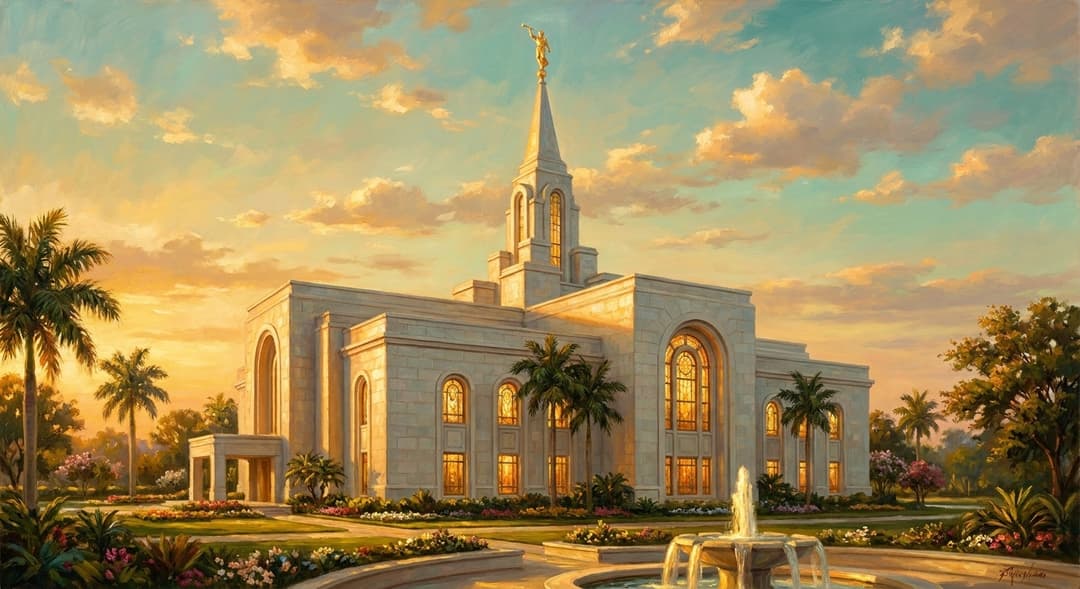
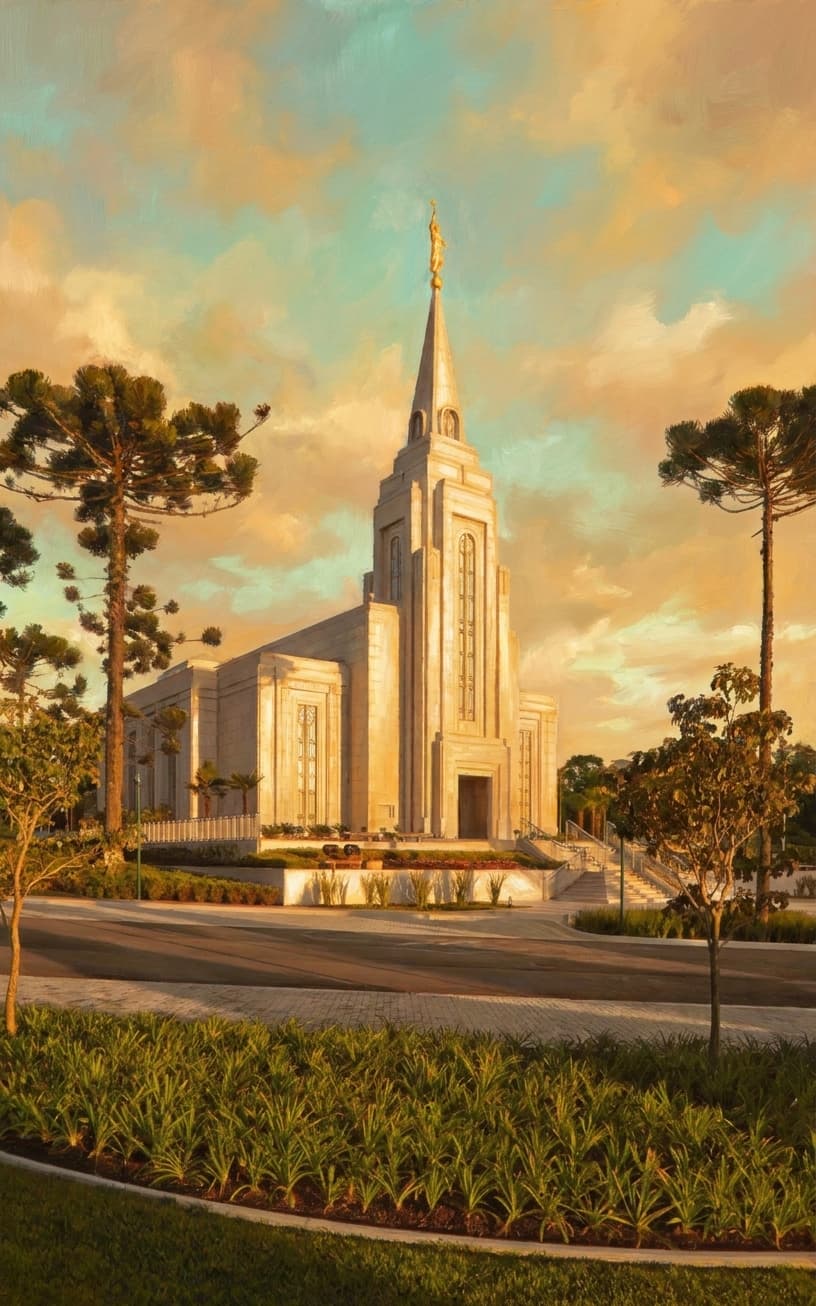
Sources & Research
Every fact on Temples.org is backed by verified Sources & Research. Each piece of information is rated by source tier and confidence level.
View All Sources (5)
| Field | Source | Tier | Retrieved |
|---|---|---|---|
| About & Historical Background | The Church of Jesus Christ of Latter-day Saints (opens in a new tab) | A | 2026-02-22 |
| About & Historical Background | ChurchofJesusChristTemples.org (opens in a new tab) | C | 2026-02-22 |
| Timeline & Featured Stories | Church News (opens in a new tab) | B | 2026-02-22 |
| Timeline & Featured Stories | LDS Living (opens in a new tab) | B | 2026-02-22 |
| Architecture & Symbolic Elements | Encyclopædia Britannica (opens in a new tab) | B | 2026-02-22 |