Visitor Insights
Visiting Salvador Brazil Temple
The Salvador Brazil Temple welcomes members holding a valid temple recommend for sacred interior ordinances, while the surrounding 4.6-acre grounds are open to all visitors. Situated near the coastal district on Avenida Paralela, the campus features serene tropical gardens, water fountains, and an auxiliary housing facility for traveling patrons.
Highlights
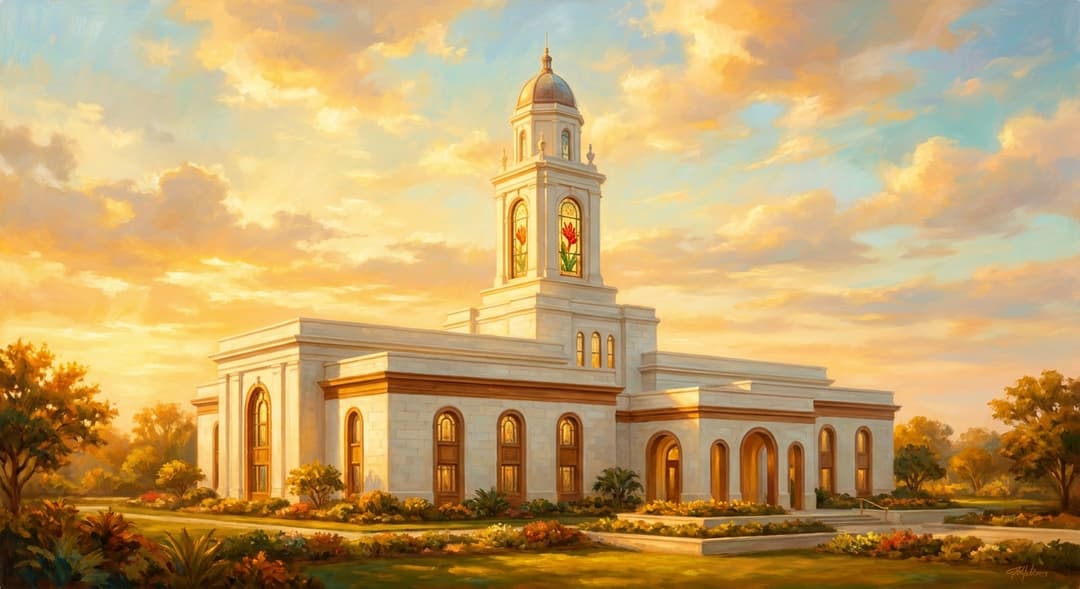
- Exquisite Portuguese Colonial Revival exterior clad in natural Brazilian white stone.
- Stained glass art panels showcasing the native red mandacaru flower motif.
- Peaceful public garden pathways with native Bahian flora and reflective fountains.
- On-site patron housing center accommodating members traveling from distant regions.
Things to Know
- Interior ordinance areas are restricted to members with a current temple recommend.
- Public visitors are invited to stroll the landscaped grounds and take exterior photographs.
- Located 0.5 miles from Bairro da Paz subway station and 5 miles from Salvador International Airport.
Location
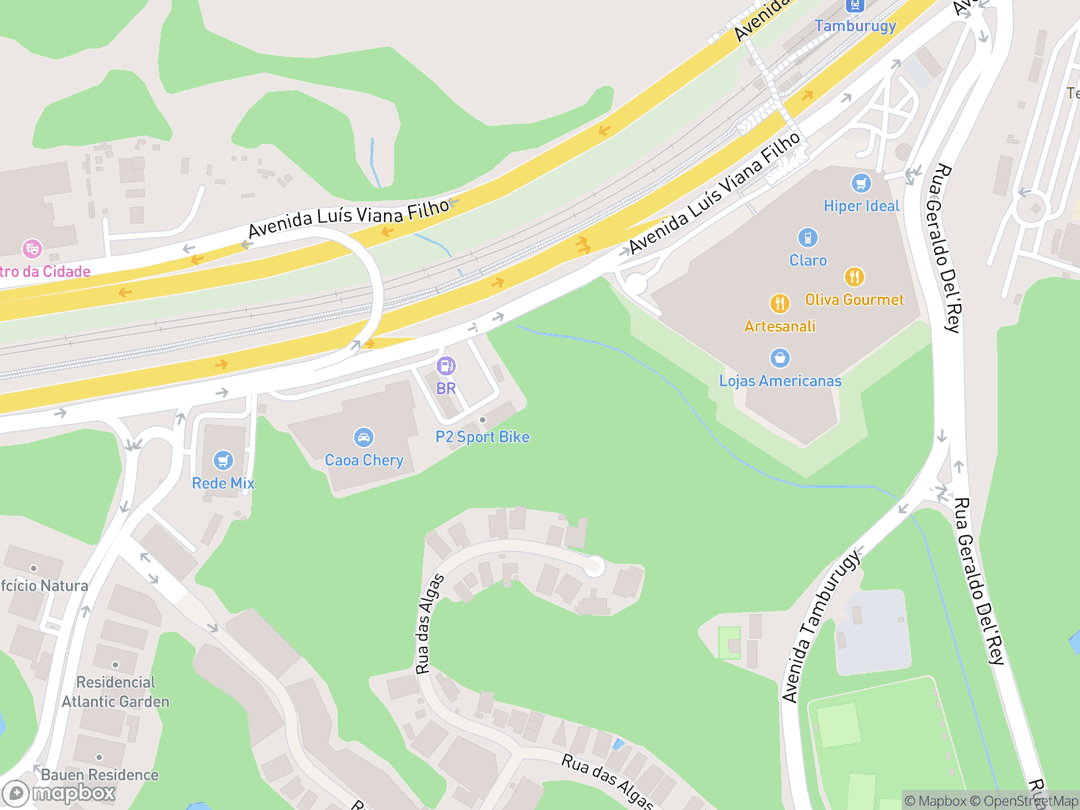
Avenida Luís Viana Filho, 9636, Bairro de Piatã / Patamares, Salvador - BA, 41650-500, Brazil
Hours: Operating schedules vary; check official Church channels for ordinance appointment times.
Getting There: Accessible via Metro Line 2 at Bairro da Paz station or by vehicle along Avenida Luís Viana Filho (Avenida Paralela).
Get DirectionsTips for Your Visit
Best Photo Opportunities
Visit in late afternoon when golden equatorial sunlight highlights the white stone facade and central cupola.
Public Access
Feel free to explore the external plazas, gardens, and fountains during daylight hours.
About
The Salvador Brazil Temple stands as the 199th operating temple of The Church of Jesus Christ of Latter-day Saints globally and the 11th in Brazil. Situated in the historic state of Bahia along Avenida Luís Viana Filho, this holy edifice serves thousands of Latter-day Saints across Northeastern Brazil who previously traveled long distances to attend temple worship.
Rooted in broader Christian Abrahamic traditions, Latter-day Saint temples are set apart as literal Houses of the Lord where heaven and earth converge. While regular chapels host Sunday congregational worship, the temple provides a sacred environment for essential priesthood ordinances, personal revelation, and eternal covenants that join families for eternity under God's grace.
Announced in October 2018 by Church President Russell M. Nelson, the temple features a Portuguese Colonial Revival design inspired by the historic architecture of Salvador's UNESCO World Heritage district. Dedicated on October 20, 2024, by Elder Neil L. Andersen, the temple represents a profound beacon of spiritual hope and endurance in a city whose very name honors Jesus Christ.
Interesting Facts
Salvador translates to 'Savior' in Portuguese, making a temple dedicated to Jesus Christ especially meaningful in this city. (Tier A)
Dedicating the Salvador Brazil Temple marked the 199th operating temple of the Church worldwide. (Tier A)
Brazil is home to over 1.5 million Latter-day Saints, representing the third-largest membership globally. (Tier A)
The temple reduced travel times for local Bahian Saints from 36 hours down to 36 minutes. (Tier A)
Custom art glass incorporates the native mandacaru flower, which blooms in arid regions during spring. (Tier A)
Interior architectural millwork and framing feature indigenous Brazilian jequitibá hardwood. (Tier A)
The building's design reflects the historic 17th-century Portuguese colonial style of Salvador's Pelourinho district. (Tier A)
The campus includes a two-story patron housing facility for members traveling long distances. (Tier A)
Common Questions
Who can enter the interior of the Salvador Brazil Temple?
Interior entrance for ordinances is reserved for baptized Latter-day Saints with a valid temple recommend, while grounds are open to everyone.
Why is the mandacaru flower prominent in the temple's design?
The native mandacaru cactus flower symbolizes faith, resilience, and spiritual hope amid adversity across Northeastern Brazil.
How far did local members previously travel to attend a temple?
Members in Salvador previously traveled up to 36 hours by bus to attend the temple in Recife.
Is there visitor accommodation on site?
Yes, an auxiliary campus structure provides patron housing for distant visitors along with a Distribution Center.
Featured Stories
From 36 Hours to 36 Minutes
October 20, 2024
For decades, faithful Latter-day Saints from Salvador made arduous 36-hour round-trip bus journeys across Northeastern Brazil to participate in temple ordinances in Recife or São Paulo. During the temple dedication, Elder Neil L. Andersen marveled at how local faith transformed those long journeys into a convenient 36-minute ride on Avenida Paralela. The opening of the Salvador Brazil Temple stands as a testament to the devotion and endurance of generations of Bahian members.
Source: Church News Dedication Report
The City Named for the Savior
October 20, 2024
The city of Salvador was originally founded as São Salvador da Bahia de Todos os Santos, honoring Jesus Christ as the Savior of the World. Dedicating a house of the Lord in a city bearing Christ's title carried deep emotional resonance for attendees. Elder Andersen noted during dedicatory proceedings that members in Bahia already had the Savior written in their hearts long before the temple stone was laid.
Source: Official Church Newsroom
Commemorative Shovels of Faith
August 7, 2021
During the three-year construction period following the 2021 groundbreaking, the gold-plated shovels used by Church leaders were displayed inside the site office. Local families and children visiting the construction site were invited to hold the shovels for photos, instilling a personal legacy of faith. This tradition created an enduring bond between local youth and the sacred structure rising in their city.
Source: Local Church Historical Records
Timeline
Temple Announced
President Russell M. Nelson announces the Salvador Brazil Temple during general conference.
MilestoneRendering Released
The Church releases the official exterior design rendering inspired by Portuguese colonial architecture.
EventGroundbreaking Ceremony
Elder Adilson de Paula Parrella presides over the site groundbreaking and dedicatory prayer.
component.timeline.groundbreakingExterior Completion
Scaffolding is removed following completion of the exterior stone cladding and central tower.
EventTemple Leadership Called
Vicente Bento de Oliveira Filho and Inês Estercio de Oliveira are called as temple president and matron.
EventMedia Day
Journalists and civic leaders tour the completed building during official media previews.
EventPublic Open House Begins
A 16-day public open house commences, welcoming thousands of visitors into the temple.
EventOpen House Concludes
Public tours conclude prior to formal consecration and temple dedication.
EventTemple Dedicated
Elder Neil L. Andersen dedicates the Salvador Brazil Temple as the 199th operating global temple.
DedicationHistory by Decade
1990s–2000s — Regional Growth and Temple Travel
Our faith was tested on long dusty roads, but our desire to make eternal covenants kept us moving forward.
During the late 20th century, the Church experienced rapid growth across Bahia, leading to the creation of multiple stakes in Salvador. Without a local temple, members organized long bus caravans traveling hundreds of miles to temples in São Paulo and later Recife. These journeys required deep sacrifice and financial planning from humble families.
2010s — Announcement and Design
On October 7, 2018, President Russell M. Nelson announced plans for a temple in Salvador. Designers blended Portuguese Colonial Revival traditions with local natural motifs, incorporating the native mandacaru flower into custom art glass to reflect Northeastern Brazilian culture.
2020s — Construction and Dedication
Groundbreaking occurred in August 2021 under the direction of Elder Adilson de Paula Parrella. Construction proceeded steadily over three years, culminating in a successful public open house and formal dedication by Elder Neil L. Andersen on October 20, 2024.
Architecture & Facilities
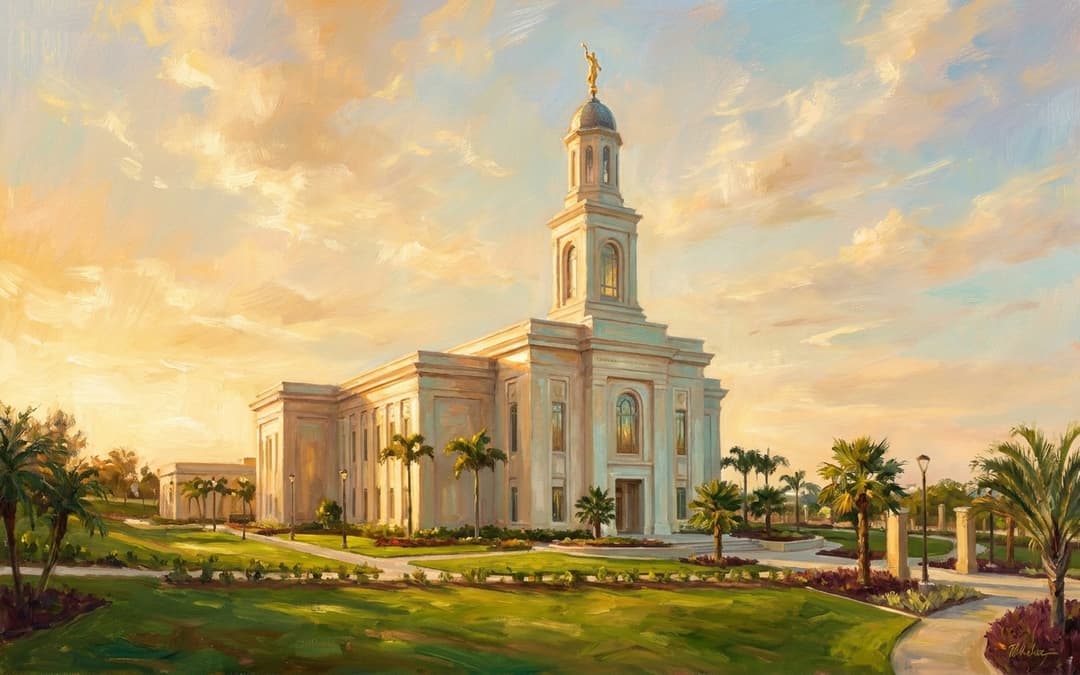
The Salvador Brazil Temple exhibits a refined Portuguese Colonial Revival architectural style adapted specifically to Bahian heritage. Inspired by the 17th- and 18th-century colonial structures in Salvador's historic Pelourinho district, the building displays symmetrical massing, smooth plaster detailing, bold vertical lines, and arched window openings topped with an elevated central dome and cupola.
Building Materials
Exterior Cladding
Clad in durable white natural stone sourced within Brazil, designed to withstand the tropical coastal climate.
Interior Hardwood
Trim, doors, and millwork feature indigenous Brazilian jequitibá hardwood finished in warm amber tones.
Art Glass Windows
Custom multi-paned glass panels depict the mandacaru cactus flower in shades of red, gold, green, and cobalt blue.
Flooring & Marble
High-traffic corridors feature polished light marble accompanied by custom-loomed carpets depicting Bahian floral scrollwork.
Interior Features
Instruction Rooms
Two ordinance rooms featuring multi-tiered tray ceilings with stepped cove lighting and gold leaf detailing.
Sealing Rooms
Two sealing rooms equipped with off-white fabric altars and crystal chandeliers for eternal marriage ceremonies.
Celestial Room
A serene room decorated in pure cream tones with hand-blown crystal chandeliers symbolizing the heavenly kingdom.
Baptistry
Houses a baptismal font resting upon twelve life-sized sculpted oxen framed by decorative iron railings.
Temple Grounds
The 4.6-acre campus features tropical landscape design, including native palm trees, flowering bougainvillea, manicured lawns, paved walkways, and reflective water fountains at the main entrance.
Additional Facilities
An adjacent two-story auxiliary building provides patron housing, missionary apartments, administrative offices, and a Church Distribution Center.
Religious Significance
In Latter-day Saint theology, building upon Christian Abrahamic roots, the temple is consecrated as a literal House of the Lord. It serves as a holy refuge set apart from worldly concerns, where members engage in sacred ordinances that establish eternal ties between God and humanity.
To provide a consecrated space for sacred priesthood ordinances, personal revelation, and eternal family sealings under divine authority.
Sacred Ordinances
Baptism for the Dead
Vicarious baptisms performed on behalf of deceased ancestors, affirming that salvation is offered universally through Jesus Christ.
Instruction & Endowment
Sacred covenants and instructions regarding the creation, purpose of life, and divine divine path back to Heavenly Father.
Eternal Sealing
Priesthood ordinances uniting husbands, wives, and children in eternal family units that endure beyond mortality.
The Thin Place Between Heaven and Earth
Like classical sanctuaries across Christian history, the temple utilizes natural light, vertical height, and sacred symbolism to direct minds heavenward. In Salvador, this sacred space reinforces Christ's central role as the Savior of humankind.
Similar Temples
Sources & Research
Every fact on Temples.org is backed by verified Sources & Research. Each piece of information is rated by source tier and confidence level.
View All Sources (2)
| Field | Source | Tier | Retrieved |
|---|---|---|---|
| Visitor Insights & Campus | ChurchofJesusChristTemples.org (opens in a new tab) | C | 2026-02-22 |
| Historical Context | The Church of Jesus Christ of Latter-day Saints (opens in a new tab) | A | 2026-02-22 |