Visitor Insights
Visiting Jokhang Temple
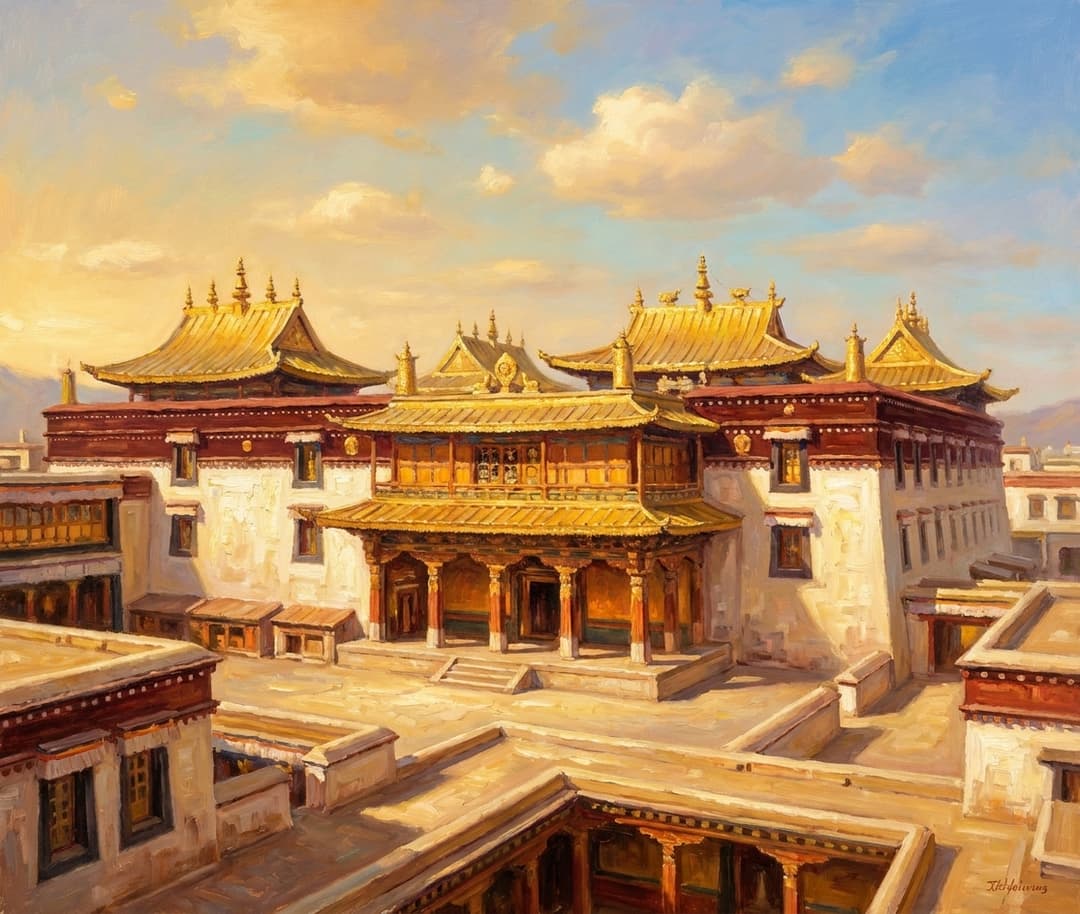
The Jokhang Temple functions as the vibrant core of Lhasa's devotional life, surrounded by the bustling Barkhor pilgrimage circuit. Morning hours are reserved exclusively for local devotees, while afternoons welcome ticketed travelers on registered guided tours. Visitors should prepare for high-altitude conditions and respect strict etiquette regarding prostrations and interior photography.
Highlights
- Witnessing thousands of pilgrims prostrating along the flagstones of Barkhor Square
- Viewing the 1,300-year-old carved Licchavi wooden lintels and gilded roof pavilions
- Experiencing the glowing butter lamp chambers surrounding the central Jowo Buddha shrine
- Panoramic rooftop vistas over Lhasa toward the Potala Palace and surrounding mountains
Things to Know
- Foreign visitors require a pre-arranged Tibet Travel Permit and an authorized local tour guide.
- Photography is strictly prohibited inside all ground-floor chapel sanctums.
- Always proceed clockwise along pilgrimage corridors, around shrines, and through exterior plazas.
Location
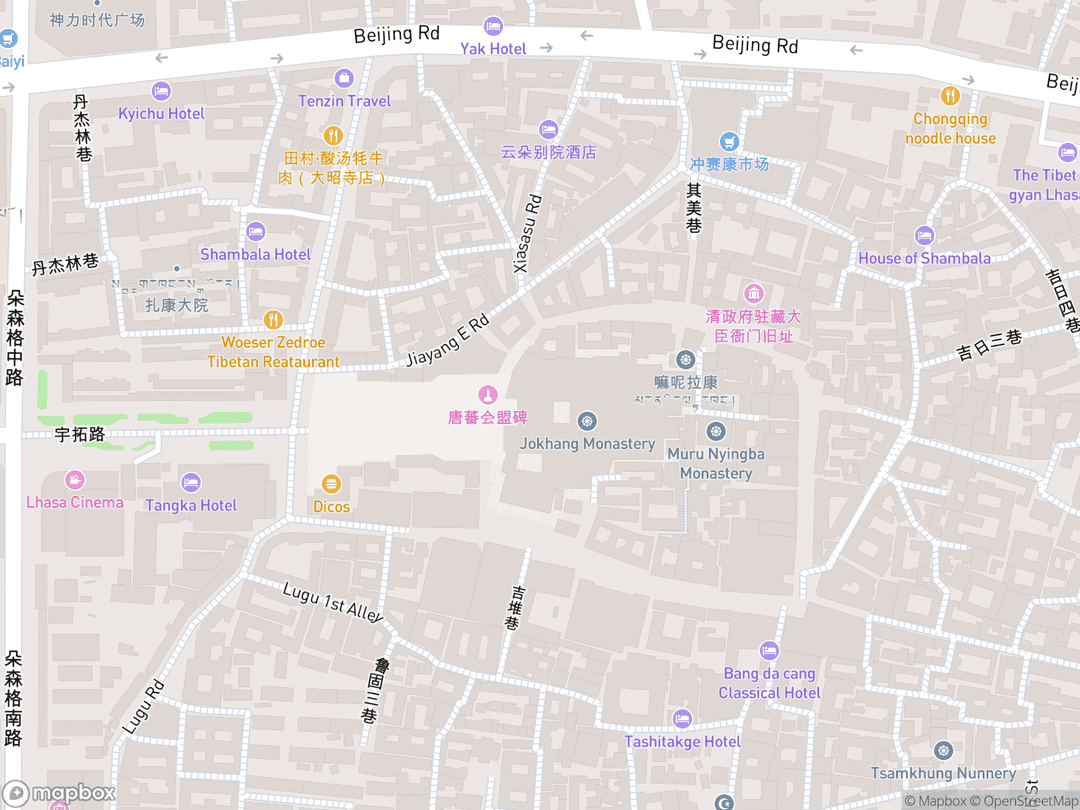
Barkhor Square, Chengguan District, Lhasa, Tibet Autonomous Region, China
Hours: 08:00 to 11:30 for local pilgrims; 11:30 to 17:30 for cultural visitors
Getting There: Located at Barkhor Square in central Lhasa, accessible on foot from designated drop-off points along Beijing East Road.
Get DirectionsTips for Your Visit
Respect Devotional Corridors
Never step over pilgrims prostrating before the western portal or interrupt moving prayer lines.
Acclimatize Early
Spend at least two days resting in Lhasa before climbing the steep rooftop stairs at 3,650 meters.
Modest Dress Required
Cover shoulders and legs completely, and remove hats and sunglasses before crossing into inner gates.
Bring Small Offerings
Pilgrims frequently bring small currency notes or edible butter bricks to offer at traditional butter lamp stations.
About
Commissioned in the seventh century by King Songtsen Gampo, the Jokhang Temple stands as the most revered sanctuary in Tibetan Buddhism. Located at the center of ancient Lhasa, the complex unites architectural traditions from India, Nepal, and China within monumental Tibetan stone masonry.
The temple was founded to enshrine sacred images brought as royal dowries by Queen Bhrikuti of Nepal and Princess Wencheng of China. According to sacred tradition, the temple was built over Lake Wothang to pin the heart of a cosmic demoness, securing peace across the plateau.
Today, the Jokhang remains an active, non-sectarian pilgrimage destination welcoming all traditions of Tibetan Buddhism. Tens of thousands of pilgrims circle its concentric circuits daily, prostrating before the revered Jowo Shakyamuni statue in search of spiritual liberation.
Gallery
Symbolic Elements
The temple's exterior features intricate carvings, each rich with spiritual meaning:
Jowo Shakyamuni
Depicting the Buddha at age twelve, this consecrated statue is revered as a living embodiment providing liberation through sight.

Dharmachakra and Flanking Deer
The golden roof wheel flanked by two kneeling deer commemorates the Buddha's first sermon at Sarnath.
Srin-ma Demoness Subjugation
The temple foundation over Lake Wothang represents the spiritual pacification of wild territorial forces across Tibet.

Three Concentric Koras
Three concentric circumambulation circuits align pilgrims physically and spiritually with the cosmic mandala.
Sacred Butter Lamps
Perpetual yak butter lamps dispel the darkness of ignorance with the illuminating flame of spiritual wisdom.
Licchavi Carved Portals
Intricately carved seventh-century Nepalese cedar timber frames line the sanctum with protective deities and floral motifs.

Baimadun Tamarisk Frieze
Dyed maroon tamarisk twig bundles along upper exterior cornices lighten structural weight while designating sacred monastic status.

Subterranean Sacred Well
The preserved well beneath the central shrine taps the residual waters of Lake Wothang for ritual purification.
Interesting Facts
The Jokhang was built before the surrounding city, inspiring the local Tibetan saying that the temple came first and Lhasa grew second (Tier A).
Thousands of white pack goats hauled clay from mountain quarries to fill the original lake foundation, commemorated by a stone goat statue inside the temple (Tier A).
Princess Jincheng secretly swapped the sacred statues between Ramoche and the Jokhang in 710 to protect the Jowo Shakyamuni from wartime damage (Tier B).
The smooth, mirror-like indentations in the western flagstones were carved naturally over centuries by millions of prostrating human knees and hands (Tier A).
A weathered willow tree stump in the outer courtyard is traditionally revered as having been hand-planted by Princess Wencheng in the 640s (Tier B).
A subterranean stone well directly beneath the main Buddha hall still draws consecrated water from the ancient drained lake bed (Tier A).
During the Cultural Revolution, monastics and local citizens saved the life-size golden Buddha by stacking grain sacks to disguise the shrine as a barn (Tier B).
The sanctuary houses the gem-encrusted eighteenth-century Golden Urn used historically to confirm the reincarnations of high Tibetan lamas (Tier A).
Despite formal Gelug administrative oversight, the sanctuary welcomes monastics and practitioners from all Tibetan Buddhist lineages and the Bön faith (Tier A).
Common Questions
Why is the Jokhang Temple facing west instead of south?
The temple faces west toward Nepal and India to honor Queen Bhrikuti's homeland and align with the birthplace of Buddhism.
Can non-Buddhist tourists enter the Jokhang Temple?
Yes, cultural visitors can enter during afternoon hours when accompanied by a licensed local Tibetan guide.
What is the single most sacred object inside the temple?
The life-size gilded statue of the twelve-year-old Shakyamuni Buddha, known as the Jowo Rinpoche, is Tibet's holiest relic.
Is photography permitted inside the chapels?
Interior photography is strictly forbidden in the ground-floor chapels, though outdoor rooftop photos are permitted.
What is the difference between the Barkhor and the Jokhang?
The Jokhang is the central temple building, while the Barkhor is the historic circumambulatory street that encircles its outer perimeter.
Featured Stories
The Subjugation of the Reclining Demoness
647
When King Songtsen Gampo sought to establish the Buddhist faith across Tibet, geomancers revealed that the plateau lay across a colossal supine demoness. Princess Wencheng identified Lake Wothang as her pulsing heart, requiring a temple to pin her spirit to the earth. Thousands of white goats hauled soil from nearby peaks to fill the lake bed, transforming a turbulent marsh into Tibet's holiest sanctuary.
Source: Smarthistory Art and Cultural Archives
The Great Royal Relic Exchange
710
The revered Jowo Shakyamuni originally stood in Ramoche Temple, while the Jokhang housed the Akshobhya Buddha from Nepal. Fearing military instability during border conflicts, Princess Jincheng orchestrated a secret transfer to seal the Jowo statue inside the Jokhang's fortified inner chapel. The two statues permanently traded shrines, establishing the Jokhang as the uncontested spiritual axis of the Tibetan world.
Source: Rubin Museum of Himalayan Art
A Living Buddha Hidden in Grain
1966
During the widespread destruction of the Cultural Revolution, devoted caretakers and monastics risked their lives to preserve the irreplaceable Jowo Shakyamuni. Working by night, they stacked hundreds of agricultural sacks filled with barley grain and dry corn stalks around the inner shrine, concealing the golden figure behind what appeared to be an ordinary granary depot. Their ingenuity ensured that Tibet's most sacred treasure survived intact for future generations.
Source: International Campaign for Tibet
Timeline
Imperial Diplomatic Alliances
King Songtsen Gampo unifies Tibet and marries Princess Bhrikuti of Nepal and Princess Wencheng of Tang China.
MilestoneGroundbreaking over Lake Wothang
Construction begins over the drained bed of Lake Wothang following geomantic divinations.
component.timeline.groundbreakingSanctification of the Tsuklakang
The central two-storey vihara sanctuary is consecrated under King Songtsen Gampo.
DedicationInstallation of the Jowo Shakyamuni
Princess Jincheng moves the Jowo Shakyamuni statue permanently into the Jokhang's inner sanctum.
MilestoneTang-Tubo Alliance Treaty Stele
The bilingual peace treaty stele is erected in the western courtyard outside the main entrance.
MilestoneConcealment During Persecution
Caretakers conceal the Jowo Shakyamuni behind a false wall during the persecution of King Langdarma.
EventArrival of Master Atisha
Indian master Atisha arrives at the temple and recovers foundational treasure texts concealed within interior pillars.
EventInauguration of the Great Prayer Festival
Je Tsongkhapa inaugurates the Great Prayer Festival and crowns the Jowo statue with a five-dhyani-buddha diadem.
MilestoneFifth Dalai Lama Expansions
The Fifth Dalai Lama initiates major expansions, constructing outer courtyards and upper residential verandas.
RenovationInstitution of the Golden Urn
The Qing court institutes the gem-encrusted Golden Urn lottery inside the sanctuary to confirm high reincarnations.
MilestonePublic Reopening and Restoration
The temple complex reopens for public veneration following comprehensive structural restorations overseen by the Panchen Lama.
RenovationUNESCO World Heritage Inscription
UNESCO officially inscribes the Jokhang Temple on the World Heritage List as an extension to the Potala Palace ensemble.
MilestoneHistory by Decade
640s–650s — Imperial Foundation
In the mid-seventh century, King Songtsen Gampo unified the Yarlung Empire and forged royal alliances with Nepal and China. Queen Wencheng utilized geomantic principles to locate Lake Wothang over the heart of a cosmic demoness, filling the waters using white pack goats. Master Newar and Chinese artisans erected the original two-storey vihara complex, consecrating it in 652.
710s–750s — Relic Relocation and Imperial Patronage
Princess Jincheng arrived in Lhasa in 710 and ordered the transfer of the Jowo Shakyamuni from Ramoche into the central Jokhang sanctum for military security. The temple evolved into the undisputed spiritual anchor of Tibet during the First Dissemination of the Dharma. Surrounding monastic cloisters expanded to support royal pujas and imperial patronage.
820s–840s — Imperial Treaties and Anti-Buddhist Persecution
In 823, Tibetan and Chinese diplomats erected the historic Tang-Tubo Alliance Treaty Stele at the temple gates, sealing an era of mutual peace. The rise of King Langdarma in 842 brought severe state crackdowns against monastic institutions. Alert monks sealed the Jowo statue behind a plastered mud wall painted with Manjushri, protecting it from destruction until the empire dissolved.
1040s–1400s — Second Dissemination and the Great Prayer Festival
The arrival of the Bengali master Atisha in 1042 sparked the Second Dissemination, leading to the discovery of hidden treasure texts inside the sanctuary's cedar columns. Aristocratic families financed the addition of third-storey chapels and gilded copper roofs crafted by Newar metalsmiths. In 1409, Gelug founder Je Tsongkhapa established the annual Monlam Chenmo festival and crowned the Jowo Buddha with a pure gold diadem.
1640s–1790s — Dalai Lama Expansions and Imperial Decrees
During the seventeenth century, the Fifth Dalai Lama comprehensively reconstructed the temple, adding the sprawling Deyangshar courtyard and private papal apartments. The complex grew into an expansive 25,000-square-meter civic and spiritual precinct. In 1793, the Qing imperial court installed the Golden Urn before the Jowo statue to govern monastic succession.
1960s–2000s — Preservation, Reopening, and World Heritage
The temple suffered damage and closure during the Cultural Revolution, but the central Buddha was saved through the bravery of local caretakers who hid it behind grain sacks. Major national restorations in the late 1970s enabled the sanctuary to reopen for worship in 1980 under the guidance of the Tenth Panchen Lama. In 2000, UNESCO recognized the Jokhang as a World Heritage Site, cementing its status as an international architectural and spiritual treasure.
Architecture & Facilities
The Jokhang Temple represents a masterwork of early Himalayan sacred architecture, harmonizing the quadrangular layout of an Indian vihara with intricate Nepalese Licchavi timber carvings and Tang Dynasty bracketed roof pavilions, all anchored within inward-sloping Tibetan stone fortress walls.
Building Materials
Tibetan Granite and Rammed Earth
Chiseled local granite and compressed earth form massive inward-sloping batter walls capable of resisting seismic shocks.
Himalayan Cedar Woodwork
Seventh-century Himalayan cedar posts and beams support intricate Newari figural carvings along the inner doorways.
Gilded Copper Roof Pavilions
Heavy mercury fire-gilded copper sheeting covers the sweeping hip-and-gable roofs against high-altitude weather.
Arga Pavement
Crushed limestone blended with clay and mineral oils is hand-beaten to create a durable, polished interior floor surface.
Interior Features
Jowo Shakyamuni Sanctum
The core inner chapel houses the life-size twelfth-year gilded Buddha statue seated amid glowing butter lamp offerings.
Nangkor Processional Corridor
A concentric circumambulatory walkway lined with spinning prayer wheels and early Buddhist murals encircles the main shrine.
Songtsen Gampo Chapel
An upper-level shrine contains ancient clay sculptures portraying King Songtsen Gampo and his Nepalese and Chinese queens.
Deyangshar Courtyard Hall
An expansive stone-paved inner open plaza hosts monastic debates, ceremonial dances, and major prayer gatherings.
Temple Grounds
The temple grounds center upon the vibrant Barkhor market square, paved with centuries-old bluestone slabs worn smooth by millions of prostrating pilgrims, while outer walled courtyards contain the historic Tang-Tubo peace treaty stele and the revered Princess Willow tree.
Additional Facilities
The complex encompasses monastic dormitories, chanting halls, administrative offices, tea kitchens, and rooftop observation terraces.
Religious Significance
To Tibetan Buddhists across all lineages, the Jokhang is revered as the spiritual center of the universe and the literal heart of the Tibetan plateau.
The temple provides a living mandala where practitioners purify negative karma, generate merit, and attain spiritual liberation through devotion before the Jowo Shakyamuni.
Sacred Ordinances
Chodpa and Mar-me Offerings
Devotees offer bowls of saffron water, incense, and burning yak butter lamps to generate spiritual merit and dispel mental ignorance.
Kora Circumambulation
Pilgrims walk clockwise around interior chapels and exterior avenues while chanting mantras to align mind and body with the Dharma.
Full-Body Prostrations
Practitioners cast themselves flat upon the flagstones repeatedly to surrender spiritual ego and honor the Triple Gem.
Monlam Prayer Rites
Monastics assemble for mass chanting and formal scriptural debates during the Great Prayer Festival following the New Year.
The Theology of Liberation by Sight
In Tibetan Vajrayana doctrine, the Jowo Shakyamuni possesses the rare spiritual power of 'thongdrol' (liberation through seeing). Devotees believe that gazing upon the consecrated face of the Buddha plants an indelible seed of awakening in the consciousness of the viewer, purifying lifetimes of negative karmic deeds.
Universal Non-Sectarian Haven
Although overseen institutionally by the Gelug order since the seventeenth century, the Jokhang remains resolutely non-sectarian (Rime). Monks and lay followers of the Nyingma, Sakya, Kagyu, Gelug, and indigenous Bön traditions worship side-by-side without distinction in its chapels.
Sources & Research
Every fact on Temples.org is backed by verified Sources & Research. Each piece of information is rated by source tier and confidence level.
View All Sources (9)
| Field | Source | Tier | Retrieved |
|---|---|---|---|
| About & Historical Background | Tibet Information Center (opens in a new tab) | A | 2026-02-19 |
| Religious Significance & Practices | Drikung Meditation Center (opens in a new tab) | A | 2026-02-19 |
| Architecture & Symbolism | Rubin Museum of Himalayan Art (opens in a new tab) | B | 2026-02-19 |
| Featured Stories & Artifacts | Smarthistory Center for Public Art History (opens in a new tab) | B | 2026-02-19 |
| Timeline & Consecration Records | Khan Academy Art History (opens in a new tab) | B | 2026-02-19 |
| Historical Preservation & Upheavals | International Campaign for Tibet (opens in a new tab) | B | 2026-02-19 |
| Cultural Traditions & Pilgrimage | Facts and Details Cultural Reference (opens in a new tab) | C | 2026-02-19 |
| Visitor Insights & Access Logistics | Great Tibet Tour (opens in a new tab) | D | 2026-02-19 |
| Site Geography & Precinct Details | Travel China Guide (opens in a new tab) | D | 2026-02-19 |