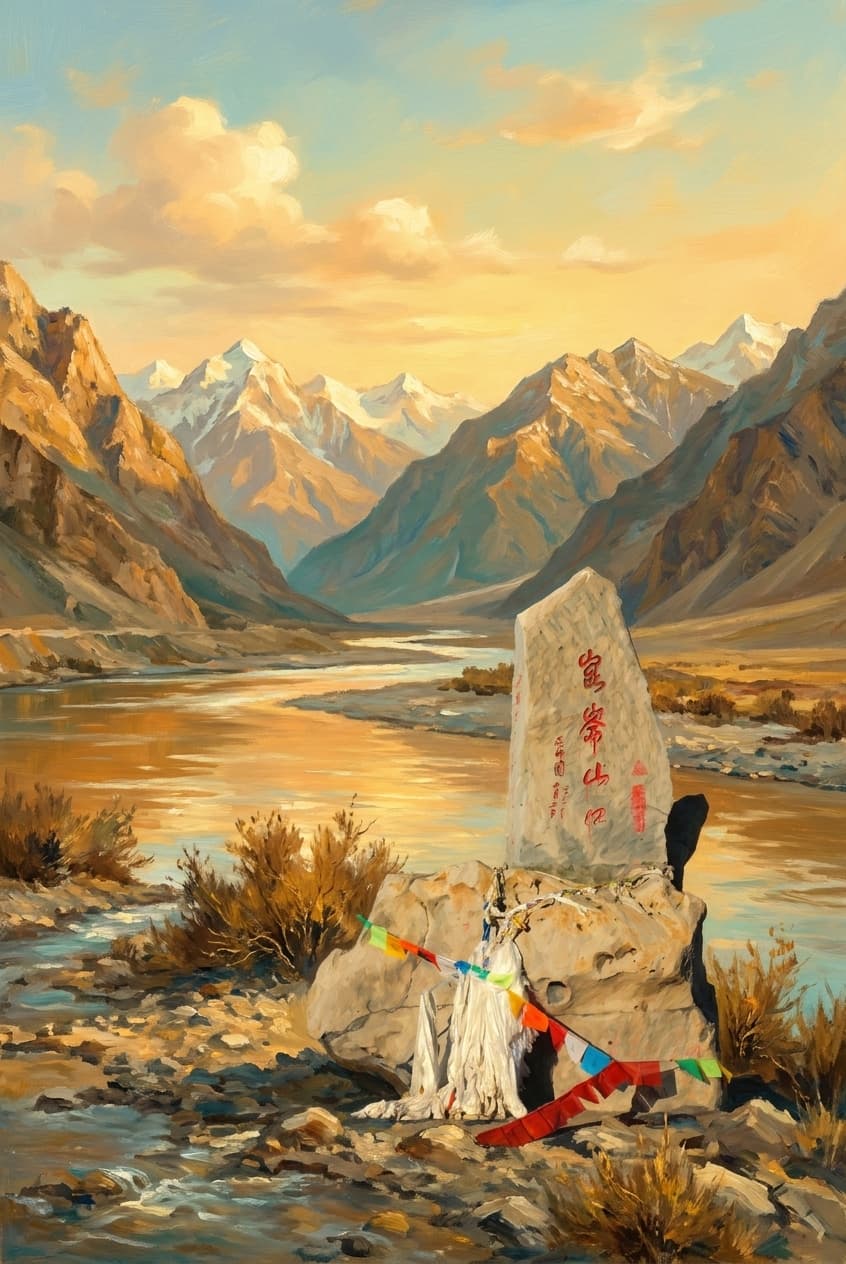
Visitor Insights
Visiting Kunlun Mountains
Visiting the Kunlun Mountains offers a profound journey into one of Asia's most austere and sacred landscapes. Travelers encounter extreme high-altitude alpine plateaus, glaciated summits, and ancient pilgrimage paths steeped in Taoist mythology.
Highlights
- Mount Kunlun UNESCO Global Geopark featuring exposed tectonic boundaries and glacial valleys
- Views of the sacred pyramid peak of Yuzhu Shan and Liushi Shan
- Historic jade-bearing waterways of the Karakash and Yurungkash Rivers
- Ancient Taoist cave shrines and high-altitude pilgrimage cairns along mountain passes
Things to Know
- Extreme elevations exceed 4,000 meters across most transit points, requiring acclimatization
- Severe weather and temperature shifts occur suddenly even during midsummer months
- Travel permits and specialized overland transport are required for remote western sectors
- Visitor infrastructure remains sparse outside of the Golmud transportation corridor
Location

Kunlun Mountain Range, Qinghai, Xinjiang, and Tibet, China
Hours: Open year-round; access depends heavily on seasonal weather conditions.
Getting There: Accessible via National Highway 109, National Highway 219, and the Qinghai-Tibet Railway corridor.
Get DirectionsTips for Your Visit
Altitude Acclimatization
Spend several days adjusting in Golmud or Lhasa before venturing into the high Kunlun passes.
Respect Sacred Sites
Never disturb ritual prayer cairns, jade deposits, or incense shrines maintained by local hermits.
Warm Weather Gear
Pack heavy sub-zero thermal layers even when traveling during peak summer travel seasons.
Travel Permits
Confirm regional border travel permits in advance before approaching sensitive frontier areas.
About
The Kunlun Mountains stretch over 3,000 kilometers across Western China, forming the formidable northern rim of the Tibetan Plateau. Known historically as Kunlun Shan, this immense geographic spine serves as a foundational pillar within Taoism and the broader Taoic cosmological landscape.
Revered as the Forefather of Mountains, Kunlun represents the primordial axis mundi where Heaven and Earth converge. In classical Taoist lore, the range is the sacred earthly paradise ruled by Xi Wang Mu, the Queen Mother of the West, who tends the mythical peaches of immortality.
Throughout centuries of imperial dynasties, hermits, alchemists, and pilgrims have journeyed toward these glaciated heights to pursue spiritual cultivation and longevity arts. Today, the sacred mountain range endures as an active spiritual landscape, celebrated for its geological grandeur and profound metaphysical legacy.
Gallery
Symbolic Elements
The temple's exterior features intricate carvings, each rich with spiritual meaning:

Axis Mundi
The mountain range symbolizes the central cosmic pillar that unites the earthly sphere with heavenly realms.

Peaches of Immortality
Sacred mythical fruits grown in Xi Wang Mu's orchard that ripen every three millennia to grant eternal life.
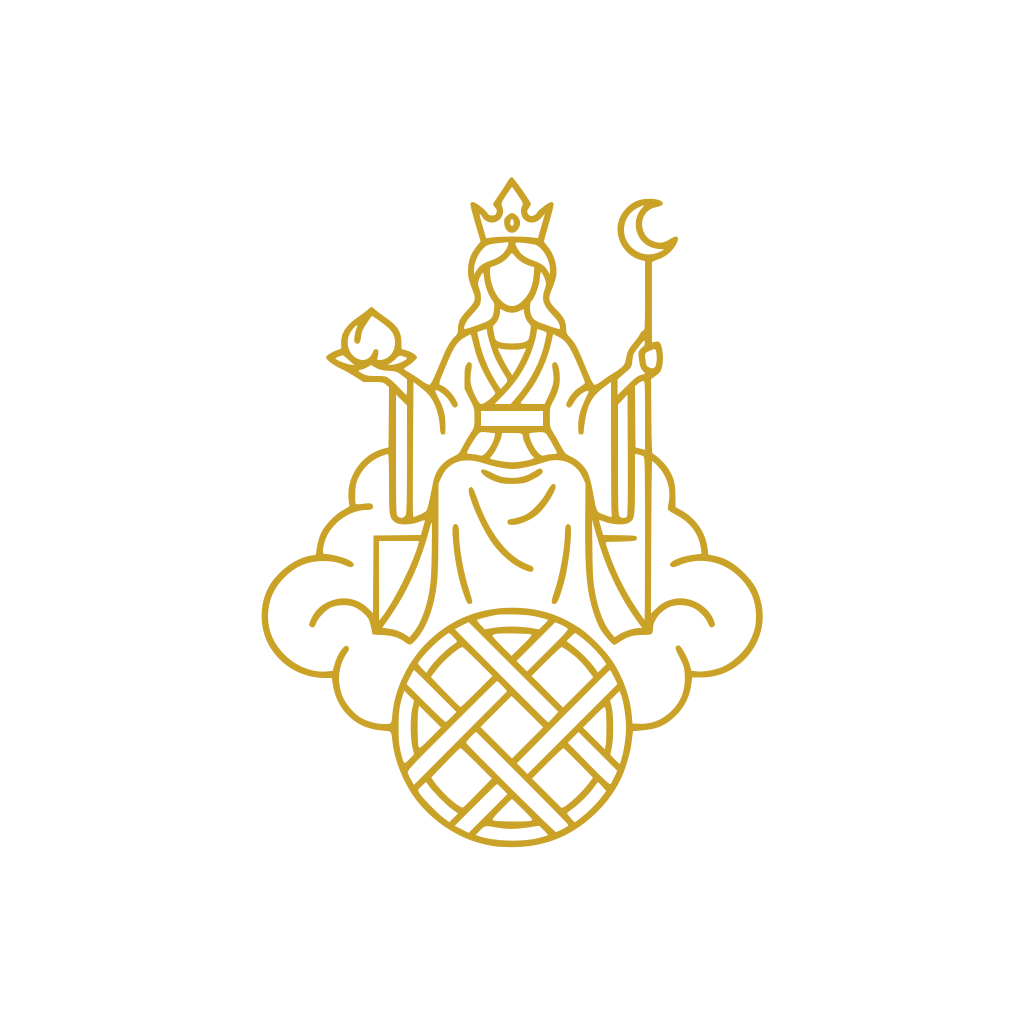
Queen Mother of the West
The primary presiding goddess representing primordial yin energy, cosmic order, and esoteric longevity wisdom.

Five Elements Balance
The natural composition of the peaks embodies the dynamic harmony among wood, fire, earth, metal, and water.

Sacred White Jade
Valued as condensed cosmic energy, nephrite jade represents moral purity and spiritual endurance.

Four Celestial Rivers
Cosmological waterways radiating from the mountain peaks to nourish the four cardinal directions of the world.
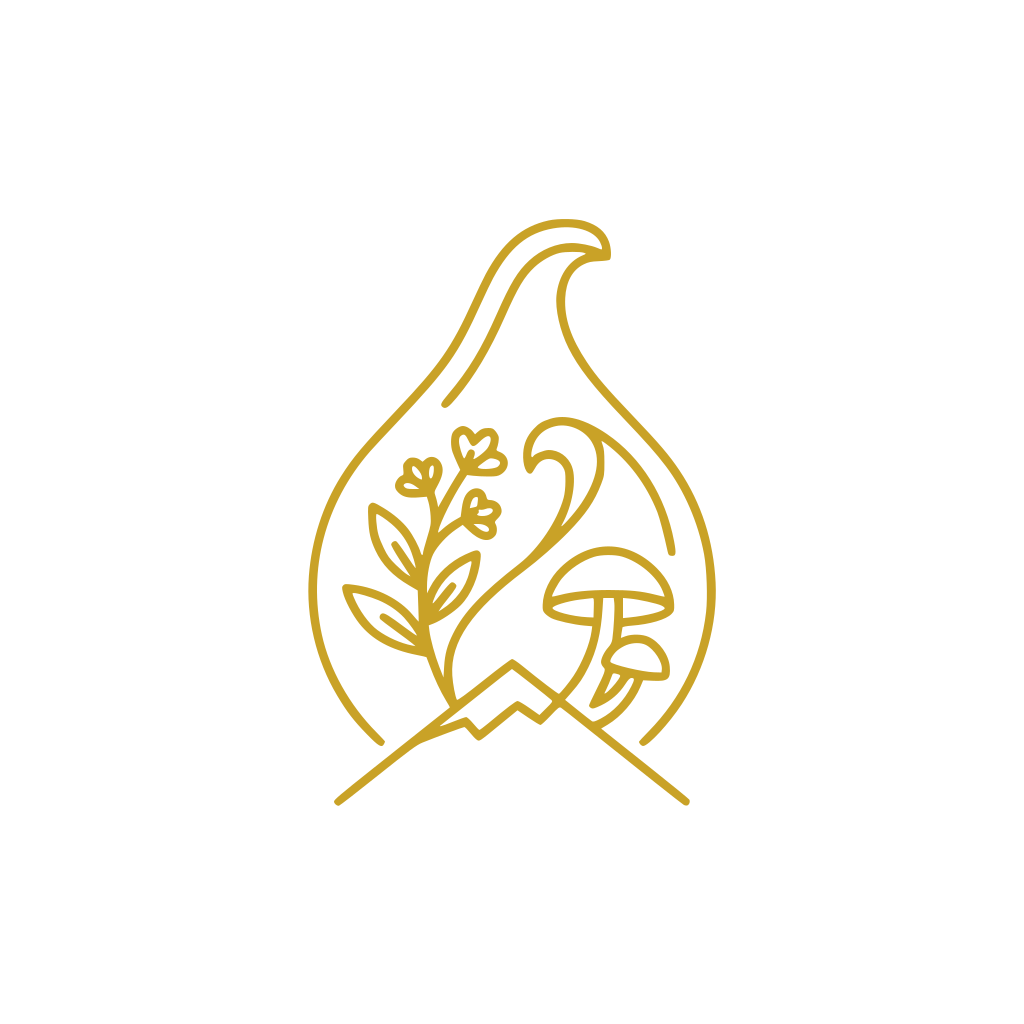
Divine Elixir Herb
Rare alpine flora and fungi believed by ancient alchemists to contain refined essences granting longevity.
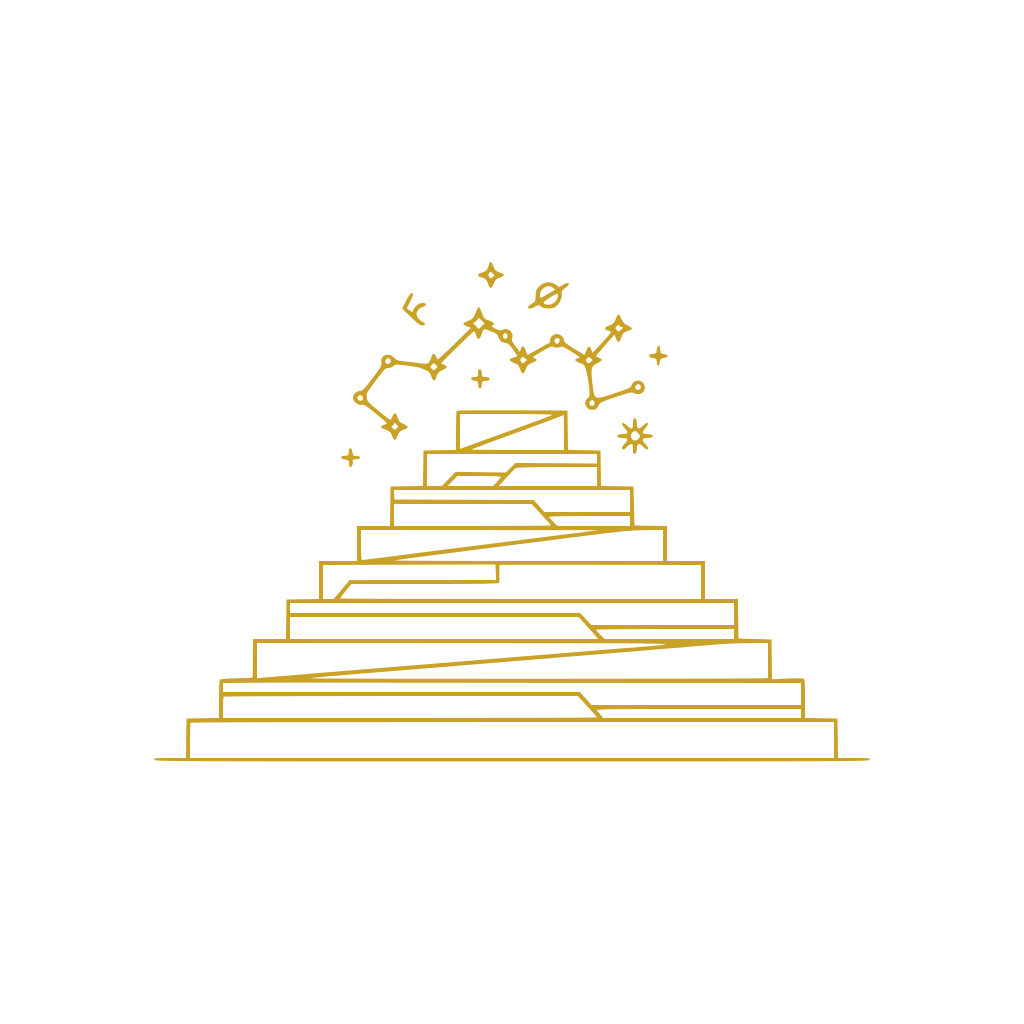
Nine-Tiered Mountain
The mythical architectural cosmology depicting Kunlun as nine ascending terraces leading directly into the stars.
Interesting Facts
Chinese mythology reveres the Kunlun Mountains as the 'Forefather of Mountains' and the backbone of China (Tier B).
The ancient text Classic of Mountains and Seas describes Kunlun as an earthly paradise inhabited by divine beings (Tier B).
The Kunlun Volcanic Group contains roughly 70 volcanic cones, including the site of mainland China's most recent eruption (Tier B).
The range serves as the historic origin of China's most prized white and black nephrite jade (Tier B).
Ancient legends tell of Houyi receiving the elixir of immortality from the Queen Mother of the West at Kunlun (Tier B).
The Kunlun Mountain Tunnel is one of the highest railway tunnels in the world, built through permafrost (Tier B).
Traditional geomancers consider the Kunlun range to be the root dragon vein from which all Chinese mountains branch (Tier B).
Four great celestial rivers in Chinese cosmology are traditionally believed to flow outward from Kunlun's heights (Tier B).
The range became an officially recognized UNESCO Global Geopark in 2014 to safeguard its unique geological heritage (Tier B).
Common Questions
Why are the Kunlun Mountains significant in Taoism?
They are revered as the cosmic axis mundi, the earthly paradise of deities, and the ancestral dragon vein of all life energy.
Who is the primary deity associated with Kunlun?
The Queen Mother of the West (Xi Wang Mu), who rules over immortality and celestial order.
Can tourists visit temples in the Kunlun Mountains?
Yes, travelers can visit mountain shrines and temples located near the Kunlun Pass and Golmud.
What precious stone originates in the Kunlun range?
The mountains are historically famous for producing white nephrite jade, known as Hetian jade.
How high is the highest peak in the Kunlun Mountains?
Liushi Shan, also known as the Kunlun Goddess, reaches an elevation of 7,167 meters.
Featured Stories
King Mu's Legendary Encounter
950 BCE
According to historical chronicle, King Mu of Zhou steered his royal chariot eight thousand miles westward into the perilous crags of Kunlun. Upon reaching the jade palace of the Queen Mother of the West, the emperor exchanged poetic verses and shared sacred wine with the goddess beside the Turquoise Pond. This celebrated encounter cemented Kunlun in imperial imagination as the tangible frontier between human kingship and immortal divinity.
Source: Bamboo Annals & Shanhaijing
Houyi and the Elixir of Life
200 BCE
After shooting down nine scorching suns to rescue humanity from drought, the legendary archer Houyi traversed the desolate crags of Kunlun to seek salvation. The Queen Mother granted him the single elixir of eternal life, a gift that would ultimately lead to his wife Chang'e ascending to the moon. The myth established Kunlun as the supreme destination for heroic seekers pursuing the secrets of immortality.
Source: Huainanzi Mythology Records
The Jade Gatherers of the Riverbeds
1200
For millennia, skilled artisans and pilgrims wade into the icy waters of the Yurungkash and Karakash Rivers beneath Kunlun's melting glaciers. By the light of full moons, searchers locate translucent jade boulders washed down from high mountain veins. These sacred stones were carved into imperial talismans and temple vessels, carrying the spiritual qi of the mountains into sacred shrines.
Source: Imperial Records of Khotan
Timeline
Tectonic Uplift
Collision of the Cimmerian Plate with Siberia initiates the formation of the Kunlun ranges.
MilestoneKing Mu's Journey
King Mu of Zhou journeys westward to meet the Queen Mother of the West at Kunlun.
EventClassic of Mountains and Seas
Ancient Chinese records codify Kunlun as the central pillar connecting earth to heaven.
MilestoneHan Dynasty Veneration
The Taoist veneration of Xi Wang Mu reaches widespread prominence across the Han Empire.
EventImperial Naming
Emperor Wu of Han officially bestows the name Kunlun upon the southern mountain chain.
MilestoneTang Taoist Treatises
Scholars compile extensive liturgies praising Kunlun as the primary reservoir of celestial elixir.
EventInternal Alchemy Synthesis
Taoist masters integrate Kunlun cosmological mapping into meditation and internal alchemy systems.
MilestoneVolcanic Eruption
The Ashikule volcanic group records the most recent documented eruption in mainland China.
EventHighway Corridor Opens
The Qinghai-Tibet Highway is constructed across the Kunlun Pass, connecting remote settlements.
EventKunlun Earthquake
An 8.1 magnitude earthquake generates an extraordinary 350-kilometer surface fault rupture.
EventQinghai-Tibet Railway
Passenger rail transit begins through the high-altitude Kunlun Mountain Tunnel.
MilestoneUNESCO Geopark Status
Mount Kunlun receives global recognition as a designated UNESCO Global Geopark.
DedicationHistory by Decade
Warring States to Han Dynasty (475 BCE – 220 CE)
During this foundational era, Kunlun transformed from an obscure geographical landmark into China's foremost mythological paradise. Taoist adepts established widespread veneration of Xi Wang Mu, codifying the range as an immortal realm in classical texts. Imperial expeditions traveled west to map the mountains and secure precious nephrite jade for state ritual ceremonies.
Tang to Song Dynasties (618–1279)
The golden age of Chinese poetry and philosophical synthesis elevated Kunlun into an archetype of internal spiritual exploration. Taoist practitioners adopted the mountain's topography as an anatomical and cosmic map for inner alchemy meditation. Isolated shrines and pilgrim waystations were maintained along high passes to support spiritual seekers making rigorous alpine ascents.
Ming to Qing Dynasties (1368–1912)
Imperial cartographers and mineral inspectors systematically documented the geography and mineral resources of the Kunlun perimeter. Mountain passes gained strategic significance along trade routes linking Xinjiang, Tibet, and central China. Local communities developed synchronized sacred traditions honoring mountain spirits and preserving mountain springs from contamination.
20th Century Exploration and Transit (1912–1999)
Modern geological expeditions penetrated the remote interior of the range, uncovering extensive volcanic fields and permafrost structures. The construction of the Qinghai-Tibet Highway across the Kunlun Pass transformed access to this once-impenetrable mountain world. Scientific surveys confirmed the mountains' crucial role as the primary watershed feeding major Chinese river systems.
21st Century Conservation (2000–Present)
The completion of the Qinghai-Tibet Railway in 2006 ushered in regulated eco-tourism through high-altitude tunnels. UNESCO designated Mount Kunlun as a Global Geopark in 2014, protecting its unique geological formations and cultural legacy. Today, the mountains maintain their timeless spiritual significance while serving as a living laboratory for alpine ecological research.
Architecture & Facilities
Rooted in traditional Taoist geomantic philosophy, sacred architecture across the Kunlun range emphasizes harmonious integration with the rugged alpine environment, using natural contours to embody balance between yin and yang.
Building Materials
Granitic Bedrock
Dense igneous stone forming the foundational bedrock and traditional cliffside foundations.
Hetian White Jade
Sacred nephrite mined along glacial riverbeds for venerated ritual talismans and altars.
Alpine Timber
Locally harvested pine and juniper used for structural shrine frameworks and bracket eaves.
Metamorphic Slate
Dark flagstone cut from scree slopes to weather severe sub-zero blizzards.
Interior Features
Sanctum of Xi Wang Mu
An elevated sanctuary honoring the Queen Mother of the West with traditional bronze incense burners.
Immortal Longevity Hall
A meditative chamber dedicated to internal alchemy practices and quiet contemplation.
Jade Spring Alcove
An enclosed pavilion protecting sacred mountain spring waters used in purification rituals.
Ancestral Pillar Chamber
A central prayer hall symbolizing the cosmic axis connecting terrestrial earth to heaven.
Temple Grounds
The expansive sacred grounds encompass soaring glaciated massifs, pristine braided glacial rivers, and windswept alpine meadows. Rocky pilgrimage trails trace historical routes across mountain passes, connecting isolated natural shrines, prayer flag cairns, and scenic overlooks facing high snow peaks.
Additional Facilities
Visitor facilities include the Mount Kunlun UNESCO Global Geopark museum, roadside prayer platforms, high-altitude research stations, and designated staging shelters for pilgrims.
Religious Significance
Within Taoism and the broader Taoic traditions, the Kunlun Mountains are revered not merely as geological giants but as the supreme energetic vortex and ancestral dragon vein of the Earth.
Serving as an earthly paradise and cosmic bridge to the celestial realms, Kunlun provides the spiritual blueprint for universal balance, immortality, and self-realization.
Sacred Ordinances
Neidan (Internal Alchemy)
Meditative visualization aligning human body energy channels with the cosmic axis of Kunlun.
Jade Purification Offerings
Ceremonial dedication of river jade and incense to appease mountain spirits and immortals.
Pass Circumambulation
Pilgrim processions along mountain passes to cultivate spiritual longevity and karmic merit.
The Paradise of Immortals
In classical Taoist cosmology, Kunlun represents an otherworldly sanctuary inhabited by celestial beings who have transcended physical mortality through harmony with the Tao.
The Ancestral Dragon Vein
Ancient geomancers identify the Kunlun range as the fountainhead of all terrestrial qi, generating the primary energy lines that nourish the entire Asian continent.
Similar Temples

Sources & Research
Every fact on Temples.org is backed by verified Sources & Research. Each piece of information is rated by source tier and confidence level.
View All Sources (9)
| Field | Source | Tier | Retrieved |
|---|---|---|---|
| About & Historical Background | Encyclopaedia Britannica (opens in a new tab) | B | 2026-03-31 |
| Visitor Insights & Geography | UNESCO Global Geoparks (opens in a new tab) | B | 2026-03-31 |
| Symbolic Elements & Iconography | Art Institute of Chicago (opens in a new tab) | B | 2026-03-31 |
| Religious Significance & Cosmology | PeakVisor Geo Platform (opens in a new tab) | C | 2026-03-31 |
| Timeline & Mythological Lore | China Cultural Heritage Studies (opens in a new tab) | C | 2026-03-31 |
| Featured Stories & Legends | Kunlun Cultural Association (opens in a new tab) | C | 2026-03-31 |
| Architecture & Landscape | Internal Arts International (opens in a new tab) | C | 2026-03-31 |
| Quick Facts & Overview | Mountain Over Earth Explorations (opens in a new tab) | C | 2026-03-31 |
| Visitor Insights & Practical Travel | Great Tibet Tour (opens in a new tab) | D | 2026-03-31 |