Visitor Insights
Visiting Mount Qiyun
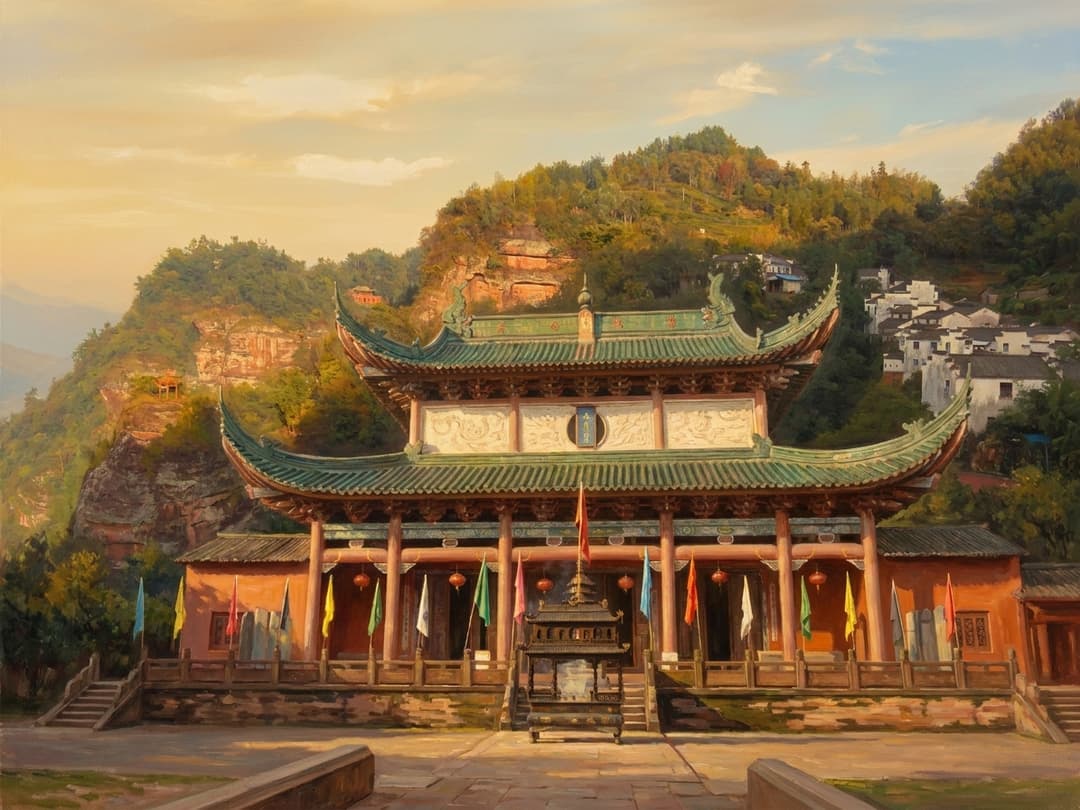
Visiting Mount Qiyun offers a unique blend of natural beauty and spiritual exploration. The mountain's Taoist temples and monasteries provide a serene atmosphere for contemplation, while its stunning Danxia landform offers breathtaking views. Visitors can expect to climb steep paths, explore ancient caves, and immerse themselves in the rich cultural heritage of this sacred mountain. Be prepared for crowds, especially during peak season, and wear comfortable shoes for the uneven terrain.
Highlights
- Explore the Taisu Palace, the largest temple complex on the mountain.
- Hike to Incense Burner Peak for panoramic views and a glimpse of a unique rock formation.
- Wander through Yuehua Street, the heart of the Taoist quarter, and admire the ancient architecture.
Things to Know
- The mountain trails can be steep and challenging, requiring a moderate level of fitness.
- Photography is generally allowed, but may be restricted inside some temples.
- Be respectful of the religious practices and customs observed by Taoist monks and pilgrims.
Location

Unnamed Road, Huangshan Shi, Anhui Province, China. Postal code: 245451
Hours: 8:00 AM to 5:00 PM (Qiyun Mountain), 8:00 AM to 4:50 PM (Cable Cars), 9:00 AM to 5:30 PM (Bamboo Raft)
Getting There: Bus from Huangshan North Station to Xiuning County, then taxi to entrance. Tour bus from Tunxi Old Street. Self-drive via G205 National Highway.
Get DirectionsTips for Your Visit
Best Time to Visit
Spring (April–May) for azaleas; autumn (October) for clear skies and maple foliage.
Avoid Crowds
Arrive early (8:30 AM) or visit on weekdays to avoid crowds.
Wear Sturdy Shoes
Wear sturdy shoes for the uneven trails.
About
Mount Qiyun, literally "Cloud-High Mountain," is a renowned Taoist sanctuary located in Anhui Province, China. As one of the Four Sacred Mountains of Taoism, it holds immense religious and cultural significance, attracting pilgrims and tourists alike. The mountain's unique Danxia landform, characterized by crimson cliffs and layered sandstone formations, provides a breathtaking backdrop for its numerous temples and monasteries.
The mountain's history as a Taoist center dates back to the Tang Dynasty, with significant development occurring during the Southern Song and Ming Dynasties. Imperial patronage, particularly during the Ming Dynasty, led to the construction of over 100 temples, transforming Mount Qiyun into a prominent hub for Taoic traditions in the Jiangnan region. The mountain is associated with the Taoist theological grouping (Taoic traditions).
Today, Mount Qiyun is a National Park and a testament to the enduring influence of Taoism in China. Visitors can explore its ancient temples, admire its stunning natural scenery, and experience the spiritual atmosphere that has drawn seekers for centuries. The mountain offers a unique blend of natural beauty and cultural heritage, making it a must-visit destination for those interested in Taoism and Chinese culture.
Gallery
Symbolic Elements
The temple's exterior features intricate carvings, each rich with spiritual meaning:
Xuantian Shangdi
Xuantian Shangdi is the supreme Taoist deity, often associated with the north and water. Many temples and monasteries on Mount Qiyun are dedicated to him, reflecting his importance in Taoist cosmology and practice. He is revered as a powerful protector and a symbol of cosmic order.

Incense Burner Peak
Incense Burner Peak is a distinctive 10-meter phallic-shaped rock formation that is revered as a fertility symbol. It represents the generative power of nature and the Taoist emphasis on harmony between man and the natural world. Pilgrims often visit the peak to offer prayers for prosperity and descendants.
Cliff Inscriptions
The cliff inscriptions on Mount Qiyun are a collection of over 460 Ming-Qing stone carvings, including a 6-meter longevity character by Empress Dowager Cixi. These inscriptions serve as a record of the mountain's history and cultural significance, reflecting the patronage of emperors and the enduring influence of Taoist philosophy.

Taoist Caves
The numerous caves on Mount Qiyun are used to enshrine statues of immortals, including the Eight Immortals. These caves provide a secluded space for meditation and contemplation, reflecting the Taoist emphasis on inner cultivation and the pursuit of enlightenment. They are considered sacred spaces where practitioners can connect with the divine.
Taoist Deities
Shrines dedicated to various Taoist deities, the Eight Immortals, and syncretic figures from Buddhism and local traditions are found throughout Mount Qiyun. These deities represent different aspects of the Taoist pantheon and are revered for their unique powers and attributes. They serve as intermediaries between the human and divine realms.
Yuehua Street Architecture
Yuehua Street, the core Daoist quarter, features ancient Taoist residences intermingled with Hui-style folk houses. This architectural blend symbolizes the integration of Taoist principles with daily life and local culture. The traditional buildings, with their intricate carvings and serene courtyards, create a unique and harmonious atmosphere.

Taisu Palace Archway
The Taisu Palace features a 17-meter red sandstone archway, a grand entrance that signifies the sacredness of the temple complex. The archway is adorned with intricate carvings and symbolic motifs, representing the power and majesty of the Taoist deities enshrined within. It serves as a gateway to the spiritual realm.

Danxia Landform
The unique Danxia landform of Mount Qiyun, characterized by crimson cliffs and layered sandstone formations, is a powerful symbol of the natural world's beauty and resilience. These geological formations, shaped by millions of years of erosion, reflect the Taoist emphasis on harmony with nature and the interconnectedness of all things.
Interesting Facts
Mount Qiyun is one of China's Four Sacred Mountains of Taoism.
The name 'Qiyun' means 'high as the clouds,' inspired by the mountain's peaks piercing the sky.
Emperor Qianlong praised Mount Qiyun as 'the unparalleled wonderland under heaven'.
Mount Qiyun is known for its sea of clouds, visible approximately 260 days a year.
The mountain has a mix of Taoist, Buddhist, and Confucian influences.
Mount Qiyun is divided into four scenic sections: Yuehua Street, Yunyan Lake, Loushanlou Building, and the area along the Hengjiang River.
The 'Shou' (longevity) character on Shouzi Cliff was written by Empress Dowager Cixi and has a diameter of 230 centimeters.
Mount Qiyun is considered a 'small Mount Wudang in the South of the River' because both enshrine Emperor Zhenwu.
There are over 460 Ming-Qing stone inscriptions on the mountain.
The mountain is home to the tomb of Zhang Sanfeng, a legendary Taoist figure, although the tomb is empty.
Common Questions
What is Mount Qiyun known for?
Mount Qiyun is known as one of the Four Sacred Mountains of Taoism in China, renowned for its stunning natural landscapes, ancient Taoist temples, and rich cultural heritage. The mountain's unique Danxia landform, characterized by crimson cliffs and layered sandstone formations, adds to its scenic appeal.
What are the key attractions on Mount Qiyun?
Key attractions include the Taisu Palace (Violet Sky Palace), the largest temple complex on the mountain; the Jade Emptiness Temple (Yuxu Gong), dedicated to Emperor Zhenwu; Incense Burner Peak, a unique rock formation; and Yuehua Street, the heart of the Taoist quarter with ancient architecture. The mountain also features numerous caves, inscriptions, and scenic viewpoints.
What is the best time to visit Mount Qiyun?
The best time to visit Mount Qiyun is during the spring (April–May) when the azaleas are in bloom, or during the autumn (October) when the skies are clear and the maple foliage is vibrant. These seasons offer pleasant weather and optimal conditions for exploring the mountain's natural beauty.
How do I get to Mount Qiyun?
You can reach Mount Qiyun by taking a bus from Huangshan North Station to Xiuning County, followed by a taxi to the entrance. Alternatively, you can join a tour bus from Tunxi Old Street. If driving, take the G205 National Highway and exit at Xiuning County, then follow the well-marked mountain road.
What should I wear and bring when visiting Mount Qiyun?
It is recommended to wear sturdy shoes for the uneven trails and bring water and snacks, as the mountain trails can be steep and challenging. Photography is allowed except in temple interiors. Drones, large bags, and smoking are prohibited outside designated areas.
Featured Stories
The Legend of Gong Qiyun
Tang Dynasty
The story of Mount Qiyun begins with Gong Qiyun, a Taoist priest who sought solitude and enlightenment amidst the mountain's rugged terrain during the Tang Dynasty. Secluding himself at Tianmen Cliff, Gong Qiyun's presence marked the early establishment of Taoism on the mountain, transforming it into a sanctuary for spiritual seekers. His dedication and devotion paved the way for future generations of Taoist practitioners who sought refuge in the mountain's serene embrace.
Gong Qiyun's legacy extends beyond his personal quest for enlightenment; he is revered as a pioneer who recognized the mountain's inherent spiritual power. His choice to make Mount Qiyun his hermitage laid the foundation for its development as a sacred site, attracting pilgrims and scholars who sought to emulate his example. The mountain's transformation into a Taoist center is a testament to Gong Qiyun's enduring influence.
Source: https://daoinfo.org/wiki/index.php?title=Mount_Qiyun
Emperor Jiajing's Divine Intervention
Ming Dynasty
During the Ming Dynasty, Emperor Jiajing faced a crisis: he lacked an heir to secure the imperial lineage. In desperation, he turned to the divine, offering fervent prayers at Mount Qiyun, beseeching the Taoist deities for assistance. Miraculously, his prayers were answered, and an heir was born, ensuring the continuation of the dynasty. In gratitude, Emperor Jiajing bestowed the name 'Qiyun' upon the mountain, signifying its connection to the heavens and its role in his personal salvation.
Emperor Jiajing's act of renaming the mountain marked a turning point in its history, elevating its status and attracting imperial patronage. The emperor's gratitude extended beyond a mere name change; he commissioned the construction of numerous temples and monasteries, transforming Mount Qiyun into a prominent Taoist center. This imperial endorsement solidified the mountain's position as a sacred site, drawing pilgrims and devotees from far and wide.
Source: https://www.longhumountain.com/newsinfo/46773.html
The Rebuilding of Taisu Palace
1994
Taisu Palace, the largest temple complex on Mount Qiyun, has undergone numerous transformations throughout its history, reflecting the mountain's resilience and enduring spiritual significance. After periods of neglect and destruction, the palace was meticulously rebuilt in 1994, adhering to its original architectural design. This restoration project symbolized a renewed commitment to preserving the mountain's cultural heritage and providing a sacred space for Taoist practice.
The rebuilding of Taisu Palace was a collaborative effort, involving skilled artisans, dedicated volunteers, and generous donors. The meticulous attention to detail ensured that the palace retained its historical authenticity, while incorporating modern amenities to accommodate visitors and practitioners. The restored palace stands as a testament to the enduring power of faith and the importance of preserving cultural landmarks for future generations.
Source: https://www.chinadaily.com.cn/m/anhui/2017-08/11/content_30232843.htm
Timeline
Gong Qiyun Seclusion
Taoist priest Gong Qiyun secluded himself at Tianmen Cliff, marking the early presence of Taoism on the mountain.
MilestoneRise to Prominence
Mount Qiyun rose to prominence as a sacred Taoist mountain and an imperial mountain of protection.
MilestoneShrine Construction
Yu Daoyuan built the Shrine of Perfect Warrior Who Protects Sages (佑聖真武祠 Yousheng Zhenwu Ci ) at the Qiyun Cliff.
EventTemple Construction
Wang Taiyuan, a Daoist, built the Jade Emptiness Temple (玉虛宮 Yuxu Gong ) and the Peaceful Joy Temple (靜樂宮 Jingle Ging ), imitating the style of Mount Wudang.
EventMountain Renaming
Emperor Jiajing renamed the mountain 'Qiyun' after his prayers for an heir were answered. Imperial patronage led to the construction of over 100 temples.
EventImperial Acclaim
Emperor Qianlong acclaimed the mountain as 'the unparalleled wonderland under heaven, the first famous mountain south of the Yangtze'.
MilestoneTaisu Palace Rebuilt
Taisu Palace was rebuilt.
RenovationNational Key Cultural Relic Protection Site
Designated a National Key Cultural Relic Protection Site.
MilestoneTaisu Palace Rebuilt
Taisu Palace was rebuilt according to its original appearance.
RenovationStatues Consecrated
Statues were consecrated in Taisu Palace, opening it to pilgrims and tourists.
Event'Toward the Clouds' Micro-Park Developed
The 'Toward the Clouds' Micro-Park, a repurposed highway, was developed as a cultural hub.
EventHistory by Decade
Tang Dynasty (758-760 CE)
The earliest recorded Taoist presence on Mount Qiyun dates back to the Tang Dynasty when the Taoist priest Gong Qiyun secluded himself at Tianmen Cliff. This marked the beginning of the mountain's association with Taoism and its development as a sacred site. Gong Qiyun's hermitage attracted other practitioners and laid the foundation for future temple construction.
Southern Song Dynasty (1127-1279)
During the Southern Song Dynasty, Mount Qiyun rose to prominence as a sacred Taoist mountain and an imperial mountain of protection. This period saw increased imperial patronage and the construction of important religious structures, solidifying the mountain's status as a significant Taoist center. Yu Daoyuan built the Shrine of Perfect Warrior Who Protects Sages (佑聖真武祠 Yousheng Zhenwu Ci ) at the Qiyun Cliff.
Ming Dynasty (1515 CE)
The Ming Dynasty witnessed a significant expansion of Taoist influence on Mount Qiyun. Wang Taiyuan, a Daoist, built the Jade Emptiness Temple (玉虛宮 Yuxu Gong ) and the Peaceful Joy Temple (靜樂宮 Jingle Ging ), imitating the style of Mount Wudang. This period marked a flourishing of Taoist architecture and religious practice on the mountain.
Ming Dynasty (1556 CE)
Emperor Jiajing's reign brought further imperial patronage to Mount Qiyun. After his prayers for an heir were answered, he renamed the mountain "Qiyun" and commissioned the construction of over 100 temples, including the Taisu Gong (Violet Sky Palace). This transformed the mountain into a Jiangnan Taoist hub.
Qing Dynasty (1768)
During the Qing Dynasty, Emperor Qianlong acclaimed Mount Qiyun as "the unparalleled wonderland under heaven, the first famous mountain south of the Yangtze". Taisu Palace was rebuilt in 1768, further enhancing the mountain's architectural and cultural significance.
Late 20th Century (1994-1997)
In 1994, Mount Qiyun was designated a National Key Cultural Relic Protection Site, recognizing its importance as a cultural and historical landmark. Taisu Palace was rebuilt according to its original appearance in 1994, and statues were consecrated in 1997, opening it to pilgrims and tourists.
21st Century (2023)
In 2023, the "Toward the Clouds" Micro-Park, a repurposed highway, was developed as a cultural hub, adding a new dimension to the visitor experience on Mount Qiyun. This project reflects ongoing efforts to preserve and promote the mountain's cultural heritage.
Religious Significance
Mount Qiyun holds profound religious significance as one of the Four Sacred Mountains of Taoism. It is a place where practitioners seek harmony with nature, cultivate inner peace, and connect with the divine. The mountain's temples and monasteries serve as centers for Taoist practice, study, and community.
The core spiritual purpose of Mount Qiyun is to provide a sanctuary for Taoist practice and to promote the principles of Taoism, including harmony, balance, and the pursuit of enlightenment. The mountain's natural beauty and serene atmosphere create an ideal environment for contemplation and spiritual growth.
Sacred Ordinances
Meditation
Meditation is a central practice in Taoism, aimed at quieting the mind, cultivating inner awareness, and connecting with the Tao. Practitioners on Mount Qiyun often meditate in caves, temples, or scenic locations, seeking to achieve a state of deep contemplation and spiritual insight.
Chanting
Chanting of Taoist scriptures and mantras is a common practice on Mount Qiyun, used to invoke the blessings of the deities, purify the mind, and cultivate spiritual energy. The rhythmic sounds and sacred words create a powerful atmosphere of devotion and reverence.
Ritual Offerings
Ritual offerings, such as incense, flowers, and food, are made to the Taoist deities on Mount Qiyun as a sign of respect, gratitude, and devotion. These offerings symbolize the practitioner's commitment to the Taoist path and their desire to connect with the divine.
The Taoist Pantheon
Mount Qiyun is home to shrines dedicated to various Taoist deities, each representing different aspects of the Tao and possessing unique powers and attributes. These deities serve as intermediaries between the human and divine realms, offering guidance, protection, and blessings to those who seek their assistance. The worship of these deities is an integral part of Taoist practice on Mount Qiyun.
Harmony with Nature
Taoism emphasizes the importance of living in harmony with nature, recognizing the interconnectedness of all things. Mount Qiyun's natural beauty and serene atmosphere provide an ideal environment for cultivating this harmony. Practitioners seek to align themselves with the rhythms of nature, drawing inspiration and wisdom from the mountain's landscapes and ecosystems.
Similar Temples

Sources & Research
Every fact on Temples.org is backed by verified Sources & Research. Each piece of information is rated by source tier and confidence level.
View All Sources (4)
| Field | Source | Tier | Retrieved |
|---|---|---|---|
| About & Historical Background | Go Grand China (opens in a new tab) | A | 2024-01-04 |
| Architectural Description | China Discover (opens in a new tab) | B | 2024-01-04 |
| Symbolic Elements | ChinaCulture.org (opens in a new tab) | B | 2024-01-04 |
| Historical Timeline | DaoInfo.org (opens in a new tab) | B | 2024-01-04 |