Visitor Insights
Visiting Mount Longhu
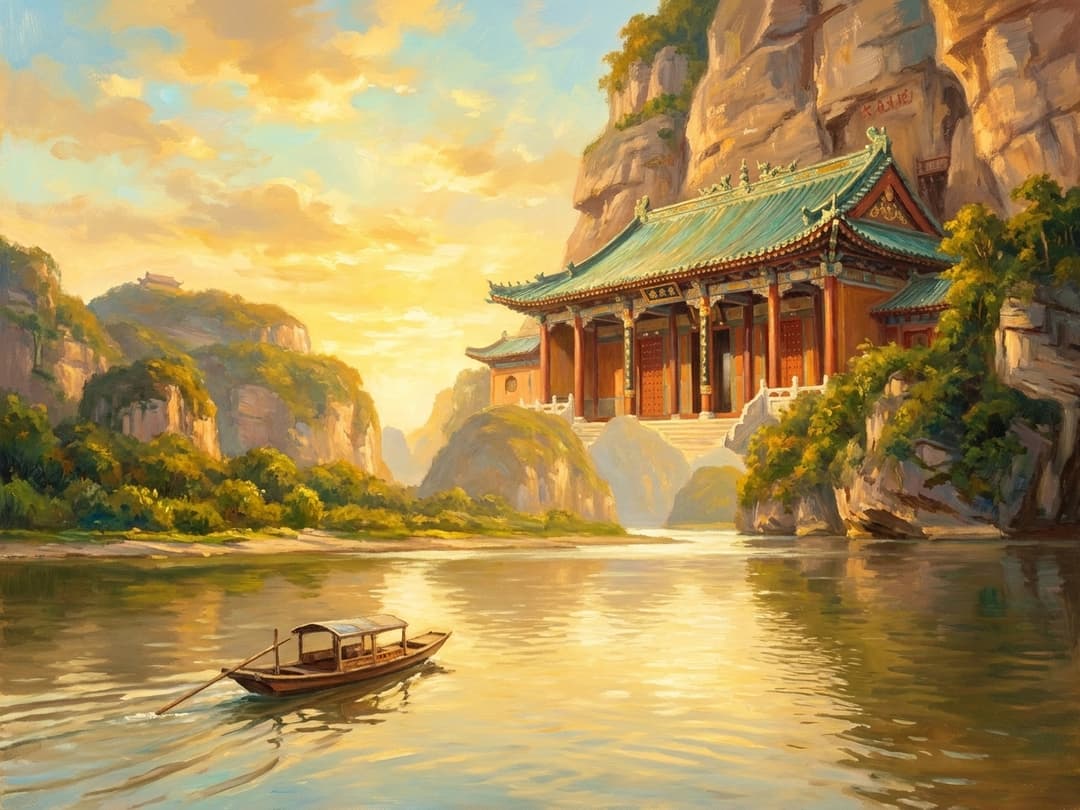
Visiting Mount Longhu provides a unique opportunity to immerse oneself in the heart of Taoist culture and experience the breathtaking beauty of the Danxia landscape. Visitors can expect a serene and spiritual atmosphere, with ancient temples nestled amidst towering red rock formations. Explore the historical sites, learn about Taoist traditions, and enjoy the natural scenery. Be prepared for some walking and potentially climbing stairs to reach certain attractions.
Highlights
- Explore the Shangqing Palace, a significant Taoist architectural complex.
- Visit the Tianshi Mansion, the historical residence of the Celestial Masters.
- Take a bamboo raft ride along the Luxi River for stunning views of the Danxia landform.
Things to Know
- Wear comfortable shoes for walking and climbing.
- Check the weather forecast and dress accordingly.
- Be respectful of the religious customs and traditions.
Location

Yingtan, Jiangxi Province, China
Hours: April to August: 7:30 am - 5:30 pm; September to March: 8:00 am - 5:00 pm.
Getting There: Fly to Sanqing Mountain Airport or Nanchang Changbei International Airport, then travel to Yingtan City. Take a train to Yingtan Railway Station (bus K2 to Mount Longhu) or Yingtan North Railway Station. Take a coach to Yingtan Coach Station, then bus K2 to Mount Longhu.
Get DirectionsTips for Your Visit
Plan your visit in advance
Book your tickets and accommodation ahead of time, especially during peak season.
Learn some basic Mandarin phrases
Knowing a few basic Mandarin phrases will enhance your experience and allow you to communicate with locals.
About
Mount Longhu, also known as Dragon Tiger Mountain, is a revered Taoist site located in Yingtan, Jiangxi Province, China. This mountain holds immense significance as the ancestral home of the Zhengyi School of Taoism, a major Taoist lineage. For centuries, Mount Longhu has served as a center for Taoist practice, attracting pilgrims and scholars. Its stunning natural landscapes, characterized by the unique Danxia landform, create a serene and spiritual atmosphere.
The mountain's history is deeply intertwined with the origins of Taoism. According to tradition, Zhang Daoling, the founder of Taoism, practiced alchemy here in the Eastern Han Dynasty. It is said that upon completing his elixir, a dragon and tiger appeared, giving the mountain its name. Since then, Mount Longhu has been revered as a sacred place, with emperors bestowing titles and supporting the construction of temples. The Celestial Masters, the leaders of the Zhengyi School, resided here for generations, preserving and transmitting Taoist traditions.
Today, Mount Longhu is a UNESCO World Heritage Site and a popular destination for those seeking to experience Taoist culture. Visitors can explore the ancient temples, marvel at the Danxia landform, and learn about the rich Taoist heritage of the mountain. The site offers a unique glimpse into the spiritual and cultural traditions of China, providing a space for contemplation, reflection, and connection with nature. As a place deeply rooted in Taoist traditions, Mount Longhu emphasizes harmony with the Tao, the fundamental principle underlying all of reality.
Gallery
Symbolic Elements
The temple's exterior features intricate carvings, each rich with spiritual meaning:
Dragon and Tiger
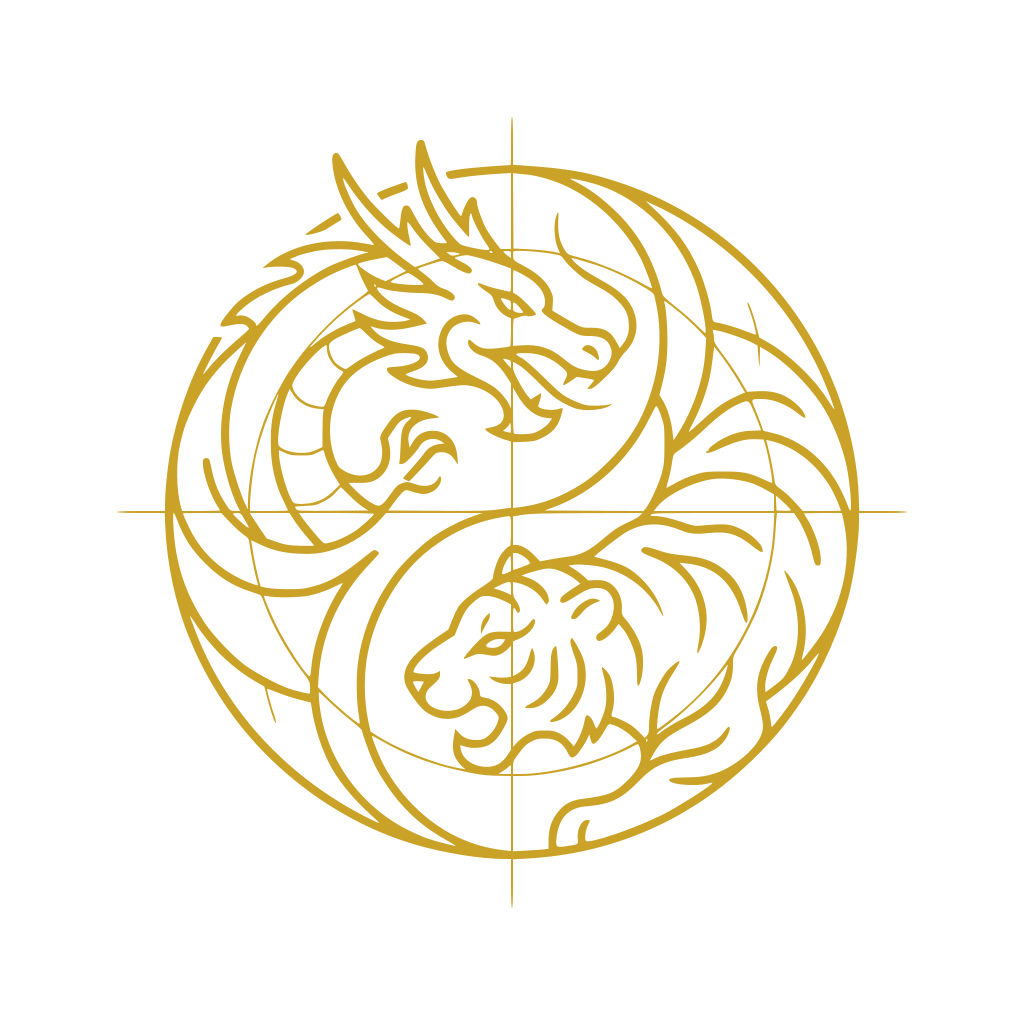
The dragon and tiger symbolize the balance of yin and yang, representing the harmony of nature and the interconnectedness of all things in Taoist philosophy. Their appearance upon the completion of Zhang Daoling's elixir signifies the attainment of spiritual enlightenment and the transformation of the self.

Zhengyi School
As the ancestral court of the Zhengyi School of Taoism, Mount Longhu embodies the traditions and teachings of this major Taoist lineage. The Zhengyi School emphasizes ritual practice, moral cultivation, and the pursuit of immortality through the integration of spiritual and physical practices.
Celestial Masters
The lineage of Celestial Masters who resided on Mount Longhu for centuries represents the continuity of Taoist practice and the transmission of knowledge. The Celestial Masters served as spiritual leaders, guiding practitioners on their path to enlightenment and preserving the traditions of the Zhengyi School.

Alchemy
Zhang Daoling's practice of alchemy on Mount Longhu highlights the Taoist pursuit of immortality and the transformation of the self through spiritual and physical practices. Alchemy involves the refinement of one's inner energies and the creation of elixirs to prolong life and attain spiritual liberation.

Danxia Landform
The unique Danxia landform of Mount Longhu, characterized by its red terrestrial clastic rock formations, symbolizes the power and beauty of nature. The towering peaks, cliffs, and caves create a landscape that inspires awe and reverence, inviting practitioners to connect with the natural world.
Shangqing Palace
Shangqing Palace, originally built as a thatched cottage by Zhang Daoling, represents the origins of Taoism on Mount Longhu. As a significant architectural complex, it embodies the traditions of ancient Chinese worship and serves as a reminder of the mountain's spiritual heritage.
Tianshi Mansion
The Tianshi Mansion, a royal-style complex of ancient buildings, served as the residence and ritual site for successive Celestial Masters. Its architectural design reflects the authority and prestige of the Celestial Masters, symbolizing their role as spiritual leaders and guardians of Taoist traditions.
Cliff Tombs
The ancient cliff tombs, where the Yue people placed hanging coffins, represent the connection between life and death and the Taoist understanding of the cyclical nature of existence. These tombs serve as a reminder of the impermanence of life and the importance of living in harmony with the Tao.
Interesting Facts
Mount Longhu is considered one of the Four Sacred Mountains of Taoism.
It is the ancestral home of the Zhengyi sect of Taoism, with a Taoist cultural heritage of over 1900 years.
The descendants of Zhang Daoling have lived on Mount Longhu for over 1,900 years, spanning 63 generations.
Mount Longhu is known for its 'three wonders': the Danxia landform, cliff tombs, and Taoist culture.
The ancient Yue people placed hanging coffins on the mountain's cliff faces, some dating back over 2,600 years.
The Luxi River meanders through the Mount Longhu area, offering scenic views of the Danxia landform and connecting various attractions.
Mount Longhu has 99 peaks, 24 cliffs, and 108 natural and artificial sights.
During its peak, Longhu Mountain had over 80 Taoist temples, 36 Taoist courtyards, and several Taoist palaces, reflecting its significance as a 'Capital of Taoism'.
The Tianshi Mansion is an ancient architectural complex built according to the styles of princes' residences.
Mount Longhu is similar in appearance to Wuyi Mountain, both being classic examples of the Danxia topography.
Common Questions
What is Mount Longhu known for?
Mount Longhu is known for its stunning Danxia landform, its rich Taoist heritage as the ancestral home of the Zhengyi School, and its ancient cliff tombs.
What is the significance of the dragon and tiger in the mountain's name?
The mountain's name comes from the legend of Zhang Daoling's alchemy, where a dragon and tiger appeared upon the elixir's completion. In Taoism, the dragon and tiger often represent the balance of yin and yang, and the harmony of nature.
What is the Zhengyi School of Taoism?
The Zhengyi School is a major Taoist lineage that originated on Mount Longhu. It emphasizes ritual practice, moral cultivation, and the pursuit of immortality.
What are the cliff tombs on Mount Longhu?
The cliff tombs are ancient burial sites of the Yue people, who placed hanging coffins on the mountain's cliff faces. Some of these tombs date back over 2,600 years.
How can I get to Mount Longhu?
You can fly to Sanqing Mountain Airport or Nanchang Changbei International Airport, then travel to Yingtan City. You can also take a train to Yingtan Railway Station or Yingtan North Railway Station. From Yingtan, you can take a bus to Mount Longhu.
Featured Stories
Zhang Daoling and the Elixir of Immortality
Eastern Han Dynasty
Tradition tells of Zhang Daoling, the founder of Taoism, who sought to unlock the secrets of immortality on the slopes of Mount Longhu. Through years of dedicated practice and alchemical experimentation, he strived to create an elixir that would grant eternal life. His efforts transformed the mountain into a sacred space, forever linked to the pursuit of spiritual enlightenment.
As Zhang Daoling neared the completion of his elixir, a mystical event unfolded. A magnificent dragon and a powerful tiger materialized, drawn by the potent energies released during the final stages of the alchemical process. This extraordinary occurrence led to the mountain being renamed Mount Longhu, Dragon Tiger Mountain, in honor of these auspicious creatures.
The dragon and tiger, symbols of yin and yang, became integral to the Taoist teachings associated with Mount Longhu. They represent the balance and harmony that practitioners strive to achieve in their lives, reflecting the interconnectedness of all things and the pursuit of inner peace.
Source: longhumountain.com
The Celestial Masters and the Transmission of Tradition
Throughout History
For centuries, the Celestial Masters, the leaders of the Zhengyi School of Taoism, resided on Mount Longhu, serving as spiritual guides and guardians of Taoist traditions. Each generation of Celestial Masters inherited the responsibility of preserving and transmitting the teachings of Zhang Daoling, ensuring the continuity of Taoist practice.
The Celestial Masters played a vital role in shaping the cultural and spiritual landscape of Mount Longhu. They oversaw the construction and maintenance of temples, conducted rituals and ceremonies, and provided guidance to practitioners seeking enlightenment. Their presence transformed the mountain into a center of Taoist learning and practice.
The lineage of Celestial Masters represents the unbroken chain of knowledge and wisdom that has been passed down through generations. Their dedication to preserving Taoist traditions has ensured that Mount Longhu remains a sacred site for practitioners seeking to connect with the Tao and deepen their understanding of the universe.
Source: travelchinaguide.com
The Ancient Cliff Tombs and the Mysteries of the Yue People
Over 2600 Years Ago
Scattered across the cliffs of Mount Longhu are ancient tombs, remnants of the Yue people who once inhabited the region. These tombs, some dating back over 2,600 years, offer a glimpse into the beliefs and practices of a long-vanished culture. The Yue people, known for their unique burial customs, placed coffins in precarious positions on the cliff faces, defying gravity and the passage of time.
The reasons behind the Yue people's cliff burial practices remain a subject of contemplation. Some believe that the practice was intended to protect the deceased from desecration, while others suggest that it was a way to honor the spirits of the mountains. Whatever the motivation, the cliff tombs stand as a testament to the ingenuity and resourcefulness of the Yue people.
Today, the cliff tombs of Mount Longhu are considered a valuable archaeological site, attracting researchers and visitors from around the world. They offer a tangible connection to the past, inviting us to contemplate the mysteries of life and death and the enduring legacy of the Yue people.
Source: chinaexpeditiontours.com
Timeline
Zhang Daoling begins practicing alchemy
Zhang Daoling, the founder of Taoism, began practicing alchemy on the mountain, then known as Mount of Splendid Clouds.
MilestoneZhang Sheng settles on Mount Longhu
Zhang Sheng, the fourth-generation descendant of Zhang Daoling, settled on Mount Longhu.
MilestoneKublai Khan grants authority over Taoism
Kublai Khan officially granted the 36th generation Celestial Master, Zhang Zongyan, authority over Taoism, making Longhu Mountain the origin of the 'Altar of Ten Thousand Dharmas'.
MilestoneShangqing Palace and Tianshi Mansion expand
Shangqing Palace and the Celestial Master's Mansion underwent expansions and renovations.
RenovationShangqing Palace and Tianshi Mansion renovated
Shangqing Palace and the Celestial Master's Mansion underwent further renovations.
RenovationMount Longhu listed as a UNESCO World Heritage Site
Mount Longhu was listed as a UNESCO World Heritage Site as part of China Danxia.
MilestoneFounding of the Zhengyi School
Zhang Daoling founded the Zhengyi school of Taoism on Mount Longhu, establishing it as a center for Taoist practice.
MilestoneArchitectural styles preserved
The ancient town of Shangqing preserves architectural styles from the Ming and Qing dynasties, showcasing the rich history of the region.
EventMount Longhu as a tourist destination
Mount Longhu is a renowned Taoist site and tourist destination, known for its natural landscapes, cliff tombs, and Taoist heritage.
EventPeak Tourist Season
Mount Longhu experiences its peak tourist season, with visitors flocking to the mountain to enjoy the scenery and learn about Taoist culture.
EventOff-Peak Tourist Season
Mount Longhu experiences its off-peak tourist season, offering a quieter and more peaceful experience for visitors.
EventTaoist cultural heritage
Mount Longhu has a Taoist cultural heritage of over 1900 years, making it a significant site for Taoist practice and study.
MilestoneAncient Yue people placed hanging coffins
The ancient Yue people placed hanging coffins on the mountain's cliff faces, some dating back over 2,600 years.
EventEmperors bestowed titles and support
Throughout history, emperors bestowed titles and support for temple construction, solidifying Mount Longhu as a spiritual pillar of Chinese culture.
EventCelestial Masters resided on Mount Longhu
The Celestial Masters resided on Mount Longhu for centuries, maintaining Taoist traditions and transmitting knowledge.
EventHistory by Decade
Eastern Han Dynasty (25-220 CE)
During the Eastern Han Dynasty, Zhang Daoling, the founder of Taoism, began practicing alchemy on Mount Longhu, then known as Mount of Splendid Clouds. Tradition states that when the elixir was completed, a dragon and tiger appeared, thus renaming the mountain. He founded the Zhengyi school of Taoism here, marking the beginning of Mount Longhu's significance as a Taoist center.
Three Kingdoms Period/Western Jin Dynasty (3rd Century CE)
In the 3rd century CE, Zhang Sheng, the fourth-generation descendant of Zhang Daoling, settled on Mount Longhu. This solidified the mountain's role as a family seat for the Celestial Masters and a center for Taoist practice, ensuring the continuation of the Zhengyi School's teachings.
Yuan Dynasty
During the Yuan Dynasty, Kublai Khan officially granted the 36th generation Celestial Master, Zhang Zongyan, authority over Taoism. This made Longhu Mountain the origin of the "Altar of Ten Thousand Dharmas," further cementing its importance as a central authority in Taoist affairs.
Ming and Qing Dynasties
The Ming and Qing Dynasties saw significant expansions and renovations of Shangqing Palace and the Celestial Master's Mansion. The architectural style of these dynasties is still evident in the ancient town of Shangqing, showcasing the enduring legacy of these periods.
Present Day
Today, Mount Longhu is a renowned Taoist site and tourist destination, known for its natural landscapes, cliff tombs, and Taoist heritage. It was listed as a UNESCO World Heritage Site in 2010, recognizing its cultural and natural significance on a global scale.
Over 1900 Years of Taoist Heritage
Mount Longhu boasts a Taoist cultural heritage spanning over 1900 years. The descendants of Zhang Daoling have lived on Mount Longhu for over 1,900 years, spanning 63 generations. This unbroken lineage has preserved the traditions and teachings of the Zhengyi School, making Mount Longhu a living testament to the enduring power of Taoism.
Architecture & Facilities
Mount Longhu is characterized by its stunning Danxia landform, featuring red terrestrial clastic rock formations sculpted by erosion over millions of years. The landscape includes cliffy scarps, numerous peaks (99 in total), boulders, caves, wells, ponds, streams, and waterfalls. The Taoist temples and structures are integrated into this natural landscape, creating a harmonious blend of human construction and natural beauty.
Building Materials
Red Terrestrial Clastic Rock
The primary material of the Danxia landform, this red rock is composed of sediment deposited over millions of years, giving the mountain its distinctive color and texture.
Wood
Traditional Chinese architecture, including the Taoist temples, utilizes wood for structural support, roofing, and decorative elements. The wood is often intricately carved and painted with vibrant colors.
Tile
Roofs of the temples and other buildings are typically covered with ceramic tiles, providing protection from the elements and adding to the aesthetic appeal of the structures.
Stone
Stone is used for foundations, walls, and pathways, providing stability and durability to the structures. The stone is often sourced locally, blending seamlessly with the natural environment.
Interior Features
Main Hall
The main hall of a Taoist temple is the central space for worship and ceremonies. It typically houses statues of deities and is adorned with intricate carvings and paintings.
Meditation Room
Meditation rooms provide a quiet and secluded space for practitioners to engage in contemplation and meditation, fostering inner peace and spiritual growth.
Library
Libraries house sacred texts and scriptures, providing a resource for scholars and practitioners to study and deepen their understanding of Taoist philosophy.
Living Quarters
Living quarters provide accommodation for monks and other residents of the temple, offering a space for rest and reflection.
Temple Grounds
The grounds of Mount Longhu encompass a vast area of natural beauty, including forests, streams, and waterfalls. Pathways wind through the landscape, connecting the various temples and attractions. The grounds are designed to promote harmony with nature and provide a space for contemplation and spiritual practice.
Additional Facilities
Mount Longhu offers various facilities for visitors, including restaurants, shops, and accommodation. These facilities are designed to cater to the needs of tourists while preserving the cultural and natural integrity of the site.
Religious Significance
Mount Longhu holds profound religious significance as the ancestral home of the Zhengyi School of Taoism, a major lineage within the Taoist theological grouping known as Taoic traditions. It is a sacred site where practitioners seek to connect with the Tao, the fundamental principle underlying all of reality.
The core spiritual purpose of Mount Longhu is to provide a space for practitioners to cultivate inner peace, understand the natural order, and seek balance in all aspects of life. Through rituals, meditation, and contemplation of nature, individuals can connect with the Tao and deepen their understanding of the universe.
Sacred Ordinances
Ritual Practice
Ritual practice is a central aspect of Taoist worship on Mount Longhu. Ceremonies are conducted to honor deities, purify the mind and body, and seek blessings for health, prosperity, and spiritual growth.
Meditation
Meditation is practiced to cultivate inner peace, focus the mind, and connect with the Tao. Practitioners may engage in various forms of meditation, including seated meditation, walking meditation, and visualization exercises.
Contemplation of Nature
Contemplation of nature is an integral part of Taoist practice on Mount Longhu. Practitioners spend time observing the natural world, seeking to understand the principles of harmony and balance that govern the universe.
The Tao and Harmony with Nature
Taoism emphasizes living in harmony with the Tao, the fundamental principle underlying all of reality. Mount Longhu, as a sacred site, provides a space for practitioners to connect with the Tao through rituals, meditation, and contemplation of nature. The mountain's symbolic elements serve as reminders of these core beliefs and guide individuals on their spiritual journey.
The Pursuit of Immortality
The pursuit of immortality is a central theme in Taoist philosophy. Zhang Daoling's practice of alchemy on Mount Longhu highlights the Taoist pursuit of immortality and the transformation of the self through spiritual and physical practices. Alchemy involves the refinement of one's inner energies and the creation of elixirs to prolong life and attain spiritual liberation.
The Role of the Celestial Masters
The Celestial Masters, as the leaders of the Zhengyi School of Taoism, played a vital role in shaping the cultural and spiritual landscape of Mount Longhu. They oversaw the construction and maintenance of temples, conducted rituals and ceremonies, and provided guidance to practitioners seeking enlightenment. Their presence transformed the mountain into a center of Taoist learning and practice.
Similar Temples
Sources & Research
Every fact on Temples.org is backed by verified Sources & Research. Each piece of information is rated by source tier and confidence level.
View All Sources (13)
| Field | Source | Tier | Retrieved |
|---|---|---|---|
| About & Historical Background | longhumountain.com (opens in a new tab) | A | 2024-01-02 |
| About & Historical Background | chinaxiantour.com (opens in a new tab) | D | 2024-01-02 |
| About & Historical Background | TravelChinaGuide (opens in a new tab) | D | 2024-01-02 |
| About & Historical Background | chinaexpeditiontours.com (opens in a new tab) | D | 2024-01-02 |
| About & Historical Background | loongwander.com (opens in a new tab) | D | 2024-01-02 |
| About & Historical Background | UNESCO (opens in a new tab) | B | 2024-01-02 |
| About & Historical Background | Trip.com (opens in a new tab) | C | 2024-01-02 |
| About & Historical Background | sinoperi.com (opens in a new tab) | D | 2024-01-02 |
| About & Historical Background | wanderboat.ai (opens in a new tab) | D | 2024-01-02 |
| About & Historical Background | longhutao.com (opens in a new tab) | A | 2024-01-02 |
| About & Historical Background | foreignercn.com (opens in a new tab) | D | 2024-01-02 |
| Visitor Information | WikiVoyage (opens in a new tab) | D | 2024-01-02 |
| Taoist Beliefs | Taobao (opens in a new tab) | D | 2024-01-02 |