Visitor Insights
Visiting Longmen Grottoes
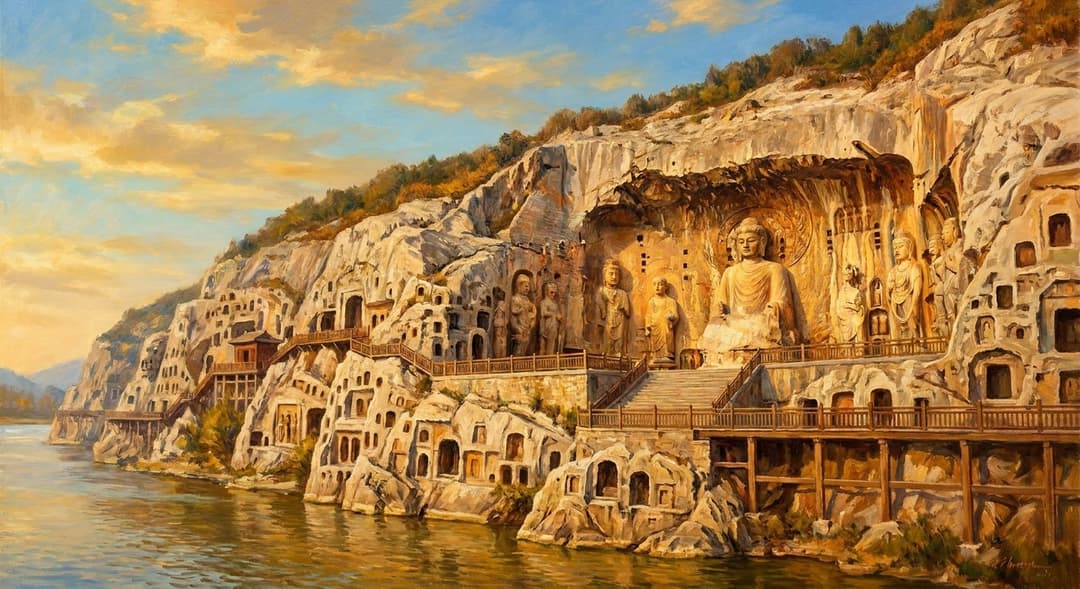
Visiting the Longmen Grottoes offers a transformative journey through cliffside sanctuaries, ancient medical inscriptions, and monumental Buddhist sculpture set against a scenic river gorge.
Highlights
- Gaze upon the colossal 17.14-meter Vairocana Buddha at Fengxian Temple.
- Explore the 15,000 miniature carved Buddhas inside Wanfo Cave.
- Examine 6th-century traditional medical formulas carved on the walls of Yaofangdong.
Things to Know
- Expect extensive walking along stairs and high wooden walkways built against the cliffs.
- Early morning visits provide the best sunlight for photographing the West Hill caves.
Location
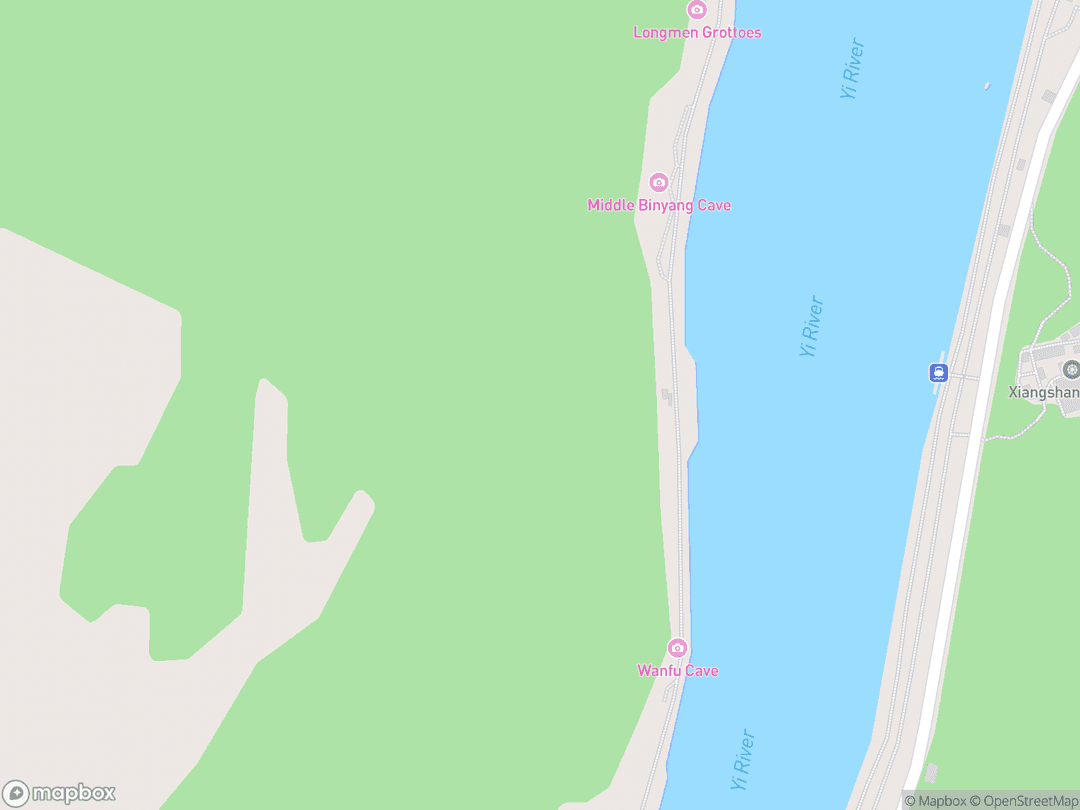
Luolong District, 12 kilometers south of Luoyang City, Henan Province, China
Hours: Peak: 08:00 - 18:30 (Apr 1 - Oct 31); Off-Peak: 08:00 - 17:30 (Nov 1 - Mar 31)
Getting There: Take High-Speed Rail to Luoyang Longmen Railway Station (5 km north), then take Taxi or Bus Route 67/71 directly to the Grottoes Scenic Area.
Get DirectionsTips for Your Visit
Optimal Viewing Route
Follow the standard one-way circuit from West Hill Grottoes across Manshui Bridge to East Hill and Xiangshan Temple.
Photography Lighting
West Hill sculptures receive direct morning light, while East Hill offers panoramic afternoon views across the river.
About
The Longmen Grottoes represent one of the finest achievements of Chinese Buddhist cave art, carved directly into the limestone cliffs of Mount Longmen and Mount Xiang along the Yi River. Initiated in 493 CE during the Northern Wei Dynasty and continuously expanded through the Tang Dynasty, the complex encompasses 2,345 caves and niches containing over 110,000 Buddhist statues and 2,800 stele inscriptions.
Rooted in East Asian Mahayana traditions and broader Dharmic theological concepts, the grottoes serve as a physical manifestation of cosmic order, imperial devotion, and spiritual liberation. The colossal central Vairocana Buddha at Fengxian Temple embodies ultimate reality and universal enlightenment, anchoring a vast sacred landscape that served both royal patrons and humble pilgrims for over six centuries.
Designated as a UNESCO World Heritage Site in 2000, the Longmen Grottoes remain an active religious pilgrimage sanctuary and a vital testament to the synthesis of Indian Buddhist iconography with traditional Han Chinese artistic forms.
Gallery
Symbolic Elements
The temple's exterior features intricate carvings, each rich with spiritual meaning:

Vairocana Buddha
Represents the unmanifested Dharmakaya cosmic body from which all universal wisdom emanates.

Nine-Figure Tableau
Depicts the hierarchical organization of spiritual beings within the Mahayana salvation realm.

Lotus Pedestal
Signifies immaculate spiritual purity emerging undefiled from the turbid physical world.

Medical Relief Inscriptions
Reflects the doctrine of spiritual compassion addressing physical suffering through the Supreme Physician.
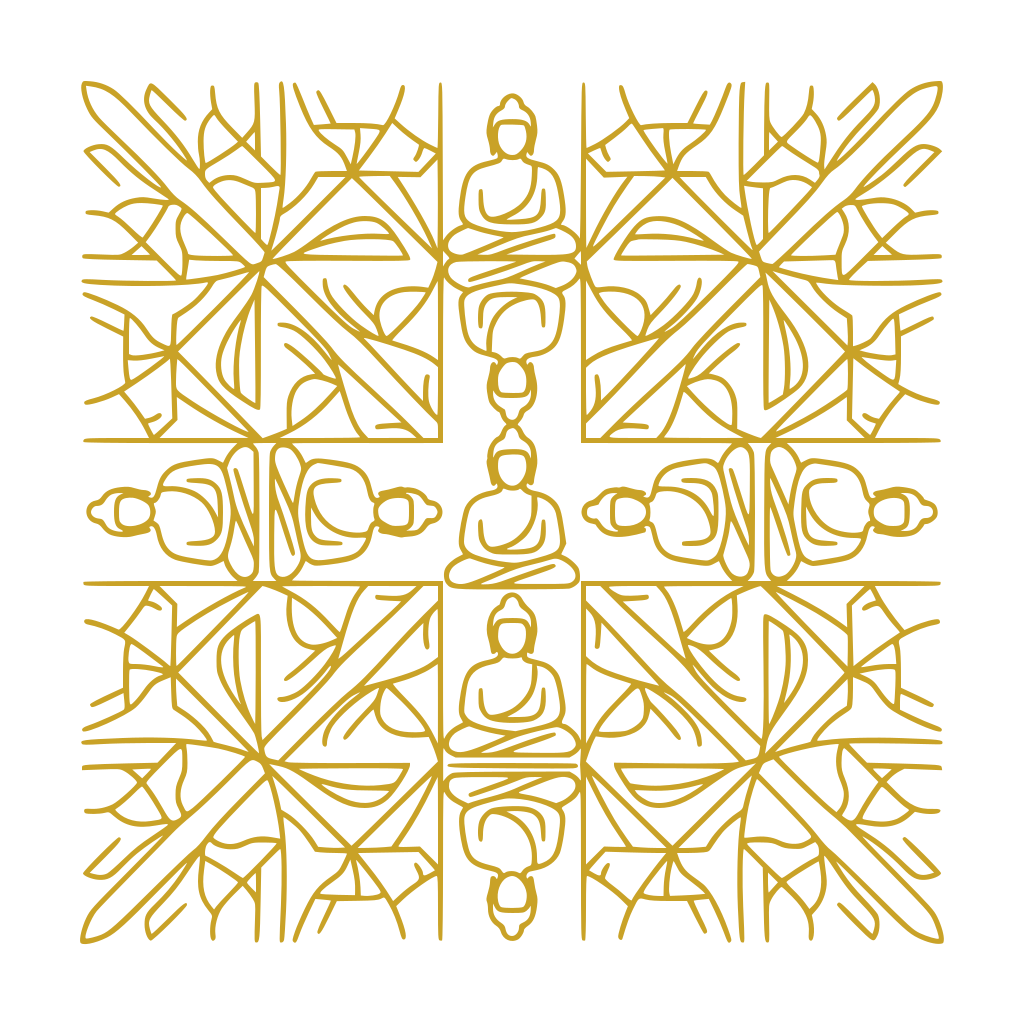
Wanfo Matrix
Illustrates the infinite interpenetrating Buddhas populated throughout every cosmic realm.
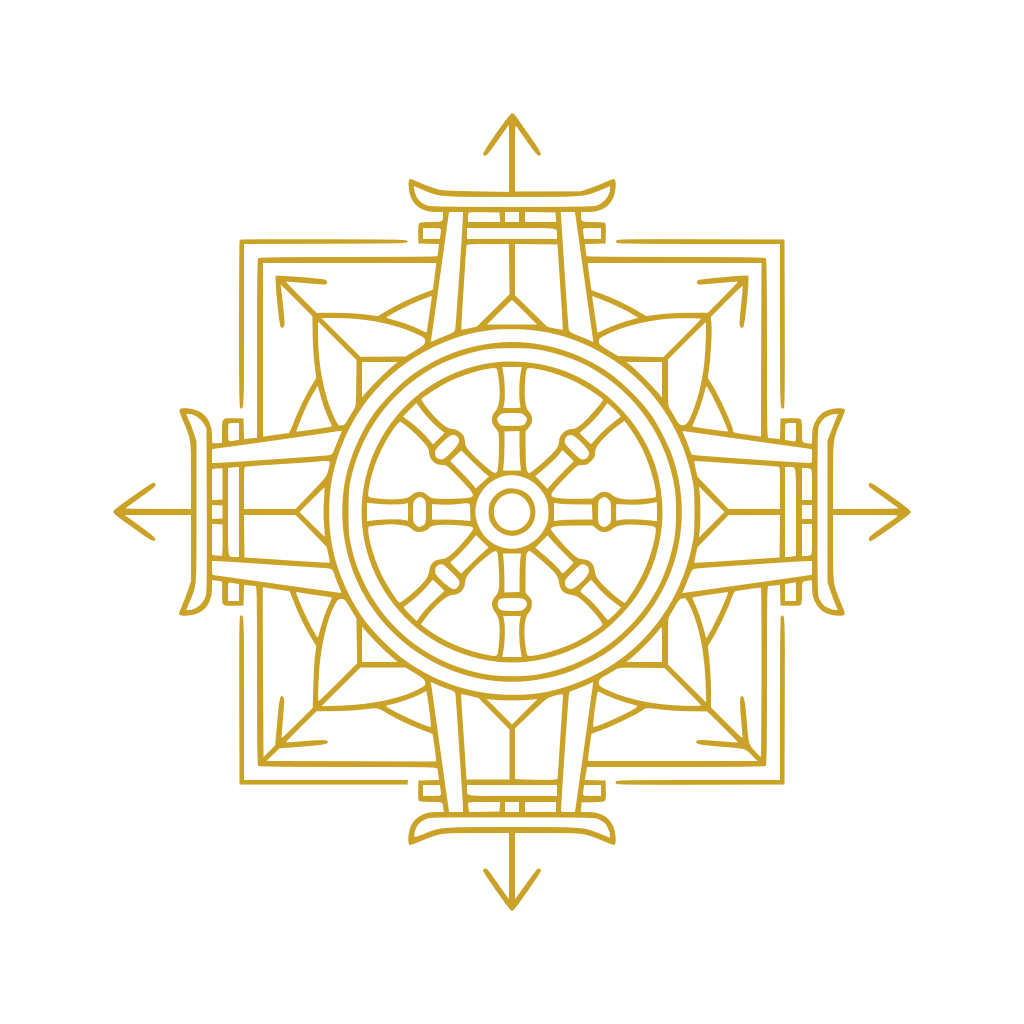
Lokapalas Deities
Symbolizes cosmic moral protection safeguarding the sacred Dharma against spiritual decay.
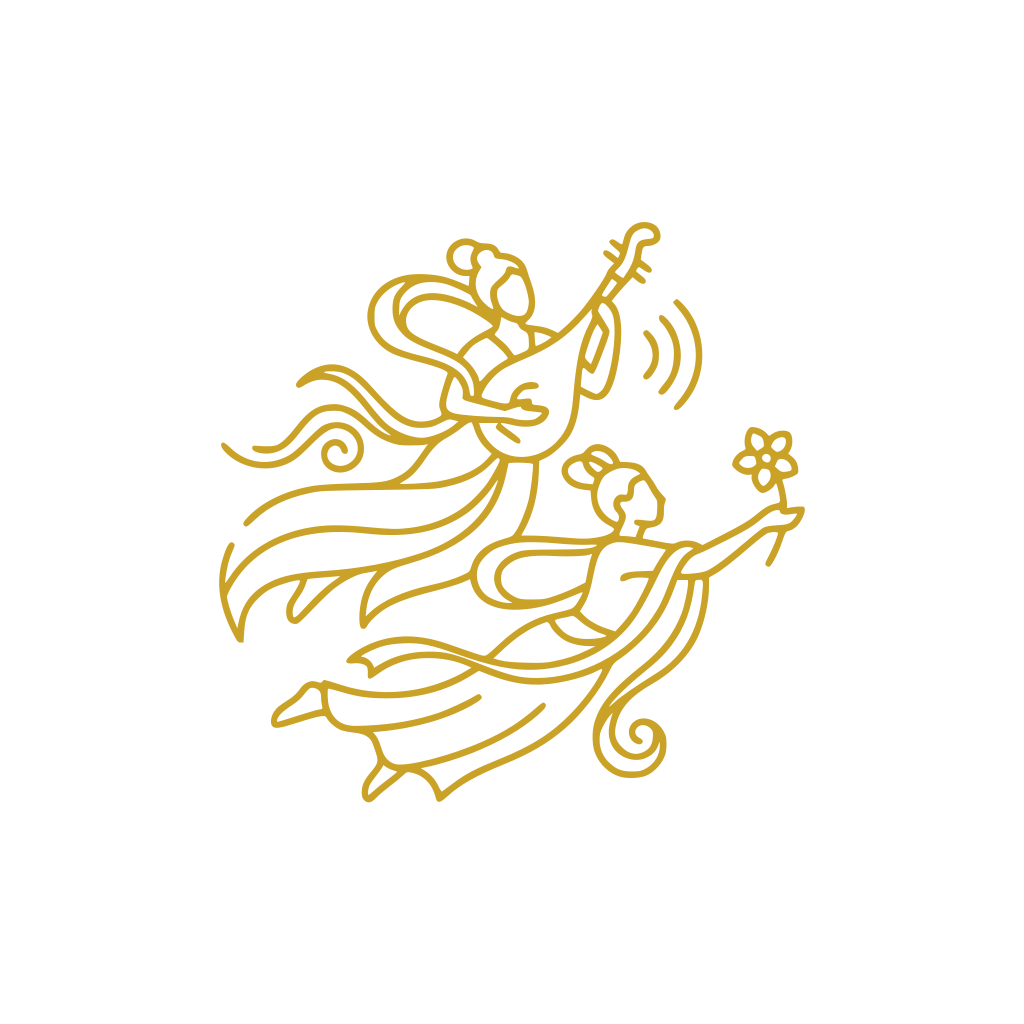
Feitian Celestial Figures
Embody joyful celestial devotion through fluid airborne figures offering music and flowers.

Northern Wei Drapery
Reflects early Han Chinese court style merged with Gandharan geometric ascetic grace.
Interesting Facts
The facial features of the colossal Vairocana Buddha were modeled after Empress Wu Zetian to reinforce her divine legitimacy. (Tier A)
Empress Wu Zetian donated her entire annual cosmetic allowance of 20,000 copper coin strings to finance Fengxian Temple. (Tier A)
Yaofangdong contains 140 carved 6th-century stone medical formulas listing remedies for ancient illnesses. (Tier A)
Statue sizes across the site range from the colossal 17.14-meter Vairocana down to miniature figures measuring just 2 centimeters. (Tier A)
Sui Dynasty Emperor Yangdi renamed the gorge Dragon Gate because it aligned perfectly with the main entrance of his imperial palace. (Tier A)
Despite being called the Ten-Thousand Buddha Cave, Wanfo Cave actually contains precisely 15,000 miniature carved Buddhas. (Tier A)
Guyang Cave contains the Twenty Works of Longmen Calligraphy, considered the gold standard of Northern Wei stone script. (Tier B)
Tang Dynasty poet Bai Juyi loved Xiangshan Temple so much that he chose to be buried on the eastern hill overlooking the grottoes. (Tier A)
Featured Stories
Empress Wu Zetian's Imperial Offering
672 CE
In 672 CE, Empress Wu Zetian pledged 20,000 strings of copper coins from her personal makeup allowance to fund the colossal Vairocana Buddha at Fengxian Temple. Sculptors modeled the deity's facial features after the Empress herself to reinforce her authority as a sovereign ruler. Consecrated in 675 CE, the statue remains the ultimate symbol of imperial patronage merging with divine Buddhist majesty.
Source: Longmen Caves Conservation Institute Records
The Medical Stone Prescriptions of Yaofangdong
520 CE
Carved during the 6th century, the walls of Yaofangdong contain 140 detailed medical prescriptions listing remedies for ancient ailments ranging from malaria to cardiac conditions. Combining traditional Chinese medicine with Mahayana concepts of compassion, these stone inscriptions served as a permanent public health encyclopedia for pilgrims seeking both physical healing and spiritual solace.
Source: Henan Provincial Cultural Resource Documentation
Digital Reunification of Looted Relics
2020 CE
Decades after 20th-century looters severed hundreds of statue heads from the cliffs, modern researchers are utilizing 3D photogrammetry to reunite these sacred sculptures. By scanning severed fragments housed in overseas museums and matching them to physical cliff torsos in Luoyang, international teams are digitally restoring the complex to its original imperial integrity.
Source: UNESCO World Heritage Research Projects
Timeline
Capital Relocation and Excavation
Emperor Xiaowen initiates excavation at Guyang Cave after moving the Northern Wei capital to Luoyang.
component.timeline.groundbreakingBinyang Cave Commission
Emperor Xuanwu commissions the Binyang Cave Complex to honor his deceased royal parents.
MilestoneMedical Relief Inscriptions
Sculptors begin carving Yaofangdong, integrating stone-inscribed traditional medical formulas into the cave walls.
EventRenaming to Longmen
Sui Dynasty Emperor Yangdi renames the gorge Longmen because it aligns with his imperial palace gate.
MilestoneEmpress Wu Zetian Donation
Empress Wu Zetian donates personal cosmetic funds to expedite the construction of Fengxian Temple.
EventVairocana Consecration
The colossal 17.14-meter Vairocana Buddha is consecrated as the supreme spiritual center of Fengxian Temple.
DedicationCompletion of Wanfo Cave
Artisans complete Wanfo Cave, creating a matrix of 15,000 miniature carved Buddha figures.
MilestoneGreat Anti-Buddhist Persecution
Emperor Wuzong halts imperial sponsorship at the cliff complex during nationwide monastic suppressions.
EventSong Dynasty Devotional Work
Merchant guilds and local officials sponsor private devotional niches during the Northern Song era.
EventNational Cultural Relic Designation
The State Council of China designates the Longmen Grottoes as a National Key Cultural Relics Protection Unit.
MilestoneUNESCO World Heritage Inscription
UNESCO officially inscribes the Longmen Grottoes onto the World Heritage List.
MilestoneDigital Relic Reunification
Researchers launch 3D photogrammetry to digitally reassemble looted head fragments with cliff torsos.
RenovationHistory by Decade
490s–530s — Northern Wei Imperial Foundations
Following Emperor Xiaowen's capital relocation to Luoyang in 493 CE, royal artisans began excavating Guyang Cave as a devotional monument for Tuoba nobility. Subsequent rulers commissioned the Binyang Cave Complex, establishing slender figures and geometric drapery styles that fused Central Asian Gandharan forms with early Han court traditions.
650s–700s — Tang Dynasty Golden Age
Under Tang Emperor Gaozong and Empress Wu Zetian, Longmen experienced its grandest expansion phase, shifting artistically toward full-figured naturalism and grand open-air cliff bays. The completion of the 17.14-meter Vairocana Buddha at Fengxian Temple and the 15,000 miniature statues of Wanfo Cave marked the architectural peak of East Asian Buddhist cave art.
840s–1930s — Suppression, Decline, and Foreign Looting
The Great Anti-Buddhist Persecution of 845 CE halted imperial commissions at the site, though local merchants continued minor carving work through the Song Dynasty. During the political instability of the early 20th century, foreign art collectors systematically vandalized the grottoes, sawing off hundreds of statue heads for global art markets.
1950s–Present — Conservation, UNESCO Inscription, and Digital Preservation
The Chinese government established the Longmen Caves Conservation Institute in 1953, declaring the site a protected national relic in 1961. Following its inscription on the UNESCO World Heritage List in 2000, modern conservation has focused on stone preservation, environmental control, and 3D digital reunification of severed sculptures.
Architecture & Facilities
The architecture illustrates the transition from high-relief Northern Wei vaulted chambers to broad Tang Dynasty naturalistic open-air cliff sanctuaries along the limestone Yi River gorge.
Building Materials
Dense Gray Limestone
Quarried directly from the natural vertical cliffs of Mount Longmen and Mount Xiang.
Mineral Pigments
Traces of azurite blue, malachite green, and cinnabar red originally coated the carved stone figures.
Gold Leaf
Applied onto primary statues during imperial dedications to signify celestial radiance.
Stone Drainage Channels
Engineered above cave entrances to divert mountain rainwater runoff away from delicate reliefs.
Interior Features
Fengxian Temple Shrine
An open-air cliff bay housing a colossal nine-figure sculpture group centered on Vairocana.
Guyang Cave Chamber
A barrel-vaulted hall lined with thousands of small devotional shrines and calligraphy steles.
Binyang Middle Cave
Features a carved lotus ceiling with flying apsaras canopying a central Shakyamuni triad.
Wanfo Cave Interior
A rectangular chamber with grid-carved walls holding 15,000 miniature Buddha statues.
Temple Grounds
Spans a one-kilometer stretch of limestone cliffs on both banks of the Yi River, connected by the Manshui and Longmen bridges.
Additional Facilities
Includes the Longmen Grottoes Museum, the historic Xiangshan Temple, and the memorial tomb park of Tang poet Bai Juyi.
Religious Significance
As a central sanctuary of East Asian Mahayana Buddhism, the Longmen Grottoes embody the theological concepts of cosmic illumination, bodhisattva compassion, and karmic liberation shared across Dharmic spiritual traditions.
Serves as a monumental devotional space expressing imperial piety, monastic study, and lay pilgrimage within East Asian Buddhist history.
Sacred Ordinances
Darshan and Circumambulation
Pilgrims engage in reverent gaze and ritual circumambulation around sacred Buddha icons to cultivate spiritual merit.
Sutra Chanting and Calligraphy
Devotees recite and transcribe sacred scriptures onto stone to preserve the Dharma for future generations.
Devotional Merit Offertory
Donations of shrines, statues, and resources dedicated to transferring karmic merit toward the liberation of all beings.
The Vairocana Dharmakaya Concept
The central Vairocana statue represents the unmanifested cosmic body of the Buddha. In Mahayana theology, Vairocana is the ultimate source from which all physical worlds and historical Buddhas originate, illuminating universal truth throughout the cosmos.
The Bodhisattva Vow in Stone
Flanking the central Buddhas are lavishly adorned Bodhisattvas representing active compassion. Their presence emphasizes the vow to postpone individual Final Nirvana until every sentient being is delivered from earthly suffering.
Sources & Research
Every fact on Temples.org is backed by verified Sources & Research. Each piece of information is rated by source tier and confidence level.
View All Sources (8)
| Field | Source | Tier | Retrieved |
|---|---|---|---|
| About & Historical Background | UNESCO World Heritage Centre (opens in a new tab) | B | 2026-02-15 |
| Architecture & Cave Structure | Henan Provincial People's Government (opens in a new tab) | A | 2026-02-15 |
| Religious Significance & Iconography | Encyclopedia of Buddhism (opens in a new tab) | B | 2026-02-15 |
| Historical Timeline & Inscriptions | World History Encyclopedia (opens in a new tab) | B | 2026-02-15 |
| Art Historical Analysis | Smarthistory Art History Portal (opens in a new tab) | B | 2026-02-15 |
| Visitor Information & Navigation | Into Travel China (opens in a new tab) | D | 2026-02-15 |
| Imperial Patronage & Inscriptions | Travel China Guide (opens in a new tab) | D | 2026-02-15 |
| Conservation & Digital Reunification | China Explorer Tour (opens in a new tab) | D | 2026-02-15 |