Visitor Insights
Visiting Mogao Caves
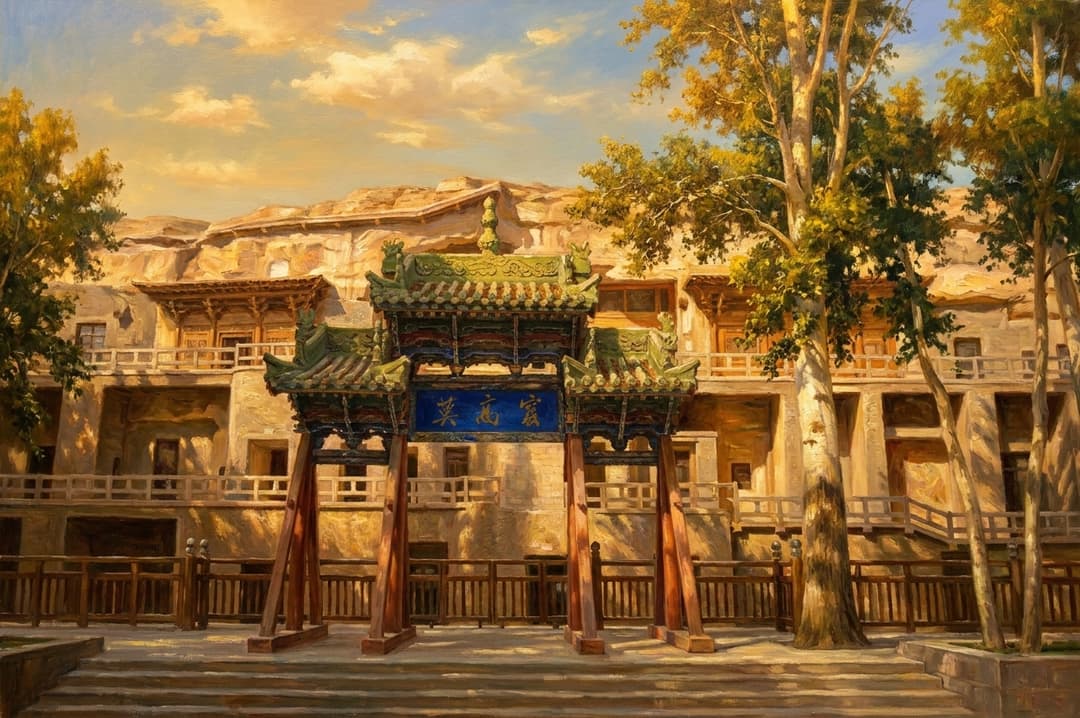
Visiting Mogao Caves offers a profound encounter with ancient Silk Road spiritual art and monastic life. All visitors must check in at the Digital Exhibition Center for introductory films before taking shuttle transport to the cave complex. Guided cave allocations ensure environmental protection while presenting multi-era masterpieces.
Highlights
- Witness the colossal 35.5-meter seated Maitreya Buddha inside the Nine-Story Pavilion of Cave 96.
- Examine intricate Western Paradise transformation murals and weightless flying celestial figures.
- View the historic site of Cave 17, where over 50,000 ancient Silk Road manuscripts were preserved.
Things to Know
- Advance real-name ticket reservation is mandatory due to strict daily visitor caps.
- Flash photography, video recording, and large backpacks are strictly prohibited inside cave chambers.
- Individual caves close automatically when microclimate sensors detect unsafe humidity levels.
Location
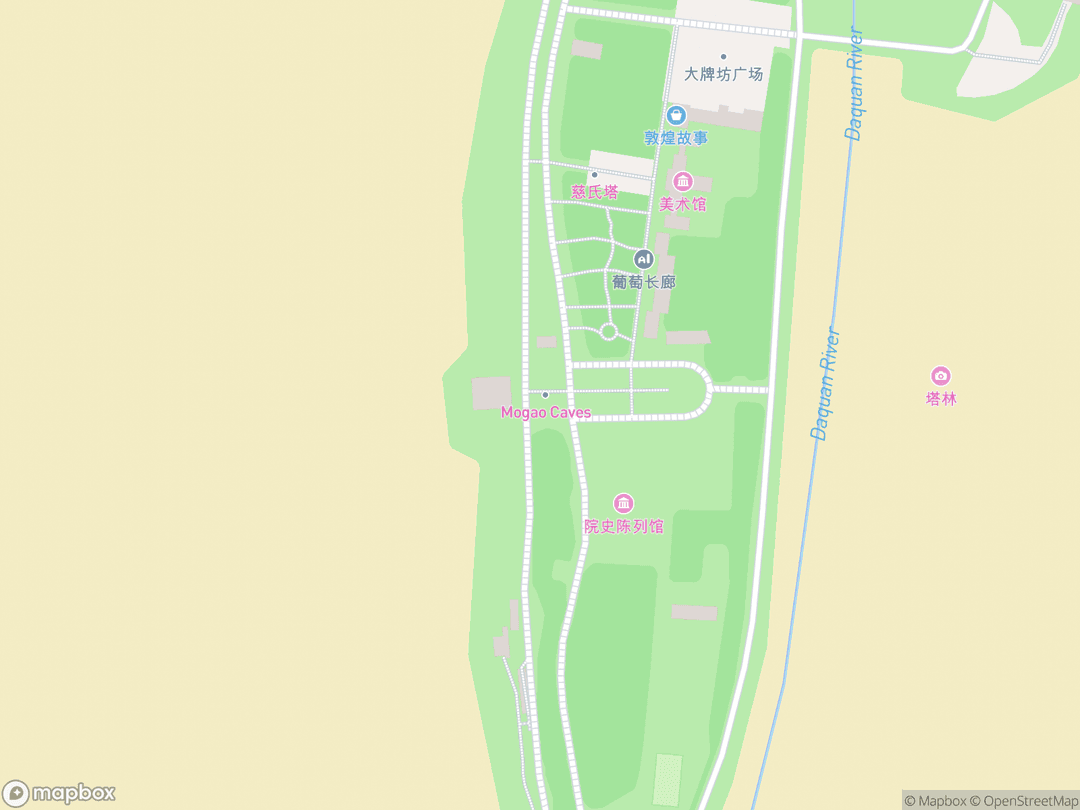
Mogao Town, 25 km Southeast of Dunhuang City, Gansu Province, China
Hours: Peak Season (May-Oct): 07:30 - 18:00. Off-Peak Season (Nov-Apr): 09:00 - 17:30.
Getting There: Located 25 km southeast of Dunhuang. Report first to the Mogao Caves Digital Exhibition Center near Dunhuang Railway Station for shuttles.
Get DirectionsTips for Your Visit
Book Ahead Online
Reserve standard admission tickets weeks in advance through official channels to secure full digital presentation and cave access.
Visit During Off-Peak Months
Winter and spring visits feature shorter waiting lines and expanded cave entry limits authorized by the academy.
Bring a Small Flashlight
Guides utilize soft LED lights to protect ancient organic pigments, making a personal compact low-intensity torch helpful.
About
Carved into the sandstone cliffs of Mount Mingsha along the ancient Silk Road, the Mogao Caves represent one of the world's most significant sacred Buddhist complexes. Founded in 366 CE by the itinerant monk Le Zun following a divine vision of a thousand shining Buddhas, the sanctuary expanded over ten centuries under imperial, monastic, and lay patronage across successive Chinese dynasties and Silk Road kingdoms.
Rooted in the Dharmic theological continuum, the complex expresses core Buddhist concepts including samsara, dhyana, and karma through the lens of Mahayana and Esoteric traditions. The sanctuary's 492 decorated art caves and 243 monastic cells contain over 45,000 square meters of painted murals and 2,415 clay sculptures, functioning as visual instruments for visualization meditation, doctrine instruction, and merit accumulation.
Beyond its artistic brilliance, Mogao served as a vibrant intercultural nexus where Indian, Iranian, Tibetan, and Han Chinese traditions converged. Re-emerging into global prominence after the 1900 discovery of the Library Cave, the site remains an active Buddhist pilgrimage destination and a UNESCO World Heritage Site preserved through cutting-edge conservation partnerships.
Gallery
Symbolic Elements
The temple's exterior features intricate carvings, each rich with spiritual meaning:
Flying Apsaras (Feitian)
Celestial figures achieving weightless flight through flowing scarves, symbolizing heavenly celebration of the Dharma.
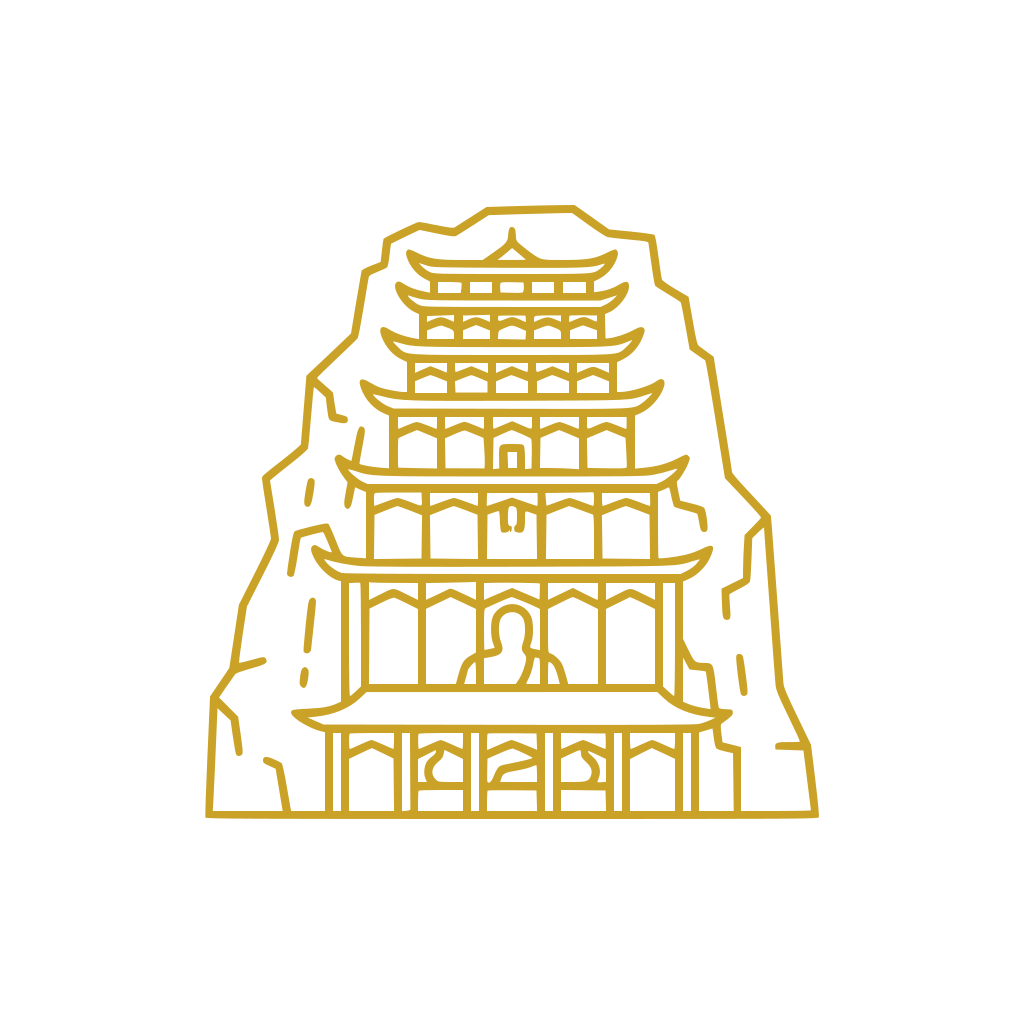
Nine-Story Pavilion
Multi-tiered wooden exterior fronting structure built against the cliff face to enclose the colossal Maitreya statue.

Central Pillar (Chaitya)
Solid rock column in rear cave centers allowing devotees to perform sacred ritual circumambulation.
Pure Land Transformation Murals
Architectural wall panoramas mapping Amitabha's Western Paradise to guide visual meditation practices.
Thousand Buddha Motif
Grid pattern of repeated Buddha figures expressing the cosmic omnipresence of Buddha-nature across space and time.
Painted Clay Statuary
Sculptures crafted from wooden cores, reed bundles, and river mud plaster to overcome conglomerate rock limits.
Donor Portraits
Mural paintings of historical patrons recording acts of religious generosity to generate positive spiritual merit.
Interesting Facts
The hidden Library Cave held over 50,000 ancient manuscripts sealed for nearly nine centuries. (Tier A)
A complete printed Diamond Sutra scroll dated May 11, 868 CE predates Gutenberg's press by nearly 600 years. (Tier A)
Manuscripts recovered from Mogao were written in over a dozen ancient languages including Sogdian and Khotanese. (Tier B)
Architects Liang Sicheng and Lin Huiyin used a Mogao mural of Mount Wutai to discover China's oldest timber building. (Tier B)
Vibrant lapis lazuli pigments were imported over thousands of miles from Afghan mines along trade routes. (Tier B)
The complex features two distinct functional zones: 492 decorated art caves and 243 unpainted living cells. (Tier A)
Empress Wu Zetian sponsored the colossal 35.5-meter Buddha in Cave 96 to validate her political authority. (Tier A)
Famous flying apsaras figures fly through fluid scarf movements rather than feathered wings. (Tier A)
Because rock walls were too soft for carving, statues were built using wood armatures and riverbed clay. (Tier A)
The Digital Dunhuang project provides global access to high-resolution 3D models of fragile cave interiors. (Tier A)
Common Questions
Why are the Mogao Caves historically significant?
They preserve a continuous thousand-year record of Silk Road Buddhist art, architectural development, and cultural interaction.
What is the Library Cave?
Cave 17 is a hidden chamber sealed around 1006 CE that contained over 50,000 ancient multi-lingual manuscripts and ritual textiles.
Can visitors take photographs inside the caves?
No, photography and flash lighting are strictly banned inside to prevent light-induced damage to fragile mineral pigments.
How are the cave murals conserved today?
The Dunhuang Academy uses automated environmental monitoring, visitor limits, and high-resolution 3D digital recording.
Featured Stories
The Divine Golden Light Vision of Le Zun
366
In 366 CE, the traveling monk Le Zun halted near Mount Mingsha as the setting sun struck the cliff face. He beheld a dazzling vision of thousands of Buddhas bathing the desert in golden light. Deeply moved, he carved the very first meditation cell into the rock, laying the foundation for a sanctuary that endured over a thousand years.
Source: Dunhuang Academy Historical Records
The Sealing and Discovery of the Library Cave
June 25, 1900
Fearing local military conflicts around 1006 CE, monastic caretakers stacked 50,000 manuscripts, textiles, and paintings into Cave 17 and plastered over the door. The chamber lay forgotten for nearly nine centuries until Taoist priest Wang Yuanlu accidentally broke through the wall in 1900, revealing an unprecedented library of ancient Silk Road civilization.
Source: International Dunhuang Project Archive
Empress Wu Zetian and the Colossal Maitreya
695
In 695 CE, Empress Wu Zetian commissioned the carving of a towering 35.5-meter seated Buddha in Cave 96. Artisans subtly shaped the colossal figure's features to reflect feminine grace, reinforcing imperial state proclamations that framed her rule as the earthly reign of the messianic Maitreya Buddha.
Source: Tang Dynasty Imperial Chronicles
Timeline
Initial Cave Excavation
Monk Le Zun excavates the first meditation cell after experiencing a vision of a thousand radiant Buddhas over Mount Sanwei.
component.timeline.groundbreakingNorthern Wei Expansion
Imperial patrons fund central-pillar caves incorporating distinctive Gandharan and Indo-Iranian artistic styles.
MilestoneSui Dynasty Construction Boom
Reunification of China spurs rapid excavation of over 70 caves displaying native Chinese artistic proportions.
EventErection of the Colossal Maitreya
Empress Wu Zetian sponsors the excavation of Cave 96 to house a monumental 35.5-meter seated Maitreya Buddha.
DedicationTibetan Empire Esoteric Influence
Tibetan rule introduces Vajrayana iconography, elaborate mandala wall murals, and unique stylistic elements.
EventGuiyi Army Patronage Era
General Zhang Yichao restores Han administration, initiating expansive donor portraits and large narrative sutra murals.
MilestoneSealing of the Library Cave
Monks deposit and seal over 50,000 sacred manuscripts and ritual objects inside Cave 17.
MilestoneYuan Dynasty Esoteric Additions
Mongol rulers commission refined Nepalese-Tibetan Esoteric wall paintings in final cave projects.
EventRediscovery of the Library Cave
Taoist priest Wang Yuanlu breaches the walled entrance of Cave 17, uncovering thousands of ancient scrolls.
EventEstablishment of Modern Conservation
The National Dunhuang Art Research Institute is founded to protect the caves from desert erosion and damage.
RenovationUNESCO World Heritage Designation
The Mogao Caves are inscribed as a UNESCO World Heritage Site for outstanding universal cultural value.
MilestoneHistory by Decade
360s–420s — Inception & Early Hermitage
Following monk Le Zun's 366 CE vision, early ascetics carved simple rock cells into the Mount Mingsha cliff for dhyana meditation. Monk Faliang soon established a second cave, establishing Dunhuang as an eastern desert outpost for monastic retreat along trade routes.
430s–530s — Northern Dynasties Imperial Support
Rulers of Northern Wei and Western Wei dynasties expanded the complex with central-pillar chaitya layouts. Murals from this era demonstrate strong Indo-Iranian and Gandharan artistic influences, characterized by slender figures, narrow faces, and active ritual circumambulation paths.
580s–610s — Sui Dynasty Building Boom
Political reunification under the Sui Dynasty sparked rapid cave construction, yielding over 70 decorated chambers in less than four decades. Artisans shifted toward rounded Chinese figural proportions, elaborate ceiling designs, and richer mineral pigment application.
618–700s — Tang Golden Age & Monumental Art
The Tang Dynasty elevated Mogao into a world-class pilgrimage sanctuary. Imperial patrons and wealthy Silk Road merchant guilds funded magnificent transformation murals and monumental projects, including Empress Wu Zetian's 35.5-meter colossal seated Maitreya in 695 CE.
780s–840s — Tibetan Esoteric Influence
During Tibetan military rule, local monastic artists constructed over 50 caves incorporating Esoteric Vajrayana Buddhist themes. Wall paintings featured complex sacred mandalas, wrathful guardian deities, and distinct Tibetan iconographic motifs.
850s–900s — Guiyi Army Autonomy & Donor Murals
General Zhang Yichao's Guiyi Army regime restored Han governance while maintaining strong patron ties to Mogao. Cave art emphasized vast architectural Pure Land panoramas framed by prominent portraits of aristocratic donor families and military governors.
1000s–1030s — Tangut Rule & Sealing Cave 17
Threatened by regional conflicts, monks sealed over 50,000 precious scrolls, silks, and ritual items inside Cave 17 around 1006 CE. The Western Xia Tangut kingdom assumed control, maintaining cave additions with distinct Esoteric themes and native scripts.
1270s–1360s — Yuan Dynasty Hybrid Masterpieces
Under Mongol Yuan rule, final cave projects like Cave 3 incorporated Nepalese-Tibetan and Han hybrid Esoteric styles. Master artists created delicate multi-armed Bodhisattva murals representing the peak of ancient line-drawing technique.
1370s–1890s — Silk Road Decline & Desert Isolation
As maritime trading routes superseded overland caravans, Dunhuang lost commercial dominance. Desert sands drifted against cliff entrances, leaving the complex preserved in dry air and maintained only by sparse local pilgrims and resident hermits.
1900s–1930s — Discovery & Foreign Expeditions
Taoist priest Wang Yuanlu breached the hidden Library Cave wall in 1900. Foreign archaeological expeditions purchased and exported thousands of manuscripts, dispersing Dunhuang's literary treasures across international museums.
1940s–1970s — Institutional Protection
Painter Zhang Daqian spent years cataloging murals in the 1940s, raising national awareness. The National Dunhuang Art Research Institute was established in 1944 to construct cliff bracing, clear sand drifts, and prevent further physical decay.
1980s–Present — World Heritage & Digitalization
Inscribed as a UNESCO World Heritage Site in 1987, Mogao became a global model for desert conservation. The Dunhuang Academy launched Digital Dunhuang, preserving cave interiors through ultra-high-definition 3D millimeter-accurate virtual records.
Architecture & Facilities
The Mogao Caves represent an architectural synthesis combining Indian rock-cut sanctuary design with traditional Chinese timber-frame frontings. Carved directly into soft conglomerate sandstone cliffs, the complex balances subterranean interior spaces designed for meditation and circumambulation with external wooden porticos featuring curved roofs, bracket systems, and decorative tiles.
Building Materials
Conglomerate Cliff Matrix
Soft gravel and clay rock formation excavated using chisels to form subterranean chambers.
Riverbed Clay Plaster
Wall smoothing plaster prepared from river silt mixed with wheat straw and animal binder.
Mineral Pigments
Inorganic paints including crushed Afghan lapis lazuli, malachite, cinnabar, and gold leaf.
Armature Sculptural Clay
Fine kaolin clay molded over wooden armatures and reed bundles to create statuary.
Interior Features
Central-Pillar Chambers
Chaitya-style rooms housing solid central columns designed for ritual circumambulation.
Truncated Pyramid Halls
Fudou-ceiling chambers offering expansive square spaces for congregational gatherings.
Nine-Story Colossal Hall
Vertical multi-tier shaft inside Cave 96 housing the 35.5-meter seated Maitreya statue.
Parinirvana Recumbent Sanctuary
Elongated hall in Cave 158 containing a massive 15.8-meter reclining clay Buddha.
Temple Grounds
The complex extends 1,600 meters north to south along the river valley cliff of Mount Mingsha. Modern grounds feature landscaped desert walkways, environmental monitoring stations, and visitor access bridges managed by the academy.
Additional Facilities
The nearby Mogao Caves Digital Exhibition Center features two immersive projection theaters, museum display galleries, research labs, and visitor shuttle transport.
Religious Significance
Within the broader Dharmic theological grouping, Mogao reflects the shared understanding of samsara, dhyana meditation, and karmic justice, expressed through Mahayana and Esoteric Buddhist traditions. The sanctuary functioned as an active pilgrimage site where visual art served as upaya (skillful means) to guide devotees toward spiritual awakening.
To provide a sacred environment for monastic meditation, ritual circumambulation, doctrinal instruction, and the accumulation of karmic merit.
Sacred Ordinances
Pradaksina (Circumambulation)
Devotional walking around central pillars or altars while reciting mantras to align mind and body with the Dharma.
Guan (Visualization Meditation)
Mental contemplation of Pure Land transformation murals to realize rebirth in Amitabha's Western Paradise.
Dana (Generous Offering)
Funding cave construction, statuary, or murals to generate merit for ancestors and all sentient beings.
Puja (Devotional Worship)
Offering incense, lamps, and chants before clay Buddha statues to cultivate humility and reverence.
The Bodhisattva Ideal in Mural Art
Mahayana theology prioritizes the Bodhisattva path—compassionate beings who postpone ultimate enlightenment to liberate others. Murals depict Avalokiteshvara and Manjushri in vibrant detail, reassuring pilgrims of divine assistance across life's trials.
Esoteric Mandalas & Vajrayana Rites
Later caves built during Tibetan and Tangut periods feature intricate mandala diagrams. These sacred geometric maps served as ritual tools for Esoteric visualization, representing the cosmic order and transformation of consciousness.
Similar Temples
Sources & Research
Every fact on Temples.org is backed by verified Sources & Research. Each piece of information is rated by source tier and confidence level.
View All Sources (8)
| Field | Source | Tier | Retrieved |
|---|---|---|---|
| About & Historical Background | Dunhuang Academy (opens in a new tab) | A | 2026-02-23 |
| About & Historical Background | UNESCO World Heritage Centre (opens in a new tab) | B | 2026-02-23 |
| Architecture & Layout | Getty Conservation Institute (opens in a new tab) | B | 2026-02-23 |
| Religious Significance & Iconography | National Museum of Asian Art, Smithsonian Institution (opens in a new tab) | B | 2026-02-23 |
| Timeline & Featured Stories | International Dunhuang Project, British Library (opens in a new tab) | B | 2026-02-23 |
| Religious Significance & Iconography | The Metropolitan Museum of Art (opens in a new tab) | B | 2026-02-23 |
| Visitor Insights & Conservation | Dunhuang Academy Research Portal (opens in a new tab) | A | 2026-02-23 |
| Timeline & Featured Stories | Princeton University Press (opens in a new tab) | B | 2026-02-23 |