Visitor Insights
Visiting Mount Putuo
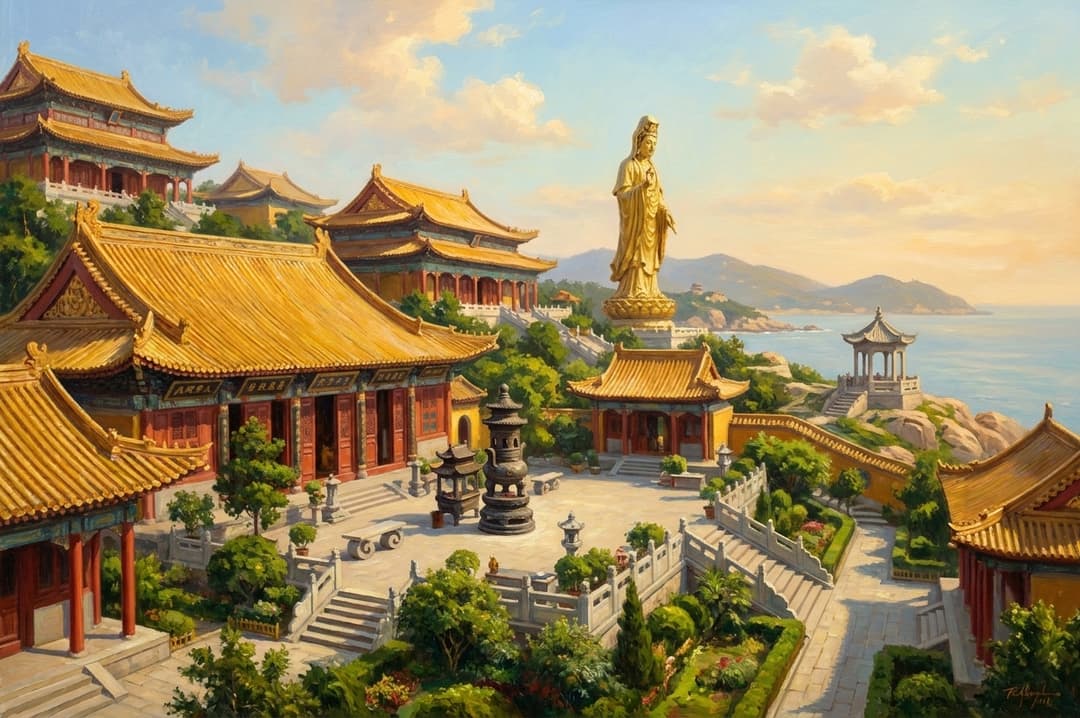
Visiting Mount Putuo provides an immersive journey through coastal Chinese monastic life and sacred mountain scenery. The tranquil car-free island invites contemplative walking along stone pathways connecting ancient temples, pine forests, and seaside shrines.
Highlights
- Marveling at the 33-meter golden bronze Nanhai Guanyin Statue standing over the sea
- Exploring the Nine-Dragon Caisson Ceiling transferred from Nanjing's imperial palace to Fayu Temple
- Riding the cable car or climbing 1,088 steps up Foding Mountain to Huiji Temple
- Experiencing morning chanting ceremonies inside Puji Temple's grand Yuantong Hall
Things to Know
- Private motorized vehicles are prohibited; island transport relies on walking or official shuttle buses
- Pilgrimage peaks occur during the three annual Guanyin festivals on lunar calendar dates
- Ferry access from the mainland can be affected by weather conditions or high tides
Location
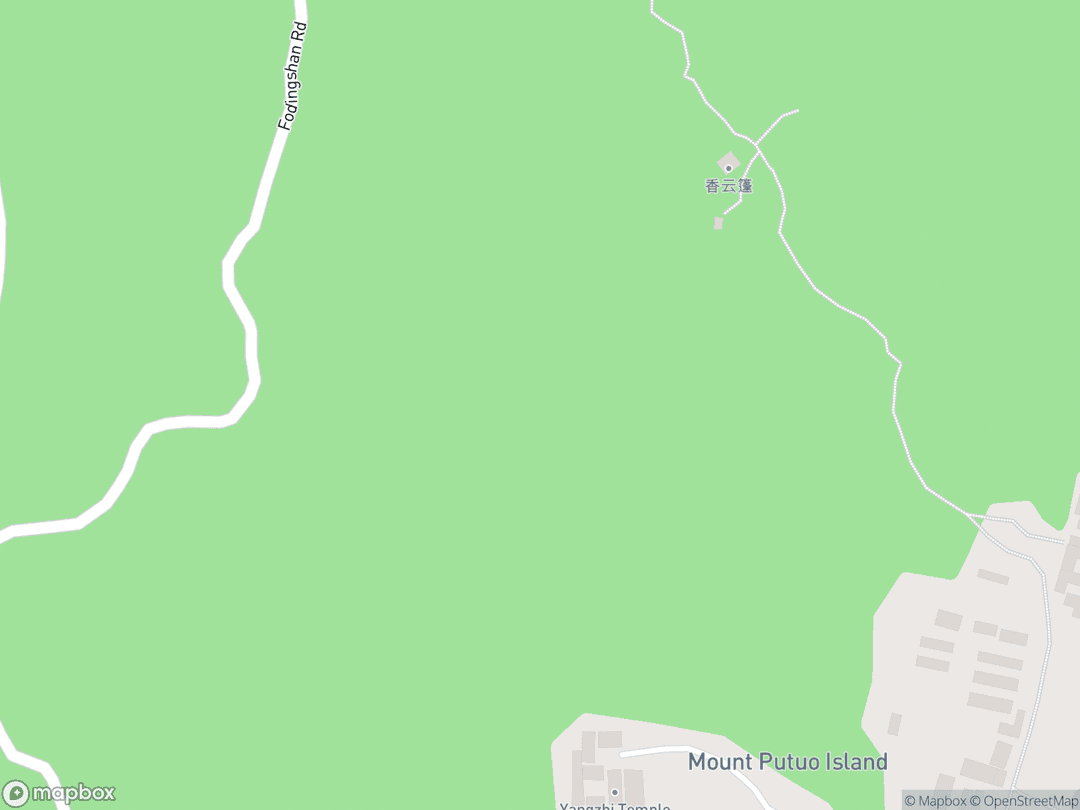
Meicen Road, Putuo District, Zhoushan City, Zhejiang Province, China
Hours: Ferry runs 06:30 to 21:50 daily. Major temples open 06:00 to 18:00.
Getting There: Express ferries connect Zhujiajian Wugongzhi Pier to Mount Putuo in 15 minutes, with nearby flight connections at Zhoushan Putuoshan Airport.
Get DirectionsTips for Your Visit
Plan for Ferry Timing
Purchase ferry tickets in advance during public holidays and keep track of weather advisories that may impact boat sailings.
Respect Monastic Etiquette
Wear modest clothing, avoid taking photographs inside sacred image halls, and step over rather than on doorway sills.
Climb Foding Mountain Early
Ascend the Xianghua Steps early in the morning to observe devotions and avoid peak midday heat.
About
Mount Putuo (Putuoshan) is an island sanctuary in the Zhoushan Archipelago off the coast of Zhejiang, revered across East Asia as the earthly bodhimanda of Guanyin (Avalokiteśvara), the Bodhisattva of Great Compassion. Within Mahayana Buddhism's Dharmic theological framework, Bodhisattvas embody the ideal of postponing entry into final Nirvana to alleviate the suffering of all sentient beings, with Guanyin holding a supreme place as the personification of divine mercy.
Recognized in Sino-Mahayana tradition as the physical manifestation of Mount Potalaka—the mythical island retreat described in the Avatamsaka Sūtra—Mount Putuo stands alongside Mount Wutai, Mount Emei, and Mount Jiuhua as one of China's Four Sacred Buddhist Mountains. Known historically as the "Buddhist Kingdom on the Sea," the island integrates sacred geography, ancient coastal monasteries, and natural mountain vistas.
The monastic island features over 40 active temples, hermitages, and sanctuaries, centered around Puji Temple, Fayu Temple, and Huiji Temple. Crowned by the colossal 33-meter Nanhai Guanyin bronze statue overlooking the East China Sea, Mount Putuo continues to draw millions of monks, pilgrims, and scholars as a vibrant living center of Chan and Pure Land Buddhist devotion.
Gallery
Symbolic Elements
The temple's exterior features intricate carvings, each rich with spiritual meaning:
Willow Branch
Held by Guanyin to sprinkle compassion, symbolizing flexibility and gentleness in overcoming hardship.

Pure Vase
Contains the nectar of Dharma that quenches desire and delusion across all living beings.
33-Meter Statue Height
Commemorates the thirty-three manifestations of Guanyin described in the Lotus Sūtra.

Purple Bamboo
Represents tranquil mental retreat and pure spiritual devotion amid worldly disturbance.

Tidal Sound
Symbolizes the endless and rhythmic voice of Buddha teachings echoing like ocean waves.

Lotus Throne
Signifies spiritual purity rising untouched above the muddy waters of earthly suffering.
Amitābha Crown
Features a small Buddha figure denoting Guanyin's lineage in the Western Pure Land.
Interesting Facts
Japanese monk Egaku founded the island's first shrine in 863 AD after storms prevented his ship from taking a Guanyin statue to Japan. (Tier A)
Qing Emperor Kangxi exempted Mount Putuo from taxes and placed all island land under direct monastic control. (Tier A)
The Nine-Dragon Caisson Ceiling inside Fayu Temple was uninstalled from Nanjing's ruined Ming Palace and shipped to the island in 1699. (Tier A)
Foding Mountain preserves the single remaining wild specimen of the critically endangered Putuo Carpinus tree. (Tier B)
Private automobiles are strictly banned on Mount Putuo to preserve air quality and tranquil monastic surroundings. (Tier A)
The sun broke dramatically through heavy ocean clouds at the exact moment of the 1997 Nanhai Guanyin statue consecration. (Tier B)
Monks on the island have cultivated Putuo Buddha Tea since the Tang Dynasty, winning awards at the 1915 Panama-Pacific Exposition. (Tier B)
Depressions in the granite reef at Nantianmen are venerated as sacred footprints left by Guanyin crossing the sea. (Tier B)
The island features two expansive golden sand beaches traditionally maintained as walking grounds for quiet contemplation. (Tier B)
Common Questions
Why is Mount Putuo sacred in Buddhism?
Mount Putuo is revered as the earthly bodhimanda of Guanyin, the Bodhisattva of Great Compassion.
What are the three main temples on Mount Putuo?
The three primary monasteries are Puji Temple, Fayu Temple, and Huiji Temple.
How tall is the Nanhai Guanyin Statue?
The colossal bronze statue stands 33 meters tall on Shuangfeng Peak.
Are cars allowed on Mount Putuo?
Private vehicles are prohibited, so visitors travel by walking or taking official electric shuttle buses.
When are the peak pilgrimage times for Mount Putuo?
Pilgrimage peaks occur on the 19th day of the 2nd, 6th, and 9th lunar months.
Featured Stories
The Unwilling to Leave Guanyin
863
In 863 AD, Japanese monk Egaku attempted to sail home with a Guanyin statue from Mount Wutai but was repeatedly turned back by fierce coastal storms and iron lotus reefs. Recognizing that the Bodhisattva wished to remain on the island, local resident Zhang-shi offered her property to enshrine the icon. This humble shrine became the Bukenqu Guanyin Courtyard, establishing Mount Putuo as Guanyin's sacred bodhimanda.
Source: Mount Putuo Monastic Chronicles
The Imperial Ceiling Transfer
1699
During a period of lavish royal patronage, Qing Emperor Kangxi ordered the grand restoration of Fayu Temple on Mount Putuo. To honor the sacred retreat, he commanded that the intricate Nine-Dragon Caisson Ceiling be removed intact from the former Ming Imperial Palace in Nanjing and transported across the sea. The glueless wooden masterpiece was reassembled inside Fayu Temple's main hall, where it remains an imperial treasure.
Source: Qing Dynasty Imperial Records
The Sunlit Consecration Miracle
October 30, 1997
On October 30, 1997, over ten thousand monastics and pilgrims gathered atop Shuangfeng Peak under heavy cloud cover for the consecration of the 33-meter Nanhai Guanyin Statue. As Venerable Master Miaoshan began the sacred unveiling ritual, thick ocean overcast parted directly above the peak. A single ray of golden sunlight beamed down upon the statue's face, inspiring awe among the assembled crowd.
Source: Putuoshan Monastic Archives
Timeline
Bukenqu Guanyin Courtyard Established
Japanese monk Egaku enshrines a sacred Guanyin statue after ocean storms halt his journey home.
MilestoneFive Dynasties Monastic Expansion
Royal patronage under the Later Liang Dynasty expands early monastic structures near Bukenqu.
EventImperial Naming by Emperor Shenzong
Song Dynasty Emperor Shenzong officially designates the primary site as Baotuo Guanyin Temple.
MilestoneDuo Bao Pagoda Erection
Master Yishan Yining oversees construction of the five-story Taihu stone pagoda during the Yuan Dynasty.
EventFayu Temple Restoration
Monk Zhenyi rebuilds damaged sanctuaries and establishes Fayu Temple under Wanli Era imperial support.
RenovationQing Imperial Reconstruction
Emperor Kangxi grants imperial funding to rebuild Puji and Fayu temples with yellow imperial roof tiles.
RenovationHuiji Temple Expansion
Qianlong Era expansion completes Huiji Temple atop Foding Mountain to finalize the three main monasteries.
EventMaster Taixu Solitary Retreat
Reformer Master Taixu enters a three-year retreat on the island to author major texts on Buddhist Sangha reform.
EventPost-Cultural Revolution Revival
Master Miaoshan leads extensive restoration efforts as Mount Putuo is designated a National Key Buddhist Temple.
RenovationNanhai Guanyin Statue Consecrated
A monumental 33-meter bronze Guanyin statue is consecrated on Shuangfeng Peak before thousands of international pilgrims.
DedicationHistory by Decade
860s–12th Century — Tang and Song Foundations
Following Egaku's enshrining of the Guanyin statue in 863 AD, Mount Putuo evolved rapidly from a quiet fishing island into an international pilgrimage center. During the Song Dynasty, Emperor Shenzong bestowed royal grants and mandated state funding for monastic ordinations, solidifying the island's spiritual status.
13th–14th Century — Yuan Dynasty Imperial Grants
Yuan Dynasty rulers supported expanding the island's sacred infrastructure to foster ties across Buddhist regions. In 1334, monk Yishan Yining oversaw the erection of the five-story Duo Bao Pagoda from fine Taihu stone, which stands today as the island's oldest intact structure.
15th–17th Century — Ming and Qing Royal Patronage
Despite temporary disruptions from coastal piracy, rebuilding efforts flourished under the Wanli Era of Ming and the Kangxi Era of Qing. Emperor Kangxi granted extensive funds, imperial yellow roof tiles, and royal decrees establishing Puji and Fayu temples as national treasures.
18th–19th Century — Completion of the Three Great Temples
During the Qianlong Era in 1793, Huiji Temple on Foding Mountain underwent major expansions to complete the triad of primary monasteries. Monastic communities developed sustainable tea agriculture and maritime retreat centers that welcomed pilgrims from across East Asia.
20th Century — Modern Reform and Renewal
Venerable Master Taixu conducted influential retreats on Mount Putuo during the 1910s, authoring foundational works on modernizing Chinese Buddhism. After mid-century interruptions, Master Miaoshan led a major revival in 1979, culminating in the 1997 consecration of the 33-meter Nanhai Guanyin bronze statue.
Architecture & Facilities
Mount Putuo's monastic architecture represents a majestic synthesis of Classical Han Chinese imperial court planning, Southern Chinese timber-frame tradition, and maritime environmental adaptation. Temple layouts follow traditional south-facing central axes with stepped multi-tiered courtyards, incorporating glazed imperial yellow roof tiles granted by Qing emperors alongside defensive granite masonry built to withstand coastal sea winds.
Building Materials
Imported Timber Frame
Massive structural columns and dougong brackets crafted from durable cedar, camphor, and pine.
Imperial Glazed Tiles
Yellow glazed roof tiles bestowed by imperial Qing decrees adorn the primary hall roofs.
Local Granite and Volcanic Basalt
Weather-resistant stone forms high retaining walls, courtyard foundations, and coastal steps.
Taihu Carved Limestone
Fine porous limestone from Lake Tai forms the sculpted tiers of the 1334 Duo Bao Pagoda.
Interior Features
Yuantong Hall (Puji Temple)
A vast central hall housing an 8.8-meter Guanyin statue flanked by thirty-two manifestation sculptures.
Nine-Dragon Hall (Fayu Temple)
Features a glueless wooden caisson ceiling transferred from Nanjing's Ming Imperial Palace.
Jade Emperor Hall (Huiji Temple)
A hilltop shrine with glazed roof tiles reflecting ocean light across Foding Mountain.
Pedestal Shrine (Nanhai Guanyin)
A two-story granite base hall displaying Buddhist relief carvings and gilded devotional panels.
Temple Grounds
The island grounds combine forested mountain slopes, ancient ginkgo trees, seaside cliffs, lotus ponds, and twin golden beaches designed for contemplative walking.
Additional Facilities
Visitor facilities include the Foding Mountain cable car, eco-friendly shuttle bus networks, vegetarian dining halls, and monastic guest houses.
Religious Significance
Within Mahayana Buddhism, Mount Putuo is venerated as the earthly bodhimanda of Bodhisattva Guanyin, personifying universal mercy and infinite compassion.
The island serves as a living retreat for spiritual contemplation, monastic study, and chanting practices dedicated to relieving human suffering.
Sacred Ordinances
Guanyin Chanting & Devotion
Recitation of the Guanyin Sutra and Namo Guanshiyin Pusa epithet to cultivate compassion and mental peace.
Three-Step Prostration Pilgrimage
Pilgrims climb the 1,088 granite steps of Foding Mountain prostrating every three steps as an act of humility.
Morning and Evening Recitation
Daily monastic chanting assemblies held at dawn and dusk across all island halls.
The Bodhisattva Ideal
Guanyin embodies the core Mahayana vows to remain connected to samsara until every sentient being attains enlightenment and relief from distress.
The Three Great Guanyin Festivals
Annual lunar celebrations mark Guanyin's birthday, attainment of enlightenment, and renunciation, drawing hundreds of thousands of devotees.
Similar Temples
Sources & Research
Every fact on Temples.org is backed by verified Sources & Research. Each piece of information is rated by source tier and confidence level.
View All Sources (8)
| Field | Source | Tier | Retrieved |
|---|---|---|---|
| About & Historical Background | Zhejiang Provincial Religious Affairs Bureau (opens in a new tab) | A | 2026-02-23 |
| About & Historical Background | UNESCO World Heritage Centre (opens in a new tab) | B | 2026-02-23 |
| Architecture & Sacred Geography | Encyclopaedia Britannica (opens in a new tab) | B | 2026-02-23 |
| Architecture & Sacred Geography | Putuo District People's Government (opens in a new tab) | A | 2026-02-23 |
| Timeline & Historical Eras | The Metropolitan Museum of Art (opens in a new tab) | B | 2026-02-23 |
| Symbolism & Devotional Practices | Buddhist Association of China (opens in a new tab) | B | 2026-02-23 |
| Visitor Insights & Access | Trip.com Group Travel Guide (opens in a new tab) | D | 2026-02-23 |
| Visitor Insights & Access | China Highlights Travel (opens in a new tab) | D | 2026-02-23 |