Visitor Insights
Visiting Mount Wutai
Visiting Mount Wutai offers a profound spiritual and historical journey through alpine scenery and ancient monastic halls. Pilgrims and travelers explore both valley monasteries in Taihuai Town and remote shrines atop the five flat-topped mountain peaks.
Highlights
- Marvel at Nanchan Temple (782 AD), the oldest surviving timber structure in China.
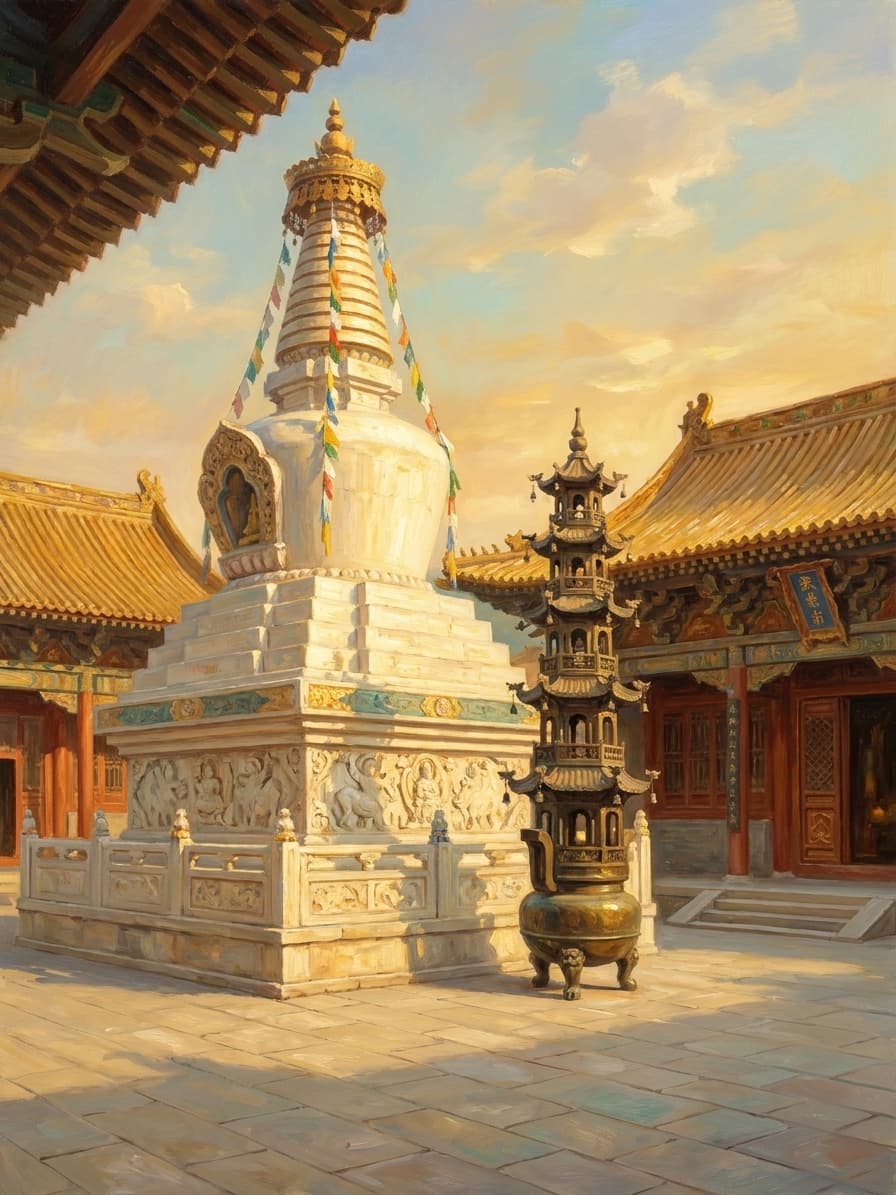
- Spin prayer wheels around the 56.4-meter Great White Pagoda at Tayuan Temple.
- Ascend the 108 stone steps to Pusading, the primary Tibetan Gelugpa monastery.
- View the solid bronze hall and 10,000 relief Buddhas at Xiantong Temple.
Things to Know
- Summit weather is unpredictable; carry warm layers even during mid-summer visits.
- Private vehicles are restricted in the core area; green eco-shuttles are required.
- Dress modestly and maintain silence near active worship areas and monastic living quarters.
Location
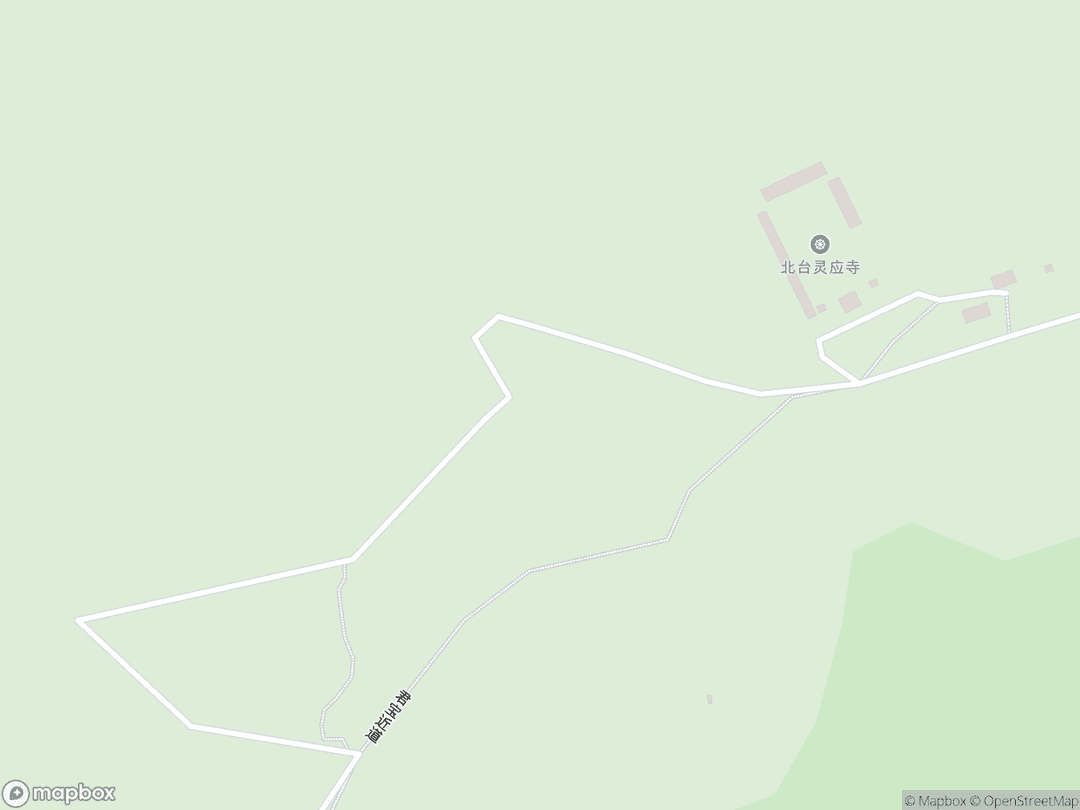
Taihuai Town, Wutai County, Xinzhou City, Shanxi Province, China
Hours: Peak Season (Apr 1–Oct 31): 06:30–20:00. Off-Peak (Nov 1–Mar 31): 07:30–18:00.
Getting There: High-speed rail to Xinzhou West Station, followed by a direct 1.5-hour shuttle bus to Taihuai Town inside the core scenic area.
Get DirectionsTips for Your Visit
Summit Climate Preparation
The peak summits reach over 3,000 meters and experience freezing temperatures even in summer.
Temple Etiquette
Walk clockwise around stupas and prayer wheels in accordance with Buddhist pilgrimage customs.
Eco-Shuttle Passes
Purchase the 50 RMB green sightseeing bus pass to navigate between distant temple clusters.
About
Mount Wutai, known as Wutai Shan or the 'Five-Terrace Mountain', stands as one of the four sacred mountains of Chinese Buddhism. Situated in Shanxi Province, this alpine sanctuary is recognized in Buddhist cosmology as the earthly seat of enlightenment (bodhimanda) for Bodhisattva Manjusri (Wenshu Pusa), the embodiment of transcendent wisdom (Prajna).
As a central pillar of the Dharmic tradition, Mount Wutai links early Indian Mahayana principles with East Asian culture. The site represents a unique synthesis where Han Chinese Chan Buddhism and Tibetan-Mongolian Esoteric Buddhism co-exist side-by-side across scores of historic monastic complexes.
Inscribed as a UNESCO World Heritage cultural landscape, Mount Wutai preserves an irreplaceable architectural legacy. Nestled among its five flat peaks are China's oldest surviving timber-frame buildings, magnificent masonry stupas, and thousands of sacred relics spanning two millennia.
Gallery
Symbolic Elements
The temple's exterior features intricate carvings, each rich with spiritual meaning:

Five Terraced Peaks
Represent the five wisdoms of Bodhisattva Manjusri and the five Dhyani Buddha crowns.

Flaming Sword of Wisdom
Symbolizes slicing through fundamental ignorance, delusion, and attachment.

Prajnaparamita Sutra on Lotus
Symbolizes the pure flowering of ultimate transcendent wisdom and spiritual realization.

Blue Lion Mount
Represents the wild untamed mind mastered by divine wisdom and fearless truth.

108-Step Stone Stair
Ascending the steps purges the mind of the 108 earthly anxieties and defilements.

Prayer Wheel Gallery
Spinning the wheels disperses the compassionate vibration of sacred mantras across creation.

Yellow Glazed Roof Tiles
Denotes Qing imperial patronage and the sacred presence of Tibetan Gelugpa sanctuaries.
Interesting Facts
Mount Wutai preserves both the oldest (782 AD) and largest (857 AD) Tang timber buildings in China. (Tier A)
Before 1937, international scholars falsely believed no Tang Dynasty timber architecture had survived. (Tier B)
It is the only mountain in China where Chinese Chan and Tibetan Gelugpa traditions share active shrines. (Tier A)
Summer temperatures rarely exceed 20°C, earning the mountain its historic name 'Clear Cool Mountain'. (Tier B)
Shuxiang Temple contains 500 suspended clay statues depicting Buddhist legends across 3D landscapes. (Tier B)
Emperor Qianlong completed six separate imperial pilgrimages to Wutai during his sixty-year reign. (Tier B)
The Hair Pagoda inside Tayuan Temple enshrines a lock of golden hair left by Manjusri. (Tier C)
Xiantong Temple features a 50,000 kg solid bronze hall lined with 10,000 relief Buddhas. (Tier B)
Climbing the 108 stone steps to Pusading traditionally purges a pilgrim of 108 worldly anxieties. (Tier C)
At 3,061 meters, the North Peak represents the highest geographic elevation in Northern China. (Tier B)
Common Questions
Why is Mount Wutai dedicated to Bodhisattva Manjusri?
Sacred scriptures identify these five cool peaks as the physical abode where Manjusri reveals wisdom.
What is the oldest wooden building on Mount Wutai?
The Great Buddha Hall at Nanchan Temple, constructed in 782 AD, is China's oldest timber structure.
How do Han and Tibetan Buddhist traditions co-exist here?
Chan 'Green Temples' and Gelugpa 'Yellow Temples' operate side-by-side under shared protection.
Why is it called 'Clear Cool Mountain'?
Its high elevation keeps summer temperatures low, with mid-summer snow occurring on summits.
Featured Stories
The 1937 Architectural Discovery
July 1, 1937
In mid-1937, Chinese architectural historians Liang Sicheng and Lin Huiyin traveled into Shanxi following a 10th-century Dunhuang mural. Their discovery of Foguang Temple proved that Tang Dynasty wooden architecture survived, revolutionizing Asian architectural history days before war broke out.
Source: Architectural Survey Reports of Shanxi (1937)
The Legend of the Hair Pagoda
1582
Legend holds that Bodhisattva Manjusri attended a temple feast disguised as a impoverished woman seeking food for her children. Before vanishing into golden clouds, she left a lock of golden hair, which was enshrined beneath the stone Hair Pagoda at Tayuan Temple.
Source: Monastic Lore of Tayuan Temple
Emperor Qianlong's Imperial Pilgrimages
1746
Over his sixty-year reign, Emperor Qianlong journeyed across North China six times to worship at Mount Wutai. He converted key sanctuaries into Gelugpa monasteries to fortify spiritual bonds between the Qing Empire, Tibet, and Mongolia.
Source: Qing Imperial Records
Timeline
Monastic Inception
Indian monks establish Dafotong Temple, marking the dawn of Buddhism on Mount Wutai.
Northern Wei Imperial Expansion
Emperor Xiaowen endows extensive lands to expand Wutai into a imperial pilgrimage center.
Construction of Nanchan Temple
Master carpenters build the Great Buddha Hall at Nanchan Temple, China's oldest timber structure.
Erection of Foguang Temple
Monk Yuanzhao oversees construction of the Great East Hall, the largest Tang Dynasty timber hall.
First White Stupa Built
Nepalese architect Anige erects the first Himalayan-style stupa at Tayuan Temple.
Great White Pagoda Rebuilt
Master Miaofeng rebuilds the Great White Pagoda into its current 56.4-meter masonry form.
Bronze Hall Cast
Xiantong Temple installs a 5-meter solid bronze hall decorated with 10,000 miniature Buddhas.
Qing Imperial Conversions
Emperor Kangxi converts upper monasteries into Tibetan Gelugpa sanctuaries with yellow tiles.
13th Dalai Lama Pilgrimage
Thubten Gyatso visits Mount Wutai on a state pilgrimage, residing at Pusading Monastery.
Tang Dynasty Discovery
Architectural historians Liang Sicheng and Lin Huiyin discover Foguang Temple.
UNESCO World Heritage Inscription
Mount Wutai is officially inscribed as a World Heritage Cultural Landscape.
History by Decade
1st Century — Eastern Han Founding
Indian monks Kashyapa Matanga and Dharmaratna arrived in North China, identifying Wutai with the 'Clear Cool Mountain' of the Avatamsaka Sutra. Emperor Ming ordered the construction of Dafotong Temple around 68 AD, establishing China's earliest monastic sanctuary alongside Luoyang's White Horse Temple.
5th–6th Century — Northern Wei Devotion
Northern Wei rulers expanded monastic lands across all five terraces, building over two hundred shrines. Imperial patronage established Mount Wutai as the national spiritual center for Manjusri veneration across East Asia.
7th–8th Century — Tang Golden Age
Mount Wutai became an international center for Buddhist philosophy and the Huayan school. Master carpenters erected Nanchan Temple (782 AD) and Foguang Temple (857 AD), creating masterpiece timber structures that survived centuries of dynastic upheaval.
13th–17th Century — Yuan & Ming Expansion
Yuan and Ming rulers introduced Tibetan influence, commissioning Nepalese architect Anige to design the original White Stupa in 1302 AD. Master Miaofeng rebuilt the Great White Pagoda and cast solid bronze halls at Xiantong Temple during the late 16th century.
18th–20th Century — Qing Royal Patronage to Modern Era
Qing emperors converted upper shrines into yellow-tiled Tibetan Gelugpa palaces. Following architectural rediscovery in 1937 and state protection, Mount Wutai was inscribed as a UNESCO World Heritage site in 2009.
Architecture & Facilities
Mount Wutai represents a synthesis of classical Han Chinese timber-frame engineering and Himalayan Tibetan-Nepalese masonry traditions, characterized by interlocking dougong bracket systems, sweeping tile roofs, and white bottle-shaped stupas.
Building Materials
Mountain White Pine
Harvested locally to construct massive load-bearing wooden columns and bracket assemblies.
White Lime Plaster
Coats the solid masonry stupas to create brilliant white reflective surfaces.
Cast Bronze
Utilized for the 50,000 kg Bronze Hall and gilded chattra canopy structure.
Yellow Glazed Tiles
Imperial ceramic tiles used exclusively on imperial and Tibetan Gelugpa rooflines.
Interior Features
Great Buddha Hall Sanctuary
An open column-free space housing 17 original Tang Dynasty painted clay figures.
Great East Hall
Features complex seven-puzuo bracket sets, Tang wall murals, and 35 clay statues.
Beamless Hall (Wuliang Dian)
Constructed entirely of blue brick with barrel vaults containing no wooden beams.
Solid Bronze Shrine
Internal bronze walls sculpted with 10,000 miniature relief figures of Buddha.
Temple Grounds
Extensive alpine monastic grounds spanning five terraced peaks, interconnected by stone steps, prayer wheel galleries, and mountain pass shuttle routes.
Additional Facilities
Visitor reception facilities in Taihuai Town include eco-shuttle terminals, pilgrim hostels, monastic dining halls, and cultural exhibition centers.
Religious Significance
In the Dharmic tradition and Mahayana Buddhism, Mount Wutai is recognized as the physical bodhimanda (seat of enlightenment) of Bodhisattva Manjusri, personifying transcendent wisdom (Prajna).
Serves as an active pilgrimage center where devotees seek spiritual awakening, meditate on wisdom, and make offerings to guide all sentient beings toward liberation.
Sacred Ordinances
Pradaksina (Circambulation)
Walking clockwise around the Great White Pagoda and sacred peaks while reciting mantras.
Prostration & Prayer Wheel Turning
Spinning wooden prayer wheels to disperse compassionate vibrations across all realms.
Wisdom Sutra Chanting
Monastic recitation of the Prajnaparamita Sutra inside Chan and Gelugpa halls.
The Bodhisattva Ideal
As a Bodhisattva, Manjusri delays final personal cessation to remain within the cycle of rebirth, using infinite wisdom to liberate all suffering beings.
Synthesis of Buddhist Traditions
Mount Wutai uniquely harmonizes Han Chinese Chan traditions with Tibetan Esoteric lineages, symbolizing spiritual unity across diverse cultural paths.
Similar Temples
Sources & Research
Every fact on Temples.org is backed by verified Sources & Research. Each piece of information is rated by source tier and confidence level.
View All Sources (8)
| Field | Source | Tier | Retrieved |
|---|---|---|---|
| About & Historical Background | UNESCO World Heritage Centre (opens in a new tab) | B | 2026-02-23 |
| About & Historical Background | Encyclopaedia Britannica (opens in a new tab) | B | 2026-02-23 |
| Architecture & Major Structures | Chinese Academy of Sciences (opens in a new tab) | B | 2026-02-23 |
| Architecture & Major Structures | Hong Kong University of Science and Technology (opens in a new tab) | B | 2026-02-23 |
| Religious Significance & Bodhisattva Ideal | Rubin Museum of Art (opens in a new tab) | B | 2026-02-23 |
| Religious Significance & Bodhisattva Ideal | The Buddhist Channel (opens in a new tab) | C | 2026-02-23 |
| Visitor Insights & Travel Logistics | Shanxi Provincial Cultural Heritage Bureau (opens in a new tab) | C | 2026-02-23 |
| Visitor Insights & Travel Logistics | Travel China Guide (opens in a new tab) | D | 2026-02-23 |