Visitor Insights
Visiting Shaolin Temple
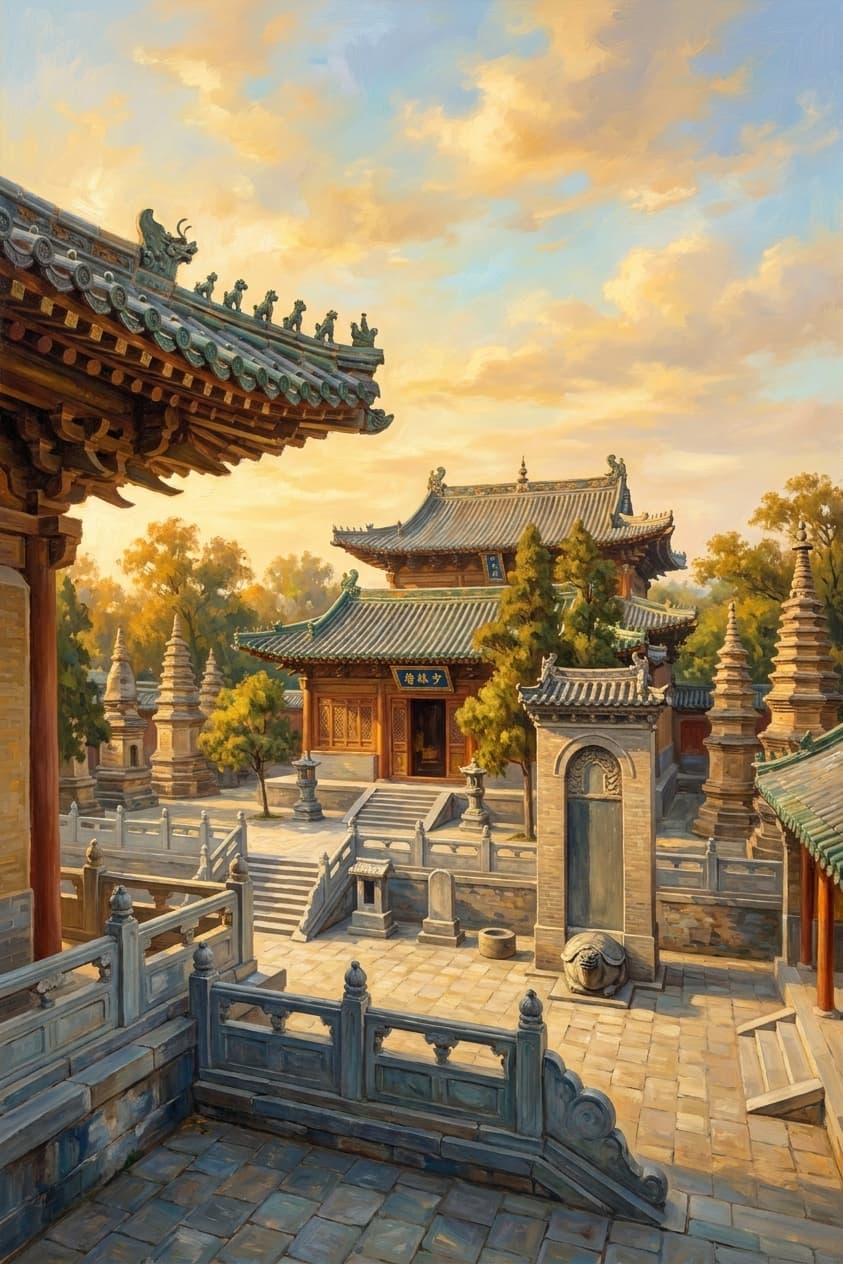
Shaolin Temple offers visitors a profound encounter with ancient monastic architecture and living Buddhist heritage set against Mount Song. The complex features active prayer halls, the historic Pagoda Forest, and authentic martial conditioning demonstrations. Travelers should prepare for moderate walking along stone pathways connecting the ascending courtyards.
Highlights
- Venerate ancient Buddhist sanctuaries along the Seven Axial Halls climbing the mountain terrace.
- Explore the historic Pagoda Forest featuring 248 brick and stone stupas spanning seven dynasties.
- Witness dynamic martial arts demonstrations exemplifying traditional Chan-Wu unity.
- Examine the late-Ming Qianfo Hall with historic floor depressions and sacred Buddhist frescoes.
Things to Know
- Dress respectfully by keeping shoulders and knees covered within all active shrines.
- Step cleanly over the elevated wooden door thresholds rather than treading on them.
- Photography is strictly forbidden inside active devotional halls and before sacred altars.
Location
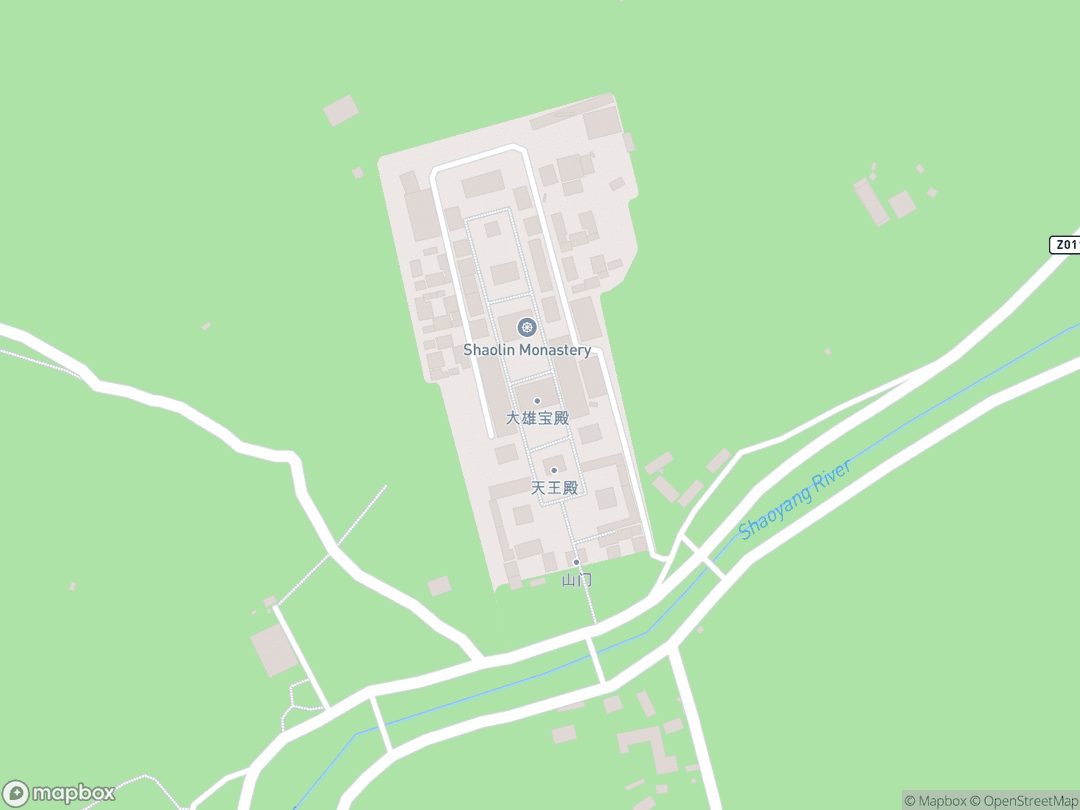
Mount Song Shaolin Scenic Area, Dengfeng, Zhengzhou, Henan Province, 452470, China
Hours: 07:30 – 18:00 (March to November), 08:00 – 17:30 (December to February)
Getting There: Take direct express coaches from Zhengzhou Central Bus Station or Luoyang Central Bus Station to Dengfeng, then connect via local bus or taxi to the scenic entrance.
Get DirectionsTips for Your Visit
Early Arrival
Arrive at opening hours to walk through the central courtyards in tranquility before tour groups reach the Mountain Gate.
Comfortable Footwear
Wear supportive walking shoes suitable for stone stairs, uneven historic flagstones, and optional mountain trails.
Pagoda Forest Etiquette
Treat the tomb stupas with solemn reverence and avoid leaning against or climbing on the ancient masonry bases.
About
Shaolin Temple stands on the forested slopes of Mount Song as the ancestral birthplace of Chan Buddhism. Founded in 495 CE under the patronage of Northern Wei Emperor Xiaowen, the monastery was originally established to accommodate the Indian dhyāna master Batuo, who translated early Buddhist meditation texts into Chinese.
The temple attained worldwide spiritual prominence following the arrival of Master Bodhidharma in the sixth century. Through his teachings on wall-gazing and direct mind transmission, Bodhidharma established the foundational doctrine of Chan, known internationally as Zen, reshaping East Asian spiritual philosophy.
Shaolin developed the unique monastic tradition of Chan Wu He Yi, which unites silent sitting meditation with dynamic martial arts. Over fifteen centuries, warrior monks cultivated martial movements as an active spiritual practice dedicated to mindful breath control, physical preservation, and the defense of the Dharma.
Surviving devastating imperial suppressions, warlord conflagrations, and mid-twentieth-century turmoil, the monastery remains a thriving center of monastic training. Today, it stands as a celebrated UNESCO World Heritage Site, drawing pilgrims, scholars, and martial practitioners from across the globe.
Gallery
Symbolic Elements
The temple's exterior features intricate carvings, each rich with spiritual meaning:

Bodhidharma Crossing on Reeds
Depicts the master floating across the Yangtze River on a single reed, symbolizing transcendence through mental discipline.

The Martial Staff
Represents compassionate, non-lethal monastic defense aimed at subduing aggression without inflicting bloodshed.

One-Handed Palm Greeting
Honors the physical sacrifice of Huike while embodying profound humility, unwavering dedication, and non-violence.

Talin Tomb Stupa
Signifies the five Buddhist cosmological elements and marks the final resting places of enlightened Chan masters.

Sacred Mountain Ginkgo
Exemplifies spiritual endurance, longevity, and renewal throughout centuries of upheaval and rebirth.

Chan-Wu Wheel
Merges the eight-spoked Wheel of the Dharma with the martial salute, symbolizing unity between stillness and kinetic action.

Mountain Gate Lions
Stone temple guardians positioned at the entry portal to ward away negative spiritual influences and protect the sangha.
Interesting Facts
Bodhidharma sat in silent meditation before a cliff wall for nine years, reportedly burning his silhouette into the cave stone (Tier A).
Centuries of martial stamping in the Hall of a Thousand Buddhas left 48 visible depressions in the kiln-fired brick floor (Tier A).
Imperial steles prove Shaolin monks upheld strict vegetarianism despite theatrical legends alleging dispensations for meat (Tier B).
The worldwide cinematic release of the 1982 martial arts film starring Jet Li catalyzed modern restoration of the monastery (Tier B).
Twentieth-century stupas in the Pagoda Forest feature modern engravings including trains, cars, and laptops alongside lotuses (Tier A).
Qing Emperor Kangxi composed the semi-cursive golden calligraphy plaque displayed above the Mountain Gate in 1704 (Tier A).
The traditional single-handed palm greeting honors Second Patriarch Huike, who severed his left arm to prove devotion to the Dharma (Tier A).
Dengfeng was recognized by ancient astronomers as the exact terrestrial Center of Heaven and Earth where shadows fell true (Tier B).
The Pagoda Forest survived a catastrophic forty-day warlord conflagration in 1928 that gutted the main timber halls (Tier A).
The monastery maintains more than forty official international cultural centers across six continents today (Tier A).
Common Questions
Why are martial arts practiced at a Buddhist monastery?
Martial arts were developed to maintain physical health during intense meditation and to cultivate mindful self-discipline without malice.
What is the significance of the Pagoda Forest?
It serves as the sacred cemetery holding the relics and memorial stupas of 248 esteemed Chan masters across seven dynasties.
Are Shaolin monks vegetarian?
Yes, resident monks strictly observe traditional Mahayana Buddhist vegetarian dietary vows.
Can visitors watch martial arts performances on site?
Visitors can attend daily martial arts demonstrations staged by academy monks in the scenic area's cultural performance hall.
Featured Stories
The Nine-Year Silent Vigil
527
Seeking unclouded realization, Bodhidharma retreated to a natural limestone cavern high above the monastery on Wuru Peak. For nine consecutive years, he sat facing the silent stone cliff wall in motionless dhyāna meditation, discarding external words to illuminate the true nature of the human mind. His enduring devotion established the unyielding core of Chan practice that guided generations of spiritual seekers.
Source: Monastic Tradition & Continued Biographies of Eminent Monks
The Thirteen Martial Monks of Cypress Valley
621
When warlord forces threatened the stability of the nascent Tang dynasty, thirteen Shaolin monks led by Tanzong mounted a daring expedition to capture the strategic fortress of Cypress Valley. Their tactical valor delivered crucial victory to Prince Li Shimin, who rewarded the sanctuary with expansive mountain lands and recognized its warrior monks. This decisive event solidified Shaolin's historic duty of protecting peace and safeguarding the monastery.
Source: Imperial Stele of 728 CE
The Unbroken Stones of Talin
1928
During the devastating chaos of the 1928 Warlord Era, an inferno swept across the central compound, consuming magnificent wooden sanctuaries and thousands of irreplaceable manuscripts. Yet across the mountain stream, the ancient stone and brick towers of the Pagoda Forest stood impervious against the flames. This miraculous survival safeguarded an uninterrupted seven-dynasty architectural lineage that anchors the monastery's ongoing revival.
Source: Henan Cultural Relics Bureau Preservation Archives
Timeline
Imperial Foundation
Emperor Xiaowen of Northern Wei decrees the founding of Shaolin Temple for Indian dhyāna master Batuo.
MilestoneArrival of Bodhidharma
Master Bodhidharma arrives at Mount Song, initiates nine years of cave meditation, and establishes Chan doctrine.
MilestoneDefense of Cypress Valley
Thirteen martial monks assist future Tang Emperor Li Shimin in defeating rival forces, securing royal patron status.
EventErection of Imperial Stele
The Tang imperial court erects a stone stele commemorating Shaolin's martial assistance and landed estates.
MilestoneFirst Talin Stupa
Monks erect the earliest surviving funerary pagoda in the western cemetery, founding the Pagoda Forest.
MilestoneYuan Dynasty Jurisdictional Primacy
Imperial decrees place northern Chinese monasteries under the direct ecclesiastical oversight of Shaolin's abbot.
MilestoneCoastal Defense Mobilization
Warrior monks mobilize under Ming imperial orders to repel coastal pirates, earning widespread prestige.
EventHall of a Thousand Buddhas Constructed
Artisans complete the majestic timber-framed Pilu Pavilion featuring expansive Buddhist frescoes.
MilestoneKangxi Imperial Plaque
Qing Emperor Kangxi writes the iconic calligraphy inscription that hangs above the Mountain Gate.
EventThe Great Fire of 1928
Warlord artillery fire incinerates the axial timber halls and ancient library, leaving only stone structures intact.
EventRelease of Shaolin Temple Film
The international film starring Jet Li triggers sweeping governmental preservation and modern monastic revitalization.
EventUNESCO World Heritage Inscription
UNESCO inscribes Shaolin Temple, the Pagoda Forest, and Chuzu Hermitage onto the World Heritage List.
MilestoneHistory by Decade
490s–530s — Imperial Founding and Chan Genesis
A special transmission outside the scriptures, pointing directly to the human mind.
Northern Wei Emperor Xiaowen established Shaolin Temple in 495 CE to host the Indian translator Batuo. Decades later, Bodhidharma arrived to teach wall-gazing dhyāna, laying the foundational spiritual tenets of Chan Buddhism.
620s–790s — Tang Patronage and the First Pagodas
Shaolin monks aided Prince Li Shimin during the Battle of Hulao, securing extensive imperial lands and state protection. In 791 CE, the sangha erected the western cemetery's first stupa, initiating the renowned Pagoda Forest.
1310s–1580s — Ming Architectural Flourishing
During the Yuan and Ming dynasties, the monastery governed northern Buddhist temples and mobilized warrior monks to defend coastal borders. In 1588, craftsmen constructed the grand Pilu Pavilion, which preserves historic Ming woodwork and frescoes.
1700s–1740s — Qing Imperial Sincerity
Emperors Kangxi and Qianlong toured Mount Song and personally patronized the monastery. Kangxi bestowed the iconic calligraphic plaque for the Mountain Gate, reaffirming Shaolin's standing despite local anti-monastic folklore.
1920s–1970s — Conflagration and Survival
Warlord artillery fire incinerated the primary timber halls and monastic library during the catastrophic blaze of 1928. Monks and local villagers safeguarded the Pagoda Forest through this tragedy and the subsequent mid-century political storms.
1980s–2010s — Renaissance and World Heritage
The 1982 film adaptation ignited a global cultural resurgence, leading to faithful timber reconstructions of the historic halls. In 2010, UNESCO officially recognized the complex and Pagoda Forest as a World Heritage Site.
Architecture & Facilities
The architecture embodies Northern Wei, Ming, and Qing timber-frame vernacular styles organized along a traditional seven-tier axial courtyard plan that ascends the mountain terrace in sacred harmony.
Building Materials
Structural Timber
Interlocking wooden pillars and tie-beams joined via mortise-and-tenon construction without iron nails to withstand seismic movement.
Mount Song Granite
Durable blue limestone and local granite quarried from mountain peaks to construct sturdy plinths, balustrades, and threshold pavers.
Kiln-Fired Clay Bricks
Dense ceramic bricks formed and fired in regional kilns to build defensive walls, courtyard pavements, and funerary stupa tiers.
Glazed Ceramic Tiles
Dark grey and forest-green glazed roof tiles fitted with ornamental ridge beasts to shield structural timbers against rain and fire.
Interior Features
Hall of a Thousand Buddhas (Qianfo Dian)
Late-Ming timber shrine containing 48 stance training depressions and historic polychrome murals depicting five hundred arhats.
Mahavira Hall (Daxiongbao Dian)
The primary liturgical center housing grand statues of Shakyamuni, Bhaisajyaguru, and Amitabha before open chanting areas.
Hall of Heavenly Kings (Tianwang Dian)
Entry pavilion enshrining statues of Maitreya Buddha, Skanda Bodhisattva, and the Four Heavenly Kings guarding the cardinal directions.
Lixue Pavilion (Standing in Snow Pavilion)
Historic commemorative sanctuary dedicated to Second Patriarch Huike featuring ornate devotional shrines and lineage ancestral plaques.
Temple Grounds
The monastery grounds encompass 57,600 square meters of terraced mountain stone courtyards, ancient shaded ginkgo groves, and stone steles ascending to the western cemetery.
Additional Facilities
Facilities include the active Chan Meditation Hall, the Shaolin Wushu Monastic Training Academy, a public performance auditorium, and a comprehensive cultural interpretation center.
Religious Significance
Shaolin Temple is the sacred ancestral seat of Chan Buddhism, cultivating profound mindfulness through silent seated dhyāna and kinetic martial practice.
To realize ultimate enlightenment by looking directly into the Buddha-nature inherent within every sentient being.
Sacred Ordinances
Zuochan (Seated Meditation)
Silent wall-gazing contemplation designed to eliminate dualistic intellectual attachments and awaken transcendent wisdom.
Chan Wu (Martial Cultivation)
Mindful physical movements and breath regulation transforming self-defense routines into kinetic spiritual meditation.
Sutra Chanting
Daily monastic recitation of Mahayana scriptures honoring historical Buddhas, Bodhisattvas, and lineage patriarchs.
The Principle of Chan Wu He Yi
Shaolin monastic tradition holds that dynamic physical motion and serene seated meditation are complementary aspects of one truth. Bodhidharma initiated physical conditioning to prevent physical lethargy during intense contemplation, establishing a kinetic path where each strike, breath, and stance becomes an active manifestation of pure mindfulness.
Lineage Transmission
As the ancestral birthplace of Chan, Shaolin preserves the direct mind-to-mind transmission passed from Bodhidharma to Huike and across thirty-four generations of abbots. This unbroken pedagogical lineage emphasizes personal realization over reliance on written texts, inspiring Zen traditions throughout China, Japan, Korea, and Vietnam.
Sources & Research
Every fact on Temples.org is backed by verified Sources & Research. Each piece of information is rated by source tier and confidence level.
View All Sources (9)
| Field | Source | Tier | Retrieved |
|---|---|---|---|
| About & Historical Background | International Shaolin Wushu Federation (opens in a new tab) | A | 2026-03-31 |
| Religious Significance & Lineage | Shaolin Cultural Association (opens in a new tab) | A | 2026-03-31 |
| Architectural Overview & UNESCO Heritage | UNESCO World Heritage Centre (opens in a new tab) | B | 2026-03-31 |
| Monastic Customs & Chan Traditions | Chan Dao Association (opens in a new tab) | A | 2026-03-31 |
| Pagoda Forest & Imperial History | Facts and Details Cultural Reference (opens in a new tab) | B | 2026-03-31 |
| Historical Timeline & Tang Patronage | Live History Research Archives (opens in a new tab) | B | 2026-03-31 |
| Early Patriarchs & Dhyāna Sutras | New World Encyclopedia (opens in a new tab) | B | 2026-03-31 |
| Martial Lineages & Monastic Curriculum | Shaolin Cultural Heritage Archives (opens in a new tab) | A | 2026-03-31 |
| Visitor Insights & Access Logistics | Shaolin Temple Tours (opens in a new tab) | D | 2026-03-31 |