Visitor Insights
Visiting Temple of Heaven
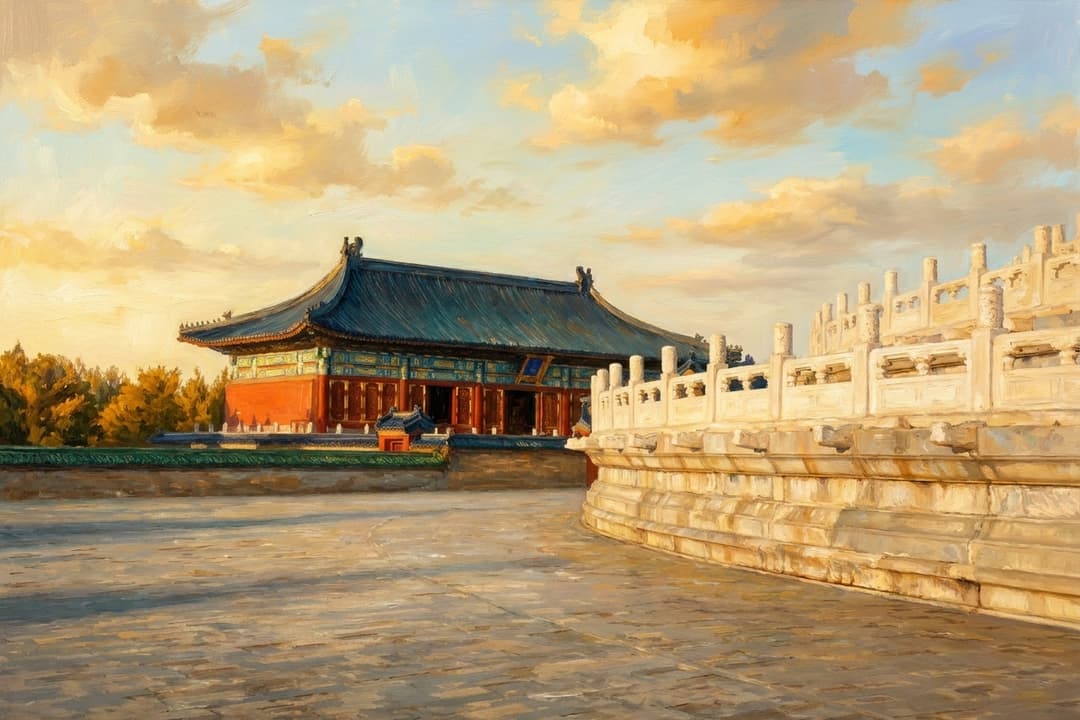
The Temple of Heaven operates both as a serene civic park and an open-air liturgical monument. Visitors can experience active morning wellness traditions like Tai Chi amidst ancient cypresses before exploring the sacred architectural core. A comprehensive through-ticket is recommended to access all primary historical enclosures.
Highlights
- Marvel at the wooden joinery of the Hall of Prayer for Good Harvests built without nails
- Experience acoustic resonance across the circular brick expanse of the Echo Wall
- Stand upon the Heaven's Heart Stone at the center of the Circular Mound Altar
- Walk the elevated 360-meter Danbi Bridge connecting the cosmic altars
Things to Know
- Interior ceremonial halls close earlier than the outer surrounding park grounds
- Historical interior exhibition halls are closed to the public on Mondays
- Purchase a through-ticket at the entrance to access inner sanctums
- Subway Line 5 directly serves the East Gate via Tiantan Dongmen Station
Location
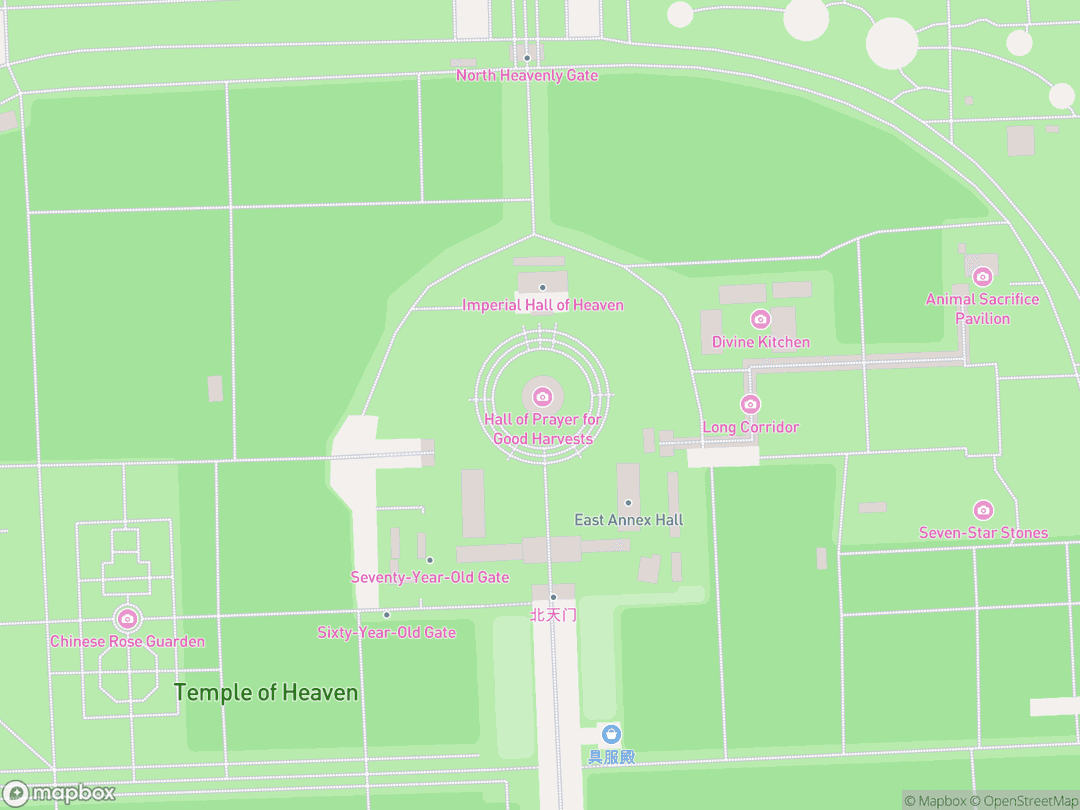
1 Tiantan Dongli, Dongcheng District, Beijing 100061, People's Republic of China
Hours: Park grounds: 06:00 – 22:00 daily; Sacred halls: 08:00 – 17:30 (closed Mondays)
Getting There: Take Beijing Subway Line 5 to Tiantan Dongmen Station (Exit A) for direct access to the East Gate.
Get DirectionsTips for Your Visit
Arrive for Morning Activities
Visit before 08:30 to see local residents practicing Tai Chi, martial arts, and calligraphy in the cypress groves.
Acquire a Through-Ticket
Buy the combined Lianpiao ticket at the gate to avoid having to purchase separate admissions for the inner halls.
Test the Acoustic Stones
Visit the Imperial Vault courtyard early in the morning when crowds are thin to test the triple-sound reflection stones.
About
Founded in 1420 by the Yongle Emperor, the Temple of Heaven is an imperial sacrificial complex embodying classical Taoist cosmology. Encompassing 273 hectares in southern Beijing, it represents the sacred intersection where earthly governance sought alignment with celestial law.
Within the Taoist tradition, the supreme divine principle of Tian (Heaven) generates the cosmic order through the ceaseless dynamics of Yin and Yang. The emperor served as Tianzi (Son of Heaven), performing solemn seasonal liturgies to sustain universal equilibrium and secure agricultural prosperity.
The complex was restructured in 1530 under Emperor Jiajing and rebuilt in the 1750s under Emperor Qianlong. Inscribed as a UNESCO World Heritage Site in 1998, the Temple of Heaven stands as the crowning achievement of traditional Chinese sacred architecture and spatial cosmology.
Gallery
Symbolic Elements
The temple's exterior features intricate carvings, each rich with spiritual meaning:

Round and Square Geometry
The curved northern and squared southern perimeters embody the Taoist cosmological concept of round Heaven and square Earth.

Celestial Blue Glazed Tiles
Deep blue roof tiles symbolize the celestial canopy of Heaven, distinguishing sacred altars from imperial palaces.

Number Nine Altar Stones
The Circular Mound terraces feature stones arranged in multiples of nine, embodying the supreme Yang number of heavenly infinity.
Twenty-Eight Interior Pillars
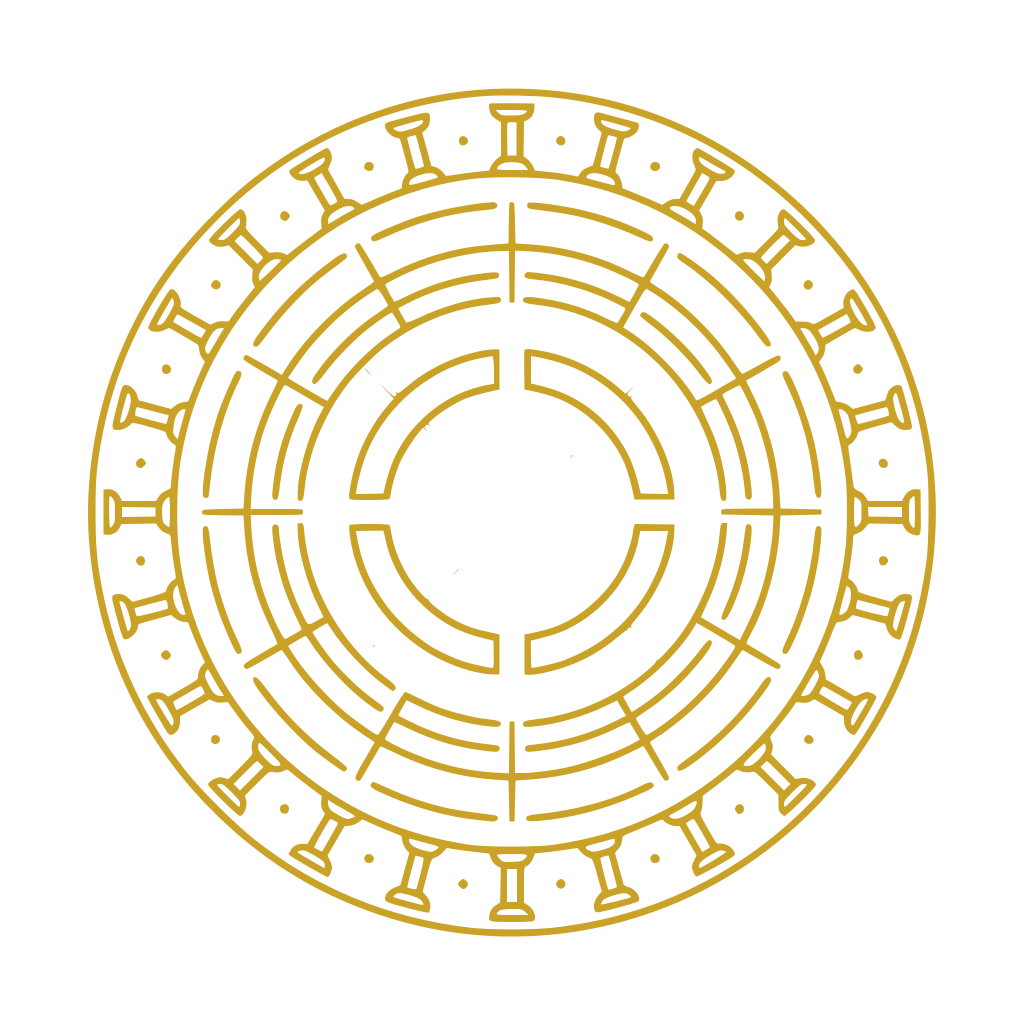
The main hall pillars correspond to the four seasons, twelve calendar months, twelve daily double-hours, and twenty-eight lunar mansions.

Heaven's Heart Stone
The central circular marble slab serves as the cosmic pivot where the emperor communed directly with the celestial vault.
Dragon and Phoenix Caisson
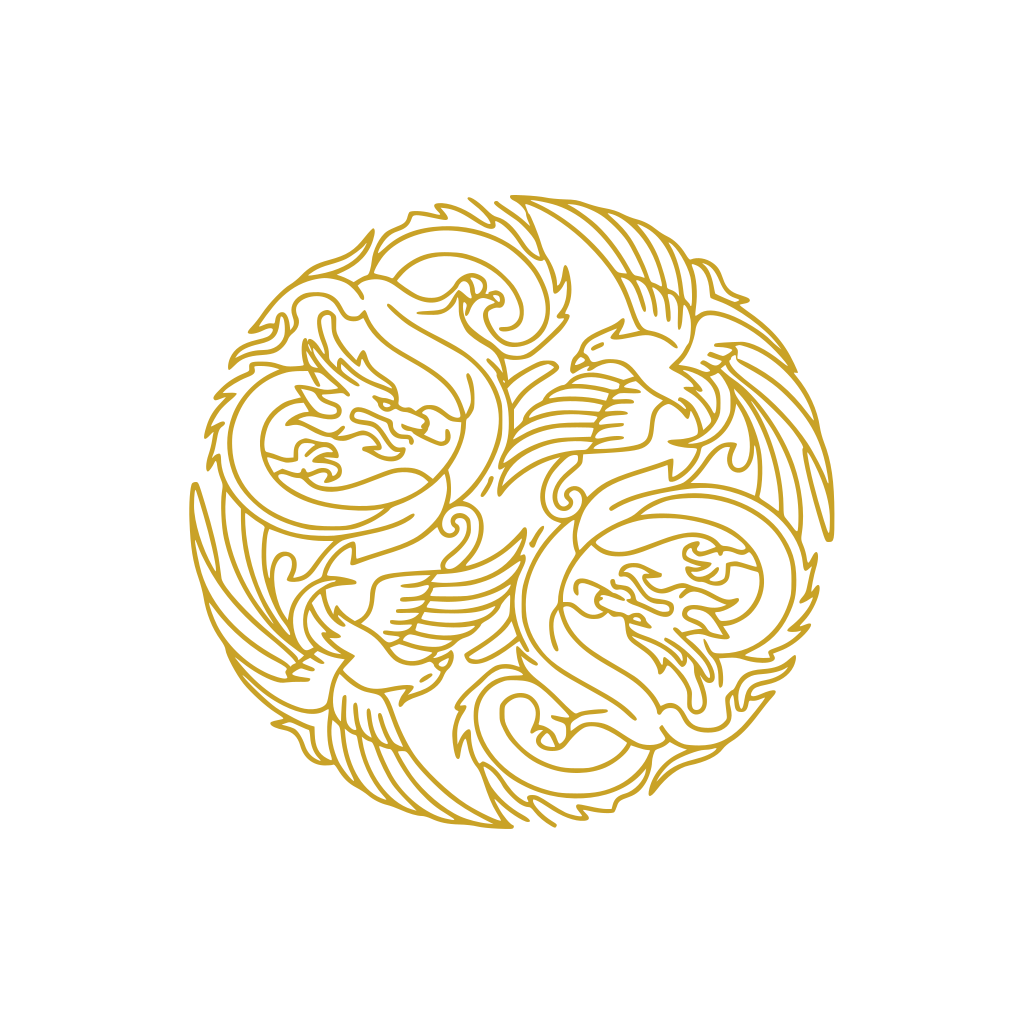
Elaborately carved coiling dragons and soaring phoenixes represent the dynamic cosmological balance of Yang and Yin energies.

Ancient Cypress Forest
Thousands of evergreen cypresses planted along ceremonial avenues embody endurance, spiritual longevity, and vital cosmic Qi.
Interesting Facts
At 273 hectares, the Temple of Heaven covers nearly four times the land area of the Forbidden City (Tier A).
The 38-meter Hall of Prayer for Good Harvests was constructed entirely without a single metal nail or structural crossbeam (Tier A).
All stone rings on the Circular Mound Altar are laid in strict multiples of nine to honor the ultimate Yang number (Tier A).
When standing on the center Heaven's Heart Stone, a person's spoken voice produces an immediate resonant echo off the marble balustrades (Tier B).
The Echo Wall allows whispers spoken against the bricks on one side to travel clearly along the perimeter to the opposite side (Tier B).
The Hall of Prayer originally had three roof tiers in blue, yellow, and green before being unified into celestial blue in 1751 (Tier A).
The famous Nine-Dragon Cypress has twisted trunk bark resembling nine coiling dragons ascending toward the sky (Tier C).
President Yuan Shikai reenacted the traditional winter sacrifice in 1914 in the final state ceremony ever held on the altar (Tier B).
Sacrificial furnaces at the altar burned specialized smokeless charcoal made from pine and cypress to avoid polluting the air (Tier B).
Common Questions
Why are the roof tiles on the Temple of Heaven blue instead of yellow?
Blue glazed tiles represent the celestial canopy of Heaven, whereas imperial residences used yellow tiles.
How does the Echo Wall transmit whispered sounds so clearly?
Its extremely dense Linqing bricks and smooth circular masonry conduct sound waves along the curved perimeter with minimal loss.
Can visitors stand on the Heaven's Heart Stone?
Yes, visitors can walk onto the Circular Mound Altar and stand directly on the central marble slab.
What is the best time of day to visit the Temple of Heaven?
Early morning is ideal to watch locals practice Tai Chi in the cypress groves before the sacred buildings open.
Is the Temple of Heaven larger than the Forbidden City?
Yes, it is roughly four times larger because imperial protocol forbade mortal palaces from exceeding the domain of Heaven.
Featured Stories
The Great Ritual Restructuring of 1530
1530
Following rigorous cosmological debates regarding ritual propriety, Emperor Jiajing separated the joint sacrifices to Heaven and Earth into distinct sanctuaries. He established the Altar of the Earth in northern Beijing and rededicated the southern precinct solely to celestial rites. This profound theological reform created the open-air Circular Mound Altar and finalized the site's distinct architectural geometry.
Source: Imperial Records of the Ming Dynasty
Rebuilding After the Celestial Fire
September 18, 1889
A sudden lightning strike in the late summer of 1889 incinerated the magnificent timber frame of the Hall of Prayer for Good Harvests. Interpreting the catastrophe as an alarming loss of the Mandate of Heaven, the Qing imperial court mobilized premier artisans to rebuild the sanctum. Completed in 1896, the reconstructed hall faithfully reproduced historic specifications using imported pine alongside domestic cedar.
Source: Historical Records of the Qing Court
The Final Imperial Winter Solstice
December 23, 1914
In a controversial bid to legitimize his autocratic ambitions following the Qing Dynasty's fall, President Yuan Shikai reenacted the traditional state sacrifice. Dressed in ceremonial vestments, he mounted the marble steps of the Circular Mound Altar to petition the heavens. The solemn pageant proved to be the final imperial ceremony ever performed upon the ancient altar.
Source: Beijing Municipal Cultural Heritage Archives
Timeline
Founding by Emperor Yongle
The Yongle Emperor establishes the complex as the combined Altar of Heaven and Earth.
MilestoneSeparation of Heaven and Earth Rites
Emperor Jiajing restructures the complex to worship Heaven exclusively and builds the Circular Mound Altar.
RenovationErection of Northern Three-Tiered Hall
The Great Hall for Sacrificial Gathering is constructed with tri-colored roof tiles.
MilestoneExpansion of the Circular Mound Altar
Emperor Qianlong reconstructs the Circular Mound Altar with white Hanbai marble based on multiples of nine.
RenovationRedesign as Hall of Prayer for Good Harvests
Qianlong unifies the northern hall's roof tiles to deep blue and designates its current name.
RenovationRebuilding of the Imperial Vault of Heaven
The Imperial Vault of Heaven receives its smooth Echo Wall and single-tier blue conical roof.
RenovationDestruction by Lightning Strike
A catastrophic lightning fire completely destroys the timber superstructure of the Hall of Prayer for Good Harvests.
EventCompletion of Hall Reconstruction
Craftsmen complete the meticulous historical reconstruction of the Hall of Prayer for Good Harvests.
DedicationFinal State Sacrificial Ceremony
President Yuan Shikai performs the final state sacrificial ritual at the Circular Mound Altar.
EventOpening as a Public Park
The formerly forbidden imperial ritual sanctuary is opened to the public as a municipal park.
MilestoneInscribed as UNESCO World Heritage Site
UNESCO inscribes the complex as a masterpiece of architecture and landscape design.
MilestoneHistory by Decade
1400s–1420s — Ming Imperial Inception
Following the transfer of China's imperial capital to Beijing, the Yongle Emperor commissioned the sanctuary in 1420. Originally named the Altar of Heaven and Earth, the complex hosted combined sacrifices to both celestial and terrestrial realms. Master craftsman Kuai Xiang and imperial builders established the foundational north-south ritual axis.
1530s–1540s — The Great Ritual Reform
Emperor Jiajing enacted sweeping cosmological reforms in 1530, dividing the worship of Heaven and Earth into distinct sanctuaries. He erected the open-air Circular Mound Altar and built the predecessor to the Hall of Prayer for Good Harvests with tri-color tiles. These changes established the sanctuary's exclusive dedication to celestial worship.
1740s–1750s — High Qing Architectural Renaissance
Under Emperor Qianlong, the sanctuary underwent comprehensive refinement to realize perfect Taoist numerological harmony. The Circular Mound Altar was enlarged using pure white Hanbai marble arranged in multiples of nine, and the northern hall was unified with celestial blue tiles. Qianlong also finalized the Imperial Vault of Heaven and its acoustic Echo Wall.
1880s–1890s — Catastrophe and Imperial Reconstruction
In September 1889, a lightning storm incinerated the timber superstructure of the Hall of Prayer for Good Harvests. Viewed as a dire cosmological portent, the Qing court immediately ordered a faithful reconstruction using historic mortise-and-tenon techniques. Master carpenters successfully re-erected the iconic three-tiered sanctum by 1896.
1900s–1910s — Foreign Occupation to Public Park
During the 1900 Boxer Rebellion, foreign forces occupied the sanctuary grounds and damaged ceremonial infrastructure. Following the 1911 fall of the Qing Dynasty, Yuan Shikai staged a final imperial rite in 1914 before the complex opened as a public park in 1918. This transition permanently opened the sacred precinct to everyday citizens.
1990s–2020s — World Heritage and Preservation
UNESCO inscribed the Temple of Heaven as a World Heritage Site in 1998, recognizing its supreme architectural harmony and philosophical depth. Modern conservation initiatives have painstakingly restored historic timber paints, protected ancient cypresses, and preserved the delicate acoustic brickwork. Today, the park remains Beijing's preeminent spiritual monument.
Architecture & Facilities
The Temple of Heaven represents the pinnacle of Chinese imperial palace architecture, synthesizing Ming and Qing structural carpentry with classical Taoist spatial cosmology. Built along a 1.5-kilometer sacred axis, its monumental circular pavilions and tiered marble terraces directly manifest ancient philosophical principles governing the cosmos.
Building Materials
Nanmu and Pine Timber
Massive solid Phoebe zhennan pillars and cured pine support the soaring wooden framework without metal nails.
Celestial Blue Glazed Tiles
Vibrantly colored glazed ceramic tiles clad the conical roofs to symbolize the infinite expanse of the sky.
Hanbai White Marble
Finely carved white marble quarried in northern China forms the balustrades and terraces of the altars.
Dense Linqing Bricks
Specially fired Shandong bricks laid with micro-thin mortar seams form the acoustic surface of the Echo Wall.
Interior Features
Hall of Prayer for Good Harvests Sanctuary
The interior houses the imperial throne and tablet shrine beneath twenty-eight massive lacquered wooden columns.
Imperial Vault of Heaven Shrine
A circular sanctum containing the sacred spirit tablet of the August High Sovereign of Heaven.
Dragon-Phoenix Caisson Ceiling
A suspended wooden ceiling featuring an intricately carved and gilded central dragon clutching a celestial sphere.
East and West Side Annex Halls
Subsidiary halls flanking the prayer terrace historically housed tablets dedicated to the sun, moon, and stars.
Temple Grounds
Enclosed within 273 hectares of walled grounds, the complex features expansive stone plazas, ceremonial bridges, and an ancient forest of over 4,000 evergreen cypress trees.
Additional Facilities
The western Fasting Palace features imperial residence quarters, while the southwest Divine Music Administration houses museum galleries and ancestral chime bells.
Religious Significance
Within the Taoist cosmological tradition, Heaven (Tian) represents the transcendent moral source of existence generated by the unnamable Dao. The Temple of Heaven served as the supreme liturgical apparatus through which imperial authority aligned human affairs with celestial order.
To perform state liturgical sacrifices and seasonal prayers that maintain equilibrium between cosmic Qi, human society, and agricultural fertility.
Sacred Ordinances
Winter Solstice Sacrifice (Dongzhi Dadian)
The supreme annual rite where the emperor offered sacrifices to Heaven at the open-air Circular Mound Altar.
Prayer for Grain Ceremony (Mengchun Qigu)
A spring liturgy conducted at the Hall of Prayer for Good Harvests petitioning for favorable weather and bountiful crops.
Imperial Fasting and Purification (Zhaijie)
Three days of strict vegetarian fasting, meditation, and ritual abstinence observed inside the moated Fasting Palace.
Ritual Court Music (Zhonghe Shaoyue)
Sacred bell, drum, and chime melodies performed by ceremonial adepts to harmonize earthly minds with celestial vibrations.
Cosmological Axiality and the Mandate of Heaven
The spatial layout of the Temple of Heaven physically embodies the concept of Tianren Heyi (the unity of Heaven and humanity). As the Son of Heaven, the emperor bore ultimate moral responsibility for maintaining universal balance. If rituals were conducted improperly or moral virtue lapsed, natural disasters were interpreted as celestial signs that the Mandate of Heaven had been withdrawn.
Acoustic Communion with the Infinite
The intentional acoustic properties engineered into the complex—including the Echo Wall and Heaven's Heart Stone—served liturgical purposes. When the emperor stood at the cosmic focal point, his spoken prayers resonated instantly off circular marble balustrades. This immediate acoustic feedback was interpreted liturgically as direct conversational communion with Heaven.
Similar Temples


Sources & Research
Every fact on Temples.org is backed by verified Sources & Research. Each piece of information is rated by source tier and confidence level.
View All Sources (9)
| Field | Source | Tier | Retrieved |
|---|---|---|---|
| Religious Significance & Imperial Liturgy | Ministry of the Interior Religious Affairs (opens in a new tab) | A | 2026-03-30 |
| Architecture & Structural Engineering | Science and Technology Daily (opens in a new tab) | B | 2026-03-30 |
| About & Historical Background | Encyclopaedia Britannica (opens in a new tab) | B | 2026-03-30 |
| History by Decade & Cultural Context | China Today (opens in a new tab) | B | 2026-03-30 |
| Timeline & Restoration Records | Getty Conservation Institute (opens in a new tab) | B | 2026-03-30 |
| Site Geometry & Cosmological Overview | WorldAtlas (opens in a new tab) | C | 2026-03-30 |
| Acoustic Features & Interior Halls | Travel China Guide (opens in a new tab) | D | 2026-03-30 |
| Visitor Insights & Practical Guidance | Trip China Guide (opens in a new tab) | D | 2026-03-30 |
| Park Access & Public Transportation | Trip.com (opens in a new tab) | D | 2026-03-30 |