Visitor Insights
Visiting White Horse Temple
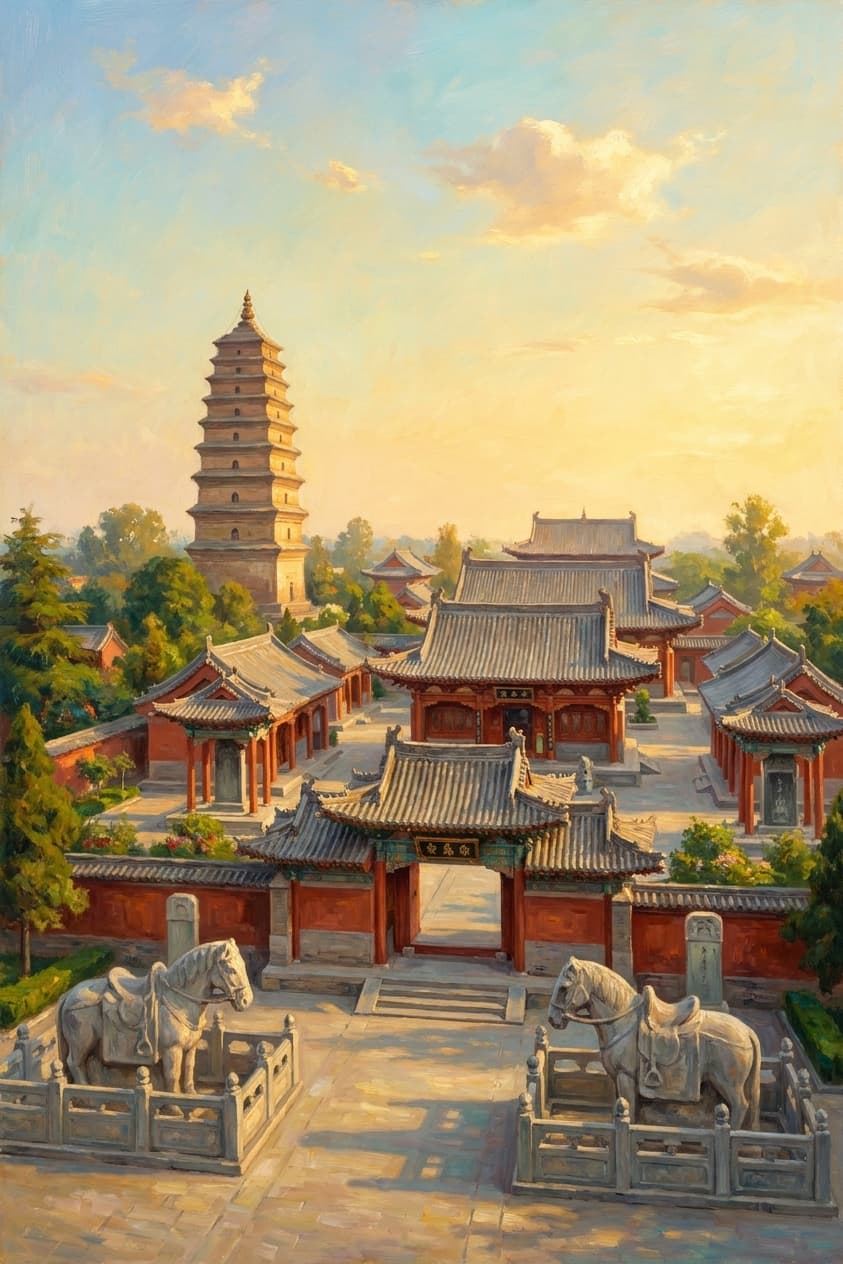
White Horse Temple offers an immersive encounter with two millennia of East Asian Buddhist heritage. Pilgrims and cultural travelers explore peaceful courtyards, the ancient brick translation terrace, and an adjacent park hosting distinct international stupas.
Highlights
- Paying quiet homage before the Song Dynasty stone horses at the Mountain Gate
- Contemplating the feather-light Yuan Dynasty hollow dry-lacquer sculptures in Mahavira Hall
- Testing the unique acoustic frog-croak echo beside the 12th-century Qiyun Pagoda
- Walking the tranquil grounds of the Thai, Burmese, and Indian international shrines
Things to Know
- Flash photography is strictly prohibited inside the historical halls to protect antique pigments.
- Modest attire covering shoulders and knees is mandatory across all active chapels.
- Plan for at least two to three hours of walking to explore the expansive heritage grounds.
Location
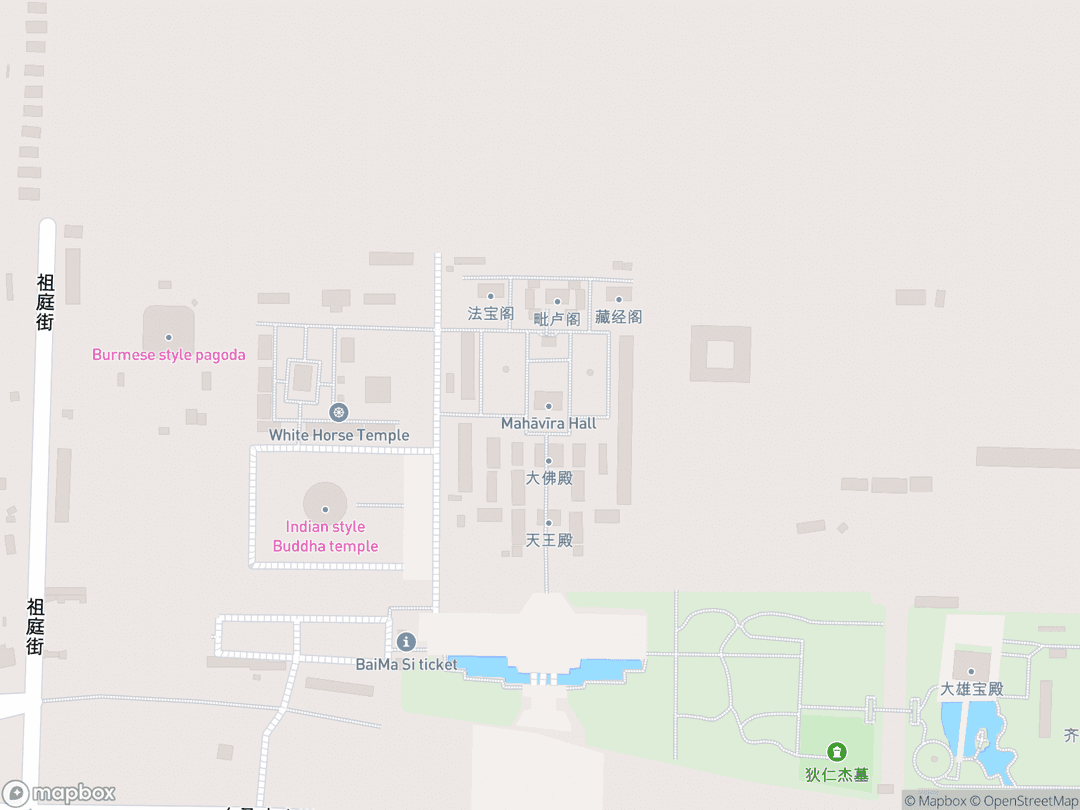
No. 6 Luobai Road, Baima Temple Town, Luolong District, Luoyang City, Henan Province, 471013, China
Hours: Peak Season (April 1 to October 7): 07:40 to 18:40; Off-Peak Season (October 8 to March 31): 08:00 to 17:30
Getting There: Take direct Bus Route 56 from Luoyang Railway Station to the White Horse Temple terminal stop, or hire a taxi from Luoyang Longmen High-Speed Station via Luobai Road.
Get DirectionsTips for Your Visit
Arrive for Morning Chanting
Visit before 08:30 to experience the morning liturgical chanting of the resident monastic community.
Spring Peony Season
Schedule your visit during April or May to see ancient temple courtyards framed by blooming Luoyang peonies.
Acoustic Clap Point
Stand approximately 20 meters south of Qiyun Pagoda and clap your hands to hear the multi-eaved echo.
About
Established in 68 CE during the Eastern Han Dynasty under Emperor Ming, White Horse Temple is celebrated as the foundational sanctuary of Buddhism in China. The monastery arose following an imperial dream of a golden divinity, prompting an emissary mission along the Silk Road that returned with two Indian masters and sacred Sanskrit texts.
Set across 13 hectares just east of ancient Luoyang, the complex served as China's inaugural scriptural translation bureau. Here, the Indian masters Kāśyapa Mātaṅga and Dharmaratna rendered the foundational Sutra in Forty-Two Sections into Classical Chinese atop the elevated Clear Cool Terrace.
The historic compound preserves sacred architecture across multiple imperial dynasties, highlighted by the 12th-century Qiyun Pagoda and Yuan Dynasty dry-lacquer arhat sculptures. Expanded with modern sanctuaries built by India, Thailand, and Myanmar, the ancestral court remains an active beacon of international Buddhist exchange.
Gallery
Symbolic Elements
The temple's exterior features intricate carvings, each rich with spiritual meaning:
Song Stone Horses
A pair of docile stone steeds marks the entrance in tribute to the animals that transported sacred sutras across the mountains.

Pattra Palm-Leaf Sutras
Slender cured palm leaves bearing Sanskrit script represent the untranslated word of Shakyamuni Buddha preserved since antiquity.
Hollow Dry-Lacquer Arhats
Feather-light Yuan Dynasty sculptures crafted from layered ramie cloth symbolize spiritual transcendence over material decay.
Thirteen Pagoda Tiers
The thirteen stacked brick roof tiers of Qiyun Pagoda represent the spiritual heavens ascended on the path to Buddhahood.
Great Bronze Resonating Bell
Inscribed with sacred dharanis, the heavy bronze bell symbolizes the awakening proclamation of Dharma dispelling ignorance.

Clear Cool Terrace Platform
The high rammed-earth terrace represents tranquil detachment and the cooling of worldly passions through scriptural study.
Sanchi Torana Gateways
Meticulously carved sandstone portals in the international zone represent the spiritual crossing into enlightened truth.
Vairocana Cosmic Buddha
Enshrined on the elevated platform, the supreme cosmic Buddha personifies universal wisdom illuminating all worldly realms.
Interesting Facts
The Chinese word for Buddhist monastery ('Sì') was originally an imperial government ministry title that was permanently repurposed when foreign monks took up residence here (Tier A).
China's first native Han Buddhist monk, Zhu Shixing, received his complete monastic vows at White Horse Temple in 250 CE (Tier A).
The twenty-three Yuan Dynasty hollow dry-lacquer sculptures in Mahavira Hall weigh only three to five kilograms each despite standing over seven centuries (Tier A).
Striking the 2.5-ton bronze temple bell during imperial eras was said to trigger sympathetic harmonic vibrations in the Luoyang city drum tower twelve kilometers away (Tier B).
Rhythmically clapping hands near the base of the thirteenth-tier Qiyun Pagoda produces an acoustic echo resembling a bullfrog croak (Tier A).
The elevated Clear Cool Terrace originally served as the private summer cooling pavilion of Emperor Ming before becoming China's first Buddhist scripture translation desk (Tier A).
White Horse Temple is the only monastic precinct globally to feature Chinese Classical, Thai, Burmese, and Indian architectural styles within a single sanctuary (Tier B).
The antique dry-lacquer statues survived the Cultural Revolution thanks to Premier Zhou Enlai ordering their emergency transfer from Beijing in 1973 (Tier A).
The iconic stone horses guarding the main gate are Northern Song Dynasty tomb sculptures relocated to honor the legendary steeds of the Silk Road mission (Tier B).
The Qiyun Pagoda grounds historically operated as the earliest recorded monastic cloister for Buddhist nuns in Henan Province (Tier B).
Common Questions
Why is the temple named White Horse Temple?
It was named in honor of the two white horses that carried the first Buddhist scriptures and statues from Central Asia to Luoyang in 67 CE.
Are non-Buddhist visitors allowed inside the monastery?
Yes, travelers of all backgrounds are welcome to explore the courtyards and chapels provided they observe temple decorum.
What is unique about the Qiyun Pagoda?
Standing thirteen stories tall, this 1175 brick tower is Luoyang's oldest building and produces an acoustic echo resembling a croaking frog when clapped near.
Why are there Thai, Indian, and Burmese temples located here?
Partner governments constructed authentic national shrines within the western grounds to honor White Horse Temple as the civilizational cradle of Asian Buddhism.
Can visitors take photographs inside the historical halls?
Photography is allowed in outdoor courtyards, but prohibited inside historic halls to protect fragile dry-lacquer pigments from light exposure.
Featured Stories
The Imperial Dream of the Golden Divinity
64 CE
In the quiet of his palace at Luoyang, Emperor Ming beheld a luminous golden figure floating across the dawn heavens. Court scholar Fu Yi interpreted the nocturnal vision as Shakyamuni Buddha, prompting the Han court to dispatch emissaries along the perilous Silk Road to seek the foreign sage's wisdom.
Source: Historical Records of the Later Han (*Hou Hanshu*)
The First Translation on Clear Cool Terrace
70 CE
Having traversed the Pamir mountain passes alongside two white horses, the Indian masters Kāśyapa Mātaṅga and Dharmaratna took up residence on the emperor's cool summer terrace. Here, amidst fragrant pines, they translated Sanskrit palm leaves into the Sutra in Forty-Two Sections, crafting the initial vocabulary of Chinese Buddhism.
Source: Biographies of Eminent Monks (*Gaoseng Zhuan*)
Zhou Enlai and the Rescue of the Lacquer Arhats
1973
Ahead of a critical diplomatic delegation led by Cambodian Prince Norodom Sihanouk, Premier Zhou Enlai discovered the main sanctuary stripped of sacred icons. By personal executive decree, he arranged the immediate transfer of twenty-three priceless Yuan Dynasty dry-lacquer sculptures from Beijing, permanently preserving them at White Horse Temple.
Source: National Cultural Relics Administration Archives
Timeline
Emperor Ming's Auspicious Vision
Emperor Ming of Han dreams of a radiant golden figure, inspiring an imperial delegation to Central Asia.
MilestoneArrival of the White Horses
Emissaries return to Luoyang with Indian masters Kāśyapa Mātaṅga and Dharmaratna bearing Sanskrit sutras.
EventMonastery Foundation
Emperor Ming decrees the formal establishment of White Horse Temple east of the imperial capital walls.
MilestoneFirst Chinese Translation
The founding Indian masters complete the translation of the 'Sutra in Forty-Two Sections' atop Clear Cool Terrace.
EventFirst Native Han Ordination
Dharmasatya establishes the monastic Vinaya code and ordains Zhu Shixing as China's first native monk.
MilestoneTang Dynasty Imperial Expansion
Empress Wu Zetian sponsors comprehensive monastery restorations housing over one thousand resident monks.
RenovationReconstruction of Qiyun Pagoda
Builders complete the current thirteen-story square brick multi-eaved pagoda following a timber tower fire.
RenovationZhao Mengfu Stele Inscription
Scholar Zhao Mengfu calligraphs the ancestral temple record, formalizing its status as Chinese Buddhism's cradle.
EventCasting of the Great Bell
Emperor Jiajing commissions the casting of the monastery's 2.5-ton bronze bell inscribed with sacred mantras.
MilestoneQing Dynasty Palace Restoration
Emperor Kangxi finances full repairs that establish the current five-hall central meridian layout.
RenovationPremier Zhou Enlai Preservation Directive
Rare Yuan Dynasty dry-lacquer arhat statues are relocated from Beijing to safeguard the sanctuary.
MilestoneIndian Buddhist Hall Inauguration
The President of India consecrates a red sandstone replica of Sanchi Stupa on the temple grounds.
DedicationHistory by Decade
60s–70s CE — Imperial Vision and Monastic Genesis
The western master arrived bearing the sacred texts, planting the timeless seed of Dharma upon the Central Plains.
Following Emperor Ming's diplomatic mission along the Silk Road, White Horse Temple was established outside Luoyang in 68 CE to house foreign monks. The Indian teachers Kāśyapa Mātaṅga and Dharmaratna translated foundational Buddhist sutras into Classical Chinese, establishing the first permanent monastic community in East Asia.
250s CE — Codification of Monastic Vows
During the Three Kingdoms period, master Dharmasatya arrived at White Horse Temple and published formal monastic conduct guidelines. In 250 CE, he presided over the complete ordination of Zhu Shixing, inaugurating an unbroken lineage of native Han Buddhist monastics.
680s CE — Tang Imperial Grandeur
Under the generous patronage of Empress Wu Zetian, the monastery underwent monumental expansion with soaring multi-story timber pavilions. The monastic ranks swelled to more than one thousand resident monks, serving as the spiritual jewel of the Tang Dynasty eastern capital.
1170s CE — Jin Dynasty Pagoda Reconstruction
Following devastating regional warfare that burned the original timber stupa, Jurchen Jin Dynasty artisans raised the thirteen-story brick Qiyun Pagoda in 1175. The multi-eaved tower became an acoustic marvel and Luoyang's oldest surviving above-ground building.
1290s CE — Yuan Dynasty Calligraphy and Sculpture
The Yuan imperial court honored White Horse Temple's preeminence by installing masterfully rendered ramie hollow dry-lacquer statues of the Buddhas and arhats. Scholar Zhao Mengfu inscribed the famous ancestral court stele, documenting twelve centuries of spiritual heritage.
1550s–1710s — Ming and Qing Dynasties Restoration
Emperors across the Ming and Qing dynasties financed repeated renovations to safeguard the central meridian axis. The casting of the great bronze bell in 1555 and Kangxi's palace-style rebuilding in 1713 established the temple footprint that survives today.
1970s — Modern Preservation and Diplomatic Revival
Designated a Major Historical Site in 1961, the compound received crucial state protection when Premier Zhou Enlai transferred historic Beijing dry-lacquer treasures to Mahavira Hall in 1973. This intervention secured the complex during sensitive political transitions and reopened it for foreign delegations.
1990s–2010s — International Buddhist Sanctuary
Beginning in the 1990s, the governments of Thailand, India, and Myanmar collaborated with China to construct authentic overseas Buddhist shrines in the western precinct. These diplomatic shrines reaffirmed the ancestral court's historic role as a meeting place of diverse Asian civilizations.
Architecture & Facilities
White Horse Temple embodies the Classical Han-Chinese palace axial style, orienting five primary timber-framed halls along a strict south-to-north meridian axis. Elevated granite podiums, interlocking timber Dougong bracket networks, vermilion perimeter walls, and curved clay tile eaves integrate early Buddhist cosmology directly into traditional imperial court architecture.
Building Materials
Imperial Vermilion Brick
Fired clay bricks layered with traditional lime mortar form the heavy perimeter defense walls and exterior gatehouses.
Structural Dougong Joinery
Hand-planed hardwood bracket clusters interlock without iron nails to distribute heavy roof loads and withstand seismic movement.
Henan Granite and Bluestone
Fine-grained local granite forms elevated hall podiums and flight steps while Northern Song bluestone constitutes the guardian horse carvings.
Glazed Clay Barrel Tiles
Traditional gray and amber glazed ceramic roof tiles shed seasonal rain and finish ornamental ridges with decorative corner beasts.
Interior Features
Mahavira Hall (Dàxióng Bǎodiàn)
The primary worship sanctuary enshrining the Three Period Buddhas and eighteen Yuan Dynasty hollow dry-lacquer arhats.
Hall of Heavenly Kings (Tiānwáng Diàn)
A double-eaved Yuan Dynasty gateway pavilion housing Maitreya, General Skanda, and the Four Heavenly Kings.
Hall of the Great Buddha (Dàfó Diàn)
A Ming Dynasty ritual hall dedicated to Shakyamuni, Ananda, Kashyapa, and the Bodhisattvas of wisdom and universal practice.
Vairocana Pavilion (Pílú Gé)
A multi-tiered timber pavilion standing on Clear Cool Terrace housing cosmic Buddha Vairocana and Sanskrit palm manuscripts.
Temple Grounds
The 13-hectare complex features manicured stone courtyards, hundred-year-old cypress trees, weeping willows, and modern botanical gardens encompassing traditional Chinese cloisters, an active nunnery, and three sovereign international Buddhist halls.
Additional Facilities
The temple precinct includes a monastic scripture library, residential cloisters for monks and nuns, a vegetarian dining hall, a ticketed visitor center, and commemorative exhibition pavilions displaying ancient stone steles.
Religious Significance
White Horse Temple is venerated throughout East Asia as the Ancestral Court and Origin of the Teaching (Shìyuán Zǔtíng), marking the first planting of the Buddhist monastic Sangha and Dharma in China.
The monastery serves as an active pilgrimage center for Mahayana Buddhists, a functioning monastic training institution, and an enduring symbol of peaceful civilizational exchange along the Silk Road.
Sacred Ordinances
Morning and Evening Chanting (Zǎowǎn Gòukè)
Daily monastic liturgy reciting the Surangama, Great Compassion, and Heart Sutras to cultivate mindfulness and transfer spiritual merit.
Scripture Circumambulation (Jīngxíng)
Mindful walking meditation around sacred relic altars and the historic Qiyun Pagoda to harmonize body and breath.
Bhikshu Ordination (Shòujiè)
Formal conferral of novice and full Vinaya precepts to monastics dedicating their lives to the three jewels.
The Cradle of Translation
Before White Horse Temple, the teachings of the Buddha existed solely in Indian and Central Asian tongues. The pioneering translations accomplished here transformed foreign metaphysical insights into the classical Chinese philosophical lexicon, profoundly enriching East Asian culture.
Harmony of Traditions
By assembling traditional Chinese Mahayana halls alongside Theravada temples from Thailand and Myanmar and an Indian stupa, the temple manifests the universal unity of the Buddhist path across differing linguistic and regional expressions.
Sources & Research
Every fact on Temples.org is backed by verified Sources & Research. Each piece of information is rated by source tier and confidence level.
View All Sources (7)
| Field | Source | Tier | Retrieved |
|---|---|---|---|
| About & Historical Background | China Internet Information Center (opens in a new tab) | A | 2026-03-31 |
| Academic History & Lacquer Treasures | Columbia University Department of Art History (opens in a new tab) | B | 2026-03-31 |
| Pagoda Architecture & Epigraphy | University of California eScholarship (opens in a new tab) | B | 2026-03-31 |
| International Buddhist Halls | Scroll.in (opens in a new tab) | C | 2026-03-31 |
| Pilgrimage Traditions & Monastic Precepts | eSamskriti Cultural Studies (opens in a new tab) | C | 2026-03-31 |
| Visitor Experience & Logistics | Trip.com Travel Guide (opens in a new tab) | D | 2026-03-31 |
| Grounds & Transportation | China Xian Tour Information (opens in a new tab) | D | 2026-03-31 |