Visitor Insights
Visiting Yungang Grottoes
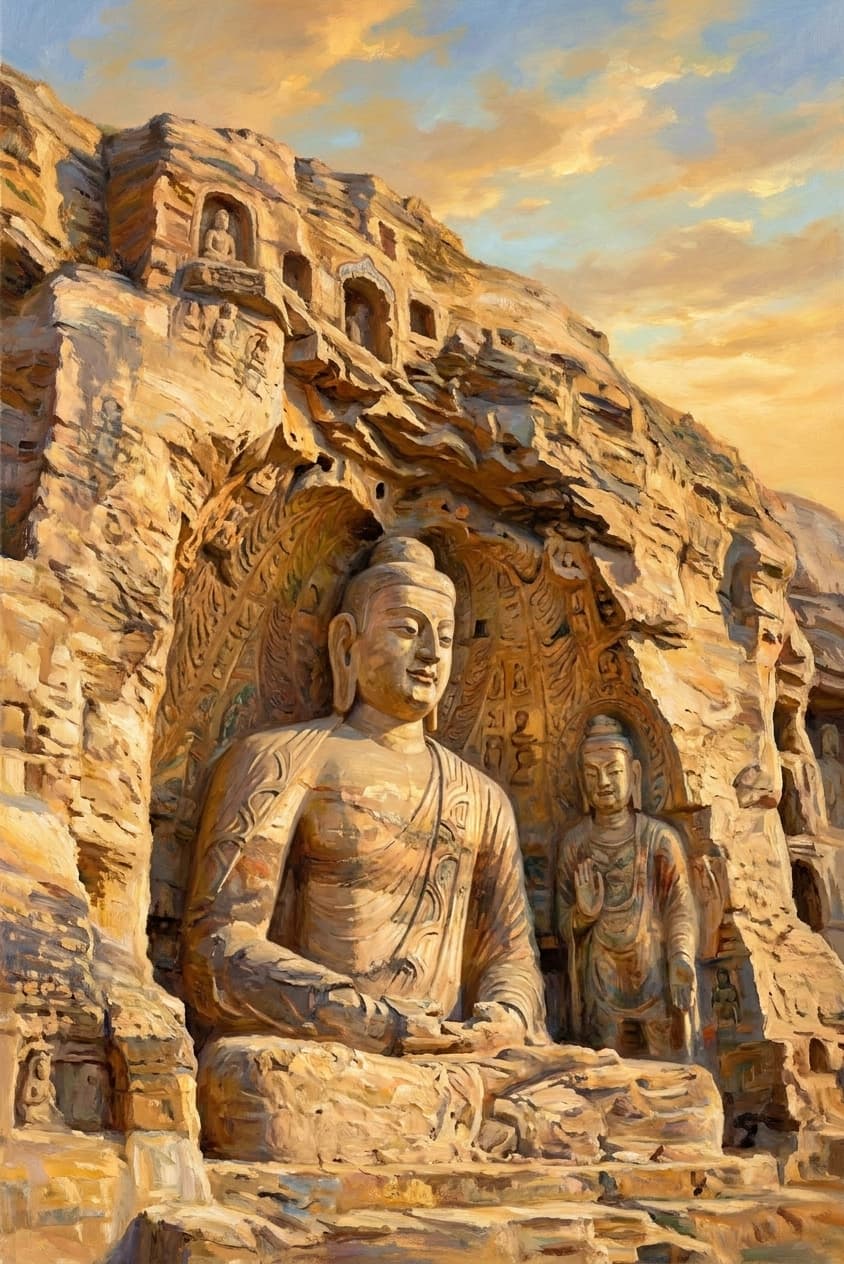
Visitors to the Yungang Grottoes experience a world-renowned gallery of ancient Buddhist rock-cut sculpture. A typical visit spans two to three hours along the manicured walkway at the foot of Wuzhou Mountain.
Highlights
- Cave 20 Open-Air Colossal Seated Buddha standing 13.7 meters high.
- Cave 6 central pagoda pillar with 33 relief panels depicting Buddha's life.
- Early Gandharan-influenced Tanyao Five Caves (Caves 16 to 20).
- Paired twin caves showing the transition to Sinicized Han drapery.
Things to Know
- Interior cave photography is regulated to protect ancient mineral pigments.
- Substantial outdoor walking along stone plazas and inclined steps.
- Mornings offer the best natural sunlight into south-facing cave mouths.
Location
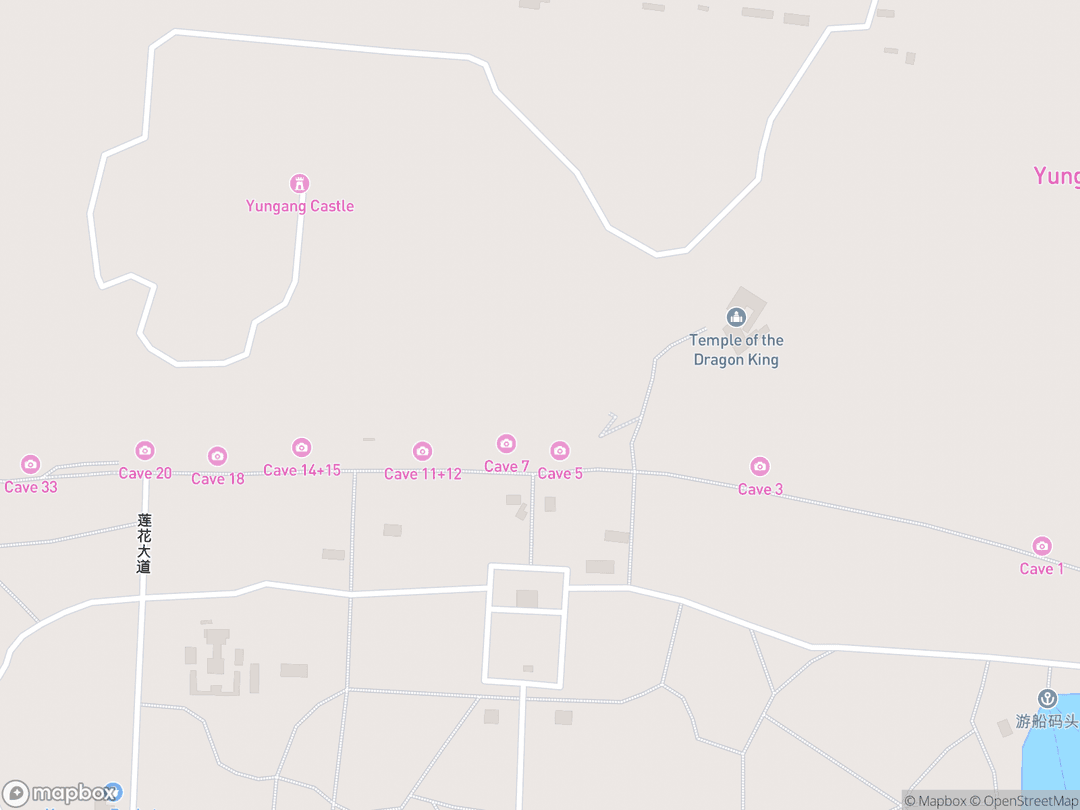
Base of Wuzhou Mountain, Shi Li River Valley, Datong, Shanxi, China
Hours: Peak Season (Apr-Oct): 08:30 - 17:30; Low Season (Nov-Mar): 08:30 - 17:00
Getting There: Located 16 km west of Datong City; accessible via Express Bus Line 603 from Datong Railway Station or direct taxi.
Get DirectionsTips for Your Visit
Best Lighting
Visit during the morning hours when sunlight strikes directly into the south-facing grotto entrances.
Layered Clothing
Cave interiors can remain cool and shaded even during hot summer months.
Audio Guides
Rent an official multi-language audio guide near the visitor center to understand iconography details.
About
The Yungang Grottoes represent one of the crowning artistic and theological achievements of 5th-century Mahayana Buddhism in East Asia. Carved into the sandstone cliffs of Wuzhou Mountain near Datong, Shanxi Province, the site encompasses 252 caves and niches containing over 51,000 stone statues of the Buddha and sacred figures across a cliff face stretching one kilometer.
Conceived following the revival of Buddhism in the Northern Wei Dynasty, the grottoes bridge foundational Dharmic concepts—such as Karma, Samsara, and spiritual liberation—with Mahayana theology. Under imperial patronage and the guidance of the monk Tan Yao, the grottoes established a unique synthesis where Northern Wei rulers were venerated as living incarnations of the Tathagata.
As a critical Silk Road crossroads, Yungang documents the artistic evolution from Gandharan and Central Asian Greco-Buddhist styles to native Chinese Han aesthetic traditions. Today, this UNESCO World Heritage Site stands as both an enduring pilgrimage landmark and a triumph of ancient rock-cut architecture.
Gallery
Symbolic Elements
The temple's exterior features intricate carvings, each rich with spiritual meaning:
Colossal Seated Buddha
The 13.7-meter Buddha of Cave 20 embodies the divine dignity of the imperial ruler aligned with cosmic Buddha hood.

Abhaya and Varada Mudras
Hand gestures signifying fearlessness and unconditional boon-granting compassion to all sentient beings.
Celestial Apsaras
Flying heavenly musicians carved across cave ceilings expressing divine praise through music and lotus flowers.

Stupa Pagoda Pillars
Central square stone columns serving as the sacred cosmic axis and housing symbolic Buddha relics.

Sacred Lotus Pedestals
Carved lotus flowers supporting thrones, symbolizing spiritual purity rising untainted from worldly existence.

Radiant Flame Nimbuses
Intricate head halos filled with carved flames and small transformation Buddhas signifying illuminating wisdom.

Sinicized Imperial Drapery
Heavy flowing Han-style robes reflecting the cultural synthesis of Northern Wei court aesthetics.
Interesting Facts
The site houses over 51,000 stone Buddha statues ranging from 17 meters down to just two centimeters in height (Tier A).
Cave 20's famous open-air Buddha was originally housed inside a stone cave before the cliff front collapsed (Tier B).
The five Tanyao caves were carved so that worshipping Buddha directly honored the living Northern Wei emperor (Tier A).
Relief carvings feature artistic influences from ancient Greece, Persia, India, and traditional Han China (Tier B).
Cave 6 contains a complete visual biography of Gautama Buddha sculpted across 33 distinct stone panels (Tier A).
A Ming Dynasty military fortress was built directly atop the cliff above the grottoes in the 16th century (Tier B).
In 2020, researchers created a full-scale 3D-printed replica of Cave 6 using digital laser scanning (Tier B).
Yungang was designated among the very first batch of National Key Cultural Heritage Sites in China in 1961 (Tier A).
Common Questions
What are the Yungang Grottoes?
The Yungang Grottoes are an ancient complex of 252 Buddhist rock-cut caves housing over 51,000 statues in Shanxi, China.
When were the Yungang Grottoes constructed?
Major excavation began around 460 CE during the Northern Wei Dynasty under imperial patronage.
Why are the grottoes historically significant?
They document the visual fusion of Silk Road Greco-Buddhist art with traditional Chinese architectural styles.
How do I travel to Yungang Grottoes from Datong?
Visitors can take direct Express Bus Line 603 or a 30-minute taxi ride from downtown Datong.
Featured Stories
Monk Tan Yao and the Imperial Caves
460
Following years of religious persecution, Monk Tan Yao petitioned Emperor Wencheng to carve five colossal caves into Wuzhou Mountain. Each statue was designed to honor both the Buddha and a Northern Wei emperor. This bold vision created the foundation for one of East Asia's greatest sacred artistic monuments.
Source: Historical Records of the Wei Dynasty (Wei Shu)
The Evolution of Sacred Drapery
480
As the Northern Wei court embraced Han Chinese culture, artists at Yungang altered the depiction of the Buddha's garments. Thin Gandharan robes gave way to heavy flowing imperial Han gowns. This transition marked the formal birth of a distinctly Chinese style of Buddhist sculpture.
Source: Yungang Research Academy Studies
The Accidental Open-Air Icon
1049
The famous 13.7-meter seated Buddha of Cave 20 was originally enclosed within a dark stone cave. Centuries ago, the outer rock facade collapsed due to natural erosion, exposing the colossal statue to open skies. What began as a structural failure created Yungang's most iconic landmark.
Source: UNESCO World Heritage Documentation
Timeline
Taiwu Persecution
Emperor Taiwu orders a widespread suppression of Buddhism across Northern Wei territories.
EventBuddhist Restoration
Emperor Wencheng ascends the throne and restores Buddhism as the Northern Wei state religion.
MilestoneTanyao Excavation Commences
Monk Tan Yao receives imperial approval to initiate construction of the Tanyao Five Caves.
component.timeline.groundbreakingImperial Zenith Phase
Empress Dowager Feng and Emperor Xiaowen sponsor paired twin cave excavations.
MilestoneSinicization of Art
Cave relief styles transition from Central Asian forms toward Han Chinese drapery and architectural motifs.
MilestoneCapital Moves to Luoyang
Northern Wei court relocates south, ending direct imperial funding at Yungang.
EventEnd of Active Carving
Northern border rebellions bring all excavation activity at Wuzhou Mountain to a close.
EventLiao Wooden Facades
Multi-story wooden protective halls are constructed over cave entrances under the Liao Dynasty.
RenovationMing Dynasty Fortification
Yungang Fort is constructed on top of the cliff ridge as a border defense outpost.
EventState Protection
Yungang Grottoes are designated a National Key Cultural Heritage Site in China.
MilestoneUNESCO World Heritage Inscription
Yungang Grottoes are officially inscribed on the UNESCO World Heritage List.
Dedication3D Replica Innovation
Researchers complete a full-scale 3D-printed replica of Cave 6 for mobile exhibitions.
MilestoneHistory by Decade
460s — Phase I Tanyao Five Caves
Following the severe Taiwu Persecution, Emperor Wencheng approved Monk Tan Yao's proposal to carve five massive caves into Wuzhou Mountain. Each central colossal Buddha directly honored one of the five early Northern Wei emperors, fusing state leadership with sacred Mahayana iconography.
470s–490s — Imperial Zenith and Sinicization
Under Empress Dowager Feng and Emperor Xiaowen, Yungang reached its peak of court patronage. Artistic designs shifted from foreign Gandharan styles to native Han robes, producing magnificent paired caves with carved wooden-beam style ceilings.
490s–520s — Late Popular Patronage
When the Northern Wei capital moved to Luoyang in 494 CE, court sponsorship ceased. Local societies, monks, and lay devotees continued carving smaller niches until northern rebellions halted work in 525 CE.
1050s–1540s — Dynastic Preservation and Fortification
Succeeding dynasties preserved and repurposed the site. The Liao Dynasty erected multi-story wooden halls over cave fronts, while the Ming Dynasty built a defensive fort on the cliff ridge above the statues.
1950s–Present — Conservation and Digital Era
Modern scientific preservation began in the mid-20th century, leading to national protection in 1961 and UNESCO inscription in 2001. Advanced 3D scanning and high-precision physical replicas now safeguard the statues for future generations.
Architecture & Facilities
The architecture of the Yungang Grottoes demonstrates a profound progression from Central Asian Gandharan and Mathura Greco-Buddhist rock-cut design to fully Sinicized Northern Wei art, characterized by Han timber-frame imitations and traditional imperial drapery.
Building Materials
Coarse Sandstone
Jurassic sandstone bedrock that allowed deep relief carving along the cliff.
Mineral Pigments
Natural azurite, malachite, and cinnabar paints applied across stone reliefs.
Timber Facades
Interlocking wooden beams forming protective outer hall superstructures.
Modern Polymers
Injected consolidation mortars used in contemporary cliff stabilization.
Interior Features
Cave 20 Open Sanctum
Dramatic open-air niche housing the iconic 13.7-meter seated Buddha statue.
Cave 6 Pagoda Chamber
Square central pillar carved with multi-story pagodas and 33 narrative relief panels.
Cave 5 Main Sanctum
Recessed cave chamber containing the site's tallest 17-meter seated Buddha.
Caves 7 and 8 Twin Complex
Paired vaulted chambers featuring intricate coffered ceilings and celestial reliefs.
Temple Grounds
A one-kilometer cliff face overlooking the Shi Li River valley, featuring landscaped stone plazas, riverside walkways, and modern conservation facilities.
Additional Facilities
Visitor reception center, Yungang Museum, 3D digital exhibition hall, and active archaeological preservation research facilities.
Religious Significance
Rooted in the Dharmic tradition, Yungang expresses Mahayana Buddhist doctrine by connecting cosmic truth with secular leadership. The grottoes serve as an enduring field of spiritual merit for pilgrims seeking liberation from the cycle of rebirth.
To provide a sacred environment for veneration, karmic merit-making, and the living proclamation of the Dharma.
Sacred Ordinances
Puja Devotion
Making offerings of incense, light, and flowers before sacred images to generate spiritual merit.
Pradaksina Circumambulation
Walking clockwise around central pagoda pillars while meditating on the teachings of the Buddha.
Sutra Recitation
Chanting sacred Mahayana texts to cultivate wisdom and purify negative karma.
Imperial Buddha Incarnation
Northern Wei theology posited that the reigning emperor was a living incarnation of the Tathagata, blending religious devotion with political harmony.
Dharmic Lineage and Stupa Veneration
Pagoda pillars inside the early caves reinforce the continuity of historical Buddhas, connecting ancient Indian stupa worship with Chinese architectural forms.
Sources & Research
Every fact on Temples.org is backed by verified Sources & Research. Each piece of information is rated by source tier and confidence level.
View All Sources (8)
| Field | Source | Tier | Retrieved |
|---|---|---|---|
| About & Historical Background | UNESCO World Heritage Centre (opens in a new tab) | B | 2026-02-15 |
| About & Historical Background | National Cultural Heritage Administration of China (opens in a new tab) | A | 2026-02-15 |
| Architecture & Cave Design | World Monuments Fund (opens in a new tab) | B | 2026-02-15 |
| Religious & Theological Significance | Encyclopaedia Britannica (opens in a new tab) | B | 2026-02-15 |
| Timeline & Historical Eras | China Daily News (opens in a new tab) | C | 2026-02-15 |
| Visitor Insights & Travel Guide | Datong Municipal People's Government (opens in a new tab) | C | 2026-02-15 |
| Featured Stories & Conservation | Getty Conservation Institute (opens in a new tab) | B | 2026-02-15 |
| Architecture & Cave Design | The Metropolitan Museum of Art (opens in a new tab) | B | 2026-02-15 |