Visitor Insights
Visiting Santo Domingo Dominican Republic Temple
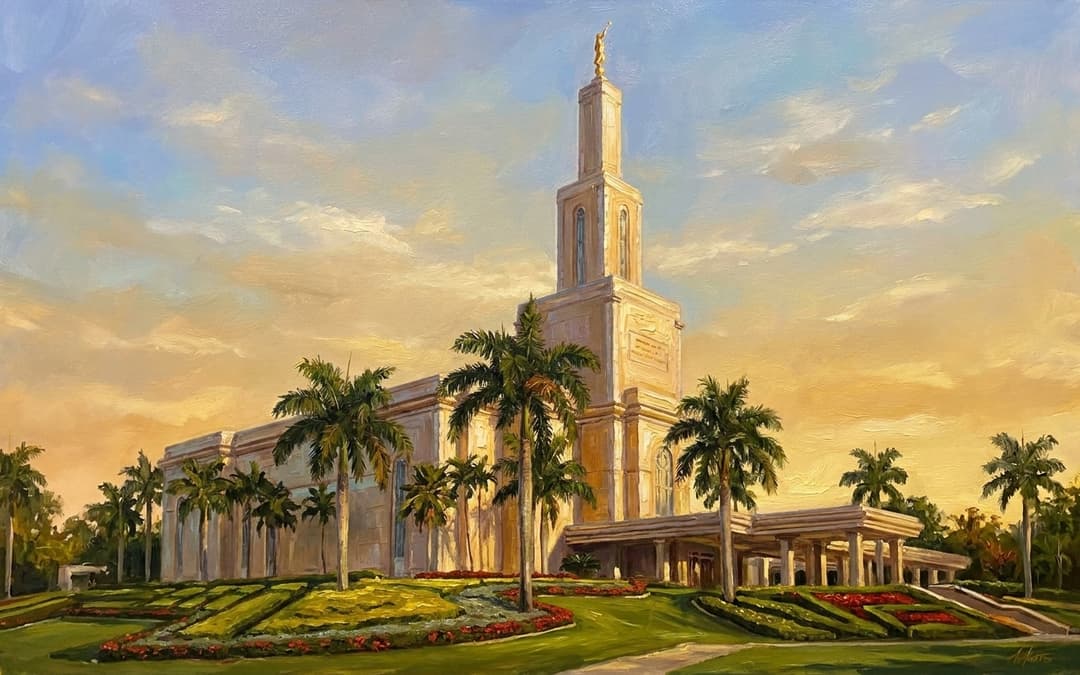
The Santo Domingo Dominican Republic Temple grounds offer a tranquil atmosphere surrounded by vibrant tropical gardens and classic modern architecture. Visitors can stroll the landscaped pathways and admire the polished white granite facade overlooking the Caribbean coastline.
Highlights
- Lush tropical landscaping with royal palms and bougainvillea
- Polished Regina White granite exterior brilliant under Caribbean sunlight
- Views toward the Caribbean Sea from the elevated avenue site
- On-site distribution store and arrival facility
Things to Know
- Interior admittance is reserved for endowed Church members holding valid temple recommends
- Modest attire is requested while enjoying the temple grounds
- Early morning or late afternoon visits provide comfortable temperatures and photogenic light
Location
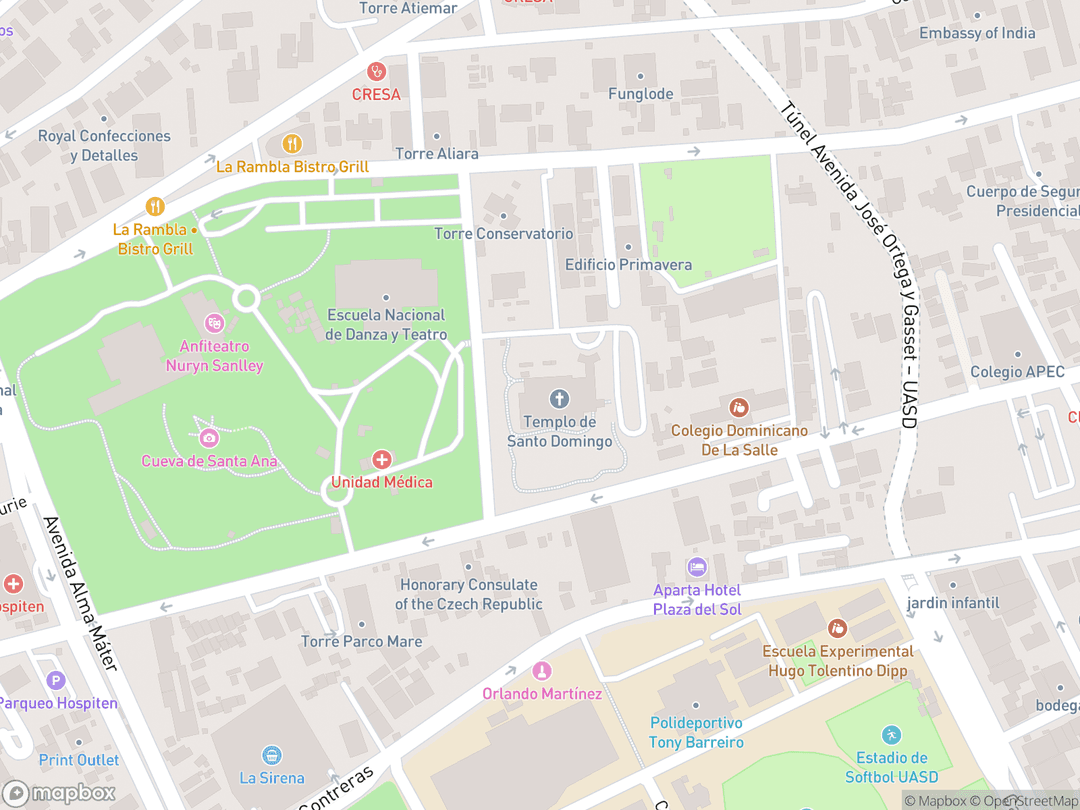
Avenida Bolívar #825, Los Robles, Santo Domingo 10106, Distrito Nacional, Dominican Republic
Hours: Grounds open daily during daylight hours. Temple services operate Tuesday through Saturday.
Getting There: Located at Avenida Bolívar #825 in Los Robles, near major civic landmarks like the Plaza de la Cultura, easily accessible via taxi or vehicle from downtown Santo Domingo.
Get DirectionsTips for Your Visit
Grounds Etiquette
Visitors are welcome to walk through the gardens and take exterior photos while maintaining a quiet, reverent tone.
Best Photography Times
Late afternoon sun illuminates the Regina White granite façade beautifully against the tropical blue sky.
About
The Santo Domingo Dominican Republic Temple stands as the 99th operating temple of The Church of Jesus Christ of Latter-day Saints and the first house of the Lord built in the Caribbean. Located along Avenida Bolívar in the capital city, the structure serves as a spiritual landmark for Latter-day Saints throughout Hispaniola and neighboring island nations.
In Christian theology, sacred structures continue the ancient Judeo-Christian tradition of designated holy spaces set apart for communion with God. While Latter-day Saint meetinghouses host Sunday worship services open to all, temples are reserved for sacred ordinances that link families eternally and deepen personal devotion to Jesus Christ through covenantal promises.
Dedicated in September 2000 by President Gordon B. Hinckley, the temple eliminated the daunting burden of international travel for thousands of Caribbean Saints. Its presence established Santo Domingo as an administrative and spiritual anchor for Latter-day Saint growth across the West Indies.
Gallery
Symbolic Elements
The temple's exterior features intricate carvings, each rich with spiritual meaning:

Holiness to the Lord Inscription
Engraved in Spanish above the entrance, this phrase marks the structure as consecrated unto God.

Angel Moroni Statue
The gold-leafed figure holding a trumpet symbolizes the restoration of Christ's eternal gospel.

Regina White Granite
Pristine white stone exterior panels symbolize spiritual purity and eternal longevity.

Baptismal Font on Twelve Oxen
Twelve oxen facing outward represent the twelve tribes of Israel spreading gospel covenants worldwide.

Celestial Room Design
Radiant chandeliers and cream interiors represent the ultimate glory and presence of God.

Mahogany Craftsmanship
Native hardwood details pay tribute to local Dominican heritage and craftsmanship.

Single Stepped Spire
The ascending tower draws the eyes upward, symbolizing humanity's spiritual connection to heaven.

Leaded Art Glass
Custom glass patterns filter bright Caribbean sunlight into calm, reverent interior light.
Interesting Facts
The Santo Domingo Temple was dedicated as the 99th operating Latter-day Saint temple worldwide. (Tier A)
It is historically recognized as the first temple constructed in the Caribbean region. (Tier A)
Contractors spent months breaking through subterranean coral rock during foundation excavation. (Tier B)
The temple complex features on-site patron housing to accommodate Saints traveling by air or ferry from other islands. (Tier A)
Its exterior is clad in polished Regina White granite imported specifically for its reflective brilliant sheen. (Tier B)
Following the 2010 Haitian earthquake, the temple grounds served as a vital humanitarian logistics hub. (Tier A)
The upper levels and spire afford a direct view corridor toward the Caribbean Sea coastline. (Tier B)
It served as the mother temple for over a dozen Caribbean island nations prior to regional expansion. (Tier A)
Common Questions
Can non-members enter the Santo Domingo Temple?
The surrounding grounds and gardens are open to everyone, while the interior is reserved for endowed Latter-day Saint members with valid temple recommends.
Why is this temple historically significant in the Caribbean?
It was the first Latter-day Saint temple constructed in the West Indies, earning its status as the mother temple of the Caribbean.
How does temple worship reflect Christian theology?
Latter-day Saint temples follow the biblical tradition of sacred spaces where covenants are made, focusing on Christ's atonement and eternal family relationships.
What materials were used in its construction?
The exterior features imported Regina White granite, while interior spaces showcase custom mahogany woodwork and polished marble.
Featured Stories
Overcoming Subterranean Coral
1996
During initial site excavation in 1996, construction crews encountered an unexpectedly dense layer of subterranean coral rock beneath the surface soil. Heavy machinery worked for months to break through the hard rock before foundation footings could be laid. The arduous effort demonstrated the builders' determination to establish a firm foundation for the house of the Lord.
Source: Church History Department
A Sacred Anchor in Times of Crisis
2010
Following the devastating earthquake that struck Haiti in January 2010, the Santo Domingo Temple complex transformed into an essential relief and logistics anchor. Relief workers used the facilities to coordinate vital medical and humanitarian supplies sent across the border to disaster victims. The sacred grounds offered both physical refuge and spiritual solace during a tragic regional crisis.
Source: Church News Briefs
A Century of Operating Temples Approaches
2000
When President Gordon B. Hinckley dedicated the Santo Domingo Temple on September 17, 2000, it became the 99th operating temple of the Church worldwide. Dedicated just two weeks before the landmark 100th temple in Boston, the ceremony marked a dramatic fulfillment of prophecy regarding global temple growth. Caribbean Saints celebrated having a permanent holy sanctuary in their home waters.
Source: Ensign Magazine
Timeline
Missionary Work Begins
Formal Latter-day Saint missionary work officially commences in the Dominican Republic.
MilestoneFirst Stake Organized
The first stake in the Dominican Republic is established in Santo Domingo.
MilestoneTemple Announced
President Gordon B. Hinckley announces the Santo Domingo Temple, the first in the Caribbean.
MilestoneGroundbreaking Ceremony
Elder Richard G. Scott presides at the site dedication and groundbreaking before 4,000 attendees.
component.timeline.groundbreakingAngel Moroni Installed
The gilded Angel Moroni statue is hoisted atop the single front tower.
EventPublic Open House Begins
Nearly 40,000 visitors tour the temple interior during a two-week open house.
EventTemple Dedicated
President Gordon B. Hinckley dedicates the temple in four spiritual sessions.
DedicationHumanitarian Relief Anchor
The complex serves as a critical support hub following the catastrophic Haitian earthquake.
EventHaiti Temple Consecrated
The Port-au-Prince Haiti Temple opens, expanding temple access in the region.
MilestoneSantiago Temple Announced
Church leaders announce a second Dominican temple to meet growing membership demands.
MilestoneHistory by Decade
1970s–1980s — Early Growth in Hispaniola
Formal Latter-day Saint missionary work began in the Dominican Republic in late 1978 under the Florida Fort Lauderdale Mission. The first converts were baptized in Santo Domingo, setting off dynamic membership growth across the country. By 1981, the first stake was organized in Santo Domingo. Within a decade, tens of thousands of Dominicans joined the Church, creating a vibrant network of congregations across major cities.
1990s — Announcement and Excavation Challenges
President Gordon B. Hinckley announced plans for the Santo Domingo Temple in November 1993, exciting members across the Caribbean who previously faced costly overseas travel to attend a temple. At the August 1996 groundbreaking, over 4,000 Saints gathered. Excavation teams encountered a dense layer of subterranean coral rock, requiring months of heavy mechanical breaking before concrete foundations could be poured.
2000s — Dedication as Caribbean Mother Temple
The public open house in late summer 2000 welcomed 39,520 visitors, including government and civic leaders. President Hinckley dedicated the sanctuary on September 17, 2000, as the Church's 99th operating temple. For nearly two decades, the temple served as the sole spiritual center for Latter-day Saints across Hispaniola, Puerto Rico, Jamaica, Trinidad and Tobago, and neighboring territories.
2010s–Present — Humanitarian Hub and Expansion
Following the devastating 2010 earthquake in Haiti, the Santo Domingo Temple complex functioned as a primary logistics center for Church humanitarian aid and relief operations across the border. With new temples operating in Haiti and Puerto Rico, and a second Dominican temple announced for Santiago in 2024, Santo Domingo remains honored as the mother temple of the West Indies.
Architecture & Facilities
Designed by the Scott Partnership in collaboration with Church A&E Services, the Santo Domingo Dominican Republic Temple exhibits a Classic Modern architectural style. The structure combines clean geometric symmetry, strong vertical lines, and an elevated single-spire tower clad entirely in brilliant imported Regina White granite, thoughtfully blending modern sacred architectural principles with tropical Caribbean aesthetics.
Building Materials
Exterior Cladding
Panels of polished imported Regina White granite reflect intense sunlight with a brilliant sheen.
Woodwork
High-grade local Dominican mahogany accents doors, cabinetry, and sacred altars.
Flooring
Polished light marble lines hallways with custom carpets featuring tropical wave motifs.
Art Glass
Leaded art glass windows diffuse bright tropical light into soft interior illumination.
Interior Features
Instruction Rooms
Four instruction rooms feature warm tones and mahogany trim for progressive endowment presentations.
Sealing Rooms
Four sealing rooms contain custom mirrors and altars for solemn family marriage ceremonies.
Baptistry
A ground-floor font rests upon twelve sculpted oxen representing the ancient tribes of Israel.
Celestial Room
A serene room finished in cream upholstery, gold leaf, and crystal chandeliers representing heavenly peace.
Temple Grounds
The 6.42-acre property features lush gardens filled with royal palms, vibrant bougainvillea, manicured lawns, and wide paved walkways.
Additional Facilities
The temple grounds host an on-site patron housing facility, an arrival center, and an official Distribution Services store.
Religious Significance
The Santo Domingo Dominican Republic Temple reflects the ancient Judeo-Christian tradition of establishing dedicated sanctuaries for divine worship. In Latter-day Saint theology, temples are distinct from weekly meetinghouses, serving as holy structures where members enter into solemn covenants with God.
The temple's primary purpose is to provide sacred priesthood ordinances that bind families for eternity and offer spiritual salvation to both living participants and deceased ancestors.
Sacred Ordinances
Baptism for the Dead
Vicarious baptisms performed in behalf of ancestors, extending gospel opportunities beyond mortality.
The Endowment
Sacred instruction and covenant-making focused on Jesus Christ and eternal spiritual progression.
Eternal Marriage and Sealing
Priesthood ordinances uniting husbands, wives, and children in eternal family relationships.
Christian Covenant Theology in the Caribbean
Rooted in biblical traditions of temple worship, the sanctuary stands as a testimony of Jesus Christ's global redemption, bringing holy covenants directly to island Saints in their native region.
Similar Temples
Sources & Research
Every fact on Temples.org is backed by verified Sources & Research. Each piece of information is rated by source tier and confidence level.
View All Sources (5)
| Field | Source | Tier | Retrieved |
|---|---|---|---|
| About & Historical Background | The Church of Jesus Christ of Latter-day Saints (opens in a new tab) | A | 2026-02-22 |
| Timeline & Key Events | Church Newsroom (opens in a new tab) | A | 2026-02-22 |
| Architecture & Structural Features | Church History Department (opens in a new tab) | A | 2026-02-22 |
| Symbolic Elements & Interior Design | The Church of Jesus Christ of Latter-day Saints (opens in a new tab) | A | 2026-02-22 |
| Visitor Insights & Location | ChurchofJesusChristTemples.org (opens in a new tab) | C | 2026-02-22 |