Visitor Insights
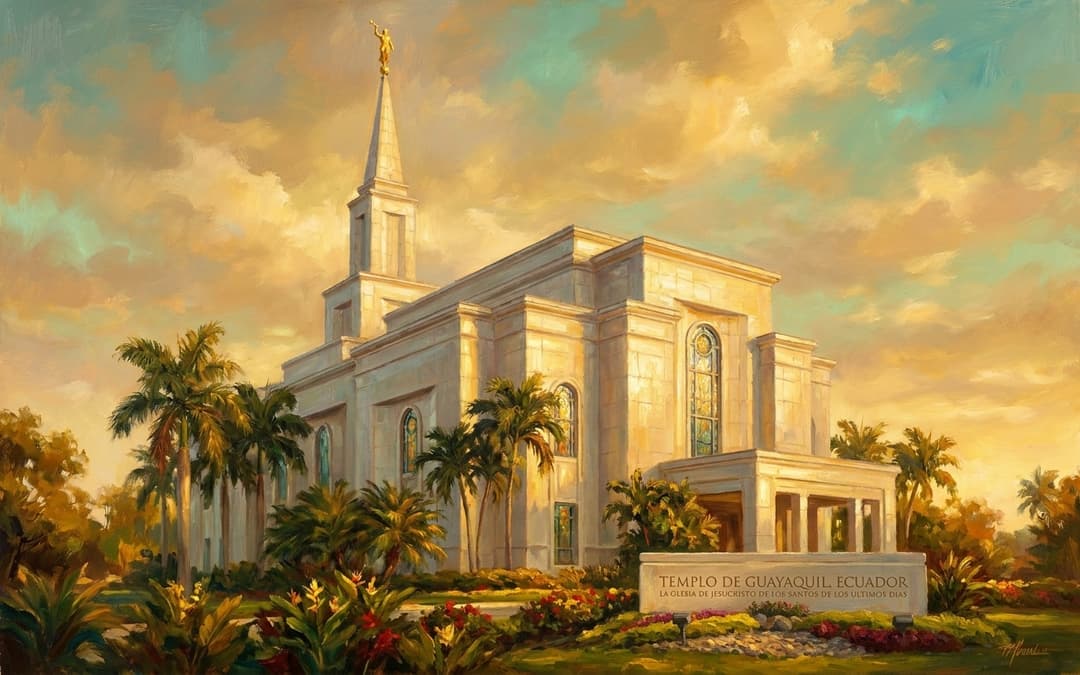
Visiting Guayaquil Ecuador Temple
The Guayaquil Ecuador Temple grounds are open to the public, offering a serene environment for quiet contemplation and enjoyment. While the interior is reserved for members with a temple recommend, the exterior beauty and peaceful atmosphere are accessible to all.
Highlights
- Enjoy the beautifully maintained temple grounds and gardens.
- An arrival center is available on site for general inquiries.
Things to Know
- The temple interior is not open for public tours after its dedication.
- Public open houses are rare events, typically held only before dedication.
Location
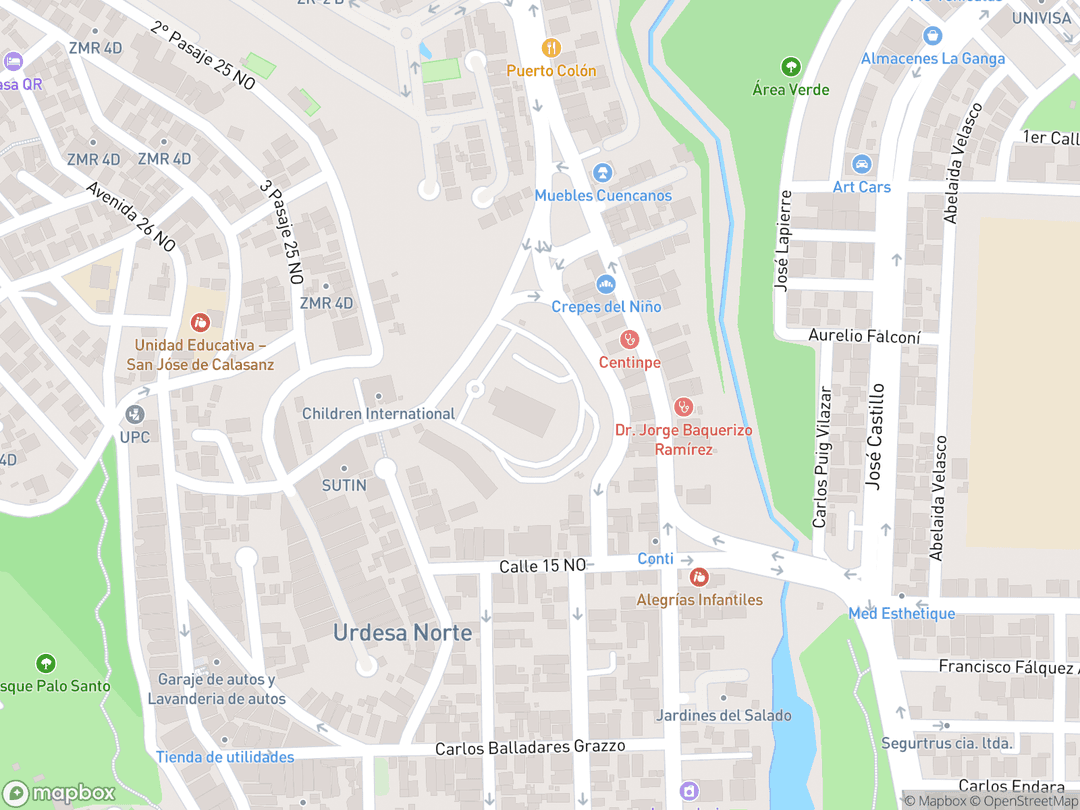
Calle Rosendo Maridueña 8845 Urdesa Norte 090510 Guayaquil Ecuador
Getting There: The temple is located in Urdesa Norte, a peaceful hillside setting in northern Guayaquil, accessible by local transportation.
Get DirectionsAbout
The Guayaquil Ecuador Temple is a sacred edifice of The Church of Jesus Christ of Latter-day Saints, dedicated to sacred ordinances and covenants. As part of the Christian theological grouping within Abrahamic traditions, Latter-day Saints believe in Jesus Christ as the Savior and Redeemer. This temple provides a place for members to deepen their relationship with God and strengthen family bonds for eternity.
Dedicated in 1999, the temple stands as a testament to the growth of the Church in Ecuador since missionaries first arrived in 1965. Its presence facilitates spiritual growth and provides a sanctuary for worship and reflection for thousands of Latter-day Saints in the region. The temple grounds are open to the public, offering a peaceful environment for all visitors.
Gallery
Symbolic Elements
The temple's exterior features intricate carvings, each rich with spiritual meaning:

Angel Moroni Statue
The statue of the Angel Moroni, atop the spire, symbolizes the restoration of the gospel and the Second Coming of Christ.

Single Spire
The temple's single attached end spire points heavenward, representing a connection between earth and divinity.

Asa Branca Granite
The exterior is crafted from Asa Branca granite, imported from Brazil, providing a bright and enduring appearance.

Celestial Room
The Celestial Room represents a return to God's presence, offering a space for prayer, meditation, and spiritual reflection.

Baptistry
The baptistry houses a font resting on twelve oxen, symbolizing the twelve tribes of Israel, used for baptisms for the dead.

Instruction Rooms
Instruction rooms are where members receive sacred teachings and make covenants, progressing through the temple's spiritual journey.

Sealing Rooms
Sealing rooms are used for eternal marriage and family sealing ordinances, uniting families beyond mortal life.

Hillside Setting
The temple's peaceful hillside location in northern Guayaquil offers a sense of elevation and separation from worldly concerns.
Interesting Facts
The Guayaquil Ecuador Temple was the first Latter-day Saint temple constructed in Ecuador.
The period between its announcement in 1982 and groundbreaking in 1996 spanned over 14 years, one of the longest delays for any temple.
Its announcement in 1982 was part of a larger announcement that included three other temples: Denver, Boise, and Taipei.
The groundbreaking ceremony on August 10, 1996, coincided with Ecuador's Independence Day.
The first day of the public open house, June 23, 1999, was also President Gordon B. Hinckley's 89th birthday.
Before dedication, members of a local stake walked 6 miles overnight to volunteer in cleaning the temple.
The selection of the temple site was considered a miraculous event, with President Gordon B. Hinckley recounting a distinct spiritual impression.
Indigenous Otavalan members, in their traditional attire, were among the first to attend ordinance sessions in the temple.
In 2016, a Spanish real estate marketing company estimated the temple's value to be approximately US$14,456,000.
Common Questions
What is the purpose of the Guayaquil Ecuador Temple?
The temple serves as a sacred house of worship where Latter-day Saints participate in ordinances and make covenants with God.
Can non-members enter the temple?
After dedication, the interior of the temple is reserved for members of The Church of Jesus Christ of Latter-day Saints who hold a valid temple recommend.
Are the temple grounds open to the public?
Yes, the beautiful temple grounds are open to the public for all to enjoy.
When was the Guayaquil Ecuador Temple dedicated?
The temple was dedicated on August 1, 1999, by President Gordon B. Hinckley.
What is the Angel Moroni statue's significance?
The Angel Moroni symbolizes the restoration of the gospel of Jesus Christ and the spreading of its message to the world.
Featured Stories
A Long-Awaited Blessing for Ecuador
1982-1999
The announcement of the Guayaquil Ecuador Temple in 1982 brought immense joy, though construction would not begin for over 14 years. This extended period tested the faith of local members, who eagerly anticipated a sacred edifice closer to home. Their patience and devotion were ultimately rewarded with a beautiful temple, a testament to their enduring commitment.
A Groundbreaking on Independence Day
August 10, 1996
The groundbreaking ceremony for the Guayaquil Ecuador Temple occurred on August 10, 1996, coinciding with Ecuador's Independence Day. This auspicious timing added a layer of national significance to the spiritual event, symbolizing a new era of religious freedom and growth for Latter-day Saints in the country. Elder Richard G. Scott presided, marking the official start of construction.
Community Devotion During Open House
June-July 1999
Before its dedication, the temple welcomed over 100,000 visitors during its public open house, including many non-members curious about the sacred building. A particularly touching act of devotion saw members of a local stake walk six miles overnight to arrive at 5 a.m. and volunteer to clean the temple, demonstrating their profound reverence and commitment to the sacred space.
Timeline
Missionaries Arrive in Ecuador
Latter-day Saint missionaries first entered Ecuador, with nine individuals baptized within the first month.
EventEcuador Mission Organized
The Ecuador Mission was officially organized, and Church membership reached 1,000 members.
MilestoneFirst Stake Organized in Guayaquil
The Ecuador Mission was divided, and the first stake in Ecuador was organized in Guayaquil, a significant organizational milestone.
MilestoneTemple Announced
Plans to construct the Guayaquil Ecuador Temple were announced by President Spencer W. Kimball.
component.timeline.announcementGroundbreaking Ceremony
A groundbreaking ceremony was held, marking the commencement of construction after a 14-year delay, presided over by Elder Richard G. Scott.
component.timeline.groundbreakingPublic Open House Begins
A public open house began, allowing approximately 108,000 visitors to tour the temple interior before its dedication.
EventTemple Dedicated
President Gordon B. Hinckley dedicated the Guayaquil Ecuador Temple in eight sessions, attended by approximately 11,700 members.
DedicationTemporary Closure Due to Pandemic
The Guayaquil Ecuador Temple was temporarily closed in response to the global coronavirus pandemic.
EventHistory by Decade
1960s — Early Missionary Efforts
The Church of Jesus Christ of Latter-day Saints began its formal presence in Ecuador in 1965 with the arrival of missionaries. Within the first month, nine individuals were baptized, marking the humble beginnings of a growing faith community in the nation. This decade laid the foundation for future expansion.
1970s — Organizational Growth
The 1970s saw significant organizational development for the Church in Ecuador. In 1970, the Ecuador Mission was officially organized, and membership quickly grew to 1,000. By 1978, the mission was divided, and the first stake (a local administrative unit) in Ecuador was organized in Guayaquil, reflecting the increasing number of Latter-day Saints.
1980s — Temple Announcement
A pivotal moment occurred on March 31, 1982, when President Spencer W. Kimball announced plans to construct the Guayaquil Ecuador Temple. This announcement brought great anticipation, though the actual groundbreaking would not take place for over a decade, making it one of the longest delays in temple construction history.
1990s — Construction and Dedication
Construction finally began with a groundbreaking ceremony on August 10, 1996, presided over by Elder Richard G. Scott. After years of work, a public open house was held from June 23 to July 17, 1999, attracting approximately 108,000 visitors. The temple was then dedicated by President Gordon B. Hinckley on August 1-2, 1999, becoming a spiritual landmark for Ecuador.
2020s — Global Challenges
In 2020, like many other temples worldwide, the Guayaquil Ecuador Temple temporarily closed its doors in response to the global coronavirus pandemic. This period highlighted the Church's commitment to public health while continuing to serve its members through adapted worship and spiritual guidance.
Architecture & Facilities
The Guayaquil Ecuador Temple is characterized by a classic modern architectural style, embodying both timeless elegance and contemporary design principles. Its design emphasizes clean lines, geometric forms, and a dignified presence, reflecting the sacred purpose of the edifice. The use of imported granite contributes to its bright and enduring appearance, harmonizing with the local environment while standing as a distinct spiritual beacon.
Building Materials
Exterior
The exterior is clad in Asa Branca granite, imported from Brazil, known for its light color and durability.
Interior
The interior features fine woods, stone, and decorative finishes, creating an atmosphere of reverence and peace.
Windows
Stained-glass windows adorn the temple, depicting local flora and fauna, adding vibrant color and natural light.
Roof
The roof is constructed with durable materials designed to withstand the local climate while complementing the overall aesthetic.
Interior Features
Celestial Room
The Celestial Room is a serene space symbolizing eternal progression and a return to God's presence, adorned with elegant furnishings.
Baptistry
The baptistry features a baptismal font resting on twelve oxen, used for proxy baptisms for the deceased.
Instruction Rooms
Four instruction rooms are designed for sacred teachings and covenant-making, each providing a reverent learning environment.
Sealing Rooms
Three sealing rooms facilitate eternal marriage and family sealing ordinances, uniting families for eternity.
Temple Grounds
The temple is situated on a beautifully landscaped 6.25-acre property in a peaceful hillside setting in northern Guayaquil, featuring lush gardens, pathways, and serene seating areas for public enjoyment and contemplation.
Additional Facilities
The temple property includes temple housing for patrons traveling from a distance and a distribution center on site for the purchase of temple garments and clothing.
Religious Significance
For Latter-day Saints, temples are considered the most sacred places of worship on earth, distinct from regular chapels. They are dedicated as Houses of the Lord, where members can draw closer to God and participate in ordinances that have eternal significance.
The core spiritual purpose of the Guayaquil Ecuador Temple is to provide a sacred space for members to make and keep covenants with God, receive divine instruction, and perform saving ordinances for both the living and the dead.
Sacred Ordinances
Baptism for the Dead
Members perform proxy baptisms on behalf of their deceased ancestors, offering them the opportunity to accept the gospel in the spirit world.
Endowment
The endowment is a series of sacred instructions and covenants that provide spiritual power, knowledge, and blessings for eternal progression.
Sealing
Sealing ordinances unite families eternally, allowing husbands and wives, and parents and children, to be bound together beyond mortal life.
Eternal Families
A central doctrine of The Church of Jesus Christ of Latter-day Saints is the belief in eternal families, made possible through sacred temple ordinances that bind loved ones together forever.
Covenants and Blessings
Temple worship involves making sacred covenants with God, promising obedience and devotion in exchange for divine blessings and guidance throughout life and into eternity.
Similar Temples
Sources & Research
Every fact on Temples.org is backed by verified Sources & Research. Each piece of information is rated by source tier and confidence level.
View All Sources (6)
| Field | Source | Tier | Retrieved |
|---|---|---|---|
| About & Historical Background | The Church of Jesus Christ of Latter-day Saints (opens in a new tab) | A | 2024-07-30 |
| Dedication & Status | ChurchofJesusChristTemples.org (opens in a new tab) | C | 2024-07-30 |
| Historical Timeline & Groundbreaking | The Church News (opens in a new tab) | B | 2024-07-30 |
| Early Church Growth in Ecuador | PhotoGent (opens in a new tab) | B | 2024-07-30 |
| Mission Organization & Stake Formation | Mission.net (opens in a new tab) | B | 2024-07-30 |
| Architectural Details & Open House | eShikshya.org (opens in a new tab) | B | 2024-07-30 |