Visitor Insights
Visiting Quito Ecuador Temple
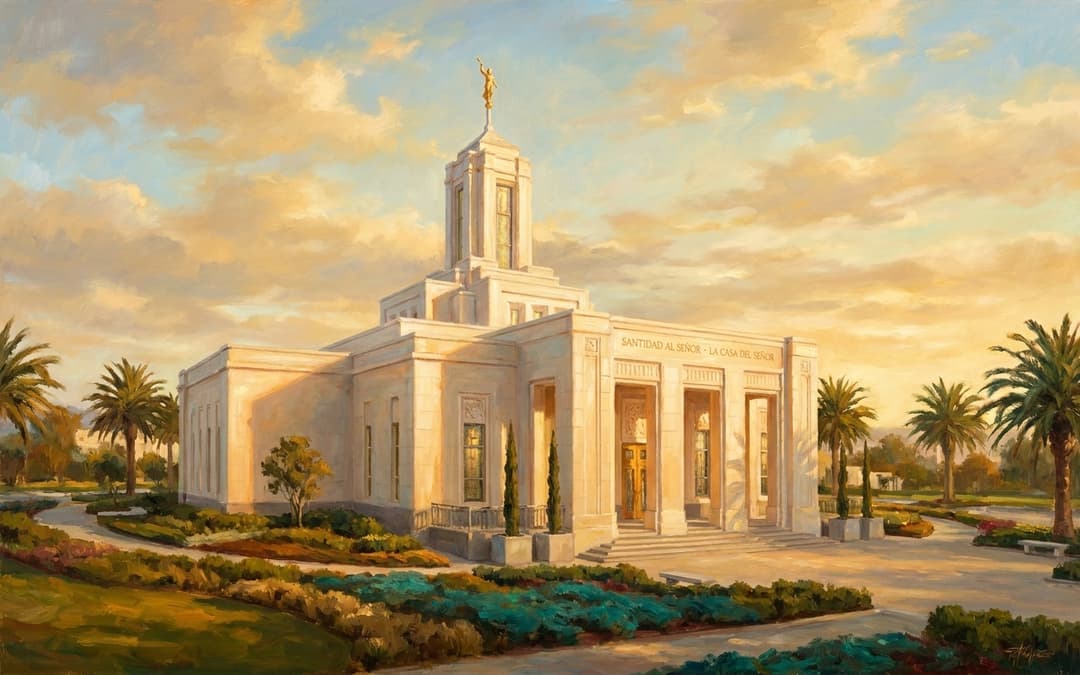
Situated in the temperate Cumbayá Valley east of Quito, the temple complex features manicured gardens, native Andean flora, and peaceful water fountains. The publicly accessible grounds offer breathtaking mountain views and serene pathways for contemplation.
Highlights
- Lush Andean botanical landscaping featuring royal palms and native flowering shrubs
- Brilliant exterior facade of White Turkish Limestone against the Andean backdrop
- L-shaped patron housing facility built to accommodate traveling mountain Saints
- Central water fountain and stone plazas offering peaceful quietude
Things to Know
- Interior access requires an active temple recommend for Church members
- Cumbayá sits at 7,400 feet elevation, milder than central Quito's 9,350 feet
- Afternoon rain showers are frequent during the wet season from October to May
Location
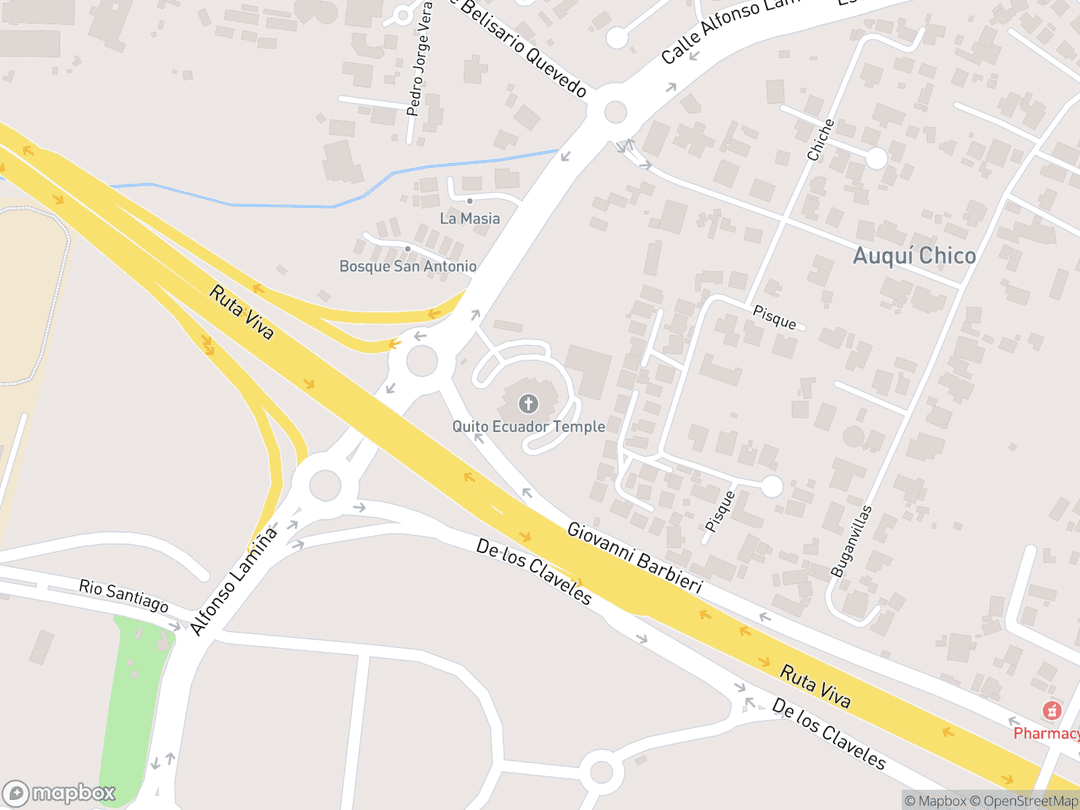
Ruta Escalón Lumbisí y Ruta Viva, Cumbayá, Quito, Pichincha, Ecuador
Hours: Grounds open daily to the public during daytime hours.
Getting There: Located along Ruta Viva in Cumbayá, approximately 20 minutes from central Quito and Mariscal Sucre International Airport.
Get DirectionsTips for Your Visit
Best Time for Photography
Visit late in the afternoon to capture golden sunlight reflecting off the white limestone facade against the dark mountain ridges.
Altitude Adjustment
While Cumbayá is warmer and lower than central Quito, remember to stay hydrated and take easy strolls around the gardens.
About
Dedicated in 2022, the Quito Ecuador Temple stands as the 175th operating temple of The Church of Jesus Christ of Latter-day Saints and the second built in Ecuador. Nestled in the Cumbayá Valley east of the capital, this holy edifice serves tens of thousands of Latter-day Saints living across the high-altitude Andean region and surrounding valleys.
Rooted in the ancient biblical tradition of sacred sanctuaries as divine dwelling places, the temple provides a consecrated space where believers enter into sacred covenants. Within these holy walls, members participate in eternal marriage sealings and sacred priesthood ordinances that bind families across generations.
The temple transforms spiritual life for Andean Saints who previously faced grueling multi-hour journeys across mountain passes to reach the coast. Its presence offers a physical beacon of Christ's love, high-altitude sanctuary, and spiritual peace in equatorial Ecuador.
Gallery
Symbolic Elements
The temple's exterior features intricate carvings, each rich with spiritual meaning:

Angel Moroni Statue
Crowns the single central tower as a herald of the restoration and Christ's Second Coming.

Geranium Motif
Incorporates local flora into custom carpets, art glass, and woodwork to reflect beauty blooming in Andean elevations.

Baptismal Font on 12 Oxen
Modeled after the Molten Sea in Solomon's Temple, representing the Twelve Tribes of Israel carrying the gospel worldwide.
Holiness to the Lord Inscription
Engraved in Spanish above the entrance arch, designating the building as a consecrated sanctuary dedicated to Jesus Christ.

Celestial Room Chandelier
Refracts light into thousands of crystalline points, representing celestial glory, divine light, and heavenly peace.

White Limestone Facade
Symbolizes purity, spiritual righteousness, and a beacon of hope shining across the valley.

Central Tower and Spire
Draws the eyes of observers upward, symbolizing humanity's spiritual aspiration toward the heavens.
Interesting Facts
The temple was dedicated on the exact same day as the Belém Brazil Temple, marking the first double dedication in over two decades. (Tier A)
Prior to the temple's opening, Ecuador was the nation with the highest Church population served by only one temple. (Tier A)
Located in the Cumbayá Valley at 7,400 feet, the site offers a much milder climate than central Quito's 9,350 feet elevation. (Tier B)
More than 50,000 visitors toured the structure during its public open house in October 2022. (Tier A)
The temple reduced travel times for northern Indigenous Quichua Saints from a 13-hour overnight bus trip to less than two hours. (Tier A)
Custom interior carpets and woodwork showcase the geranium, a blossom iconic to historic Quito's balconies. (Tier A)
The exterior facade is made of White Turkish Limestone engineered for high UV resistance and seismic safety. (Tier A)
An L-shaped patron housing facility was constructed on site to accommodate members traveling long distances. (Tier A)
Common Questions
Who can enter the Quito Ecuador Temple?
The surrounding grounds are open to all visitors, while interior access is reserved for Latter-day Saints with an active temple recommend.
Why was the temple constructed in Cumbayá instead of downtown Quito?
Cumbayá offers a milder climate, ample space for patron housing, and accessible highway routes from both Quito and the international airport.
What floral design is highlighted inside the temple?
The local geranium flower is woven into custom hand-tufted carpets, wood carvings, art glass, and decorative interior metalwork.
How large is the Quito Ecuador Temple complex?
The temple spans 36,780 square feet on a 3.96-acre site that includes an L-shaped patron housing facility.
Featured Stories
A Historic Same-Day Double Dedication
November 20, 2022
When Elder Quentin L. Cook dedicated the Quito Ecuador Temple on November 20, 2022, the event coincided with the dedication of the Belém Brazil Temple across the continent. This historic occasion marked the first time in over twenty years that two Latter-day Saint temples were dedicated on the exact same calendar day. The simultaneous dedications highlighted the remarkable growth of the faith across South America.
Source: Church News & Official Dedication Records
Transforming the Pilgrimage of Highland Saints
2022
For over two decades following the dedication of Ecuador's first temple in Guayaquil, highland members from Quito and Otavalo endured exhausting 13-hour overnight bus journeys to participate in temple worship. The completion of the Quito temple transformed this arduous journey into a comfortable travel time of under two hours. Indigenous Quichua Saints were deeply emotional as they gathered in their own mountain valley to make sacred eternal covenants.
Source: LDS Living & Area Church Historical Records
Welcoming 50,000 Guests in Cumbayá
October 2022
During the two-week open house prior to dedication, over 50,000 visitors toured the sacred interior, including national government officials, local civic leaders, and religious representatives. Ecuadorian Interior Minister Dr. María Paula Romo had previously attended the groundbreaking, reflecting broad civic respect for the project. Community members praised the sanctuary's architectural elegance and the serene beauty of its public gardens.
Source: Church News Open House Coverage
Timeline
Missionaries Arrive
The first Latter-day Saint proselytizing missionaries arrive in Quito, initiating church work in Ecuador.
First Branch Established
Missionaries organize the first congregation meeting in Otavalo, expanding outreach to highland Indigenous communities.
First Stake Formed
The Quito Ecuador Stake is organized as local membership expands rapidly across the mountain capital basin.
Guayaquil Temple Dedicated
President Gordon B. Hinckley dedicates Ecuador's first temple in coastal Guayaquil, requiring mountain Saints to travel 13 hours.
Temple Announced
President Thomas S. Monson announces the Quito Ecuador Temple during General Conference.
Exterior Rendering Released
The official architectural design showing Neoclassical Spanish Colonial Revival elements is presented.
Groundbreaking Ceremony
Elder Enrique R. Falabella presides over the groundbreaking ceremony attended by over 800 people.
Public Open House Begins
A two-week public open house begins, welcoming over 50,000 community visitors and government dignitaries.
Temple Dedicated
Elder Quentin L. Cook dedicates the temple across three sessions on the same day as the Belém Brazil Temple.
Otavalo Temple Announced
The First Presidency announces a third temple in Otavalo to further serve northern highland Saints.
History by Decade
1960s — Arrival of Missionaries & First Converts
Proselytizing efforts in Ecuador began in October 1965 when the first missionaries arrived in Quito. By March 1966, work expanded north into Otavalo, leading to the baptism of the first highland converts and the establishment of vibrant local branches.
1970s–1980s — Rapid Andean Expansion
Church growth expanded rapidly across the high-altitude capital basin, leading to the organization of the first Quito stake in 1979. The Otavalo Ecuador Stake followed in 1981, establishing a strong spiritual center among Indigenous Quichua Latter-day Saints.
1990s — Coastal Temple & Highland Burden
The dedication of the Guayaquil Ecuador Temple in 1999 provided the nation's first temple on the Pacific coast. However, mountain Saints in Quito and Imbabura still faced long 270-mile journeys over mountain passes to attend services.
2000s–2010s — Announcement & Groundbreaking
With Ecuador's membership exceeding 230,000, President Thomas S. Monson announced the Quito temple in April 2016. Elder Enrique R. Falabella presided over a joyous groundbreaking ceremony in Cumbayá on May 11, 2019.
2020s — Open House & Dedication
Despite global pandemic adjustments, construction concluded successfully in 2022. Following an open house that welcomed 50,000 guests, Elder Quentin L. Cook dedicated the temple on November 20, 2022, as the Church's 175th operating sanctuary.
Architecture & Facilities
The Quito Ecuador Temple exhibits a Neoclassical Spanish Colonial Revival architectural design. Its symmetrical massing, clean vertical lines, and central entrance tower harmonize classic Latter-day Saint temple design with traditional Spanish Andean motifs. The edifice rises to a height of 97 feet topped by a gold-leafed spire and statue of the angel Moroni.
Building Materials
Exterior Cladding
White Turkish Limestone selected for its high UV reflectance, exceptional durability, and striking light contrast.
Structural System
Reinforced concrete foundations with heavy steel framing built to resist high mountain seismic forces.
Exterior Windows
Custom art glass featuring geometric and floral motifs that filter ambient high-altitude equatorial sunlight.
Interior Trim
Deep carved hardwood trim and polished stone elements celebrating local craftsmanship and traditional elegance.
Interior Features
Celestial Room
Features custom hand-tufted wool carpets in cream tones and a brilliant crystal chandelier symbolizing heavenly peace.
Ordinance Rooms
Equipped with custom art glass panels, carved wooden altars, and subtle gold-leaf trim for quiet worship.
Sealing Rooms
Adorned with custom floral glass and plush seating, focused on eternal marriage and family unity.
Baptistry
Houses a baptismal font resting on twelve bronze oxen modeled after the biblical Molten Sea in Solomon's Temple.
Temple Grounds
Spanning 3.96 elevated acres in Cumbayá, the grounds feature royal palms, manicured lawns, native flowering shrubs, stone plazas, and a central water fountain.
Additional Facilities
Includes an L-shaped patron housing complex and arrival facility directly across from the main entrance to accommodate long-distance travelers.
Religious Significance
In harmony with Abrahamic and broad Christian traditions, Latter-day Saints regard the temple as a consecrated House of the Lord (Domus Dei). Unlike weekly meetinghouses used for congregational worship, the temple is set apart as a sacred sanctuary where believers commune directly with God and participate in eternal priesthood ordinances.
To provide a holy space where Church members enter into sacred covenants with God, receive higher spiritual endowments, and unite families eternally through priesthood authority.
Sacred Ordinances
Baptisms for Ancestors
Vicarious baptisms performed by youth and adult members on behalf of deceased ancestors, reflecting the universal scope of Christ's redemption.
Temple Endowment
A sacred ceremony where members receive instruction about God's plan of salvation and make personal covenants of obedience and devotion.
Eternal Marriage Sealings
Sacred marriage ceremonies uniting husbands, wives, and families for time and all eternity under divine priesthood authority.
The Sanctuary in Andean Theology
For Ecuadorian Latter-day Saints, the Quito temple serves as a physical witness of God's covenant promises, bringing eternal ordinances to high-altitude communities.
Vicarious Service & Universal Redemption
Through proxy ordinances, believers express selfless Christian love by extending salvation covenants to previous generations who passed without those opportunities.
Similar Temples
Sources & Research
Every fact on Temples.org is backed by verified Sources & Research. Each piece of information is rated by source tier and confidence level.
View All Sources (4)
| Field | Source | Tier | Retrieved |
|---|---|---|---|
| Architecture & Interior Design | ChurchofJesusChristTemples.org (opens in a new tab) | C | 2026-02-22 |
| About & Open House | LDS Living (opens in a new tab) | B | 2026-02-22 |
| Religious Significance & Ordinances | The Church of Jesus Christ of Latter-day Saints (opens in a new tab) | A | 2026-02-22 |
| Symbolic Elements & Interior Artistry | ChurchofJesusChristTemples.org (opens in a new tab) | C | 2026-02-22 |