Visitor Insights
Visiting The Hague Netherlands Temple
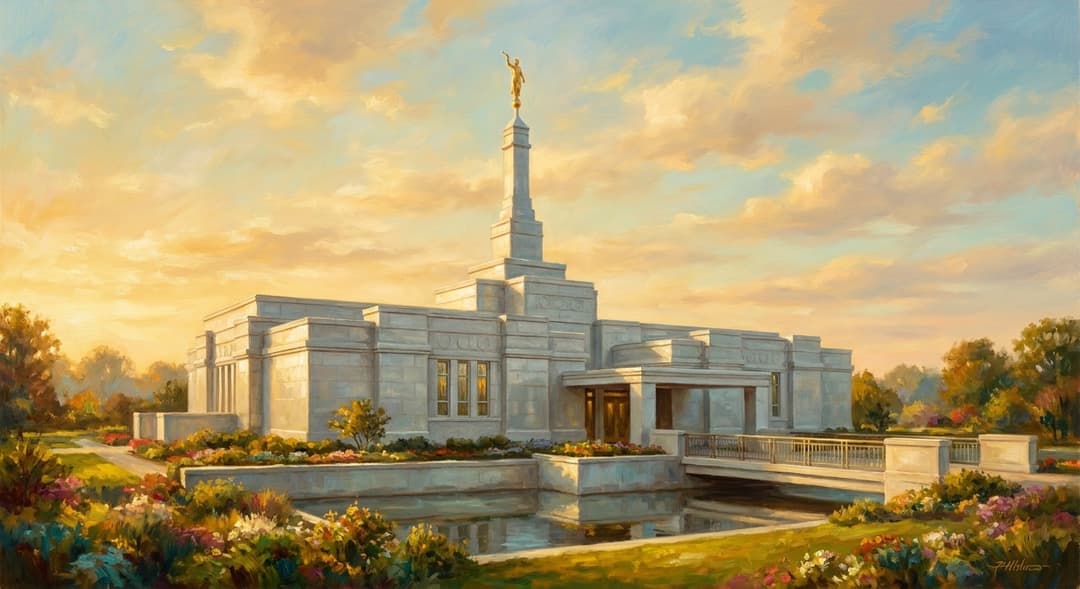
Visitors to The Hague Netherlands Temple can explore beautifully landscaped public gardens featuring native Dutch flowers, manicured hedges, and a reflective water basin. While interior access is reserved for Church members holding a temple recommend, all guests are welcome to enjoy the serene perimeter grounds.
Highlights
- Reflective water pool with a pedestrian entrance bridge inspired by Dutch polder design.
- Lush floral gardens and peaceful perimeter walking paths open to all visitors.
- Polished grey granite exterior topped by a gold-leafed Angel Moroni spire.
Things to Know
- Interior access requires an active temple recommend from The Church of Jesus Christ of Latter-day Saints.
- Located in Zoetermeer, accessible via RandstadRail line 3 or 4 from Den Haag Centraal.
- Gardens are open during daylight hours; Sunday temple ordinance operations are closed.
Location
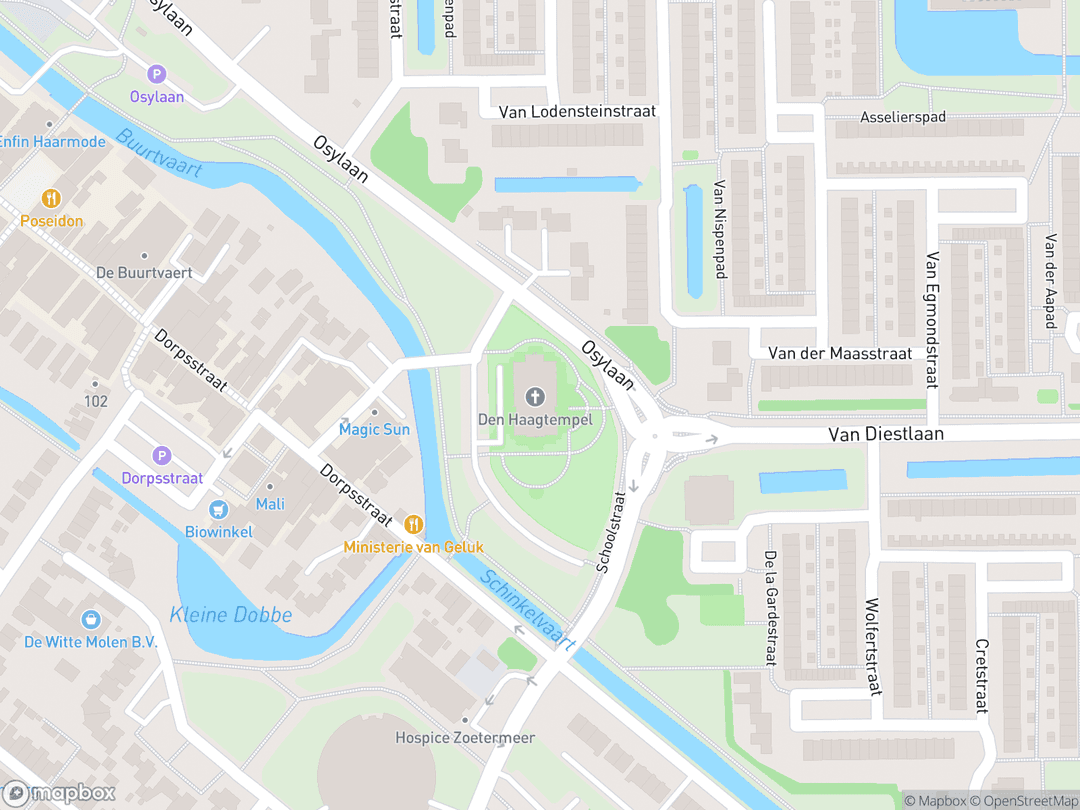
Osylaan 2, 2712 GJ Zoetermeer, Netherlands
Hours: Tuesday–Saturday session hours vary; gardens open daily during daylight.
Getting There: Take RandstadRail line 3 or 4 to Dorpsstraat or Palenstein stop in Zoetermeer; by car, exit A12 motorway toward Zoetermeer Centrum.
Get DirectionsTips for Your Visit
Public Garden Access
The exterior grounds and reflective pool are freely accessible to visitors of all faiths for quiet reflection.
Transit Convenience
The temple is an easy 10-minute walk from the RandstadRail Palenstein station.
About
The Hague Netherlands Temple stands as a sacred sanctuary of peace, divine devotion, and eternal covenants for Latter-day Saints across the Netherlands, Belgium, and Luxembourg. Located in the municipality of Zoetermeer within the Greater Hague metropolitan area, it is the 114th operating temple of The Church of Jesus Christ of Latter-day Saints worldwide and the first built in the Low Countries.
Rooted in the broader Christian tradition of set-apart holy spaces, the temple functions as a House of the Lord where believers draw closer to Jesus Christ through sacred ordinances. Dedicated by President Gordon B. Hinckley on September 8, 2002, the edifice embodies the rich spiritual heritage of Dutch Saints, from 19th-century missionary roots to post-war acts of Christian reconciliation.
Gallery
Symbolic Elements
The temple's exterior features intricate carvings, each rich with spiritual meaning:

Angel Moroni Statue
The gold-leafed statue atop the spire symbolizes the restoration of the everlasting gospel.

Polder Reflection Basin Bridge
The pedestrian bridge over water represents leaving secular life to step onto consecrated ground.

Sub-Sea Level Foundation Pilings
Deep subterranean steel and concrete pilings represent establishing faith on an immovable foundation.

Celestial Room Crystal Chandelier
Imported Austrian crystal casts brilliant multi-hued light symbolizing celestial glory and purity.

Baptismal Font on Twelve Oxen
Twelve sculpted oxen supporting the font mirror Solomon's Temple and symbolize the twelve tribes of Israel.

Polished Grey Granite Cladding
High-grade granite panels reflect light while emphasizing enduring strength and timeless reverence.
European Cherrywood Artistry
Polished cherrywood woodwork throughout the interior reflects fine European craftsmanship dedicated to God.
Interesting Facts
The Hague Netherlands Temple sits four meters below sea level on reclaimed Dutch polder land. (Tier B)
Deep heavy concrete and steel pilings anchor the foundation into subterranean sand beds. (Tier A)
Designed by Dutch architect Albert van Eerde, who was not a Latter-day Saint. (Tier B)
Local Zoetermeer authorities granted a special zoning code exemption for the sacred building. (Tier B)
Dutch Saints in 1947 shipped 70 tons of welfare potatoes to aid starving German families after WWII. (Tier A)
Dedicatory prayers for rain were immediately followed by gentle rainfall across the region in 2002. (Tier A)
Instruction rooms feature built-in hardware offering translation in Dutch, French, and English. (Tier A)
A pedestrian bridge over a water basin symbolizes passing from the secular world into sacred space. (Tier B)
Common Questions
Why is the temple located in Zoetermeer instead of The Hague?
Zoetermeer is part of the Greater Hague metropolitan area and provided a suitable site with favorable local municipal approvals.
Is the temple open to the general public?
The surrounding floral gardens and grounds are open to everyone, while interior access is reserved for Church members holding a temple recommend.
How does the temple handle multiple languages in the Low Countries?
Instruction rooms feature multi-channel audio systems providing simultaneous translation in Dutch, French, English, and other languages.
What engineering challenge was caused by building below sea level?
Engineers drove heavy concrete and steel pilings deep into subsoil sand strata to anchor the structure in waterlogged peat land.
Featured Stories
The Dutch Potato Project of 1947
1947
In the aftermath of World War II, Dutch Latter-day Saints cultivated large crops of potatoes on local land to relieve hunger. Demonstrating remarkable Christian forgiveness, Dutch members shipped over 70 tons of their harvest to starving Saints in post-war Germany. This legacy of reconciliation laid a spiritual foundation that culminated decades later in the dedication of their own temple.
Source: Church History Department
An Architect's Spiritual Reflection
2002
Non-member Dutch architect Albert van Eerde was selected by HBG Construction to design the temple. Working closely with Church leaders, van Eerde noted that designing the sacred edifice was 'more than just a job.' He later shared that entering the completed Celestial Room brought an undeniable sense of heavenly peace and tranquility.
Source: Local Architectural Records
Answered Dedicatory Prayer for Rain
September 8, 2002
During the temple's dedication weekend in September 2002, President Gordon B. Hinckley included a prayer for relief from a regional drought affecting Dutch farmland. Moments after the conclusion of the final dedicatory session, gentle rain began falling over Zoetermeer and the surrounding countryside. Local Saints received the moisture as a gracious blessing accompanying the new house of the Lord.
Source: Church News Dedication Report
Timeline
First Apostolic Visit
Apostle Orson Hyde visits Rotterdam and publishes the first Dutch LDS text. (Tier A)
MilestoneFirst Missionaries Arrive
Anne van der Woude and Paul Schettler arrive in Rotterdam to begin formal preaching. (Tier A)
MilestoneFirst Convert Baptisms
The first three Dutch converts are baptized near Broeksterwâld in Friesland. (Tier A)
MilestoneNetherlands Mission Formed
The Netherlands Mission is formally organized under President Joseph Weiler. (Tier A)
MilestoneDutch Book of Mormon
The Book of Mormon is translated into Dutch and presented to the Dutch royal family. (Tier B)
MilestoneDutch Potato Project
Dutch Saints ship 70 tons of potatoes to starving German members after WWII. (Tier A)
EventFirst Continental Stake
The Holland Stake is organized in Rotterdam as the first stake in continental Europe. (Tier A)
MilestoneTemple Announced
President Gordon B. Hinckley officially announces plans for a temple in the Netherlands. (Tier A)
MilestoneGroundbreaking
Elder John K. Carmack presides over the groundbreaking ceremony in Zoetermeer. (Tier A)
component.timeline.groundbreakingPublic Open House
Over 32,000 visitors tour the completed temple during a two-week open house. (Tier A)
EventTemple Dedication
President Gordon B. Hinckley dedicates the edifice in four sessions. (Tier A)
DedicationHistory by Decade
1840s–1860s — Early Missionary Endeavors
Apostle Orson Hyde visited Rotterdam in 1841 while traveling to Jerusalem, authoring the first Dutch-language Church pamphlet. Formal missionary work began twenty years later in 1861, leading to the first convert baptisms in Friesland and the establishment of the Netherlands Mission in 1864.
1890s–1940s — Deepening Roots and Post-War Sacrifice
The Book of Mormon was translated into Dutch in 1890, and Church leaders encouraged members to remain in Holland to strengthen local stakes. Following WWII in 1947, Dutch Saints sent 70 tons of welfare potatoes to aid German families, exemplifying deep Christian charity.
1950s–1990s — The European Temple Era
For decades after the 1955 dedication of the Bern Switzerland Temple, Dutch Saints made long journeys across national borders for temple worship. In 1961, the Holland Stake was organized as continental Europe's first stake, preparing the way for President Hinckley's 1999 temple announcement.
2000s–Present — Dedication and Modern Operations
Groundbreaking took place in August 2000, requiring complex sub-sea engineering in Zoetermeer. Dedicated on September 8, 2002, by President Gordon B. Hinckley, the temple continues to serve over 9,000 Saints across the Low Countries.
Architecture & Facilities
The Hague Netherlands Temple exhibits a Classic Modern, single-spire architectural aesthetic tailored to harmonize with the residential and municipal scale of Zoetermeer. Its clean horizontal geometric lines are balanced by a prominent vertical spire clad in light grey granite, reflecting contemporary European design adapted for sacred Latter-day Saint worship.
Building Materials
Exterior Cladding
Polished light grey granite panels clad the outer walls to provide weather resistance in maritime climates.
Foundation Anchors
Heavy concrete and steel pilings extend deep into subterranean sand beds to secure the building below sea level.
Art Glass Windows
Leaded art glass panels contain understated geometric patterns that filter soft daylight into corridors.
Interior Woodwork
Rich European cherrywood lines the doors, trim, and wall paneling throughout the interior spaces.
Interior Features
Celestial Room
Features off-white upholstered furnishings illuminated by a grand Austrian Strauss crystal chandelier.
Endowment Rooms
Two progressive instruction rooms equipped with multi-channel audio systems for multi-language translation.
Sealing Rooms
Two intimate sealing rooms with sacred altars dedicated to solemnizing eternal family marriage covenants.
Baptistry
A cast-metal baptismal font supported by twelve sculpted oxen facing outward in symbolic formation.
Temple Grounds
The 2.7-acre grounds feature manicured hedges, native flower gardens, mature trees, and a central rectangular reflection basin crossed by a pedestrian bridge.
Additional Facilities
An on-site arrival facility and patron parking area serve visiting members from across the Low Countries.
Religious Significance
Within the Christian restorationist doctrine of The Church of Jesus Christ of Latter-day Saints, temples are holy sanctuaries distinct from meetinghouses. Rooted in biblical traditions of holy places, the temple is consecrated as a House of the Lord where Christ's spirit is felt and eternal covenants are solemnized.
To provide a consecrated sanctuary for sacred ordinances including eternal marriage sealings, proxy baptisms, and the endowment.
Sacred Ordinances
Baptism for the Dead
Proxy baptisms performed in behalf of deceased ancestors, offering them the choice to accept gospel covenants.
The Endowment
A sacred ceremonial instruction presenting the plan of salvation and personal covenants of obedience and holiness.
Eternal Marriage Sealings
Priesthood ordinances uniting husbands, wives, and families for time and all eternity.
A Refuge for the Low Countries
As the first temple built in the Low Countries, the structure eliminates the need for long international travel to Switzerland or Germany, enabling Saints in Holland, Belgium, and Luxembourg to engage regularly in holy worship.
Similar Temples
Sources & Research
Every fact on Temples.org is backed by verified Sources & Research. Each piece of information is rated by source tier and confidence level.
View All Sources (8)
| Field | Source | Tier | Retrieved |
|---|---|---|---|
| About & Historical Background | The Church of Jesus Christ of Latter-day Saints (opens in a new tab) | A | 2026-02-18 |
| Timeline & History | The Church of Jesus Christ of Latter-day Saints (opens in a new tab) | A | 2026-02-18 |
| Historical Records & Potato Project | Church History Department (opens in a new tab) | A | 2026-02-18 |
| Dedication Coverage | Church News (opens in a new tab) | B | 2026-02-18 |
| Architecture & Engineering | HBG Construction / van Eerde Architects (opens in a new tab) | B | 2026-02-18 |
| Municipal Zoning & Location | Municipality of Zoetermeer (opens in a new tab) | B | 2026-02-18 |
| Religious Significance & Context | European Religious Studies Record (opens in a new tab) | B | 2026-02-18 |
| Temple Data & Directory | ChurchofJesusChristTemples.org (opens in a new tab) | C | 2026-02-18 |