Visitor Insights
Visiting Temple of Edfu
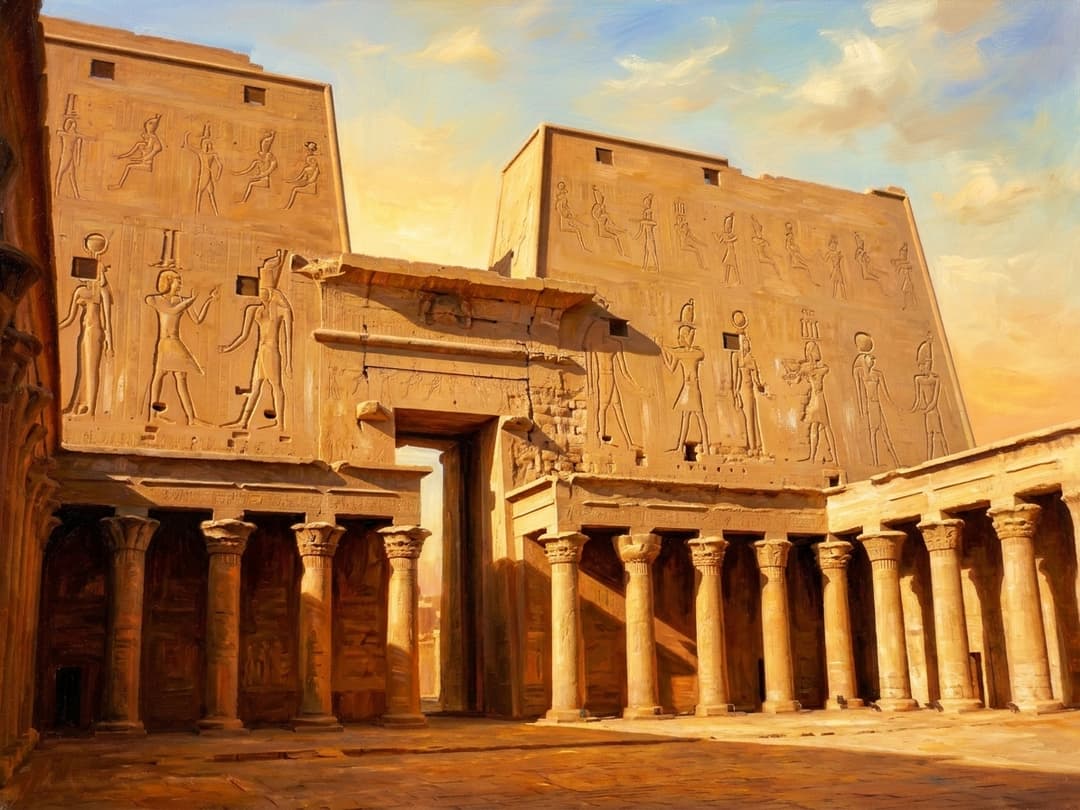
Visiting the Temple of Edfu offers a captivating journey into ancient Egyptian history and architecture. As you approach the temple, the towering pylons adorned with intricate carvings immediately command attention. Inside, the atmosphere is filled with a sense of reverence and wonder, as you explore the well-preserved halls, courtyards, and sanctuaries. Be prepared to be transported back in time as you wander through this remarkable testament to ancient Egyptian civilization.
Highlights
- Marvel at the towering pylons and intricate hieroglyphic inscriptions.
- Explore the well-preserved halls, courtyards, and sanctuaries.
- Learn about the mythical battle between Horus and Seth.
Things to Know
- Wear comfortable shoes for walking on uneven surfaces.
- Bring water to stay hydrated in the Egyptian heat.
- Consider hiring a guide to fully understand the temple's history and significance.
Location
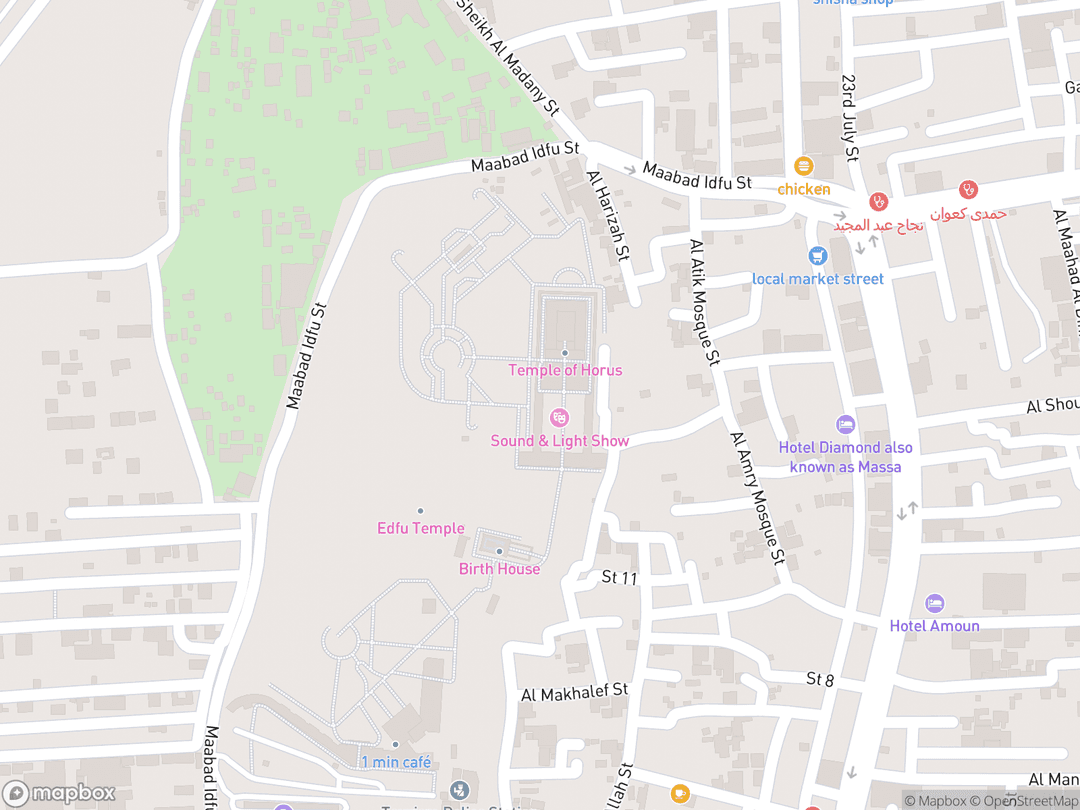
Adfo, Edfo, Aswan Governorate 1291237, Egypt
Hours: Open daily from early morning until late afternoon; exact hours may vary between winter and summer seasons.
Getting There: Most visitors reach Edfu Temple as part of Nile cruise itineraries traveling between Luxor and Aswan. Traditional horse-drawn carriages, modern tuk-tuks, and air-conditioned vehicles provide transportation from the dock to the temple entrance.
Get DirectionsTips for Your Visit
Hire a Guide
A guided tour is highly recommended to fully understand the symbolism, rituals, and history behind the carvings and architecture of Edfu.
Dress Respectfully
As a religious site, it's advisable to dress modestly. Lightweight, breathable clothing is recommended due to the heat.
About
The Temple of Edfu, located on the west bank of the Nile in Edfu, Upper Egypt, stands as one of the best-preserved ancient temples in the country. Dedicated primarily to Horus, the falcon-headed god of kingship and protection, the temple embodies the grandeur of Ptolemaic architecture and the enduring legacy of ancient Egyptian religious practices. Its construction spanned approximately 180 years, from 237 BC to 57 BC, under the rule of several Ptolemaic kings.
The temple's significance extends beyond its architectural marvel. It is believed to be built on the site of the mythical battle between Horus and Seth, where Horus avenged the murder of his father, Osiris. The walls of the temple are adorned with intricate hieroglyphic inscriptions, known as the Edfu Texts, which provide invaluable insights into the language, myth, and religious beliefs of the Hellenistic period in Egypt. These texts also narrate the story of the beginning of the world and the triumph of land over primeval water.
Today, the Temple of Edfu attracts visitors from around the globe, drawn to its well-preserved structure and rich historical and religious significance. As the second-largest temple in Egypt, after Karnak, it offers a profound glimpse into the religious beliefs and architectural prowess of the ancient Egyptians, reflecting the determination of the Macedonian dynasty to establish legitimacy through monumental architecture.
Gallery
Symbolic Elements
The temple's exterior features intricate carvings, each rich with spiritual meaning:

Pylons
The massive pylons at the entrance of the Temple of Edfu stand 36 meters high and are adorned with scenes of the king presenting offerings to Horus and Ptolemy XII conquering his enemies. These pylons served as a monumental gateway, symbolizing the power and authority of the pharaoh and the gods.
Falcon Statues
Two large granite statues of Horus as a falcon stand before the pylons, representing the god's protective presence and divine power. The falcon was a sacred animal associated with Horus, symbolizing kingship, protection, and victory over enemies.
Hieroglyphic Inscriptions
The walls of the Temple of Edfu are covered with intricate hieroglyphic inscriptions, known as the Edfu Texts, which provide invaluable insights into the language, myth, and religion of the Hellenistic period in Egypt. These inscriptions narrate the story of the beginning of the world and the triumph of land over primeval water.
Barque Sanctuary
The barque sanctuary, located in the inner part of the temple, housed the sacred barque or boat used to transport the statue of Horus during religious processions. This sanctuary was surrounded by nine chapels, each dedicated to different deities and purposes.
Hypostyle Hall Columns
The hypostyle hall contains towering columns adorned with intricate carvings and reliefs, creating a majestic and awe-inspiring space. These columns symbolize the strength and stability of the temple and the connection between the earthly and divine realms.
Sandstone Construction
The Temple of Edfu is constructed primarily of sandstone, a durable and readily available material in the region. The use of sandstone reflects the architectural ingenuity of the ancient Egyptians and their ability to create monumental structures that have withstood the test of time.
Courtyard Colonnades
The vast open courtyard behind the pylons is flanked by colonnades, providing a space for gatherings and processions. The colonnades create a sense of grandeur and symmetry, enhancing the overall architectural harmony of the temple.
Naos of Nectanebo II
The inner sanctuary houses a naos of Nectanebo II, a relic from an earlier building. This naos is a testament to the temple's long history and the continuity of religious practices in the region.
Interesting Facts
The Temple of Edfu is one of the best-preserved ancient temples in Egypt.
It is the second-largest temple in Egypt, after Karnak.
The temple was buried under layers of settlement debris for millennia, which contributed to its preservation.
The inscriptions on the walls provide important information on language, myth, and religion during the Hellenistic period in Egypt.
The Edfu Texts are considered to be some of the most important sources for the Ptolemaic period.
The temple reflects the determination of the Macedonian dynasty to establish legitimacy through monumental architecture.
The annual Feast of Victory celebrated Horus's divine justice and reinforced the pharaoh's divine right to rule.
The temple's iconography reinforces the divine protection offered by Horus and the triumph of good over evil.
The temple was constructed over 180 years, from 237 BC to 57 BC.
The town of Edfu was renamed Apollonopolis Magna during Greco-Roman rule in Egypt.
Common Questions
What is the Temple of Edfu dedicated to?
The Temple of Edfu is primarily dedicated to Horus, the falcon-headed god of kingship and protection in ancient Egyptian religion. It also honors Hathor and Harsomtus.
How well-preserved is the Temple of Edfu?
The Temple of Edfu is one of the best-preserved ancient temples in Egypt. Its relatively complete state is attributed to being buried under layers of settlement debris for millennia, which protected it from the elements and human interference.
What are the Edfu Texts?
The Edfu Texts are the hieroglyphic inscriptions that cover the walls of the Temple of Edfu. They provide important information on the language, myth, and religion during the Hellenistic period in Egypt and are considered some of the most important sources for the Ptolemaic period.
How can visitors reach the Temple of Edfu?
Most visitors reach Edfu Temple as part of Nile cruise itineraries traveling between Luxor and Aswan. Riverboats typically dock at the town's small harbor, and transportation to the temple entrance is available via traditional horse-drawn carriages, modern tuk-tuks, and air-conditioned vehicles.
What is the significance of the mythical battle between Horus and Seth?
The Temple of Edfu is believed to be built on the site of the mythical battle between Horus and Seth, where Horus avenged the murder of his father, Osiris. This battle symbolizes the triumph of good over evil and the restoration of order in the world.
Featured Stories
The Mythical Battle of Horus and Seth
Ancient Times
The Temple of Edfu is believed to be built on the site of the mythical battle between Horus and Seth, a pivotal event in ancient Egyptian mythology. According to the legend, Seth murdered Horus's father, Osiris, plunging the land into chaos and darkness. Horus, the falcon-headed god, rose to avenge his father's death and reclaim his rightful place as the ruler of Egypt.
The battle between Horus and Seth was a fierce and protracted struggle, filled with magic, trickery, and physical combat. It symbolized the eternal conflict between good and evil, order and chaos. The temple's location at Edfu was chosen to commemorate Horus's ultimate victory over Seth, marking the triumph of light over darkness and the restoration of harmony to the world.
The inscriptions and reliefs within the Temple of Edfu depict scenes from this epic battle, showcasing Horus's courage, strength, and divine power. These images served to reinforce the pharaoh's divine right to rule and the importance of upholding justice and order in the kingdom. The story of Horus and Seth continues to resonate with visitors today, reminding them of the enduring power of hope and the ultimate triumph of good over evil.
The Sacred Marriage of Horus and Hathor
Annual Festival
The Temple of Edfu was the center of several festivals sacred to Horus, including his ritual marriage with the goddess Hathor. Each year, Hathor journeyed south from her temple at Dendera to visit Horus at Edfu, celebrating their sacred union. This event was a time of great celebration and religious significance, symbolizing fertility, renewal, and the harmonious balance of the cosmos.
The journey of Hathor from Dendera to Edfu was a grand procession, with priests, musicians, and dancers accompanying the goddess's statue along the Nile. Upon arrival at Edfu, Hathor was greeted with joyous festivities, including feasting, music, and ritual performances. The marriage ceremony itself was a sacred and symbolic act, uniting the divine couple and ensuring the prosperity and well-being of Egypt.
The Temple of Edfu's architecture and decorations reflect the importance of this sacred marriage, with numerous depictions of Horus and Hathor embracing and celebrating their union. The annual festival served to reinforce the pharaoh's divine authority and the interconnectedness of the gods, the land, and the people of Egypt. The memory of this ancient ritual continues to inspire awe and reverence among visitors to the Temple of Edfu.
The Discovery and Excavation of the Temple
1860
For centuries, the Temple of Edfu lay buried beneath layers of desert sands and river silt, its existence largely forgotten. It was not until 1798 that a French expedition identified the upper reaches of the temple pylons, sparking renewed interest in the site. However, it was the French Egyptologist Auguste Mariette who undertook the monumental task of excavating the temple in 1860.
Mariette and his team worked tirelessly to uncover the temple, revealing its remarkably well-preserved structure and intricate decorations. The excavation process was a challenging and arduous undertaking, requiring the removal of vast quantities of sand and silt. However, the results were nothing short of spectacular, as the Temple of Edfu emerged from the depths of history to reclaim its place as one of Egypt's most iconic monuments.
The discovery and excavation of the Temple of Edfu had a profound impact on the field of Egyptology, providing invaluable insights into the architecture, religion, and culture of ancient Egypt. The temple's well-preserved state allowed scholars to study its inscriptions and decorations in detail, shedding new light on the Ptolemaic period and the enduring legacy of ancient Egyptian civilization. Today, the Temple of Edfu stands as a testament to the dedication and perseverance of those who worked to uncover its hidden treasures.
Timeline
Early Structure
It is believed that the original structure on the site was a simple grass hut housing a statue of Horus.
MilestoneEarlier Pylon
A smaller pylon dating to the reign of Ramesses II existed at a 90-degree angle to the current structure.
MilestoneConstruction Begins
Construction of the current temple began under Ptolemy III Euergetes, including a pillared hall, two transverse halls, and a barque sanctuary with surrounding chapels.
component.timeline.groundbreakingConstruction Completed
Construction was completed under Ptolemy XII Auletes, marking the end of approximately 180 years of building.
DedicationTemple Abandoned
Following the banning of paganism in the Roman Empire by Emperor Theodosius, the temple was abandoned.
EventPylons Identified
The upper reaches of the temple pylons were identified by a French expedition.
MilestoneExcavation Begins
French Egyptologist Auguste Mariette began excavating the temple from beneath the desert sands and river silt.
RenovationSacred Marriage
Each year, Hathor journeyed south from her temple at Dendera to visit Horus at Edfu, celebrating their sacred marriage.
EventTown Renamed
The town of Edfu was renamed Apollonopolis Magna during Greco-Roman rule in Egypt.
EventEdfu Texts
The Edfu Texts are considered to be some of the most important sources for understanding the Ptolemaic period.
MilestoneMythical Battle
The temple is believed to be built on the site of the mythical battle between Horus and Seth, where Horus avenged the murder of his father, Osiris.
EventDeity Dedication
The temple is dedicated to Horus, the falcon-headed god of kingship and protection.
DedicationTemple Construction
The temple reflects the determination of the Macedonian dynasty to honor traditional Egyptian religious practices while incorporating Greek artistic influences.
MilestoneFeast of Victory
The annual Feast of Victory celebrated Horus's divine justice and reinforced the pharaoh's divine right to rule.
EventIconography
The temple's iconography reinforces the divine protection offered by Horus and the triumph of good over evil.
MilestoneSimilar Temples
Sources & Research
Every fact on Temples.org is backed by verified Sources & Research. Each piece of information is rated by source tier and confidence level.
View All Sources (11)
| Field | Source | Tier | Retrieved |
|---|---|---|---|
| Visitor Information | Visit Egypt (opens in a new tab) | D | 2024-08-29 |
| Visitor Information | Ruins and Remnants (opens in a new tab) | D | 2024-08-29 |
| Architectural Description | Imperial Egypt (opens in a new tab) | D | 2024-08-29 |
| Historical Timeline | Nile Cruisen (opens in a new tab) | D | 2024-08-29 |
| Historical Timeline | Egypt Uncovered (opens in a new tab) | C | 2024-08-29 |
| Visitor Information | Egypt Tours Plus (opens in a new tab) | D | 2024-08-29 |
| Architectural Description | Egyptian Monuments (opens in a new tab) | A | 2024-08-29 |
| Visitor Information | 360 Excursions (opens in a new tab) | D | 2024-08-29 |
| Religious Significance | Egyptian Museum (opens in a new tab) | D | 2024-08-29 |
| Historical Timeline | Ancient Origins Tours (opens in a new tab) | D | 2024-08-29 |
| Interesting Facts | iEgypt Travels (opens in a new tab) | D | 2024-08-29 |