Visitor Insights
Visiting Karnak Temple Complex
Visiting the Karnak Temple Complex is an awe-inspiring experience, offering a profound connection to ancient Egyptian history and religious practices. As you wander through the vast complex, you'll be surrounded by towering columns, colossal statues, and intricate carvings that narrate the stories of pharaohs and gods. Be prepared for a sensory journey through time, where the scale of the structures and the artistry of the hieroglyphs evoke a sense of wonder and reverence.
Highlights
- Explore the Great Hypostyle Hall with its massive columns.
- Marvel at the towering obelisk of Hatshepsut.
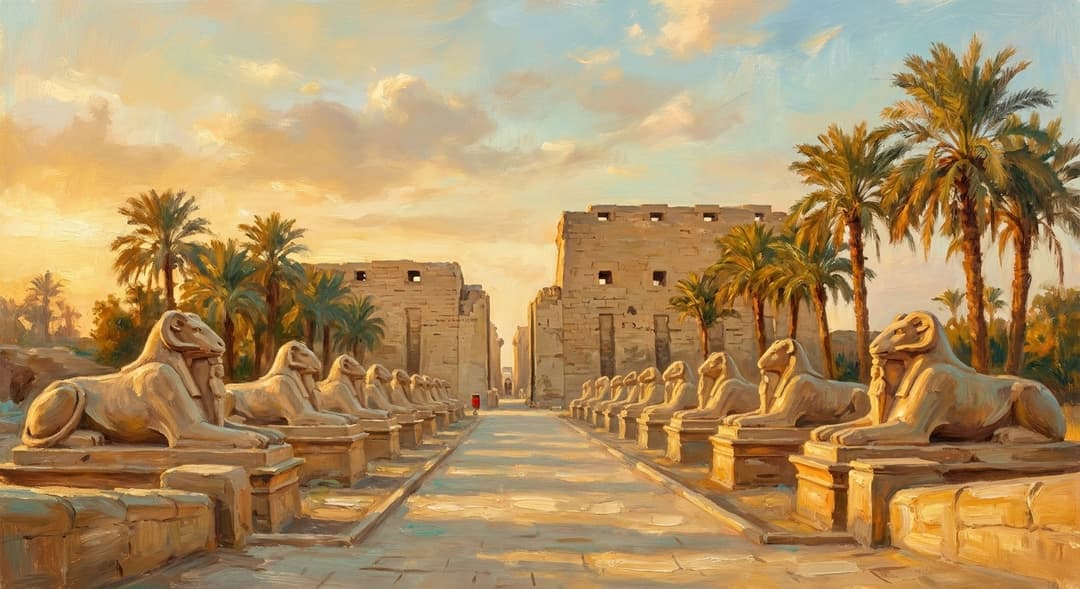
- Walk along the Avenue of Sphinxes.
Things to Know
- Wear comfortable shoes as there is a lot of walking involved.
- Bring water and sunscreen, especially during the hot summer months.
- Consider hiring a guide to fully appreciate the history and significance of the site.
Location
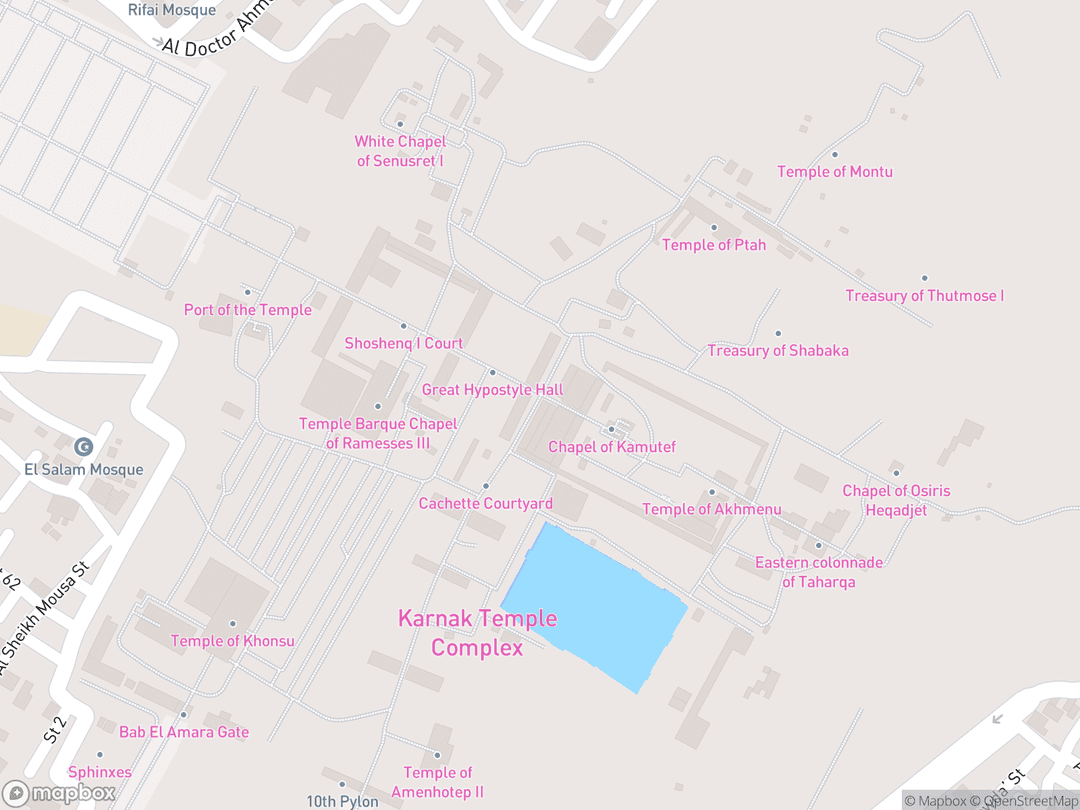
El-Karnak, Luxor Governorate, Egypt
Hours: Open daily. Summer: 6:00 AM to 6:30 PM. Winter: 6:00 AM to 5:30 PM.
Getting There: Easily reached on foot or via public transport from Luxor. It is a 15-minute drive from Luxor's International Airport.
Get DirectionsTips for Your Visit
Best Time to Visit
Visit early morning or late afternoon to avoid heat and crowds.
Sound and Light Show
Attend the Sound and Light Show held three times a night in multiple languages.
About
The Karnak Temple Complex, located near Luxor, Egypt, is an extraordinary testament to ancient Egyptian religious architecture. More than just a single temple, Karnak is a sprawling interconnected complex of temples, sanctuaries, pylons, and ceremonial spaces dedicated primarily to the Theban Triad: Amun-Re, Mut, and Khonsu. Construction at Karnak began around 2055 BC during the Middle Kingdom and continued for nearly 2,000 years, with numerous pharaohs contributing to its grandeur.
The complex is renowned for its colossal scale and intricate details, showcasing the evolution of Egyptian religious beliefs and architectural styles over centuries. The Great Hypostyle Hall, with its towering columns, is one of the most iconic structures within Karnak, demonstrating the advanced engineering and artistic skills of the ancient Egyptians. Obelisks, pylons adorned with elaborate carvings, and the sacred lake further enhance the spiritual and historical significance of the site.
Today, Karnak stands as an open-air museum, offering visitors a glimpse into the religious practices and cultural achievements of ancient Egypt. Despite its ruinous state, the complex continues to inspire awe and wonder, attracting tourists and scholars from around the world who seek to understand the legacy of this remarkable sacred site. Thebes, including Karnak, was designated a UNESCO World Heritage Site in 1979, ensuring its preservation for future generations.
Gallery
Symbolic Elements
The temple's exterior features intricate carvings, each rich with spiritual meaning:

Amun-Re
Amun-Re was the primary deity worshipped at Karnak, considered the king of the gods and god of the sun. He was often associated with the ram and was a central figure in the Theban Triad. The ram-headed sphinxes symbolize Amun-Re's power and protection.

Mut
Mut, the wife of Amun, was also a significant deity at Karnak. She is symbolically portrayed as a vulture, representing her role as a mother goddess and protector. Her precinct within Karnak was an important center of worship.
Khonsu
Khonsu, the son of Amun and Mut, completed the Theban Triad. He was the god of the moon and was believed to have healing powers. His temple within Karnak reflects his importance in the ancient Egyptian pantheon.

Obelisks
The pointed shape of the obelisks symbolized the sun's rays and the pharaoh's connection to the sun god Ra, representing divine power and eternal life. The obelisk of Hatshepsut is one of the tallest surviving ancient obelisks, standing at 29 meters.
Sacred Lake
The Sacred Lake symbolized the primordial waters from which all life emerged. It was used for ritual purification and represented the cyclical nature of life and rebirth. Priests would use the lake for cleansing rituals and sacred ceremonies.
Great Hypostyle Hall Columns
The massive columns in the Great Hypostyle Hall represent the papyrus plants, symbolizing creation and fertility. The columns were originally plastered and painted with vibrant colors, depicting scenes of religious significance and royal power.

Pylons
The pylons, or massive gates, served as monumental entrances to the temple complex. They were adorned with elaborate carvings and hieroglyphs, showcasing the power and authority of the pharaohs and the gods. The pylons marked the transition from the secular world to the sacred space within the temple.
Ram-Headed Sphinxes
The ram-headed sphinxes lining the Avenue of Sphinxes symbolize Amun-Re, the chief deity of Karnak. These sphinxes served as guardians of the temple, representing divine protection and royal authority. They guided visitors towards the sacred precinct.
Interesting Facts
Karnak is the largest religious complex ever built.
The Great Hypostyle Hall covers more than 54,000 square feet.
Over 80,000 priests, workers, and attendants served Amun-Ra.
More than 5,000 statues once stood inside the complex.
Parts of the temple are aligned with astronomical events like the winter solstice.
The Karnak Temple was known as 'The Most Select of Places' by ancient Egyptians.
The area of the sacred enclosure of Amun alone is sixty-one acres and could hold ten average European cathedrals.
The Great Hypostyle Hall is large enough to fit the Cathedral of Notre Dame comfortably.
Common Questions
What is the Karnak Temple Complex?
The Karnak Temple Complex is a vast complex of ancient Egyptian temples, chapels, pylons, and other buildings located near Luxor, Egypt. It is one of the largest religious structures ever built and was dedicated primarily to the Theban Triad: Amun-Re, Mut, and Khonsu.
When was Karnak built?
Construction at Karnak began around 2055 BC during the Middle Kingdom and continued for nearly 2,000 years, with numerous pharaohs contributing to its expansion and grandeur.
What is the Great Hypostyle Hall?
The Great Hypostyle Hall is one of the most impressive structures within Karnak, featuring 134 massive columns. The central 12 columns are approximately 69 feet (21 meters) high, while the other 122 columns are approximately 40 feet tall. The hall covers 54,000 square feet.
What were the main deities worshipped at Karnak?
The main deities worshipped at Karnak were Amun-Re, Mut, and Khonsu, known as the Theban Triad. Amun-Re was the primary deity, considered the king of the gods and god of the sun.
How do I get to Karnak Temple?
Karnak Temple is easily reached on foot or via public transport from Luxor. It is approximately a 15-minute drive from Luxor's International Airport.
Timeline
Construction Begins
Construction of the Karnak Temple Complex begins during the early Middle Kingdom.
MilestoneSenusret I's Construction
Senusret I begins construction of the Temple of Amun.
MilestoneNew Kingdom Expansion
Thebes becomes Egypt's capital, leading to significant expansions of Karnak during the New Kingdom.
MilestoneHatshepsut's Reign
Major contributions are made by pharaoh Hatshepsut, including the construction of obelisks.
MilestoneAmenhotep III's Construction
Construction of the main hypostyle hall begins under Amenhotep III.
MilestoneSeti I's Construction
King Seti I continues construction of the Great Hypostyle Hall.
MilestoneRamses II's Completion
Ramses II completes the Great Hypostyle Hall.
MilestoneThutmose III builds the Akh-menu temple
Thutmose III builds the Akh-menu temple.
MilestoneThe kiosk of Taharqa is constructed
The kiosk of Taharqa is constructed in the First Courtyard.
MilestonePtolemaic Kingdom Construction
Construction continues into the Ptolemaic period.
MilestoneConstantine's Recognition
Roman Emperor Constantine the Great recognizes Christianity.
MilestoneClosure of Pagan Temples
Constantius II orders the closing of pagan temples, and Karnak is mostly abandoned.
MilestoneRestoration Work
Restoration work is done to the Great Hypostyle Hall.
RenovationColumn Collapse
The Wichita Daily Eagle reports that nine of the massive columns in the Hypostyle Hall of the Temple of Karnak had fallen.
EventUNESCO World Heritage Site
Thebes, including Karnak, is designated a UNESCO World Heritage Site.
MilestoneSimilar Temples
Sources & Research
Every fact on Temples.org is backed by verified Sources & Research. Each piece of information is rated by source tier and confidence level.
View All Sources (2)
| Field | Source | Tier | Retrieved |
|---|---|---|---|
| About & Historical Background | Luxor and Aswan Travel (opens in a new tab) | D | 2024-02-29 |
| Interesting Facts | Memphis Tours (opens in a new tab) | D | 2024-02-29 |