Visitor Insights
Visiting Luxor Temple
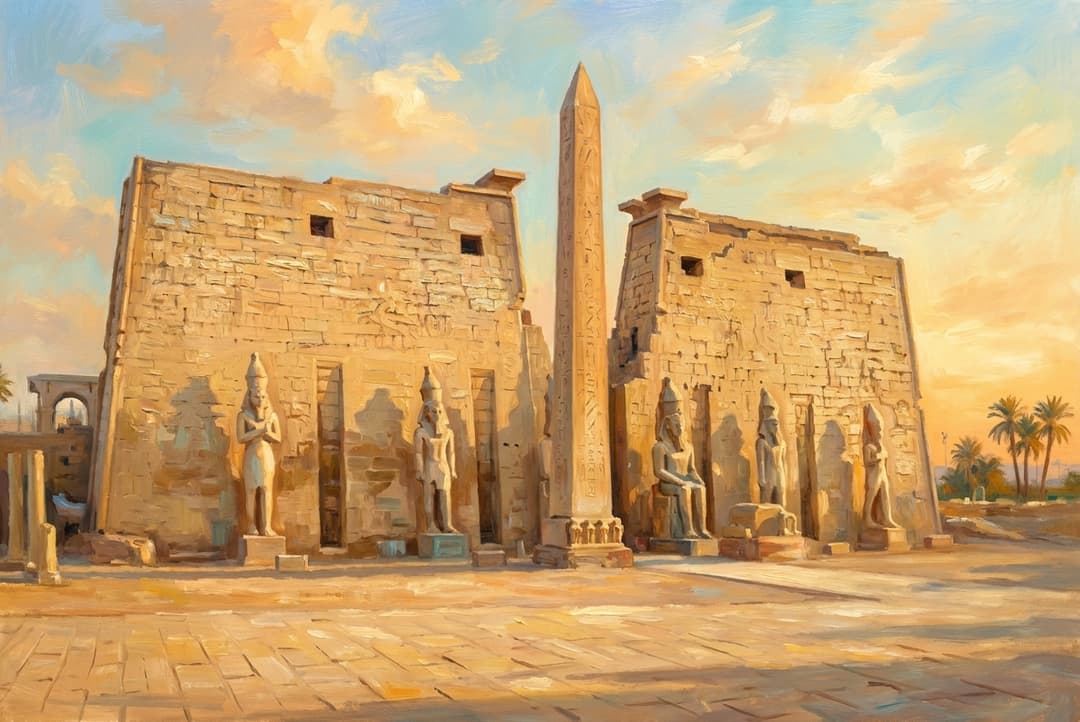
Visiting Luxor Temple is an awe-inspiring experience, offering a glimpse into the grandeur of ancient Egypt. The temple's towering columns, intricate carvings, and well-preserved structures create a captivating atmosphere. Expect to be amazed by the scale and artistry of this sacred site, and allow ample time to explore its various halls, courtyards, and sanctuaries. Remember to wear comfortable shoes and bring water, especially during the hotter months.
Highlights
- Explore the grand Peristyle Court of Amenhotep III.
- Marvel at the Hypostyle Hall, adorned with intricate reliefs.
- Walk along the Avenue of Sphinxes, connecting Luxor Temple to Karnak Temple.
Things to Know
- Be prepared for crowds, especially during peak tourist season.
- Dress respectfully, as the temple is a historical and religious site.
- Hire a local guide to learn more about the temple's history and significance.
Location

Luxor, Luxor Governorate, Egypt
Hours: Generally open from 6:00 AM to 10:00 PM, but hours may vary seasonally.
Getting There: Luxor Temple is located in the heart of Luxor and is easily accessible by taxi or on foot from most hotels in the city.
Get DirectionsTips for Your Visit
Visit Early or Late
Visit in the early morning or late afternoon to avoid the midday heat and crowds.
Hire a Guide
Hire a local guide to learn more about the temple's history and significance.
About
The Luxor Temple is a large ancient Egyptian temple complex located on the east bank of the Nile River in the city now known as Luxor (ancient Thebes). Founded in 1399 BCE, it is dedicated to the Theban Triad: Amun, Mut, and Chons. The temple was a center for sacred festivals, most notably the annual Opet Festival, where the statues of the Theban Triad were paraded from Karnak Temple to Luxor Temple, symbolizing renewal and divine authority.
The temple exemplifies ancient Egyptian architectural design, characterized by its massive scale, symmetrical layout, and intricate carvings. Over centuries, various rulers expanded and embellished the temple, leaving their mark on its walls and columns. The Luxor Temple stands as a testament to the enduring legacy of ancient Egyptian civilization and its profound religious beliefs.
Today, the Luxor Temple is a well-preserved ancient site, attracting tourists and researchers from around the world. It is part of the UNESCO World Heritage Site of Ancient Thebes with its Necropolis. Visitors can explore its grand halls, courtyards, and sanctuaries, marveling at the intricate reliefs and inscriptions that adorn its walls. The temple offers a glimpse into the rich history and cultural heritage of ancient Egypt.
Gallery
Symbolic Elements
The temple's exterior features intricate carvings, each rich with spiritual meaning:
Columns
The columns in Luxor Temple represent papyrus plants, symbolizing life and creation. Their design reflects the importance of the Nile River and its life-giving properties to ancient Egyptian society. The columns also served a structural purpose, supporting the massive roofs of the temple's halls and courts.
Reliefs and Inscriptions
The reliefs and inscriptions on the walls of Luxor Temple depict religious rituals, pharaohs' divine right to rule, and mythological narratives. These carvings served as a form of visual communication, conveying important religious and political messages to the temple's visitors. They also provide valuable insights into the beliefs and practices of ancient Egyptian civilization.
Sphinxes
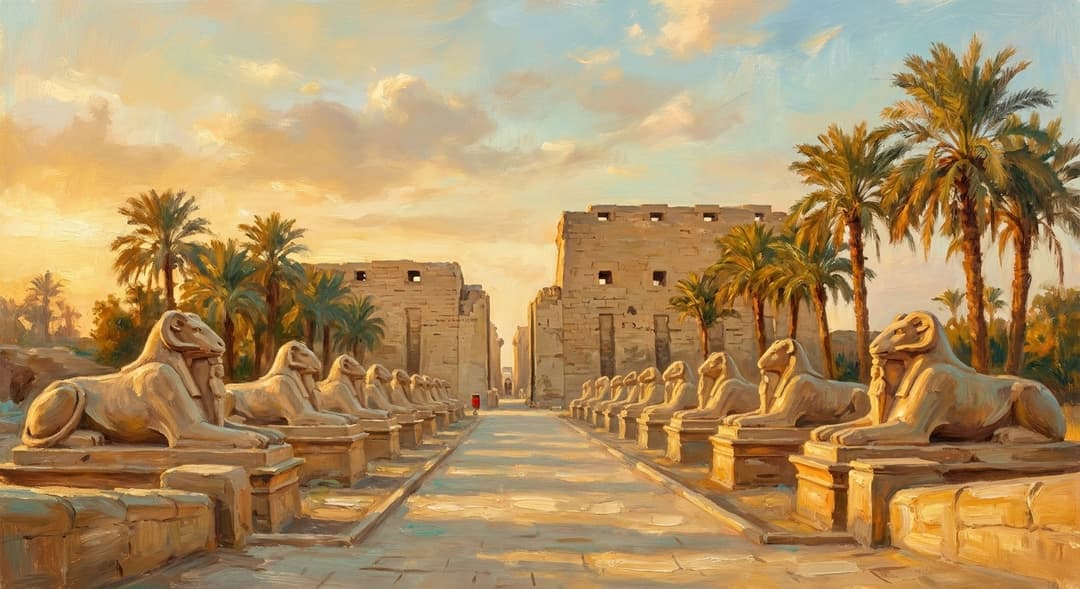
The sphinxes lining the Avenue of Sphinxes symbolize royal power and protection. These mythical creatures, with the body of a lion and the head of a human, were believed to guard the temple and its sacred spaces. The Avenue of Sphinxes connected Luxor Temple to Karnak Temple, creating a grand processional route for religious festivals and ceremonies.
Statues of Deities and Pharaohs
The statues of deities and pharaohs represent the presence and power of the gods and rulers. These statues were often placed in prominent locations within the temple, serving as focal points for worship and veneration. They were believed to embody the essence of the deities and pharaohs, connecting the earthly realm with the divine.
Pylons
Pylons are monumental gateways that mark the entrance to the temple complex. They are typically adorned with reliefs and inscriptions depicting scenes of pharaohs defeating their enemies and honoring the gods. The pylons served as a symbolic barrier between the secular world and the sacred space of the temple.
Hypostyle Hall
The Hypostyle Hall is a large hall supported by rows of massive columns. It was designed to create a sense of awe and wonder, evoking the primeval swamp from which the world was believed to have emerged. The hall was used for religious ceremonies and processions, and its walls were adorned with intricate reliefs and inscriptions.

Sanctuary
The sanctuary is the innermost part of the temple, where the statue of the deity was housed. It was considered the most sacred space within the temple, and access was restricted to priests and pharaohs. The sanctuary was believed to be the dwelling place of the god, and it was the focus of religious rituals and offerings.

Obelisks
Obelisks are tall, four-sided tapering monuments that were often placed in pairs in front of temples. They were symbols of the sun god Ra and were believed to possess magical powers. The obelisks served as a visual representation of the pharaoh's power and his connection to the divine.
Interesting Facts
The Luxor Temple was once connected to the Karnak Temple by a 1.7-mile-long Avenue of Sphinxes.
During the Christian era, part of the temple was converted into a church, and evidence of this conversion can still be seen.
A shrine dedicated to the Roman god Serapis was built within the temple during the Ptolemaic Dynasty.
The temple was the focus of the Opet Festival, an annual event that involved a procession from Karnak to Luxor to reaffirm the pharaoh's divine connection.
The Mosque of Abu Haggag was built over part of the temple and was later removed to reveal the ancient structure.
One of the obelisks that once stood in front of the temple was moved to the Place de la Concorde in Paris.
Luxor Temple is smaller than Karnak but is considered more elegant due to its architectural unity.
Excavations have revealed that the temple was built on the site of an earlier sanctuary.
In 2013, China agreed to help Egypt restore monuments in Luxor Temple.
Common Questions
What is the Luxor Temple?
The Luxor Temple is an ancient Egyptian temple complex located on the east bank of the Nile River in the city of Luxor. It was founded in 1399 BCE and is dedicated to the Theban Triad: Amun, Mut, and Chons.
Who built the Luxor Temple?
The Luxor Temple was primarily built by Amenhotep III and Rameses II, with contributions from other pharaohs over the centuries. Amenhotep III constructed the core of the temple, while Rameses II significantly expanded the complex.
What was the purpose of the Luxor Temple?
The Luxor Temple served as a center for religious festivals and rituals, most notably the annual Opet Festival. It was also a place where pharaohs sought to legitimize their rule and connect with the divine.
How can I visit the Luxor Temple?
The Luxor Temple is located in the heart of Luxor and is easily accessible by taxi or on foot from most hotels in the city. It is generally open from 6:00 AM to 10:00 PM, but hours may vary seasonally.
What are some of the highlights of the Luxor Temple?
Some of the highlights of the Luxor Temple include the grand Peristyle Court of Amenhotep III, the Hypostyle Hall, the Avenue of Sphinxes, and the well-preserved reliefs and inscriptions that adorn its walls.
Featured Stories
The Opet Festival
Annual Event
The Opet Festival was one of the most important religious celebrations in ancient Egypt, held annually in Thebes (modern Luxor). During this festival, the statues of the Theban Triad—Amun, Mut, and Khonsu—were carried in a grand procession from Karnak Temple to Luxor Temple. This journey symbolized the renewal of the gods' powers and the reaffirmation of the pharaoh's divine authority.
The procession involved elaborate rituals, music, dancing, and feasting, with the entire city participating in the sacred festivities. The statues were placed in the Luxor Temple's sanctuary, where they underwent purification and rejuvenation rites. The Opet Festival served to strengthen the bond between the gods, the pharaoh, and the people of Egypt.
The festival was a time of great joy and celebration, with the streets lined with people eager to witness the spectacle. The Opet Festival played a crucial role in maintaining the religious and political stability of ancient Egypt, reinforcing the pharaoh's legitimacy and the gods' benevolence.
Rameses II's Grand Expansion
1279-1213 BCE
Rameses II, one of the most powerful and prolific pharaohs of ancient Egypt, significantly expanded the Luxor Temple during his reign. He added a new pylon, a large courtyard, and numerous statues and obelisks, transforming the temple into a monument to his power and piety. Rameses II's additions enhanced the temple's grandeur and magnificence, solidifying its status as a major religious center.
The pylon, adorned with scenes of Rameses II's military victories, served as a powerful symbol of his strength and dominance. The courtyard provided a space for public gatherings and ceremonies, while the statues and obelisks proclaimed Rameses II's divine connection. His contributions left an indelible mark on the temple, shaping its appearance for centuries to come.
Rameses II's expansion of the Luxor Temple reflected his ambition to create lasting monuments to his reign. His additions not only enhanced the temple's physical structure but also reinforced its religious and political significance, ensuring its continued importance in ancient Egyptian society.
The Temple's Christian Transformation
Late Antiquity
During the Late Antiquity period, as Christianity spread throughout Egypt, the Luxor Temple underwent a significant transformation. Parts of the temple were converted into a Christian church, with alterations made to the Hypostyle Hall to accommodate Christian worship. This conversion reflected the changing religious landscape of Egypt and the decline of traditional Egyptian beliefs.
The Christian community adapted the temple's existing structures to suit their needs, repurposing its halls and courtyards for religious services. While the temple's original Egyptian decorations remained visible, they were gradually replaced by Christian symbols and imagery. The conversion of the Luxor Temple into a church marked a turning point in its history, signaling the end of its role as a center of ancient Egyptian religion.
The Christian presence in the Luxor Temple left a lasting impact on its architecture and appearance. The temple's transformation serves as a reminder of the complex interplay between different cultures and religions throughout history, and the ways in which ancient sites can be adapted and reinterpreted over time.
Timeline
Construction Begins
Construction of the Luxor Temple begins during the reign of Amenhotep III of the 18th Dynasty.
MilestoneAkhenaten's Reign
Akhenaten attempts to shift religious focus to Aten, causing disruption in traditional temple practices.
EventRameses II Expands Temple
Rameses II significantly expands the temple complex, adding a new pylon and courtyard.
MilestonePtolemaic Dynasty
During the Ptolemaic Dynasty, a shrine is dedicated to Serapis within the temple complex.
MilestoneConversion to Church
The temple is partially converted into a Christian church, with evidence of alterations in the Hypostyle Hall.
EventArrival of Islam
With the arrival of Islam in Egypt, the temple gradually loses its religious significance.
EventRemoval of Mosque
Gaston Maspero begins the process of removing the mosque of Abu Haggag, which was built over the temple.
RenovationUNESCO World Heritage Site
The Luxor Temple is a well-preserved ancient site, attracting tourists and researchers from around the world.
MilestoneAmenhotep III's Contributions
Amenhotep III constructs the core of the temple, including the Peristyle Court and Hypostyle Hall.
MilestoneTutankhamun's Restoration
Tutankhamun orders the restoration of the temple after the Amarna period.
RenovationRameses II's Additions
Rameses II adds a large pylon and forecourt, enhancing the temple's grandeur.
RenovationPtolemaic Shrine
The Ptolemies add a shrine dedicated to Alexander the Great within the temple complex.
MilestoneChristian Alterations
The temple undergoes alterations as it is partially converted into a Christian church.
RenovationRediscovery
European scholars and travelers begin to rediscover and document the Luxor Temple.
EventRestoration Efforts
China agrees to help Egypt restore monuments in Luxor Temple, including the Luxor Temple.
RenovationHistory by Decade
1399 BCE
Construction of the Luxor Temple begins during the reign of Amenhotep III of the 18th Dynasty. The main structure consisted of the Peristyle Court and the Hypostyle Hall.
1279-1213 BCE
Rameses II significantly expands the temple complex, adding a new pylon and courtyard.
323-30 BCE
During the Ptolemaic Dynasty, a shrine is dedicated to Serapis within the temple complex.
Late Antiquity
The temple is partially converted into a Christian church, with evidence of alterations in the Hypostyle Hall.
640 AD
With the arrival of Islam in Egypt, the temple gradually loses its religious significance, and parts of it are used for residential and agricultural purposes.
1884
Gaston Maspero begins the process of removing the mosque of Abu Haggag which was built over the temple, to reveal more of the ancient structure.
Architecture & Facilities
The Luxor Temple exemplifies ancient Egyptian architectural design, characterized by its massive scale, symmetrical layout, and intricate carvings. The temple's style is classic ancient Egyptian, featuring pylons, peristyle courts, and hypostyle halls adorned with reliefs and inscriptions. The complex demonstrates the evolution of Egyptian temple architecture over several dynasties.
Building Materials
Sandstone
The temple is primarily constructed of sandstone, a durable and readily available material in the region. The sandstone was quarried from nearby areas and transported to the temple site for construction.
Mud Brick
Mud brick was used for some of the temple's walls and structures, particularly in the earlier phases of construction. Mud brick was a common building material in ancient Egypt, made from Nile mud mixed with straw.
Interior Features
The Peristyle Court of Amenhotep III
Features double rows of columns with papyrus-bud capitals. This court was designed to provide a shaded and open space for religious ceremonies and processions.
The Hypostyle Hall
Originally built by Amenhotep III, it was later decorated by Tutankhamun and Horemheb. The hall is supported by massive columns and adorned with intricate reliefs and inscriptions.
The Birth Room
Depicts the divine birth of Amenhotep III. This room was designed to legitimize Amenhotep III's rule by portraying him as the son of the god Amun.
The Sanctuary
The innermost part of the temple, where the statue of the deity was housed. This was the most sacred space within the temple, and access was restricted to priests and pharaohs.
Temple Grounds
The temple grounds include the Avenue of Sphinxes, which once connected Luxor Temple to Karnak Temple. The area surrounding the temple has been excavated to reveal various structures and artifacts.
Religious Significance
The Luxor Temple held immense religious significance in ancient Egypt, serving as a center for worship, festivals, and royal ceremonies. Dedicated to the Theban Triad—Amun, Mut, and Khonsu—the temple was believed to be a dwelling place of the gods, connecting the earthly realm with the divine.
The core spiritual purpose of the Luxor Temple was to honor the gods, legitimize the pharaoh's rule, and maintain the cosmic order. The temple served as a place where pharaohs sought to connect with the divine, seeking guidance and blessings for their reign.
Sacred Ordinances
Opet Festival
The Opet Festival was an annual celebration that involved a procession from Karnak Temple to Luxor Temple, symbolizing the renewal of the gods' powers and the reaffirmation of the pharaoh's divine authority.
Royal Coronation
The Luxor Temple was a site for royal coronations, where pharaohs underwent rituals to legitimize their rule and connect with the gods. These ceremonies involved offerings, prayers, and the presentation of royal regalia.
Daily Offerings
Priests performed daily offerings to the gods, presenting food, drink, and other valuable items to ensure their continued benevolence. These offerings were believed to nourish the gods and maintain the cosmic balance.
The Role of Amun
Amun, the chief deity of the Theban Triad, was the primary focus of worship at the Luxor Temple. He was considered the king of the gods, representing creation, fertility, and royal power. The temple's architecture and decorations reflected Amun's importance, with numerous statues, reliefs, and inscriptions dedicated to him.
The Significance of Mut
Mut, the consort of Amun and mother of Khonsu, was also venerated at the Luxor Temple. She was associated with motherhood, protection, and royal authority. Mut's presence in the Theban Triad symbolized the importance of family and the continuity of the royal lineage.
The Importance of Khonsu
Khonsu, the son of Amun and Mut, was the moon god and a protector of the city of Thebes. He was believed to possess healing powers and was often invoked for protection against illness and misfortune. Khonsu's presence in the Theban Triad symbolized the importance of youth, vitality, and divine protection.
Similar Temples
Sources & Research
Every fact on Temples.org is backed by verified Sources & Research. Each piece of information is rated by source tier and confidence level.
View All Sources (8)
| Field | Source | Tier | Retrieved |
|---|---|---|---|
| About & Historical Background | Egyptian Ministry of Tourism and Antiquities (opens in a new tab) | A | 2024-01-01 |
| About & Historical Background | Britannica (opens in a new tab) | B | 2024-01-01 |
| Historical Timeline | World History Encyclopedia (opens in a new tab) | B | 2024-01-01 |
| Architectural Description | Ancient History Encyclopedia (opens in a new tab) | B | 2024-01-01 |
| Interesting Facts | Tour Egypt (opens in a new tab) | C | 2024-01-01 |
| Interesting Facts | Khan Academy (opens in a new tab) | B | 2024-01-01 |
| Historical Timeline | UNESCO (opens in a new tab) | B | 2024-01-01 |
| Architectural Description | Akhet (opens in a new tab) | A | 2024-01-01 |