Visitor Insights
Visiting San Salvador El Salvador Temple
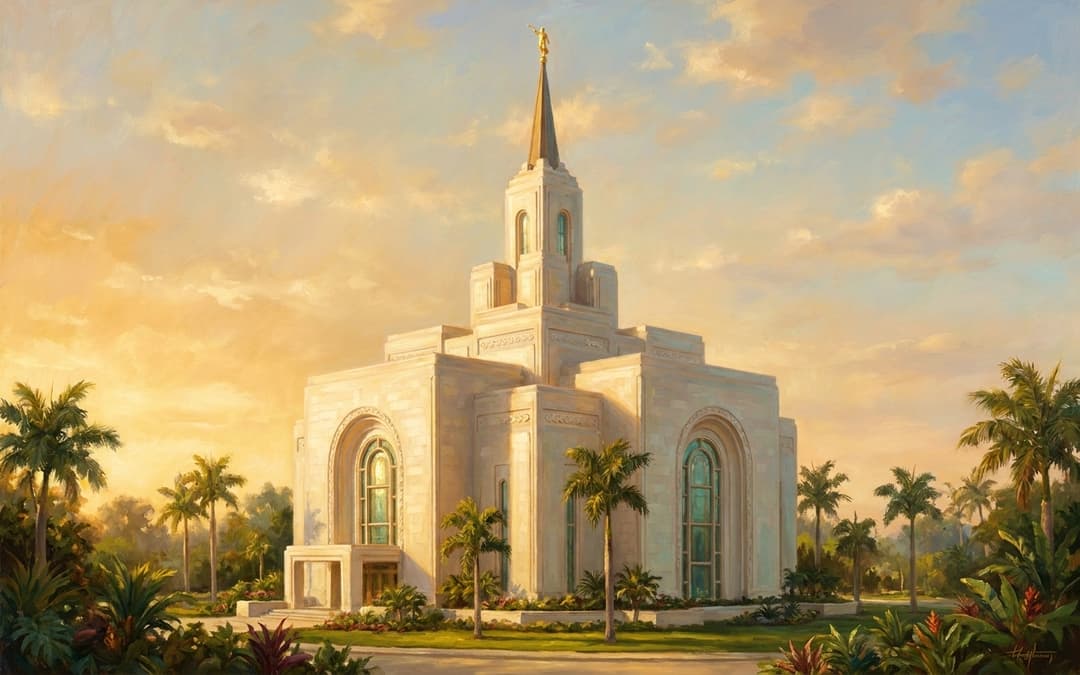
The San Salvador El Salvador Temple is situated in the Colonia San Benito area of Antiguo Cuscatlán. Beautifully manicured gardens, tropical greenery, and tranquil water features create a peaceful atmosphere accessible to all guests. While temple ordinance areas are reserved for recommendation card holders, the general grounds and arrival facilities are open to the public.
Highlights
- Lush tropical landscaping featuring native flora and serene reflection pools
- Exquisite exterior stonework carved with the Flor de Izote motif
- Elevation offering scenic views of surrounding San Salvador mountain vistas
- On-site arrival center and Church Distribution store for visitors
Things to Know
- Interior ordinance rooms require a current temple recommend for entry
- Public access is welcomed across the outer landscaped grounds during daylight hours
- Sunday services occur at nearby chapels rather than within the temple
Location
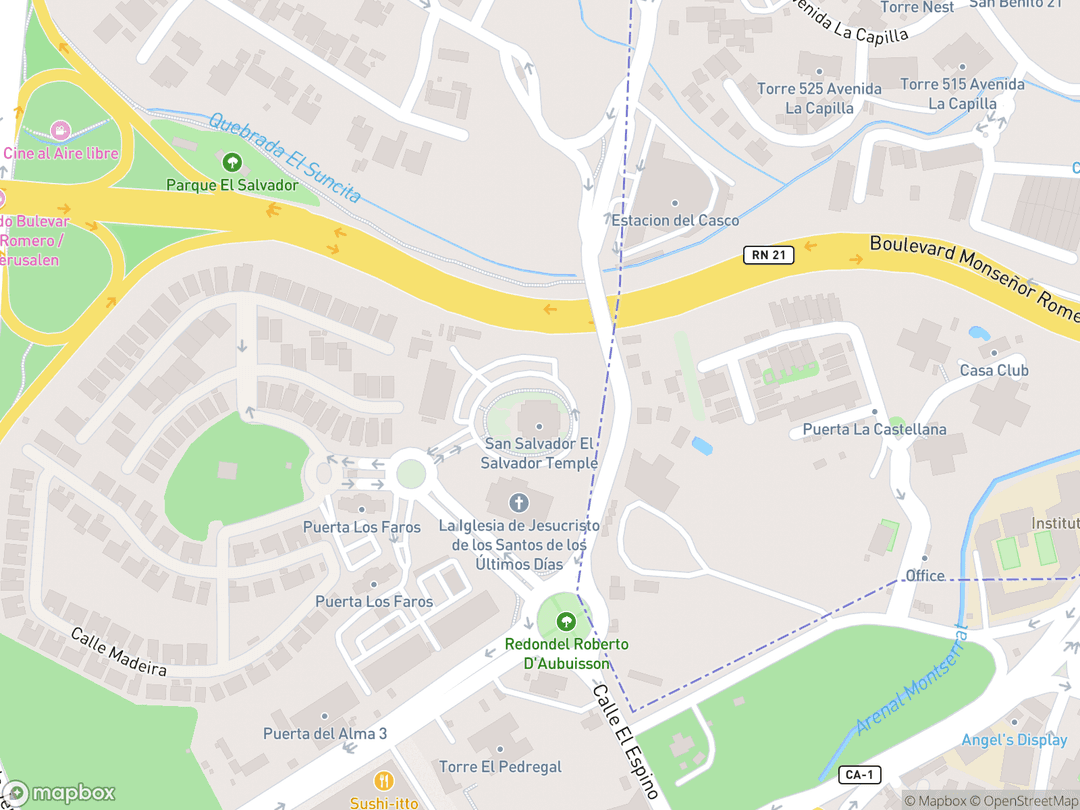
Avenida El Espino y Calle El Pedregal, Colonia San Benito, Antiguo Cuscatlán, La Libertad, El Salvador
Hours: Tuesday–Saturday: Schedules vary by ordinance; closed Sundays and Mondays.
Getting There: Located opposite Redondel Roberto D'Aubuisson near Multiplaza Panamericana; easily accessible by taxi or vehicle from central San Salvador or the international airport.
Get DirectionsTips for Your Visit
Ground Access
Visitors of all faiths are welcome to walk the perimeter gardens and photograph the exterior facade.
Nearby Services
A Church Distribution store and arrival facility are located on the temple grounds for visitor convenience.
About
As part of the broader Christian tradition rooted in Abrahamic covenant theology, Latter-day Saints venerate Jesus Christ as the Redeemer of humanity. While local chapels host weekly Christian congregational worship, temples serve as holy sanctuaries designated as literal Houses of the Lord. The San Salvador El Salvador Temple stands as a sacred site where faithful Saints participate in divine ordinances, eternal family sealings, and personal reflection.
Dedicated in 2011, the structure was the first Latter-day Saint temple built in El Salvador and the fourth across Central America. Situated in Antiguo Cuscatlán against a backdrop of volcanic hills, it provides a quiet sanctuary of spiritual refuge for tens of thousands of local members who previously traveled to Guatemala or the United States for temple worship.
The temple harmoniously blends sacred monumentality with Salvadoran cultural motifs, incorporating the national flower into its stone carvings and stained glass. Resting on an elevated 6.5-acre site, the complex stands as a lasting beacon of Christian faith, devotion, and community unity throughout the region.
Gallery
Symbolic Elements
The temple's exterior features intricate carvings, each rich with spiritual meaning:

Flor de Izote Motif
The national flower of El Salvador is integrated into stonework, glass, doors, and carpets as a symbol of regional identity and divine creation.

Spanish Colonial Arches
Graceful exterior arches evoke historic Central American colonial architecture while providing sacred structural framing.

Shell-Shaped Conches
Decorative conch motifs embedded in archways symbolize rebirth, spiritual washing, and divine refuge.

Branco Sienna Granite Facade
Off-white Brazilian granite represents purity and durability, reflecting tropical sunlight across the valley.

Jerusalem Limestone Flooring
Natural stone quarried in Israel connects modern temple worship to the ancient biblical Holy Land.

Central Spire and Angel Moroni
A single central spire topped with a gold-leafed Angel Moroni represents the restoration of the everlasting gospel.

Honduran Mahogany Millwork
Rich native timber used throughout interior doors and furnishings honors regional forestry craftsmanship.

Tropical Landscape and Reflection Pools
Peaceful reflection pools surrounded by native palm trees offer visual serenity and quiet contemplation.
Interesting Facts
The temple dedication occurred on August 21, 2011, coinciding with the 84th birthday of Church President Thomas S. Monson (Tier A).
It was the first temple constructed in El Salvador and the 135th operating temple of the Church globally (Tier A).
It represented the fourth temple dedicated across the Central American region (Tier A).
Materials were gathered from three continents, including Brazilian granite, Israeli limestone, and Honduran mahogany (Tier B).
During the 2011 public open house, over 165,000 guests toured the sacred interior spaces (Tier A).
More than 200 government officials and leaders from 27 distinct religious faiths attended the open house tours (Tier A).
The architectural design seamlessly incorporates El Salvador's national flower, the Flor de Izote, into stonework and glass (Tier B).
Upon dedication, the temple served Latter-day Saints from El Salvador, Nicaragua, Belize, and parts of Honduras (Tier A).
Common Questions
Is the San Salvador El Salvador Temple open to the general public?
The landscaped outer grounds are open to the public, while interior access is reserved for Latter-day Saints with temple recommends.
What makes the temple's architecture unique?
It combines Spanish Colonial Revival arches with local cultural motifs, including El Salvador's national flower, the Flor de Izote.
Which materials were used in constructing the temple?
The exterior uses Brazilian Branco Sienna granite, interior floors feature Israeli Jerusalem limestone, and woodwork consists of Honduran mahogany.
Can visitors purchase Church literature on site?
Yes, a Church Distribution store is located on the temple grounds and is open to the general public.
Featured Stories
A Temple Dedicated on a Prophet's Birthday
August 21, 2011
The dedication of the San Salvador El Salvador Temple was conducted by President Henry B. Eyring on August 21, 2011, an occasion that coincided with the 84th birthday of Church President Thomas S. Monson. During the proceedings, President Eyring shared greetings from President Monson, noting the joy the prophet felt for the Saints of Central America. Local members viewed the milestone as a monumental gift of faith after decades of devoted worship.
Source: Church News Dedication Report, August 2011
Interfaith Harmony during the Public Open House
July 2011
During the three-week public open house in July 2011, over 165,000 visitors passed through the temple doors. Among the attendees were more than 200 Salvadoran government officials and representatives from 27 non-Latter-day Saint religious denominations. Guests expressed admiration for the sacred peace of the building and the respectful integration of El Salvador's national flower into the architectural motif.
Source: LDS Newsroom Open House Summary, July 2011
Vibrant Youth Cultural Celebration
August 20, 2011
On the eve of the temple dedication, approximately 16,000 spectators gathered at the Adolfo Pineda Gymnasium in San Salvador for a massive cultural celebration. Thousands of Latter-day Saint youth presented traditional Salvadoran dances, musical numbers, and theatrical enactments showcasing the history of the country and the growth of the Church. The event highlighted the vitality and unity of the rising generation in Central America.
Source: Church News Cultural Celebration Coverage, August 2011
Timeline
First Missionaries Arrive
Latter-day Saint missionaries arrive in El Salvador to establish the Church's initial presence.
MilestoneRegional Temple Dedication
The Guatemala City Guatemala Temple opens, providing a closer worship sanctuary for Salvadoran Saints.
MilestoneFirst Presidency Letter Issued
The First Presidency formally authorizes plans for the construction of a temple in San Salvador.
MilestonePublic Announcement
Church leaders read the official announcement during Sunday sacrament meetings across El Salvador.
MilestoneGroundbreaking Ceremony
Elder Don R. Clarke presides over the groundbreaking and site dedication in Antiguo Cuscatlán.
component.timeline.groundbreakingExterior Cladding Completed
Artisans complete the exterior installation of Brazilian Branco Sienna granite slabs.
MilestonePublic Open House Begins
The temple opens its doors to community members and guests for a multi-week public tour.
EventOpen House Concludes
Over 165,000 visitors tour the temple interior during the three-week public open house period.
EventCultural Celebration
Thousands of youth perform regional music and dances at the Adolfo Pineda Gymnasium.
EventTemple Dedication
President Henry B. Eyring dedicates the temple in three sacred sessions on President Monson's 84th birthday.
DedicationHealth Protocol Adjustments
Temple operations temporarily adapt to phased schedules during global pandemic restrictions.
EventFull Operations Resume
Regular temple ordinance operations resume for patrons across El Salvador and neighboring countries.
MilestoneHistory by Decade
1950s–1970s — Pioneers of Faith
The first Latter-day Saint missionaries arrived in El Salvador in March 1951, introducing the restored gospel to a small circle of early believers. Over subsequent decades, membership grew steadily despite regional socio-political changes. Early Salvadoran Saints demonstrated profound sacrifice, making long, arduous journeys to temples in Mesa, Arizona, and later Guatemala City to receive sacred ordinances.
1980s–1990s — Rapid Regional Growth
The dedication of the Guatemala City Guatemala Temple in 1984 significantly reduced travel distances for Salvadoran members, though international border crossings remained complex. By the late 1990s, Church membership in El Salvador surpassed 80,000 individuals across numerous stakes and districts. This robust spiritual foundation set the stage for a local temple in the nation's capital.
2000s — Announcement and Construction
On November 18, 2007, a First Presidency letter was read in sacrament meetings announcing plans to construct the San Salvador El Salvador Temple. Groundbreaking took place on September 20, 2008, under the direction of Elder Don R. Clarke. Over the next three years, skilled artisans assembled the granite superstructure and handcrafted interior millwork in Antiguo Cuscatlán.
2010s–Present — Dedication and Ministry
Following a highly successful public open house that welcomed over 165,000 visitors, President Henry B. Eyring dedicated the temple on August 21, 2011. The temple initially served members from El Salvador, Nicaragua, Belize, and Honduras. Today, it stands as an enduring spiritual landmark, fostering family history work and sacred covenant worship across the region.
Architecture & Facilities
Designed by VCBO Architecture, the San Salvador El Salvador Temple exhibits a classical design influenced by Spanish Colonial Revival architecture native to Central America. The edifice features soft exterior arches, symmetrical stepped massing, and prominent conch shell motifs. Its single attached central spire and crisp white granite cladding present a striking monumentality against the green mountain backdrop of the San Salvador valley.
Building Materials
Exterior Cladding
Monolithic exterior walls lined with Branco Sienna Granite imported from Brazil, providing an off-white brilliant facade.
Interior Flooring
High-traffic corridors and sacred spaces feature natural Jerusalem limestone imported from quarries in Israel.
Woodwork & Doors
Custom doors and interior millwork are crafted from genuine Honduran mahogany sourced in Central America.
Art Glass
Handcrafted leaded glass windows present warm pastel tones framed by floral patterns.
Interior Features
Instruction Rooms
Two ordinance rooms featuring two-stage progressive seating decorated with subtle floral wall murals.
Sealing Rooms
Two intimate sealing rooms furnished with carved mahogany altars and custom-woven carpets.
Celestial Room
A serene room filled with natural light, crystal chandeliers, and soft cream furnishings symbolizing heaven.
Baptistry
A baptismal font resting on twelve cast bronze oxen, surrounded by Jerusalem limestone flooring.
Temple Grounds
The temple occupies 6.5 acres of elevated, beautifully landscaped terrain in Antiguo Cuscatlán. Grounds feature royal palms, vibrant flowering gardens, paved stone plazas, and serene reflection pools that offer peaceful places for prayer and contemplation.
Additional Facilities
The temple complex includes an adjacent meetinghouse, a patron arrival center, a cafeteria, a residence for the temple president, and a Church Distribution store.
Religious Significance
In harmony with global Christian covenant theology, Latter-day Saints consider temples to be holiness to the Lord. While routine Sunday worship and communion occur in local meetinghouses, the temple is reserved for sacred ordinances that bind families eternally and deepen personal devotion to Jesus Christ.
To provide a holy space where sacred ordinances—including eternal marriages, personal endowments, and proxy baptisms—are performed under divine priesthood authority.
Sacred Ordinances
Holy Endowment
Sacred instruction regarding God's plan of salvation and covenants binding believers to righteous Christian living.
Eternal Sealing
Priesthood ordinances uniting husbands, wives, and children in eternal family relationships.
Proxy Baptism
Baptisms performed by living members on behalf of deceased ancestors, offering them the opportunity to accept the gospel.
Biblical Antecedents
Latter-day Saints view modern temples as the continuation of sacred ancient worship traditions seen in biblical sanctuaries like the Tabernacle of Moses and Solomon's Temple.
Eternal Family Covenants
Central to temple theology is the conviction that family relationships continue beyond the grave through sacred covenants solemnized in temple sealings.
Similar Temples
Sources & Research
Every fact on Temples.org is backed by verified Sources & Research. Each piece of information is rated by source tier and confidence level.
View All Sources (3)
| Field | Source | Tier | Retrieved |
|---|---|---|---|
| About & Historical Background | The Church of Jesus Christ of Latter-day Saints (opens in a new tab) | A | 2026-02-22 |
| About & Historical Background | BYU Studies (opens in a new tab) | B | 2026-02-22 |
| Timeline & Open House | ChurchofJesusChristTemples.org (opens in a new tab) | C | 2026-02-22 |