Visitor Insights
Visiting St. Louis Missouri Temple
The St. Louis Missouri Temple welcomes all visitors to explore its peaceful 14-acre grounds in Town and Country. While interior worship rooms are reserved for Church members with active temple recommends, the manicured public gardens, stone walkways, and exterior reflecting pools offer a contemplative setting for quiet reflection.
Highlights
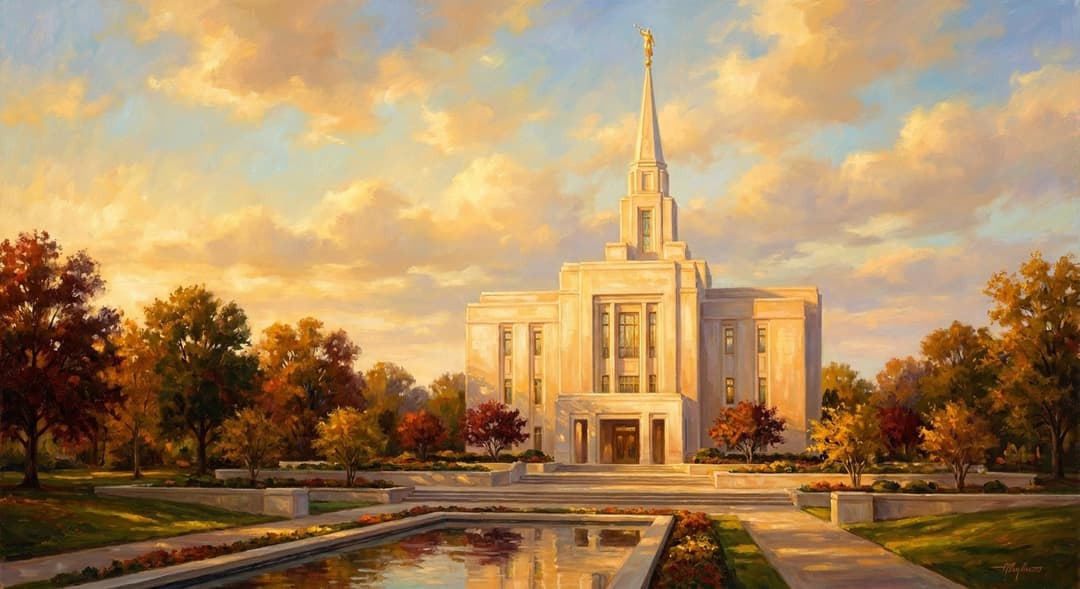
- Luminous Bethel White Granite facade with a dramatic 150-foot single spire.
- Beautiful exterior reflecting pool and surrounding formal floral gardens.
- Gold-leafed Angel Moroni statue overlooking the suburban St. Louis landscape.
- Quiet open-air seating areas framed by mature Midwest shade trees.
Things to Know
- Interior entry requires an active temple recommend issued by Church leadership.
- Public garden hours run during daylight hours throughout the week.
- Photography is welcomed in the exterior grounds and public gardens.
Location
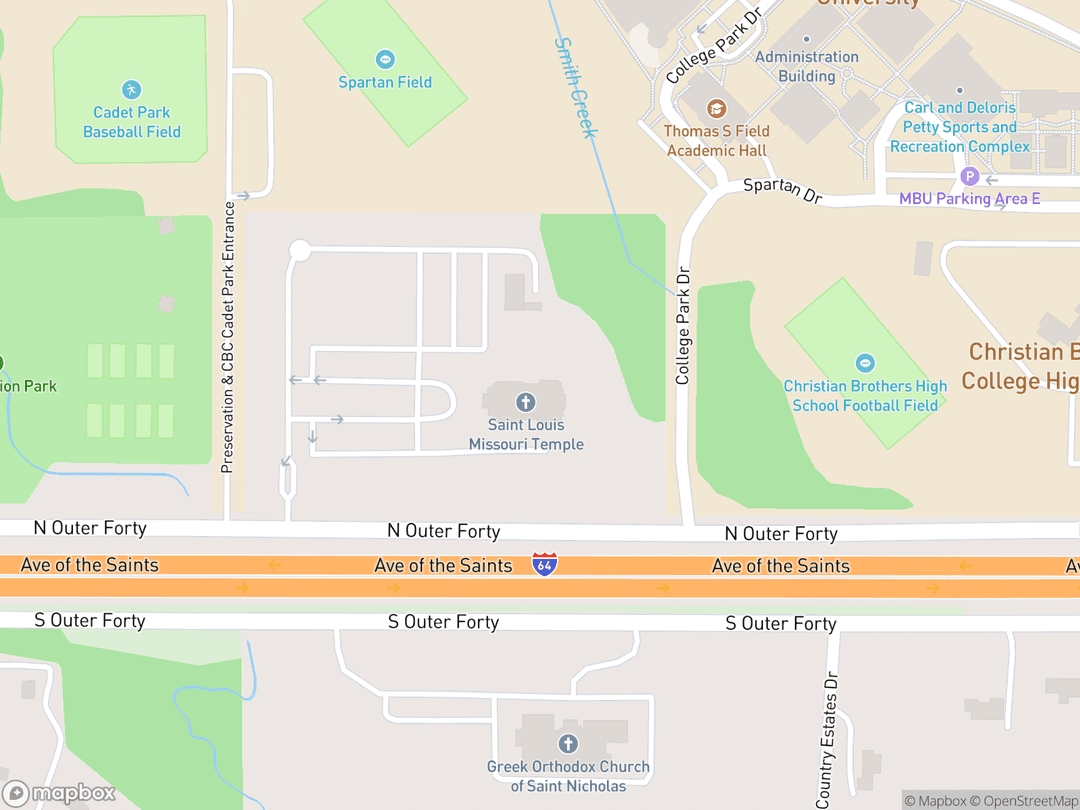
12555 North Outer Forty Drive, Town and Country, MO 63141, United States
Hours: Grounds open daily during daylight hours; sacred interior services scheduled Tuesday through Saturday.
Getting There: Located in west St. Louis County along Interstate 64 / U.S. Route 40 near the I-270 interchange, approximately 20 minutes from Downtown St. Louis and St. Louis Lambert International Airport.
Get DirectionsTips for Your Visit
Best Time for Photography
Visit in mid-spring when tulips and flowering trees bloom, or at dusk when floodlights illuminate the white granite facade.
Visitor Etiquette
Please maintain a peaceful demeanor on temple grounds to respect those seeking quiet reflection and spiritual sanctuary.
About
The St. Louis Missouri Temple stands as a monument of sacred devotion and historic healing in the Midwestern United States. Dedicated in June 1997 as the 50th operating temple of The Church of Jesus Christ of Latter-day Saints, the edifice represents a poignant chapter of reconciliation. In the 1830s, Latter-day Saints faced severe persecution and exile from western Missouri. During the bitter winter of 1838–1839, the city of St. Louis served as a compassionate 'city of refuge,' offering shelter, medical care, and employment to thousands of displaced believers.
Within the broader Christian tradition, the St. Louis Missouri Temple functions as a consecrated House of the Lord, anchoring Abrahamic and Latter-day Saint covenant theology. Built of luminous Bethel White Granite, the temple reflects classic modern architectural proportions while housing sacred ordinance spaces—including a baptismal font resting upon twelve oxen, instruction rooms, sealing rooms for eternal families, and the celestial room symbolizing heavenly order.
Gallery
Symbolic Elements
The temple's exterior features intricate carvings, each rich with spiritual meaning:

Angel Moroni Statue
The gold-leafed figure atop the spire symbolizes the heraldic call of the restored gospel to all earthly nations.

Twelve Cast Oxen Font
The baptismal basin rests upon twelve cast oxen mirroring Solomon's molten sea and representing the twelve tribes of Israel.

Celestial Room Chandelier
Multi-tiered crystal prisms refract light throughout the celestial room, symbolizing spiritual clarity and divine unity.

Facing Sealing Mirrors
Parallel mirrors mounted in sealing rooms create an endless reflection, symbolizing eternal family ties across generations.

Bethel White Granite
High-grade white granite walls reflect ambient sunlight, symbolizing holiness, purity, and enduring spiritual strength.

Single High Spire
A single 150-foot spire points heavenward, emphasizing vertical orientation and the soul's ascent toward God.

Geometric Art Glass
Understated geometric glass patterns admit natural sunlight while preserving sanctuary privacy and reverent atmosphere.
Interesting Facts
The St. Louis Missouri Temple marked a major global milestone when dedicated as the 50th operating temple of the Church (Tier A).
All three members of the First Presidency independently selected the exact same 14-acre hilltop site without prior consultation (Tier A).
At the freezing 1993 groundbreaking, President Hinckley noted the cold helped attendees appreciate the 1838 pioneer trials (Tier A).
Former Missouri Governor Kit Bond, who rescinded the 1838 Extermination Order in 1976, attended the open house as a U.S. Senator (Tier B).
Nearly 260,000 visitors toured the temple during its four-week public open house in spring 1997 (Tier A).
The temple served as the sole operating temple in the state of Missouri for 15 years until 2012 (Tier C).
Its exterior cladding utilizes Bethel White Granite from Vermont with a textured thermal finish (Tier B).
Due to high attendance demand, Church leaders conducted 19 separate dedicatory sessions over five days (Tier A).
Common Questions
Can non-members visit the St. Louis Missouri Temple?
Yes, visitors of all faiths are welcome to walk through the grounds, gardens, and reflecting pools during daylight hours.
Why is the St. Louis temple historically significant?
It is the first temple completed in Missouri, marking spiritual healing after the 1838 exile of early Latter-day Saints.
What material was used for the exterior of the temple?
The exterior is clad in Bethel White Granite with a thermal finish combined with custom architectural cast stone accents.
Who designed the St. Louis Missouri Temple?
The temple was designed by the St. Louis architectural firm Chiodini Associates in a Classic Modern style.
Featured Stories
Unanimous Site Selection
1990
During the initial search for a site, each member of the First Presidency inspected six potential property candidate parcels across St. Louis County individually. In an unexpected display of administrative unity, all three leaders independently designated the exact same 14-acre hilltop in Town and Country as their first choice without prior discussion. This unanimous consensus confirmed the sacred location where the temple stands today.
Source: Church Newsroom Reports, 1997
Snow-Flurry Groundbreaking
October 30, 1993
On an exceptionally chilly autumn afternoon filled with snow flurries, 5,000 members bundled in winter coats gathered for the groundbreaking ceremony. Presiding Counselor Gordon B. Hinckley remarked warmly that the bitter cold gave modern Saints a small appreciation for the winter hardship endured by early believers driven across Missouri in 1838. The gathering transformed a cold day into a memorable spiritual milestone.
Source: Deseret News Archives
Reconciliation and the Rescinded Order
April 1997
During the 1997 open house, U.S. Senator Christopher 'Kit' Bond toured the completed sacred structure as an honored guest. Twenty-one years earlier while serving as Governor of Missouri in 1976, Bond had formally rescinded Governor Boggs's 1838 Extermination Order. His presence at the open house symbolized profound civil reconciliation and religious freedom after more than a century.
Source: St. Louis Post-Dispatch, April 1997
Timeline
Temple Announcement
The First Presidency officially announces plans to construct a temple in the St. Louis metropolitan area.
MilestoneGroundbreaking Ceremony
President Gordon B. Hinckley presides over the groundbreaking on a cold, snow-flurry-filled afternoon.
component.timeline.groundbreakingPublic Open House Begins
A four-week public open house commences, eventually drawing nearly 260,000 visitors.
EventPublic Open House Concludes
The extended open house concludes after welcoming community members, civic leaders, and press.
EventDedication Day
President Gordon B. Hinckley dedicates the temple in the first of 19 dedicated sessions.
DedicationDedicatory Sessions Complete
The 19th dedicatory session concludes, officially opening the 50th operating temple worldwide.
MilestoneRegional Temple Expansion
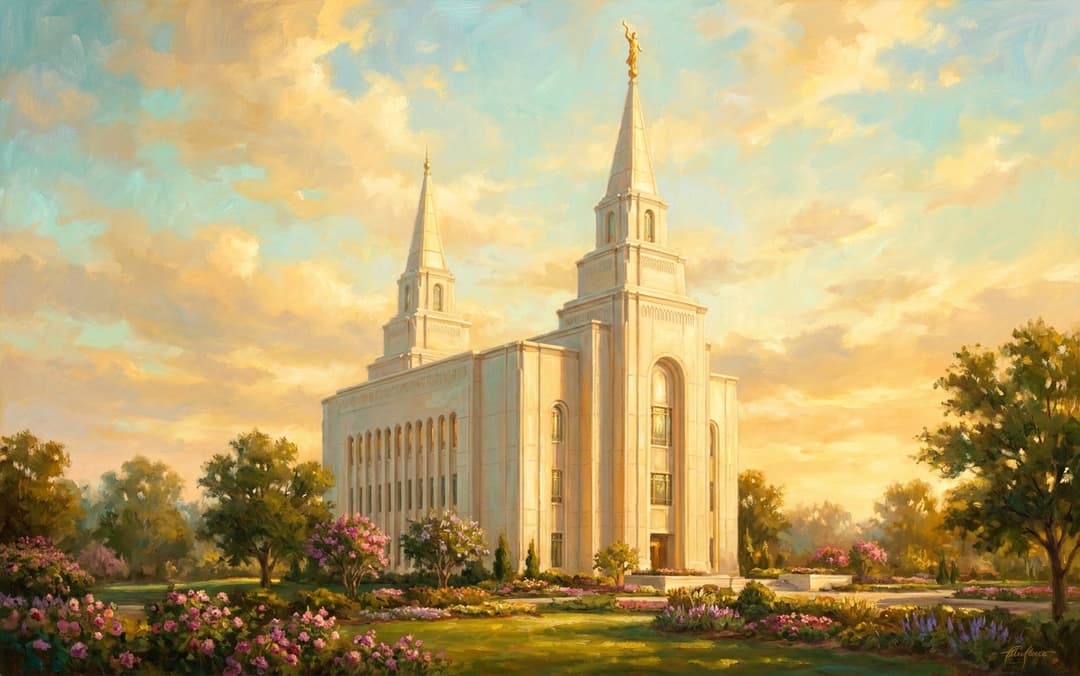
The Kansas City Missouri Temple is dedicated, sharing regional temple service duties across the state.
EventHistory by Decade
1830s–1840s — Exile and Refuge
In the 1830s, early Latter-day Saints gathered in western Missouri but faced intense persecution that culminated in Executive Order 44. During their forced winter exile in 1838–1839, the municipal city of St. Louis served as a compassionate 'city of refuge.' St. Louis citizens provided housing, food, and employment to thousands of displaced believers.
1970s — Formal Reconciliation
In 1976, 138 years after Executive Order 44 was issued, Missouri Governor Christopher S. Bond formally rescinded the historic Extermination Order. Recognizing it as a violation of constitutional rights, Governor Bond extended an official apology, paving the way for spiritual healing between the state and Church members.
1990s — Announcement, Construction, and Dedication
The First Presidency announced the temple in December 1990, selecting a 14-acre hilltop parcel in Town and Country. Ground broke in October 1993 under the direction of President Gordon B. Hinckley. Following a public open house that drew 260,000 visitors, President Hinckley dedicated the temple across 19 sessions in June 1997 as the Church's 50th operating temple.
2000s–Present — Continued Sacred Service
The St. Louis Missouri Temple continues to serve stakes throughout eastern Missouri, southern Illinois, and nearby Midwestern communities. Routine refurbishments and meticulous grounds maintenance preserve the structure's physical grandeur and sacred purpose for future generations.
Architecture & Facilities
The St. Louis Missouri Temple reflects a Classic Modern architectural style designed by St. Louis firm Chiodini Associates. The building balances clean modern geometry with traditional sacred motifs, projecting stability, dignity, and spiritual elevation. Clad in thermal-finished Bethel White Granite and cast stone accents, its single 150-foot east spire creates a striking vertical silhouette amidst wooded Midwestern hills.
Building Materials
Bethel White Granite
High-grade granite quarried in Vermont with a textured thermal finish that provides luminous reflective qualities under sunlight.
Architectural Cast Stone
Custom precast stone accents seamlessly integrated with granite walls to highlight exterior window openings and roof cornices.
Gold Leafing
Twenty-two karat gold leaf coating applied to the fiberglass Angel Moroni statue crowning the single spire.
Art Glass Windows
Custom geometric insulated glass panels designed to filter natural light while providing interior privacy.
Interior Features
Foyer and Reception
Light-filled entry featuring polished marble flooring, warm hardwood trim, and reception desks for arriving worshipers.
Baptistry
Lower-level baptistry centered around a baptismal font supported by twelve life-sized cast oxen.
Ordinance Rooms
Four stationary instruction rooms decorated with soft carpet tones, handcrafted woodwork, and understated wall murals.
Celestial Room
Serene celestial room with lofty ceilings, detailed moldings, plush cream carpets, and a massive crystal chandelier.
Temple Grounds
The 14-acre site features manicured lawns, seasonal floral beds, stone retaining walls, a formal water fountain, and mature native shade trees.
Additional Facilities
Includes an adjacent meetinghouse chapel, patron arrival center, and maintenance infrastructure supporting temple operations.
Religious Significance
Within Abrahamic and Latter-day Saint theological traditions, the temple functions as a consecrated House of the Lord—a physical intersection between heaven and earth where divine covenants are forged.
To serve as a holy sanctuary for personal communion with God, sacred instructional endowment, and eternal family sealings.
Sacred Ordinances
Baptism for the Dead
Vicarious baptisms performed in the twelve-oxen font, extending salvation universally to deceased ancestors.
Temple Endowment
Progressive spiritual instruction and sacred covenant-making that orient believer lives toward Jesus Christ.
Eternal Marriage Sealings
Sacred rites performing marriages and family unite covenants intended to endure beyond physical mortality.
Historical Healing in Missouri
The dedication of the St. Louis Missouri Temple realized long-standing hopes for a dedicated temple in Missouri, bringing full circle the historic shelter provided by St. Louis in 1838.
Similar Temples
Sources & Research
Every fact on Temples.org is backed by verified Sources & Research. Each piece of information is rated by source tier and confidence level.
View All Sources (8)
| Field | Source | Tier | Retrieved |
|---|---|---|---|
| About & Historical Background | The Church of Jesus Christ of Latter-day Saints (opens in a new tab) | A | 2026-02-18 |
| About & Historical Background | Church Newsroom (opens in a new tab) | A | 2026-02-18 |
| Timeline & Featured Stories | Church History Department (opens in a new tab) | A | 2026-02-18 |
| Architecture & Symbolic Elements | ChurchofJesusChristTemples.org (opens in a new tab) | C | 2026-02-18 |
| Historical Reconciliation & Extermination Order | Missouri State Archives (opens in a new tab) | B | 2026-02-18 |
| Architecture & Open House Coverage | St. Louis Post-Dispatch (opens in a new tab) | B | 2026-02-18 |
| Visitor Information & Significance | The Church of Jesus Christ of Latter-day Saints (opens in a new tab) | A | 2026-02-18 |
| Construction & Dedication Records | Deseret News (opens in a new tab) | B | 2026-02-18 |