Visitor Insights
Visiting Suva Fiji Temple
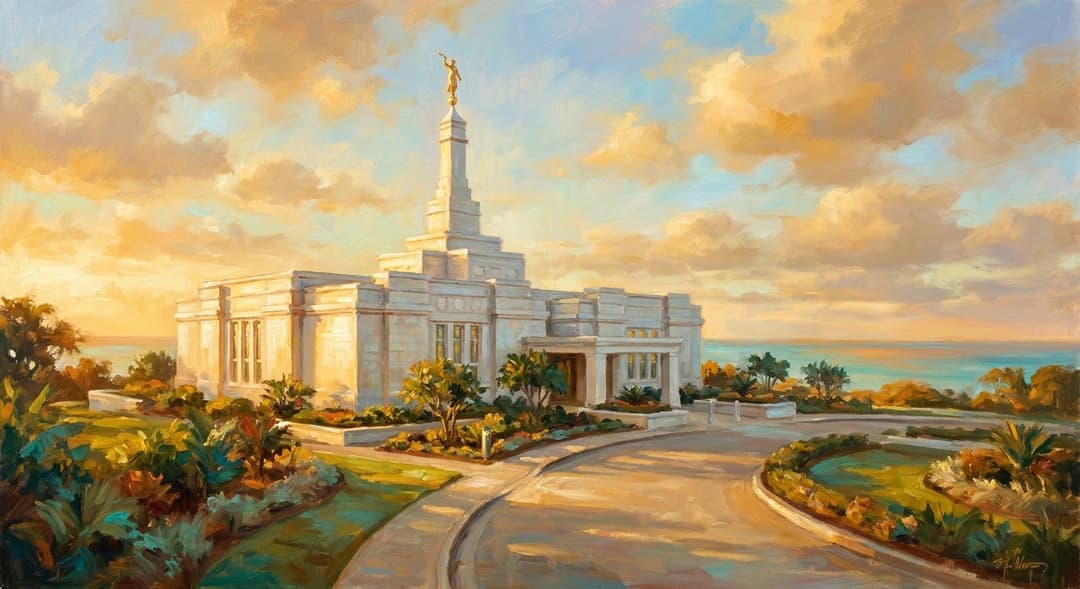
The temple grounds in Samabula are open to the general public, offering tranquil gardens and panoramic vistas of the Pacific Ocean. Access to the building interior is reserved exclusively for Church members holding a valid temple recommend.
Highlights
- Sweeping ocean vistas from three distinct angles of the hilltop property
- Manicured tropical gardens adorned with native hibiscus, flowering plants, and palm trees
- Striking snow-white granite facade imported from Campolonghi, Italy
Things to Know
- Interior entry requires an active temple recommend
- Visitors are asked to observe quiet reverence and modest dress on grounds
- Tropical rain showers are frequent, so carrying an umbrella is recommended
Location
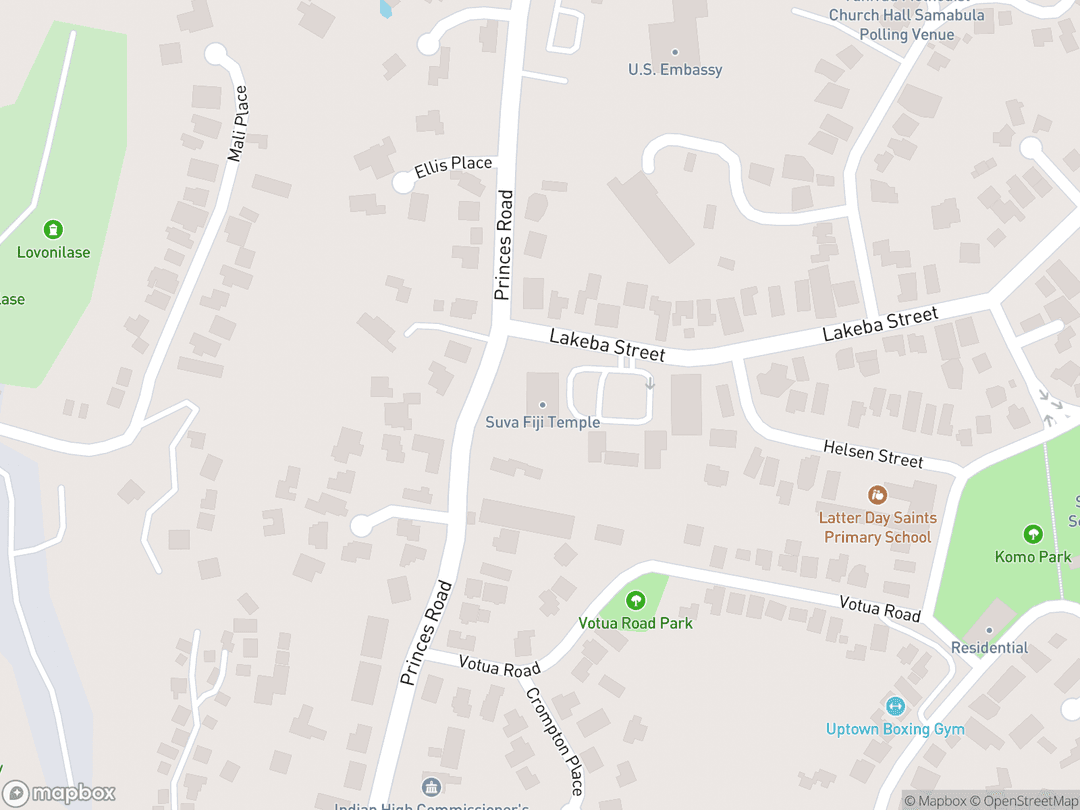
2-20 Lakeba Street, Samabula, Suva, Fiji
Hours: Grounds open daily during daylight hours; sacred ordinance schedules vary.
Getting There: Situated roughly 3 km northeast of central Suva in Samabula, accessible via taxi or public bus along Lakeba Street.
Get DirectionsTips for Your Visit
Optimal Viewing Times
Visit during late afternoon to capture optimal light against the Italian granite facade and Pacific Ocean.
Grounds Respect
Modest casual attire is encouraged while enjoying the exterior gardens and paved perimeter paths.
About
The Suva Fiji Temple stands as a sacred beacon of faith on the island of Viti Levu. Rooted in the Christian theological tradition of Abrahamic holy places, Latter-day Saints regard this temple as a literal house of the Lord dedicated to sacred covenants and spiritual reflection.
Announced in 1998 by President Gordon B. Hinckley, the temple was constructed to bring essential religious ordinances closer to Pacific island members. Its initial dedication in June 2000 occurred under extraordinary circumstances during an active military coup in Suva.
Following a complete structural and mechanical renovation, the temple was rededicated in February 2016 by President Henry B. Eyring immediately after Category 5 Tropical Cyclone Winston. Today, it serves thousands of Saints across Fiji, Kiribati, Vanuatu, Nauru, and Tuvalu.
Gallery
Symbolic Elements
The temple's exterior features intricate carvings, each rich with spiritual meaning:

Angel Moroni Statue
A golden figure pointing eastward to herald the gospel restoration and Christ's Second Coming.

Twelve-Oxen Baptismal Font
A sunken baptismal font supported by twelve oxen representing the twelve tribes of Israel.

Italian White Granite Exterior
Light-reflecting Italian granite symbolizing sacred purity and durability against sea weather.
Tropical Art Glass Windows
Custom geometric art glass featuring tropical blues, sea-spray aquas, and coral tones.

South Pacific Landscape Mural
A hand-painted interior mural depicting the volcanic peaks and lush coastlines of Fiji.

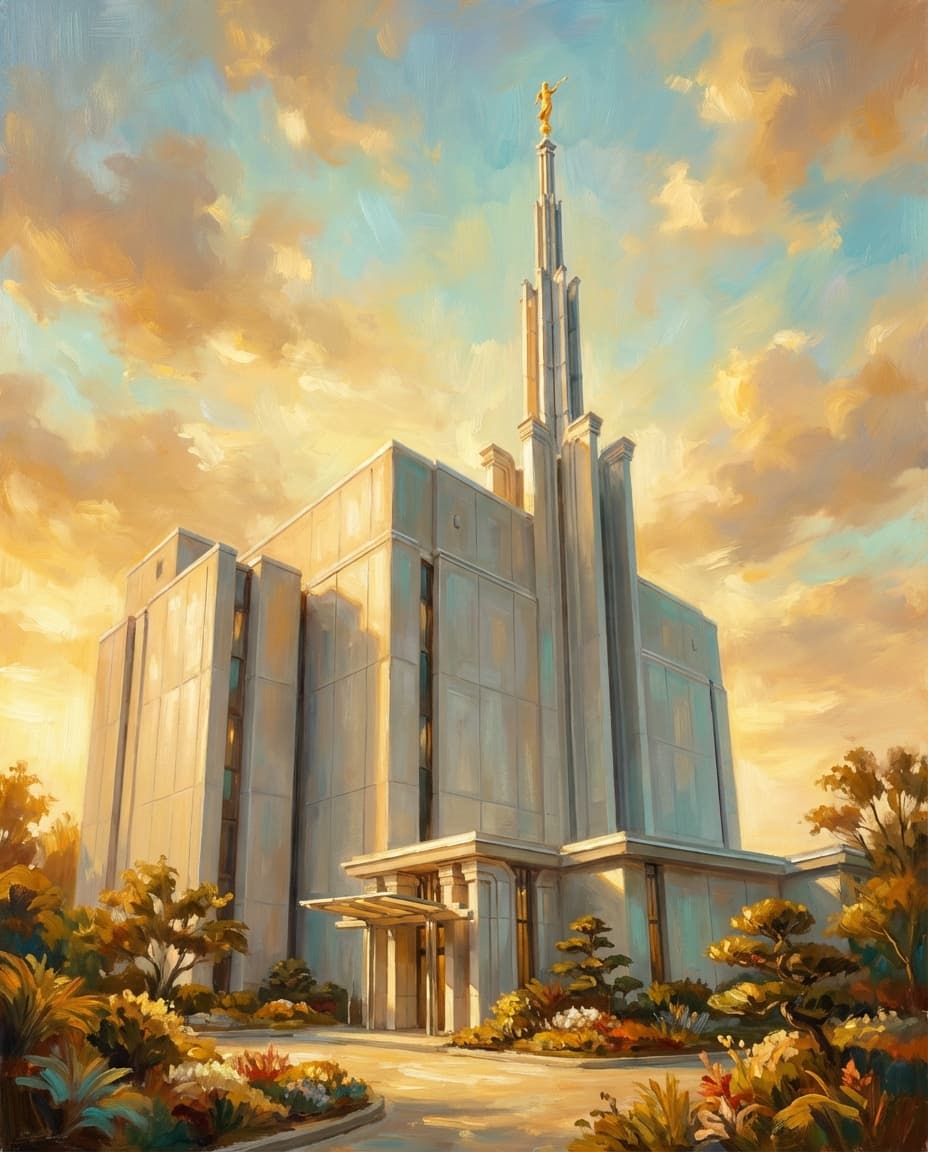
Single Stepped Spire
A classic modern spire drawing worshipers' attention heavenward toward God.

Sealing Room Altars
Sacred altars where eternal family unions are solemnized for time and all eternity.
Interesting Facts
Dedicated under military martial law during an active political coup in June 2000. (Tier A)
Rededicated by President Henry B. Eyring hours after Category 5 Cyclone Winston swept Fiji. (Tier A)
Clad in snow-white Italian granite from Campolonghi to resist coastal sea spray. (Tier A)
Official engineering blueprints confirm a total floor area of exactly 12,755 square feet. (Tier A)
Designed by native Fijian architect Conway Beg of Architects Pacific. (Tier B)
Perched on a elevated Samabula hilltop offering ocean views from three directions. (Tier A)
Ground was broken on May 8, 1999, simultaneously with the Baton Rouge Louisiana Temple. (Tier A)
Serves an expansive Pacific district including Kiribati, Vanuatu, Nauru, and Tuvalu. (Tier A)
Common Questions
Can non-members visit the Suva Fiji Temple?
Non-members are welcome to visit the manicured exterior gardens, while interior access is reserved for Church members.
Why was the 2000 temple dedication unusual?
President Gordon B. Hinckley dedicated the temple under military martial law during an active political coup.
What materials were used for the temple exterior?
The facade features snow-white granite quarried and precut in Campolonghi, Italy.
Which nations are served by this temple?
The district covers Fiji, Kiribati, Vanuatu, Nauru, and Tuvalu.
Featured Stories
Dedication During a Military Coup
June 18, 2000
When political unrest broke out in Suva in May 2000, military martial law and curfews threatened the planned temple dedication. President Gordon B. Hinckley traveled to Fiji under heavy security and conducted a small dedication with roughly 60 local leaders. This solemn service became one of the smallest and most memorable temple dedications in modern Church history.
Source: Church Newsroom
Faith Amid Category 5 Cyclone Winston
February 21, 2016
Just hours before the rededication of the renovated temple, Category 5 Tropical Cyclone Winston devastated Fiji with winds exceeding 180 mph. Despite massive damage across the island nation, local Saints navigated debris-filled roads to attend the rededication presided over by President Henry B. Eyring. The sacred edifice stood unharmed, serving as a sanctuary of peace amid the physical storm.
Source: Church Newsroom
An Island Architect's Vision
May 8, 1999
Fijian architect Conway Beg of Architects Pacific designed the temple to blend modern Latter-day Saint architecture with indigenous Pacific aesthetics. He selected resilient Italian granite to protect against tropical sea spray and designed the grounds to frame sweeping Pacific Ocean views. His architectural vision created an enduring house of the Lord tailored specifically to the South Pacific environment.
Source: Architects Pacific Fiji
Timeline
First Missionaries Arrive
The first Latter-day Saint missionaries arrive in Fiji to begin formal proselytizing. (Tier A)
MilestoneFirst Official Meeting
The Church holds its first recorded official worship meeting in Suva's Matanisiga Hall. (Tier A)
EventSuva Fiji Stake Organized
The first stake in Fiji is organized, marking mature local Church leadership growth. (Tier A)
MilestoneTemple Announcement
President Gordon B. Hinckley announces the intent to construct a temple in Fiji. (Tier A)
EventSite Selected in Samabula
The official 4.7-acre hilltop site in the Suva suburb of Samabula is announced. (Tier A)
EventGroundbreaking Ceremony
Elder Earl M. Monson presides over the groundbreaking and site dedication service. (Tier A)
component.timeline.groundbreakingTruncated Open House
Public open house concludes under heightened security restrictions due to political instability. (Tier A)
EventTemple Dedication Under Coup
President Gordon B. Hinckley dedicates the temple under military martial law during a coup. (Tier A)
DedicationRenovation Closure
The temple closes for multi-year mechanical, structural, and interior upgrades. (Tier A)
RenovationRenovated Open House Concludes
Over 22,000 visitors tour the renovated edifice during the public open house. (Tier A)
EventCyclone Winston Landfall
Category 5 Tropical Cyclone Winston strikes Fiji hours prior to the rededication. (Tier A)
EventRededication by President Eyring
President Henry B. Eyring rededicates the temple following the passage of Cyclone Winston. (Tier A)
DedicationHistory by Decade
1950s–1970s — Foundations in Fiji
Missionary work officially began in Fiji in July 1953, with early meetings held in Suva's Matanisiga Hall. Over the following decades, scriptural translations and local seminary programs helped establish a vibrant community of Fijian Latter-day Saints.
1980s–1990s — Growth and Temple Announcement
The creation of the Suva Fiji Stake in 1983 reflected rapid membership growth across the islands. In April 1998, President Gordon B. Hinckley announced plans for a local temple in Suva, eliminating the need for long overseas pilgrimages to New Zealand or Samoa.
2000s — A Historic Dedication
Construction progressed quickly toward a June 2000 dedication, but sudden political unrest forced a scaled-back ceremony. President Hinckley dedicated the sacred structure before a small gathering under martial law, marking a triumph of faith during turbulent times.
2010s to Present — Renovation and Resilience
The temple closed in 2014 for an extensive renovation to upgrade systems and interior design. Following its 2016 rededication during Tropical Cyclone Winston, the temple continues to serve Saints across Fiji, Kiribati, Vanuatu, Nauru, and Tuvalu.
Architecture & Facilities
The Suva Fiji Temple features a classic modern, single-spire architectural design adapted specifically for tropical island environmental conditions by native Fijian architect Conway Beg. Clad in brilliant white Italian granite, the building combines clean geometric clarity with subtle South Pacific Islander aesthetic proportions and motif details.
Building Materials
Exterior Granite
Snow-white granite quarried and precut in Campolonghi, Italy, offering durability against salt spray.
Art Glass Windows
Custom stained glass featuring deep ocean blues, aqua, and coral tones handcrafted in Australia.
Interior Hardwoods
Richly carved hardwood joinery reflecting traditional South Pacific craftsmanship.
Custom Carpeting
Hand-tufted area rugs and woven floor coverings produced in Utah and Hong Kong studios.
Interior Features
Baptistery
A sacred font resting on twelve oxen patterned after biblical Solomon's Temple precedents.
Ordinance Rooms
Two progressive instruction rooms featuring hand-painted island landscape murals.
Celestial Room
A serene room with crystal chandeliers and light fabrics representing heavenly peace.
Sealing Rooms
Two ordinance rooms with padded altars where eternal family unions are performed.
Temple Grounds
The 4.7-acre hilltop grounds feature palm avenues, manicured lawns, native flowering shrubs, and local stone retaining walls with views of the Pacific Ocean from three directions.
Additional Facilities
An adjoining patron housing unit and arrival facilities serve members traveling across the South Pacific.
Religious Significance
Rooted in the Christian tradition of sacred sanctuaries, the Suva Fiji Temple serves as a literal house of the Lord where sacred covenants unite families across generations.
To provide sacred priesthood ordinances, eternal marriage sealings, and vicarious baptisms for members throughout the South Pacific region.
Sacred Ordinances
Baptism for Deceased Ancestors
Vicarious baptisms performed in the baptismal font, extending Christ's redeeming grace to departed souls.
The Endowment
A solemn sequence of instruction and covenants focusing on Jesus Christ and humanity's eternal divine destiny.
Eternal Marriage and Sealings
Priesthood ordinances performed at sacred altars uniting husbands, wives, and children for eternity.
Abrahamic and Christian Sanctuary Traditions
Like ancient biblical temples, Latter-day Saint temples are set apart from common meetinghouses as dedicated places for personal communion with God.
Serving the Island Nations
The temple stands as a spiritual beacon for Saints traveling across vast Pacific distances from Fiji, Kiribati, Vanuatu, Nauru, and Tuvalu.
Similar Temples
Sources & Research
Every fact on Temples.org is backed by verified Sources & Research. Each piece of information is rated by source tier and confidence level.
View All Sources (4)
| Field | Source | Tier | Retrieved |
|---|---|---|---|
| About & Historical Background | The Church of Jesus Christ of Latter-day Saints (opens in a new tab) | A | 2026-02-18 |
| Historical Records | Church History Department (opens in a new tab) | A | 2026-02-18 |
| Timeline & Featured Stories | ChurchofJesusChristTemples.org (opens in a new tab) | C | 2026-02-18 |
| Cultural Context & History | LDS Living (opens in a new tab) | B | 2026-02-18 |