Visitor Insights
Visiting Akal Takht Sahib
Visiting the Akal Takht Sahib offers a profound experience of Sikh spirituality and history. Located within the Golden Temple complex, the atmosphere is serene and reverent. Visitors can witness the daily rituals, admire the architectural grandeur, and learn about the Akal Takht's significance in Sikhism. Remember to dress modestly, cover your head, and remove your shoes as a sign of respect.
Highlights
- Witness the Hukamnama ceremony.
- Admire the golden dome and intricate marble work.
- Learn about the Akal Takht's role in Sikh history.
Things to Know
- Dress modestly and cover your head.
- Photography is prohibited inside the main sanctum.
- Expect large crowds, especially during festivals.
Location

Harmandir Sahib Complex, Golden Temple Road, Amritsar, Punjab, India
Hours: 3:00 AM to 10:00 PM
Getting There: Located within the Golden Temple complex in Amritsar. Easily accessible by road and public transport.
Get DirectionsAbout
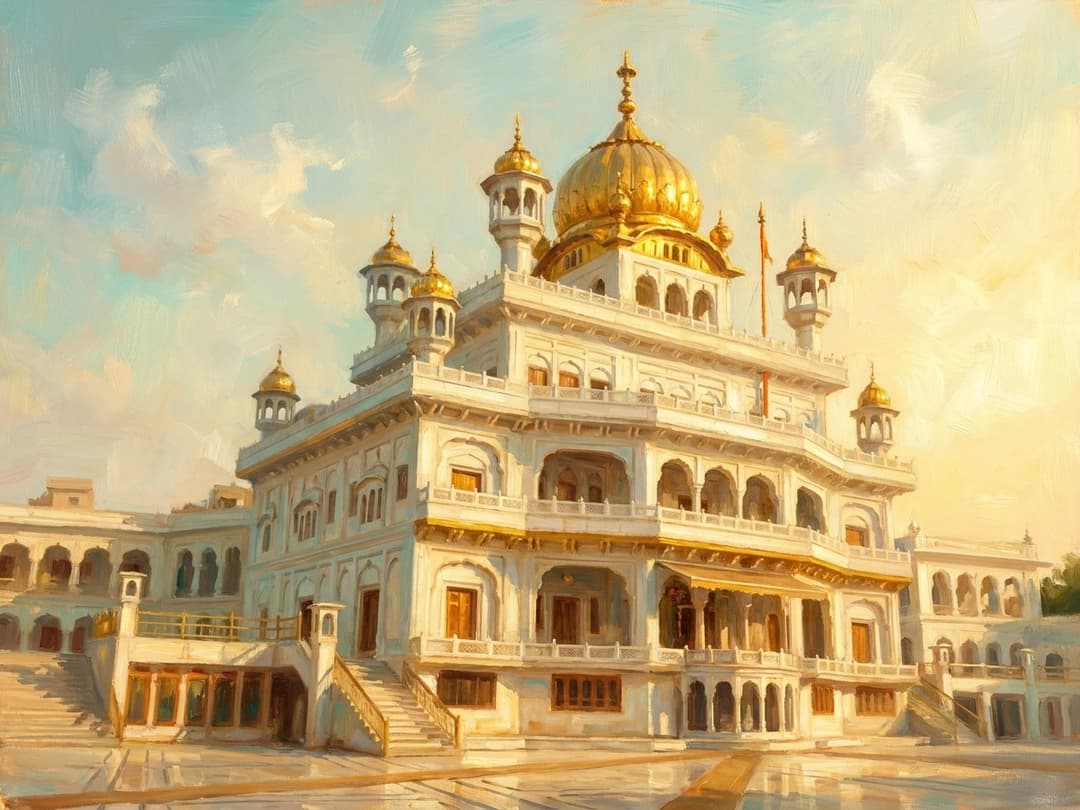
The Akal Takht Sahib, meaning "Throne of the Timeless One," is the most prominent of the five Takhts (seats of authority) in Sikhism. Located within the Harmandir Sahib (Golden Temple) complex in Amritsar, Punjab, India, it symbolizes the integration of spiritual and temporal authority within the Sikh faith. The Akal Takht is a place where the temporal and spiritual concerns of the Sikh community are addressed.
Founded by Guru Hargobind in 1606, the Akal Takht served as a symbol of resistance against Mughal rule and faced repeated attacks throughout the 17th and 18th centuries. The structure was rebuilt with bricks in the 1770s-1780s. In the 19th century, Maharaja Ranjit Singh added three stories to the Akal Takht, and Hari Singh Nalwa gilded the dome with gold.
During Operation Blue Star in 1984, the Akal Takht was heavily damaged. The rebuilt structure by the Indian government in 1986 was demolished to reject government involvement, and the Akal Takht was rebuilt by the Sikh community. The Akal Takht continues to serve as the supreme seat of authority for Sikhs worldwide.
Gallery
Symbolic Elements
The temple's exterior features intricate carvings, each rich with spiritual meaning:

Golden Dome
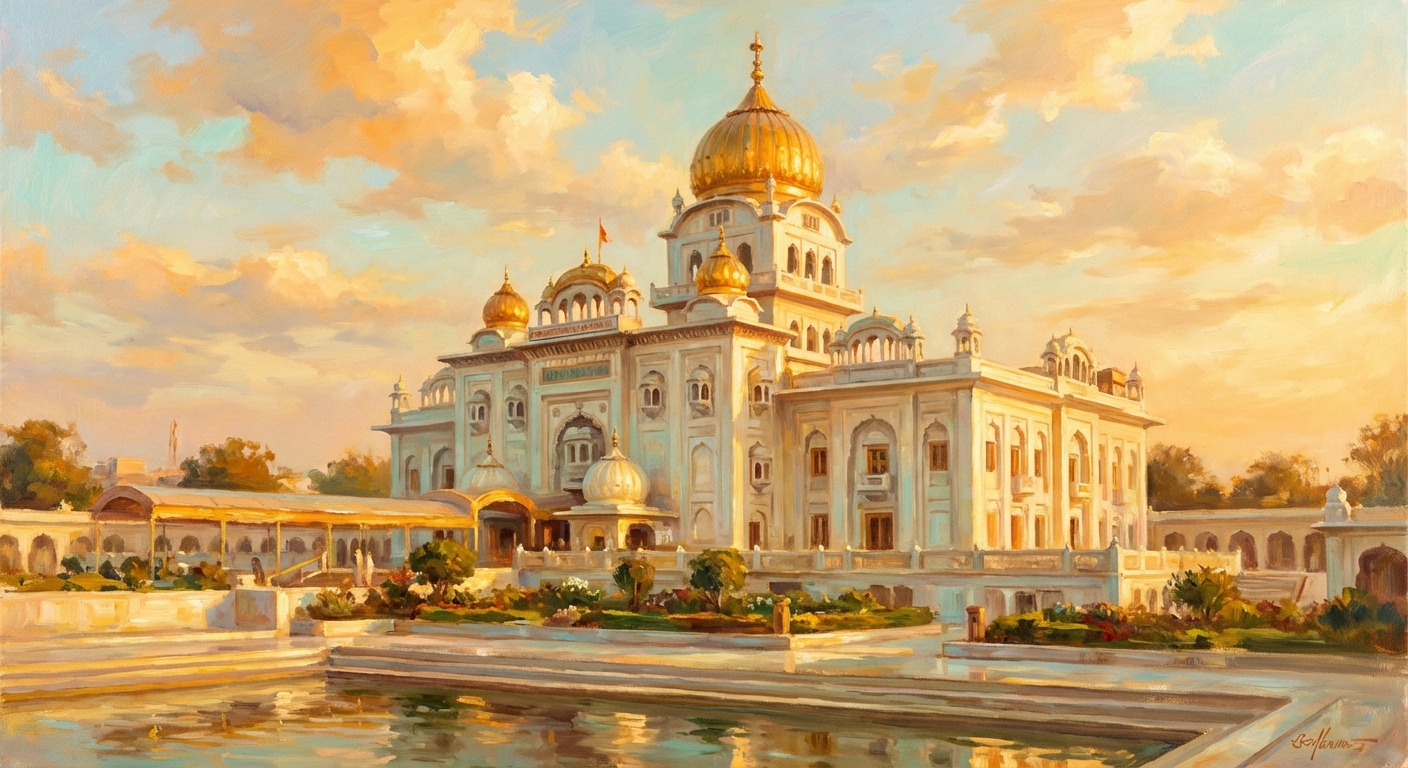
The golden dome of the Akal Takht, plated with gold by Maharaja Ranjit Singh, symbolizes the spiritual and temporal sovereignty of the Sikh faith. Its radiant appearance reflects the divine light and the Sikh community's prosperity. The dome is a prominent feature, visible from afar, and serves as a beacon of hope and resilience.

Nishan Sahib Flags
Two Nishan Sahib flags fly at the Akal Takht, representing the dual concepts of Miri and Piri (temporal and spiritual authority). These flags symbolize the Sikh commitment to both worldly responsibilities and spiritual pursuits. The flags are prominently displayed, signifying the Akal Takht's role as a center of both political and religious guidance.

Five Stories
The Akal Takht's five-story structure represents the five Takhts or seats of Sikh religious authority. Each story signifies a different aspect of Sikh governance and spiritual leadership. The height of the building is a testament to the Akal Takht's importance and its role as the supreme decision-making body for the Sikh community.

Marble Inlays
The intricate marble inlays adorning the Akal Takht showcase a blend of Mughal and Sikh artistic styles. These delicate designs reflect the cultural synthesis and the rich heritage of the region. The marble work adds to the Akal Takht's aesthetic beauty and symbolizes the enduring legacy of Sikh craftsmanship.

Miri-Piri Concept
The Akal Takht embodies the Miri-Piri concept, the intertwining of temporal (political) and spiritual authority in Sikhism. This principle guides the Akal Takht's decisions and actions, ensuring that the Sikh community is governed with both spiritual wisdom and practical considerations. The Miri-Piri concept is central to the Akal Takht's identity and purpose.

Hukamnama Edicts
Hukamnamas, or edicts, issued from the Akal Takht provide guidance on Sikh doctrine and practice. These pronouncements carry significant weight and are followed by Sikhs worldwide. The Hukamnamas reflect the Akal Takht's role as the ultimate arbiter of Sikh religious and social matters, ensuring the community remains united and guided by its principles.

White Building
The white color of the Akal Takht symbolizes purity, peace, and righteousness in Sikhism. This choice of color reflects the Akal Takht's commitment to justice and ethical governance. The pristine white facade stands in contrast to the golden hues of the adjacent Harmandir Sahib, creating a visually striking and spiritually significant landmark.

Open Court
The Akal Takht serves as an open court for civil and non-spiritual disputes, reflecting its role in maintaining justice and order within the Sikh community. This function underscores the Akal Takht's commitment to addressing the practical needs of its followers, providing a forum for resolving conflicts and promoting harmony. The open court symbolizes transparency and fairness in governance.
Interesting Facts
The Akal Takht means 'Throne of the Timeless One'.
It is the first and most important of the five Takhts in Sikhism.
The Akal Takht was established in 1606 by Guru Hargobind.
The height of the original Akal Takht was raised to defy Mughal Emperor Jahangir's edict.
The Jathedar of the Akal Takht is the highest spokesperson of the Sikh Panth.
The Akal Takht serves as a court of law for civil and non-spiritual disputes.
Rare weapons pertaining to Sikh Gurus and warriors are displayed.
The Guru Granth Sahib is brought to the Akal Takht every night and returned to the Golden Temple in the morning.
The Akal Takht can express gratitude for exceptional services rendered by individuals supporting Sikhism.
No individual is above the Akal Takht.
Common Questions
What is the Akal Takht Sahib?
The Akal Takht Sahib, meaning 'Throne of the Timeless One,' is the most important of the five Takhts (seats of authority) in Sikhism. It symbolizes the integration of spiritual and temporal authority within the Sikh faith.
Who founded the Akal Takht Sahib?
The Akal Takht Sahib was founded by Guru Hargobind, the sixth Sikh Guru, in 1606.
Where is the Akal Takht Sahib located?
The Akal Takht Sahib is located within the Harmandir Sahib (Golden Temple) complex in Amritsar, Punjab, India.
What is the significance of the Akal Takht Sahib?
The Akal Takht Sahib represents the concept of Miri-Piri, the intertwining of temporal (political) and spiritual authority in Sikhism. It serves as the highest seat of earthly authority for Sikhs, where decisions affecting the community are made.
What are Hukamnamas?
Hukamnamas are edicts issued from the Akal Takht Sahib, providing guidance on Sikh doctrine and practice.
Featured Stories
Guru Hargobind's Vision
1606
In 1606, Guru Hargobind, the sixth Sikh Guru, laid the foundation of the Akal Takht, a pivotal moment in Sikh history that signified the intertwining of spiritual and temporal authority. Following the martyrdom of his father, Guru Arjan Dev, Guru Hargobind recognized the need for the Sikh community to assert its sovereignty and protect its religious freedom. The Akal Takht was envisioned as a place where Sikhs could address their worldly concerns and seek justice, standing in contrast to the purely spiritual focus of the Harmandir Sahib.
The construction of the Akal Takht marked a significant shift in Sikh identity, symbolizing a commitment to both spiritual enlightenment and social responsibility. Guru Hargobind himself oversaw the building process, emphasizing the importance of the Akal Takht as a center for decision-making and the resolution of disputes. This bold step laid the groundwork for the Akal Takht's future role as the supreme seat of authority for the Sikh Panth.
Source: Discover Sikhism
The Golden Dome's Glimmer
1830
In the 19th century, Maharaja Ranjit Singh, the powerful Sikh ruler, played a crucial role in enhancing the Akal Takht's grandeur and significance. Recognizing the Akal Takht as the heart of Sikh temporal authority, Ranjit Singh commissioned the gold-plating of its dome, transforming it into a radiant symbol of Sikh prosperity and resilience. This act not only beautified the structure but also reinforced its importance in the eyes of the Sikh community and the world.
The gleaming golden dome became a beacon of hope and inspiration, reflecting the Sikh community's strength and unity under Ranjit Singh's leadership. The addition of the gold plating was a testament to the deep respect and reverence that Ranjit Singh held for the Akal Takht, solidifying its position as the supreme seat of Sikh authority. The golden dome continues to shine brightly, reminding Sikhs of their rich heritage and their commitment to both spiritual and temporal values.
Source: Golden Temple Amritsar
Rebuilding After Blue Star
1986
The events of 1984, particularly Operation Blue Star, left a deep scar on the Sikh community, with the Akal Takht suffering significant damage during the military operation. The aftermath of this event saw the Akal Takht rebuilt by the Indian government, but this reconstruction was met with widespread rejection by the Sikh community, who viewed it as an attempt to undermine their autonomy and control over their religious affairs. This led to a collective decision to demolish the government-rebuilt structure.
In a remarkable display of unity and determination, the Sikh community undertook the arduous task of rebuilding the Akal Takht through their own resources and efforts. This act of self-reliance and community spirit underscored the Akal Takht's importance as a symbol of Sikh identity and resilience. The rebuilt Akal Takht stands as a testament to the Sikh community's unwavering commitment to preserving their heritage and maintaining their independence in the face of adversity.
Source: Britannica
Timeline
Akal Takht Founded
The Akal Takht was founded by Guru Hargobind, the sixth Sikh Guru, as a place to address the temporal and spiritual needs of the Sikh people.
MilestoneResistance Against Mughal Rule
The Akal Takht served as a symbol of resistance against Mughal rule and faced repeated attacks.
EventRebuilt with Bricks
The structure was rebuilt with bricks after being damaged in previous conflicts.
RenovationMaharaja Ranjit Singh's Additions
Maharaja Ranjit Singh added three stories to the Akal Takht, and Hari Singh Nalwa gilded the dome with gold.
RenovationOperation Blue Star
During Operation Blue Star, the Akal Takht was heavily damaged.
EventRebuilt by the Sikh Community
The rebuilt structure by the Indian government was demolished to reject government involvement, and the Akal Takht was rebuilt by the Sikh community.
RenovationRebuilt Structure Completed
The rebuilt structure of the Akal Takht was completed.
RenovationGuru Hargobind Assumes Leadership
Guru Hargobind, after the martyrdom of his father Guru Arjan Dev, began to assert Sikh sovereignty, leading to the construction of the Akal Takht.
MilestoneAhmad Shah Abdali's Attack
Ahmad Shah Abdali, the Afghan ruler, attacked the Harmandir Sahib complex and desecrated the Akal Takht, leading to further rebuilding efforts.
EventBaba Deep Singh's Martyrdom
Baba Deep Singh, a Sikh scholar and warrior, fought valiantly to protect the Harmandir Sahib and the Akal Takht from invaders, ultimately sacrificing his life.
EventRanjit Singh Takes Control
Maharaja Ranjit Singh consolidated Sikh power in the Punjab region and began significant renovations and enhancements to the Akal Takht.
MilestoneGolden Dome Completed
The gold-plating of the Akal Takht's dome was completed under the patronage of Maharaja Ranjit Singh, adding to its splendor.
RenovationSGPC Formed
The Shiromani Gurdwara Parbandhak Committee (SGPC) was formed to manage Sikh Gurdwaras, including the Akal Takht, leading to reforms and better administration.
MilestoneActing Jathedar Appointed
Giani Kuldip Singh Gargaj was appointed as the acting Jathedar by the Shiromani Gurdwara Parbandhak Committee (SGPC).
MilestoneSimilar Temples
Sources & Research
Every fact on Temples.org is backed by verified Sources & Research. Each piece of information is rated by source tier and confidence level.
View All Sources (5)
| Field | Source | Tier | Retrieved |
|---|---|---|---|
| About & Historical Background | Golden Temple Amritsar (opens in a new tab) | A | 2024-01-01 |
| About & Historical Background | Discover Sikhism (opens in a new tab) | A | 2024-01-01 |
| About & Historical Background | Britannica (opens in a new tab) | B | 2024-01-01 |
| About & Historical Background | FabHotels (opens in a new tab) | C | 2024-01-01 |
| Visitor Information | Travelsetu (opens in a new tab) | D | 2024-01-01 |