Visitor Insights
Visiting Brihadeeswarar Temple
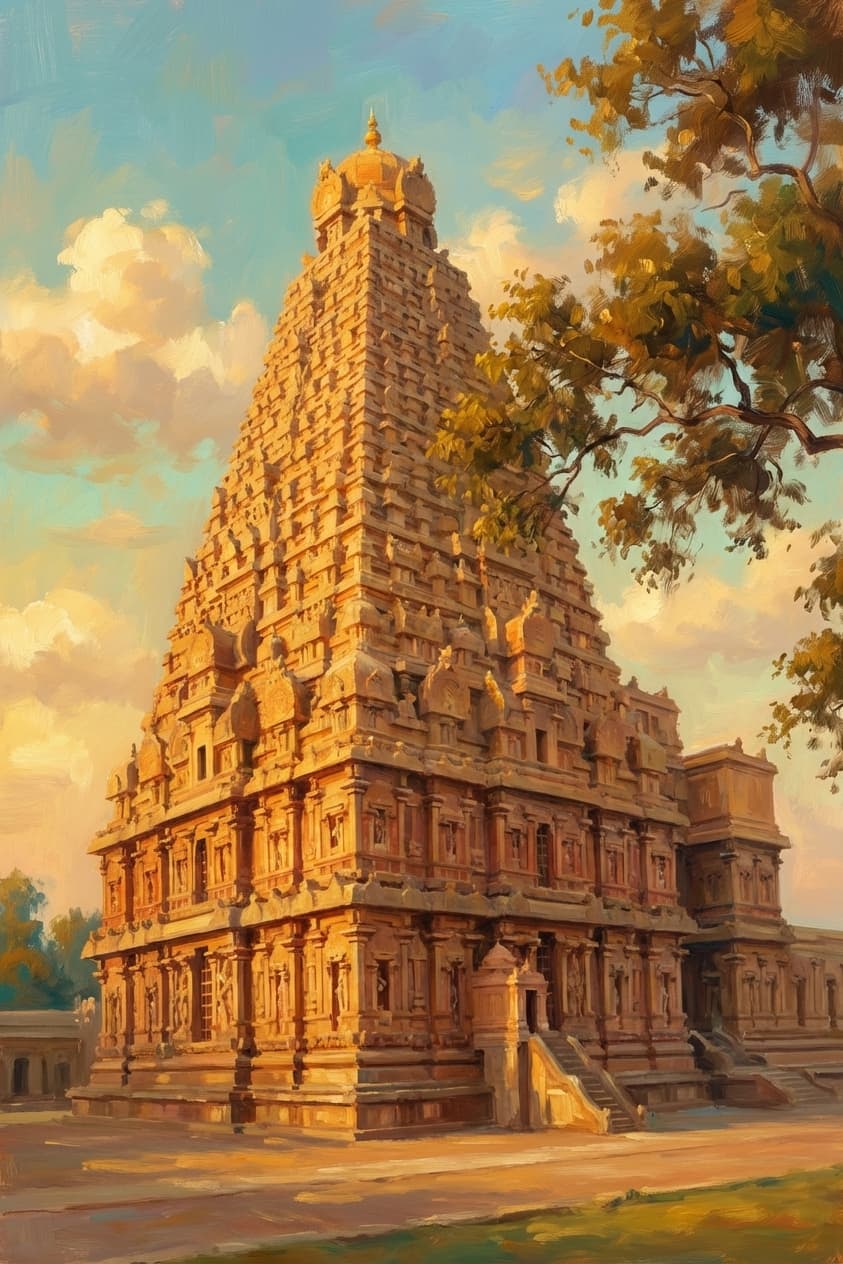
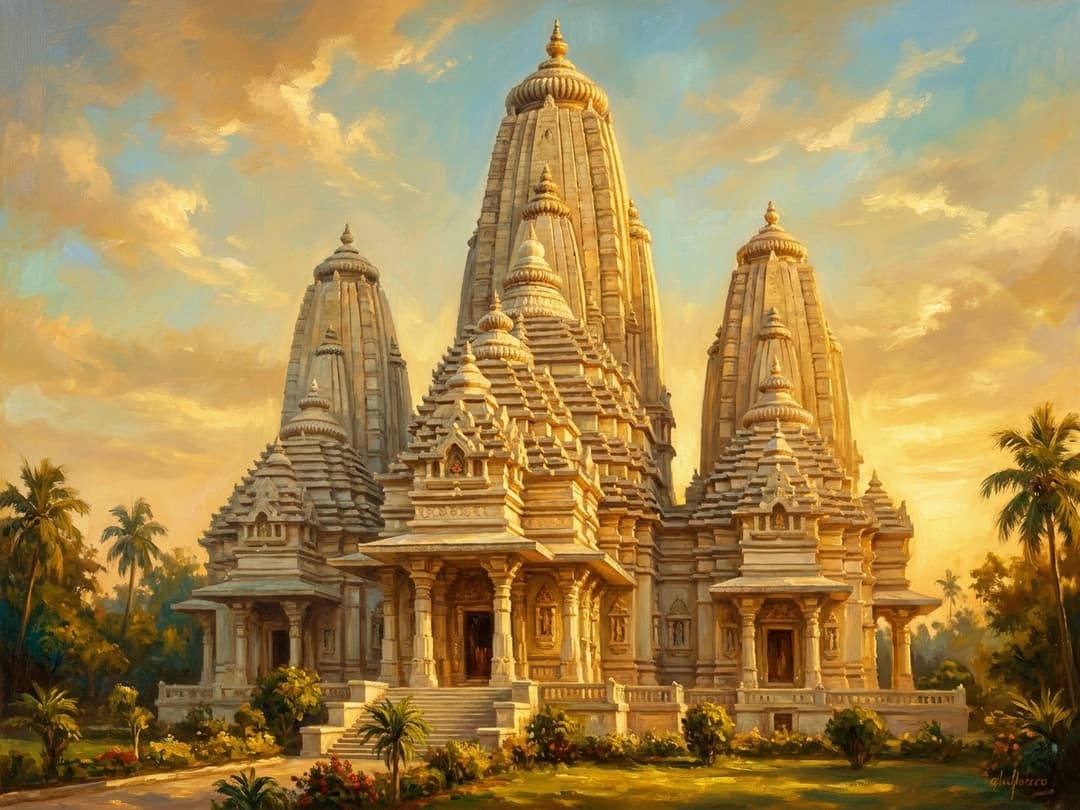
Visiting the Brihadeeswarar Temple is a journey into the heart of Chola artistry and devotion. The temple's grandeur is immediately apparent, with its towering vimana and expansive courtyards. Expect a serene and spiritual atmosphere, filled with the echoes of ancient chants and the scent of incense. Be prepared to remove your shoes before entering the main temple complex.
Highlights
- Marvel at the towering vimana, a masterpiece of Dravidian architecture.
- Explore the intricate carvings and sculptures that adorn the temple walls.
- Witness the daily rituals and ceremonies performed by the temple priests.
Things to Know
- Photography may be restricted in certain areas of the temple.
- Dress modestly and respectfully when visiting the temple.
- Be aware of the crowds, especially during festivals and holidays.
Location

Membalam Rd, Balaji Nagar, Thanjavur, Tamil Nadu 613007, India
Hours: Open daily from 6:00 AM to 12:30 PM and 4:00 PM to 8:30 PM.
Getting There: The temple is located in Thanjavur, easily accessible by road and rail. The nearest airport is Tiruchirappalli International Airport, about 60 km away.
Get DirectionsTips for Your Visit
Best Time to Visit
The cooler months from November to March are ideal for visiting Thanjavur.
Dress Code
Dress modestly, covering shoulders and knees, to show respect.
About
The Brihadeeswarar Temple, also known as Rajarajeshwaram or Peruvudaiyar Kovil, is a Hindu temple dedicated to Lord Shiva located in Thanjavur, Tamil Nadu, India. It is one of the largest South Indian temples and an exemplary example of Dravidian architecture. Commissioned by the Chola emperor Raja Raja I in the 11th century, the temple stands as a testament to the Chola dynasty's power, artistic prowess, and deep devotion.
The temple's construction began around 1003 CE and was completed in 1010 CE. Its towering vimana (temple tower) reaches a height of 66 meters (216 ft) and is one of the tallest structures of its kind in the world. The temple complex includes numerous shrines, pillared halls, and intricately carved sculptures, showcasing the rich artistic and cultural heritage of the Chola period.
Brihadeeswarar Temple is recognized as a UNESCO World Heritage Site, forming part of the "Great Living Chola Temples." It continues to be a vibrant center of religious worship, cultural events, and historical significance, attracting devotees and tourists from across the globe. The temple's enduring legacy lies in its architectural grandeur, intricate craftsmanship, and its role as a living testament to the Chola dynasty's golden age.
Gallery
Symbolic Elements
The temple's exterior features intricate carvings, each rich with spiritual meaning:

Vimana
The vimana, or temple tower, is the most prominent feature of the Brihadeeswarar Temple, rising to a height of 66 meters. It symbolizes the sacred mountain, Mount Meru, and represents the cosmic axis connecting the earthly and divine realms. The intricate carvings and sculptures on the vimana depict various deities, mythological figures, and scenes from Hindu scriptures.

Nandi
The Nandi, a sacred bull, is the mount of Lord Shiva and is prominently placed facing the main shrine. The Nandi statue at Brihadeeswarar Temple is one of the largest in India, carved out of a single stone. It symbolizes strength, devotion, and fertility, and serves as a guardian of the temple.

Lingam
The Lingam is a representation of Lord Shiva and is the central deity worshipped in the main shrine. It symbolizes the divine energy and creative power of Shiva. The Lingam at Brihadeeswarar Temple is a large, monolithic stone structure, representing the eternal and infinite nature of the deity.

Gopuram
The gopurams, or entrance gateways, are towering structures that mark the entrances to the temple complex. They are adorned with intricate carvings and sculptures depicting various deities, mythological figures, and scenes from Hindu epics. The gopurams serve as a symbolic threshold between the mundane world and the sacred space of the temple.

Sculptures
The Brihadeeswarar Temple is renowned for its intricate sculptures that adorn the temple walls, pillars, and shrines. These sculptures depict various deities, mythological figures, and scenes from Hindu scriptures, showcasing the artistic skill and craftsmanship of the Chola artisans. They serve as visual narratives of Hindu mythology and spirituality.

Pillars
The pillars within the temple complex are intricately carved and decorated with various motifs and sculptures. They support the roofs of the pillared halls and shrines, creating a sense of grandeur and spaciousness. The pillars symbolize stability, strength, and the interconnectedness of the various elements of the temple.

Frescoes
The Brihadeeswarar Temple contains ancient frescoes that adorn the inner walls of the temple. These paintings depict scenes from the life of Lord Shiva and other Hindu deities, providing valuable insights into the artistic and religious practices of the Chola period. The frescoes are a testament to the rich cultural heritage of the temple.

Kalasam
The Kalasam is the finial at the top of the Vimana. It is believed to be made of copper and plated with gold. The Kalasam is a sacred object and is an important part of the temple's rituals. It is believed to contain the essence of the deity and is a symbol of prosperity and abundance.
Interesting Facts
The temple's vimana is one of the tallest of its kind in the world.
The capstone on top of the vimana weighs around 80 tons and was placed using a ramp.
The temple is built entirely of granite, with over 130,000 tons of stone used.
The shadow of the vimana does not fall on the ground at noon.
The temple complex includes numerous shrines, pillared halls, and sculptures.
The Brihadeeswarar Temple is a UNESCO World Heritage Site.
The temple is dedicated to Lord Shiva and is an important pilgrimage site.
The temple's construction took only seven years to complete.
The temple is also known as Rajarajeshwaram or Peruvudaiyar Kovil.
The temple was commissioned by the Chola emperor Raja Raja I.
Common Questions
What is the Brihadeeswarar Temple famous for?
The Brihadeeswarar Temple is renowned for its magnificent Dravidian architecture, towering vimana, and intricate sculptures. It is a UNESCO World Heritage Site and a testament to the Chola dynasty's artistic and engineering prowess.
Who built the Brihadeeswarar Temple?
The temple was commissioned by the Chola emperor Raja Raja I and completed in 1010 CE.
What deity is the Brihadeeswarar Temple dedicated to?
The temple is dedicated to Lord Shiva, one of the principal deities in Hinduism.
What are the timings for visiting the Brihadeeswarar Temple?
The temple is open daily from 6:00 AM to 12:30 PM and 4:00 PM to 8:30 PM.
Is there an entry fee to visit the Brihadeeswarar Temple?
There is no entry fee to visit the Brihadeeswarar Temple.
What should I wear when visiting the temple?
Dress modestly and respectfully, covering shoulders and knees. It is customary to remove shoes before entering the main temple complex.
Featured Stories
The Vision of Raja Raja I
1003 CE
The story begins with Raja Raja I, the great Chola emperor, who envisioned a temple so magnificent that it would stand as a testament to the glory of Lord Shiva and the power of the Chola dynasty. Legend has it that the emperor received a divine vision, guiding him to build a temple that would reach the heavens and inspire generations to come. This vision fueled his ambition and set in motion the construction of the Brihadeeswarar Temple.
With unwavering determination, Raja Raja I assembled the finest architects, sculptors, and artisans from across his empire. He personally oversaw the planning and design of the temple, ensuring that every detail reflected the highest standards of artistic excellence. The emperor's dedication and passion transformed his vision into a tangible reality, resulting in a temple that continues to inspire awe and reverence.
The construction of the Brihadeeswarar Temple was not merely a feat of engineering but also an act of devotion. Raja Raja I poured his heart and soul into the project, ensuring that the temple would serve as a sacred space for generations to connect with the divine. His legacy lives on through the temple, a symbol of his vision, devotion, and the enduring power of the Chola dynasty.
Source: Tamil Nadu Tourism Department
The Placement of the Capstone
1010 CE
One of the most remarkable feats of engineering during the construction of the Brihadeeswarar Temple was the placement of the massive capstone atop the vimana. Weighing approximately 80 tons, the capstone presented a formidable challenge to the Chola engineers. They devised an ingenious method, constructing a ramp that stretched several kilometers to the top of the temple.
Using a combination of manpower and animal power, the engineers gradually hauled the capstone up the ramp. The process required immense coordination and precision, as even the slightest miscalculation could have resulted in disaster. The entire empire watched with bated breath as the capstone slowly made its way to the summit.
Finally, after months of painstaking effort, the capstone was successfully placed atop the vimana. The moment was met with jubilation and celebration, as the completion of the temple marked a triumph of human ingenuity and perseverance. The capstone stands as a symbol of the Chola dynasty's engineering prowess and their ability to overcome seemingly insurmountable challenges.
Source: Archaeological Survey of India
A Thousand Years of Devotion
2010
For over a thousand years, the Brihadeeswarar Temple has served as a center of religious worship, cultural events, and historical significance. Generations of devotees have flocked to the temple to offer prayers, seek blessings, and connect with the divine. The temple has witnessed the rise and fall of empires, the ebb and flow of history, and the enduring power of faith.
Throughout its long history, the Brihadeeswarar Temple has undergone numerous renovations and restorations, ensuring its preservation for future generations. The temple has been recognized as a UNESCO World Heritage Site, a testament to its universal cultural value. The temple continues to be a vibrant and living monument, attracting visitors from across the globe.
As the Brihadeeswarar Temple celebrated its 1000th anniversary in 2010, the occasion was marked with grand festivities and celebrations. The event served as a reminder of the temple's enduring legacy and its importance as a symbol of Tamil culture and heritage. The Brihadeeswarar Temple stands as a beacon of hope, inspiration, and devotion, a testament to the enduring power of faith and the human spirit.
Source: The Hindu
Timeline
Construction Begins
Raja Raja I commissions the construction of the Brihadeeswarar Temple.
MilestoneTemple Completed
The Brihadeeswarar Temple is completed, marking a significant achievement in Chola architecture.
DedicationKumbhabhishekham Ceremony
The first Kumbhabhishekham ceremony is performed, consecrating the temple.
EventDelhi Sultanate Invasion
The temple faces damage during the invasion by the Delhi Sultanate.
EventMaratha Rule
Thanjavur comes under Maratha rule, with subsequent renovations to the temple.
RenovationUNESCO World Heritage Site
The Brihadeeswarar Temple is declared a UNESCO World Heritage Site.
MilestoneMajor Renovation
Extensive restoration work is carried out to preserve the temple's structure and art.
RenovationKumbhabhishekham
Kumbhabhishekham ceremony is performed after the renovation work.
Event1000th Anniversary
The temple celebrates its 1000th anniversary with grand festivities.
EventRenovation Work
Further renovation and conservation efforts are undertaken to maintain the temple's integrity.
RenovationKumbhabhishekham
Kumbhabhishekham ceremony is performed after the renovation work.
EventDeath of Raja Raja I
The death of Raja Raja I, the Chola emperor who commissioned the temple.
EventAccession of Rajendra I
Rajendra I, the son of Raja Raja I, ascends the Chola throne and continues supporting the temple.
EventGangaikonda Cholapuram Temple
Rajendra I builds the Gangaikonda Cholapuram Temple, inspired by the Brihadeeswarar Temple.
MilestoneFrench Occupation
The French briefly occupy Thanjavur, impacting the temple's administration.
EventReligious Significance
The Brihadeeswarar Temple holds immense religious significance as a sacred abode of Lord Shiva, representing the divine cosmic energy and the eternal cycle of creation, preservation, and destruction.
The primary purpose of the temple is to provide a space for devotees to connect with Lord Shiva, seek his blessings, and attain spiritual enlightenment through prayer, rituals, and contemplation.
Sacred Ordinances
Abhishekam
Abhishekam is a ritualistic bathing of the Lingam with sacred substances such as milk, honey, and water, symbolizing purification and devotion to Lord Shiva.
Puja
Puja is a ritualistic offering of flowers, incense, and food to the deity, expressing reverence and seeking blessings for prosperity and well-being.
Aarti
Aarti is a ritualistic waving of lamps before the deity, accompanied by devotional songs and chants, symbolizing the dispelling of darkness and the illumination of divine presence.
The Significance of Shiva Lingam
The Shiva Lingam represents the formless and infinite nature of Lord Shiva, symbolizing the divine energy and creative power that permeates the universe. It is a focal point of worship and meditation, allowing devotees to connect with the ultimate reality.
The Importance of Temple Rituals
The temple rituals, such as Abhishekam, Puja, and Aarti, are essential practices that purify the mind, invoke divine blessings, and foster a sense of community and devotion among the worshippers. These rituals are performed with utmost care and precision, following ancient traditions and scriptures.
Similar Temples
Sources & Research
Every fact on Temples.org is backed by verified Sources & Research. Each piece of information is rated by source tier and confidence level.
View All Sources (7)
| Field | Source | Tier | Retrieved |
|---|---|---|---|
| About & Historical Background | UNESCO World Heritage Centre (opens in a new tab) | B | 2024-01-02 |
| Architecture & Construction | Archaeological Survey of India (opens in a new tab) | A | 2024-01-02 |
| Religious Significance | Tamil Nadu Tourism Department (opens in a new tab) | A | 2024-01-02 |
| Historical Context | Live History India (opens in a new tab) | B | 2024-01-02 |
| Temple Architecture and Deities | Ministry of Culture, Government of India (opens in a new tab) | B | 2024-01-02 |
| Temple History and Construction | The Hindu (opens in a new tab) | B | 2024-01-02 |
| Temple Art and Sculpture | Sahapedia (opens in a new tab) | B | 2024-01-02 |