Visitor Insights
Visiting Birla Mandir Kolkata
Birla Mandir is an active spiritual sanctuary offering peaceful reflection amidst the vibrant energy of Kolkata. Visiting during the evening prayer service provides an enchanting experience as floodlights illuminate the marble facade and crystal chandeliers.
Highlights
- Witnessing the evening Sandhya Aarti with illuminated marble interiors
- Inspecting the Bhagavad Gita verses carved along the marble walls
- Admiring the soaring 160-foot Kalinga-style main spire
Things to Know
- Strict prohibition of photography inside temple halls
- Footwear must be left at the free counter prior to entry
- Modest attire covering shoulders and knees is mandatory
Location
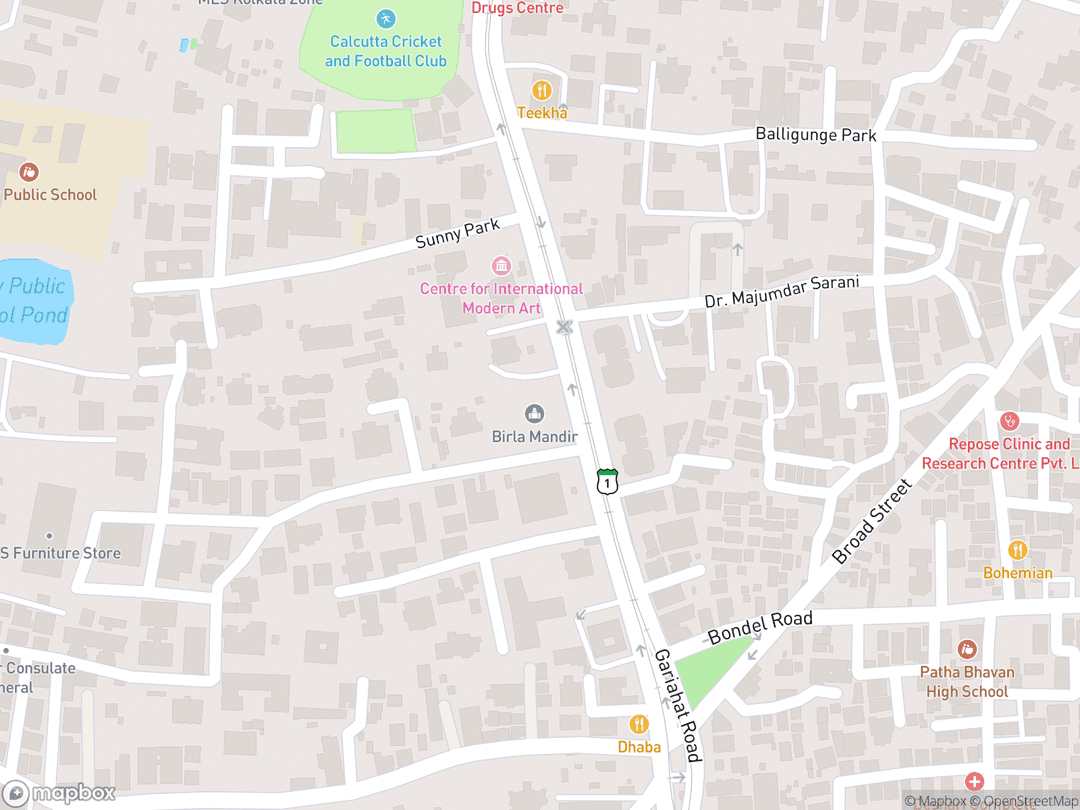
29, Ashutosh Chowdhury Avenue, Ballygunge, Kolkata, West Bengal 700019, India
Hours: Open daily: 5:30 AM – 11:00 AM and 4:30 PM – 9:00 PM
Getting There: Located at 29 Ashutosh Chowdhury Avenue in Ballygunge. Accessible via Jatin Das Park Metro Station (2.5 km away) or local buses and taxis.
Get DirectionsTips for Your Visit
Evening Aarti Experience
Arrive between 6:00 PM and 7:00 PM to attend the evening prayers when the entire temple complex is beautifully illuminated.
Shoe Counter Guidance
Deposit shoes and leather accessories at the dedicated counter near the entrance gate before walking onto the marble courtyard.
About
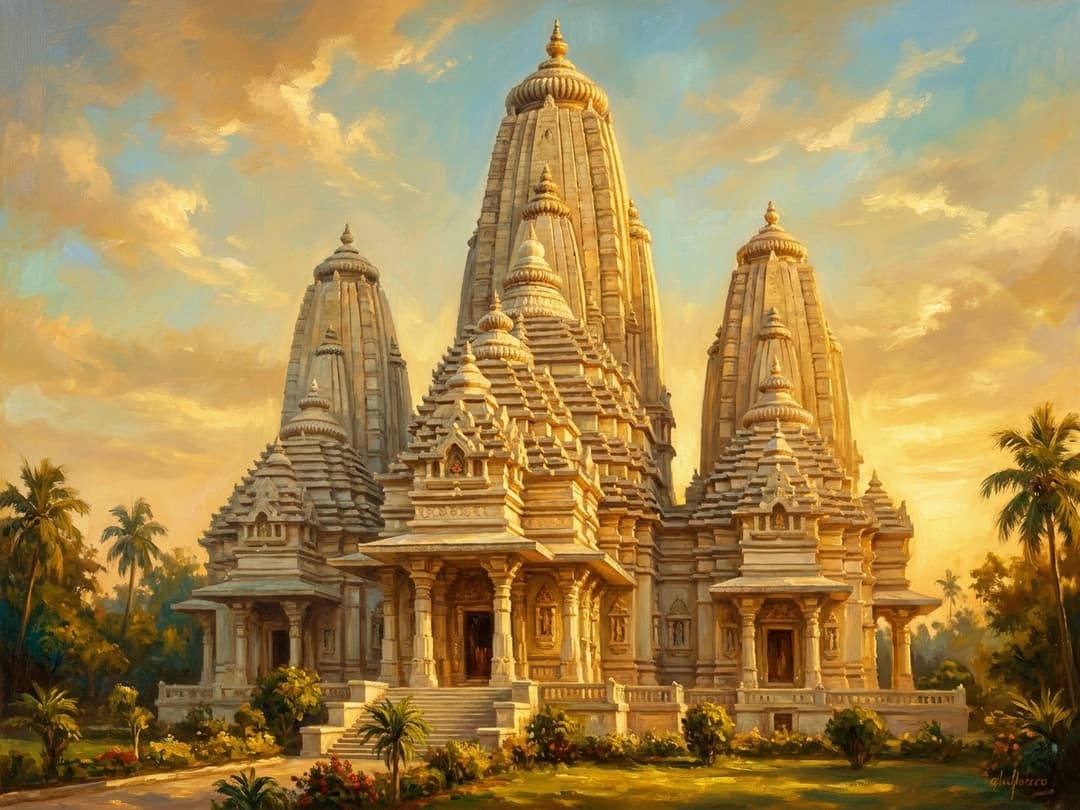
Birla Mandir in Kolkata, officially known as Shri Radha-Krishna Mandir, is a modern architectural masterpiece located on Ashutosh Chowdhury Avenue in Ballygunge. Rooted in the shared spiritual heritage of Dharmic traditions, the temple serves as a sacred crossing point between the material world and the divine transcendent. Constructed over a span of 26 years by the industrial Birla family, the sanctuary was consecrated in 1996 to promote devotion and moral upliftment.
The temple harmoniously integrates classical design elements from across Indian sacred traditions. Modeled after the 11th-century Kalinga architecture of the Lingaraj Temple in Bhubaneswar, its exterior of Rajasthani cream sandstone features three soaring spires while its interior is lined with luminous Makrana white marble. The complex embodies the non-sectarian Panchayatana spirit of Hinduism, welcoming pilgrims of all faiths to experience peace and reflection.
Gallery
Symbolic Elements
The temple's exterior features intricate carvings, each rich with spiritual meaning:

Triple Spire Composition
Three towering shikhars represent the harmonious union of Vaishnava, Shaiva, and Shakta worship.

Kalinga Main Spire
The 160-foot central tower symbolizes the upward ascent of human consciousness toward divine truth.

Carved Gita Engravings
Marble wall slabs engraved with Bhagavad Gita verses transform architecture into an active scriptural study.

White Makrana Marble Inner Sanctum
Luminous white interior marble signifies spiritual purity and the unblemished light of the soul.

Cream Rajasthani Sandstone Facade
Warm exterior sandstone reflects earthiness and the enduring strength of ancient architectural traditions.

Pillared Assembly Mandapa
Carved marble columns form a gathering space symbolizing communal devotion and peaceful meditation.

Belgian Crystal Chandeliers
Hanging crystal lamps represent the illumination of spiritual wisdom driving away ignorance.
Interesting Facts
Construction spanned 26 continuous years between 1970 and 1996 to ensure unhurried traditional craftsmanship. (Tier A)
The temple provided employment across two decades to generations of traditional Sompura artisan families. (Tier A)
Its structural proportions were calculated according to Varahamihira's 6th-century treatise Brihat Samhita. (Tier B)
Complete chapters and selected verses of the Bhagavad Gita are hand-carved into the interior marble walls. (Tier A)
The central 160-foot tower is directly modeled after Orissa's famous 11th-century Lingaraj Temple. (Tier B)
Three distinct spires under one roof unify Vaishnava, Shaiva, and Shakta worship traditions. (Tier A)
At night, concealed floodlights and suspended Belgian crystal chandeliers transform the entire sanctuary. (Tier A)
The temple welcoming over 2.5 million visitors annually ranks among Kolkata's most visited sacred sites. (Tier A)
Common Questions
Who are the primary deities worshipped at Birla Mandir Kolkata?
The central sanctum is dedicated to Shri Radha and Krishna, flanked by shrines for Goddess Durga and Lord Shiva.
When was the temple consecrated and opened to the public?
The temple was consecrated on February 21, 1996, by Swami Chidananda Maharaj and Dr. Karan Singh.
Is photography allowed inside the temple?
Photography and videography are strictly prohibited inside the main sanctum and assembly halls.
What is the architectural style of Birla Mandir Kolkata?
The temple combines Orissan Kalinga spire architecture with Rajasthani Nagara decorative stone carving.
Featured Stories
A Quarter-Century of Sacred Craftsmanship
1970–1996
When the Birla family commissioned the temple in 1970, they committed to an unhurried construction process that honored ancient Sompura stonemasonry techniques. Over 26 years, master craftsmen from Rajasthan, Bihar, and Uttar Pradesh lived on-site, hand-carving intricate sandstone reliefs and marble panels. Their dedicated craftsmanship ensured that every pillar and spire embodied the highest standards of classical sacred art.
Source: Birla Mandir Historical Records
The Sacred Morning of Pran Pratishtha
February 21, 1996
On the auspicious morning of February 21, 1996, Swami Chidananda Maharaj of the Divine Life Society conducted the ancient Pran Pratishtha consecration ritual to invoke the divine presence into the idols. Later that day, scholar Dr. Karan Singh formally opened the doors to the public, marking the birth of a major spiritual refuge for Eastern India. The solemn ceremonies drew spiritual leaders and thousands of eager devotees from across the nation.
Source: Divine Life Society Archives
Scripture Carved in Stone
1985
During the interior execution, master carvers painstakingly engraved full Sanskrit shlokas from the Bhagavad Gita directly into polished white marble walls. Rather than treating scripture as static books, the designers transformed the temple walls into an interactive spiritual text. Visitors walking through the gallery can pause and meditate upon timeless moral lessons while circumambulating the sanctum.
Source: Asian Historical Architecture Documentation
Timeline
Construction Initiated
Industrialists Basant Kumar Birla and Sarala Birla commission the temple structure on Ashutosh Chowdhury Avenue.
component.timeline.groundbreakingArtisan Workshops Established
Sompura master architects assemble team of specialized stone craftsmen from Rajasthan and Bihar.
MilestoneCarving of Scriptural Wall Reliefs
Artisans begin hand-engraving entire chapters of the Bhagavad Gita into white Makrana marble.
MilestoneTriple Spire Construction Begins
Assembly of the 160-foot central Kalinga spire and two flanking towers commences.
MilestoneInstallation of Interior Chandeliers
Belgian crystal chandeliers and silver ornamentation are mounted within the vaulted main hall.
MilestoneArchitectural Completion
Stone masonry and interior polishing finish after 26 years of continuous construction.
MilestonePran Pratishtha Consecration
Swami Chidananda Maharaj performs sacred consecration rituals in the morning.
DedicationFormal Inauguration
Statesman Dr. Karan Singh formally inaugurates the complex for public worship.
DedicationFirst Major Janmashtami
The temple welcomes over 100,000 pilgrims during its first major Krishna Janmashtami festival.
EventLighting System Modernization
Exterior floodlighting is updated to enhance energy efficiency and illuminate the sandstone facade.
RenovationHistory by Decade
1970s — Vision and Foundations
Industrialists Basant Kumar Birla and Sarala Birla initiated the temple project in 1970 to create a lasting spiritual institution in Kolkata. Master Sompura architects were engaged to design a complex following ancient Vastu Purusha Mandala geometry. Artisan workshops were set up on Ashutosh Chowdhury Avenue to prepare foundation blocks and begin stone carving.
1980s — Masonry and Scriptural Carving
The 1980s saw intensive hand-carving of cream Rajasthani sandstone exterior panels and white Makrana marble interior slabs. Craftsmen engraved complete chapters of the Bhagavad Gita alongside detailed bas-relief scenes from the Mahabharata. Structural work advanced steadily as the triple-spire framework took shape.
1990s — Consecration and Public Opening
By 1995, interior embellishments including Belgian glass accents and crystal chandeliers were installed. On February 21, 1996, Swami Chidananda Maharaj officiated the sacred Pran Pratishtha consecration ceremony. The temple immediately became one of Kolkata's premier pilgrimage sites, drawing millions of visitors.
2000s–Present — Spiritual Haven for Eastern India
Over subsequent decades, Birla Mandir consolidated its role as an essential center for festival celebrations such as Janmashtami and Navratri. Modern security and visitor amenities were integrated while preserving the serene environment. Today, it remains a landmark of modern Hindu architecture and cross-cultural devotion.
Architecture & Facilities
Birla Mandir Kolkata presents a sophisticated modern synthesis of classical Indian temple styles. Its elevated profile is modeled after the 11th-century Kalinga architecture of Orissa's Lingaraj Temple, featuring three soaring spires built from cream Rajasthani sandstone. The interior sanctum is lined with luminous white Makrana marble, creating an atmosphere of pristine devotion framed by strict adherence to traditional Vastu Purusha Mandala geometric principles.
Building Materials
Exterior Sandstone
Durable cream-colored Rajasthani sandstone hand-carved into intricate relief panels and lattice screens.
Interior Marble
Pristine white Makrana marble from Rajasthan providing reflective elegance within the inner sanctum.
Glass & Silver Accents
Belgian glassware and engraved silver mountings used for temple alters and ceremonial lamp vessels.
Lighting Infrastructure
Imported hand-cut crystal chandeliers suspended from vaulted marble ceilings illuminate the main hall.
Interior Features
Central Radha-Krishna Sanctum
The primary shrine featuring consecrated silver-adorned marble deities of Lord Krishna and Radha.
Left Durga Shrine
A consecrated secondary sanctum dedicated to Goddess Durga symbolizing protective divine energy.
Right Shiva Shrine
A secondary sanctum displaying Lord Shiva in a peaceful meditative posture.
Pillared Assembly Hall
A spacious assembly mandapa supported by carved columns where devotees gather for congregational prayers.
Temple Grounds
The elevated temple stands on a 44-katha (~0.66 acre) landscaped stone podium featuring wide marble staircases, manicured flower beds, and open circumambulation pathways.
Additional Facilities
Facilities include a free footwear counter, organized queuing corridors, book stalls offering devotional literature, and security check points.
Religious Significance
Rooted in the shared Dharmic worldview of spiritual liberation (Moksha) and cosmic order (Dharma), Birla Mandir functions as a sacred Tirtha—a crossing place between temporal existence and ultimate reality.
To provide a non-sectarian sanctuary where devotees of all backgrounds can cultivate devotional love, study sacred scripture, and experience spiritual peace.
Sacred Ordinances
Sandhya Aarti
Evening prayer ritual offering light and incense to the deities accompanied by devotional chanting and bells.
Pran Pratishtha
The sacred consecration rite that invokes divine life into temple idols through ancient Vedic mantras.
Bhakti Worship
Personal and congregational devotional offerings performed before Shri Radha-Krishna to cultivate divine love.
Panchayatana Non-Sectarian Synthesis
By housing shrines for Shri Radha-Krishna (Vaishnava), Lord Shiva (Shaiva), and Goddess Durga (Shakta) under three unified spires, the temple embodies the inclusive spirit of Hindu worship.
Scriptural Wall Study
The hand-engraved verses from the Bhagavad Gita along the interior corridors encourage pilgrims to combine physical circumambulation with active moral and philosophical contemplation.
Major Festivals
Janmashtami
August / September (Bhadrapada Krishna Ashtami)
Grand celebration of Lord Krishna's birth featuring elaborate floral decorations, midnight aarti, and thousands of attending pilgrims.
Navratri
September / October (Ashvin Bright Fortnight)
Nine nights of continuous devotional worship, special pujas, and decorations focused on Goddess Durga.
Maha Shivratri
February / March (Phalguna Krishna Chaturdashi)
Night-long prayers and milk offerings dedicated to Lord Shiva in his meditative form.
Similar Temples
Sources & Research
Every fact on Temples.org is backed by verified Sources & Research. Each piece of information is rated by source tier and confidence level.
View All Sources (8)
| Field | Source | Tier | Retrieved |
|---|---|---|---|
| About & Historical Background | Birla Mandir Trust Kolkata (opens in a new tab) | A | 2026-03-30 |
| About & Historical Background | West Bengal Tourism Development Corporation (opens in a new tab) | A | 2026-03-30 |
| Timeline & Consecration | The Divine Life Society (opens in a new tab) | A | 2026-03-30 |
| Architecture & Structural Design | Kolkata Municipal Corporation (opens in a new tab) | A | 2026-03-30 |
| Architecture & Structural Design | Asian Historical Architecture (opens in a new tab) | B | 2026-03-30 |
| Religious Significance & Deities | India Lost and Found Heritage Initiative (opens in a new tab) | B | 2026-03-30 |
| Visitor Insights & Access | Kolkata Tourism Guide (opens in a new tab) | C | 2026-03-30 |
| Festivals & Cultural Impact | Holidify Travel (opens in a new tab) | D | 2026-03-30 |