Visitor Insights
Visiting Swaminarayan Akshardham New Delhi
Visiting Swaminarayan Akshardham offers a peaceful immersion into traditional Hindu temple architecture and cultural exhibitions. Visitors should allow four to five hours to explore the central mandir, boat ride, and evening water show.
Highlights
- Marveling at the central mandir carved entirely without structural metal framework
- Exploring the 148 hand-carved stone elephants along the Gajendra Peeth plinth
- Riding the 12-minute indoor boat journey depicting 10,000 years of Indian history
- Attending the Sahaj Anand multimedia water show in the Yagnapurush Kund stepwell
Things to Know
- All electronic items including mobile phones and smartwatches are strictly prohibited inside
- Free monitored cloakroom facilities are available near the main entrance
- Conservative attire covering shoulders and knees is strictly required for entry
Location
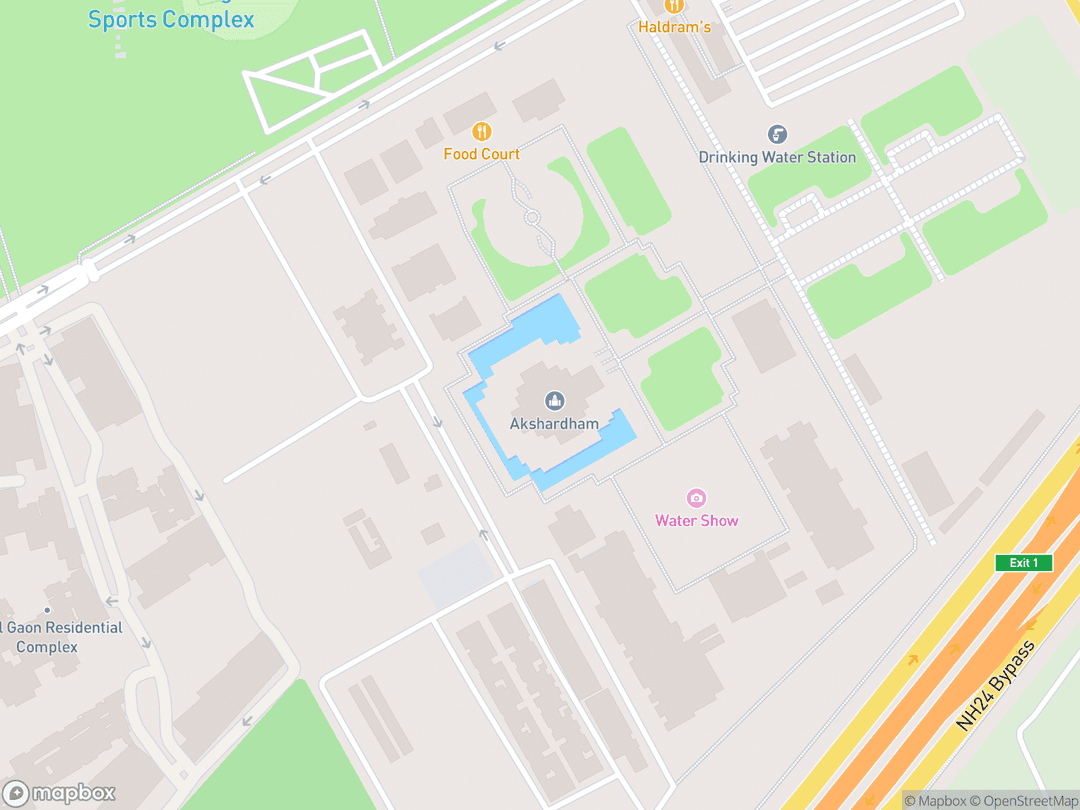
NH 24, Noida Mor, Pandav Nagar, New Delhi, Delhi 110092, India
Hours: Tuesday to Sunday: 10:00 AM to 8:00 PM (Closed Mondays)
Getting There: Located adjacent to Akshardham Metro Station on the Delhi Metro Blue Line.
Get DirectionsTips for Your Visit
Security Protocol
Deposit all mobile phones, cameras, and electronic accessories at the free security cloakroom before queueing.
Afternoon Arrival
Arrive around 1:30 PM to tour the main sanctuary and exhibitions before getting seats for the sunset water show.
Dress Code Compliance
Ensure shoulders, upper arms, and knees are covered, or utilize the sarong wrapping service near security.
About
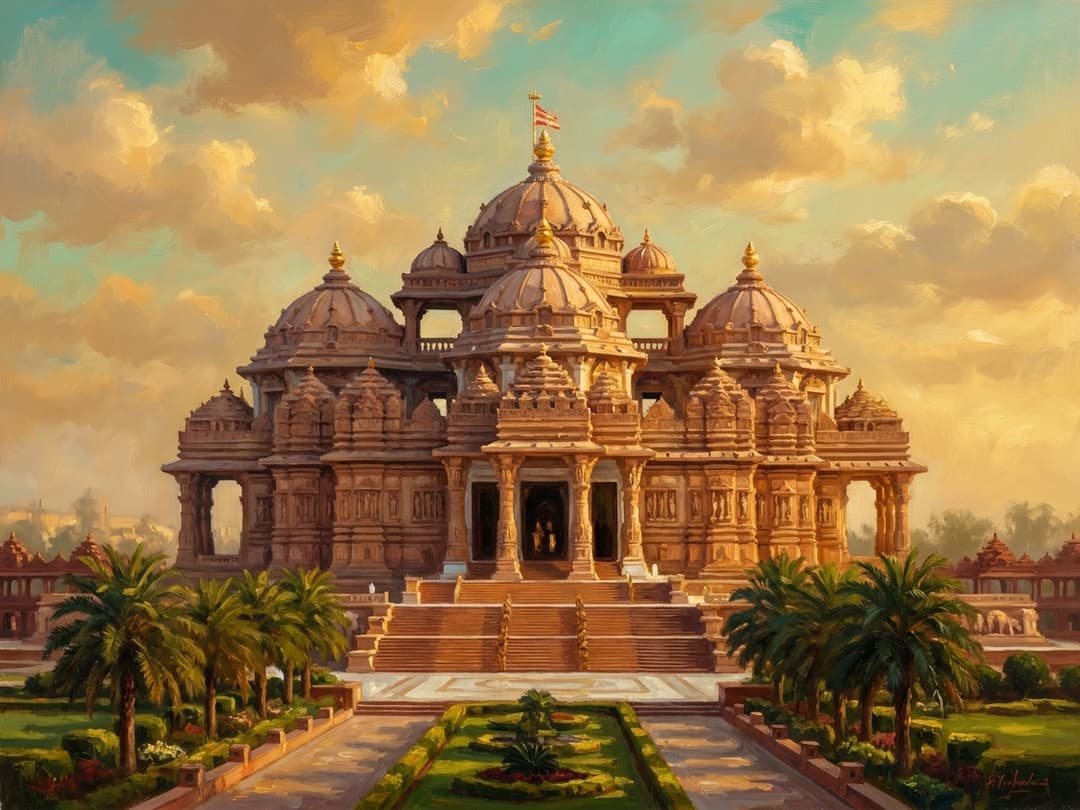
Swaminarayan Akshardham in New Delhi is a monumental spiritual and cultural complex along the Yamuna River. Consecrated on November 6, 2005, by Pramukh Swami Maharaj, the complex was conceptualized to showcase the timeless spiritual wisdom, art, and architectural heritage of India's Dharmic traditions.
The central mandir is crafted entirely from pink Rajasthani sandstone and Italian Carrara marble without structural steel or iron. Built according to ancient Shilpa Shastra texts, the structure features over 20,000 carved figures, 234 pillars, and 148 stone elephants, standing as a landmark of modern traditional Hindu architecture.
Beyond its central sanctuary, the 100-acre complex integrates educational exhibitions, a stepwell water show, and expansive gardens. It serves as both an active place of Hindu worship and a global destination for cultural diplomacy and spiritual learning.
Gallery
Symbolic Elements
The temple's exterior features intricate carvings, each rich with spiritual meaning:

Gajendra Peeth
A base plinth of 148 carved stone elephants symbolizing strength, peace, and nature's reverence for the divine.

Mayur Dwar
Entrance gates decorated with 869 carved peacocks representing purity, beauty, and joyful greeting.

Yogi Hruday Kamal
An eight-petaled lotus garden displaying inspirational quotes that symbolize a pure human heart open to divine wisdom.

Yagnapurush Kund
A historic stepwell featuring 2,870 stone steps and a lotus yantra pool representing sacred geometry.

Narayan Sarovar
A sacred perimeter water body gathering waters from 151 holy rivers to represent spiritual unity.

Samarna Domes
Carved stone lotus domes reflecting spiritual detachment and soul purity rising above worldly illusion.

Mandovar Wall
An exterior relief wall containing 200 sculpted figures of ancient sages, avatars, and spiritual teachers.

Garbhagruh Sanctum
The golden inner sanctuary housing murtis that embody the eternal spiritual realm and divine presence.
Interesting Facts
The main temple sanctuary was built completely without structural steel, iron, or reinforced concrete. (Tier A)
Over 11,000 artisans and 8,000 volunteers contributed 300 million hours to construct the sanctuary. (Tier A)
Guinness World Records certified Akshardham as the World's Largest Comprehensive Hindu Temple in 2007. (Tier B)
The 3,000-ton elephant plinth features 148 carved stone elephants, with no two sharing the exact same pose. (Tier A)
An indoor cultural boat ride navigates through life-sized animatronic scenes depicting 10,000 years of Indian history. (Tier A)
The surrounding lake contains water collected from 151 sacred rivers and lakes across India. (Tier A)
The outer Mandovar wall is the largest single carved exterior temple wall created in India in 800 years. (Tier A)
The evening water show uses lasers, projection mapping, and fire inside a 300-foot stepwell. (Tier A)
Common Questions
Is entry to Swaminarayan Akshardham free?
Entry to the complex grounds and central mandir is completely free, while optional exhibitions require separate nominal tickets.
Are cameras or mobile phones allowed inside?
No electronics including phones, cameras, and smartwatches are permitted past the security checkpoint.
How long does a typical visit take?
A complete visit including the main sanctuary, cultural exhibitions, and evening water show takes four to five hours.
Is the temple open every day?
The complex is open Tuesday through Sunday and is strictly closed every Monday for maintenance.
Featured Stories
The Vision of Yogiji Maharaj
1968
In 1968, Yogiji Maharaj envisioned a monumental temple on the banks of the Yamuna River to showcase India's spiritual heritage to the world. His successor, Pramukh Swami Maharaj, pursued this dream through two decades of land allocation and environmental planning. In 2005, that vision materialized as one of the world's most detailed stone sanctuary complexes.
Source: BAPS Swaminarayan Sanstha Archives
A Triumph of Devotional Craftsmanship
2000–2005
Built in under five years, the complex brought together 11,000 traditional artisans and 8,000 international volunteers. Together, they dedicated an estimated 300 million volunteer hours to carve Rajasthani sandstone and Italian Carrara marble. The entire central sanctuary was assembled without structural steel, relying strictly on interlocking stone joinery.
Source: BAPS Swaminarayan Sanstha Archives
The Consecration and Global Honor
November 6, 2005
On November 6, 2005, the complex was consecrated by Pramukh Swami Maharaj alongside President A. P. J. Abdul Kalam and Prime Minister Manmohan Singh. Two years later, Guinness World Records officially declared Swaminarayan Akshardham the World's Largest Comprehensive Hindu Temple. Today, it stands as a landmark of Indian spiritual art and global cultural diplomacy.
Source: Guinness World Records Documentation
Timeline
Initial Vision
Yogiji Maharaj visualizes a monumental temple complex on the Yamuna riverbank in Delhi.
EventLeadership Transition
Pramukh Swami Maharaj succeeds Yogiji Maharaj and assumes leadership of the Delhi temple project.
EventLand Petition
BAPS formally petitions the Delhi Development Authority for land allocation along the Yamuna.
EventLand Allocation
Government authorities officially allocate land along the Yamuna riverfront for construction.
MilestoneFoundation Ceremony
Pramukh Swami Maharaj performs the Shilanyas Vidhi foundation stone ceremony.
component.timeline.groundbreakingTemple Consecration
The complex is consecrated by Pramukh Swami Maharaj in the presence of national leaders.
DedicationGuinness World Record
Guinness World Records certifies the complex as the World's Largest Comprehensive Hindu Temple.
MilestoneSahaj Anand Water Show
The complex inaugurates an upgraded multimedia water show based on the Kena Upanishad.
RenovationHistory by Decade
1960s–1980s — Vision and Land Search
In 1968, Yogiji Maharaj envisioned building a major cultural complex in New Delhi along the Yamuna River. Following his passing in 1971, Pramukh Swami Maharaj led efforts to secure land, formally petitioning the Delhi Development Authority in 1982.
1990s — Architectural Planning and Research
During the 1990s, BAPS engineers and traditional architects studied ancient Shilpa Shastra manuals to plan an all-stone sanctuary. Land negotiations and environmental studies continued along the Yamuna floodplains.
2000s — Construction and Consecration
Land was officially allocated in April 2000, and foundation work began in November 2000. Over 11,000 artisans carved stone in Rajasthan before assembly in Delhi, leading to the grand inauguration on November 6, 2005.
2010s–Present — Global Landmark and Cultural Hub
The complex expanded its educational programs and upgraded its stepwell water show in 2014. Today, Akshardham remains a premier center for Hindu heritage, hosting millions of visitors annually.
Architecture & Facilities
Constructed in traditional Māru-Gurjara and Nagara architectural styles adhering strictly to ancient Shilpa Shastra manuals, the sanctuary features stone-carved structures built without structural steel, iron, or reinforced concrete.
Building Materials
Pink Sandstone
Over 6,000 tons of Rajasthani sandstone hand-carved in Banshi Paharpur for outer walls.
Carrara Marble
Pure white Italian Carrara marble carved for interior sanctuaries, domes, and pillars.
Sand-and-Rock Foundation
A 30-foot deep stabilized foundation matrix engineered for riverbed floodplain safety.
Carved Brass Gaumukhs
108 sculpted brass spouts surrounding the perimeter lake for sacred water delivery.
Interior Features
Garbhagruh (Inner Sanctum)
Houses an 11-foot gilded murti of Bhagwan Swaminarayan flanked by Gunatitanand Swami.
Carved Marble Halls
Vaulted central halls supported by 234 detailed marble pillars showing celestial figures.
Sahajanand Darshan Hall
An exhibition space featuring 3D dioramas and immersive robotics depicting moral values.
Sanskruti Vihar Boat Hall
An indoor boat ride venue displaying life-sized scenes from 10,000 years of Indian history.
Temple Grounds
Spanning 100 acres along the Yamuna, featuring lotus gardens, stepwells, and bronze statues of freedom fighters.
Additional Facilities
Includes a visitor welcome center, cloakrooms, food court serving vegetarian cuisine, and bookshops.
Religious Significance
In Sanatana Dharma (Hinduism), a mandir serves as a physical microcosm of the universe and a temporal home for the Divine. Architecture is crafted to facilitate darshan—the sacred exchange of sight between devotee and deity—fostering spiritual peace and ethical living.
To serve as an active sanctuary for worship, moral education, and the preservation of Dharmic spiritual traditions.
Sacred Ordinances
Darshan
The devotional act of beholding sacred murtis in quiet prayer and contemplation.
Aarti
A ceremonial ritual of light offered to the deities accompanied by devotional music and prayers.
Abhishek
A ritual pouring of sanctified water over the murti of Neelkanth Varni for peace and world harmony.
Sanatana Dharma and Denominational Harmony
Honoring broader Hindu tradition, the complex features side shrines to Shri Sita-Ram, Shri Radha-Krishna, Shri Shiva-Parvati, and Shri Lakshmi-Narayan alongside the central Swaminarayan sanctum.
The Akshar-Purushottam Theology
In Swaminarayan philosophy, Akshardham signifies the transcendent spiritual abode of God. The central sanctum expresses this doctrine through murtis of Bhagwan Swaminarayan and his spiritual successors.
Similar Temples
Sources & Research
Every fact on Temples.org is backed by verified Sources & Research. Each piece of information is rated by source tier and confidence level.
View All Sources (7)
| Field | Source | Tier | Retrieved |
|---|---|---|---|
| About & Historical Background | BAPS Swaminarayan Sanstha (opens in a new tab) | A | 2026-02-15 |
| Architecture & Craftsmanship | BAPS Swaminarayan Sanstha (opens in a new tab) | A | 2026-02-15 |
| Exhibitions & Cultural Shows | BAPS Swaminarayan Sanstha (opens in a new tab) | A | 2026-02-15 |
| Religious Significance & Deities | BAPS Swaminarayan Sanstha (opens in a new tab) | A | 2026-02-15 |
| About & Historical Background | Encyclopaedia Britannica (opens in a new tab) | B | 2026-02-15 |
| Architecture & Craftsmanship | Guinness World Records (opens in a new tab) | B | 2026-02-15 |
| Visitor Insights & Regulations | Delhi Tourism Development Corporation (opens in a new tab) | B | 2026-02-15 |