Visitor Insights
Visiting The Pantheon (Santa Maria ad Martyres)
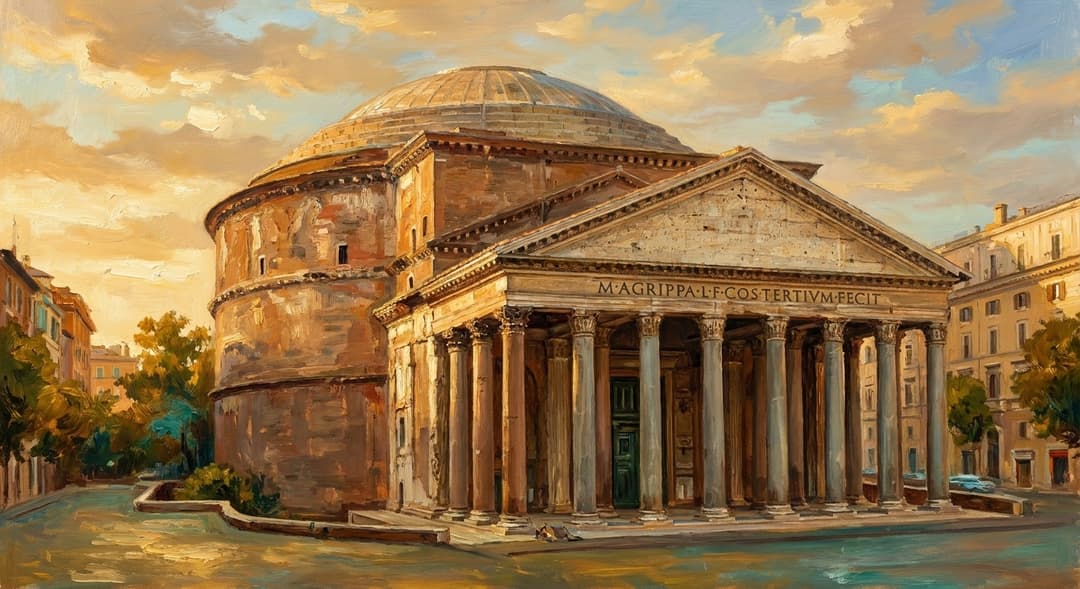
Visiting the Pantheon offers an unforgettable encounter with classical Roman engineering and sacred space. Midday visits reveal the dynamic play of sunlight moving through the open oculus onto polychrome marble floors.
Highlights
- Soaring 43.3-meter unreinforced concrete dome with central oculus
- Tombs of Renaissance painter Raphael and Italian Kings Vittorio Emanuele II and Umberto I
- Sixteen massive monolithic Egyptian granite columns supporting the classical portico
- Intact original ancient Roman polychrome marble floor with micro-drainage system
Things to Know
- Modest dress covering shoulders and knees is strictly enforced for entry
- Paid admission tickets must be booked online in advance for weekend visits
- Rain falls directly inside the oculus, making the central marble floor slippery during storms
Location
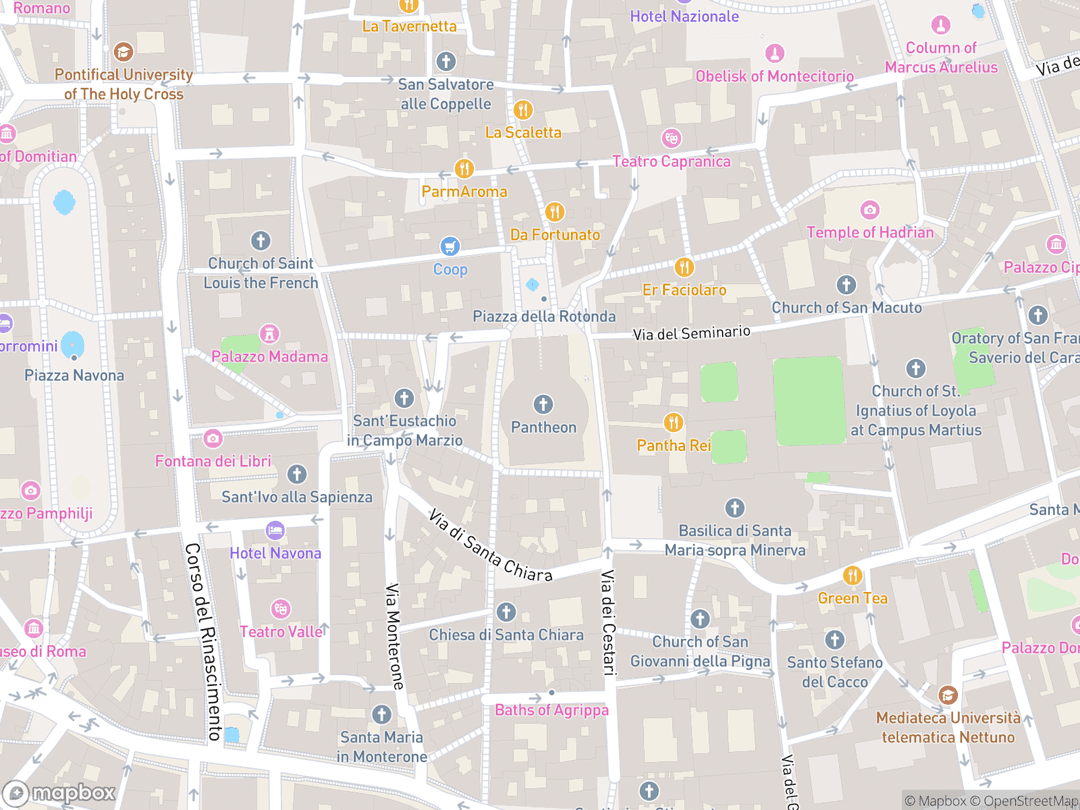
Piazza della Rotonda, 00186 Rome, Italy
Hours: Open daily from 9:00 AM to 7:00 PM (Last entry at 6:30 PM). Closed January 1 and December 25.
Getting There: Located in Piazza della Rotonda in central Rome. Take Metro Line A to Barberini or Spagna, or buses 30, 40, 62, or 64 to Largo di Torre Argentina.
Get DirectionsTips for Your Visit
Optimal Sunlight Viewing
Visit between 11:00 AM and 1:00 PM when the sunlight streams through the oculus at its most dramatic angle.
Pentecost Rose Petal Ceremony
Attend Pentecost Sunday Mass to witness local firefighters dropping thousands of red rose petals through the oculus.
About
Commissioned originally by Marcus Vipsanius Agrippa during the reign of Augustus and radically rebuilt by Emperor Hadrian around AD 125, the Pantheon stands as the supreme architectural monument of ancient Rome. Conceived as a physical microcosm of the cosmos, its groundbreaking rotunda and soaring concrete dome were dedicated to all planetary deities, seamlessly uniting divine worship with imperial authority.
In AD 609, Byzantine Emperor Phocas granted the structure to Pope Boniface IV, who consecrated it as the Basilica of Santa Maria ad Martyres. This continuous religious function protected the monumental structure from the stone harvesting that claimed many of Rome's ancient monuments, preserving its soaring coffered vault and classical marble interior across two millennia.
Today, the Pantheon functions both as an active Roman Catholic minor basilica and a national monument housing the tombs of Renaissance master Raphael and Italy's first monarchs. Its timeless proportions continue to inspire architects worldwide.
Gallery
Symbolic Elements
The temple's exterior features intricate carvings, each rich with spiritual meaning:

The Oculus
An unglazed 8.2-meter opening at the dome apex that symbolizes the sun and connects earth with the cosmos.
Coffered Vaulting
Five rings of 28 recessed square coffers that reduce ceiling weight while symbolizing mathematical perfection.
Monolithic Granite Columns
Sixteen single-block Egyptian granite columns representing the global reach of Imperial Roman authority.

Graded Concrete Dome
A solid concrete shell utilizing light pumice aggregate toward the top to achieve structural balance.
Polychrome Marble Floor
Geometric stone floor combining purple porphyry, yellow marble, and green granite from across the empire.
Seven Planetary Apses
Deep perimeter niches designed to house cult statues of the classical planetary deities.

Imperial Bronze Portal
Massive double bronze doors that have guarded the rotunda entrance since ancient Roman antiquity.
Interesting Facts
The Pantheon contains the largest unreinforced concrete dome ever constructed in human history (Tier A).
The height from the floor to the oculus matches the internal diameter of 43.3 meters, forming a perfect sphere (Tier A).
On April 21, solar noon light strikes the main doorway to illuminate entering emperors (Tier B).
The dome's concrete aggregate shifts from heavy travertine at the base to light volcanic pumice at the top (Tier A).
The 16 portico columns were quarried in Egypt and shipped across the Mediterranean to Rome (Tier A).
Rain falling through the open oculus drains through 22 concealed holes in the marble floor (Tier A).
Poet Pietro Bembo composed a famous epitaph carved on Raphael's tomb inside the sanctuary (Tier B).
The number 28 used in the coffer rings was considered mathematically perfect by ancient scholars (Tier B).
Common Questions
Why is the Pantheon's dome historically significant?
It remains the largest unreinforced solid concrete dome ever constructed in human history.
What happens when it rains inside the Pantheon?
Rain falls through the open 8.2-meter oculus onto a marble floor equipped with 22 subtle drain holes.
Why does the facade mention Marcus Agrippa instead of Hadrian?
Hadrian kept Agrippa's original inscription out of political humility and respect for Augustan tradition.
Is the Pantheon still an active place of worship?
Yes, it functions as an active Roman Catholic minor basilica holding regular Masses and religious services.
Featured Stories
Hadrian's Architectural Humility
125
When Emperor Hadrian rebuilt the destroyed Pantheon around AD 125, he made the surprising decision not to put his own name on the facade. Instead, he carefully recarved the original dedication celebrating Marcus Agrippa, honoring Augustus's general while presenting his own radical architectural masterpiece as a respectful restoration.
Source: Ministero della Cultura - Direzione Musei Statali di Rome
The Christian Transformation
May 13, 609
On May 13, AD 609, Pope Boniface IV transformed the abandoned pagan temple into the Basilica of Santa Maria ad Martyres. By re-dedicating the sanctuary to the Virgin Mary and Christian martyrs, the church secured permanent protection for the ancient structure, rescuing Rome's structural marvel from medieval destruction.
Source: Basilica di Santa Maria ad Martyres
Raphael's Eternal Sanctuary
1520
Before his untimely death at age 37, Renaissance painter Raphael requested burial within the Pantheon's sacred rotunda. His interment beneath the ancient dome established the monument as a national mausoleum, binding classical antiquity directly with Renaissance artistic triumph.
Source: Encyclopædia Britannica
Timeline
Original Construction by Agrippa
Marcus Vipsanius Agrippa builds the first T-shaped temple on his private estate following the Battle of Actium.
MilestoneDestruction by Great Fire
The original timber-roofed Agrippan structure is destroyed during the Great Fire of Rome under Titus.
EventLightning Strike and Burning
The restored Domitianic Pantheon is destroyed by lightning during the reign of Trajan.
EventRebuilding Under Hadrian
Emperor Hadrian completes the grand rotunda and portico, retaining Agrippa's original dedicatory inscription.
DedicationSeveran Restorations
Emperors Septimius Severus and Caracalla conduct minor structural repairs on the complex.
RenovationClosure of Pagan Temples
Emperor Theodosius I bans pagan rites throughout the empire, leaving the Pantheon disused.
EventChristian Consecration
Pope Boniface IV consecrates the building as Santa Maria ad Martyres, ensuring its survival.
DedicationStripping of Gilded Roof Tiles
Byzantine Emperor Constans II removes the exterior gilded bronze roof tiles to take to Constantinople.
EventBurial of Raphael
Renaissance painter Raphael is interred inside the Pantheon at his request.
EventRemoval of Portico Bronze
Pope Urban VIII melts down the remaining portico bronze girders for military cannons and papal projects.
RenovationInterment of King Vittorio Emanuele II
The first king of unified Italy is buried in the Pantheon, establishing it as a royal mausoleum.
EventModern Visitor Conservation Fee
The Italian Ministry of Culture introduces entry ticketing to support ongoing preservation.
MilestoneHistory by Decade
20s BC — Augustan Origins
Marcus Vipsanius Agrippa commissioned the original Pantheon on his private estate following the Battle of Actium. Designed as a traditional rectangular temple, it was destroyed by fire in AD 80.
120s — Hadrianic Masterpiece
Emperor Hadrian oversaw the complete redesign of the complex, erecting the massive concrete rotunda and portico that survive today. The building served as a cosmic hall for imperial audiences.
600s — Christian Transformation
Consecrated as Santa Maria ad Martyres in AD 609, the temple adapted to Christian liturgical use. Christian altars replaced planetary statues, maintaining the building's sacred purpose.
1600s — Baroque Transformations
Pope Urban VIII removed ancient bronze girders from the portico to cast military cannons, sparking civic controversy. Renaissance master artists were interred in the perimeter chapels.
1870s–Present — National Monument & Royal Mausoleum
Following Italian unification, the Pantheon became the royal burial ground for King Vittorio Emanuele II and King Umberto I. It continues today as both a basilica and public monument.
Architecture & Facilities
The Pantheon represents the absolute pinnacle of Imperial Roman engineering, harmonizing a traditional Hellenistic columned portico with an unprecedented interior rotunda. Its structural concept relies on Euclidian geometry, creating an interior space where a perfect 43.3-meter sphere fits precisely within the cylindrical wall drum beneath an open sky oculus.
Building Materials
Graded Concrete
Roman concrete transitioning from heavy travertine aggregate at the base to lightweight volcanic pumice at the crown.
Egyptian Granite
Monolithic grey and red granite columns quarried at Mons Claudianus and Aswan.
Polychrome Marble
Interior wall paneling and floor tiles composed of porphyry, yellow giallo antico, and green pavonazzetto.
Bronze Portico Doors
Ancient solid bronze double doors framing the central entryway into the rotunda.
Interior Features
The Rotunda Vault
Five rings of 28 coffers rising toward the central unglazed circular oculus.
High Altar Sanctuary
An eastern apse designed for Catholic liturgy containing sacred Christian frescoes and relics.
Planetary Niches
Seven recessed wall apses framed by Corinthian columns that once housed classical statues.
Royal & Artist Tombs
Dedicated mausoleum chapels housing the remains of painter Raphael and Italian monarchs.
Temple Grounds
Situated directly on the vibrant Piazza della Rotonda in central Rome, surrounded by historic pedestrian avenues and classical urban fountains.
Additional Facilities
Visitor reception and audio guide services managed in coordination between the Italian Ministry of Culture and church authorities.
Religious Significance
Conceived as a cosmic shrine to all planetary gods and later consecrated as a Catholic minor basilica, the Pantheon bridges ancient Roman state theology and Christian worship.
Functions as an active Roman Catholic minor basilica honoring Saint Mary and the Martyrs while serving as a global symbol of divine geometry.
Sacred Ordinances
Holy Mass
Regular Catholic liturgical services celebrated at the historic main altar beneath the central dome.
Pentecost Spirit Descent
An annual liturgical tradition where red rose petals fall through the oculus to symbolize the Holy Spirit.
Royal Honor Guard Commemorations
Solemn memorial services conducted by honor guards at the tombs of Italy's unified monarchs.
Cosmic Imperial Theology
The original Roman design positioned the emperor beneath a moving beam of sunlight, representing divine approval of imperial rule under cosmic law.
Sanctuary of the Martyrs
The AD 609 Christian consecration dedicated the ancient space to Mary and early Christian martyrs, sanctifying classical architectural genius for divine devotion.
Similar Temples
Sources & Research
Every fact on Temples.org is backed by verified Sources & Research. Each piece of information is rated by source tier and confidence level.
View All Sources (8)
| Field | Source | Tier | Retrieved |
|---|---|---|---|
| About & Historical Background | Basilica di Santa Maria ad Martyres (opens in a new tab) | A | 2026-02-18 |
| About & Historical Background | Ministero della Cultura - Direzione Musei Statali di Rome (opens in a new tab) | A | 2026-02-18 |
| Architecture & Engineering | The Metropolitan Museum of Art (opens in a new tab) | B | 2026-02-18 |
| Architecture & Engineering | Khan Academy Art History (opens in a new tab) | B | 2026-02-18 |
| Timeline & Key Events | Encyclopædia Britannica (opens in a new tab) | B | 2026-02-18 |
| Symbolic Elements & Iconography | Holy See - Vatican News (opens in a new tab) | A | 2026-02-18 |
| Visitor Insights & Practical Info | Roma Capitale Tourist Board (opens in a new tab) | A | 2026-02-18 |
| Historical Development & Relics | Perseus Digital Library - Tufts University (opens in a new tab) | B | 2026-02-18 |