Visitor Insights
Visiting Kinkaku-ji
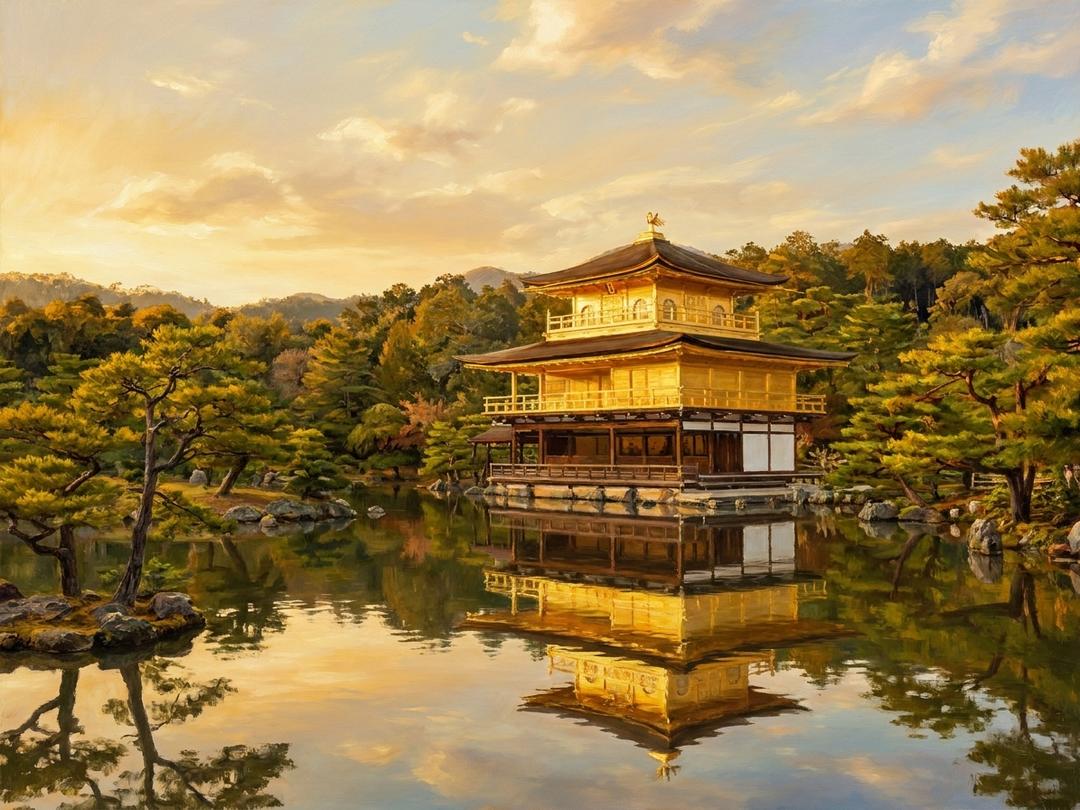
Visitors circumambulate a designated stone path through the Muromachi strolling garden, viewing the pavilion across the Mirror Pond before ascending toward rustic tea grounds. The gold leaf glows most intensely in late afternoon sunlight as it reflects across the still water.
Highlights
- Unobstructed lakeside vistas across Kyōko-chi pond capturing the shimmering gold reflection
- The 600-year-old pine pruned into the sacred shape of a sailing boat heading toward paradise
- The dramatic Ryūmon-taki waterfall featuring the symbolic leaping carp stone
- The Edo-period Sekka-tei teahouse constructed with an unplaned sacred bamboo pillar
Things to Know
- The interior chambers of the pavilion are closed to the public to safeguard sacred relics
- Midday brings peak tourist density; visit at opening or after 3:30 PM for quieter viewing
- The admission ticket is an authentic paper protection talisman inscribed with auspicious blessings
- Tripods and drones are strictly prohibited throughout the precinct grounds
Location
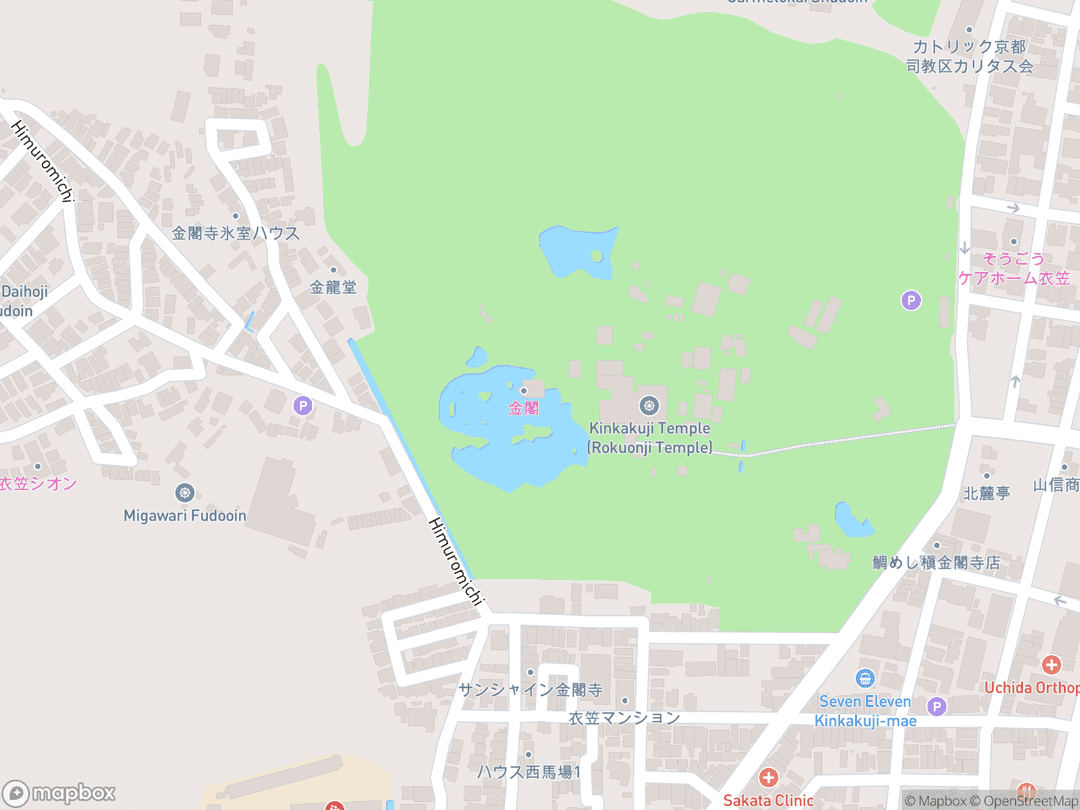
1 Kinkakuji-cho, Kita-ku, Kyoto, Kyoto Prefecture 603-8361, Japan
Hours: 9:00 AM - 5:00 PM daily
Getting There: Take Kyoto City Bus route 205 directly from JR Kyoto Station to the Kinkakuji-michi stop.
Get DirectionsTips for Your Visit
Golden Hour Photography
Arrive an hour before gate closure when the low western sun directly illuminates the gilded top tiers.
Preserve the Talisman
Keep your protective paper entrance ticket flat, as traditional practice encourages placing it over home doorways.
Avoid Road Congestion
Take the Karasuma Subway Line to Kitaōji Station before boarding bus 204 or 205 to avoid central city traffic.
About
Kinkaku-ji, officially consecrated as Rokuon-ji, stands as one of East Asia's most revered Buddhist monuments. Rooted in the ancient Dharmic tradition and belonging to the Rinzai Zen school, the sacred precinct harmonizes rigorous Zen non-dual contemplation with the radiant cosmological imagery of Mahayana Pure Land devotion. The centerpiece Shariden pavilion was conceived by the third Ashikaga Shogun, Yoshimitsu, who transformed a thirteenth-century aristocratic mountain estate into a vibrant spiritual refuge.
Following Yoshimitsu's death in 1408, the villa was converted into a formal Rinzai Zen monastery under the honorary abbotship of the master Musō Soseki. Rising three stories above the Kyōko-chi Mirror Pond, the pavilion combines Heian aristocratic, samurai residential, and Chinese Zen monastic architectures into a unified structure. Its upper tiers, enveloped in natural urushi lacquer and brilliant gold leaf, create an earthly reflection of Sukhāvatī, the Western Paradise of Amida Buddha.
Having survived the civil conflagrations of the fifteenth-century Ōnin War, the pavilion succumbed to an act of tragic arson in 1950. Reconstructed faithfully in 1955 through Meiji-era blueprints and regilded in 1987 with five-fold thick gold foil, Kinkaku-ji endures as an active temple of contemplation, a Japanese National Special Historic Site, and a cornerstone of Kyoto's UNESCO World Heritage landscape.
Gallery
Symbolic Elements
The temple's exterior features intricate carvings, each rich with spiritual meaning:

The Mirror Pond (Kyōko-chi)
The tranquil water represents the unclouded Buddhist mind reflecting ultimate reality without grasping.

Gold Leaf Cladding (Haku)
Gilded surfaces symbolize incorruptible spiritual illumination and freedom from mundane suffering.

The Celestial Phoenix (Hō-ō)
The rooftop bronze bird signifies cosmic harmony, virtuous rule, and universal Buddhist protection.

Carp Rock and Dragon Waterfall
A leaping stone carp represents the disciple transcending earthly obstacles to achieve enlightenment.

Land-Dividing Boat Pine
A 600-year-old bonsai pine shaped as a sailing vessel points westward toward Amida's Pure Land.

Bell-Shaped Arch Windows (Katōmado)
Cusped Zen windows frame external scenery to remind practitioners of universal Buddha-nature.

White Snake Mound Pagoda
A stone stupa on a pond islet honors local Kami spirits coexisting with Buddhist guardianship.
Interesting Facts
The temple entrance ticket is an authentic paper protection talisman written by resident monks to ward off misfortune (Tier A).
The rooftop bronze phoenix miraculously survived the catastrophic 1950 arson because it had been removed for repair (Tier A).
The restoration in 1987 applied 200,000 sheets of gold leaf that were five times thicker than standard foil (Tier A).
The ground floor remains bare unpainted wood to represent the natural human state open to the world (Tier B).
Yoshimitsu used the golden pavilion as a diplomatic hall to receive official envoys from the Ming Dynasty court (Tier B).
The 1950 burning of the pavilion inspired author Yukio Mishima's acclaimed novel The Temple of the Golden Pavilion (Tier B).
Ginkaku-ji, the Silver Pavilion in eastern Kyoto, was modeled directly after Kinkaku-ji by Yoshimitsu's grandson (Tier B).
The massive land-dividing pine tree on the temple grounds has been trained for six centuries into the shape of a boat (Tier A).
The tea cottage on the hill features a rustic pillar crafted from an unpeeled heavenly bamboo trunk (Tier B).
Common Questions
Can visitors enter the interior of the Golden Pavilion?
No, the interior chambers are closed to the public to safeguard sacred Buddhist statues and fragile gilded surfaces.
Why is only the top two floors of the pavilion covered in gold leaf?
The design transitions upward from earthly Heian palace living quarters on the ground floor to celestial Zen reliquaries above.
Is Kinkaku-ji open year-round?
Yes, the temple gates welcome visitors every day of the year from 9:00 AM to 5:00 PM.
What is the official religious name of Kinkaku-ji?
The official name is Rokuon-ji, meaning Deer Park Temple, commemorating the site of Shakyamuni Buddha's first sermon.
Featured Stories
The 1950 Arson and the Resurrected Phoenix
July 2, 1950
In the early morning hours of July 2, 1950, a young novice monk consumed by obsession set fire to the 550-year-old pavilion, reducing the national treasure to ash. Miraculously, the historic bronze phoenix had been removed for conservation prior to the blaze and survived unscathed. Japan united in grief to reconstruct the pavilion with meticulous accuracy, returning the original phoenix to its rightful rooftop apex in 1955.
Source: Kyoto Cultural Heritage Preservation Bureau
Yoshimitsu's Vision of an Earthly Pure Land
1397
Shogun Ashikaga Yoshimitsu sought to manifest Sukhāvatī, the Western Paradise of Amida Buddha, amidst the hills of northern Kyoto. By gilding the reliquary hall and setting it against the pristine Mirror Pond, he created a visual sermon in timber and gold. There, he hosted foreign dignitaries and fostered the brilliant Kitayama cultural renaissance.
Source: Rokuon-ji Monastic Records
The Monumental 1987 Heisei Regilding
October 1, 1987
After three decades of Kyoto weathering deteriorated the postwar gilding, craftsmen undertook a monumental restoration requiring 20 kilograms of gold foil. Each sheet was five times thicker than conventional gold leaf, affixed over hand-rubbed urushi lacquer tapped from thousands of trees. The project restored the pavilion to its brilliant fifteenth-century radiance.
Source: Shōkoku-ji Conservation Archives
Timeline
Kitayama-dai Estate Established
Statesman Saionji Kintsune develops a grand villa and Buddhist chapel along northern Kyoto's foothills.
MilestoneShogunal Acquisition
Ashikaga Yoshimitsu acquires the estate to construct his retirement palace complex.
MilestoneShariden Reliquary Completed
Carpenters complete the three-story gilded pavilion housing sacred relics of Shakyamuni Buddha.
DedicationDeath of Ashikaga Yoshimitsu
The retired shogun passes away after requesting the palace be converted to a Zen monastery.
MilestoneConsecration as Rokuon-ji
The villa is dedicated as a Rinzai Zen temple with Master Musō Soseki named honorary founding abbot.
DedicationSurvival of the Ōnin War
The Golden Pavilion miraculously escapes destruction while surrounding halls burn during urban warfare.
EventInspiration for Ginkaku-ji
Shogun Ashikaga Yoshimasa models the Silver Pavilion on his grandfather's gilded reliquary hall.
MilestoneConstruction of Sekka-tei
Tea master Kanamori Sōwa erects a rustic teahouse within the strolling garden for imperial visits.
RenovationNational Treasure Designation
The Meiji government recognizes the pavilion as a premier Japanese National Treasure.
MilestoneTragic Arson Destruction
A troubled novice monk burns the 550-year-old reliquary hall to the ground.
EventReconstruction Consecration
A faithful reconstruction built from historic Meiji architectural drawings is formally dedicated.
DedicationMonumental Regilding Completed
Artisans complete a five-fold thicker gold leaf overhaul anchored by natural Japanese urushi lacquer.
RenovationUNESCO World Heritage Inscription
The temple is inscribed as a vital part of the Historic Monuments of Ancient Kyoto.
MilestoneHistory by Decade
1220s–1380s — The Saionji Aristocratic Estate
The waters of the northern hills once quenched the thirst of courtiers before welcoming the contemplative dharma.
During the Kamakura period, powerful court statesman Saionji Kintsune acquired the forested northern foothills of Kyoto to establish his Kitayama-dai villa. The expansive estate combined residential quarters with private Buddhist prayer halls overlooking an artificial pond. Over the subsequent century, political shifts weakened the Saionji clan, leaving the mountain retreat largely dilapidated.
1390s–1400s — Shogunal Palace and Consecration
In 1397, third Ashikaga Shogun Yoshimitsu took ownership of the land and commenced construction of his palatial retirement complex, Kitayama-dono. The centerpiece reliquary pavilion was completed around 1399, hosting Chinese Ming Dynasty envoys and fostering the syncretic Kitayama culture. Following Yoshimitsu's death in 1408, his son Yoshimochi converted the palace into Rokuon-ji, an official Zen temple of the Rinzai Shōkoku-ji branch.
1460s–1480s — Wartime Survival and Cultural Influence
The devastating Ōnin War engulfed Kyoto between 1467 and 1477, leveling most imperial and shogunal complexes across the capital. While the surrounding residential halls of Rokuon-ji were reduced to ash, the Golden Pavilion miraculously escaped untouched. The building's visual balance profoundly influenced Yoshimitsu's grandson, who constructed Ginkaku-ji on Kyoto's eastern hills in its direct image.
1640s–1890s — Edo Resurgence and Modern Heritage Recognition
Under early Tokugawa patronage, the temple garden was reorganized into its definitive kaiyū-shiki strolling configuration. Tea master Kanamori Sōwa added the rustic Sekka-tei teahouse to accommodate imperial tea ceremonies. Surviving the anti-Buddhist disruptions of the early Meiji period, the pavilion achieved formal designation as a Japanese National Treasure in 1897.
1950s — Tragedy, Loss, and Faithful Rebirth
Out of grief emerged an unyielding commitment to resurrect Kyoto's golden reflection for all generations.
On July 2, 1950, a young novice monk set fire to the pavilion, destroying the 550-year-old structure and irreplaceable historical statues. Relying on exhaustive architectural blueprints drawn between 1904 and 1906, master craftsmen completed a precise reconstruction using authentic hinoki wood. The revived Golden Pavilion was formally consecrated on October 10, 1955.
1980s–Present — Gilded Renewal and Global Heritage
By the 1980s, Kyoto's harsh weather had eroded the thin postwar gold leaf applied to the upper floors. Between 1986 and 1987, a major restoration applied five-fold thicker gold foil anchored over multi-layered Japanese urushi lacquer. In December 1994, UNESCO inscribed Kinkaku-ji onto the World Heritage List as a cultural touchstone of Ancient Kyoto.
Architecture & Facilities
The Shariden exemplifies Setchūyō, an ingenious syncretic architectural style uniting three distinct Japanese and Asian traditions vertically into a cohesive spiritual monument: Heian palace architecture, samurai residential design, and Chinese Zen monastic construction.
Building Materials
Urushi Lacquer and Gold Foil
Over 200,000 sheets of thick gold leaf cover the upper stories over coats of natural Japanese tree lacquer.
Japanese Cypress Bark (Hiwadabuki)
The pyramid hip roof is thatched with dense layers of hand-harvested cypress bark.
Unpainted Hinoki Cypress
The ground floor relies on untreated Japanese cypress columns that maintain organic harmony with the water.
Cast Gilded Bronze
A weather-resistant cast bronze phoenix crowns the pavilion roofline, gleaming in pure gold leaf.
Interior Features
Hosshui-in (Chamber of Dharma Waters)
The open ground floor houses statues of Shakyamuni Buddha and seated founder Ashikaga Yoshimitsu.
Chō'on-dō (Tower of Sound Waves)
The warrior-style second level enshrines Kannon Bodhisattva surrounded by the Four Heavenly Kings.
Kukkyō-chō (Cupola of the Ultimate)
The gilded Zen third level contains holy relics of Shakyamuni Buddha and an altar to Amida Buddha.
Sekka-tei Tea Arbor
A rustic teahouse featuring an unplaned nandina bamboo pillar that evokes wabi-sabi simplicity.
Temple Grounds
The designated stroll garden spans over 90,000 square meters, orchestrating sightlines of islands, rocky crags, and waterfalls that frame the gilded pavilion.
Additional Facilities
The temple precinct includes the Abbot's residence (Hōjō), the sacred Fudō-dō hall, and administrative pavilions.
Religious Significance
Within the broader Dharmic tradition, Buddhist architecture serves as a three-dimensional mandala connecting mundane earthly existence to the unconditioned shore of liberation.
To safeguard holy relics (śarīra) of Shakyamuni Buddha while providing an embodied vision of the Pure Land through Zen contemplative garden design.
Sacred Ordinances
Śarīra Veneration
Paying reverence to holy Buddhist relics housed in the topmost gilded cupola.
Kannon Devotion
Chanting and meditating before the Bodhisattva of Infinite Compassion on the second level.
Mindful Circumambulation
Walking meditation around the sacred strolling pond to cultivate inner calm and detachment.
Sutras of Protection
Inscribing sacred talismanic ofuda blessings distributed to visitors for household peace.
Zen Non-Duality and Pure Land Light
While Rinzai Zen emphasizes silent meditation and the direct perception of reality, Kinkaku-ji embraces the golden splendor of Pure Land cosmology. The unpainted ground floor grounds the spirit in organic reality, while the shimmering upper tiers lift human consciousness into boundless compassion and spiritual clarity.
Crossing the Waters of Saṃsāra
The garden layout mirrors classical Buddhist geography. The calm waters of the Mirror Pond separate the observer from the reliquary pavilion, symbolizing the passage from the turbulence of saṃsāra across the sea of illusion to the tranquil paradise of nirvana.
Similar Temples
Sources & Research
Every fact on Temples.org is backed by verified Sources & Research. Each piece of information is rated by source tier and confidence level.
View All Sources (9)
| Field | Source | Tier | Retrieved |
|---|---|---|---|
| About & Historical Background | Shōkoku-ji Religious Foundation (opens in a new tab) | A | 2026-03-30 |
| Architecture & Pavilion Design | Shōkoku-ji Religious Foundation (opens in a new tab) | A | 2026-03-30 |
| Religious Significance & Relics | Rokuon-ji Temple Administrative Office (opens in a new tab) | A | 2026-03-30 |
| Visitor Insights & Access | Shōkoku-ji Religious Foundation (opens in a new tab) | A | 2026-03-30 |
| Timeline & Shogunate Heritage | Encyclopaedia Britannica (opens in a new tab) | B | 2026-03-30 |
| Symbolic Elements & Garden Iconography | Connecticut College East Asian Studies (opens in a new tab) | B | 2026-03-30 |
| Featured Stories & Postwar Reconstruction | Tricycle: The Buddhist Review (opens in a new tab) | B | 2026-03-30 |
| Common Questions & Visitor Considerations | Japan-Guide (opens in a new tab) | C | 2026-03-30 |
| Grounds & Precinct Overview | Japan National Tourism Organization (opens in a new tab) | A | 2026-03-30 |