Visitor Insights
Visiting Sapporo Japan Temple
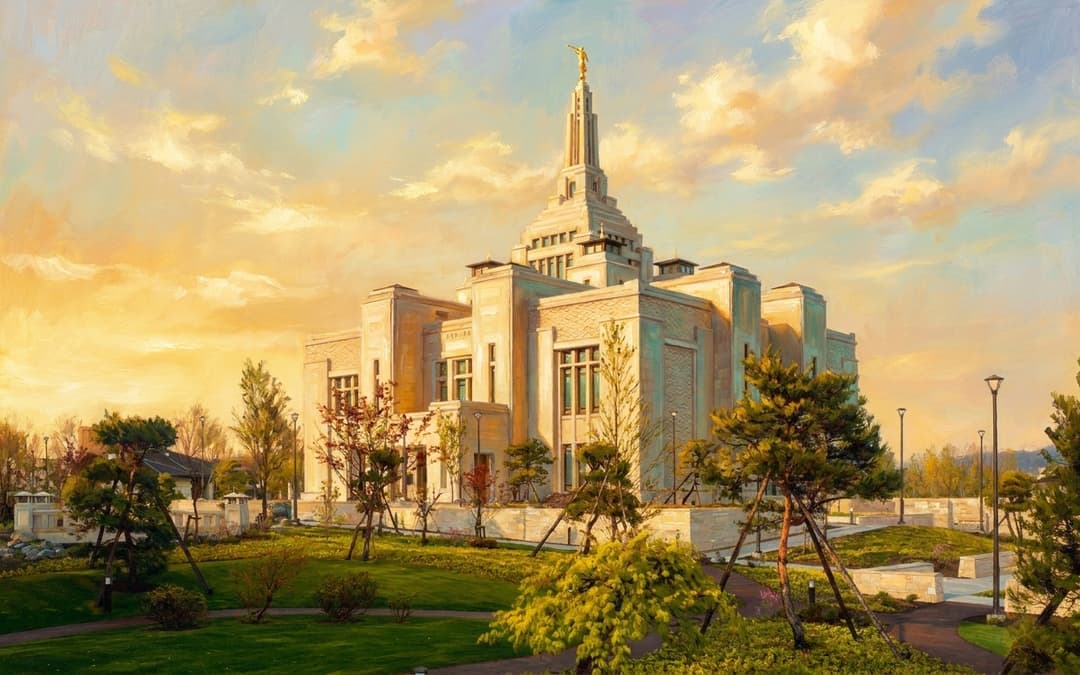
The Sapporo Japan Temple grounds offer a peaceful, reflective environment situated along the Atsubetsu River. Visitors of all faiths can stroll through landscaped Japanese gardens featuring native trees, ponds, and stone pedestrian bridges.
Highlights
- Landscaped Japanese stone-and-water garden with tranquil streams
- Exterior Chinese granite with relief-carved Seigaiha wave motifs
- Art glass windows featuring stylized four-petal lilac flower patterns
Things to Know
- Interior sacred spaces are reserved for recommend-holding Church members
- Patrons entering the temple exchange outdoor shoes in a traditional Genkan
- Outer garden paths remain accessible daily from dawn to dusk
Location
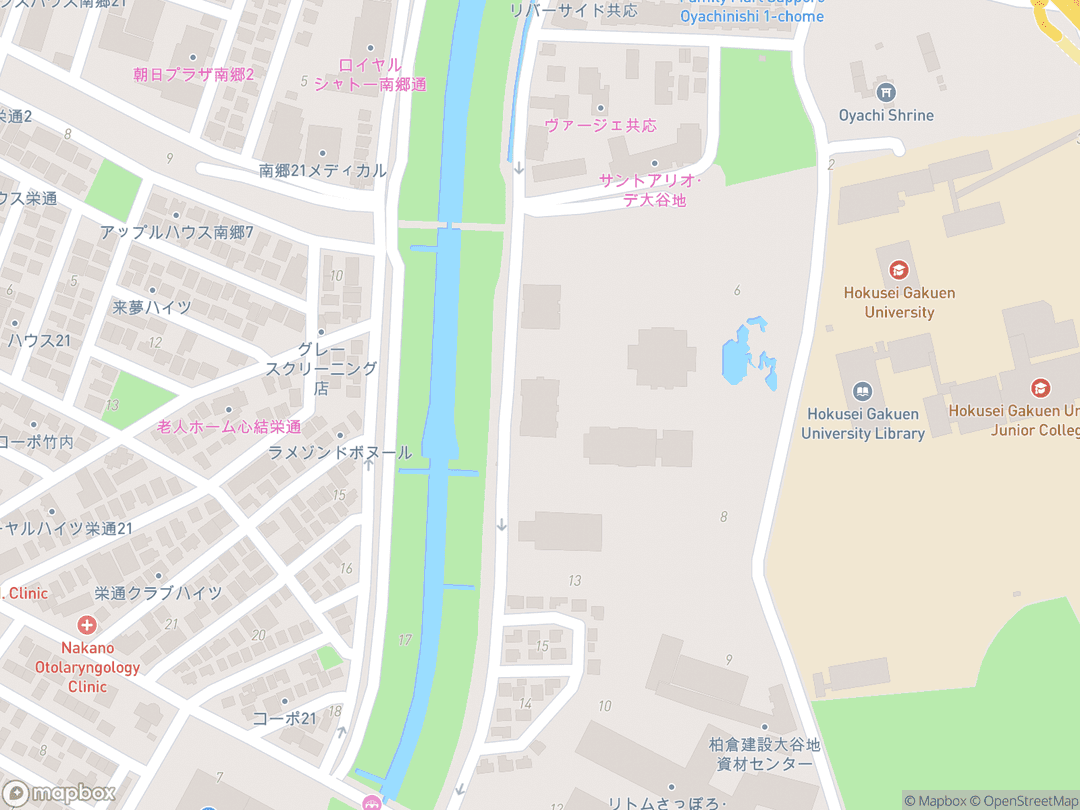
1-6-1 Oyachi-Nishi, Atsubetsu-ku, Sapporo, Hokkaido 004-0042, Japan
Hours: Grounds open daily dawn to dusk; temple services by appointment
Getting There: Located a 10-minute walk southwest from Oyachi Station on the Tozai Subway Line, near the Oyachi Interchange on the Do-O Expressway.
Get DirectionsTips for Your Visit
Lilac Season Visits
Visit during late spring (May to June) to experience the grounds filled with blooming lilac trees, the official municipal flower of Sapporo.
Winter Photography
Winter visits offer dramatic photo opportunities as snow caps the stepped rooflines and stone lanterns along the garden stream.
About
Grounded in ancient biblical traditions of sacred sanctuaries, the Sapporo Japan Temple stands as a house of the Lord serving believers across Hokkaido and northern Honshu. Announced in 2009 and dedicated in 2016, the temple seamlessly integrates traditional Japanese architectural forms—such as hip-and-gable rooflines and Genkan entryways—with Latter-day Saint sacred design.
As a sanctuary dedicated to eternal family covenants and personal consecration, the temple provides a spiritual refuge while honoring the natural beauty and cultural heritage of northern Japan. Situated along the Atsubetsu River, it serves as a beacon of faith, unity, and divine peace.
Gallery
Symbolic Elements
The temple's exterior features intricate carvings, each rich with spiritual meaning:

Lilac Flower Motif
The four-petaled lilac pattern represents purity and regional identity, honoring Sapporo's official municipal flower across art glass and interior woodwork.

Seigaiha Wave Pattern
Carved into exterior granite panels, the ancient Japanese wave pattern symbolizes continuous spiritual progress and eternal life.

Circle and Square Geometry
Interlocking circles and squares in window frames represent the joining of heaven and earth.

Traditional Genkan Entry
An entry threshold where shoes are exchanged for temple slippers, symbolizing leaving worldly cares behind upon entering sacred ground.

Japanese Zen Garden
A courtyard stone-and-water garden beneath the main interior staircase that reflects the contemplative tranquil design of historic Kyoto sanctuaries.

Hip-and-Gable Rooflines
Stylized Japanese roof geometry with subtle upturned eaves anchors the sacred structure within traditional civic Japanese architecture.

Stepped Pagoda Spire
The multi-tiered central spire pays tribute to traditional East Asian temple geometry pointing toward heaven.
Interesting Facts
The Sapporo Temple is the first Latter-day Saint temple constructed on the island of Hokkaido (Tier A).
It is one of the few temples worldwide featuring a traditional Genkan entrance where footwear is exchanged for slippers (Tier A).
Israeli marble flooring is cut and arranged in proportions that mirror traditional Japanese tatami mats (Tier B).
The 2011 groundbreaking was held during a torrential rainstorm with members standing under plastic ponchos (Tier A).
Interior wood trim features native Japanese white birch sourced directly from Hokkaido forests (Tier B).
The exterior Chinese granite is decorated with relief carvings of the classic Seigaiha wave pattern (Tier B).
Art glass windows feature stylized four-petal lilac blossoms representing Sapporo's official city flower (Tier A).
President Russell M. Nelson dedicated the temple in 2016 while serving as Quorum of the Twelve Apostles President (Tier A).
Common Questions
Can non-members visit the Sapporo Japan Temple?
Visitors of all faiths are welcome to walk through the landscaped Japanese gardens and arrival center, though interior access is reserved for Church members.
Why do visitors remove their shoes inside this temple?
The temple incorporates a traditional Japanese Genkan entry hall where patrons exchange outdoor footwear for temple slippers as a sign of respect and cleanliness.
What flower motif is featured in the temple's artwork?
The four-petaled lilac blossom, which is the official city tree of Sapporo, is featured across art glass, carpets, and wood transoms.
Who dedicated the Sapporo Japan Temple?
The temple was dedicated on August 21, 2016, by President Russell M. Nelson when he served as President of the Quorum of the Twelve Apostles.
Featured Stories
Groundbreaking in the Downpour
October 22, 2011
The groundbreaking ceremony for the Sapporo Japan Temple took place during a heavy wind and rain storm, but over 300 faithful members gathered under plastic ponchos and umbrellas. Presiding Church leader Elder Gary E. Stevenson noted that the torrential rain could not dampen the immense joy felt by the Saints who had prayed decades for a local temple.
Source: Church Newsroom
Prophetic Promise Realized
August 21, 2016
During a meetinghouse dedication in 1959, President Hugh B. Brown promised local Japanese converts that some present would live to see a temple built in Hokkaido. Nearly six decades later, elderly pioneers who remembered that promise sat wiping away tears as President Russell M. Nelson dedicated the Sapporo Temple.
Source: Church Newsroom
A Genkan for a House of the Lord
July 8, 2016
In a unique architectural adaptation to Japanese culture, designers built a traditional Genkan entry area inside the temple's main entrance. During the public open house, local visitors expressed deep appreciation for the gesture, feeling immediately at home as they removed their outdoor shoes before stepping onto sacred carpets.
Source: LDS Living
Timeline
First Missionaries Arrive
Latter-day Saint missionaries first arrive in Sapporo to establish preaching missions on Hokkaido.
MilestoneProphecy of Japanese Temples
Elder Matthew Cowley prophesies that sacred temples will one day dot the island nation of Japan.
MilestonePromise to Hokkaido Saints
President Hugh B. Brown assures local members during a meetinghouse dedication that a temple will rise in Hokkaido.
MilestoneTemple Announced
President Thomas S. Monson officially announces the intent to construct the Sapporo Japan Temple.
MilestoneGroundbreaking Ceremony
Elder Gary E. Stevenson presides over a stormy groundbreaking ceremony held along the Atsubetsu River.
component.timeline.groundbreakingExcavation Begins
Heavy machinery begins ground site excavation work on the 9.8-acre complex in Atsubetsu Ward.
EventStructural Steel Completion
Framing for the central stepped tower and surrounding structure is successfully erected.
EventScaffolding Removal
Exterior Chinese granite cladding and art glass windows are revealed as scaffolding comes down.
EventPublic Open House Begins
A two-week public open house begins, welcoming over 13,000 visitors and civic leaders.
EventYouth Cultural Celebration
Local youth perform dance and music programs at the Hokkaido Prefectural Sports Center.
EventTemple Dedicated
President Russell M. Nelson dedicates the temple in three sessions, making it the 151st operating temple worldwide.
DedicationHistory by Decade
1900s–1940s — Pioneer Beginnings
Missionaries first arrived in Sapporo in 1905, establishing early converts across Hokkaido. Although political instability temporarily suspended missionary efforts in 1924, local believers maintained their devotion. Formal missionary work resumed following World War II in 1948, solidifying small branches across northern Japan.
1950s–1960s — Prophetic Promises
In 1949, Elder Matthew Cowley foretold that temples would dot Japan. A decade later, during a 1959 meetinghouse dedication in Moiwa, President Hugh B. Brown assured members that some present would live to see a temple built in Hokkaido, inspiring decades of faithful fasting and prayer.
2000s — Official Announcement
On October 3, 2009, President Thomas S. Monson officially announced plans to build a temple in Sapporo. The news brought immense gratitude to members in northern Japan, who previously endured costly travel to Tokyo for temple ordinances.
2010s — Construction and Dedication
Following an October 2011 groundbreaking during a heavy rainstorm, construction advanced efficiently over four years. In August 2016, President Russell M. Nelson dedicated the temple, marking the third temple completed in Japan and the eighth across Asia.
Architecture & Facilities
The Sapporo Japan Temple represents a hybrid of modern Latter-day Saint sacred architecture and traditional Japanese design principles, featuring stylized hip-and-gable rooflines with subtle upturned eaves (sori) and a central stepped spire reminiscent of classic Asian pagodas.
Building Materials
Exterior Granite
Light-colored granite quarried and hand-carved in China featuring relief-carved Seigaiha wave motifs.
Japanese White Birch
Interior millwork and trim crafted from native Hokkaido white birch (shirakaba) wood.
Stained Cherry Wood
Utilized for interior Shoji-inspired lattice screens and transoms separating corridors.
Israeli and Egyptian Marble
Flooring laid out in traditional tatami proportions using Israeli marble and Italian-carved Egyptian marble.
Interior Features
Genkan Entrance
A traditional Japanese entry hall where patrons exchange outdoor footwear for sacred temple slippers.
Baptistry
Features a glass-tiled baptismal font supported by twelve cast bronze oxen representing the tribes of Israel.
Ordinance Rooms
Two-stage progressive instruction rooms with coffered wooden ceilings and frosted floral art glass.
Celestial Room
A serene room featuring Egyptian marble floors, gilded ceiling coffers, and crystal chandeliers.
Temple Grounds
The 9.8-acre complex features native Japanese plantings, a stone-and-water garden, a stream with an arched pedestrian bridge, patron housing, and an arrival center.
Additional Facilities
Includes a patron arrival center, patron housing quarters, temple missionary apartments, and the mission presidency home.
Religious Significance
Grounded in the biblical lineage of holy sanctuaries, the Sapporo Japan Temple is considered a literal house of the Lord where sacred covenants unite families across generations.
To provide a holy sanctuary where sacred ordinances are performed to bind families for eternity and foster personal communion with God.
Sacred Ordinances
Baptism for the Dead
Vicarious baptisms performed in a font supported by twelve bronze oxen, offering spiritual blessings to deceased ancestors.
Temple Endowment
A ceremony providing sacred instruction, personal covenants, and spiritual promises regarding man's eternal destiny.
Eternal Marriage and Sealing
Sacred rites performed in sealing rooms that unite husbands, wives, and children into eternal family units.
Sacred Space in Northern Japan
The temple stands as a spiritual anchor for over 8,000 members across Hokkaido and northern Honshu, offering a place of sanctuary, quiet reflection, and divine instruction.
Christian Covenants in Cultural Harmony
By blending Latter-day Saint temple worship with Japanese artistic motifs, the temple illustrates how universal Christian theology can flourish within local cultural expressions.
Similar Temples
Sources & Research
Every fact on Temples.org is backed by verified Sources & Research. Each piece of information is rated by source tier and confidence level.
View All Sources (2)
| Field | Source | Tier | Retrieved |
|---|---|---|---|
| About & Historical Background | The Church of Jesus Christ of Latter-day Saints (opens in a new tab) | A | 2026-02-15 |
| Quick Facts & Construction Data | ChurchofJesusChristTemples.org (opens in a new tab) | C | 2026-02-15 |