Visitor Insights
Visiting Erdene Zuu Monastery
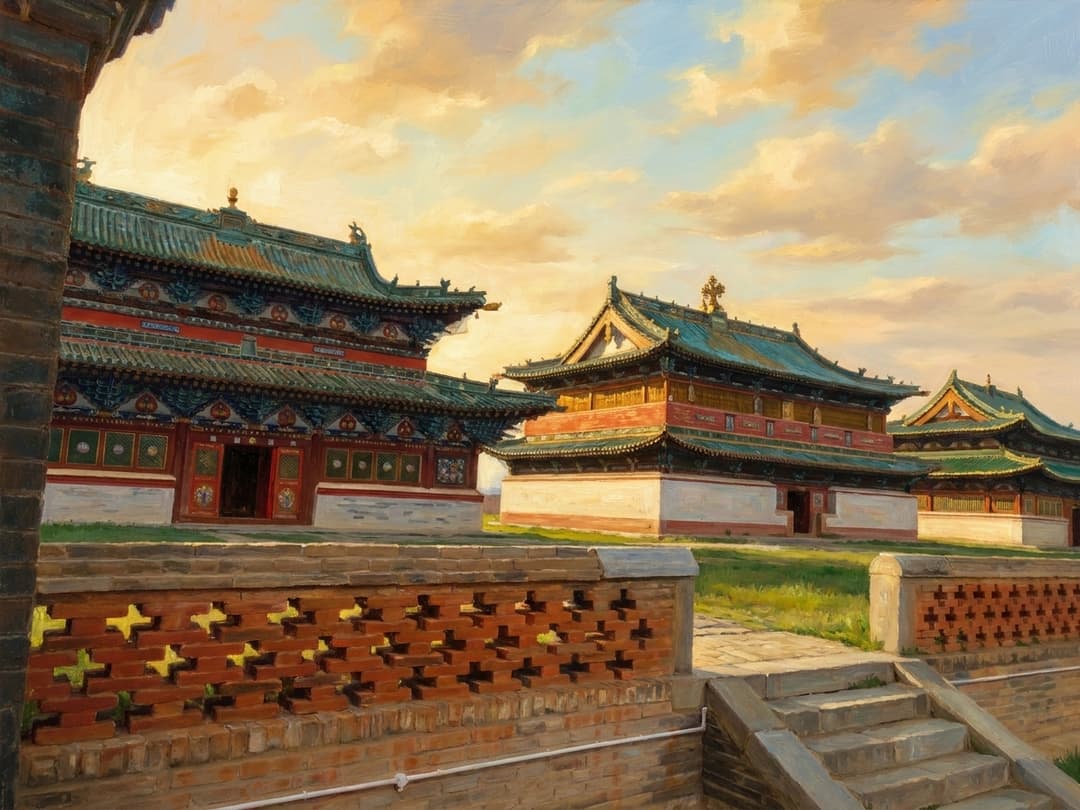
Erdene Zuu offers visitors a rare look into active Tibetan Buddhist liturgy set inside a monumental 16th-century fortress compound. Guests can explore preserved temple museums, observe daily morning chants in the Lavran Temple, and walk the historic perimeter wall.
Highlights
- Witnessing daily morning prayer chants inside the Tibetan-style Lavran Temple.
- Exploring the preserved Gurban Zuu halls filled with original 16th-century Buddhist statues.
- Walking the complete 1.6-kilometer outer wall crowned by 108 white stupas.
- Viewing the 13th-century imperial granite turtle markers outside the wall.
Things to Know
- Admission to the walled grounds is free, but inner museum halls require a modest entry fee.
- Visitors must walk clockwise around all stupas and prayer wheels as custom demands.
- Photography inside active prayer halls and museum temples requires special permits.
Location
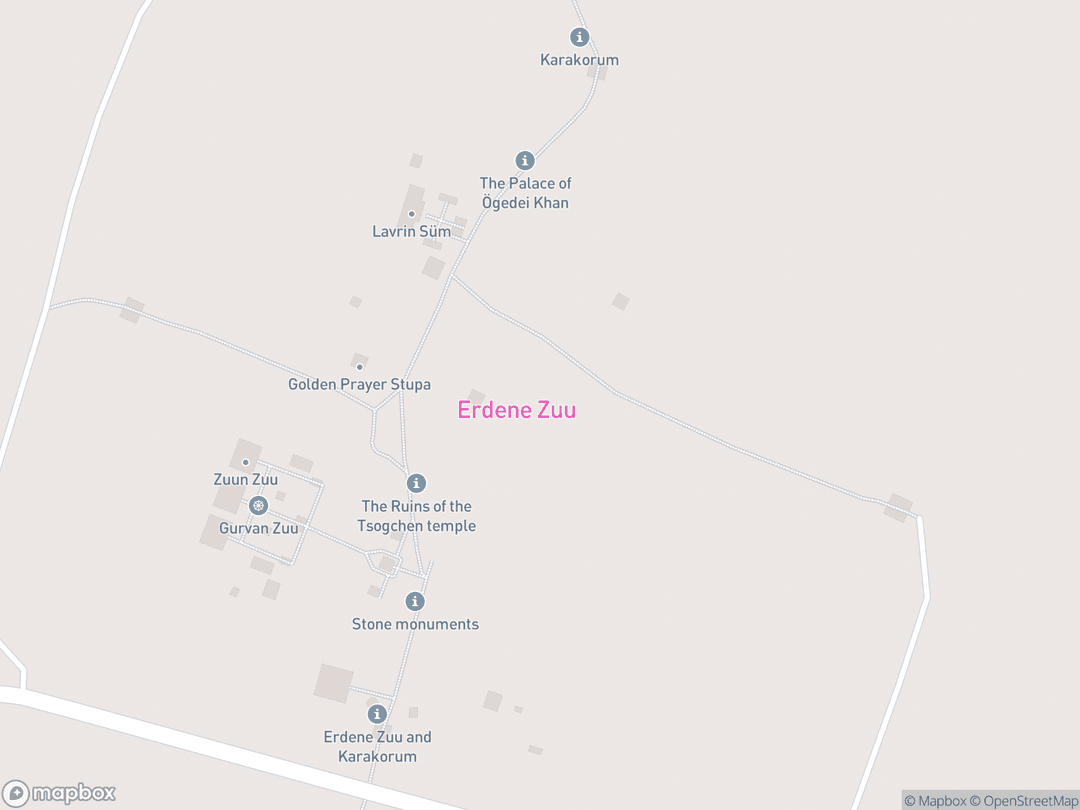
Kharkhorin soum, Övörkhangai Province, Mongolia
Hours: Daily 09:00 - 18:00 (Summer, May-Sep); Weekdays 09:00 - 17:00 (Winter, Oct-Apr)
Getting There: Located in Kharkhorin soum, approximately 360 kilometers southwest of Ulaanbaatar via paved highway, accessible by express bus, private drivers, or organized overland tours.
Get DirectionsTips for Your Visit
Timing Monastic Chants
Arrive at Lavran Temple around 09:00 to experience the morning monastic chanting service.
Photography Rules
Purchase a photo permit at the ticket box if you plan to photograph museum exhibits.
Respectful Attire
Remove hats and sunglasses before stepping into active prayer halls and bow slightly.
About
Erdene Zuu Monastery stands as Mongolia's premier historical sanctuary of Tibetan Vajrayana Buddhism within the Gelug order. Founded in 1585 by Abtai Sain Khan, a prince of the Khalkha Mongols and direct descendant of Genghis Khan, the monastery represented the spiritual renaissance of post-imperial Mongolia. Situated near the ancient capital of Karakorum, its builders repurposed stones and bricks from the 13th-century imperial ruins to construct the first sedentary Buddhist monastery in the nation.
Within the broader Dharmic tradition, Erdene Zuu reflects the fundamental pursuit of liberation (nirvana) from cyclic existence (samsara) through the Buddha's teachings. Gelug Buddhism in Mongolia integrates the Noble Eightfold Path with deep reverence for compassion (karuna) and wisdom (prajna). The complex served as the premier religious and educational institute for Khalkha Mongolia, fostering monastic scholarship, artistic traditions like Tsam dancing, and spiritual leadership under the lineage of the Jebtsundamba Khutuktus.
Despite facing devastating conflict during the Dzungar wars and near-total destruction during Soviet-backed religious purges in 1939, Erdene Zuu survived through strategic historic preservation. Reopened following Mongolia's 1990 Democratic Revolution, the site functions today as both an active place of daily monastic chanting and a UNESCO World Heritage museum showcasing centuries of Mongol sacred art.
Gallery
Symbolic Elements
The temple's exterior features intricate carvings, each rich with spiritual meaning:

108 Stupas Outer Wall
Represents the 108 beads of the Buddhist mala rosary and the clearing of 108 earthly defilements through spiritual practice.
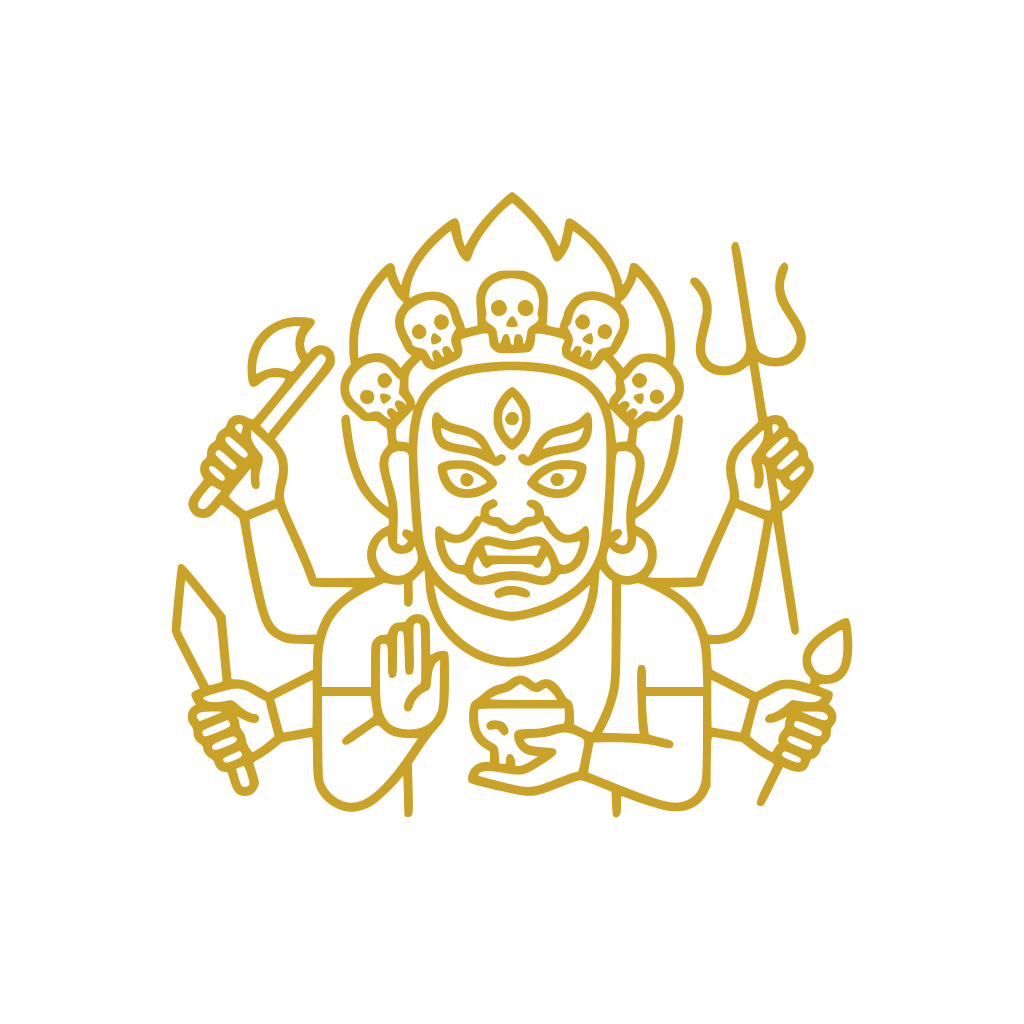
White Mahakala Gombogur
The primary wrathful protector deity brought from Tibet by Abtai Sain Khan to guard the monastery.

Green Glazed Roof Tiles
Symbolizes growth, spiritual vitality, and the Buddha family of Amoghasiddhi in Vajrayana color symbolism.
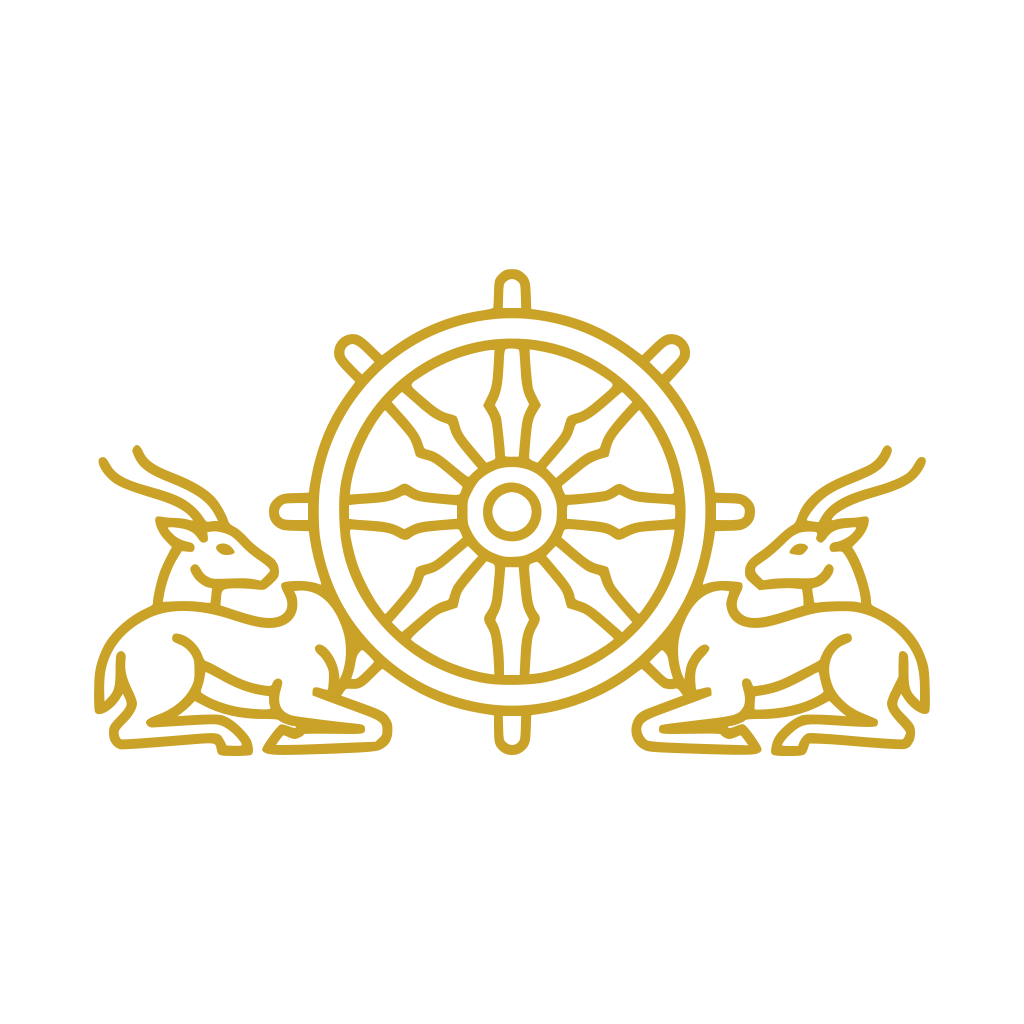
Dharma Wheel and Gazelles
Emblems mounted above temple entrances symbolizing Sakyamuni Buddha's First Sermon at Deer Park.

Imperial Granite Turtles
Thirteenth-century stone turtles from ancient Karakorum representing world stability and spiritual longevity.
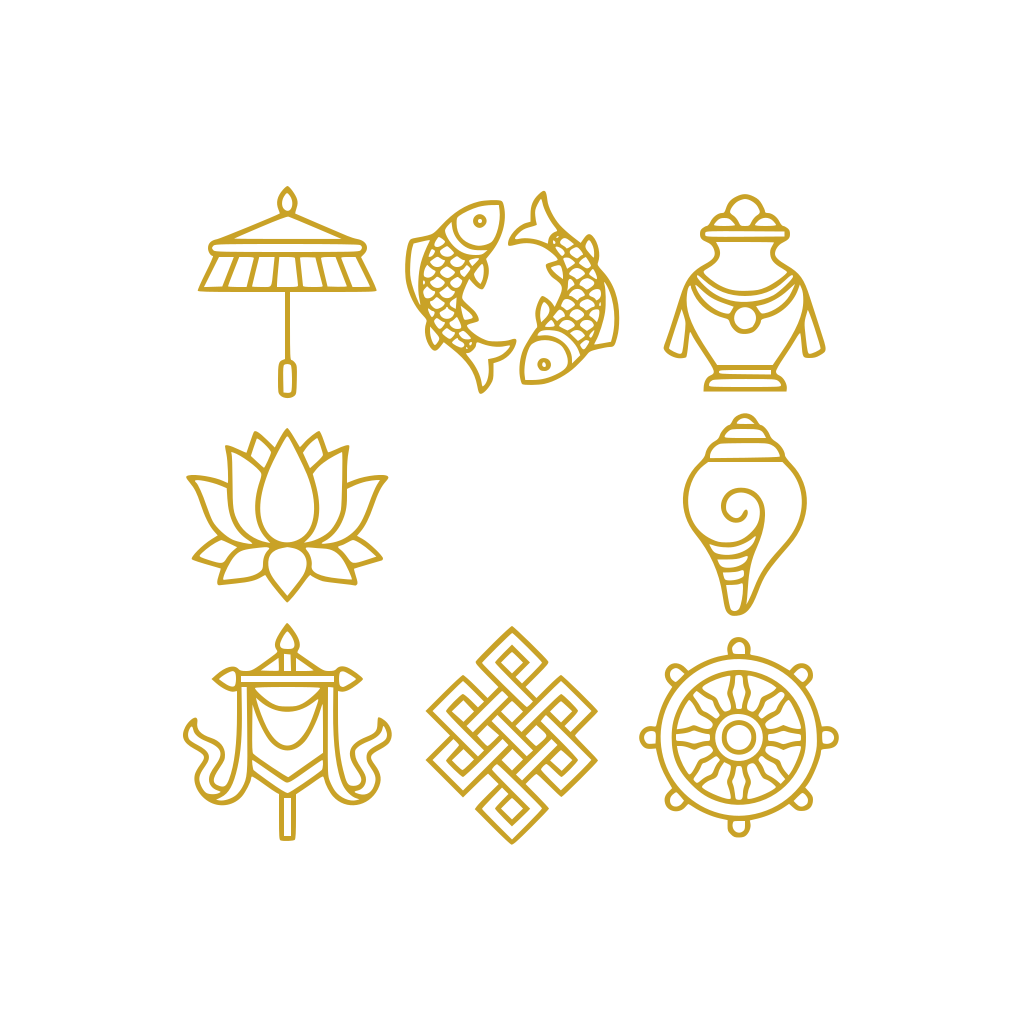
Eight Auspicious Symbols
Sacred motifs painted throughout ceiling beams and altars that convey divine protection and auspicious blessings.

Bodhi Suvraga Golden Stupa
A monumental 1799 reliquary stupa surrounded by eight smaller stupas commemorating Buddha's major life events.
Interesting Facts
Erdene Zuu was constructed using stone blocks and bricks quarried directly from Karakorum's imperial ruins. (Tier A)
In 1745, a local monk named Bunia built a glider frame and attempted flight off the monastery roofs. (Tier B)
The complex avoided complete Soviet destruction in 1944 to serve as a diplomatic museum piece. (Tier B)
At its peak in 1872, the monastery complex housed 62 active temples and over 1,000 monks. (Tier A)
Erdene Zuu was the first permanent sedentary masonry monastery built in Khalkha Mongolia. (Tier A)
Two massive granite turtle sculptures carved during Ögedei Khan's reign sit outside the walls. (Tier A)
The original 1585 statue of White Mahakala survived 1930s purges hidden by local villagers. (Tier B)
The entire outer perimeter wall spans 1.6 kilometers and features 108 white stupas. (Tier A)
Common Questions
Is Erdene Zuu an active monastery or a museum?
Erdene Zuu functions as both an active monastery with daily chants in Lavran Temple and a state-run historic museum complex.
Why does the perimeter wall have 108 stupas?
The number 108 is sacred in Buddhism, representing the 108 beads on a prayer rosary and the 108 earthly defilements overcome through Dharma practice.
Was Erdene Zuu really built from Genghis Khan's capital?
Yes, builders used stones, bricks, and granite blocks salvaged directly from the nearby 13th-century ruins of Karakorum.
Can tourists watch the monks chant?
Visitors are welcome to quietly observe the daily morning prayer services inside Lavran Temple starting around 09:00.
Featured Stories
Built from Imperial Stones
1585
When Prince Abtai Sain Khan established Erdene Zuu in 1585, he sought to anchor Mongolia's spiritual rebirth in its proud historic capital. Craftsmen gathered fallen granite blocks and baked bricks from the ruined palaces of Karakorum, literally building Mongolia's first permanent Buddhist monastery upon the imperial foundations of Genghis Khan.
Source: Government of Övörkhangai Province Heritage Records
The Flying Monk of 1745
1745
Local monastic chronicles record the story of Bunia, an inventive monk residing at Erdene Zuu in 1745. Crafting a winged parachute apparatus from fabric and wood, Bunia launched himself off the high wooden roof of the monastery, achieving a brief gliding flight before landing safely on the steppe fields.
Source: Silk Road Foundation Historical Archives
Saved by Cold War Diplomacy
1944
Amid the systematic anti-religious purges of the 1930s, Erdene Zuu was slatted for complete demolition. However, ahead of a key 1944 visit by American Vice President Henry A. Wallace, Joseph Stalin ordered the Mongolian government to preserve the central temples as a museum display of religious freedom, unintentionally rescuing the ancient complex from total destruction.
Source: International Council on Monuments and Sites (ICOMOS)
Timeline
Capital of Karakorum Established
Ögedei Khan establishes Karakorum as the imperial capital of the Mongol Empire near the site.
MilestoneDestruction of Karakorum
Ming dynasty armies destroy Karakorum, leaving stone ruins that later supply materials for Erdene Zuu.
EventMeeting with 3rd Dalai Lama
Prince Abtai Sain Khan meets Sonam Gyatso in Hohhot and adopts Gelug Tibetan Buddhism.
EventMonastery Foundation
Abtai Sain Khan orders the construction of Erdene Zuu using stone blocks from Karakorum.
component.timeline.groundbreakingCompletion of First Central Hall
The initial temple hall is dedicated and protective deity Gombogur is enshrined.
DedicationDalai Lama Temple Built
The Dalai Lama Süm is erected to honor regional ties to Tibetan monastic leadership.
MilestoneRansacked in Dzungar Conflict
Dzungar forces under Galdan Boshugtu Khan attack the complex during inter-tribal warfare.
EventLavran Temple Completed
A multi-story Tibetan-style white stone palace is finished for resident reincarnated lamas.
DedicationGolden Stupa Erected
The central Bodhi Suvraga stupa is constructed alongside the outer perimeter wall.
MilestonePeak Monastic Footprint
The compound reaches its maximum size with 62 active temples and over 1,000 monks.
MilestoneCommunist Purges
Soviet-backed purges destroy over 40 temples and eliminate monastic leadership.
EventPreserved as Propaganda Museum
State authorities spare remaining temples ahead of a United States diplomatic visit.
RenovationDemocratic Religious Revival
Religious freedom is restored and monastic chants resume inside Lavran Temple.
EventUNESCO World Heritage Inscription
The site is inscribed as part of the Orkhon Valley Cultural Landscape.
MilestoneHistory by Decade
1230s–1380s — Imperial Origins of Karakorum
Long before Erdene Zuu was built, the location served as the political heart of Eurasia. Ögedei Khan founded Karakorum in 1235 as the capital of the Mongol Empire. Following the fall of the Yuan dynasty in 1388, Ming forces burned Karakorum, leaving behind massive stone foundations that waited two centuries for a second life.
1580s — Spiritual Renaissance under Abtai Khan
In 1580, Abtai Sain Khan embraced Gelug Buddhism after meeting the 3rd Dalai Lama. Returning to Khalkha lands in 1585, he commissioned Erdene Zuu as the nation's first permanent masonry monastery. Master builder Manzushir led craftsmen in harvesting stone blocks from Karakorum's ruins to construct the iconic Gurban Zuu halls.
1680s–1780s — Destruction, Rebuilding, and Tibetan Styles
Inter-tribal conflicts during the 1688 Dzungar–Khalkha War left Erdene Zuu severely damaged and temporarily abandoned. Reconstruction began in the early 18th century under Qing oversight, culminating in the 1780 completion of Lavran Temple—a striking white-stone pavilion built in pure Tibetan monastic fashion.
1790s–1870s — Golden Era of Expansion
By 1799, the giant Bodhi Suvraga reliquary stupa was completed, surrounded by eight smaller stupas. Donors across Mongolia funded 108 white stupas along the 1.6-kilometer outer square perimeter wall. At its historic zenith in 1872, the complex housed 62 individual temples and over 1,000 resident monks.
1930s–1940s — Purges and Strategic Preservation
Mongolia's 1939 communist purges under Khorloogiin Choibalsan forced the monastery's closure and destroyed over 40 historic structures. In 1944, Joseph Stalin instructed Mongolian leadership to preserve remaining halls to demonstrate religious tolerance to visiting Western diplomats, converting the site into a state museum in 1947.
1990s–Present — Return of Faith and Global Conservation
Following Mongolia's 1990 Democratic Revolution, Erdene Zuu was returned to the Buddhist monastic community. Lavran Temple reopened for active daily worship, while surrounding halls operate as a national museum. UNESCO inscribed the site in 2004, supporting ongoing international restoration efforts.
Architecture & Facilities
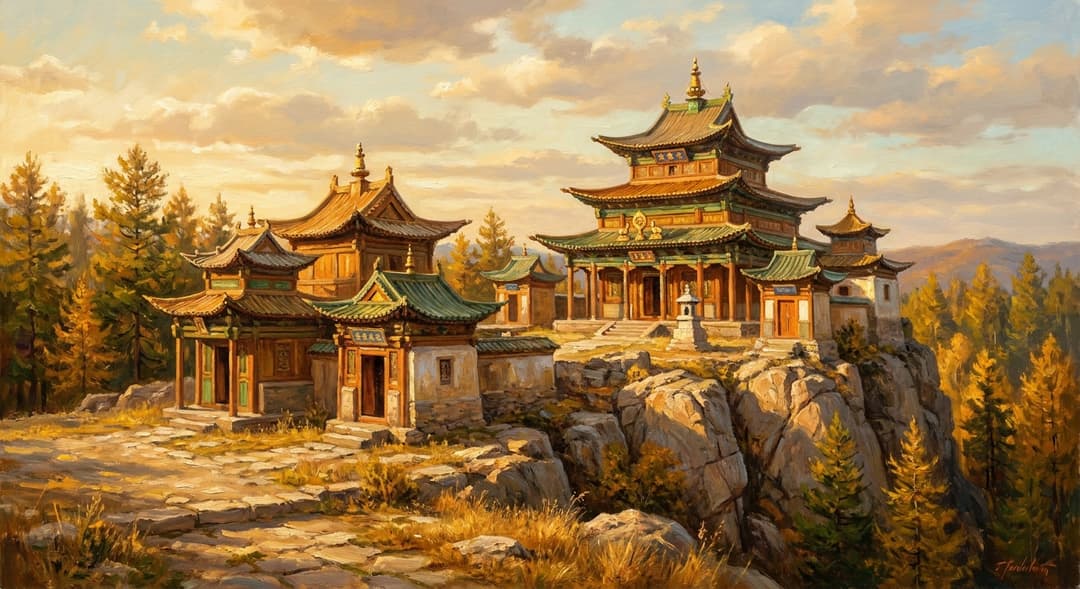
Erdene Zuu Monastery represents a historic synthesis of Sino-Mongolian glazed-tile timber framework, Tibetan white masonry construction, and Mongolian nomadic encampment (khuree) spatial planning within a massive square perimeter.
Building Materials
Imperial Stone and Brick
Foundations and masonry walls repurposed original 13th-century bricks and stone blocks quarried from Karakorum.
Heavy Larch Timber
Structural frames rely on thick Siberian larch timbers connected via mortise-and-tenon joinery without metal nails.
Glazed Roof Tiles
Multi-tiered sweeping roofs feature dark green and blue glazed ceramic tiles decorated with protective dragon motifs.
White Plastered Masonry
Tibetan-style halls utilize thick, slightly inward-tapering stone walls finished in smooth white plaster.
Interior Features
West Temple (Baruun Zuu)
Enshrines statues dedicated to Dipankara Buddha, representing the enlightened Buddha of the past era.
Main Temple (Gol Zuu)
Houses a sacred statue of Sakyamuni Buddha portrayed as a young boy, inspired by Lhasa's Jowo Rinpoche.
East Temple (Zuu Zuu)
Dedicated to Maitreya Buddha, symbolizing the future teacher who will restore Dharma to the world.
Lavran Temple Assembly Hall
An active Tibetan-style prayer hall lined with brocade thangkas, altars, and seating for chanting monks.
Temple Grounds
The sprawling 16-hectare grassy compound is contained within a 400m x 400m square wall lined with 108 white stupas and historic imperial turtle stones.
Additional Facilities
The site functions as both an active Buddhist monastery and a state museum complex, offering visitor ticket offices, educational exhibition halls, and local artisan shops.
Religious Significance
Erdene Zuu Monastery occupies a vital theological position within Gelug Tibetan Vajrayana Buddhism. In the Dharmic tradition, the monastery serves as a physical sanctuary designed to help practitioners purify karma, study Buddhist philosophy, and achieve liberation from the cycle of rebirth.
To serve as the spiritual heart of Mongolian Buddhism, preserving sacred liturgies, educating monastic scholars, and hosting community blessings.
Sacred Ordinances
Daily Monastic Liturgy (Chanting)
Monks assemble inside Lavran Temple every morning to chant Gelug sutras, play traditional horns, and make ritual offerings.
Circumambulation (Kora)
Devotees walk clockwise around the outer 108-stupa wall and prayer wheels while reciting sacred mantras.
Tsam Sacred Masked Dance
A ritual dance tradition performed by masked monks to subdue harmful spiritual forces and bless the community.
Sutra Study and Meditation
Monks engage in classical philosophical debate and silent meditation to cultivate wisdom and compassion.
The Gelug Lineage in Mongolia
Erdene Zuu established the firm theological connection between Khalkha Mongolian rulers and the Dalai Lamas of Tibet, defining the religious character of Mongolian Buddhism for centuries.
Protective Deities
The enshrining of Gombogur (White Mahakala) at Erdene Zuu in 1586 established a spiritual guardian dedicated to safeguarding the Mongolian people and the Buddhist Dharma.
Similar Temples
Sources & Research
Every fact on Temples.org is backed by verified Sources & Research. Each piece of information is rated by source tier and confidence level.
View All Sources (7)
| Field | Source | Tier | Retrieved |
|---|---|---|---|
| About & Historical Background | UNESCO World Heritage Centre (opens in a new tab) | B | 2026-02-18 |
| About & Historical Background | Government of Övörkhangai Province (opens in a new tab) | A | 2026-02-18 |
| Architecture & Facilities | International Council on Monuments and Sites (ICOMOS) (opens in a new tab) | B | 2026-02-18 |
| Timeline & Featured Stories | Silk Road Foundation (opens in a new tab) | B | 2026-02-18 |
| Religious Significance | National Museum of Mongolia (opens in a new tab) | A | 2026-02-18 |
| Religious Significance | Buddhist Digital Resource Center (opens in a new tab) | B | 2026-02-18 |
| Visitor Insights & Cultural Context | World Monuments Watch (opens in a new tab) | B | 2026-02-18 |