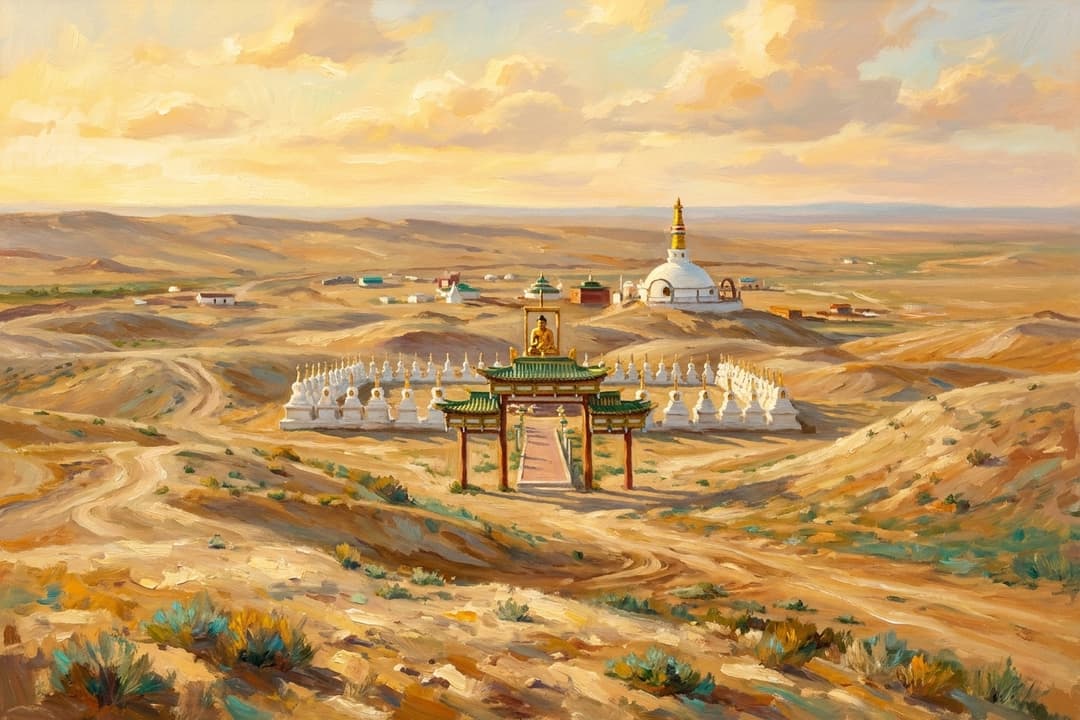
Visitor Insights
Visiting Khamarin Hiid & Shambhala Energy Center
Visiting Khamarin Hiid offers a profound desert spiritual experience combining traditional monastic chanting with open-air energy meditation at Northern Shambhala. Pilgrims gather at sunrise to absorb terrestrial energy from the sacred soil.
Highlights
- Walking the 108 stupa perimeter ring around the open-air Shambhala mandala
- Sunrise ground-lying energy recharging ritual on sacred red desert soil
- Exploring the 108 sandstone cliffside meditation caves
- Squeezing through the Mother's Womb Cave passage for symbolic spiritual rebirth
Things to Know
- Desert climate produces extreme summer heat and severe sub-zero winter temperatures
- Visitors should walk clockwise around all stupas and shrines in accordance with Buddhist tradition
Location
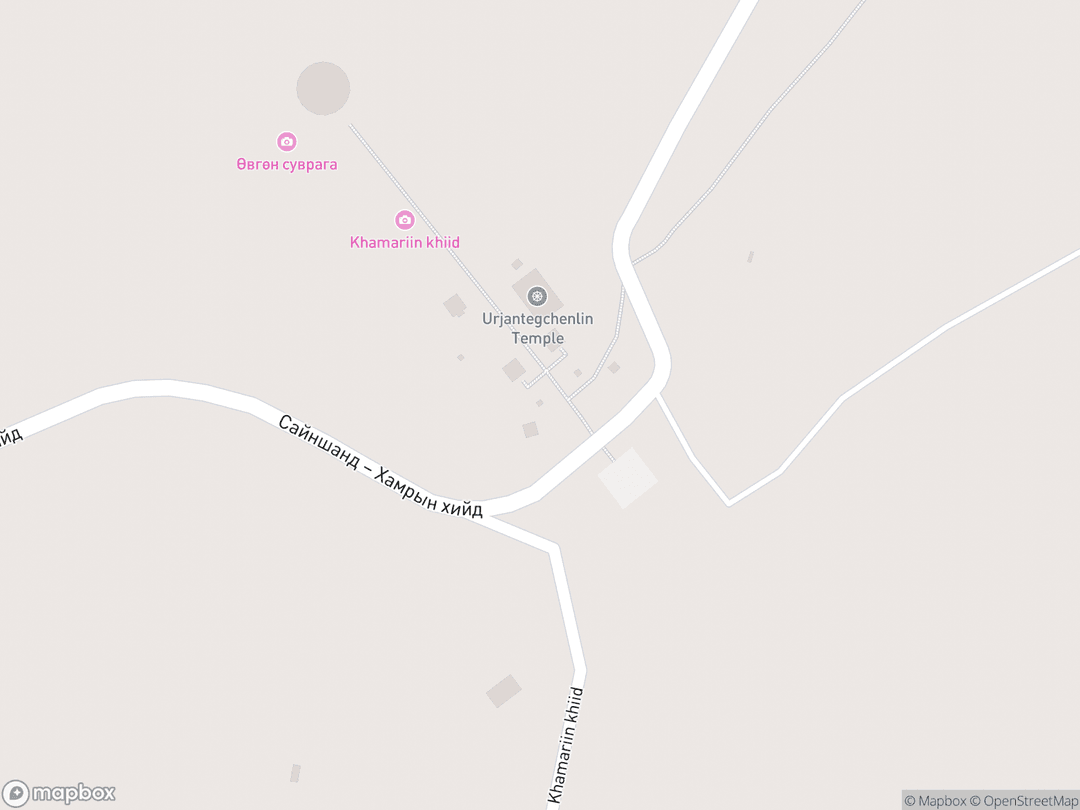
Khatanbulag, Sainshand Soum, Dornogovi Province, Mongolia
Hours: Monastic prayer halls daily 08:00–18:00; Shambhala Energy Center open 24/7
Getting There: Located 45 km south of Sainshand; accessible by paved road or train connection from Ulaanbaatar.
Get DirectionsTips for Your Visit
Arrive at Sunrise
Visit the Shambhala Energy Center at dawn when local tradition considers terrestrial energy alignment to be most potent.
Respect Ritual Protocols
Walk clockwise around all sacred structures and remove footwear when stepping onto consecrated earth platforms.
About
Khamarin Hiid is an active Vajrayana Buddhist monastic center and sacred energy portal situated in the eastern Gobi Desert of Mongolia. Established in 1820 by the 19th-century polymath, poet, and reincarnate lama Dulduityn Danzanravjaa, the complex was designed as an egalitarian center for spiritual learning, artistic performance, and terrestrial energy practices.
Rooted in the Nyingma 'Red Hat' lineage and Dharmic traditions, the monastery incorporates Kalachakra Tantra principles to transform bodily and subtle energies. Danzanravjaa established the adjacent Khoid Shambhala site as an open-air mandala where the physical desert landscape functions as a direct energetic link to the pure land of Shambhala.
After suffering complete destruction during state religious purges in 1937, the monastery was revived in 1990 following the recovery of sacred relics hidden in remote desert caves. Reconstructed in 2006 with a landmark perimeter of 108 white stupas, Khamarin Hiid stands today as a major global pilgrimage center.
Gallery
Symbolic Elements
The temple's exterior features intricate carvings, each rich with spiritual meaning:

108 Whitewashed Stupas
Defines the perimeter wall and symbolizes overcoming 108 human defilements to achieve spiritual realization.

Wisdom Eyes of the Buddha
Represents all-seeing non-dual awareness observing the universe with boundless compassion.

Kalachakra Mandala Geometry
Embodies the Wheel of Time cosmic diagram used for transforming internal and external subtle energies.

Golden Galav Ovoo
Serves as a sacred stone cairn connecting heaven, earth, and humanity for protective spiritual blessings.

Mother's Womb Cave
A narrow natural rock formation where pilgrims squeeze through to symbolically shed negative past karma.

Sacred Red Ochre Soil
Venerated as a natural energetic conductor used by practitioners to absorb earth currents.

Purification Furnace
A consecrated stone vessel where pilgrims ritually burn written descriptions of past errors and attachments.

Meditation Cave Network
Comprises 108 cliffside sandstone caves historically utilized for 108-day solitary Tantric retreats.
Interesting Facts
Danzanravjaa established Mongolia's first professional public theater at the monastery in 1821. (Tier A)
The monastery gave women equal access to higher Buddhist education in feudal Mongolia. (Tier A)
A heroic curator hid 64 crates of priceless relics in desert caves for over 50 years. (Tier A)
Monks undertook continuous 108-day solitary meditation retreats in cliffside sandstone caves. (Tier B)
Pilgrims lie flat on bare red desert soil to recharge their vital prana energy currents. (Tier B)
Visitors ritually burn written descriptions of their spiritual faults in a consecrated stone furnace. (Tier B)
Danzanravjaa built a desert library housing nearly one million sacred texts alongside a public museum. (Tier B)
Danzanravjaa composed Mongolia's cherished folk song Ulemjiin Chanar at this sanctuary. (Tier B)
Common Questions
What is the Shambhala Energy Center?
It is a sacred open-air mandala consecrated in 1853 and restored in 2006 to align subtle energies and connect with Shambhala.
Why are there 108 stupas around the site?
The 108 stupas symbolize overcoming 108 human defilements and represent the volumes of the sacred Kangyur.
How do visitors reach Khamarin Hiid?
The sanctuary is 45 km south of Sainshand, accessible via paved road or overnight train from Ulaanbaatar.
What is the significance of lying on the desert earth?
In Vajrayana tradition, the site's sacred energetic currents absorb negative karma and recharge vital physical energy.
Featured Stories
The Secret Crate Guardians of the Gobi
1937
During the communist religious purges of 1937, monastery curator O. Tüdev secretly loaded 64 heavy wooden crates with sacred statues, books, and Danzanravjaa's personal relics, burying them across remote desert caves under cover of night. For over 50 years, Tüdev guarded the secret map in silence before passing the memory to his grandson Zundoi Altangerel on his deathbed. In 1991, Altangerel successfully unearthed 24 crates intact to restore the ancient spiritual sanctuary.
Source: Danzanravjaa Museum Archives
Danzanravjaa's Revolution in Desert Education
1821
In 1821, Dulduityn Danzanravjaa established Mongolia's first public professional theater and non-religious school at Khamarin Hiid. Defying the rigid feudal class structures of the era, he granted women full equal rights to receive formal education and perform on stage alongside men. His famous musical drama 'Saran Khukhuu' used theatrical art as a direct vehicle for moral enlightenment and social reform.
Source: Mongolian Cultural History Records
Consecration of Northern Shambhala
1853
On the full moon of spring in 1853, Danzanravjaa led hundreds of practitioners in an intensive Kalachakra meditation assembly on the Övör Hamar plain. Through secret Tantric rituals, he consecrated the land as Khoid Shambhala, opening a permanent energetic gateway connecting physical earth with the pure realm of Shambhala. Today, pilgrims continue gathering at this exact desert coordinate to recharge their spiritual vitality.
Source: Vajrayana Monastic Tradition
Timeline
Birth of Danzanravjaa
Dulduityn Danzanravjaa is born in the Gobi Desert.
MilestoneRecognition of the Fifth Noyon Khutagt
Danzanravjaa is formally recognized at age nine as a reincarnate lama.
MilestoneFounding of Khamarin Hiid
Danzanravjaa establishes Khamar Monastery in the eastern Gobi plain.
DedicationTheater and Public School Opened
The monastery opens Mongolia's first professional public theater and co-educational school.
MilestoneDebut of Saran Khukhuu
Danzanravjaa stages his famed spiritual musical opera for the public.
EventConsecration of Khoid Shambhala
Danzanravjaa ritually opens the Northern Shambhala spiritual portal.
DedicationPassing of Danzanravjaa
The founder passes away and his embalmed body is enshrined at the monastery.
MilestoneDestruction and Hidden Relics
Communist purges burn the monastery while curator O. Tüdev buries 64 crates of relics in desert caves.
EventRevival and Artifact Recovery
Religious freedom is restored and Zundoi Altangerel begins unearthing the hidden crates.
MilestoneShambhala Energy Center Reconstructed
The open-air Shambhala Energy Center is officially rebuilt with a perimeter of 108 white stupas.
RenovationHistory by Decade
1820s — Founding and Educational Reforms
In 1820, Dulduityn Danzanravjaa selected an arid site in the Gobi Desert to establish Khamarin Hiid as a spiritual and cultural sanctuary. He introduced groundbreaking social reforms by founding Mongolia's first public theater and schools open to both boys and girls.
1830s–1850s — Cultural Zenith and Shambhala Consecration
The complex expanded into four major monastic colleges hosting hundreds of resident monks and housing a desert library of nearly one million texts. In 1853, Danzanravjaa consecrated the surrounding plain as Khoid Shambhala, establishing an open-air mandala for Kalachakra meditation.
1930s — Destruction during Religious Purges
During state-sponsored anti-religious campaigns in 1937, the entire complex of over 80 temples was burned to the ground. Monastic curator O. Tüdev secretly packed 64 wooden crates containing priceless relics and buried them in desert caves to save them from destruction.
1990s–2000s — Restoration and Global Pilgrimage
With the restoration of religious freedom in 1990, Tüdev's grandson unearthed 24 intact crates of treasures to begin rebuilding the monastery. The open-air Shambhala Energy Center was officially consecrated in 2006, restoring the site as an active international pilgrimage destination.
Architecture & Facilities
The architecture of Khamarin Hiid combines traditional Mongolian felt tent forms, Tibetan stone masonry, and East Asian pagoda motifs arranged across an expansive desert mandala landscape.
Building Materials
Gobi Stone & Clay
Local red Gobi stone and whitewashed clay masonry form the heavy structural foundations.
Siberian Timber
Siberian cedar and larch timber frame the main assembly hall roofs and door pillars.
Gilded Brass & Copper
Sheet brass and gilded copper ornament the stupa spires and ritual prayer wheels.
Mineral Pigments
Natural earth ochre pigments illuminate the decorative murals and Buddha wisdom eyes.
Interior Features
Main Assembly Hall (Tsogchin Duğan)
Houses main altar thrones, colorful silk thangkas, and seating for monastic prayer chants.
Eye Temple (Wisdom Shrine)
Features painted Buddha eyes observing pilgrims seeking mental clarity and non-dual wisdom.
Danzanravjaa Shrine Room
Contains preserved personal effects and recovered artifacts of the Fifth Noyon Khutagt.
Kalachakra Shrine
Dedicated to Tantric deity practice and subtle energy transformation visualizations.
Temple Grounds
Spread over several kilometers, featuring 108 perimeter stupas, purification gates, meditation caves, and open earth energy platforms.
Additional Facilities
Includes a visitor welcome center, ritual paper burning furnace, peace bell tower, and nearby Danzanravjaa Museum in Sainshand.
Religious Significance
Khamarin Hiid is celebrated within Vajrayana Buddhism as an earthly focal point for Kalachakra Tantra and a physical gateway to the enlightened realm of Shambhala.
To facilitate spiritual liberation through Vajrayana meditation, moral education, and direct engagement with terrestrial earth energies.
Sacred Ordinances
Shambhala Kora & Recharging
Pilgrims walk clockwise around 108 stupas and lie flat on red soil to align subtle body energy channels.
Purification Burning Ritual
Writing down negative karmic patterns on paper and burning them in consecrated stone furnaces.
Tantric Cave Meditation
Practicing 108-day solitary retreats in cliffside sandstone caves to cultivate inner realization.
Northern Shambhala Portal
Danzanravjaa established Khoid Shambhala as an active cosmic mandala where pure intentions directly connect practitioners to Shambhala.
Egalitarian Vajrayana Path
The monastery upholds Danzanravjaa's Nyingma teaching that every human regardless of gender or social status possesses Buddha nature.
Similar Temples
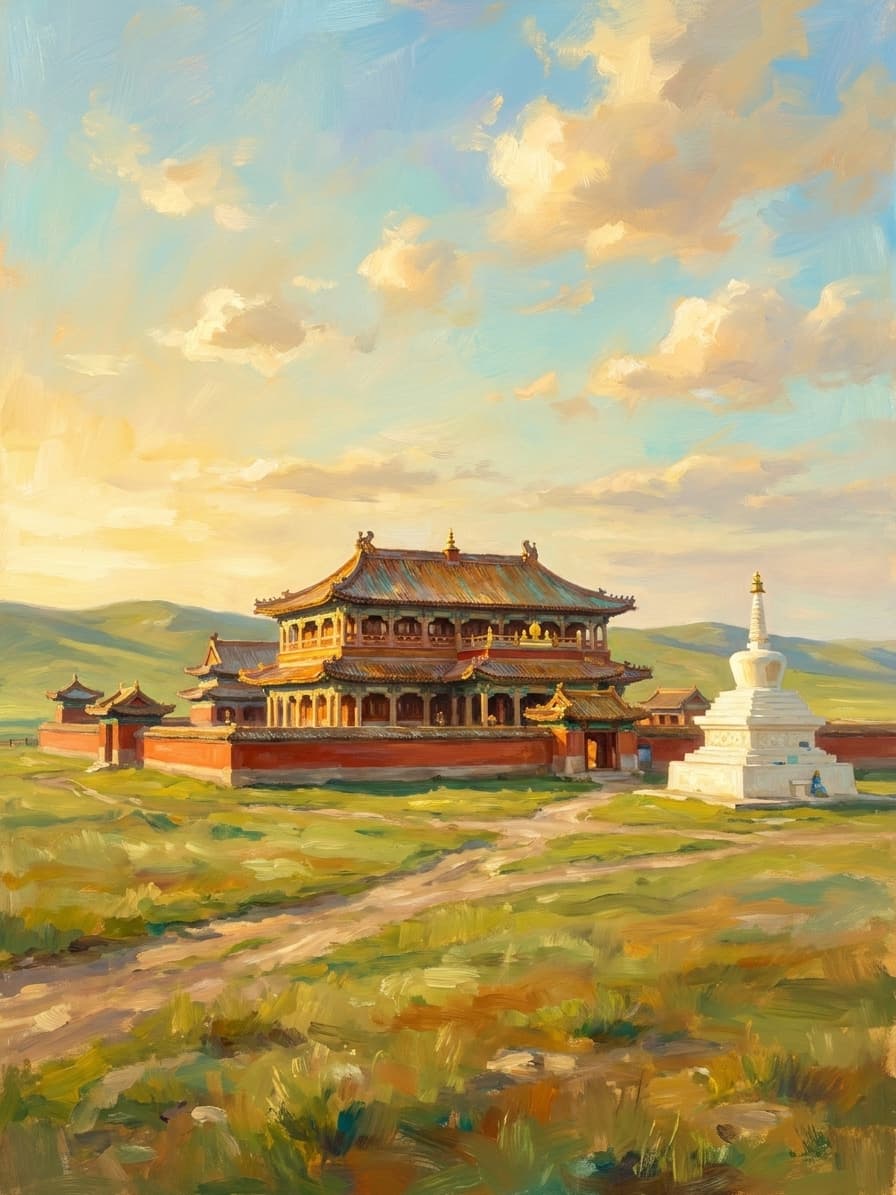
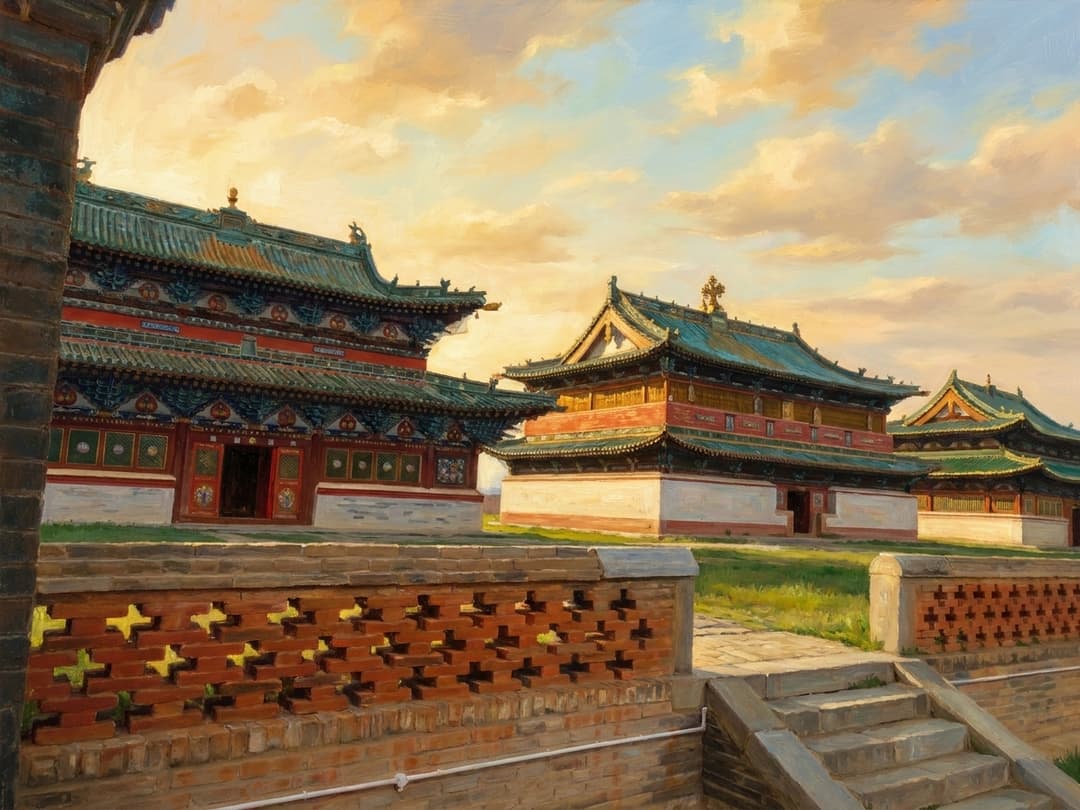
Sources & Research
Every fact on Temples.org is backed by verified Sources & Research. Each piece of information is rated by source tier and confidence level.
View All Sources (8)
| Field | Source | Tier | Retrieved |
|---|---|---|---|
| About & Historical Background | Mend-Ooyo Cultural Heritage Research (opens in a new tab) | B | 2026-02-18 |
| Architecture & Layout | Amicus Mongolia Cultural Expeditions (opens in a new tab) | C | 2026-02-18 |
| Religious Significance & Shambhala | ResearchGate Academic Network (opens in a new tab) | B | 2026-02-18 |
| Visitor Insights & Access | Tour Mongolia Cultural Heritage (opens in a new tab) | C | 2026-02-18 |
| Timeline & Rebuilding Era | Mongolia Guide Heritage Registry (opens in a new tab) | B | 2026-02-18 |
| Danzanravjaa Legacy & History | Brigham Young University Academic Studies (opens in a new tab) | B | 2026-02-18 |
| Monastic Colleges & History | View Mongolia Travel & Heritage (opens in a new tab) | C | 2026-02-18 |
| Desert Museum & Sacred Geography | Visit Silk Road Heritage Network (opens in a new tab) | B | 2026-02-18 |