Visitor Insights
Visiting Gandantegchinlen Monastery
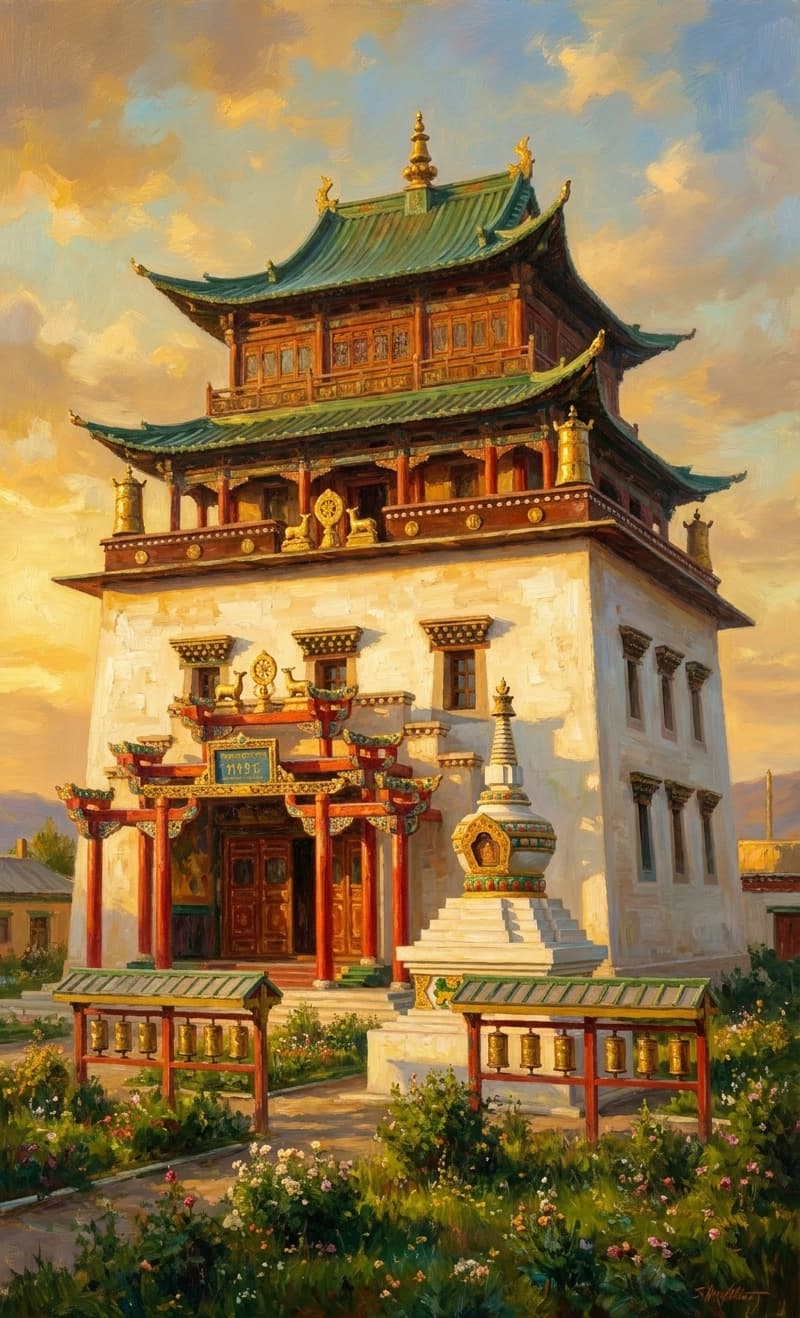
Visitors to Gandantegchinlen Monastery experience an authentic living Buddhist environment where morning chanting ceremonies resonate across active colleges. The complex invites peaceful circumambulation along prayer wheel perimeters amidst sweeping multi-tiered temple rooflines and active monastic life.
Highlights
- Witness morning monastic chanting and ceremonial horn signaling between 09:00 AM and 11:30 AM.
- Marvel at the monumental 26.5-meter indoor Megjid Janraisig statue in the main pavilion.
- Explore historic colleges dedicated to Buddhist philosophy, traditional medicine, and astrology.
- Observe traditional monk residences in white felt yurts (gers) within the monastery courtyard.
Things to Know
- Walk clockwise (sunwise) around all temples, stupas, and prayer wheels.
- Remove hats inside shrine halls and refrain from pointing feet directly at sacred altars.
- Interior photography requires a small permit fee purchased at the entrance gate.
Location
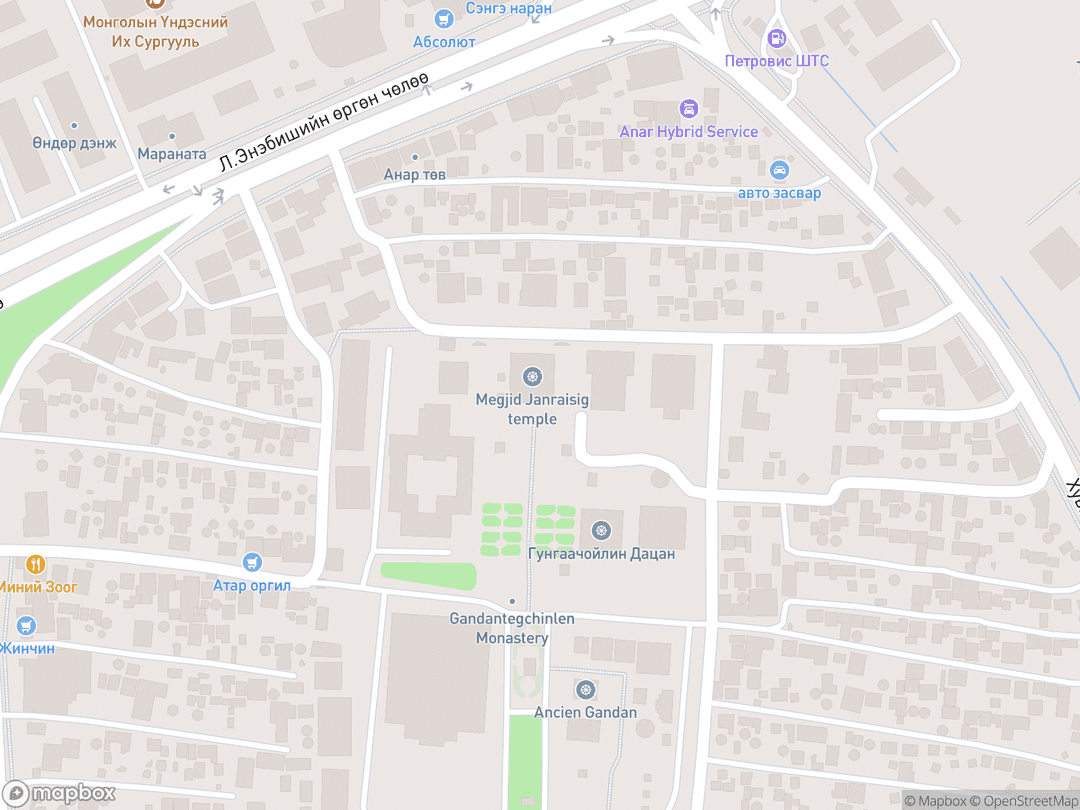
Zanabazar Street, Bayangol District, 16th Khoroo, Ulaanbaatar 16040, Mongolia
Hours: Daily 09:00 AM – 05:00 PM (grounds open at 08:00 AM)
Getting There: Located 1.5 km west of Sükhbaatar Square on Zanabazar Street, accessible by bus or local taxi to the south gate.
Get DirectionsTips for Your Visit
Arrive for Morning Chanting
Visit before 10:00 AM to hear monks playing traditional horns, drums, and chanting in the assembly halls.
Mind the Circumambulation Route
Always walk clockwise around prayer wheels, stupas, and shrine buildings to respect traditional practice.
About
Gandantegchinlen Monastery, known locally as Gandan, stands on Dalkha Hill as the preeminent seat of Mongolian Buddhism and the national center of the Gelug school. Established in 1838 by decree of the Fifth Jebtsundamba Khutuktu, this historic complex served as the intellectual capital of Outer Mongolia and preserved ancient Dharmic traditions through periods of profound socio-political turmoil.
Rooted in the shared Dharmic heritage of Buddhist traditions, Gandan serves as a living repository of the Buddha's teachings on wisdom, ethics, and liberation. The sanctuary synthesizes traditional nomadic Mongolian timber construction, Tibetan stone masonry, and Sino-Mongolian decorative arts, housing rare scriptures, sacred relics, and world-renowned artistic masterpieces.
After surviving decades as Mongolia's sole functioning monastery during the Cold War era, Gandan underwent a dramatic post-1990 national renaissance. Today, it operates as an active monastic community, university, and international pilgrimage site, housing the monumental 26.5-meter indoor standing Avalokiteshvara statue that symbolizes national spiritual rebirth and universal compassion.
Gallery
Symbolic Elements
The temple's exterior features intricate carvings, each rich with spiritual meaning:
Megjid Janraisig Statue
A 26.5-meter indoor standing figure of Avalokiteshvara embodying universal compassion and national healing.

Dharmachakra & Twin Deer
Gilded roofline emblem representing the Buddha's first turning of the Wheel of Law at Sarnath.

Dhvaja Victory Banners
Cylindrical copper and fabric banners mounted on roof corners symbolizing enlightenment over spiritual obstacles.

Mani Prayer Wheels
Copper cylinders filled with mantras that radiate spiritual blessings when turned clockwise by pilgrims.

Ayush Niche Statues
Over 1,000 uniform miniature gilded statues of Amitayus lining shrine walls to represent infinite life.

Soyombo Emblem
Mongolia's national and spiritual symbol depicting elements of fire, sun, moon, and cosmic harmony.

Endless Knot (Srivatsa)
Sacred geometric design representing the interconnected nature of wisdom, compassion, and ultimate reality.
Interesting Facts
The main hall houses a 26.5-meter tall standing Avalokiteshvara statue, one of the world's tallest indoor Buddha sculptures. (Tier A)
The original 1911 copper statue was dismantled in 1938 and shipped to Russia, where reports indicate it was melted down into bullets during WWII. (Tier B)
In 1904, the 13th Dalai Lama fled Lhasa and resided at Gandantegchinlen Monastery for over a year. (Tier A)
Gandan survived the Cold War as Mongolia's sole active monastery after being hastily reopened in 1944 following a visit by U.S. Vice President Henry Wallace. (Tier B)
The 1996 statue reconstruction was funded by thousands of nationwide citizen donations alongside gold leaf from Nepal. (Tier A)
Resident monks at Gandan continue to live in traditional felt yurts (gers) pitched in the monastic courtyard enclosure. (Tier B)
The interior of the 1996 Megjid Janraisig statue holds 27 tons of medicinal herbs, 2,000 sutras, and 334 scriptures written in pure gold leaf. (Tier A)
Gandan houses active colleges dedicated to traditional Tibetan-Mongolian medicine and astrology alongside philosophical studies. (Tier A)
Common Questions
What does the name Gandantegchinlen mean?
The name derives from Tibetan 'Ganden' meaning 'The Great Place of Complete Joy'.
How tall is the main Buddha statue inside Gandan Monastery?
The indoor Megjid Janraisig statue stands 26.5 meters (87 feet) tall.
When is the best time of day to visit the monastery?
Visiting between 09:00 AM and 11:30 AM allows visitors to observe morning chanting ceremonies.
Are visitors permitted to take photographs inside the temples?
Photography inside shrine rooms is restricted or requires a modest camera permit purchased at the entrance.
Featured Stories
Sanctuary for the 13th Dalai Lama
1904
In 1904, following the British military expedition into Lhasa, the 13th Dalai Lama fled Tibet and sought sanctuary at Gandantegchinlen Monastery for over a year. His residence transformed Gandan into the international hub of the Tibetan Buddhist world, deepening spiritual ties between Tibetan and Mongolian monastic leaders. The historic visit cemented Gandan's status as a fortress of Dharmic learning capable of hosting the tradition's highest spiritual authorities.
Source: Gandantegchinlen Monastery Historical Archives
The Reluctant Cold War Showcase
1944
After the tragic anti-religious purges of the 1930s destroyed hundreds of Mongolian monasteries, U.S. Vice President Henry A. Wallace made an official diplomatic visit to Ulaanbaatar in 1944. To project an image of religious tolerance, the government hastily reopened Gandan under strict state supervision. This unexpected diplomatic encounter allowed a core community of lamas to preserve sacred chanting traditions openly through decades of totalitarian rule.
Source: National Archives of Mongolia
The Great Reconstruction of Avalokiteshvara
1996
Following the 1990 Democratic Revolution, the Mongolian nation united in a monumental campaign to rebuild the destroyed Megjid Janraisig statue. Funded by thousands of public donations from everyday citizens alongside gold leaf from Nepal, the 26.5-meter masterpiece was consecrated in 1996 by the 14th Dalai Lama. The restoration marked the vibrant rebirth of Mongolian national identity and Buddhist heritage.
Source: Center for Buddhist Studies Ulaanbaatar
Timeline
Gungaachoilin Datsan Founded
Initial philosophical college established as the institutional forerunner to Gandan Monastery.
MilestoneMonastery Established on Dalkha Hill
The Fifth Jebtsundamba Khutuktu officially decrees the founding of Gandantegchinlen Monastery.
DedicationVajradhara Temple Constructed
Building of Bat Tsagaan temple completed to house master sculptures by Zanabazar.
EventZuu Temple Erected
Dedication of the Sino-Mongolian shrine hall honoring Sakyamuni Buddha.
Event13th Dalai Lama Takes Sanctuary
The 13th Dalai Lama resides at Gandan for over a year following the British entry into Lhasa.
EventMegjid Janraisig Statue Commissioned
The Eighth Bogd Khan orders the construction of the 26.5-meter Avalokiteshvara statue.
MilestoneMonastery Forcibly Closed
Soviet-backed purges close Gandan and dismantle its main copper statue for wartime materials.
EventReopened as Showcase Monastery
Gandan reopens following U.S. Vice President Henry Wallace's visit to Ulaanbaatar.
MilestoneZanabazar Buddhist University Founded
Establishment of higher Buddhist education institute during the Cold War era.
MilestoneRebuilt Avalokiteshvara Statue Consecrated
The 14th Dalai Lama consecrates the newly reconstructed 26.5-meter statue amidst national celebration.
DedicationHistory by Decade
1800s–1830s
Let Dalkha Hill become a sanctuary of complete joy and unyielding wisdom.
In 1809, the initial precursor Gungaachoilin Datsan was constructed west of the mobile monastic center Ikh Khuree. Recognizing the need for an expanded sanctuary, the Fifth Jebtsundamba Khutuktu officially decreed the establishment of Gandantegchinlen Monastery on Dalkha Hill in 1838.
1840s–1860s
Rapid architectural expansion saw the construction of the Vajradhara Temple in 1840 and the Zuu Temple in 1869. These additions established Gandan as the intellectual and administrative center of Outer Mongolia, housing hundreds of scholar monks.
1900s–1910s
In 1904, the 13th Dalai Lama resided at Gandan, elevating its international standing across Asia. Following Mongolia's 1911 independence, the Eighth Bogd Khan commissioned the colossal 26.5-meter copper Avalokiteshvara statue and shrine hall to bring national unity and healing.
1930s–1940s
Communist religious purges forcibly closed Gandan in 1938, dismantling its primary statue for Soviet war materials. Following the 1944 visit of U.S. Vice President Henry Wallace, the monastery was reopened as Mongolia's sole active showcase sanctuary.
1970s–1990s
Gandan founded the Zanabazar Buddhist University in 1970 to educate future scholar-lamas. With the 1990 Democratic Revolution, full religious freedom returned, culminating in the 1996 consecration of the rebuilt Megjid Janraisig statue by the 14th Dalai Lama.
2000s–2020s
The monastery expanded its educational infrastructure with colleges for Tantric practice, medicine, and astrology. The addition of the modern Battsagaan Grand Assembly Hall enabled Gandan to host international Buddhist summits and regional cultural conferences.
Architecture & Facilities
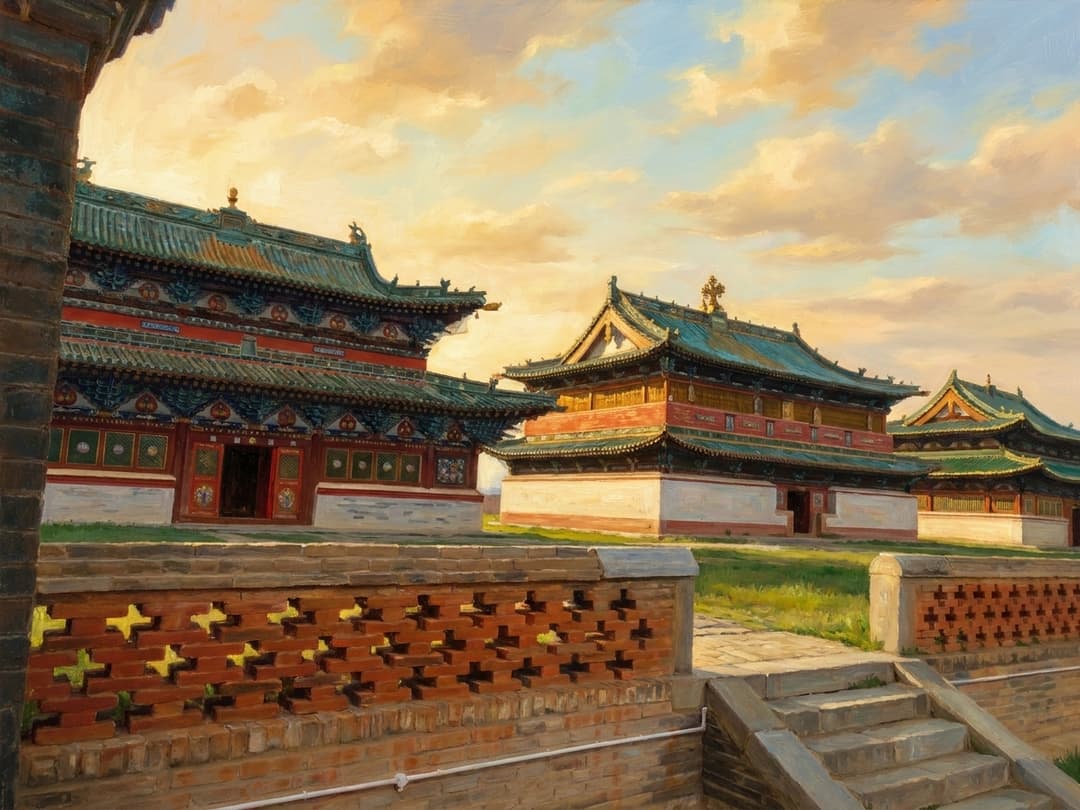
Gandantegchinlen Monastery displays a distinctive tri-style architectural synthesis combining indigenous Mongolian timber construction, Tibetan stone masonry, and Sino-Mongolian decorative timber framing. White-plastered stone walls with inward-sloping trapezoidal profiles support sweeping green-glazed rooflines, ornate dougong bracket systems, and circular wooden assembly layouts adapted for high-altitude Eurasian steppe weather.
Building Materials
Siberian Larch Timber
Dense Siberian larch beams and pillars crafted using classical joinery techniques without metal nails.
Kiln-Fired Brick & Plaster
Massive exterior masonry walls coated in white lime plaster for environmental insulation.
Gilded Copper & Leaf
Hammered copper plates gilded with gold leaf forming the massive Megjid Janraisig statue.
Glazed Roof Tiles
Ceramic roof tiles in imperial green and yellow hues protecting timber roof framing.
Interior Features
Megjid Janraisig Shrine Room
A monumental multi-story hall housing the 26.5-meter statue flanked by 1,000 gilded Amitayus images.
Vajradhara Temple (Bat Tsagaan)
Historic assembly hall holding rare original bronze sculptures by master artist Undur Gegeen Zanabazar.
Zuu Temple
Sacred shrine dedicated to Sakyamuni Buddha featuring classic Sino-Mongolian multi-curved timber altars.
Battsagaan Assembly Hall
A modern multi-purpose grand hall designed for international Buddhist conferences and large gatherings.
Temple Grounds
A sprawling hilltop complex featuring paved circumambulation paths lined with hundreds of prayer wheels, historic college yards, and traditional monk ger quarters.
Additional Facilities
Houses Zanabazar Buddhist University, traditional medical clinic (Mamba Datsan), astrological college, and a manuscript library containing rare ancient texts.
Religious Significance
Gandantegchinlen Monastery stands as the primary spiritual heart of Mongolian Buddhism, representing the endurance of the Dharma on the northern steppe. Grounded in the shared Dharmic traditions of Mahayana and Vajrayana Buddhism, it serves as a beacon of wisdom and liberation from suffering.
To preserve and propagate the Buddha's teachings through rigorous monastic study, ritual practice, traditional medicine, and universal compassion.
Sacred Ordinances
Morning Chanting & Pujas
Daily congregational prayers and sutra recitations performed by resident lamas to invoke peace and spiritual purification.
Mani Prayer Wheel Turning
Clockwise circumambulation while spinning prayer wheels to generate merit and radiate compassion for all sentient beings.
Tantric Ritual Assemblies
Specialized Vajrayana ceremonies utilizing traditional instruments, mandalas, and chanting to dissolve mental afflictions.
The Gelug Philosophical Lineage
As the seat of the Gelug school in Mongolia, Gandan emphasizes intellectual rigor through monastic debate and systematic study of the Lamrim (Graduated Path). Its colleges maintain unbroken lineages of logic, Vinaya discipline, and philosophical analysis.
Avalokiteshvara and National Resilience
The central Megjid Janraisig statue represents Avalokiteshvara, the Bodhisattva of Universal Compassion. Its historical destruction and triumphantly funded rebirth mirror Mongolia's spiritual journey and enduring national identity.
Similar Temples
Sources & Research
Every fact on Temples.org is backed by verified Sources & Research. Each piece of information is rated by source tier and confidence level.
View All Sources (7)
| Field | Source | Tier | Retrieved |
|---|---|---|---|
| About & Historical Background | Gandantegchinlen Monastery Official Administration (opens in a new tab) | A | 2026-01-30 |
| Historical Timeline & Purge Era | Encyclopaedia Britannica (opens in a new tab) | B | 2026-01-30 |
| Architecture & Statuary Features | UNESCO World Heritage Centre (opens in a new tab) | B | 2026-01-30 |
| Religious Significance & Gelug Lineage | Office of His Holiness the Dalai Lama (opens in a new tab) | A | 2026-01-30 |
| 1996 Statue Restoration History | Mongolian Cultural Heritage Studies (opens in a new tab) | B | 2026-01-30 |
| Traditional Medicine & Astrological Colleges | Mamba Datsan Medical Institute of Gandan (opens in a new tab) | A | 2026-01-30 |
| Manuscript Library & Historic Relics | British Library Endangered Archives Programme (opens in a new tab) | B | 2026-01-30 |