Visitor Insights
Visiting Lisbon Portugal Temple
The Lisbon Portugal Temple offers a peaceful retreat for members and visitors alike, with its beautifully maintained grounds open to the public. While the interior is reserved for sacred ordinances, the exterior provides a serene space for quiet reflection. Its location in Parque das Nações makes it easily accessible for those wishing to experience its spiritual ambiance.
Highlights
- Enjoy the tranquil, beautifully landscaped temple grounds.
- Observe the unique architecture blending modern and traditional Portuguese elements.
- Learn about the temple's significance as the first in Portugal.
Things to Know
- The temple interior is not open for public tours after dedication.
- Dress respectfully when visiting the temple grounds.
- There are no public food services or housing on site.
Location
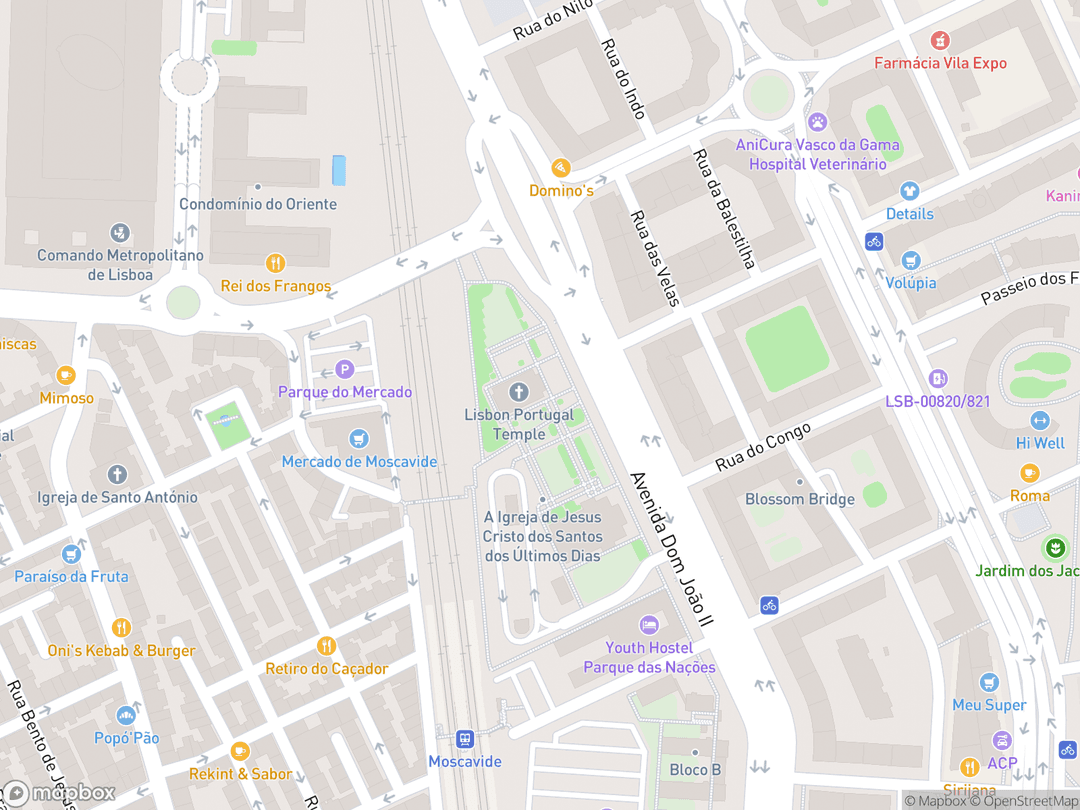
Avenida Dom João II, Lot 4.72.00 Nations Park, 1990-364 Moscavide, Lisbon, Portugal
Hours: Grounds open daily from dawn to dusk.
Getting There: Located adjacent to the Moscavide Metro station in Parque das Nações, offering convenient public transit access.
Get DirectionsTips for Your Visit
Explore Parque das Nações
Combine your visit with exploring the modern Parque das Nações district, known for its waterfront, gardens, and the Oceanário de Lisboa.
Respect Sacred Space
Maintain a reverent demeanor while on the temple grounds, as it is considered a sacred place of worship.
About
The Lisbon Portugal Temple stands as a significant edifice for members of The Church of Jesus Christ of Latter-day Saints, representing a milestone in the Church's history within the nation. As the first temple in Portugal, it serves as a sacred house of worship within the Christian theological grouping of Abrahamic traditions. Its construction and dedication reflect decades of growth and establishment for the Church in this vibrant European country.
Dedicated in 2019, the temple provides a sacred space for Latter-day Saints to participate in ordinances and covenants central to their faith. Its design thoughtfully incorporates local Portuguese cultural elements, blending modern architectural styles with traditional motifs. The temple grounds offer a serene environment for contemplation and are open to the public, inviting all to experience its peaceful atmosphere.
Gallery
Symbolic Elements
The temple's exterior features intricate carvings, each rich with spiritual meaning:

Angel Moroni Statue
A prominent gold-leafed statue atop the spire, symbolizing the restoration of the gospel and its spread to the world.

Baptismal Font Oxen
Twelve bronze-colored oxen support the baptismal font, representing the twelve tribes of Israel and the strength of God's work.

Celestial Room
This sacred space within the temple is designed to evoke a sense of peace and reflection, symbolizing heaven and eternal life with God.

Sealing Rooms
These rooms are dedicated to the ordinance of 'sealing,' uniting families for time and all eternity, a distinctive aspect of Latter-day Saint faith.

Portuguese Moleanos Limestone
The temple's exterior is clad in this locally quarried material, connecting the structure to Portugal's natural resources and heritage.

Azulejo Tile Star Patterns
Indigenous to the region, these traditional Portuguese tile designs are featured throughout the temple's interior and exterior art glass.

Crystal Chandeliers
Adorning the celestial and sealing rooms, these elegant fixtures from Swarovski Lighting enhance the sacred atmosphere.

Landscaped Grounds
The beautifully maintained grounds provide a tranquil environment for visitors and patrons, reflecting the temple's peaceful purpose.
Interesting Facts
The Lisbon Portugal Temple is the first temple of The Church of Jesus Christ of Latter-day Saints built in Portugal and the 166th operating temple worldwide.
President Thomas S. Monson, who dedicated Portugal for missionary work in 1975, also announced the Lisbon Portugal Temple in 2010.
The temple's exterior is covered with Portuguese Moleanos limestone, quarried locally near Lisbon, showcasing a connection to the region's natural resources.
The interior and exterior designs prominently feature traditional Portuguese 'azulejo' tile star patterns, reflecting local culture and Moorish heritage.
The bronze oxen supporting the baptismal font were cast from molds taken during the renovation of the Idaho Falls Idaho Temple in the United States.
During the public open house, Portuguese President Marcelo Rebelo de Sousa toured the temple, highlighting its cultural significance in the nation.
The temple was dedicated in the same month as another temple, the Port-au-Prince Haiti Temple, both in September 2019.
Elder Neil L. Andersen, who dedicated the temple, invited missionaries and youth to return to the area for a devotional in 2069, marking the temple's 50th anniversary.
The temple serves over 45,000 Latter-day Saints living in Portugal, including the archipelagos of Madeira and the Azores, as well as members in neighboring countries.
The temple site is located in Parque das Nações, a modern district redeveloped for the 1998 Lisbon World Exposition.
Common Questions
What is the purpose of the Lisbon Portugal Temple?
The temple provides a sacred space for Latter-day Saints to make covenants with God and perform saving ordinances for themselves and their ancestors.
Can non-members enter the Lisbon Portugal Temple?
After its dedication, the interior of the temple is reserved for members of the Church who hold a current temple recommend.
What are the temple grounds like?
The temple grounds are beautifully landscaped and open to the public for quiet contemplation and enjoyment.
Where is the temple located in Lisbon?
It is located in the modern Parque das Nações district, adjacent to the Moscavide Metro station.
Are there any visitor facilities on site?
There is an arrival center and a distribution center, but no public visitors' center, food services, or temple housing.
Featured Stories
A Prophetic Announcement
October 2, 2010
During the Church's General Conference, President Thomas S. Monson announced the construction of the Lisbon Portugal Temple. This historic declaration fulfilled a long-held hope for Latter-day Saints in Portugal, marking a new era of spiritual growth and accessibility to sacred ordinances.
Source: The Church Newsroom
Presidential Visit to the Open House
August 2019
Before its dedication, the Lisbon Portugal Temple opened its doors to the public, welcoming over 18,000 visitors, including Portuguese President Marcelo Rebelo de Sousa. His visit underscored the temple's cultural significance and its role in the nation's religious landscape, fostering goodwill and understanding.
Source: The Church News
A Dedication for Generations
September 15, 2019
Elder Neil L. Andersen dedicated the Lisbon Portugal Temple, inviting missionaries and youth to return in 2069 for its 50th anniversary. This forward-looking invitation emphasized the temple's enduring legacy and its promise to bless generations of Latter-day Saints in Portugal and surrounding regions.
Source: The Church News
Timeline
Church Established in Portugal
The Church of Jesus Christ of Latter-day Saints was first established by American armed forces members stationed in Portugal.
EventFirst Branch Organized
The Lajes Branch, the first small congregation of the Church in Portugal, was officially organized.
EventFirst Portuguese Convert Baptized
Maria Morgado became the first known Portuguese convert to be baptized in Portugal.
EventCarnation Revolution
The Carnation Revolution brought increased religious freedom to Portugal, paving the way for greater Church growth.
EventOfficial Recognition
The Church secured official recognition as a religious entity in Portugal, published in the Diário da República.
EventFirst Continental Baptisms
Maria Lourdes Dias Prista and her daughter became the first converts baptized in continental Portugal.
EventPortugal Dedicated for Gospel Preaching
Then-Elder Thomas S. Monson dedicated Portugal for the preaching of the gospel, marking a significant spiritual milestone.
MilestoneFirst Stake Organized
The Lisbon Portugal Stake, a larger ecclesiastical unit, was organized with José Manuel da Costa Santos as its president.
EventTemple Announced
President Thomas S. Monson announced the construction of the Lisbon Portugal Temple during General Conference.
component.timeline.announcementLand Acquisition Finalized
The Church finalized the acquisition of land for the temple within Lisbon city limits.
MilestoneGroundbreaking Ceremony
A groundbreaking ceremony was held, presided over by Elder Patrick Kearon of the Europe Area Presidency.
component.timeline.groundbreakingAngel Moroni Installed
The gold-leafed statue of the Angel Moroni was installed atop the temple's spire.
MilestonePublic Open House Begins
A public open house commenced, allowing over 18,000 visitors, including the Portuguese President, to tour the temple.
EventTemple Dedicated
Elder Neil L. Andersen of the Quorum of the Twelve Apostles dedicated the Lisbon Portugal Temple.
DedicationHistory by Decade
1950s–1960s — Early Establishment
The Church of Jesus Christ of Latter-day Saints first gained a foothold in Portugal through American military personnel stationed there in the mid-1950s. By 1967, the first official branch was organized, and Maria Morgado became the first Portuguese convert, marking the nascent stages of the Church's presence.
1970s — Growth and Recognition
The Carnation Revolution in 1974 brought religious freedom, leading to the Church's official recognition in Portugal. This period saw the first baptisms in continental Portugal and the dedication of the country for gospel preaching by then-Elder Thomas S. Monson, significantly accelerating membership growth.
1980s — Organizational Development
Building on the momentum of the previous decade, the Church continued to strengthen its organizational structure in Portugal. In July 1981, the Lisbon Portugal Stake, a larger ecclesiastical unit, was organized, providing greater local leadership and support for the growing membership.
2010s — Temple Realization
The long-awaited announcement of the Lisbon Portugal Temple came in 2010 from President Thomas S. Monson, fulfilling decades of prayers. Following land acquisition and a groundbreaking ceremony in 2015, the temple was completed, with the Angel Moroni statue installed in 2018, leading to its dedication in 2019.
Architecture & Facilities
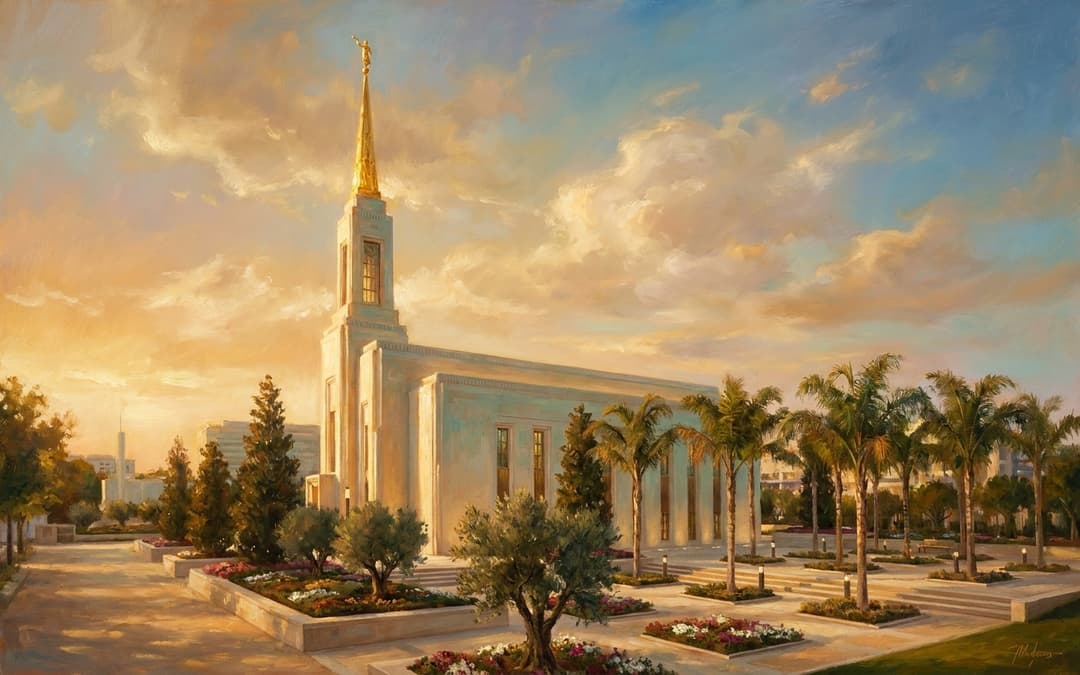
The Lisbon Portugal Temple showcases a distinctive blend of late Art Deco and Modern architectural styles, characterized by its clean lines, geometric forms, and a soaring spire. The design thoughtfully integrates local Portuguese cultural elements, creating a contemporary yet reverent structure that harmonizes with its urban setting in Parque das Nações.
Building Materials
Exterior Cladding
Portuguese Moleanos limestone, quarried near Lisbon and fabricated by Solancis, provides a light, durable, and regionally authentic facade.
Interior Stone
Stone tiles in creams and warm light browns, sourced from Spain, Italy, and Turkey, contribute to the temple's elegant interior flooring and surfaces.
Art Glass
Deeply etched and carved art glass, accentuated with gold leaf, features traditional Portuguese azulejo tile star patterns.
Lighting Fixtures
Crystal chandeliers by Swarovski Lighting adorn the celestial and sealing rooms, while other fixtures are provided by Crenshaw Lighting.
Interior Features
Color Palette
The interior features a vibrant color palette of gold, blue, ochre, and lavender, creating a rich and inviting atmosphere.
Azulejo Patterns
Traditional Portuguese azulejo tile star patterns are prominently incorporated into the interior designs, reflecting local heritage.
Ceilings
Cove or pendant lighting is utilized throughout the temple's ceilings, providing soft and ambient illumination.
Baptismal Font
The baptismal font is supported by twelve bronze-colored oxen, a symbolic representation of the twelve tribes of Israel.
Temple Grounds
The temple is situated on a 4.6-acre site featuring beautifully landscaped gardens, pathways, and serene seating areas, providing a peaceful environment for visitors and patrons.
Additional Facilities
An arrival center on site includes an area for patrons to change clothing, and a distribution center is available for purchasing temple garments and clothing.
Religious Significance
As a temple of The Church of Jesus Christ of Latter-day Saints, the Lisbon Portugal Temple is considered a sacred house of the Lord, a place where members can draw closer to God and Jesus Christ. It stands as a testament to the enduring Christian faith of its members, rooted in Abrahamic traditions.
The core spiritual purpose of the temple is to provide a dedicated space for members to make sacred covenants with God, receive divine instruction, and participate in ordinances essential for eternal salvation and exaltation.
Sacred Ordinances
Baptism for the Dead
Living members perform baptisms on behalf of their deceased ancestors, extending the saving grace of Jesus Christ to all people.
Endowment
Members receive sacred instructions and make covenants to follow Jesus Christ, preparing them for eternal life in God's presence.
Sealing
Marriages are performed for 'time and all eternity,' uniting families beyond mortal life and emphasizing the eternal nature of family relationships.
Path to Exaltation
The ordinances performed in the temple are seen as steps on a covenant path that leads individuals and families back to live with God the Father and Jesus Christ eternally.
Eternal Families
A central doctrine of Latter-day Saint faith, the temple teaches and facilitates the eternal nature of family units, providing hope and purpose for family relationships beyond this life.
Similar Temples
Sources & Research
Every fact on Temples.org is backed by verified Sources & Research. Each piece of information is rated by source tier and confidence level.
View All Sources (4)
| Field | Source | Tier | Retrieved |
|---|---|---|---|
| About & Historical Background | The Church of Jesus Christ of Latter-day Saints (opens in a new tab) | A | 2024-07-30 |
| Architectural Description & Symbolic Elements | Naylor Wentworth Lund Architects (opens in a new tab) | B | 2024-07-30 |
| Architectural Details & Symbolic Elements | ChurchofJesusChristTemples.org (opens in a new tab) | C | 2024-07-30 |
| Early Church History in Portugal | The Church of Jesus Christ of Latter-day Saints (opens in a new tab) | A | 2024-07-30 |