Visitor Insights
Visiting Oquirrh Mountain Utah Temple
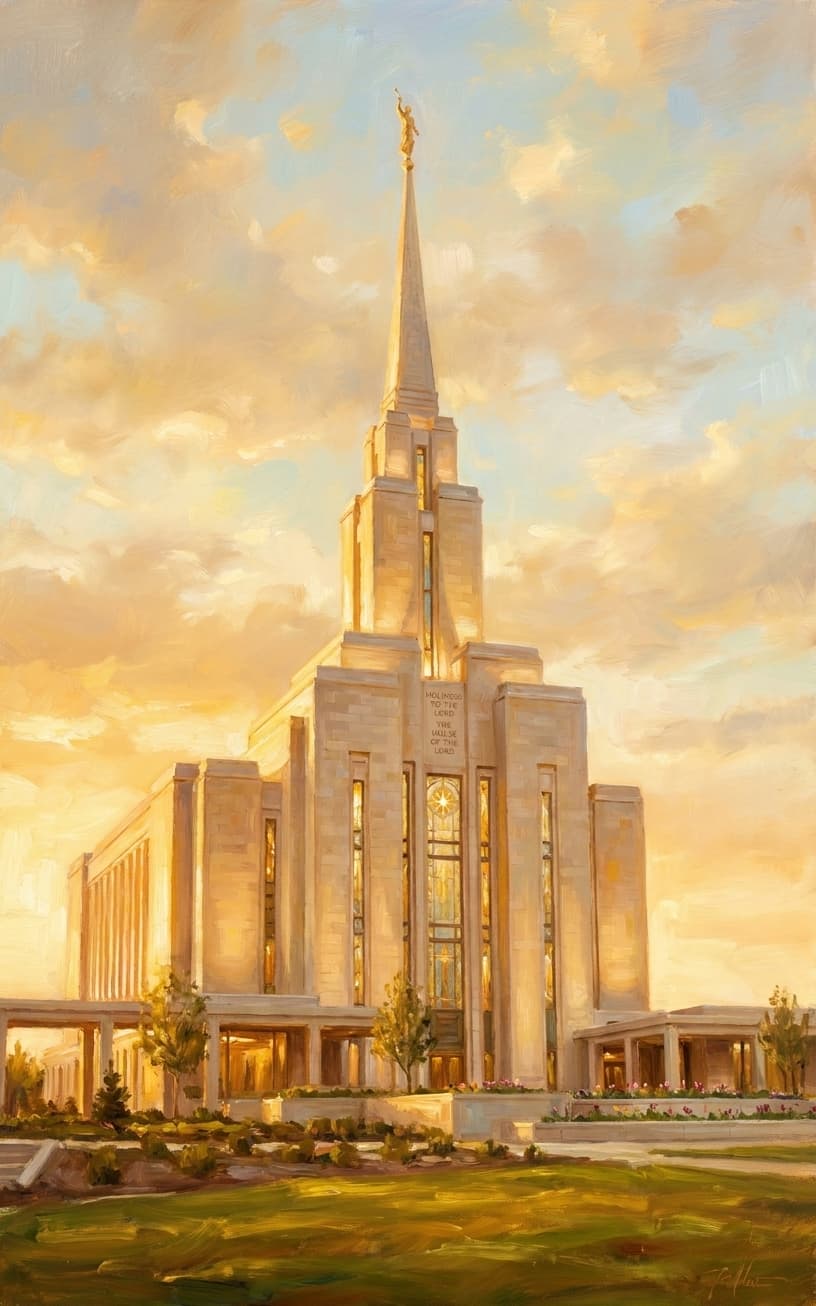
The Oquirrh Mountain Utah Temple is set on a prominent hill in South Jordan, offering panoramic views across the Salt Lake Valley. Its quiet grounds feature well-manicured flowerbeds, walking paths, and reflective water features accessible to the public.
Highlights
- Panoramic eastern views toward the Wasatch Mountains and western views of the Oquirrh range
- Artfully landscaped flower gardens and manicured lawns surrounding the building
- Intricate art glass windows designed with stars and geometric flutes
Things to Know
- Interior access is reserved for Latter-day Saints holding current temple recommends
- The exterior grounds are open daily for peaceful walking and photos
Location
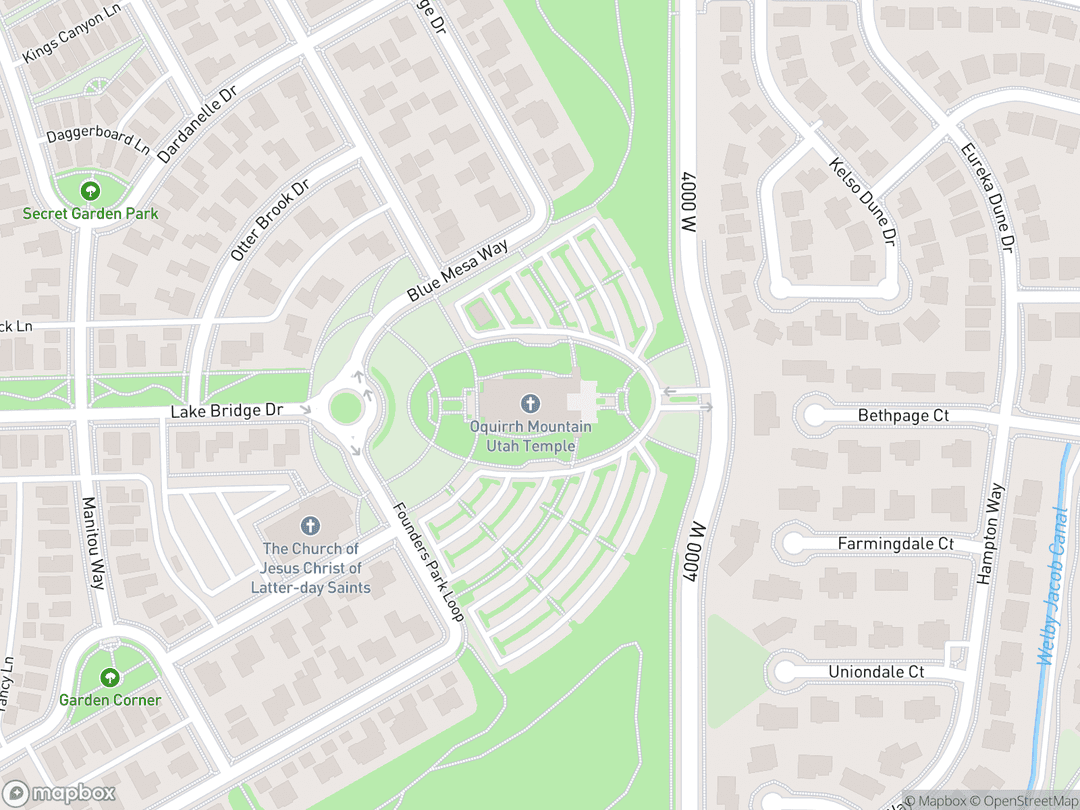
11022 S 4000 W, South Jordan, Utah 84009-5797, United States
Hours: Tuesday through Saturday: Varies by appointment; Grounds open daily to the public
Getting There: Located near 11000 South and 4000 West in South Jordan, accessible via Bangerter Highway and 11400 South.
Get DirectionsTips for Your Visit
Sunset Photography
Visit near sunset for optimal lighting of the Uinta Gold granite facade against the Wasatch range.
Respectful Reverence
Guests are asked to maintain quiet reverence on the grounds near ordinance room windows.
Adjacent Meetinghouse
Visitors interested in Sunday services are welcome at the adjacent Latter-day Saint meetinghouse.
About
The Oquirrh Mountain Utah Temple serves as a sacred House of the Lord for members of The Church of Jesus Christ of Latter-day Saints. Rooted in Christian theology and the Abrahamic tradition of sacred altars and covenant making, the temple provides a consecrated space apart from the world for holy ordinances and spiritual reflection.
Announced in 2005 as the fourth temple in the Salt Lake Valley, the edifice occupies an 11-acre elevated site in South Jordan. Designed by Naylor Wentworth Lund Architects, the single-spire structure features exterior cladding of light beige Uinta Gold granite and offers expansive views of both the Wasatch and Oquirrh mountain ranges.
Dedicated in August 2009 by President Thomas S. Monson, the temple stands as a beacon of faith, eternal family connections, and devotion for tens of thousands of Latter-day Saints living in the southwestern Salt Lake Valley.
Gallery
Symbolic Elements
The temple's exterior features intricate carvings, each rich with spiritual meaning:

Angel Moroni Statue
The gold-leafed figure facing eastward heralds the Second Coming of Jesus Christ and the restoration of the gospel.

Art Glass Window Stars
Intricate glass star motifs symbolize heavenly realms, celestial order, and eternal spiritual progression.

Concentric Circles
Circular window elements signify the eternal nature of God and the unending duration of sacred covenants.

Vertical Flutes
Architectural fluting draws the observer's eyes upward, prompting contemplation of divine aspirations.

Single Soaring Spire
The centered spire pointing skyward represents single-minded devotion to Heavenly Father.

Celestial Room Chandelier
Thousands of brilliant crystals catch and diffuse light, evoking divine glory and eternal peace.

Uinta Gold Granite Cladding
Durable earth-toned stone reflects the enduring stability and eternal strength of God's house.
Interesting Facts
South Jordan became the first city in the world with two operating Latter-day Saint temples upon its dedication. (Tier A)
The name 'Oquirrh' originates from a Goshute word meaning 'shining mountains.' (Tier B)
During the 2009 open house, a lightning bolt struck the Angel Moroni statue and blackened its surface. (Tier A)
President Thomas S. Monson dedicated the temple on his 82nd birthday while attendees sang 'Happy Birthday' to him. (Tier A)
The land for the temple was donated by Kennecott Land from historical mining acreage. (Tier B)
Statewide Sunday Church services were canceled across Utah on August 23, 2009, for the dedication broadcast. (Tier A)
The grand Celestial Room chandelier contains nearly 20,000 individually cut crystals. (Tier B)
Exterior granite was quarried in China and custom milled specifically for this structure. (Tier B)
Common Questions
What does the word "Oquirrh" mean?
Oquirrh is a Goshute Native American word meaning 'shining mountains' or 'wooded mountain.'
Can non-members tour inside the Oquirrh Mountain Utah Temple?
Non-members could tour the interior during the 2009 open house, but interior access is now reserved for worthy Latter-day Saints.
Why does South Jordan have two temples?
South Jordan was the first city worldwide with two operating temples due to high local Latter-day Saint membership density.
Are the temple grounds open to the public?
Yes, all visitors are welcome to walk through the landscaped grounds and enjoy the mountain views.
Featured Stories
The Lightning Strike and Quick Replacement
June 2009
During the public open house in June 2009, a sudden thunderstorm sent a direct lightning strike into the spire's Angel Moroni statue. The strike blackened Moroni's trumpet, arm, and face before hundreds of onlookers on the grounds. Church leaders swiftly arranged for a replacement statue, which workers raised into place just days before the formal dedication.
Source: Church News & LDS Church Temples
Birthday Dedication for President Monson
August 21, 2009
President Thomas S. Monson dedicated the Oquirrh Mountain Utah Temple on August 21, 2009, which coincided with his 82nd birthday. As he stepped outside for the traditional cornerstone ceremony, the gathered crowd spontaneously broke into a rendition of 'Happy Birthday.' President Monson smiled warmly and thanked the Saints, remarking on the joy of dedicating a house of the Lord on his birthday.
Source: Church Newsroom
A Historic Statewide Sunday Gathering
August 23, 2009
To enable Latter-day Saints throughout Utah to participate in the dedication, Church leaders took the historic step of canceling regular Sunday services statewide on August 23, 2009. Hundreds of thousands gathered in local meetinghouses across the state to watch the live encrypted broadcast. It marked the first time in Utah history that all Sunday meetings were cleared for a temple dedication.
Source: The Church News
Timeline
Temple Announced
President Gordon B. Hinckley announced plans for the South Jordan Utah Temple during General Conference.
MilestoneSite Plan Approved
The South Jordan Planning Commission officially approved construction plans for the temple.
MilestoneGroundbreaking Ceremony
President Gordon B. Hinckley presided over the groundbreaking and announced the name Oquirrh Mountain Utah Temple.
component.timeline.groundbreakingSpire and Statue Placed
Construction crews installed the single spire along with the gold-leafed Angel Moroni statue.
MilestoneCultural Celebration
Youth from the temple district staged a large cultural performance celebrating local heritage.
EventPublic Open House Begins
Nearly 600,000 visitors toured the temple interior during a two-month public open house.
EventLightning Strike Event
Lightning struck the Angel Moroni statue during the open house, requiring a replacement.
EventReplacement Statue Installed
A brand-new Angel Moroni statue was raised atop the spire prior to dedication.
MilestoneDedication
President Thomas S. Monson dedicated the temple in nine sessions over three days on his 82nd birthday.
DedicationHistoric Statewide Service Cancellation
Regular Sunday Church services were canceled across Utah so members could watch the dedication broadcast.
EventPandemic Operations Adjustment
The temple temporarily suspended operations in response to the COVID-19 global health crisis.
EventHistory by Decade
2000s — Announcement and Construction
President Gordon B. Hinckley announced the temple in October 2005 to serve the rapid population growth in the southwestern Salt Lake Valley. Groundbreaking took place in December 2006, and construction proceeded smoothly under Naylor Wentworth Lund Architects. The open house in summer 2009 welcomed nearly 600,000 visitors before President Thomas S. Monson dedicated the structure in August 2009.
2010s — Operational Devotion
Throughout the 2010s, the Oquirrh Mountain Utah Temple operated at high capacity alongside its neighbor, the Jordan River Utah Temple. Tens of thousands of local Latter-day Saint families frequented the temple weekly for sacred endowment ceremonies, sealings, and baptisms for ancestors.
2020s — Global Pandemic and Continued Service
In March 2020, the temple suspended routine operations due to the global COVID-19 pandemic. It reopened in phased steps as safety protocols permitted, returning to full ordinance operations to serve the growing Saints of South Jordan and Daybreak.
Architecture & Facilities
Designed by Naylor Wentworth Lund Architects, the Oquirrh Mountain Utah Temple features a modern classic single-spire form framed by crisp geometric lines. Clad in light beige Uinta Gold granite, the building balances contemporary mountain-west aesthetic sensibilities with sacred architectural tradition, creating a prominent landmark visible across the Salt Lake Valley.
Building Materials
Exterior Cladding
Uinta Gold granite quarried and milled to high precision.
Exterior Pavers
Wyndam Grey granite pavers from Northern China.
Interior Stone Flooring
Light Moroccan limestone paired with dark Egyptian limestone accents.
Interior Millwork
American white oak with Alpine sycamore decorative wood veneers.
Interior Features
Celestial Room
Features a soaring ceiling and a 15-foot chandelier crafted with 19,447 crystals.
Ordinance Rooms
Four instruction rooms featuring custom hand-painted nature murals.
Sealing Rooms
Nine sealing rooms appointed with gold-leaf detailing and plush seating.
Baptistry
Contains a bronze baptismal font resting upon twelve sculptured oxen.
Temple Grounds
The 11-acre hilltop parcel is landscaped with cascading flower gardens, mature shade trees, stone walkways, and a central water fountain.
Additional Facilities
An adjacent Latter-day Saint meetinghouse provides chapel seating and multi-purpose rooms for local congregation worship.
Religious Significance
For members of The Church of Jesus Christ of Latter-day Saints, the Oquirrh Mountain Utah Temple is a physical embodiment of holy sanctuary. Rooted in Abrahamic covenant theology, Latter-day Saints regard the temple as a literal House of the Lord where heaven and earth meet.
To provide a consecrated space for sacred ordinances that bind families eternally and deepen personal devotion to Jesus Christ.
Sacred Ordinances
Baptism for the Dead
Vicarious baptisms performed on behalf of deceased ancestors offering them gospel covenants.
Endowment
A sacred instruction session where members make covenants of obedience, consecration, and purity.
Sealing Ordinance
Sacred marriage and family rites uniting couples and children for eternity.
Sacred Family Covenants
Latter-day Saints believe that relationships formed through temple sealings endure beyond death, anchoring the family unit as the fundamental block of eternal progression.
Sanctuary of Peace
The temple offers patrons a quiet refuge from worldly distractions to ponder scripture, seek divine guidance, and renew spiritual commitments.
Similar Temples
Sources & Research
Every fact on Temples.org is backed by verified Sources & Research. Each piece of information is rated by source tier and confidence level.
View All Sources (6)
| Field | Source | Tier | Retrieved |
|---|---|---|---|
| About & Historical Background | The Church of Jesus Christ of Latter-day Saints (opens in a new tab) | A | 2026-02-18 |
| Architecture & Design | Naylor Wentworth Lund Architects (opens in a new tab) | B | 2026-02-18 |
| Architecture & Construction | Okland Construction (opens in a new tab) | B | 2026-02-18 |
| Temple Status & Specifications | LDS Church Temples (opens in a new tab) | C | 2026-02-18 |
| Visitor Insights & Location | Gephardt Daily (opens in a new tab) | C | 2026-02-18 |
| Symbolism & Sacred Ordinances | The Church of Jesus Christ of Latter-day Saints (opens in a new tab) | A | 2026-02-18 |