Visitor Insights
Visiting Gloucester Cathedral
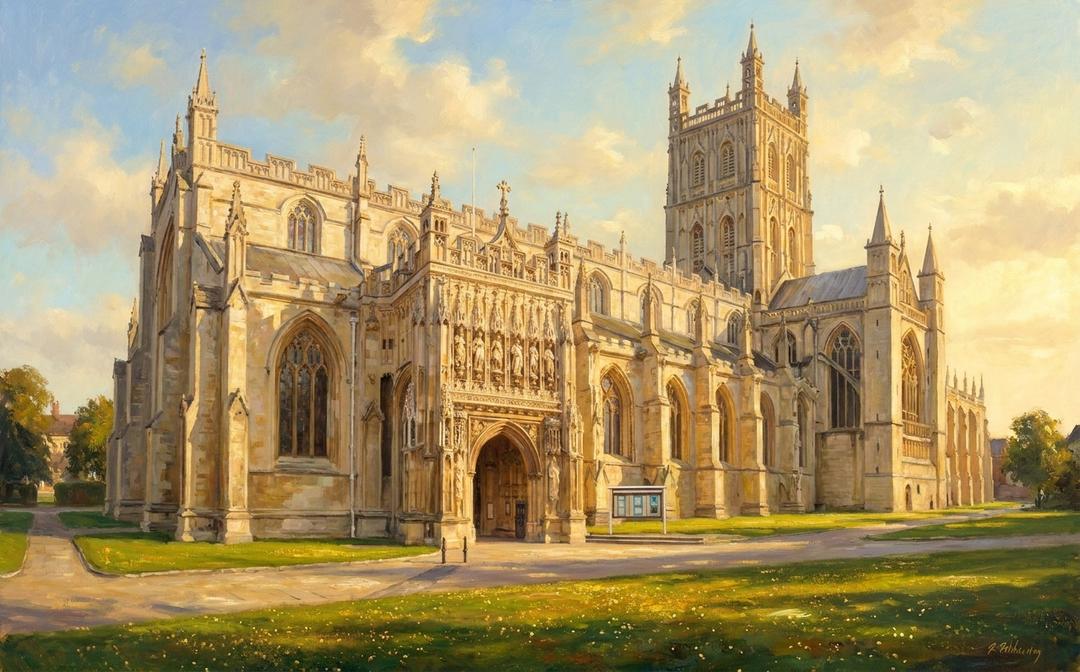
Gloucester Cathedral offers visitors an encounter with more than thirteen centuries of sacred Christian heritage. Guests can marvel at the Norman nave, explore the world-renowned fan-vaulted cloisters, and reflect before the historic royal shrines. The precinct remains an active sanctuary with daily worship, evocative choral music, and welcoming grounds.
Highlights
- Breathtaking fourteenth-century fan vaulting along the monastic cloister walkways.
- The colossal Great East Window illustrating Christ in Majesty and medieval heraldry.
- The fourteenth-century royal tomb effigy of King Edward II in carved alabaster.
- Monumental eleventh-century Norman cylindrical piers lining the central nave.
Things to Know
- General entry is free with voluntary donations welcomed to support building conservation.
- Photography is restricted during active liturgical services and choral rehearsals.
- Specialized tours of the subterranean crypt and central tower require advance booking.
Location
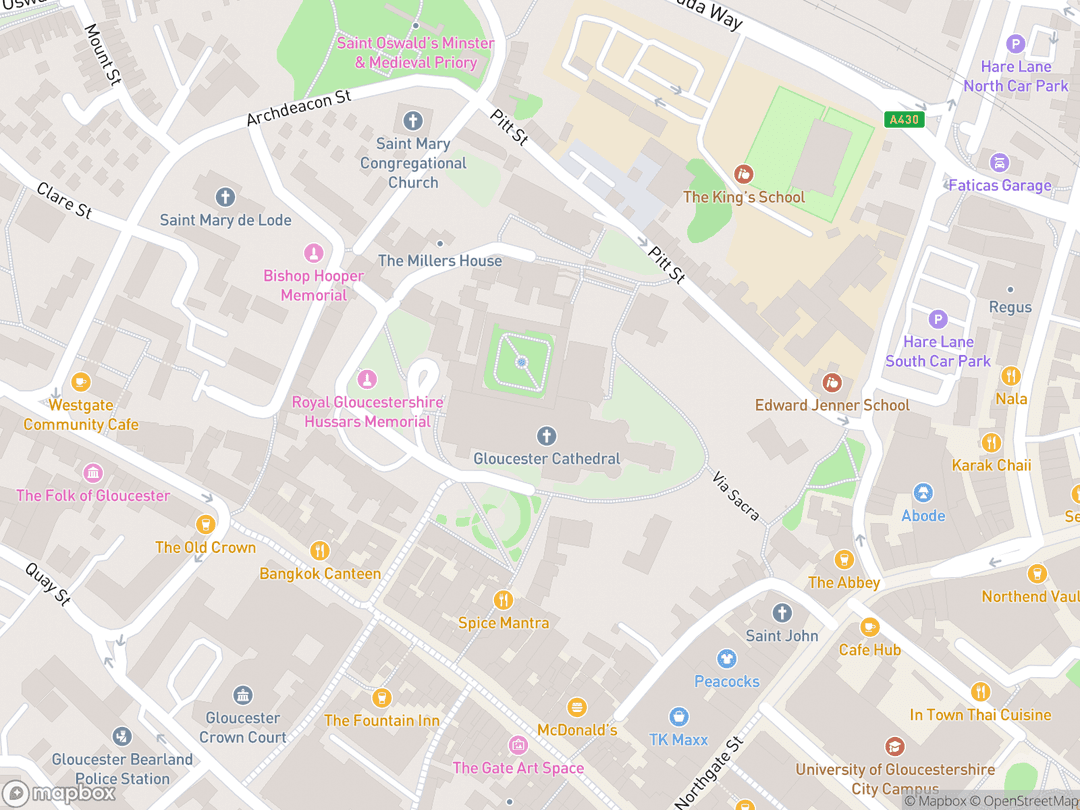
12 College Green, Gloucester, Gloucestershire, GL1 2LX, England, United Kingdom
Hours: Monday to Friday 10:00 AM – 5:00 PM; Saturday 10:00 AM – 4:00 PM; Sunday 12:00 PM – 2:30 PM & 4:00 PM – 5:00 PM
Getting There: Located in central Gloucester within College Green; a level 10-minute walk from Gloucester Railway Station and Transport Hub.
Get DirectionsTips for Your Visit
Choral Evensong
Attend daily Choral Evensong at 5:30 PM during term time to experience the cathedral's magnificent acoustics.
Afternoon Light
Visit the presbytery between 2:00 PM and 4:00 PM when sunlight illuminates the Great East Window.
Cloister Details
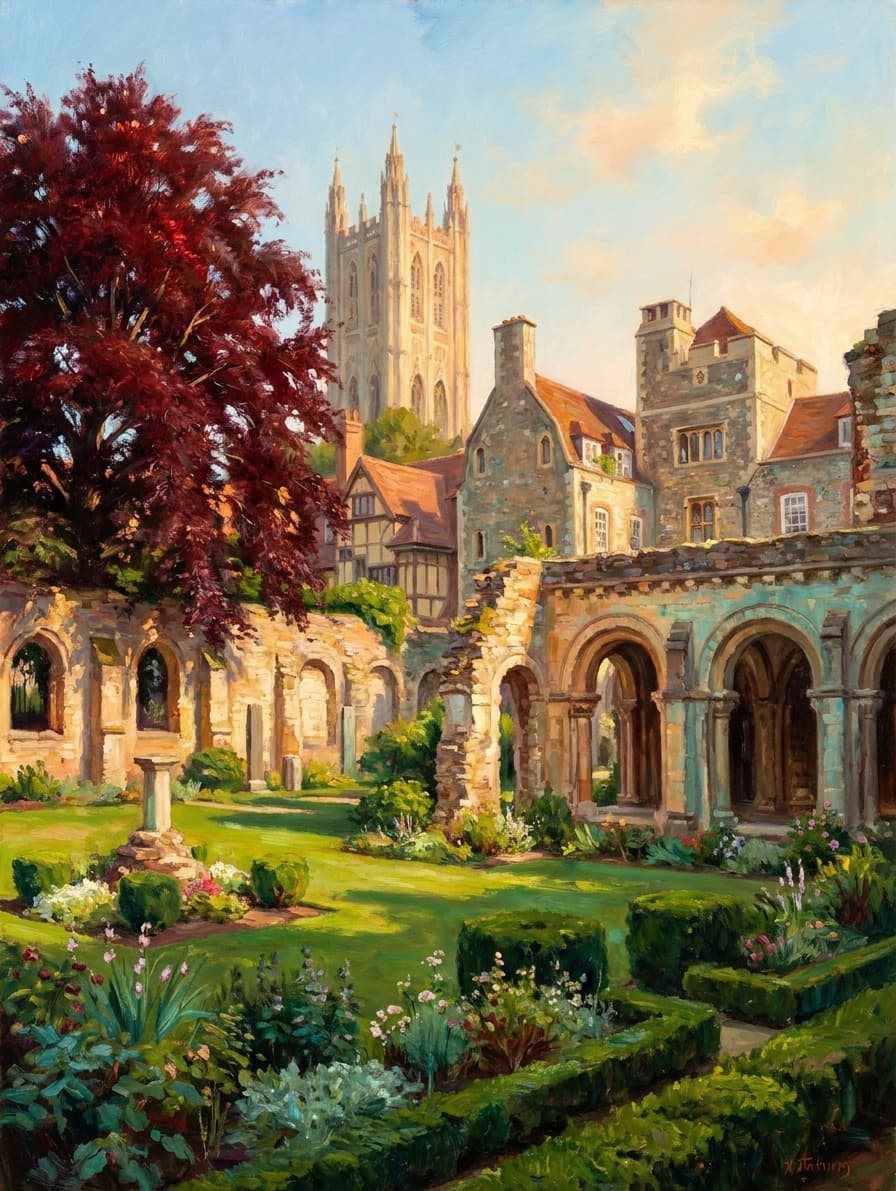
Walk the south cloister slowly to observe the twenty medieval study carrels carved directly into the stone walls.
About
Gloucester Cathedral, formally the Cathedral Church of St Peter and the Holy and Indivisible Trinity, stands as a premier monument of English sacred architecture. Rooted in the biblical paradigm of sacred enclosure, the sanctuary serves as the cathedra of the Bishop of Gloucester and mother church of the diocese. It represents a living continuum of Abrahamic devotion where worshipers seek the divine presence through liturgy, scripture, and music.
Founded in 679 as an Anglo-Saxon minster and transformed into a Benedictine abbey in 1022, the site underwent monumental rebuilding under Norman Abbot Serlo from 1089. Following the 1327 burial of King Edward II, royal patronage enabled fourteenth-century master masons to invent the Perpendicular Gothic style here. The monastic abbey was refounded as a Church of England cathedral by King Henry VIII in 1541.
The building unites two profound architectural moments: the colossal, earthly Romanesque nave reflecting unyielding faith, and the luminous Perpendicular choir and earliest extant fan-vaulted cloisters. Together, they articulate an enduring theology of divine illumination and redemption.
Gallery
Symbolic Elements
The temple's exterior features intricate carvings, each rich with spiritual meaning:

Apostolic Nave Piers
Fourteen giant cylindrical piers represent the steadfast apostles and unshakeable foundations of the Church.

The Great East Window
A monumental wall of stained glass symbolizing the Heavenly Jerusalem and the reign of Christ the King.

Fan Vault Conoids
Spreading stone ribs evoke palm branches and celestial canopies over monastic prayer walks.

Celestial Angel Orchestra
Over four hundred carved ceiling bosses depict angels playing instruments in eternal liturgical praise.

The Whispering Gallery
Curving eastern acoustic passage symbolizing divine omniscience and the hearing of silent prayers.
Tomb of Edward II
Translucent alabaster royal monument representing earthly humility, divine mercy, and spiritual redemption.

Medieval Lavatorium
Stone washing trough symbolizing ritual purification and physical cleanliness before communal meals.

The Great Peter Bell
A historic three-ton medieval ringing bell whose resonant chime calls the community to prayer.
Interesting Facts
Gloucester is celebrated as the birthplace of the Perpendicular Gothic architectural style. (Tier B)
The cathedral cloisters feature the earliest extant structural fan vaults in European history. (Tier B)
It is the only church outside Westminster Abbey to host an English royal coronation post-1066. (Tier A)
Burial offerings from pilgrims visiting Edward II's tomb funded the cathedral's Gothic transformation. (Tier B)
The Great East Window was the largest stained-glass window in the medieval world when installed around 1350. (Tier B)
William the Conqueror commissioned the Domesday Book in the abbey's Chapter House during Christmas 1085. (Tier A)
In 2016, Gloucester became the world's oldest cathedral to install an array of solar roof panels. (Tier A)
The high Whispering Gallery allows a soft whisper against the wall to carry audibly across seventy-five feet. (Tier B)
Common Questions
Why is Gloucester Cathedral considered the birthplace of Perpendicular Gothic?
Between 1331 and 1337, masons recased the Norman south transept in rectilinear stone tracery, inventing the Perpendicular style.
Which English monarch was crowned inside Gloucester Cathedral?
Nine-year-old King Henry III was crowned here on October 28, 1216, during the First Barons' War.
Why are the bases of the nave pillars stained red?
The reddish hue was caused by intense heat during a devastating roof fire that swept the abbey in 1122.
Why did Henry VIII spare the abbey church during the Dissolution?
Henry VIII spared the structure because it housed the royal tomb of his Plantagenet ancestor, King Edward II.
Were the cloisters featured in famous films?
The fan-vaulted cloister walks famously served as the corridors of Hogwarts in several Harry Potter films.
Featured Stories
The Unlikely Royal Coronation of 1216
October 28, 1216
With London held by French forces and rebel barons, the nine-year-old Prince Henry was hurried to St Peter's Abbey for safety. In a solemn ceremony before the high altar, he was crowned King Henry III using a borrowed gold circlet belonging to Queen Isabella. This momentous event marked the only coronation of an English monarch outside Westminster Abbey since the Norman Conquest.
Source: Gloucester Cathedral Archives
The Royal Tomb That Saved a Sanctuary
December 20, 1327
Following the murder of the deposed King Edward II, Abbot John Thokey bravely offered sacred sanctuary for the monarch's remains when other abbeys feared political reprisal. The opulent alabaster shrine attracted vast throngs of pilgrims whose offerings financed the cathedral's Gothic remodeling. Two centuries later, King Henry VIII spared the abbey from dissolution specifically out of reverence for his ancestor's burial.
Source: Diocese of Gloucester Historical Ledger
The Chapter House Council of 1085
December 25, 1085
During the Christmas feast of 1085, William the Conqueror gathered his counselors in the Romanesque Chapter House of Gloucester Abbey for profound consultations. From these intense deliberations emerged royal orders to conduct the comprehensive survey of land and wealth known as the Domesday Book. The ancient stone chamber remains an enduring witness to this formative milestone of English history.
Source: Historic England Records
Timeline
Anglo-Saxon Minster Founded
Osric, under-king of the Hwicce, founds a Christian minster dedicated to St Peter near Roman ruins.
MilestoneBenedictine Rule Established
King Cnut introduces monastic vows under the Rule of St Benedict to reform the religious community.
MilestoneNorman Foundation Stone Laid
Abbot Serlo initiates construction of the monumental Romanesque abbey church following the Conquest.
component.timeline.groundbreakingNorman Abbey Consecrated
Bishops of Worcester, Rochester, and Bangor consecrate the newly completed crypt and eastern arm.
DedicationThe Great Abbey Fire
A catastrophic fire collapses the timber roof and scorches the bases of the massive Norman piers.
EventCoronation of King Henry III
Nine-year-old King Henry III is crowned in the abbey, the only post-1066 coronation outside Westminster.
MilestoneBurial of King Edward II
Abbot John Thokey receives the murdered monarch's body for honorable burial, establishing a royal pilgrimage shrine.
MilestoneBirth of Perpendicular Gothic
Royal masons remodel the south transept and choir, pioneering the English Perpendicular style.
RenovationEarliest Fan Vaulting Created
Master Thomas of Cambridge begins the south cloister walk, introducing structural fan vaulting to European architecture.
MilestoneRefounded as Anglican Cathedral
King Henry VIII establishes the Diocese of Gloucester and designates the abbey church as its cathedral.
DedicationVictorian Restoration Commences
Sir George Gilbert Scott oversees extensive structural repairs and liturgical furnishings across the interior.
RenovationSolar Array Installed
Gloucester becomes the oldest cathedral in the world to integrate renewable solar panels on its nave roof.
MilestoneHistory by Decade
670s–1060s — Anglo-Saxon Minster Foundation
A house of prayer consecrated to God where the daily work of worship shall never cease.
In 679, Osric, sub-king of the Hwicce, established an early Christian religious house dedicated to St Peter near the Roman garrison of Glevum. In 1022, King Cnut formally reconstituted the community as a Benedictine monastery adhering to the Rule of St Benedict. Bishop Ealdred of Worcester subsequently erected a new stone abbey church on the grounds in 1058.
1070s–1190s — Norman Conquest & Serlo's Abbey
Following the Norman Conquest, Abbot Serlo took charge of a struggling monastery in 1072 and commenced a colossal Romanesque rebuilding program in 1089. The church was consecrated in 1100, though a devastating fire in 1122 scorched the interior nave pillars. Despite structural challenges, the Benedictine abbey expanded into one of western England's wealthiest monasteries.
1210s–1320s — Plantagenet Crowns & Royal Shrines
The abbey gained national prominence in 1216 when young King Henry III was crowned before its high altar. In 1327, Abbot John Thokey received the body of the murdered King Edward II for Christian burial following his death at Berkeley Castle. The subsequent arrival of thousands of pilgrims generated substantial financial resources for future architectural ambition.
1330s–1490s — The Perpendicular Revolution
Let the stone become a curtain of glass and light, revealing the majesty of heaven.
Between 1331 and 1355, royal masons encased the Norman presbytery within an innovative grid of vertical mullions, originating the Perpendicular Gothic style. Master Thomas of Cambridge commenced the magnificent fan-vaulted cloisters around 1351, creating the earliest known fan vaults. Abbot Seabroke completed the soaring 225-foot central crossing tower between 1450 and 1457.
1530s–1790s — Reformation & Civil War Preservation
St Peter's Abbey surrendered to the Crown in 1540 during the Dissolution of the Monasteries, but Henry VIII refounded it as an Anglican cathedral in 1541. During the English Civil War, civic leaders successfully prevented Parliamentary forces from demolishing the cathedral for salvage. By the eighteenth century, the Three Choirs Festival established the building as a renowned center of choral performance.
1850s–Present — Restoration, Film, & Renewal
Sir George Gilbert Scott directed sympathetic structural restorations during the Victorian era to stabilize the ancient fabric. In the twenty-first century, the cloisters gained worldwide renown as filming locations for the Harry Potter movies. The cathedral embraced environmental stewardship in 2016 by installing rooftop solar panels, continuing its living witness into modern times.
Architecture & Facilities
Gloucester Cathedral represents a unique fusion of colossal Norman Romanesque architecture and pioneering Perpendicular Gothic design, originating the latter style through its innovative fourteenth-century presbytery recasing, soaring 225-foot crossing tower, and the earliest extant fan-vaulted cloister walks.
Building Materials
Cotswold Oolitic Limestone
Warm honey-toned ashlar quarried from Painswick and Minchinhampton provides the cathedral's durable structural masonry.
Purbeck Marble
Dark fossiliferous limestone from Dorset was utilized for polished decorative shafts, plinths, and tomb bases.
Derbyshire Alabaster
Fine-grained translucent mineral stone was skillfully carved to create the effigy of King Edward II.
Cast Sheet Lead
Molded heavy metal sheets protect the extensive timber roofs of the nave and aisles against rainfall.
Interior Features
The Norman Nave
A monumental congregational aisle flanked by fourteen giant cylindrical stone columns carrying round Romanesque arches.
The Perpendicular Choir
A magnificent presbytery encased in late-medieval vertical stone tracery crowned by a complex lierne vault.
The Great Cloister
Four covered walkways featuring the world's earliest extant fan vaults and preserved monastic study carrels.
The Norman Crypt
An evocative subterranean sanctuary featuring heavy groin vaulting and radiating chapels dating to Abbot Serlo's foundation.
Temple Grounds
The cathedral sits within historic College Green, an enclosed precinct featuring manicured lawns, historic stone gates, and pedestrian walkways.
Additional Facilities
Visitor facilities include the Chapter House exhibition spaces, cathedral gift shop, Monk's Kitchen cafe, and accessible public courtyards.
Religious Significance
As an Anglican cathedral within the historic Abrahamic tradition, Gloucester Cathedral embodies the biblical vision of a sacred sanctuary where humanity enters into communion with the living God.
To serve as the seat of the Bishop of Gloucester, a regional mother church of pastoral leadership, and an enduring house of daily prayer and Eucharistic worship.
Sacred Ordinances
The Holy Eucharist
The central Christian sacrament celebrated daily, where bread and wine are consecrated in memorial of Christ's sacrifice.
The Daily Office and Choral Evensong
Continuous liturgical cycles of morning and evening prayer chanted by clergy and choristers using psalms and biblical canticles.
Holy Baptism and Confirmation
Sacraments of Christian initiation welcoming individuals into the covenant community through water, prayer, and apostolic blessing.
Ordination and Diocesan Assemblies
Solemn episcopal services where deacons and priests are ordained to serve Christ's flock across the diocese.
The Cathedral as Cathedra
The physical presence of the bishop's seat symbolizes apostolic succession, doctrinal teaching, and pastoral unity for parishes across Gloucestershire.
The Cloister as Sacred Enclosure
Originally built for Benedictine contemplation, the cloister alleys served as a transitional precinct balancing silent study with communal labor.
Similar Temples
Sources & Research
Every fact on Temples.org is backed by verified Sources & Research. Each piece of information is rated by source tier and confidence level.
View All Sources (5)
| Field | Source | Tier | Retrieved |
|---|---|---|---|
| About & Historical Background | The Chapter of Gloucester Cathedral (opens in a new tab) | A | 2026-02-18 |
| Architecture & Heritage Listing | Historic England (opens in a new tab) | B | 2026-02-18 |
| Timeline & Monastic History | British History Online (opens in a new tab) | B | 2026-02-18 |
| Architecture & Perpendicular Vaulting | Cambridge University Press (opens in a new tab) | B | 2026-02-18 |
| Interesting Facts & Structural Data | Britain Express Heritage Guide (opens in a new tab) | C | 2026-02-18 |