Visitor Insights
Visiting Lincoln Cathedral
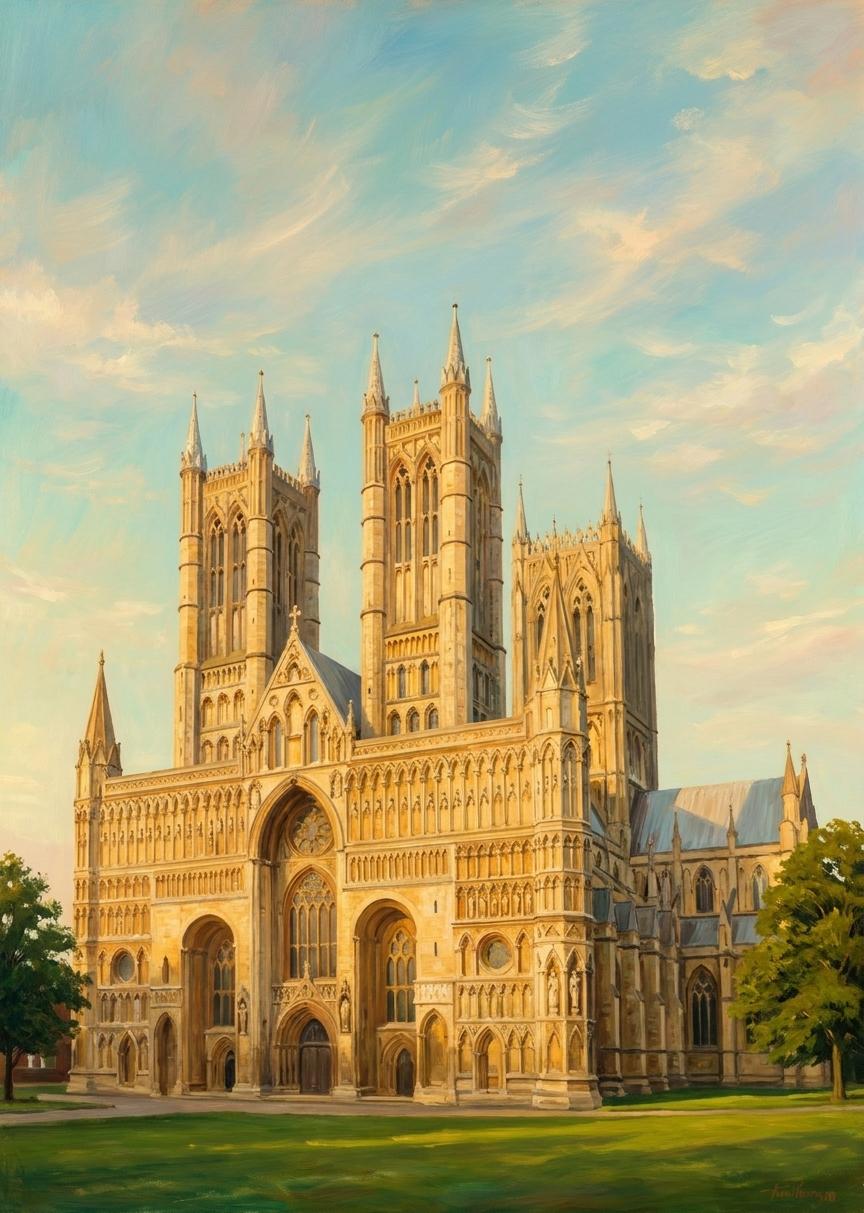
Lincoln Cathedral crowns the hilltop summit of historic Lincoln, standing immediately opposite the medieval stone walls of Lincoln Castle. Visitors encounter eight centuries of evolving medieval architecture, daily choral worship, and expansive vistas across the Witham valley.
Highlights
- The monumental Norman Romanesque western facade featuring eleventh-century carved relief friezes
- The world-famous Lincoln Imp perched atop a foliage capital in the Gothic Angel Choir
- The vibrant Dean's Eye and Bishop's Eye medieval rose windows in the north and south transepts
- The Wren Library designed by Sir Christopher Wren above the medieval cloister walk
Things to Know
- Access from the lower city center requires walking up Steep Hill, a historic cobbled 1:7 gradient
- Daily worship services and Choral Evensong take precedence in the choir and nave
- Sensible flat footwear is advised when navigating centuries-old worn stone floor slabs
Location
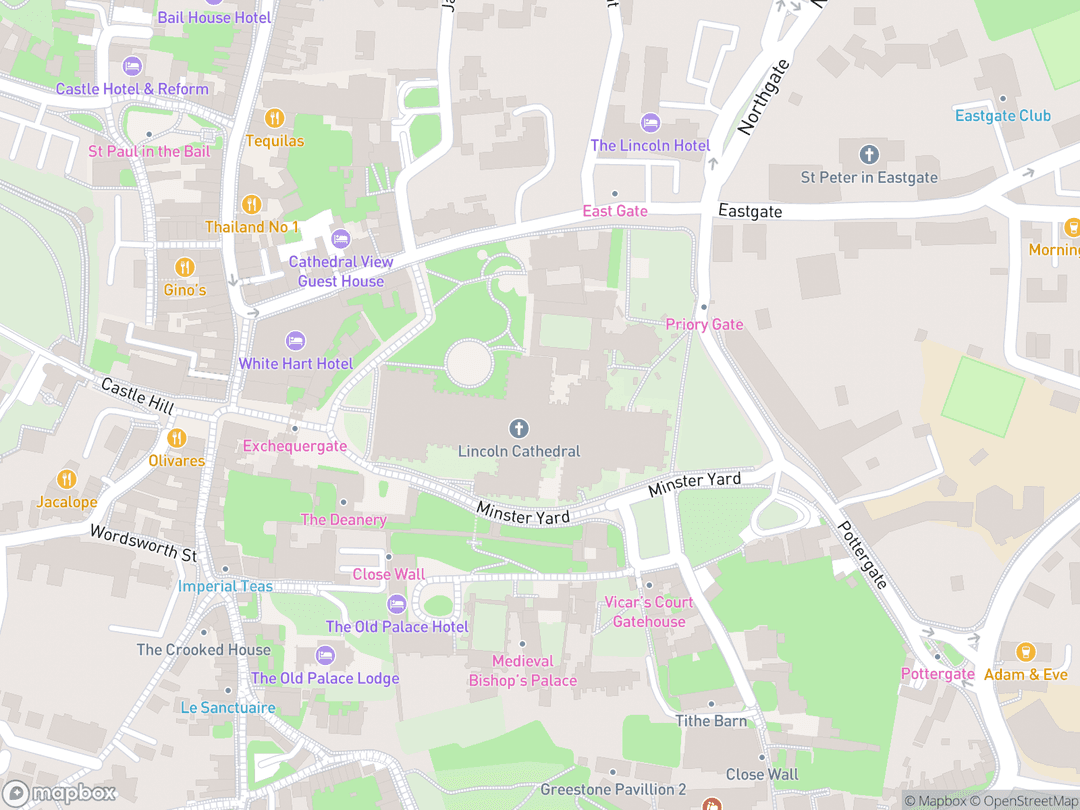
Minster Yard, Lincoln, Lincolnshire, LN2 1PX, England, United Kingdom
Hours: Monday to Saturday from 10:00 to 16:00, Sunday from 11:30 to 15:30
Getting There: A fifteen-minute uphill walk from Lincoln Central Railway Station via Steep Hill, or accessible by local shuttle bus.
Get DirectionsTips for Your Visit
Attend Choral Evensong
Experience the exceptional five-second acoustic resonance during daily sung evening prayer in the choir stalls.
Ascend Steep Hill Early
Pace your climb along the cobbled medieval high street to explore Minster Yard before midday crowds.
Inspect the Angel Spandrels
Bring a small pair of binoculars to examine the thirty stone angels carved into the Angel Choir triforium.
About
Perched high upon a limestone ridge, Lincoln Cathedral stands as one of the supreme achievements of High Medieval Western Christendom. Within the Abrahamic tradition of consecrated sanctuaries, the cathedral represents a living house of prayer and the historic seat of the Bishop of Lincoln.
Commissioned by William the Conqueror in 1072, the original Norman church was severely damaged by an earthquake in 1185. Bishop Hugh of Avalon initiated its sweeping Gothic reconstruction in 1192, pioneering English Gothic spatial design and structural innovation.
Renowned for its world-record central spire that touched the heavens between 1311 and 1548, Lincoln Cathedral remains an active center of Anglican worship. Its soaring stone vaults, sacred choral traditions, and luminous stained glass continue to draw pilgrims from around the world.
Gallery
Symbolic Elements
The temple's exterior features intricate carvings, each rich with spiritual meaning:

The Lincoln Imp
A grotesque stone carving representing a mischievous demon frozen into stone by heavenly angels.

The Dean's Eye
A northern rose window symbolizing spiritual vigilance against temptation facing the cold and dark North.

The Bishop's Eye
A southern curvilinear rose window symbolizing openness to the warmth of the Holy Spirit and divine grace.

The Angelic Orchestra
Thirty triforium stone relief carvings of musical angels uniting earthly worship with the eternal heavenly liturgy.

Tournai Marble Font
A dark twelfth-century Flemish marble basin depicting mythical beasts subdued by the regenerative waters of baptism.

Pelican in Her Piety
A traditional Christian symbol carved on choir wood representing Christ feeding believers with His own life.

The Swineherd of Stow
A high facade carving commemorating a humble peasant who donated his life savings to rebuild the cathedral.

Saint Hugh's Swan
An enduring icon of Bishop Saint Hugh honoring his faithful whooper swan that guarded him during sleep.
Interesting Facts
Between 1311 and 1548, Lincoln Cathedral was the tallest building in the world at an estimated 160 metres before its spire collapsed. (Tier B)
Lincoln Cathedral holds one of only four surviving original parchment exemplars of the 1215 Magna Carta. (Tier A)
A rare magnitude 5.0 earthquake split the original Norman church in 1185, prompting Saint Hugh's Gothic rebuilding. (Tier B)
The asymmetrical 'Crazy Vaults' designed by Geoffrey de Noiers in 1192 introduced the first decorative tierceron ribs in Europe. (Tier B)
The mischievous stone Lincoln Imp carved in the Angel Choir became the official civic mascot of Lincolnshire. (Tier A)
During World War II, the cathedral tower served as a vital visual navigation landmark for RAF Bomber Command crews. (Tier A)
Renowned architect Sir Christopher Wren designed the cathedral's classical library above the ruined medieval cloister in 1674. (Tier A)
The cathedral's colossal central bell named Great Tom of Lincoln was cast in 1835 and weighs more than five tons. (Tier A)
Lincoln Cathedral stood in for Westminster Abbey during filming for the major motion pictures The Da Vinci Code and The Young Victoria. (Tier C)
Common Questions
Was Lincoln Cathedral really the tallest building in the world?
Yes, from approximately 1311 until 1548 its lead-covered timber spire reached an estimated 160 metres, surpassing the Great Pyramid of Giza.
What is the legend of the Lincoln Imp?
Medieval legend tells that mischievous demons invaded the church until angels intervened and petrified the unruly imp in stone.
Does Lincoln Cathedral still own an original Magna Carta?
Yes, the cathedral owns one of four surviving 1215 exemplars, displayed nearby in a secure vault at Lincoln Castle.
Is Lincoln Cathedral free to enter for worship?
Yes, attendance at all daily services, including Choral Evensong and Holy Communion, is entirely free of charge.
Featured Stories
The Bishop with a Trowel
1192
When Bishop Hugh of Avalon arrived at Lincoln following the devastating 1185 earthquake, he refused to merely oversee the cathedral's reconstruction from an episcopal desk. Hugh donned a workman's apron, carried a hod of mortar, and laboriously hauled quarry stones alongside his masons. His hands-on devotion inspired the workforce and cemented his legacy as a leader of exceptional humility.
Source: Diocese of Lincoln Historical Annals
Guardian of the Great Charter
June 15, 1215
Bishop Hugh of Wells stood alongside King John at Runnymede as one of the key ecclesiastical witnesses to Magna Carta. Recognizing the profound covenant between justice and divine order, the bishop immediately dispatched a sealed parchment exemplar back to Lincoln for safekeeping. Preserved through eight centuries in the cathedral archives, it remains one of only four surviving original 1215 exemplars.
Source: Lincoln Cathedral Archives
The Spire Riots of Minster Yard
1807
When the dean and chapter resolved to dismantle the rotting timber spires of the western towers to prevent catastrophic collapse, local citizens rose in furious rebellion. Convinced that their civic crown was being stolen, angry mobs laid siege to the cathedral gates and physically blocked the scaffolding crews. Order was only restored after the local military intervened, enabling the towers to be stabilized into their modern flat-topped form.
Source: Lincolnshire County Records
Timeline
Norman Foundation
William the Conqueror orders the transfer of the episcopal seat to Lincoln and Bishop Remigius commences construction.
MilestoneNorman Consecration
The completed Norman Romanesque cathedral is consecrated shortly following the death of Bishop Remigius.
DedicationRebuilding After Fire
Bishop Alexander restores and vaults the upper cathedral after fire ravages the timber roofs.
RenovationThe Great Earthquake
A powerful earthquake shatters the Norman cathedral, destroying the nave and leaving only the west front standing.
EventGothic Reconstruction Begins
Bishop Hugh of Avalon initiates complete Gothic rebuilding alongside master mason Geoffrey de Noiers.
MilestoneArrival of Magna Carta
An original sealed exemplar of Magna Carta arrives in Lincoln following the accord at Runnymede.
EventDedication of the Angel Choir
The magnificent Angel Choir is consecrated in the presence of King Edward I and Queen Eleanor of Castile.
DedicationWorld's Tallest Structure
Master Mason Richard of Stowe completes the towering central timber spire, making Lincoln the tallest building in the world.
MilestoneShrine Despoliation
Royal commissioners under King Henry VIII despoil the golden shrine of Saint Hugh during the English Reformation.
EventCollapse of the Central Spire
A fierce gale topples the lead-clad central spire, permanently altering the cathedral's historic skyline.
EventConstruction of Wren Library
Sir Christopher Wren constructs the classical library over the north cloister arcade for Dean Michael Honywood.
RenovationRecasting of Great Tom
The cathedral's colossal central bell, Great Tom of Lincoln, is recast in London and rehung in the central tower.
MilestoneHistory by Decade
1070s–1090s — The Norman Foundation
A church strong as it was fair, dedicated to the Virgin of Virgins.
Following the Norman Conquest, William the Conqueror moved the Mercian bishopric to Lincoln to consolidate royal and ecclesiastical authority. Bishop Remigius de Fécamp laid the foundations of a fortified Romanesque cathedral opposite Lincoln Castle, completing it just prior to his death in 1092. The resulting church was consecrated by Bishop Robert Bloet, establishing Lincoln as a dominant ecclesiastical seat.
1120s–1140s — Fire and Romanesque Renewal
A catastrophic fire gutted the cathedral roof in 1124, damaging much of Remigius's timber-trussed interior. Bishop Alexander the Magnificent rebuilt the high roofs with fireproof stone barrel and groin vaulting while expanding the west front with lavish carved portals. His elaborate stone carving transformed the cathedral facade into a tour de force of Anglo-Norman Romanesque art.
1180s–1200s — Earthquake and Saint Hugh's Vision
Hugh was not only a builder of stones, but a builder of living souls.
On April 15, 1185, a rare earthquake ripped through Lincoln, splitting the cathedral from top to bottom and reducing the nave to rubble. Bishop Hugh of Avalon seized the crisis to rebuild the sanctuary in the revolutionary Early English Gothic style under mason Geoffrey de Noiers. Together, they laid the foundations of the choir, introducing daring asymmetrical vaults and Purbeck marble colonnettes.
1250s–1280s — The Angel Choir and Royal Devotion
To accommodate surging pilgrim traffic honoring the canonized Saint Hugh, the chapter demolished the eastern Norman walls to build the expansive Angel Choir. Completed in 1280, this retrochoir showcased thirty carved stone angels and sweeping Geometric Decorated window tracery. King Edward I and Queen Eleanor attended the translation of Hugh's relics into a jewel-encrusted golden shrine.
1300s–1310s — The Tallest Spire in the World
Master Mason Richard of Stowe elevated the central crossing tower with two decorative stages crowned by a colossal lead-covered timber spire. Completed around 1311, the structure reached an astonishing height of 160 metres, officially surpassing the Great Pyramid of Giza. For over two centuries, Lincoln's triple spires stood as the tallest architectural achievement on earth.
1540s–1670s — Reformation, Collapse, and Restoration
The Tudor Reformation brought dramatic changes when Henry VIII stripped Saint Hugh's shrine of its treasures, followed in 1548 by the collapse of the central spire in a tempest. During the English Civil War, Parliamentary troops quartered horses in the nave and destroyed historic furnishings. Following the Restoration, Sir Christopher Wren revitalized the cloister in 1674 by erecting an elegant classical library.
Architecture & Facilities
Lincoln Cathedral is a masterwork of English Gothic architecture, seamlessly integrating eleventh-century Norman Romanesque fortified elements on its west facade with Early English Gothic pointed arcades and Geometric Decorated tracery in the choir.
Building Materials
Lincolnshire Limestone
Quarried locally from the Lincoln Ridge escarpment to provide a resilient, honey-toned oolitic stone.
Purbeck Marble
Transported from Dorset to carve slender, dark polished colonnettes that accent the piers.
Tournai Marble
Imported from Flanders to construct the ornate, late-twelfth-century baptismal font.
English Oak and Lead
Hewn from ancient forests and sheeted in lead to frame the massive timber roof vaults.
Interior Features
Saint Hugh's Choir
Presents the famous 'Crazy Vaults' designed with syncopated diagonal ribs that lead the eye eastward.
The Angel Choir
Decorated with thirty expressive high-relief stone angels playing medieval instruments in the triforium.
The Chapter House
A ten-sided polygonal chamber whose vaulted ceiling branches out like a palm tree from a central pillar.
The Nave
Features a continuous horizontal ridge rib that anchors a rhythmic starburst pattern of vaulting.
Temple Grounds
Minster Yard surrounds the cathedral with cobbled pathways, historic prebendal residences, the restored Dean's Green gardens, and medieval gatehouses opening toward Lincoln Castle.
Additional Facilities
A modern visitor center and education suite situated within the restored Old Deanery, alongside the historic seventeenth-century Wren Library.
Religious Significance
Rooted in the Abrahamic understanding of consecrated sanctuaries as sacred thresholds uniting heaven and earth, Lincoln Cathedral embodies the Christian doctrine of the Incarnation in stone. As an architectural representation of the Heavenly Jerusalem and the living Body of Christ, its soaring geometry directs human devotion toward the transcendent.
To serve as the active cathedral church and cathedra of the Bishop of Lincoln, sustaining continuous daily Christian worship, prayer, and choral liturgy for the diocese and community.
Sacred Ordinances
Holy Communion (Eucharist)
The central Christian sacrament commemorating Christ's sacrifice, celebrated daily across the cathedral's historic altars.
Choral Evensong
The daily liturgical prayer of the Anglican tradition featuring sung psalms, canticles, and intercessory prayers.
Holy Baptism
The sacrament of initiation into Christ's Church administered at the ancient Tournai marble font.
The Liturgy of Sacred Light
Drawing on the medieval Christian theology of Robert Grosseteste and Pseudo-Dionysius, sunlight entering through stained glass is experienced as a conduit of divine illumination, manifesting Christ as the Light of the World.
The Anglican Choral Heritage
Unbroken for centuries, Lincoln's secular collegiate foundation preserves daily choral services according to the Book of Common Prayer, consecrating time through scripture and sacred music.
Similar Temples
Sources & Research
Every fact on Temples.org is backed by verified Sources & Research. Each piece of information is rated by source tier and confidence level.
View All Sources (8)
| Field | Source | Tier | Retrieved |
|---|---|---|---|
| About & Historical Background | Chapter of Lincoln (opens in a new tab) | A | 2026-02-18 |
| Architecture & Facilities | Historic England (opens in a new tab) | A | 2026-02-18 |
| Religious Significance & Worship | The Church of England (opens in a new tab) | A | 2026-02-18 |
| Timeline & Archival Records | Lincolnshire County Council (opens in a new tab) | A | 2026-02-18 |
| Restoration & Conservation | National Lottery Heritage Fund (opens in a new tab) | B | 2026-02-18 |
| Architecture & Vaulting Analysis | Cambridge University Press (opens in a new tab) | B | 2026-02-18 |
| Historical Spire & Structural Surveys | Society of Architectural Historians of Great Britain (opens in a new tab) | B | 2026-02-18 |
| Visitor Insights & Practicalities | Visit Lincoln (opens in a new tab) | D | 2026-02-18 |