Visitor Insights
Visiting Wells Cathedral
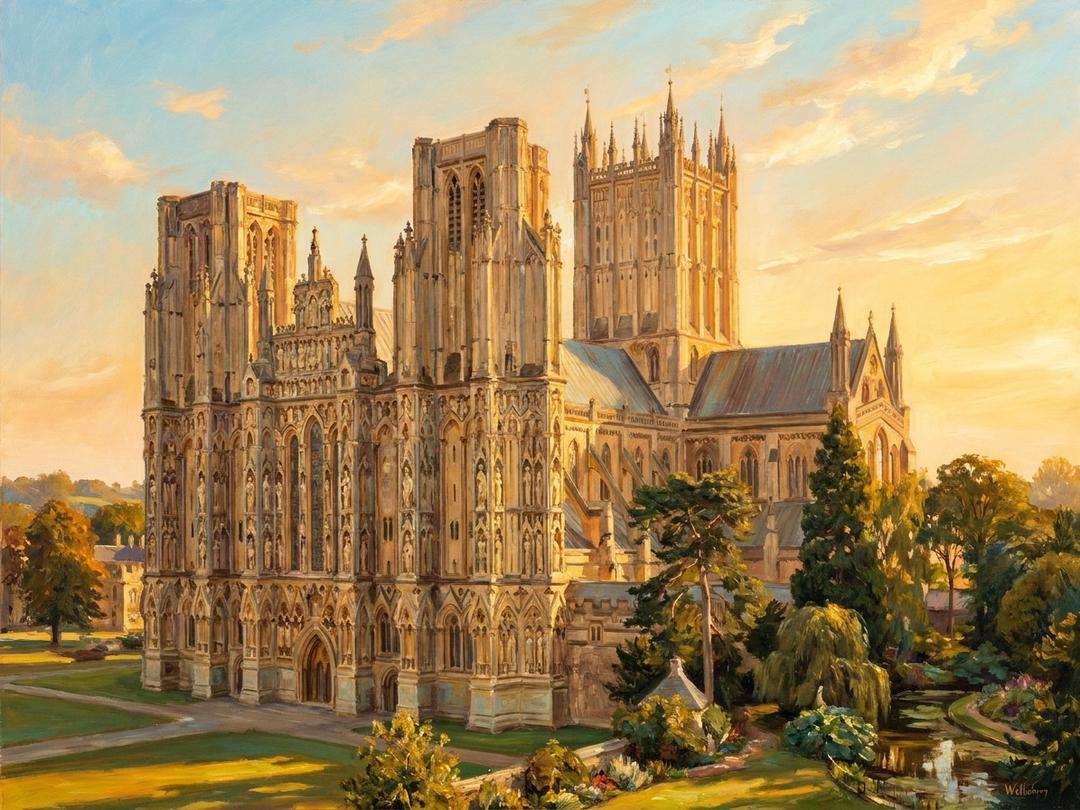
Wells Cathedral is an active place of worship situated in England's smallest freestanding city. Sightseeing visits allow access to the nave, scissor arches, and chapter house, while daily divine services remain completely free to all. Choral Evensong offers an unforgettable acoustic and spiritual experience.
Highlights
- Monumental West Front featuring nearly 300 surviving medieval statues
- Ingenious 14th-century scissor strainer arches spanning the central crossing
- Octagonal Chapter House with thirty-two ribs radiating from a central palm pillar
- Historic 14th-century astronomical clock with mechanical jousting knights
Things to Know
- Sightseeing closes prior to daily Choral Evensong services
- Historic spiral stairs to the Chapter House require careful footwork
- Photography is welcomed during visiting hours but prohibited during services
Location
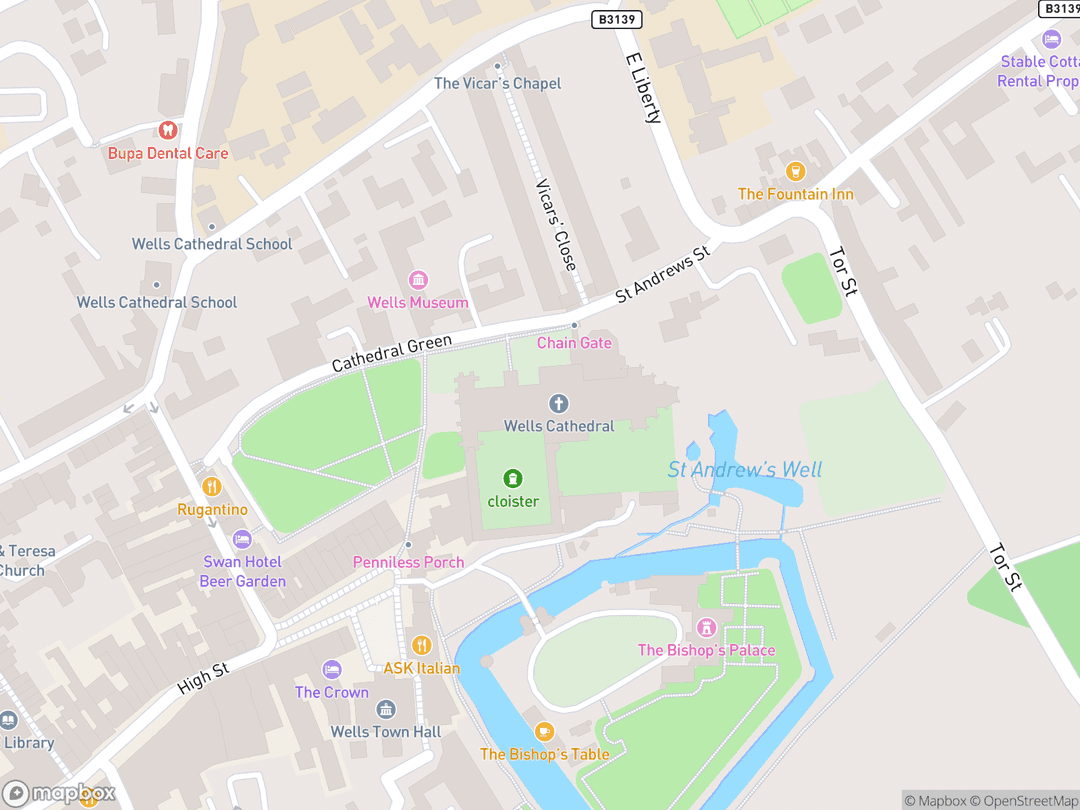
Cathedral Green, Wells, Somerset, BA5 2UE, England, United Kingdom
Hours: Monday through Saturday 09:00 - 17:00, Sunday 11:30 - 15:00
Getting There: Accessible via First Bus 376 from Bristol or 173 from Bath; rail connections via Castle Cary and Bath Spa.
Get DirectionsTips for Your Visit
Choral Evensong
Attend weekday Evensong at 17:15 to experience the renowned cathedral choir within the sacred Gothic space.
Quarter-Hour Strikes
Gather near the North Transept astronomical clock on the quarter hour to see the mechanical jousting figures cycle.
Vicars' Close Walk
Step through the Chain Gate into Vicars' Close, Europe's oldest continuously inhabited medieval residential street.
About
Wells Cathedral, formally the Cathedral Church of Saint Andrew, stands as the mother church of the Diocese of Bath and Wells. Rooted in the Christian Abrahamic tradition, this sacred sanctuary has served continuous daily prayer and Eucharistic worship for over eight centuries.
Begun around 1175 under Bishop Reginald de Bohun, Wells was the first cathedral in Britain designed entirely within the Early English Gothic aesthetic. Unlike earlier Anglo-Norman structures, it rejected rounded Romanesque arches from the start, pioneering refined lancet arches, clustered limestone piers, and harmonious horizontal spatial rhythm.
Today, the cathedral remains an active house of prayer, celebrated for its monumental sculpted West Front, dramatic fourteenth-century scissor arches, and the adjacent medieval residential street of Vicars' Close.
Gallery
Symbolic Elements
The temple's exterior features intricate carvings, each rich with spiritual meaning:

The Saltire Cross
The diagonal bracing of the scissor arches deliberately invokes the X-shaped cross of Saint Andrew.

The Jesse Window
Depicts the prophecy of Isaiah illustrating Christ's messianic lineage through Mary and the stem of Jesse.

The Astronomical Clock
Displays a geocentric medieval universe symbolizing mortal passing time framed by eternal divine judgment.

Jack Blandifers
A mechanical quarter jack who strikes bells with heels and hammer to remind worshippers of spiritual vigilance.

The Palm Tree Pillar
A central Purbeck marble pillar branching into thirty-two vaulting ribs representing the Tree of Life.

Stiff-Leaf Grotesques
Stone carvings of toothaches and thieves reminding pilgrims of mortal human frailty within sacred precincts.

Saint Andrew Wells
Ancient freshwater springs feeding the moat that symbolize baptismal renewal and the living water of salvation.
Interesting Facts
Wells is widely celebrated by architectural historians as the first fully Gothic cathedral built in Europe. (Tier B)
The cathedral's celebrated crossing scissor arches were an emergency engineering intervention to stop tower collapse. (Tier A)
Directly adjacent lies Vicars' Close, recognized as Europe's oldest continuously inhabited residential street. (Tier A)
The astronomical clock in the North Transept features mechanical jousters who knock a knight backward every 15 minutes. (Tier B)
Wells is England's smallest freestanding city, owing its historic civic status directly to its cathedral church. (Tier B)
Townspeople saved the 14th-century stained-glass Jesse Window from Puritan destruction by boarding it over during the Civil War. (Tier B)
The worn stone steps leading to the Chapter House undulate in ripples resembling descending waves of water. (Tier B)
Acoustic openings behind the West Front statuary enabled concealed medieval choristers to sing out during Palm Sunday. (Tier A)
Common Questions
Is Wells Cathedral an active church?
Yes, it is the mother church of the Diocese of Bath and Wells, holding daily worship and choral services.
Why were the scissor arches built?
They were built between 1338 and 1348 to prevent the cathedral's central tower from sinking and collapsing.
Is there an admission charge to visit the cathedral?
Sightseeing requires an admission ticket, but entry for personal prayer and all scheduled church services is free.
What is Vicars' Close?
It is a fourteenth-century street connected to the cathedral, regarded as the oldest continuously inhabited residential street in Europe.
When does the astronomical clock cycle its figures?
The mechanical jousting figures perform every fifteen minutes on the quarter-hour.
Featured Stories
William Joy and the Scissor Arches
1338
When the newly heightened central tower began crushing its foundations into Somerset subsoil in 1338, disastrous masonry cracks opened across the crossing piers. Master Mason William Joy conceived three pairs of interlocking pointed arches that braced the tower and transferred its massive downward thrust safely to the ground. This emergency engineering feat created an iconic architectural sculpture that modern visitors often mistake for twenty-first-century abstract art.
Source: Cathedral Chapter Acts and Fabric Rolls
Concealed Voices of the West Front
1239
During medieval Palm Sunday processions, clergy and townspeople gathered on the green to gaze upon the grand theological reredos of the West Front. Hidden behind the stone figures within concealed galleries, cathedral choristers sang anthems through acoustic holes perforating the facade. The ethereal sound poured downward over the assembly, creating the convincing sensation that the sculpted angels and apostles were audibly praising Christ.
Source: Wells Cathedral Medieval Liturgical Manuscripts
The Preservation of the Golden Window
1642
As civil war engulfed England, Parliamentary soldiers entered cathedrals to smash stained glass depictions of biblical figures. Foreseeing the impending destruction, loyal cathedral clergy and town residents carefully disassembled and boarded over the magnificent fourteenth-century Jesse Window. Because of this brave foresight, the window's vivid emerald-green and gold glass survived intact to illuminate the choir today.
Source: Diocesan Preservation Records
Timeline
Saxon Minster Founded
King Ine of Wessex establishes a minster dedicated to Saint Andrew near the natural freshwater springs.
MilestoneElevation to Cathedral
Wells becomes the seat of Bishop Athelm, establishing the first episcopal seat in Somerset.
MilestoneEpiscopal Demotion
Bishop John of Tours transfers the bishop's seat to Bath Abbey, relegating Wells to collegiate church status.
EventGothic Construction Begins
Bishop Reginald de Bohun initiates construction on an open site using pointed Early English Gothic arches.
component.timeline.groundbreakingCathedral Consecration
Bishop Jocelin of Wells formally consecrates the completed nave and sculptural West Front on October 23, 1239.
DedicationDiocese of Bath and Wells
Pope Innocent IV decrees that the diocese shall permanently bear the dual title of Bath and Wells.
MilestoneChapter House Completed
Canons complete the octagonal Chapter House with thirty-two stone ribs fanning from a single central pier.
MilestoneScissor Arches Construction
Master William Joy constructs strainer arches to halt dangerous subsidence caused by the heightened central tower.
RenovationJesse Window Glazed
Glaziers install the celebrated east-end Jesse Window depicting the genealogical tree of Jesus Christ.
EventAstronomical Clock Installed
Craftsmen build the 24-hour astronomical dial displaying lunar phases and rotating mechanical jousters.
MilestoneMonmouth Rebellion Desecration
Rebel forces stable cavalry in the nave and strip lead from the roofs before Lord Grey halts further damage.
EventWest Front Restoration
Conservators complete a thirteen-year lime conservation project protecting hundreds of medieval sculptures.
RenovationHistory by Decade
700s–1090 — Saxon Minster to Episcopal Demotion
King Ine of Wessex established a Saxon minster church beside natural springs around 705. Elevated to a cathedral seat in 909, the community served secular canons until Norman Bishop John of Tours transferred the episcopal see to Bath Abbey in 1090.
1175–1239 — Early English Gothic Rebirth
Bishop Reginald de Bohun initiated a total Gothic rebuilding in 1175, abandoning the Romanesque style for lancet arches. Bishop Jocelin completed the spacious nave and commissioned the sculptural West Front before consecrating the cathedral on October 23, 1239.
1280–1348 — Crisis, Strainer Arches, and Expansion
The Chapter House was finished around 1306, followed by the addition of the eastern Lady Chapel. When raising the crossing tower caused severe structural settlement, Master William Joy inserted the famous scissor strainer arches between 1338 and 1348.
1350–1540 — Vicars' Close and the English Reformation
Bishop Ralph of Shrewsbury established Vicars' Close to house the cathedral choral clergy. During the English Reformation, the secular cathedral avoided dissolution, though its chantry chapels were suppressed and shrine treasures confiscated.
1640–1685 — Civil War Desecration and the Monmouth Rebellion
Parliamentary soldiers stabled horses in the nave during the Civil War, and Monmouth rebels damaged the interior in 1685. Lord Grey of Warke famously intervened with his sword to defend the high altar from complete destruction.
1840–Present — Victorian Renewal and Global Stewardship
Victorian restorers Anthony Salvin and Benjamin Ferrey repaired the decaying vaults and choir furnishings. Between 1974 and 1987, conservators carried out landmark stone preservation on the West Front, securing the cathedral for ongoing worldwide worship.
Architecture & Facilities
Wells Cathedral represents the premier early expression of English Gothic architecture, begun around 1175. It systematically eschewed Norman Romanesque rounded arches in favor of uniform pointed lancets, deeply undercut clustered piers, and a horizontal spatial continuity designed to inspire contemplation.
Building Materials
Doulting Limestone
Creamy-buff oolitic limestone quarried eight miles away in the Mendip Hills forms the primary exterior and interior fabric.
Purbeck Marble
Dense fossiliferous limestone from Dorset polishes to a lustrous dark sheen on internal decorative shafts.
Draycott Conglomerate
Local Somerset dolomitic stone provides rich chromatic texture in column bases and accent bands.
Pot-Metal Stained Glass
Medieval glass rich in cobalt and copper oxide creates the vivid emerald and gold tones of the east window.
Interior Features
The Nave and Triforium
Ten bays of pointed lancet arcades featuring stiff-leaf foliate capitals and continuous horizontal gallery bands.
The Crossing and Scissor Arches
Dramatic double-curved stone strainer arches erected in 1338 that permanently brace the four crossing piers.
The Chapter House
An octagonal deliberative room with thirty-two ribs springing gracefully from a single Purbeck marble pillar.
The Retrochoir and Lady Chapel
A low eastern space displaying star-shaped tierceron vaults that open into a polygonal chapel.
Temple Grounds
The cathedral stands centered upon Cathedral Green, bordered by the moated Bishop's Palace to the south and connected across Chain Gate to the medieval row-houses of Vicars' Close.
Additional Facilities
Visitor reception, cafe, gift shop in the cloister, and accessible ground-floor interactive exhibits illustrating the upper library and Chapter House.
Religious Significance
Wells Cathedral stands within the Western Christian tradition as an earthly reflection of the heavenly Jerusalem, pointing worshipers toward the God of Abraham.
The cathedral serves as the seat of the Bishop of Bath and Wells, hosting daily Eucharistic celebration, choral prayer, and pastoral service.
Sacred Ordinances
Holy Communion (Eucharist)
Daily sacrament commemorating the sacrifice and resurrection of Jesus Christ through the sharing of consecrated bread and wine.
Choral Evensong
Daily liturgical service of psalms, scripture readings, and choral canticles based on the Book of Common Prayer.
Holy Baptism
Christian sacrament of initiation celebrated at the cathedral font symbolizing cleansing from sin and new life.
Daily Morning Prayer
Morning liturgical prayer offering scripture readings and intercessions for the surrounding world.
The Cruciform Sacred Geometry
Oriented toward the east in anticipation of the Resurrection, the cruciform ground plan mirrors the body of Christ on the cross, leading pilgrims from the entrance nave toward the altar.
The Secular Canon Tradition
Unlike monastic houses, Wells was maintained by secular canons who lived in the surrounding town, intentionally integrating sacred worship with civic responsibility.
Similar Temples
Sources & Research
Every fact on Temples.org is backed by verified Sources & Research. Each piece of information is rated by source tier and confidence level.
View All Sources (8)
| Field | Source | Tier | Retrieved |
|---|---|---|---|
| About & Historical Background | Wells Cathedral Chapter (opens in a new tab) | A | 2026-03-31 |
| Heritage Listing & Legal Designation | Historic England (opens in a new tab) | A | 2026-03-31 |
| Diocese & Anglican Worship | The Church of England (opens in a new tab) | A | 2026-03-31 |
| Architecture & Structural Engineering | National Churches Trust (opens in a new tab) | B | 2026-03-31 |
| Somerset Heritage & History | South West Heritage Trust (opens in a new tab) | B | 2026-03-31 |
| Building History & Architectural Analysis | Exploring Building History (opens in a new tab) | B | 2026-03-31 |
| Crossing Arches & Architectural Profile | Atlas Obscura (opens in a new tab) | C | 2026-03-31 |
| Sacred Sites & Pilgrim Guides | Sacred Destinations (opens in a new tab) | B | 2026-03-31 |