Visitor Insights
Visiting Winchester Cathedral
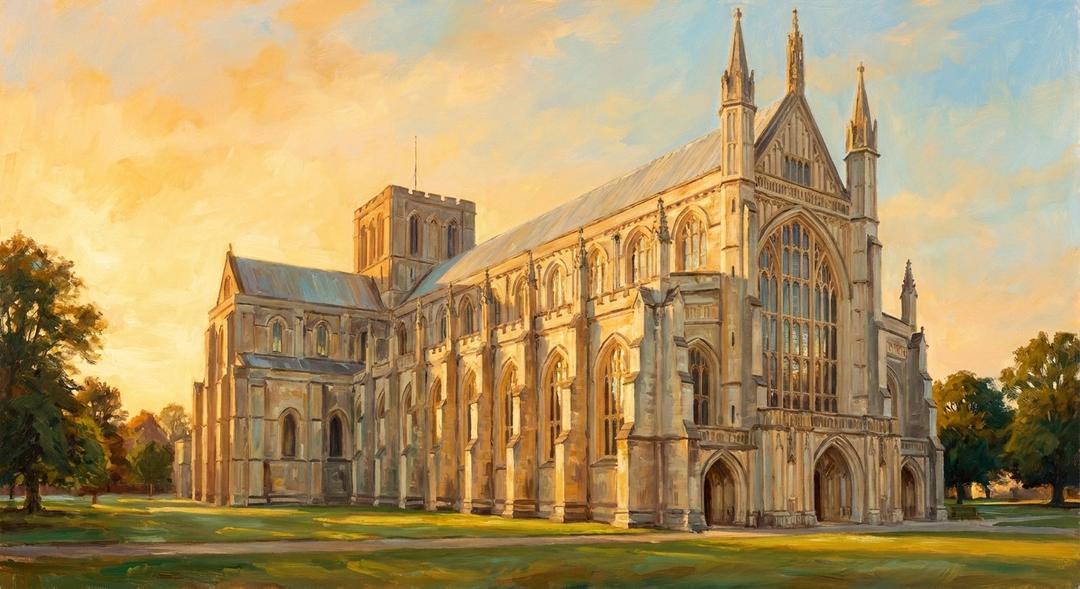
Visitors experience soaring medieval stone vaults, quiet crypt waters, and centuries of royal English history. Daily life centers around vibrant worship services, contemplative prayer, and exploration of the historic close.
Highlights
- Marvel at the longest medieval Gothic nave in Europe with its intricate lierne stone vaulting.
- View Antony Gormley's contemplative Sound II statue standing in the subterranean flooded crypt.
- Pay homage at the ledger stone of celebrated author Jane Austen in the north nave aisle.
- Examine the 12th-century Winchester Bible and medieval mortuary chests in the Triforium.
Things to Know
- Daily Choral Evensong offers a transformative acoustic experience and is free to attend.
- The crypt is periodically flooded during wet winter months and may only be viewed from viewing platforms.
- Access to private prayer and devotional areas in the nave remains open and free at all times.
Location
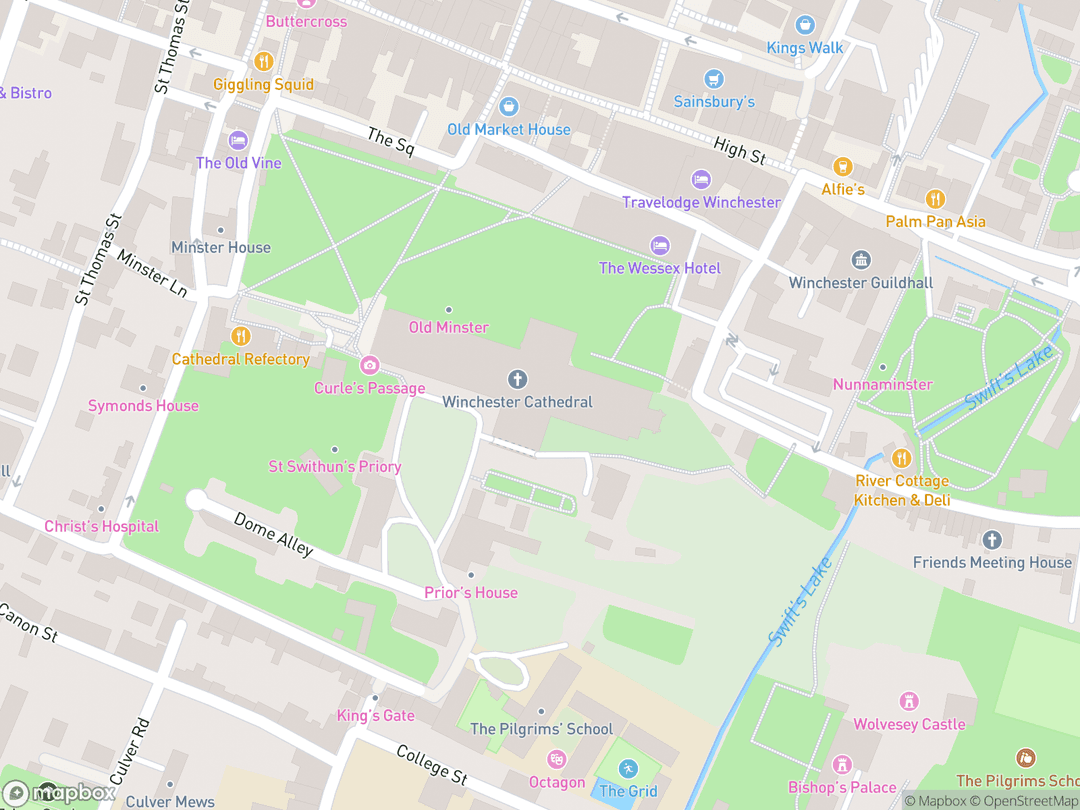
9 The Close, Winchester, Hampshire, SO23 9LS, United Kingdom
Hours: Monday through Saturday 09:00–17:00; Sunday 12:30–15:00
Getting There: Located a 10-minute walk from Winchester Railway Station with direct train service from London Waterloo, or via city Park and Ride shuttles.
Get DirectionsTips for Your Visit
Choral Evensong
Arrive by 17:15 Tuesday through Saturday to secure seating in the quire for daily Choral Evensong.
Guided Fabric Tours
Join a volunteer-led cathedral tour included with admission to discover hidden chantry carvings and medieval graffiti.
Crypt Access
Check the daily crypt opening status at the welcome desk, as water levels fluctuate based on the River Itchen water table.
About
Winchester Cathedral stands within the ancient Abrahamic sanctuary tradition as a consecrated dwelling where heaven and earth converge in stone, light, and solemn liturgy. As the cathedral church of the Bishop of Winchester, it embodies over a millennium of Christian devotion, continuity of the realm, and communal prayer.
Established in 1079 to replace the adjacent Anglo-Saxon Old Minster, the building reflects an evolution from Norman fortress to soaring Perpendicular Gothic pilgrimage center. Its sacred ground preserves the tombs of Saxon and Danish kings, early bishops, and novelist Jane Austen.
Spanning 558 feet, Winchester remains the longest medieval Gothic cathedral in Europe. Through ongoing worship, daily choral services, and meticulous architectural stewardship, the cathedral endures as an active spiritual beacon for the Diocese of Winchester and pilgrims worldwide.
Gallery
Symbolic Elements
The temple's exterior features intricate carvings, each rich with spiritual meaning:
Tournai Marble Font
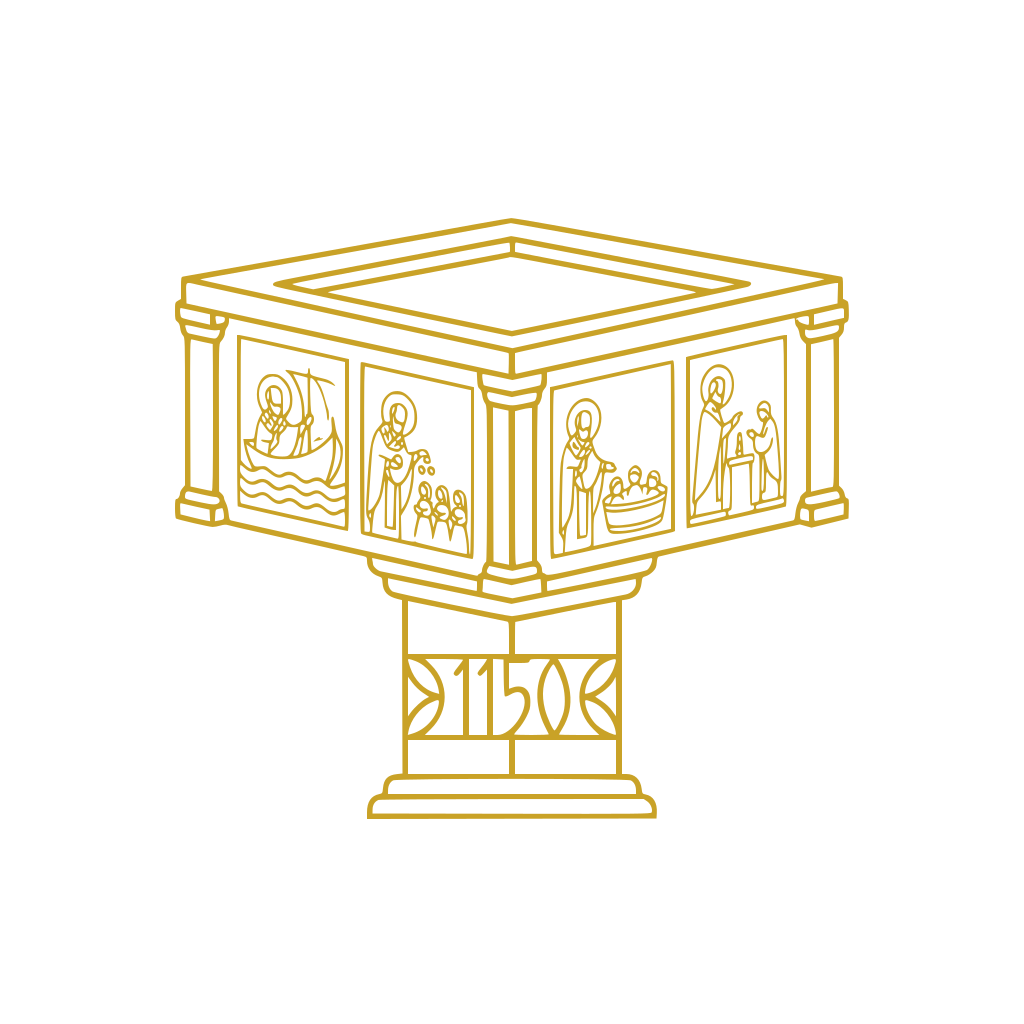
Carved from dark Belgian stone around 1150, its reliefs illustrate Saint Nicholas performing deeds of Christian salvation.

The Winchester Bible
This 12th-century illuminated manuscript visually links Old Testament prophecies with the fulfillment of Christ's Gospel.

Royal Mortuary Chests
Resting atop choir screens, these Renaissance chests symbolize the eternal bond between English monarchs and the Church.

Great West Window Mosaic
A collage of shattered medieval glass that stands as an enduring theological emblem of beauty resurrected from ruin.

Saint Swithun Shrine Canopy
The retrochoir shrine site marks a threshold of spiritual intercession, physical healing, and divine comfort.

The Great Screen
This 15th-century stone reredos portrays the crucified Christ surrounded by saints to depict the Church Triumphant.

Antony Gormley Sound II
Submerged during seasonal flooding in the crypt, this iron sculpture evokes baptismal mystery and prayerful contemplation.

Perpendicular Lierne Vaulting
The intricate web of ribs across the nave ceiling symbolizes heavenly order and draws the gaze of worshippers upward.
Interesting Facts
Deep-sea diver William Walker worked in total underwater darkness for five years to shore up the sinking cathedral foundations. (Tier A)
At 558 feet in length, Winchester Cathedral is the longest medieval Gothic church building surviving in Europe. (Tier A)
The Great West Window is an accidental mosaic assembled from shattered glass fragments after parliamentary soldiers sacked the nave in 1642. (Tier A)
Novelist Jane Austen was buried in the north aisle in 1817 without any mention of her famous novels on her original ledger stone. (Tier A)
The massive Norman structure was originally built upon a floating raft of waterlogged beech logs placed in the wet meadows. (Tier B)
Queen Mary I of England married King Philip II of Spain in the cathedral quire in July 1554. (Tier A)
Six painted mortuary chests elevated on the presbytery screens contain the mingled remains of Saxon and Danish monarchs. (Tier A)
The cathedral served as a filming stand-in for Westminster Abbey in historical productions including The Crown. (Tier C)
The 12th-century Winchester Bible required the vellum hides of approximately 250 calves and contains rare lapis lazuli pigment. (Tier B)
Common Questions
Is Winchester Cathedral still an active place of worship?
Yes, Winchester Cathedral holds daily Anglican services including Morning Prayer, Holy Communion, and Choral Evensong.
Why is the crypt often flooded with water?
The Romanesque crypt lies below the local water table of the River Itchen and fills naturally during wet winter seasons.
Where is Jane Austen buried in the cathedral?
Jane Austen is interred beneath a black marble floor ledger in the north nave aisle near the font.
How long is Winchester Cathedral compared to other cathedrals?
At 558 feet, it has the longest overall medieval Gothic cathedral footprint anywhere in Europe.
Do you need a ticket to enter the cathedral for prayer?
No, entrance is always free of charge for anyone attending services, private prayer, or personal devotion.
Featured Stories
The Diver Who Saved the Cathedral
1906–1911
When Winchester Cathedral began sinking into its swampy peat subsoil in 1905, deep-sea diver William Walker descended beneath the foundations into pitch darkness. Working six hours a day submerged in groundwater for five years, he placed more than 140,000 concrete blocks by hand to underpin the collapsing walls. His solitary underwater labor saved Britain's longest cathedral from catastrophic ruin.
Source: Winchester Cathedral Archives and Fabric Records
The Shattered Window of the Restoration
1660
During the English Civil War, parliamentary soldiers used the bones of ancient kings to smash the great west window into thousands of fragments. Following the restoration of the monarchy, local citizens gathered every surviving shard from the dirt and weeds of the churchyard. Rather than attempting a futile re-creation, glazers fused the random pieces into a dazzling kaleidoscope of abstract color that endures as a monument to perseverance.
Source: Cathedral Chapter Historical Ledger
A Modest Farewell to Jane Austen
July 24, 1817
Early on a summer morning in 1817, family members quietly carried author Jane Austen into the cathedral for burial in the north nave aisle. Her original gravestone praised her extraordinary kindness and Christian faith, making no mention of the timeless literary works she had published. Only in Victorian times was an adjacent brass plaque added to celebrate the worldwide influence of her storytelling.
Source: Diocese of Winchester Memorial Register
Timeline
Old Minster Founded
King Cenwalh of Wessex founds the original Old Minster church adjacent to the present cathedral site.
MilestoneBurial of Saint Swithun
Bishop Swithun is buried in the churchyard outside the minster wall where rains and pilgrims may tread.
EventTranslation of Saint Swithun
Saint Swithun's relics are brought inside the enlarged Old Minster, establishing a major national pilgrimage shrine.
MilestoneNorman Construction Commences
Bishop Walkelin begins construction of the massive new Norman Romanesque cathedral immediately south of the Old Minster.
component.timeline.groundbreakingConsecration of the Norman Cathedral
Monks process into the completed Norman choir and transepts as demolition of the Old Minster begins.
DedicationCollapse of the Central Tower
The original Norman central crossing tower collapses into the choir following the controversial burial of William Rufus.
EventEarly English Retrochoir Begun
Bishop Godfrey de Lucy begins construction of the lower lancet-arched retrochoir to accommodate pilgrim processions.
RenovationPerpendicular Nave Transformation
Bishop William of Wykeham and William Wynford begin re-casing the Norman nave into the Perpendicular Gothic style.
RenovationDestruction of Saint Swithun's Shrine
Royal commissioners under King Henry VIII dismantle and plunder the medieval shrine of Saint Swithun.
EventRoyal Wedding of Mary I
Queen Mary I of England weds King Philip II of Spain before the high altar.
EventCivil War Desecration
Parliamentary troops ransack the interior, scatter ancient royal bones, and shatter the stained glass of the west window.
EventBurial of Jane Austen
Novelist Jane Austen is laid to rest in the north nave aisle following her death in Winchester.
MilestoneUnderpinning by Diver William Walker
Diver William Walker begins deep underwater excavation to stabilize the cathedral's failing foundations with concrete.
RenovationHistory by Decade
640s–990s — The Anglo-Saxon Old Minster
King Cenwalh of Wessex established the Old Minster in 648 as the ecclesiastical center of Saxon England. Bishop Swithun's humble outdoor burial in 863 blossomed into a national pilgrimage site following the translation of his relics in 971. The churchyard served as the ceremonial and burial sanctuary for King Alfred the Great and early rulers of Wessex.
1070s–1190s — The Norman Fortress of Faith
Following the Norman Conquest, Bishop Walkelin initiated construction in 1079 of a colossal Romanesque cathedral immediately south of the Old Minster. Dedicated in 1093, the new church towered over Hampshire with thick ashlar walls and heavy semicircular arches. A sudden collapse of the central crossing tower in 1107 led to the erection of reinforced Norman piers that stand today.
1200s–1390s — Gothic Extensions and Royal Chantries
Bishop Godfrey de Lucy introduced the Early English Gothic style during the 13th century by expanding the spacious eastern retrochoir for visiting pilgrims. In the late 14th century, master mason William Wynford executed an unprecedented engineering feat by chiseling away Norman piers to produce the current soaring Perpendicular Gothic nave. Ornate chantry chapels were founded where daily requiem Masses were offered for departed episcopal benefactors.
1530s–1650s — Reformation and Civil War Upheaval
The dissolution of the Benedictine priory in 1538 brought the plundering of Saint Swithun's shrine and the re-founding of the cathedral with a secular dean and chapter. In 1554, Queen Mary I celebrated her royal marriage to Philip II of Spain in the quire. Parliamentary forces ransacked the sanctuary in 1642 during the Civil War, scattering ancestral mortuary chests and smashing sacred stained glass.
1660s–1890s — Restoration, Literary Honor, and Subsidence
The Restoration era saw shattered stained glass fragments gathered and reset into the iconic west window mosaic. Jane Austen was interred in the north nave aisle in 1817, cementing the building's literary heritage. By the late 19th century, land drainage lowered the surrounding water table, causing the historic timber raft foundation to rot and threatening structural collapse.
1900s–Present — Structural Rescue and Modern Ministry
Between 1906 and 1911, deep-sea diver William Walker carried out critical underwater underpinning beneath the southern walls to secure the cathedral permanently. In 1986, Antony Gormley installed his evocative sculpture Sound II in the flooded Romanesque crypt. Today, Winchester Cathedral balances daily Anglican liturgical life with global cultural heritage, welcoming visitors through its Kings and Scribes exhibitions and annual choral festivals.
Architecture & Facilities
Winchester Cathedral represents a composite architectural palimpsest that blends monumental Norman Romanesque transepts and crypts with refined Early English lancets and an internationally renowned Perpendicular Gothic nave remodel designed to inspire awe through soaring vertical lines.
Building Materials
Quarr Stone
Quarried on the Isle of Wight, this sturdy limestone forms the heavy internal walling and original Norman Romanesque fabric.
Caen Limestone
Imported from Normandy, this fine-grained cream stone was utilized for external dressings and delicate interior tracery.
Purbeck Marble
Sourced from the Dorset coast, this polished fossiliferous stone adorns the clustered lancet shafts in the Early English retrochoir.
English Oak
Harvested from ancient Hampshire woodlands, dense oak comprises the magnificent 14th-century choir stalls and nave roof trusses.
Interior Features
The Nave
Europe's longest medieval nave features an extraordinary tierceron lierne vault suspended 78 feet above the central pavement.
The Quire
Contains Britain's earliest surviving complete set of carved oak stalls dating to 1308, adorned with delicate misericords.
The Retrochoir
A wide, low Early English vaulted hall built to accommodate medieval pilgrimage processions around Saint Swithun's shrine.
The Norman Crypt
A low-vaulted Romanesque undercroft that fills naturally with groundwater during seasonal rises in the local water table.
Temple Grounds
The walled cathedral close encompasses tranquil rolling green lawns, historic canonical residences, the medieval Deanery, and excavated footprint markers of the Anglo-Saxon Old Minster.
Additional Facilities
Visitor facilities include the Kings and Scribes interactive exhibition in the south triforium gallery, the Cathedral Shop, and the Cathedral Refectory set in a walled garden.
Religious Significance
Within Christian theology and the Anglican tradition, Winchester Cathedral serves as the episcopal seat where communal prayer, Word, and Sacrament unite the people of God.
The cathedral operates as the mother church of the Diocese of Winchester, providing a daily rhythm of worship, pastoral care, and holy pilgrimage.
Sacred Ordinances
The Holy Eucharist
Celebrated daily at the high altar to remember the sacrifice and resurrection of Jesus Christ through bread and wine.
Choral Evensong
The historic Anglican twilight service of scripture, psalms, canticles, and choral anthems sung each afternoon.
Holy Baptism
The rite of Christian initiation administered at the 12th-century Tournai marble font.
The Pilgrim's Spiritual Path
Entering the west portals, pilgrims walk along the monumental axis toward the high altar and retrochoir, mirroring the Christian journey from earthly repentance to celestial communion with Christ.
Sacred Relics and Sanctified Memories
The cathedral remembers the steadfast witness of Saint Swithun and early martyrs, inviting believers to seek spiritual renewal, healing, and deeper discipleship.
Similar Temples
Sources & Research
Every fact on Temples.org is backed by verified Sources & Research. Each piece of information is rated by source tier and confidence level.
View All Sources (8)
| Field | Source | Tier | Retrieved |
|---|---|---|---|
| About & Historical Background | Winchester Cathedral Dean and Chapter (opens in a new tab) | A | 2026-03-31 |
| Architecture & Listed Building Fabric | Historic England (opens in a new tab) | A | 2026-03-31 |
| Diocesan Ministry & Cathedral Governance | Diocese of Winchester (opens in a new tab) | A | 2026-03-31 |
| Liturgical Calendar & Ecclesiastical History | The Church of England (opens in a new tab) | A | 2026-03-31 |
| Archaeological Excavations of Old Minster | British Archaeological Association (opens in a new tab) | B | 2026-03-31 |
| Academic Fabric Research & Mortuary Analysis | University of Winchester Research Repository (opens in a new tab) | B | 2026-03-31 |
| Hampshire Cultural and Heritage Records | Hampshire Cultural Trust (opens in a new tab) | B | 2026-03-31 |
| Visitor Information and Access Guidelines | Visit Winchester Official Tourism (opens in a new tab) | D | 2026-03-31 |